Best surf fishing beaches near Plum Island
There’s nothing quite like the thrill of casting into the surf, feeling the salty spray, and waiting for that tell-tale tug. But if you’ve ever tried to find the truly prime spots for surf fishing near Plum Island, you know it can feel like a secret society. Anglers are notoriously tight-lipped about their honey holes, and navigating the nuances of tides, currents, and access can be downright frustrating. This guide is here to pull back the curtain, helping you discover the best beaches and strategies for successful surf fishing in this legendary Massachusetts region.
Why Plum Island is a Surf Fishing Hotspot
Plum Island isn't just a picturesque barrier island; it's a biological superhighway for some of the most sought-after game fish in New England. Its unique geography, at the confluence of several key waterways, creates an environment that's simply irresistible to marine life and, by extension, to keen surf anglers.
Understanding the Unique Environment
Imagine a giant funnel where a powerful river meets the vast Atlantic. That's essentially what you have with the Merrimack River estuary emptying out right next to Plum Island. This dynamic intersection of fresh and saltwater creates a highly oxygenated, nutrient-rich soup that supports an incredible diversity of baitfish. Think of vast schools of menhaden, sand eels, and mackerel pushing in and out with the tides. This abundance of forage is like an all-you-can-eat buffet for predators, making it a prime hunting ground.
Beyond the bait, the bottom structure here is constantly shifting, forming a mosaic of sandbars, deep channels, and current-swept rips. These features act like underwater highways and ambush points for fish. The strong currents around the Merrimack River mouth also play a crucial role, disorienting baitfish and making them easy targets. It's a challenging environment to fish, no doubt, but one that rewards perseverance with truly memorable catches. The sheer energy of the ocean meeting the river creates a unique fishing experience that you just don't find everywhere.
Seasonal Movements and Target Species
The surf fishing scene around Plum Island is a migratory affair, with different species making their grand entrance and exit throughout the year. It's like a finely tuned clock, and understanding these movements is key to being in the right place at the right time. The undisputed heavyweight champion here is the striped bass. These majestic fish arrive in earnest as the waters warm in late spring, usually around May, and stay well into the fall, sometimes even into November. They follow the baitfish, feasting in the wash and patrolling the cuts.
Bluefish are another major player, often showing up a bit later in the summer, usually by late June or July. Known for their voracious appetites and fierce fights, they can quickly turn a calm fishing session into a frenzied battle. Beyond these two giants, you might also encounter false albacore and bonito during late summer and early fall, especially closer to the open ocean stretches. These speedsters offer an exhilarating challenge, requiring quick retrieves and sharp reflexes. Knowing when striped bass season starts in Massachusetts and the legal size for keeping striped bass in Massachusetts will prepare you for a successful outing. For a broader perspective on the area, be sure to check out the Plum Island Surf Fishing Guide.
Top Surf Fishing Beaches Near Plum Island
While Plum Island itself is a treasure trove, the surrounding coastline offers a variety of surf fishing experiences, each with its own character and charm. From the rugged stretches of the island to the more open sands of Salisbury, there's a spot for every angler and every tide.
Plum Island Beach (Northern and Southern Sections)
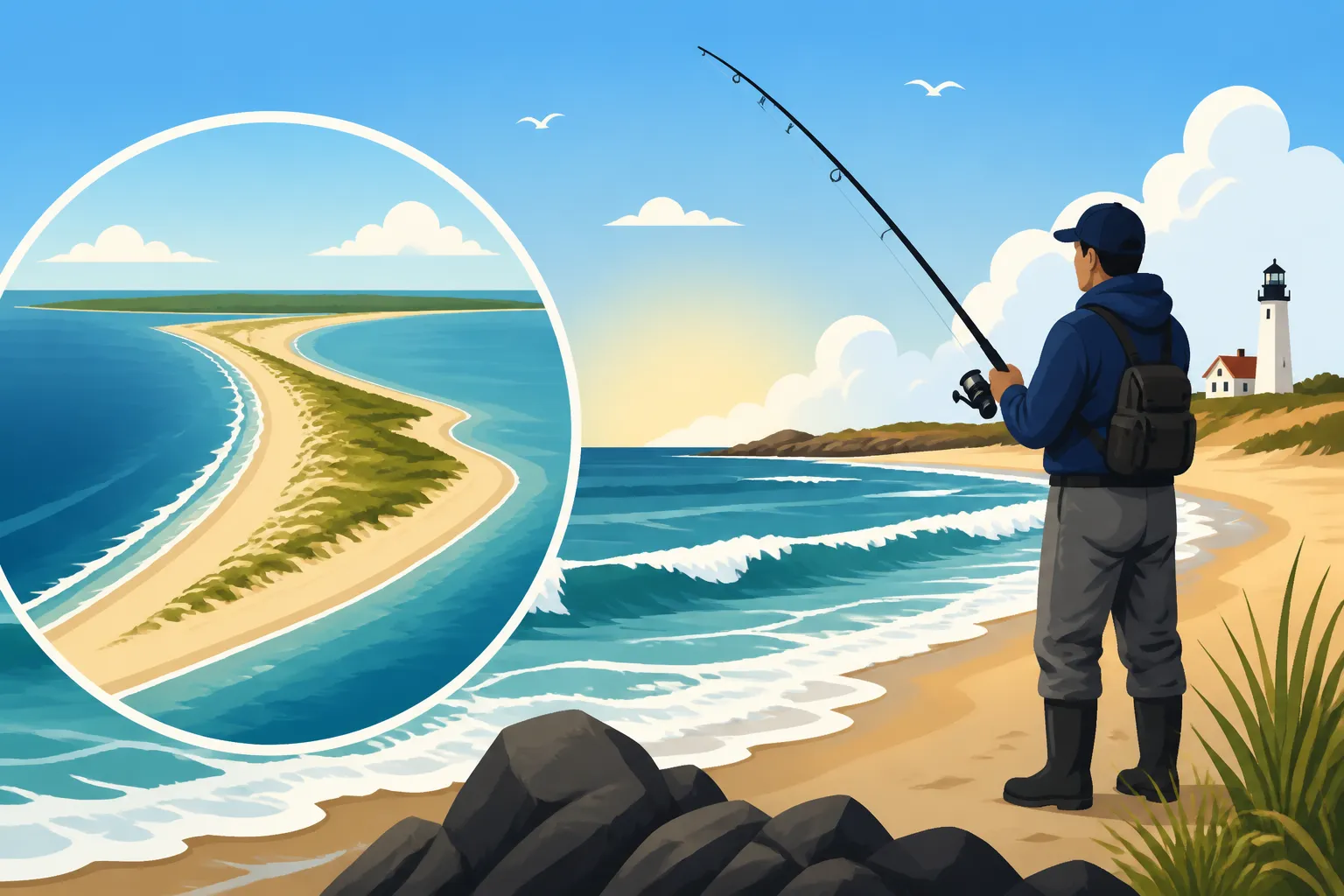
Plum Island Beach is the beating heart of surf fishing in this region, stretching for miles and offering diverse opportunities. The northern end, particularly near the mouth of the Merrimack River, is legendary. This is where the powerful currents meet the ocean, creating turbulent water, deep scour holes, and incredible rips that concentrate bait and, consequently, large predators. Access here can be tricky, with soft sand that often requires four-wheel drive or a decent hike, but the rewards can be immense. Anglers often target the jetty or the turbulent waters where the river current meets the incoming tide. This spot demands heavy tackle and a keen understanding of the tides, but it's where many trophy striped bass are landed.
As you move south along Plum Island, the beach becomes a bit less dramatic but no less productive. The long, sandy stretches with scattered rock formations provide ample opportunities for casting lures and soaking bait. You'll find a series of sandbars and troughs here, which act as highways for migrating fish. These areas are fantastic for casting various plugs and soft plastics during low light conditions or when the tide is pushing in. Parking can be a challenge, especially during peak season, so arriving early is always a good strategy. Remember, a Massachusetts Saltwater Recreational Fishing Permit Explained is essential before you even wet a line.
Salisbury Beach State Reservation
Just north of Plum Island, across the Merrimack River, lies Salisbury Beach State Reservation. This sprawling park offers miles of sandy beach, often less crowded than parts of Plum Island, especially during the shoulder seasons. While it doesn't have the intense current dynamics of the Merrimack River mouth quite as directly, it still benefits immensely from the estuary's influence. The currents can still be strong, especially near the river mouth, but further north, you'll find more consistent waves rolling onto sandy flats.
Salisbury Beach is excellent for anglers who prefer a bit more space to spread out their gear or those looking for a slightly less challenging environment than the rip at the mouth. It’s particularly good for soaking bait, like fresh clam or seaworms, in the troughs just beyond the breaking waves. You might also find good action casting metal jigs or poppers, especially during the early morning or late evening. The state reservation offers ample parking, though there is a fee, and facilities like restrooms are usually available, which is a nice bonus for a long day of fishing. Don't forget to familiarize yourself with the Massachusetts Recreational Fishing Rules and Bag Limits before your trip.
Crane Beach (Ipswich)
A bit further south, but still within a reasonable drive and offering some truly exceptional surf fishing, is Crane Beach in Ipswich. Managed by The Trustees of Reservations, Crane Beach is a pristine stretch of sand backed by dunes and a maritime forest. While there’s an entrance fee, the immaculate surroundings and incredible fishing opportunities make it well worth it. Crane Beach offers expansive, relatively shallow water that gradually deepens, making it perfect for wading out and casting into productive channels and cuts.
This beach is renowned for its consistent striped bass action, particularly during the spring and fall migrations. The clear waters here mean that stealth and presentation can be key. Anglers often find success with sand eel imitations, smaller plugs, and soft plastics retrieved slowly along the bottom or through the wash. The sheer size of the beach means you can often find your own stretch of solitude, making it a wonderful spot for a more meditative fishing experience. Keep in mind that access hours and regulations are strictly enforced by The Trustees, so always check their website before heading out. For other great options in the area, consider checking out Ipswich Bay Fishing Spots in Massachusetts.
Essential Tips for Surf Fishing Success
No matter how many "best spots" you know, success in surf fishing often comes down to a few fundamental skills and preparations. The ocean is a dynamic environment, and understanding its language is paramount.
Reading the Water and Tides
This is arguably the most critical skill for any surf angler. The beach might look uniform, but beneath the surface, the water is constantly carving out features that hold fish. Look for "cuts" or "troughs" – deeper channels between sandbars where water rushes in and out, creating natural pathways for fish. Rips, where currents collide or flow around structure, are also prime ambush points. Pay attention to changes in wave patterns; a calm spot in an otherwise turbulent area often indicates a deeper hole.
The tides are your best friend, or your worst enemy, depending on how you read them. For Plum Island and Salisbury, the Merrimack River's influence means very strong currents, especially around the new and full moons. Generally, the incoming or outgoing tide (the "moving" water) is when fish are most active, feeding in the current. Slack tide can be slower, but sometimes large fish will move into calmer areas to rest. Learning the best tide for fishing the Cape Cod Canal can give you transferable skills for understanding these powerful currents. Sites like FishingBooker often have local fishing reports that can provide insights into current conditions and species activity, giving you an edge.
Gear and Bait Recommendations
Having the right tackle can make all the difference, especially when battling strong currents and powerful fish. For surf fishing near Plum Island, a medium-heavy to heavy surf rod, typically 9 to 11 feet in length, paired with a robust spinning reel (size 5000-8000) loaded with 30-50 lb braided line is a solid setup. This provides the casting power and backbone needed to launch lures long distances and handle big fish in strong currents. You'll also want a strong leader of 40-80 lb fluorocarbon to resist abrasion from sand and rocks.
When it comes to lures, a diverse selection is key. Plugs like poppers (for surface action), pencil poppers, and various minnow-imitating swimmers (like those from a popular brand such as Daiwa or SP Minnows) are deadly for striped bass and bluefish. Metal jigs and soft plastics, especially those mimicking sand eels or baitfish (e.g., Lunker City Slug-Go or Al Gag's Whip-It Fish), are also incredibly effective, particularly when fish are feeding sub-surface. For bait fishing, fresh sea clams, bloodworms, and chunks of mackerel or menhaden are excellent choices. Learn how to Catch Striped Bass in Massachusetts and explore the Best lures for striped bass in Massachusetts for more in-depth advice. Don't forget that a Massachusetts Fishing License Guide is your first step to being legal on the water!
Safety and Regulations
Surf fishing can be exhilarating, but the ocean demands respect. Always be aware of your surroundings: rogue waves, strong currents (especially near river mouths), and changing weather conditions can pose real hazards. Never turn your back on the ocean. If you’re wading, know your limits and consider a wading belt and a good pair of cleats for slippery rocks. It's also wise to let someone know where you're going and when you expect to return.
Beyond personal safety, adherence to fishing regulations is crucial for the sustainability of our fisheries. Make sure you have a valid Massachusetts Fishing License and are aware of all current size, bag, and season limits for the species you are targeting. Regulations can change, so it's always a good idea to check the latest rules from MassWildlife before each season. For instance, knowing How to Catch Bluefish in Massachusetts means you also need to know their bag limits. Respect private property, clean up after yourself, and practice good sportsmanship. Remember, we're all out there to enjoy the beauty and bounty of Massachusetts fishing.
| Beach Name | Primary Target Species | Key Features / Terrain | Best Fishing Method | Access/Parking |
|---|---|---|---|---|
| Plum Island Beach (North) | Striped Bass, Bluefish | Merrimack River mouth, jetties, strong currents, deep holes | Lure casting (heavy plugs), Live bait (eels, mackerel) | Soft sand (4WD recommended), limited parking |
| Plum Island Beach (Central/South) | Striped Bass, Bluefish | Long sandy stretches, sandbars, troughs, scattered rocks | Lure casting (plugs, soft plastics), Bait soaking | Parking lots (can fill fast), foot access |
| Salisbury Beach State Reservation | Striped Bass, Bluefish, Flounder | Miles of open sand, less extreme currents, some deep troughs | Bait soaking (clams, worms), Lure casting | Large paid parking lots, good facilities |
| Crane Beach (Ipswich) | Striped Bass, Flounder | Pristine sandy beach, gradual depth, clear water, conservation area | Lure casting (sand eel imitations, small plugs) | Paid entrance (Trustees of Reservations), ample parking |
Disclaimer
The information provided in this guide is for general informational purposes only and is subject to change. Fishing regulations, conditions, and access points can vary. Always consult official Massachusetts Division of Fisheries and Wildlife (MassWildlife) resources and local signage for the most up-to-date and accurate information before planning your fishing trip. Safety should always be your top priority when fishing.