How Massachusetts measures a striped bass for the slot limit
There's nothing quite like the thrill of hooking into a powerful striped bass in Massachusetts waters, but that excitement can quickly turn to anxiety when you realize you need to measure your catch accurately to ensure it falls within the legal slot limit. Misinterpreting these regulations isn't just frustrating; it can lead to hefty penalties and, more importantly, undermine the vital conservation efforts for this iconic species. This comprehensive guide is here to walk you through exactly how Massachusetts measures a striped bass for the slot limit, ensuring you're confident and compliant every time you reel one in.
Understanding the Massachusetts Striped Bass Slot Limit
For many anglers, the striped bass is the quintessential game fish of Massachusetts' coastal waters. However, keeping one isn't as simple as just catching it. Massachusetts, like many other states, employs a "slot limit" for striped bass. This isn't just a random rule; it's a carefully designed management tool intended to protect the spawning stock and ensure the long-term health of the striped bass population. Essentially, it means you can only keep fish that fall within a specific size range – not too small, and not too big.
The current recreational slot limit for striped bass in Massachusetts is 28 to 31 inches. This means any striped bass you catch that measures under 28 inches or over 31 inches must be immediately and carefully released. You are typically allowed to keep one fish per person per day within this slot. These regulations are critical for several reasons, primarily focused on safeguarding the future of striped bass fishing.
Why the Slot Limit Matters for Conservation
The slot limit is a cornerstone of striped bass conservation. Its primary goal is to protect the breeding population. By making it illegal to keep the largest fish, Massachusetts aims to ensure that the most successful and prolific breeders remain in the water to reproduce. These larger fish, often referred to as "trophy" fish, are typically mature females that can lay millions of eggs. Removing them from the ecosystem would have a disproportionately negative impact on future generations.
Similarly, protecting the smaller fish ensures that they have a chance to grow, mature, and contribute to the breeding stock before they can be harvested. It's a delicate balance: allowing some harvest for recreational enjoyment while ensuring enough fish are left to sustain the population. Anglers often appreciate this approach because it directly impacts the abundance and size of fish they'll encounter in years to come. Understanding the spirit of the law, not just the letter, can make complying with regulations like the Massachusetts Recreational Fishing Rules and Bag Limits feel less like a chore and more like a contribution.
The Evolving Nature of Fishing Regulations
It's also crucial to remember that fishing regulations, especially for highly migratory and popular species like striped bass, are not static. They can and do change based on scientific assessments of fish stocks, environmental factors, and management goals. What might be legal this season could be different next year. This is why staying informed is paramount for every responsible angler.
Changes often occur at both federal and state levels, influenced by organizations like the Atlantic States Marine Fisheries Commission (ASMFC) and the Massachusetts Division of Marine Fisheries (DMF). These bodies regularly review data on fish populations, spawning success, and angler harvest rates. For instance, recent years have seen adjustments to the slot limit as part of broader efforts to rebuild striped bass stocks. Always consult the most current official sources, such as the Massachusetts Fishing Regulations Pamphlet, Explained, before heading out. Trust me, it’s worth the quick check to avoid any unpleasant surprises.
The Official Method for Measuring Your Catch
Now, let's get down to the nitty-gritty: how exactly do you measure a striped bass so you're absolutely sure it's within that 28-31 inch slot? The official method is straightforward, but it requires precision and a good understanding of what "legal measurement" entails. There’s no room for guesswork here; even a quarter-inch can make a difference.
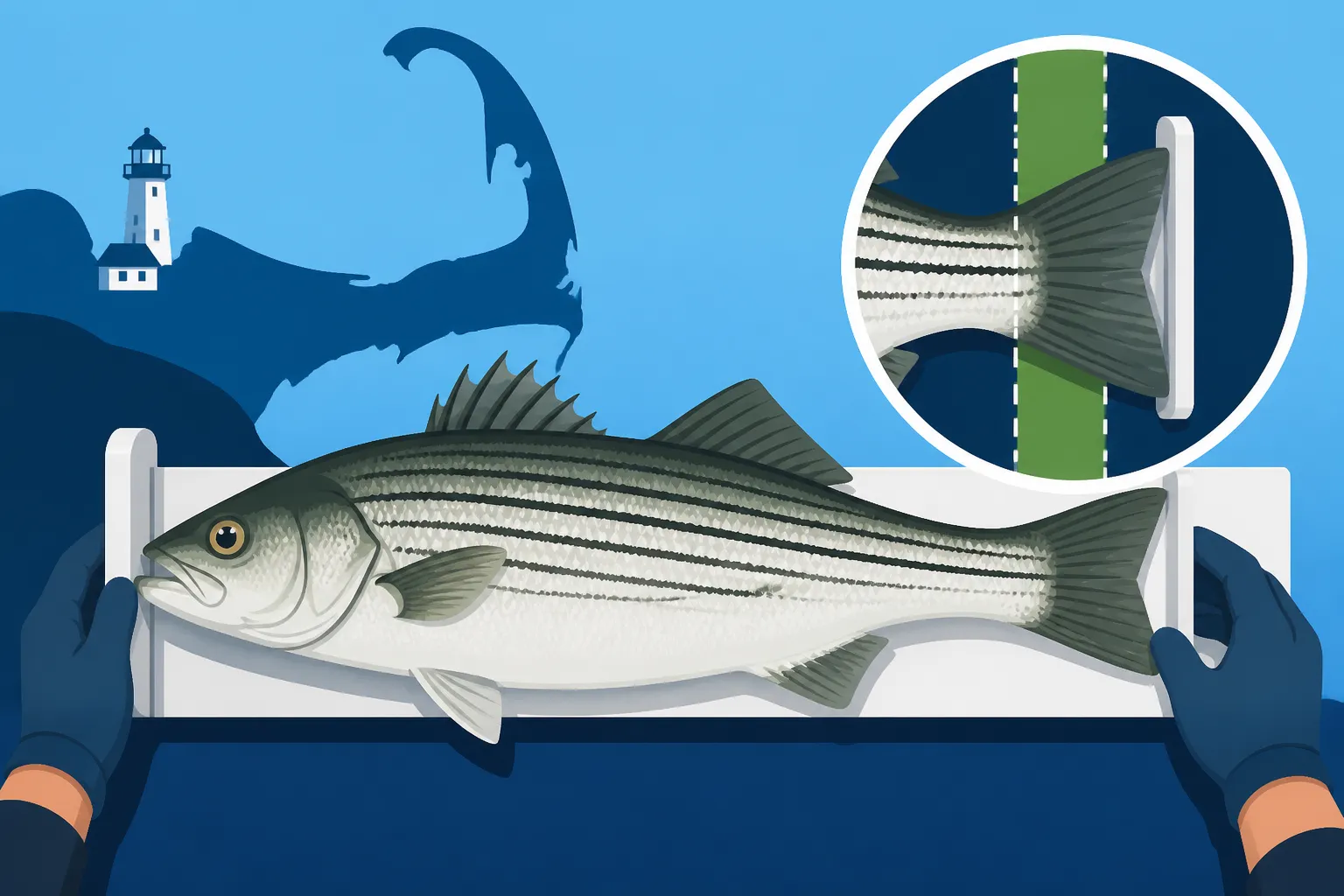
The measurement of a striped bass in Massachusetts is taken from the tip of the snout (or mouth, when closed) to the farthest end of the tail, with the tail compressed or "pinched" together. The fish must be lying flat on a measuring device. This is often referred to as "total length." This isn't some arbitrary rule; it's a standardized method used by fisheries managers to ensure consistency and accuracy across all measurements, whether by an angler, a charter captain, or an environmental police officer.
Step-by-Step Measuring Process
To ensure you're measuring correctly and confidently, follow these steps:
- Prepare Your Measuring Device: Before you even start fishing, have your measuring tape or, ideally, a solid fish measuring board ready. A good measuring board often has a "nose bump" at one end, which helps ensure you start your measurement from the absolute tip of the fish's snout. You can find a variety of reliable measuring boards, often made from durable materials like plastic or aluminum, on platforms like Amazon, making it easy to keep one on your boat or in your tackle box.
- Lay the Fish Flat: Once you've landed a fish you suspect might be a keeper, gently lay it flat on its side on your measuring device. Ensure its mouth is closed and the tip of its snout is pressed firmly against the starting point of your measure (the "nose bump" of a measuring board, or the zero mark of your tape).
- Compress the Tail: This is where many anglers make a mistake. The regulation specifies "tail compressed." This means you should gently squeeze the two lobes of the tail fin together, so they form a straight line, extending as far as possible. Do not measure to the fork of the tail. The goal is to get the maximum possible length.
- Read the Measurement: With the snout firmly at the zero mark and the tail compressed, read the length at the farthest point of the tail. Ensure your eyes are directly above the measurement mark to avoid parallax error.
Remember, the goal is to get an accurate reading quickly to minimize stress on the fish, especially if it's going to be released. This is a crucial aspect of responsible fishing, as detailed in guides like How to Identify a Keeper Striped Bass in Massachusetts.
Essential Measuring Tools and Where to Find Them
Having the right tools makes all the difference when it comes to accurate measurement. While a simple cloth or metal tape measure can work in a pinch, they're prone to inaccuracies, especially on a moving boat or with a flopping fish.
- Fish Measuring Boards (Bump Boards): These are the gold standard. They're rigid, typically made of plastic or aluminum, with a fixed "nose stop" at one end. This ensures a consistent starting point for every measurement. Many boards have clearly marked inches and even half-inch or quarter-inch increments. You'll find a wide selection of these, from basic models to those with extra features like built-in scales, on retailers like Amazon. Brands like Frabill, Rapala, and Ketch Products offer popular options. A good quality board is an investment that will save you headaches and potential fines.
- Measuring Tapes (Adhesive or Retractable): While not as ideal as a board, a high-quality, waterproof measuring tape can be useful, especially for larger fish that might exceed the length of a standard board. You can even get adhesive measuring tapes to stick to the gunwale of your boat or a cooler. When using a tape, just be extra diligent about holding the fish straight and ensuring the starting point is precise. Again, Amazon is a convenient place to pick up durable, marine-grade tapes.
Keeping your measuring device easily accessible on your boat or in your tackle bag is just as important as having it. There’s nothing worse than landing a beautiful fish and then frantically searching for your measuring tape!
Common Mistakes and How to Avoid Them
Even experienced anglers can make mistakes when measuring. The pressure of a potential keeper, a lively fish, or simply a momentary lapse in judgment can lead to errors. Being aware of these common pitfalls can help you avoid them and stay compliant with the Massachusetts Striped Bass Size and Bag Limit.
One of the biggest frustrations is getting a borderline fish. Is it 27.75 inches? Is it 31.25 inches? Those fractions of an inch can feel like a lifetime when you're trying to make a quick, accurate decision. But the law doesn't care about "almost." It's either in the slot or it's not.
The "Pinched Tail" vs. "Forked Tail" Confusion
This is perhaps the most frequent measurement error. Many species are measured to the fork of the tail, but striped bass in Massachusetts require the "pinched tail" method.
- Incorrect (Forked Tail): Measuring to the deepest part of the "V" in the tail. This will give you a shorter measurement than the official method. If you mistakenly measure to the fork, a fish that is legally 28 inches might appear to be 27 inches, leading to its release when it could have been kept. Conversely, a fish that is truly 31.5 inches might appear 31 inches, leading you to illegally keep an oversized fish.
- Correct (Pinched Tail): Gently pressing the tail lobes together so they are parallel to the measuring device, extending the tail as far as it can go. This provides the "total length." Always make sure both lobes are compressed. If one lobe is extended further than the other, push them together to get the longest possible legal measurement. This technique is non-negotiable for striped bass.
Best Practices for Quick and Accurate Measurement
Beyond just knowing the steps, practicing good habits can make the process smoother for everyone involved, especially the fish.
- Measure on a Stable, Flat Surface: Your boat deck, a cooler lid, or a dedicated measuring board secured to a stable surface is ideal. Trying to measure a fish while it's flopping in a net or on an uneven surface is a recipe for inaccuracy and can cause unnecessary injury to the fish.
- Minimize Handling Time: The quicker you measure, the better for the fish's survival, especially if it's going to be released. Have your measuring tools ready and your camera (if you're taking a photo) prepared.
- Wet Your Hands (for Release): If you anticipate releasing the fish (either because it's out of the slot or you choose to), wet your hands before touching it. This protects the fish's slime coat, which is vital for its health and disease resistance.
- Consider a Release Tool: For fish that are clearly oversized or undersized, a de-hooking tool can speed up the release process and minimize damage, especially if the fish has swallowed the hook. Quick release means less stress.
- Double-Check: If you're unsure, measure twice. It's better to be absolutely certain than to face the Penalties for Fishing Without a License in Massachusetts (or in this case, for possessing an illegal fish).
By adopting these best practices, you not only comply with the law but also demonstrate a commitment to ethical angling and conservation, contributing to a healthier fishery for everyone.
What to Do If Your Fish Is Out of the Slot
It happens to all of us. You hook into a magnificent striped bass, fight it to the boat, and then find out it’s just shy of 28 inches or, perhaps more painfully, just over 31 inches. While it can be disappointing, knowing how to handle an out-of-slot fish properly is just as important as knowing how to measure one. Releasing a fish safely maximizes its chances of survival and contributes positively to the fishery.
Remember that Massachusetts considers possession of an undersized or oversized striped bass a violation. This isn't a small oversight; it carries fines and potential loss of fishing privileges. The goal isn't just to measure accurately, but to be prepared for the outcome, whatever it may be.
Responsible Catch and Release Practices
If your striped bass falls outside the legal slot, it must be released immediately and with as little harm as possible. Here’s how to do it right:
- Handle with Care: Avoid dragging the fish over rough surfaces or dropping it. Use a rubberized landing net, if possible, as it’s gentler on the fish’s scales and fins than knotted nylon.
- Minimize Air Exposure: The less time a fish spends out of the water, the higher its chances of survival. Try to measure it while it’s still in the net, or quickly lay it on a wet surface for measurement and a photo, then get it back in the water.
- Support Its Weight: If you must lift the fish, support its body horizontally. Avoid holding it vertically by the jaw or tail alone, especially larger fish, as this can damage its internal organs and spine.
- Remove the Hook Quickly: Use a de-hooking tool or needle-nose pliers to remove the hook. If the fish is deeply hooked, especially in the gills or esophagus, cut the line as close to the hook as possible. Attempting to forcefully remove a deeply embedded hook often causes more harm than leaving it in.
- Revive If Necessary: If the fish appears sluggish, hold it gently in the water, facing into the current (or move it back and forth gently if there's no current) to force water over its gills. Release it only when it’s strong enough to swim away on its own. This is particularly important when applying techniques from guides like How to Catch Striped Bass in Massachusetts, where rapid catches might mean more releases.
By following these steps, you give that out-of-slot striper the best chance to grow bigger and spawn another day.
Legal Ramifications of Non-Compliance
Let’s be clear: fishing regulations are laws, and breaking them has consequences. If you are found in possession of a striped bass that is outside the legal slot limit, you could face significant fines and penalties. Massachusetts Environmental Police officers are diligent in their enforcement efforts.
Fines for possessing illegal fish can range from hundreds to thousands of dollars, depending on the severity of the offense and whether it's a repeat violation. In addition to monetary penalties, offenders might also have their fishing gear confiscated, their fishing license suspended, or even face criminal charges in more extreme cases. It's a risk simply not worth taking.
The best defense against these penalties is knowledge and strict adherence to the rules. Always double-check the current regulations, carry your measuring device, and if there's any doubt about a fish's size, practice responsible catch and release. The slight disappointment of releasing a fish that might have been a keeper pales in comparison to the hassle and cost of a violation.
Here's a quick summary of key measurement points:
| Measurement Aspect | Correct Method for Striped Bass | Common Mistake | Why It Matters |
|---|---|---|---|
| Starting Point | Tip of the snout (mouth closed) pressed against a flat stop. | Measuring from the jaw, gills, or eye. | Ensures consistent "total length" from the absolute front of the fish. |
| Fish Position | Laid flat on its side on a measuring board/tape. | Measuring a wiggling fish in a net or on an uneven surface. | Accuracy; avoids misreading due to curvature or movement. |
| Tail Position | Tail lobes compressed/pinched together to their furthest point. | Measuring to the fork of the tail or with tail splayed naturally. | Critical for "total length" as defined by regulation; prevents under/over-measurement. |
| Observation | Eye-level with the measuring device. | Reading from an angle (parallax error). | Ensures accurate reading of the exact mark. |
| Speed & Handling | Quick, gentle measurement with wet hands; minimal air exposure. | Prolonged handling, dry hands, rough surfaces. | Maximizes fish survival if released; reduces stress. |
Ultimately, fishing in Massachusetts is a privilege that comes with the responsibility of adhering to regulations designed to protect our precious marine resources. By understanding how to properly measure a striped bass for the slot limit, you become a more skilled, ethical, and responsible angler, contributing to the health and sustainability of this incredible fishery for generations to come. Don't forget to secure your Massachusetts Saltwater Recreational Fishing Permit Explained before you head out!
Disclaimer
The information provided in this guide is for general informational purposes only and is subject to change. While we strive to provide accurate and up-to-date information, fishing regulations can be complex and are regularly updated. It is the angler's sole responsibility to consult the official Massachusetts Division of Marine Fisheries (DMF) website or the current year's Massachusetts Marine Fisheries Guide for the most precise and current regulations regarding striped bass slot limits, bag limits, and seasons before engaging in any fishing activity. Non-compliance with fishing regulations can result in significant penalties.