Massachusetts Fishing Regulations Pamphlet, Explained
There's nothing quite like the excitement of planning a fishing trip in Massachusetts, whether it's a peaceful morning on a freshwater pond or an adrenaline-fueled day chasing stripers in the salt. But let's be honest, trying to wrap your head around all the rules and regulations can feel like trying to untangle a hundred-pound snarl of fishing line. It's frustrating, confusing, and sometimes you just want to throw your hands up. That's why understanding the Massachusetts Fishing Regulations Pamphlet is so crucial – it’s your compass in a sea of rules, and this guide is here to break it down for you, section by section, so you can focus on what you love: fishing.
What is the Massachusetts Fishing Regulations Pamphlet, Anyway?
Why the Pamphlet is Essential for Every Angler
This is more than just a dry government document; it's your go-to reference for staying legal and fishing responsibly in Massachusetts. Think of it as the ultimate cheat sheet, containing everything from when you need a license, to what fish you can keep, and even specific rules for certain bodies of water like the Quabbin Reservoir or the Cape Cod Canal. Without consulting it, you're essentially fishing blind, risking fines, or worse, inadvertently harming fish populations. It's particularly important for new anglers, but even seasoned vets will find themselves flipping through it for updates or clarifications on nuanced rules that change from year to year.
It's important to remember that these regulations aren't just there to make your life difficult. They are vital for conservation, ensuring that Massachusetts fisheries remain healthy and sustainable for generations to come. Every rule, from slot limits to closed seasons, is designed to protect fish stocks, allowing them to reproduce and grow. So, embracing the pamphlet isn't just about avoiding trouble; it's about being a responsible steward of our natural resources.
The Annual Update Cycle and Its Importance
One of the biggest reasons to familiarize yourself with the pamphlet is its annual update. Fishing regulations are not static; they change! Often, these changes are in response to scientific assessments of fish populations, environmental factors, or even angler input. What was legal last year might not be this year, and that can catch even the most experienced angler off guard.
Typically, the Massachusetts Division of Fisheries and Wildlife (MassWildlife) releases an updated version of the pamphlet at the beginning of each calendar year, usually around January 1st. These updates are critical, especially for popular species like striped bass, where slot limits or bag limits can be adjusted based on stock assessments. Missing these changes could lead to unknowingly violating a rule, which nobody wants. Always make it a habit to check for the newest edition before your first outing of the year, or if you're targeting a species you haven't fished for in a while.
Where to Find Your Massachusetts Fishing Regulations Pamphlet
Online Access: MassFishHunt and Mass.gov
In this digital age, getting your hands on the regulations pamphlet is easier than ever. The most reliable and up-to-date source is online. The MassWildlife website, specifically the Mass.gov section dedicated to fishing, is where you'll find the official digital version. It’s usually available as a downloadable PDF, which is fantastic because you can save it to your phone or tablet for quick reference right on the water.
The MassFishHunt portal, which is also where you'll go to purchase your Massachusetts Fishing License Guide, is another excellent resource. While primarily for license sales, it often directs you to the latest regulations, ensuring you’re getting the correct information. Having it on your phone means you can quickly look up a specific rule, like a minimum size limit or a bag limit for a particular species, without having to carry a physical copy around. It’s a real game-changer for on-the-spot verification, especially when you’re out on the boat or shore fishing.
Physical Copies: Sporting Goods Stores and MassWildlife Offices
For those who prefer the tactile feel of paper or just don’t want to rely on their phone battery, physical copies of the pamphlet are still widely available. You can typically pick one up for free at most local sporting goods stores that sell fishing licenses. Think about places like local bait and tackle shops, larger retailers like Bass Pro Shops or Cabela's, or even some Walmart locations with a sporting goods section. These vendors receive bulk shipments from MassWildlife.
Additionally, you can always visit a MassWildlife district office or their headquarters in Westborough to grab a copy. It’s a great idea to pick one up early in the season, perhaps when you're getting your gear ready or buying a new lure. Having a physical copy can be incredibly useful, especially if you're heading to an area with spotty cell service, or if you just prefer to highlight and dog-ear pages as you study the rules.
Considering Digital vs. Print for Convenience
The choice between a digital and print pamphlet really comes down to personal preference and how you fish. A digital copy is undeniably convenient for immediate access and searchability. You can easily zoom in on small print, and you’ll always have the latest version if you download it directly from MassWildlife’s site. It’s perfect for the angler who relies on their smartphone for navigation, weather, and now, regulations.
However, a print copy offers a different kind of convenience. There's no worrying about battery life, screen glare, or accidental drops in the water. Many anglers find it easier to flip through pages quickly when they're actively fishing, or to share with a buddy on the boat. It's also a reliable backup if technology fails. Some folks even buy a small, waterproof binder or case for their paper copy, making it just as durable as any digital device. You could even find some specialized waterproof pouches or small, portable printouts that would be great to keep in your tackle box, maybe even on a platform like Amazon if you're looking for extra protection for your paper goods.
Navigating the Pamphlet: Key Sections to Understand
Licenses and Permits: What You Need to Get Started
Before you even cast a line, the pamphlet will quickly clarify the fundamental requirement: a valid Massachusetts fishing license. This section is paramount. It will detail who needs a license, the different types available (resident, non-resident, short-term options), and how age affects these requirements. For instance, you'll find out whether Massachusetts Senior Fishing License Discounts or if Do Kids Need a Fishing License in Massachusetts? applies to your situation. It also covers the separate but equally crucial Massachusetts Saltwater Recreational Fishing Permit Explained for those venturing into the ocean.
The pamphlet will also provide clear instructions on how to purchase your license, whether through the user-friendly MassFishHunt system online or by visiting authorized vendors in person. It's not just about having a license; it’s about having the right license for the type of fishing you plan to do. A freshwater license won't cover saltwater angling, and vice-versa, which brings us to another critical distinction explained within the pamphlet.
Freshwater vs. Saltwater Rules: A Critical Distinction
Massachusetts boasts an incredible diversity of fishing opportunities, from its pristine freshwater lakes and rivers to its vast, productive coastline. The pamphlet meticulously separates the rules for these two distinct environments. This is a crucial distinction because regulations, bag limits, and even the type of license required can differ dramatically. For example, a freshwater license covers things like trout, bass, and pike in inland waters, while a saltwater permit is for species like striped bass, cod, and flounder in coastal areas.
You'll find dedicated sections addressing each, detailing specific regulations for popular freshwater spots like the Quabbin Reservoir Fishing Permits and Rules in Massachusetts or the Wachusett Reservoir Fishing Access Rules in Massachusetts. Similarly, it will outline specific zones and species rules for saltwater fishing. This clear separation helps anglers avoid common pitfalls, ensuring they are compliant regardless of whether they are dropping a worm into a local pond or casting into the surf off Cape Cod. Understanding this division is fundamental to legal and responsible fishing in the Commonwealth.
Understanding Catch Limits, Seasons, and Size Restrictions
This is often the section anglers spend the most time poring over, and for good reason. It dictates what you can keep, how many, and when. The pamphlet provides a comprehensive list of game fish, both freshwater and saltwater, along with their associated regulations. You’ll find details on minimum and maximum size limits (like the dreaded "slot limit"), daily bag limits (how many fish you can keep per day), and possession limits (how many you can have on hand, often extending beyond a single day’s catch).
Seasonal closures are also prominently featured. Certain species might only be open for harvest during specific times of the year to protect spawning populations or allow young fish to grow. For instance, you’ll see specific dates for trout season openings or the timeframe for keeping black sea bass. It’s absolutely vital to cross-reference your target species with these regulations before heading out, as they can vary significantly and often have specific nuances (e.g., minimum size for fluke might differ for shore vs. boat anglers).
Specific Species Regulations: Trout, Bass, Stripers, etc.
While general rules apply, the pamphlet goes into detail for many popular species, recognizing that each fish has its own biological needs and conservation challenges. You'll find specific sections dedicated to the regulations for different types of trout (brook, brown, rainbow), various bass species (largemouth, smallmouth, striped bass), tautog, cod, flounder, bluefish, and many more.
These species-specific rules might include unique slot limits, such as the Massachusetts Striped Bass Slot Limit Explained, which aims to protect the breeding stock by requiring anglers to release fish that are too small or too large. You'll also see different bag limits for different species, sometimes even varying by method of take or time of year. For example, the daily limit for a particular panfish might be much higher than for a prized game fish like a striped bass. Paying close attention to these individual species rules ensures you're fishing sustainably and within the law for whatever you're targeting.
Decoding Common Regulations and Terminology
The "Slot Limit" Explained: Why It Matters for Striped Bass
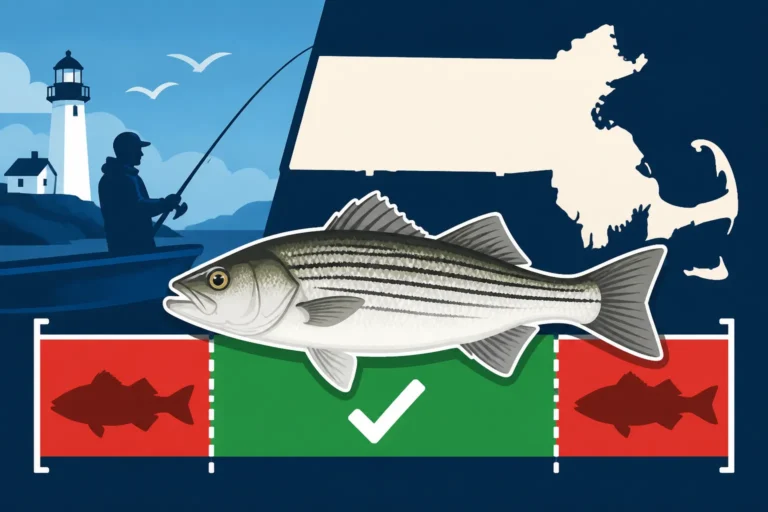
If you're planning on chasing striped bass in Massachusetts, understanding the slot limit is non-negotiable. This regulation is specifically designed to protect the breeding population of a species by allowing anglers to keep fish within a certain size range, while requiring the release of fish that are either too small (juveniles) or too large (mature breeders). For striped bass in Massachusetts, as per recent regulations, there's a specific slot that changes periodically, for example, 28 to less than 31 inches. This means any striped bass you catch that measures under 28 inches or 31 inches or over must be immediately released.
This type of regulation is a powerful conservation tool, and misinterpreting it can lead to significant penalties. The pamphlet will clearly illustrate how to measure your fish correctly (usually from the tip of the snout to the end of the tail, with the tail compressed). It's crucial to have a reliable measuring device on hand – a tape measure, a fish ruler, or even a specialized measuring board. Practicing catch and release with undersized or oversized fish is not just good practice, it's the law, and vital for ensuring the future of this iconic New England fishery.
Daily Bag Limits vs. Possession Limits: What's the Difference?
These two terms often cause confusion, but the pamphlet does a great job of clarifying them. A daily bag limit refers to the maximum number of fish of a particular species that an individual angler can keep in a single day, or within a 24-hour period. For example, if the daily bag limit for bluefish is three, you can only keep three bluefish during your fishing trip on any given day.
A possession limit, on the other hand, refers to the maximum number of fish of a particular species that an individual angler may have in their possession at any time, regardless of when or where they were caught. This is especially relevant if you're on a multi-day trip or if you've brought fish home and have them in your freezer. The possession limit is often, but not always, the same as the daily bag limit. However, for some species, the possession limit might be twice the daily limit, or there might be special rules for fish kept at a residence. The pamphlet will lay out these distinctions clearly for each species, so you know exactly how many fish you can legally have.
Gear Restrictions and Prohibited Methods: What Not to Do
The pamphlet isn't just about what you can do; it also outlines important restrictions on the gear and methods you cannot use. These rules are put in place for safety, fairness, and the protection of fish and their habitats. For example, you’ll find information on the number of rods or lines you can actively fish at one time, which is usually limited to two or three in freshwater, as clarified in the Massachusetts two-pole fishing rules section of the regulations.
Prohibited methods might include things like snagging (intentionally hooking a fish anywhere other than the mouth), using dynamite, or certain types of nets (unless specifically permitted for baitfish). There might also be restrictions on specific types of bait, especially in certain reservoirs or for particular species. For instance, live bait might be prohibited in some sensitive waters to prevent the spread of invasive species. This section is vital for ensuring ethical angling practices and preventing harm to the environment. Always check it to make sure your tackle box and techniques align with the current rules.
Staying Updated and Avoiding Violations
How Regulations Change Mid-Season: Staying Informed
While the annual pamphlet provides a solid foundation, it’s important to realize that regulations aren't set in stone for the entire year. Sometimes, due to sudden changes in fish stock assessments, emergency conservation measures, or new scientific data, MassWildlife may implement in-season regulation changes. These aren't common, but they do happen, especially for highly managed species like striped bass or cod.
When such changes occur, MassWildlife typically announces them through official press releases, their website, and often through social media channels. It’s the angler’s responsibility to stay informed. Subscribing to MassWildlife's email newsletter or following their social media accounts can be an excellent way to receive timely alerts. Additionally, keeping an ear to the ground at local bait shops and fishing forums can also help, as these communities often share updates quickly. Don’t rely solely on the paper pamphlet you picked up in January; always verify against the most current online information, particularly if you're heading out during seasons known for potential adjustments.
Penalties for Non-Compliance: Fishing Without a License or Breaking Rules
Let’s face it, nobody wants to get a ticket while enjoying a peaceful day of fishing. But ignorance of the law is not an excuse. The pamphlet touches upon the consequences of non-compliance, which can range from monetary fines to forfeiture of gear, or even more severe penalties for repeated or egregious violations. For example, fishing without a valid license, as detailed in Penalties for Fishing Without a License in Massachusetts, is a clear violation that could lead to an expensive fine.
Other common violations include keeping undersized or oversized fish, exceeding bag or possession limits, or fishing during a closed season. Environmental police officers and other authorized personnel regularly patrol fishing areas, and they are well-versed in the regulations. Their job isn't to ruin your day, but to enforce the rules that protect our fisheries. A small fine can quickly turn a fun day into a frustrating and costly experience. Always carry proof of your license, know the rules for your target species, and when in doubt, practice catch and release or err on the side of caution.
Best Practices for Responsible Angling
Beyond just following the letter of the law, the pamphlet implicitly encourages responsible angling practices. This includes understanding catch-and-release techniques to minimize stress and injury to fish you don't intend to keep, properly disposing of fishing line and tackle to prevent environmental harm, and respecting private property and other anglers. Being a good steward of the environment means leaving no trace behind and actively participating in conservation efforts.
It also means being courteous to fellow anglers, whether you're sharing a pier, a boat launch, or a stretch of river. Respecting personal space, keeping noise down, and sharing information (when appropriate) all contribute to a positive fishing community. The pamphlet is a guide to legal fishing, but responsible angling goes a step further, ensuring that the act of fishing itself is sustainable, ethical, and enjoyable for everyone involved.
Beyond the Pamphlet: Other Important Resources
MassWildlife Website and Social Media: Real-time Updates
While the annual pamphlet is excellent, the official MassWildlife website (mass.gov/masswildlife) is your ultimate, always-current resource. This site provides the most up-to-the-minute updates on regulation changes, trout stocking schedules (which are critical for freshwater anglers seeking Massachusetts Trout Stocking Schedule information), fish consumption advisories, and public access information. It’s also where you can delve deeper into specific species information or learn about ongoing conservation projects.
Pair this with MassWildlife’s social media presence (they often post on platforms like Facebook and X, formerly Twitter). Following them can give you real-time alerts about regulatory shifts, emergent issues, or simply beautiful photos and news from around the state. These digital channels act as an invaluable supplement to the static pamphlet, ensuring you’re never out of the loop, even if changes happen mid-season.
Local Bait Shops and Community Forums: Angler Insights
Don't underestimate the power of local knowledge! Your local bait and tackle shop owners and employees are often veritable encyclopedias of fishing wisdom. They're on the front lines, talking to anglers every day, and often have the inside scoop on recent regulation clarifications, local hotspots, and what's biting. They can offer practical advice that might not be in the pamphlet, like preferred baits or techniques for certain areas.
Online fishing forums and local social media groups dedicated to Massachusetts fishing are also fantastic resources. These communities are where anglers share their experiences, ask questions, and often discuss current regulations and any perceived ambiguities. Just be sure to cross-reference any information with official MassWildlife sources, as interpretations can vary among anglers. It’s a great way to learn from others and feel more connected to the local fishing scene.
Mobile Apps for On-the-Go Information
In today's world, there are several mobile applications that can help anglers stay informed. While MassWildlife doesn't have an official all-encompassing fishing regulations app, many general fishing apps (some available on platforms like Amazon for a small fee or free) integrate state-specific regulations or provide quick access to official government links. These apps can often help you identify fish, track catches, and sometimes even overlay regulations onto maps of fishing locations.
Having a reliable app on your phone that either directly links to the MassWildlife PDF or provides easily searchable summaries of regulations can be a lifesaver when you're out on the water. It serves as an instant reference point, making it simpler to check a size limit or confirm a season date without fumbling through a paper pamphlet or navigating a website on a small screen. Just ensure the app draws its data from official and frequently updated sources to avoid outdated information.
Key Massachusetts Fishing Regulations at a Glance
| Category | Freshwater (Examples) | Saltwater (Examples) | Notes |
|---|---|---|---|
| License Type | Freshwater Fishing License | Saltwater Recreational Fishing Permit | Separate licenses required; check specific rules. |
| Primary Species | Trout, Bass, Pickerel, Perch | Striped Bass, Bluefish, Fluke, Cod, Tautog | Diverse species with unique regulations. |
| Striped Bass | Not applicable | Slot Limit: e.g., 28" to <31" | Vital for conservation, check current slot. |
| Daily Bag Limit | Varies by species (e.g., Trout: 3) | Varies by species (e.g., Bluefish: 3) | Always confirm species-specific daily limits. |
| Fishing Methods | Limited poles (e.g., 2-3) | Limited rods (e.g., 10 on private boats) | Specific restrictions apply to gear usage. |
| Seasonal Closures | Specific trout seasons, spawning periods | Some species (e.g., Tautog, Cod) | Consult pamphlet for exact season dates. |
| Measuring Fish | Snout to tip of tail, tail compressed | Snout to tip of tail, tail compressed | Accurate measurement is crucial for compliance. |
| Consumption Advisories | Check Mass.gov for specific water bodies and species | Check Mass.gov for certain species/areas | Important for health; advisories can vary. |
Disclaimer
The information provided in this guide is intended for general informational purposes only and serves as a friendly explanation of the Massachusetts Fishing Regulations Pamphlet. While we strive to offer accurate and up-to-date content, fishing regulations are subject to change by the Massachusetts Division of Fisheries and Wildlife (MassWildlife). It is the angler's sole responsibility to consult the most current official Massachusetts Fishing Regulations Pamphlet and MassWildlife website (mass.gov/masswildlife) before engaging in any fishing activity. Relying solely on summaries or interpretations without verifying the official source may result in non-compliance with state laws and potential penalties. Always prioritize official state resources for the definitive and most current regulatory information.