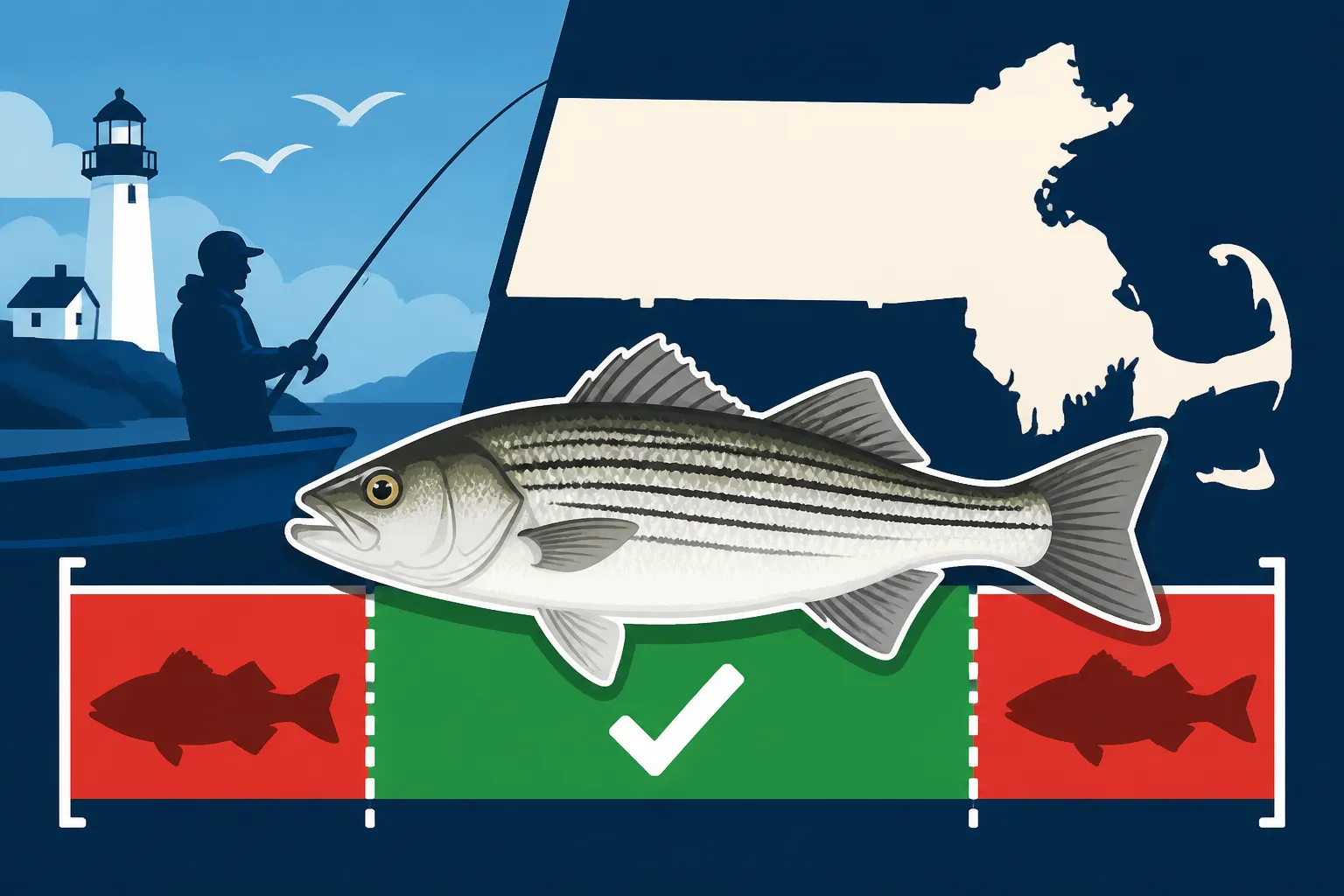
Massachusetts Striped Bass Slot Limit Explained
One of the biggest head-scratchers for us anglers hitting the Massachusetts coast, especially when targeting those beloved striped bass, is figuring out what fish we can actually keep. It's not as simple as "bigger is better" anymore, and the constantly evolving rules can feel like a moving target, leaving many of us frustrated and unsure. This comprehensive guide is here to untangle the complexities of the Massachusetts striped bass slot limit, explaining exactly what it means for your fishing trips and how to stay on the right side of the regulations.
What Exactly is a Slot Limit for Striped Bass?
The term "slot limit" might sound a bit like a casino game, but in fishing, it's a critical conservation tool. Unlike a minimum size limit where you can keep any fish over a certain length, or a maximum size limit that protects the largest breeders, a slot limit specifies a range of lengths within which you can legally keep a fish. Anything shorter than the minimum, or longer than the maximum, must be released. It's a way for fisheries managers to be really precise about which segments of the fish population they want anglers to harvest.
Defining the "Slot"
For striped bass in Massachusetts, the slot limit means that if you catch a striper, it must fall within a very specific length window to be considered a "keeper." This isn't just an arbitrary number; it's a scientifically determined range designed to protect both the very young, immature fish that haven't had a chance to reproduce yet, and the large, mature breeding females that are crucial for sustaining future populations. Imagine a bustling nursery for young fish and a retirement home for wise matriarchs – the slot limit aims to leave both of those untouched, focusing harvest on the productive middle-aged adults. It’s a delicate balance that tries to ensure there are always plenty of fish to spawn and replenish the stocks.
The Goal of Slot Limits
The primary goal of implementing a slot limit for striped bass is conservation and long-term sustainability. For a highly migratory species like striped bass, which faces immense fishing pressure along the entire Atlantic coast, simply having a minimum size limit can lead to overharvesting of larger, older fish. These larger fish, especially the females, are often the most prolific breeders, laying millions more eggs than smaller, younger fish. By protecting these "trophy" sized fish, a slot limit helps ensure that the most valuable spawners remain in the water, contributing to the genetic diversity and resilience of the population. It also provides an opportunity for smaller fish to grow into that fertile breeding stock before they become eligible for harvest. This approach allows anglers to still enjoy keeping some fish, while also being active participants in safeguarding the future of the fishery. Understanding this goal can help shift perspective from viewing it as a restriction to seeing it as a collective investment in healthy fish stocks.
Why Massachusetts Implements a Striped Bass Slot Limit
Massachusetts, like other states along the Atlantic coast, plays a crucial role in the management of migratory species such as striped bass. These fish don't respect state lines, which is why their management is often coordinated through interstate bodies like the Atlantic States Marine Fisheries Commission (ASMFC). The decision to implement a slot limit is a direct response to scientific assessments indicating declining striped bass populations and the need for more conservative management strategies. It's not about making fishing harder; it's about making sure there are fish to catch for generations to come.
Conservation Efforts
The history of striped bass fishing in Massachusetts is rich, but it's also seen periods of significant decline due to overfishing and environmental factors. Conservation efforts have been ongoing for decades, and the slot limit represents one of the most recent and impactful measures. This regulation is a critical component of the larger interstate management plan aimed at rebuilding the striped bass stock to healthier levels. It's about protecting the biomass of the spawning stock and ensuring the species' reproductive capacity isn't compromised. The Massachusetts Division of Marine Fisheries (DMF) regularly works with federal and regional partners to monitor the stock, analyze data, and implement necessary changes. They aren't just pulling numbers out of a hat; these decisions are based on extensive scientific research, population models, and catch data collected from recreational and commercial anglers alike. You can learn more about these broader rules in the Massachusetts Recreational Fishing Rules and Bag Limits guide.
Balancing Recreational and Commercial Interests
One of the ongoing challenges in fisheries management is balancing the interests of different user groups. Both recreational anglers and commercial fishermen value striped bass, but their methods and impacts differ. The slot limit is designed to spread the harvest pressure across different size classes, rather than concentrating it on a single group. For recreational anglers, it means a chance to still bring home a delicious meal, while also contributing to conservation by releasing the largest breeders and the smallest juveniles. For commercial fisheries, there are often separate regulations, including quotas and size limits, that align with the overall conservation goals. The slot limit for recreational anglers is a way to ensure that this significant sector of the fishing community also contributes to the recovery efforts. It's a recognition that everyone who enjoys this incredible fish has a responsibility to help manage its future.
Understanding the Current Massachusetts Striped Bass Slot Limit
Alright, let's get down to brass tacks: what's the actual rule you need to know when you're out on the water? The current regulations for recreational striped bass fishing in Massachusetts are quite specific, and it's absolutely crucial to have these numbers committed to memory, or at least have them readily accessible. This is the single most important piece of information for any striper angler in the Bay State.
The Specific Numbers: What You Can Keep
As of the current regulations, recreational anglers in Massachusetts are allowed to keep one (1) striped bass per person per day, and that fish must measure 28 inches to less than 31 inches in total length. This means if your striper is 27.9 inches or smaller, it must go back. If it's 31 inches or larger (e.g., 31.1 inches), it also must go back. Only those fish squarely within that 28-inch to less than 31-inch window are legal keepers.
It can be a tough pill to swallow when you catch a beautiful 35-inch striper, a real battle-axe that put up an incredible fight, and you know you have to send her back. But remember, that big fish is a vital part of the breeding stock, ensuring there are more stripers for everyone to enjoy in the future. The same goes for those feisty schoolies under 28 inches; they're the future of the fishery, just growing up. This "one fish, slot size" rule is a common regulation along the Atlantic coast, making it a little easier for anglers who travel.
Here's a quick summary table for clarity:
| Category | Regulation |
|---|---|
| Bag Limit | 1 fish per angler |
| Size Limit | 28 inches to less than 31 inches (total length) |
| Minimum Size | 28 inches (fish must be at least this long) |
| Maximum Size | Less than 31 inches (fish must be shorter than 31 inches) |
| Total Length | Measured from the tip of the snout to the tip of the tail (with tail compressed) |
Remember, these rules apply year-round unless specific seasonal closures are announced. Always check the latest Massachusetts Saltwater Fishing Seasons or the Massachusetts Fishing Regulations Pamphlet, Explained for any updates before heading out.
How to Accurately Measure Your Catch
Accurate measurement is absolutely non-negotiable when dealing with a slot limit. A mismeasurement of even half an inch can turn a legal fish into a violation, leading to significant penalties. The official method for measuring a striped bass in Massachusetts (and generally across the region) is to measure its total length. This means you need to measure from the tip of the snout (mouth closed) to the very end of the tail, with the tail compressed (squeezed) to get the maximum length.
To do this properly:
- Lay the fish flat on a measuring board or tape.
- Close the mouth of the fish gently.
- Place the tip of the snout at the zero mark of your measuring device.
- Compress the tail (gently squeeze the lobes together) to extend it as far as possible.
- Read the measurement at the furthest point of the tail.
It sounds straightforward, but when you've got a lively striper on deck, possibly in choppy conditions, it can be tricky. That's why having the right tools is essential. A rigid measuring board is often better than a flexible tape measure, especially if you're alone, as it provides a stable surface. You can find excellent, durable fish rulers and measuring boards on platforms like Amazon, which are perfect for this task. They often have clear markings and even a nose stop to help with accurate placement. Precision here is paramount to avoid any issues with enforcement. If you're unsure, it's always better to err on the side of caution and release the fish. For more detailed instructions, check out our guide on How to Measure a Striped Bass for the Slot Limit.
Exceptions and Special Regulations
While the 28-inch to less than 31-inch slot limit applies to most recreational striped bass fishing in Massachusetts, it's always worth being aware that exceptions or special regulations can exist for certain areas or specific types of fishing. For instance, specific rules might apply to permitted recreational striped bass tournaments or to the harvest methods of commercial fishermen, which are entirely separate from recreational angler rules.
However, for the vast majority of us heading out on private boats, kayaks, or fishing from shore, the "one fish, 28 to less than 31 inches" rule is the one to live by. There isn't typically a different set of rules for different bodies of water within Massachusetts when it comes to the recreational slot limit for stripers, unlike some other species or specific reservoirs (like Quabbin). Always remember that regulations can change, sometimes with short notice, especially for highly managed species like striped bass. It's a good habit to quickly check the Mass.gov website or the latest fishing regulations pamphlet right before your trip to ensure you're working with the most current information. This vigilance ensures you're never caught off guard by a regulatory shift.
Practical Tips for Adhering to the Slot Limit
Navigating the striped bass slot limit successfully goes beyond just knowing the numbers; it requires practical application on the water. From having the right gear to understanding how to quickly and safely release fish, these tips will help you be a responsible and compliant angler.
Essential Measuring Tools
To effectively comply with the slot limit, having reliable measuring tools readily accessible is crucial. As mentioned, a sturdy, flat measuring board is often the best choice. Look for models made from durable plastic or aluminum with clear, contrasting markings. Many come with a raised "nose stop" that allows you to easily butt the fish's snout against it, ensuring a consistent starting point for your measurement. These are far more accurate than trying to hold a flexible tape measure against a wiggling fish.
Beyond a measuring board, consider a simple, waterproof notepad and pencil or a small digital scale if you also like to keep track of weight (though not required for the slot limit). Some anglers even mark the legal slot directly on their boat's gunwale or a cooler lid with permanent marker, or use specific color bands on a tape measure for quick visual reference. Being prepared means less fumbling, less stress on the fish, and more confidence in your compliance. You can easily find various measuring devices designed for anglers on sites like Amazon, where you can compare different styles and features to find one that suits your fishing setup. Having a few options on hand, perhaps a longer one for the boat and a compact one for surfcasting, can make a big difference.
Best Practices for Catch and Release
Since the slot limit often requires you to release fish that are either too small or too large, mastering proper catch-and-release techniques is vital. The goal is to minimize stress and injury to the fish, giving it the best chance of survival.
Here are some key practices:
- Use appropriate tackle: Don't "light line" large stripers if you can avoid it. Using tackle that matches the size of fish you're targeting allows you to land the fish more quickly, reducing exhaustion.
- Minimize handling: Keep the fish in the water as much as possible. If you must bring it aboard, handle it gently with wet hands or a wet towel to protect its slime coat, which is vital for disease resistance. Avoid gripping by the gills or eyes.
- Use dehooking tools: A good pair of pliers or a dehooker can remove hooks quickly, especially if the fish has swallowed the hook. Circle hooks are highly recommended for bait fishing as they significantly reduce gut hooking.
- Support the fish: If you're taking a quick measurement or photo, support the fish horizontally, especially larger ones, to avoid damaging its internal organs or spine. Never hold a large striper vertically by the jaw.
- Revive if necessary: If a fish seems sluggish before release, hold it gently in the water, facing into the current, and move it back and forth to force water over its gills until it regains strength and swims away on its own.
These practices are not just for conservation; they're a mark of a respectful angler. Learning How to Catch Striped Bass in Massachusetts often includes details on these release techniques.
Knowing Your Fishing Spot's Rules
While the statewide slot limit for striped bass is generally consistent, it's always smart to be aware of any hyper-local rules that might apply to a specific area. For instance, certain estuaries or restricted areas might have specific access rules or even temporary closures that could impact your striper fishing. While rare for the striped bass slot limit itself, some areas, like the renowned Quabbin Reservoir Fishing Permits and Rules in Massachusetts or Wachusett Reservoir Fishing Access Rules in Massachusetts, have their own unique regulations for other species, emphasizing the importance of local knowledge.
Always consult local signage, bait shop owners, or the MassWildlife and DMF websites for the most current information related to your chosen fishing grounds. Sometimes, specific piers, bridges, or conservation areas might have additional guidelines on where you can fish or what tackle you can use. Becoming familiar with these nuances ensures a smooth and enjoyable fishing experience, free from unexpected run-ins with enforcement. Ignorance of the law is never an excuse, so a little proactive research goes a long way.
Consequences of Violating Striped Bass Regulations
Fishing without adhering to regulations isn't just a minor infraction; it carries real consequences that can impact your wallet, your license, and your ability to enjoy fishing in Massachusetts for years to come. The Division of Environmental Law Enforcement (DLE) takes these violations seriously, especially for species under rebuilding plans like striped bass.
Fines and Penalties
If you're caught violating the striped bass slot limit – whether it's keeping an undersized, oversized, or an extra fish beyond the daily limit – you can expect to face significant fines. The exact amount can vary depending on the severity of the offense, the number of fish involved, and whether it's a first-time or repeat offense. However, typical fines for recreational fishing violations in Massachusetts can range from hundreds to thousands of dollars. For example, keeping an oversized striped bass can lead to a substantial monetary penalty, as detailed in our article on the Penalty for keeping an oversized striped bass in Massachusetts.
Beyond the monetary fine, DLE officers have the authority to confiscate your catch, and in some cases, your fishing gear or even your vessel, depending on the circumstances. It's a costly mistake that far outweighs the perceived benefit of keeping an illegal fish. These fines are in place not just as punishment, but as a deterrent, to emphasize the importance of compliance for the sustainability of the fishery. It's a clear message that responsible angling is expected.
License Suspension and Other Ramifications
Monetary fines are often just the beginning. A serious violation of fishing regulations, particularly repeat offenses, can lead to the suspension or revocation of your Massachusetts fishing license. This means you could be legally barred from fishing in the Commonwealth for a specified period, or even permanently. Imagine having your passion for fishing taken away simply because you failed to measure accurately or ignored the bag limit. Our guide on the Penalties for Fishing Without a License in Massachusetts offers a glimpse into how seriously Massachusetts takes adherence to fishing laws, and similar strictness applies to other violations.
Furthermore, a conviction for a fishing violation can become part of your public record. While not a criminal offense in many cases, it can still have ramifications, particularly if you hold other professional licenses or need to undergo background checks. For commercial operators, the consequences can be even more severe, potentially impacting their livelihood. The DLE works to enforce these regulations consistently, and their officers are well-trained to identify violations. It's truly not worth the risk, especially when the rules are clearly laid out for everyone to follow. Respecting the law is respecting the resource and your fellow anglers.
Future Outlook for Striped Bass Regulations in Massachusetts
Fisheries management is not a static endeavor; it's a dynamic process that constantly adapts to new scientific information, changing environmental conditions, and the health of the fish stock. For striped bass, a species under significant scrutiny due to population declines, regulations are always subject to review and potential modification. Staying informed is part of being a dedicated angler.
Factors Influencing Regulatory Changes
Several factors drive potential changes to striped bass regulations in Massachusetts and along the Atlantic coast. The most significant is the regular stock assessment conducted by the ASMFC. These assessments use vast amounts of data—including catch rates, spawning stock biomass, recruitment numbers (new fish entering the population), and angler effort—to determine the overall health of the stock. If assessments show the population is declining or not rebuilding as expected, more restrictive measures, such as tighter slot limits, reduced bag limits, or even seasonal closures, may be proposed. Conversely, if the stock shows robust recovery, there could eventually be discussions about relaxing some restrictions, though this often takes many years.
Environmental factors like water temperature, habitat degradation, and prey availability also play a role. Climate change, for example, is altering migration patterns and spawning success for many species, including striped bass. Public input from anglers, commercial fishermen, and conservation groups also contributes to the decision-making process, ensuring that diverse perspectives are considered. It's a complex, multi-faceted process designed to protect the resource for the long term.
How Anglers Can Stay Informed
Given the dynamic nature of fisheries management, it's essential for all Massachusetts anglers to stay proactive in seeking out the latest regulatory information. Simply knowing the rules from last season isn't enough; they can and do change.
Here are the best ways to stay informed:
- Mass.gov/MassDMF Website: The official website for the Massachusetts Division of Marine Fisheries is your primary and most reliable source for current regulations. They publish regulatory changes, stock assessments, and public hearing notices.
- MassWildlife Digests and Pamphlets: MassWildlife and DMF produce annual fishing regulation pamphlets that are usually available at bait shops, tackle stores, and online. These are excellent summaries, but remember to cross-reference with the website for any mid-year updates.
- Email Lists and Social Media: Many state agencies and fishing organizations offer email newsletters or maintain active social media presences where they announce urgent regulatory changes or upcoming public meetings.
- Local Bait and Tackle Shops: These local businesses are often on the front lines of information dissemination and can provide valuable insights into local conditions and any recent rule adjustments.
- Attend Public Meetings: When significant changes are being considered, public hearings are often held. Participating in these meetings allows you to voice your opinion and directly engage with fisheries managers.
Being an informed angler isn't just about avoiding fines; it's about being an active steward of the resource you cherish. By keeping up-to-date, you contribute to the ongoing efforts to ensure healthy and thriving striped bass populations in Massachusetts for all to enjoy. If you want to dive deeper into the overarching licensing requirements, our Massachusetts Fishing License Guide is a great place to start.
Disclaimer
Please note that fishing regulations, including those for striped bass, are subject to change. While every effort has been made to provide accurate and up-to-date information in this guide, it is ultimately the angler's responsibility to verify the most current regulations before fishing. Always consult the official Massachusetts Division of Marine Fisheries (DMF) website or the current Massachusetts Marine Fisheries regulations pamphlet for the most precise and legally binding information.