Can You Fish in Massachusetts With a Rhode Island License?
It's a common dilemma for anglers, especially those living near state borders like the one between Massachusetts and Rhode Island. You've got your gear, you know the spots, but the question of whether your Rhode Island fishing license actually covers you when you cast a line in Massachusetts waters can be incredibly confusing. This guide will unravel the intricacies of interstate fishing license reciprocity, specifically for Massachusetts and Rhode Island, ensuring you understand exactly what you need to legally enjoy fishing across state lines.
Understanding Interstate Fishing License Reciprocity
The idea of being able to use one fishing license across multiple states sounds wonderfully convenient, doesn't it? Unfortunately, the reality is often far more complex, and generally, a single state fishing license isn't valid in another state's waters.
The General Rule: No Reciprocity
For the vast majority of fishing scenarios, especially when it comes to inland waters like lakes, rivers, and ponds, state fishing licenses are not reciprocal. This means if you hold a Rhode Island freshwater fishing license, it does not permit you to fish in any freshwater body within Massachusetts. Conversely, your Massachusetts freshwater license won't allow you to fish the ponds and rivers of Rhode Island. Each state issues its own licenses to manage its specific fisheries, fund its conservation efforts, and enforce its unique regulations. It's a system designed to keep funds and management within the state where you're fishing.
Why Reciprocity is Rare for State Licenses
The primary reason for the lack of widespread reciprocity boils down to state sovereignty and resource management. Each state operates its own wildlife and fisheries agencies, like the Massachusetts Division of Fisheries and Wildlife (MassWildlife) and the Rhode Island Department of Environmental Management (RIDEM). These agencies depend on license sales to fund crucial programs such as fish stocking, habitat restoration, scientific research, and law enforcement. If licenses were universally reciprocal, a significant portion of this funding could be siphoned away from the state where the actual fishing occurs. Furthermore, each state has specific bag limits, size restrictions, and season dates that are tailored to its local fish populations and environmental conditions. Managing these disparate rules across state lines with a single license would be an administrative nightmare.
Special Cases: Shared Waters
While general reciprocity is rare, there are some exceptions, typically involving specific shared boundary waters between states. For example, some states have agreements that allow anglers to fish certain border rivers or lakes with a license from either adjoining state. However, it's crucial to understand that Massachusetts and Rhode Island do not have a general reciprocity agreement that allows a Rhode Island fishing license to be used in Massachusetts waters (freshwater or saltwater), nor vice versa. This means if you're a Rhode Island resident planning to fish anywhere in Massachusetts, you will need to obtain the appropriate Massachusetts license or permit. The rules are pretty clear-cut on this front, avoiding any grey areas that might lead to confusion.
Massachusetts Fishing License Requirements
Navigating the licensing requirements for fishing in Massachusetts can seem a bit daunting at first, especially with the distinction between freshwater and saltwater, and the nuances of permits. However, understanding these requirements is essential for a worry-free fishing experience.
Freshwater Fishing in Massachusetts
If your angling adventures take you to the lakes, ponds, and rivers that crisscross the Bay State, you absolutely need a Massachusetts freshwater fishing license. This license is your ticket to pursuing species like largemouth bass, smallmouth bass, trout, pike, and various panfish in inland waters. When you purchase a freshwater license, you'll also typically be required to purchase a Wildlands Conservation Stamp. This stamp is a small additional fee that goes directly to supporting conservation efforts and land acquisition for public access, proving that your dollars contribute directly to the health of the state's natural resources. It's a small but significant detail that many anglers, particularly those new to the state's regulations, might overlook. For more detailed information on specific costs, you might want to read about the Massachusetts Resident Fishing License Cost.
Saltwater Fishing in Massachusetts
The rules for saltwater fishing are a little different, largely due to federal mandates. While there isn't a "saltwater license" in the same way there's a freshwater one, Massachusetts requires recreational saltwater anglers to obtain a Massachusetts Saltwater Recreational Fishing Permit. The good news for many is that this permit is free for most recreational anglers. It's not a true "license" that you purchase for a fee in the way you buy a freshwater license, but rather a registration that ensures Massachusetts complies with federal requirements set by NOAA Fisheries for tracking recreational fishing effort. Even though it's free, it is mandatory for most individuals engaging in recreational saltwater fishing, including those fishing from shore, a private boat, or a for-hire vessel. It helps the state collect vital data on fishing activity, which informs conservation and management decisions for species like striped bass, cod, and fluke. You can find detailed information on age requirements and exemptions in the Massachusetts Saltwater Permit Age Requirements guide.
Who Needs a Massachusetts License?
Generally, anyone aged 15 or older needs a license or permit to fish in Massachusetts. This applies to both residents and nonresidents. Children under 15 can typically fish without a license in most situations, which is fantastic for introducing youngsters to the sport without the bureaucratic hurdles. However, it's always wise to double-check the specific age requirements, as there can be nuances, particularly for certain reservoirs or special fishing events. If you're wondering, "Do Kids Need a Fishing License in Massachusetts?", our detailed guide has you covered. Exemptions also exist for certain disabled individuals or military personnel, but these often require specific documentation or applications. For non-residents, the process is very similar to residents, but the costs for licenses might differ, which is covered in our Massachusetts Fishing License for Nonresidents article.
Rhode Island Fishing License Overview
Just like Massachusetts, Rhode Island has its own specific set of licensing requirements for anglers looking to enjoy its diverse aquatic environments. Understanding these rules is crucial if you plan to fish in the Ocean State.
Rhode Island Freshwater License
If you're targeting freshwater species in Rhode Island's numerous ponds, lakes, and rivers, you'll need a Rhode Island freshwater fishing license. This license, issued by the Rhode Island Department of Environmental Management (RIDEM), allows you to pursue species such as trout, bass, pike, and panfish. Similar to Massachusetts, the funds generated from these license sales directly support Rhode Island's freshwater fisheries management and conservation efforts, including stocking programs and habitat protection. Without a valid RI freshwater license, you risk fines and penalties if caught fishing in the state's inland waters.
Rhode Island Saltwater License
For saltwater angling in Rhode Island, whether you're casting from a beach, a pier, or a boat in Narragansett Bay or offshore, a Rhode Island Saltwater Fishing License is required for most anglers aged 16 and older. Unlike Massachusetts's free saltwater permit for most, Rhode Island's saltwater license typically comes with a fee. This license fulfills both state and federal requirements, ensuring that Rhode Island contributes to the national recreational angler registry and has the data needed for its own fishery management. There are specific exemptions for certain age groups, disabled individuals, or those fishing on a licensed for-hire vessel, but for the average angler, it's a paid requirement.
Key Differences to Note
The most significant difference, as highlighted, is the structure of the saltwater fishing authorization. Massachusetts offers a free recreational saltwater permit for most, whereas Rhode Island typically charges a fee for its saltwater fishing license. This difference in funding mechanisms and regulatory frameworks is precisely why general reciprocity between the two states is not feasible. Each state is managing its resources and funding its programs independently, making it impossible for a license from one state to validate fishing activity and funding contributions in another. These distinct approaches underscore why anglers must obtain the proper license for the specific state waters they intend to fish in.
Can You Use a Rhode Island License in Massachusetts Waters? The Definitive Answer
Let's cut right to the chase because this is the core question everyone wants answered. The short and unambiguous answer is no. A Rhode Island fishing license, whether freshwater or saltwater, does not grant you the legal right to fish in Massachusetts waters.
Inland Waters Lakes, Ponds, Rivers
If you're thinking of driving up from Rhode Island to fish the famed trout streams of the Berkshires, the bass-filled ponds of Central Massachusetts, or any other freshwater body in the Commonwealth, your Rhode Island freshwater fishing license is unfortunately invalid. You will need to purchase a Massachusetts freshwater fishing license, which includes the required Wildlands Conservation Stamp. This applies whether you're a Rhode Island resident, a visitor from another state, or even an out-of-state college student. The lines are clearly drawn when it comes to inland fisheries, and each state manages its own.
Ocean Waters Saltwater
This is where the confusion often intensifies, mainly because both Massachusetts and Rhode Island are coastal states that share portions of the same ocean. However, the rule remains the same: a Rhode Island Saltwater Fishing License does not allow you to recreationally fish in Massachusetts state waters. While both states participate in the federal angler registry (managed by NOAA Fisheries), this federal participation doesn't create state-level reciprocity. Each state maintains jurisdiction over its "state waters" (generally extending three miles offshore) and mandates its own state permit or license for those waters.
So, if you're launching a boat from a Massachusetts port, surfcasting from a Massachusetts beach, or fishing from a pier on the Massachusetts coastline, you must possess a valid Massachusetts Saltwater Recreational Fishing Permit. It doesn't matter if you already have a Rhode Island license; you need the specific permit for the state you are actively fishing in. This ensures that your fishing activity is properly registered with the correct state agency for data collection and resource management. If you plan to fish from a pier or bridge in Massachusetts, there are specific Massachusetts Rules for Fishing From a Pier or Bridge that apply.
What Happens if You Don't Comply?
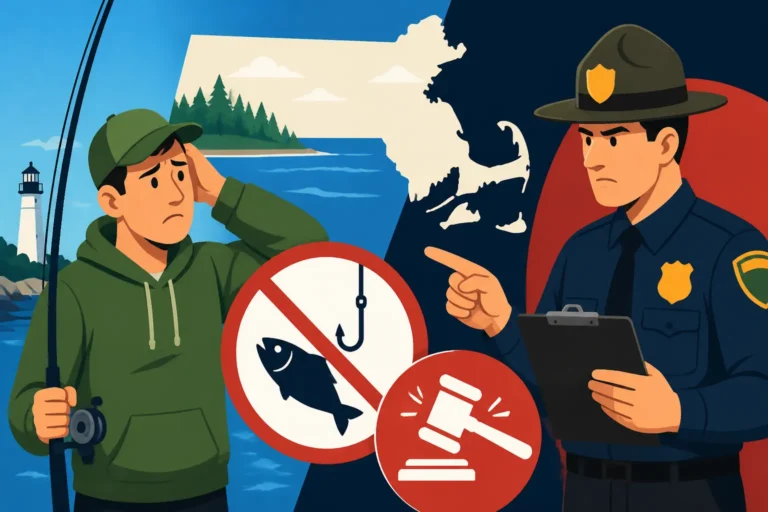
Fishing without the proper license or permit in Massachusetts is not just a minor oversight; it's a violation of state law. If a Massachusetts Environmental Police Officer or other authorized law enforcement official finds you fishing without the required Massachusetts freshwater license or saltwater permit, you can face significant penalties. These can include:
- Fines: Monetary penalties can be substantial, often ranging into the hundreds of dollars for a first offense. These fines are designed to deter illegal fishing and recoup some of the lost revenue that would have come from license sales. Our guide on Penalties for Fishing Without a License in Massachusetts offers more specific details.
- Confiscation of Gear: In some cases, your fishing gear, including rods, reels, and even your catch, may be confiscated. This can be a particularly painful consequence for anglers with expensive equipment.
- Loss of Future Privileges: Repeated offenses or severe violations could lead to the suspension or revocation of your fishing privileges in Massachusetts, and potentially other states as well, through interstate compacts.
- Court Appearances: Depending on the severity of the violation, you might be required to appear in court, which can be a time-consuming and stressful process.
It's simply not worth the risk. The small cost or effort of obtaining the correct Massachusetts license or permit pales in comparison to the potential legal and financial repercussions of non-compliance.
How to Get a Massachusetts Fishing License
Since your Rhode Island license won't cut it, the next logical step is to understand how to obtain a Massachusetts fishing license or permit. Thankfully, the process is quite streamlined and user-friendly.
Online Purchase Through MassFishHunt
The easiest and most convenient way to secure your Massachusetts fishing license or saltwater permit is through the official MassFishHunt online licensing system. This platform, managed by MassWildlife, allows you to purchase and print your licenses from the comfort of your home, 24/7.
Here's a general overview of the steps:
- Visit the MassFishHunt Website: Navigate to the official MassFishHunt portal.
- Create an Account or Log In: If you're a new user, you'll need to create a customer profile. This involves providing personal details like your name, address, date of birth, and possibly a Social Security Number (required for federal identification purposes for licenses). If you're a returning user, simply log in to your existing account. If you need a more detailed walkthrough, our How MassFishHunt Works for Buying a Massachusetts License guide is an excellent resource.
- Select Your License/Permit: Choose the appropriate license for your needs – a freshwater fishing license, a recreational saltwater fishing permit, or a combination if you plan on both.
- Complete the Purchase: Follow the prompts to add the license to your cart and complete the payment process. Don't forget the Wildlands Conservation Stamp if you're getting a freshwater license.
- Print Your License: Once the transaction is complete, you'll typically be able to print a copy of your license or permit immediately. You can also save a digital copy to your phone, which is generally accepted as proof by law enforcement, though carrying a physical copy is always a good idea. Our guide on Carrying Proof of Your Massachusetts Fishing License can clarify this for you.
In-Person Vendor Locations
While online is usually the quickest route, not everyone has easy access to a printer or prefers online transactions. Massachusetts also offers numerous in-person vendor locations where you can purchase licenses and permits. These often include:
- Sporting Goods Stores: Many larger sporting goods retailers, like your local Dick's Sporting Goods or smaller, independent bait and tackle shops, are authorized vendors. These places are great because you can also pick up any last-minute gear or local bait advice.
- Town Clerk Offices: Some municipal offices also serve as licensing agents. It's best to check with your specific town or a nearby one to see if this is an option.
- MassWildlife Offices: A few MassWildlife district offices may offer in-person sales, but their hours can be limited.
Finding a vendor near your destination is usually quite simple with a quick online search for "Massachusetts fishing license vendor locations." Just remember to bring a valid form of identification and any other required information, such as your previous license details if you're renewing.
Essential Information for Purchase
When purchasing your Massachusetts fishing license or permit, whether online or in person, make sure you have the following information handy:
- Proof of Residency: If you're claiming Massachusetts residency for a resident rate, you'll need proof, such as a valid Massachusetts driver's license or state ID.
- Date of Birth: Essential for age verification.
- Social Security Number: Required by federal law for recreational fishing licenses.
- Contact Information: Your current address, phone number, and email.
Being prepared with this information will make the acquisition process smooth and quick, getting you out on the water faster.
Massachusetts vs. Rhode Island: License Comparison
To make things even clearer, here's a quick comparison of the general fishing license requirements for both states. This table highlights why a license from one state generally won't work in the other.
| Feature | Massachusetts | Rhode Island |
|---|---|---|
| Freshwater License | Required for ages 15+ (fee applies) | Required for ages 16+ (fee applies) |
| Wildlands Conservation Stamp | Required for freshwater license holders (small fee) | Not applicable |
| Saltwater Permit/License | Recreational Saltwater Fishing Permit (free for most, required for ages 15+) | Saltwater Fishing License (fee applies, required for ages 16+) |
| Reciprocity with RI | NONE (RI license NOT valid in MA) | NONE (MA license NOT valid in RI) |
| Online Purchase | Available via MassFishHunt | Available via RI DEM website (Go Outdoors RI) |
| In-person Purchase | Available at various vendors, town clerks, MassWildlife offices | Available at various vendors, town clerks, DEM offices |
| Federal Registry | Participates (via MA permit) | Participates (via RI license) |
As you can see, despite being neighboring states, the licensing structures are distinct, particularly for saltwater fishing, and there's no general agreement for using one state's license in the other's waters. So, planning ahead and getting the correct Massachusetts license or permit is the only way to ensure a legal and enjoyable fishing trip in the Commonwealth.
Disclaimer
The information provided in this guide is intended for general informational purposes only and may not cover every specific regulation or exemption. Fishing regulations, license requirements, and fees are subject to change at any time. It is always the angler's responsibility to consult the most current regulations published by the Massachusetts Division of Fisheries and Wildlife (MassWildlife) and the Rhode Island Department of Environmental Management (RIDEM) before fishing.