Drift Fishing Techniques for Summer Flounder
Oh, the elusive summer flounder, or "fluke" as we love to call them here in Massachusetts! If you've spent any time on our waters trying to catch these delicious flatfish, you know they can be incredibly finicky. One day they're practically jumping into the boat, the next you feel like you're dragging your bait through an empty bathtub. It's enough to make even the most seasoned angler pull their hair out. But what if there was a technique that consistently put you in front of more fish, covering more ground and mimicking their natural prey? That's exactly what drift fishing offers, and this guide is going to walk you through mastering it for the diverse and challenging waters of Massachusetts.
Understanding Summer Flounder and Their Massachusetts Habits
Before we even think about dropping a line, it's crucial to get inside the head of a fluke. Understanding their behavior, where they like to hang out, and what makes them tick is the first step to consistently bringing them aboard. They're not just randomly scattered across the seafloor; there's a method to their madness, especially as our Massachusetts summers warm up.
Fluke Behavior and Habitat Preferences
Summer flounder are fascinating fish, perfectly adapted to their environment. They're flat-bodied ambush predators, masters of camouflage, and they spend a good chunk of their lives lying in wait on the bottom, often partially buried in the sand or mud. This flat profile is exactly why they earned the nickname "fluke," and it allows them to blend in seamlessly with the seafloor, making them incredibly difficult for prey to spot until it's too late.
During the warmer months here in Massachusetts, fluke gravitate towards specific types of habitats where they can find both cover and a steady supply of food. They love sandy and muddy bottoms, especially where these transition into areas with some structure like mussel beds, rocky outcrops, or even subtle changes in depth. Channels, the edges of flats, and areas with a good current flow are prime real estate for fluke. The current acts as a conveyer belt, bringing unsuspecting baitfish and invertebrates right to their doorstep. Water temperature also plays a significant role; as coastal waters warm up, fluke become more active and spread out, often moving into shallower bays and estuaries, but they'll still seek out slightly cooler, oxygen-rich water found in deeper channels or near rips.
Prime Times and Locations for Massachusetts Fluke
Timing is everything when it comes to fluke fishing, and it's less about the time of day and more about the tide. Fluke are opportunistic feeders, and they rely heavily on moving water to bring food to them. A strong, steady current is your best friend. This means fishing the outgoing and incoming tides, particularly around the peak of the movement, tends to be most productive. Slack tide, when the water isn't moving much, often translates to slower fishing, as the food delivery system shuts down and fluke become less active.
Massachusetts offers an incredible array of prime fluke fishing grounds. Buzzards Bay is a perennial favorite, known for its extensive flats, channels, and rocky edges that hold plenty of fish. To the south, Vineyard Sound and Nantucket Sound are legendary for their abundant populations, especially around the numerous shoals, rips, and rocky structures that break up the sandy bottom. Even closer to shore, many of our larger harbors and estuaries, such as those near Falmouth or throughout the South Shore, will hold good numbers of fluke during the summer months. The key, no matter where you are, is to look for areas with current and structure, whether it's a deep channel, a rocky ledge, or even just a subtle rise in the seafloor that creates a current break where a fluke can lie in ambush. If you're looking for general information on when and where to find these fish, our guide on Best Time of Year to Fish in Massachusetts can offer some broader seasonal context.
The Fundamentals of Effective Drift Fishing
Now that we understand a bit more about our target, let's dive into the core technique: drift fishing. This method is incredibly effective for fluke because it aligns perfectly with their predatory nature and preferred habitat. It's not just about letting your bait drag; it's a strategic approach to covering water and presenting your offering in the most natural way possible.
Why Drift Fishing Works So Well for Fluke
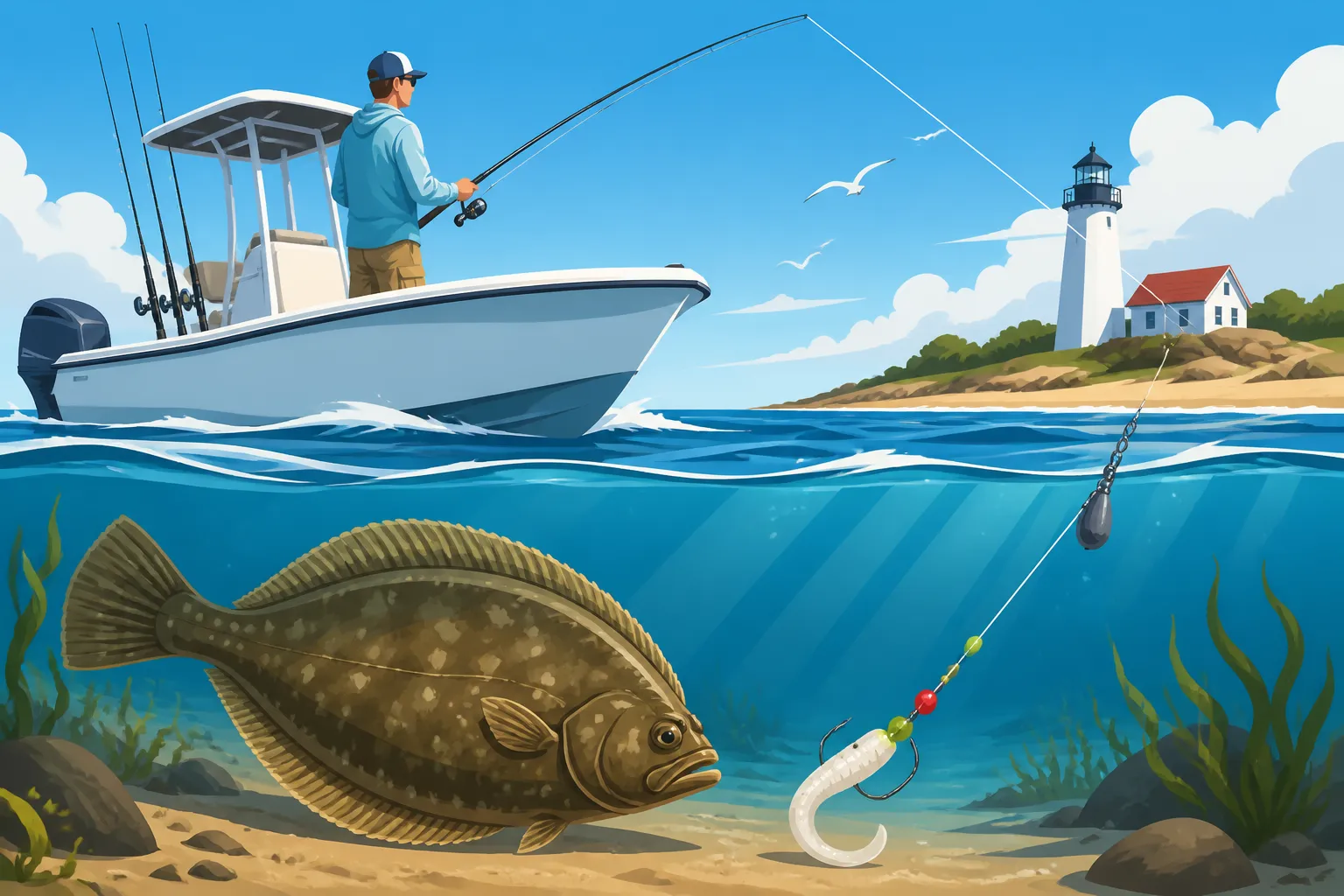
Drift fishing, at its heart, is about letting your boat, and consequently your bait, move naturally with the prevailing wind, current, or a combination of both. This mobility is a game-changer when targeting fluke. Instead of anchoring in one spot and hoping the fish come to you, drift fishing allows you to systematically cover large swaths of promising bottom. Think of it as painting a wide stroke across the canvas of the ocean floor, increasing your chances of encountering a hungry fluke.
This technique excels because it perfectly mimics the movement of natural prey. A strip of squid or a soft plastic jig bouncing and sweeping along the bottom in a natural drift looks exactly like a wounded baitfish or a struggling invertebrate. This subtle, lifelike presentation is incredibly enticing to an ambush predator like the fluke. Furthermore, by covering more ground, you're not just hitting one isolated pocket; you're exploring different depths, bottom compositions, and structures, ultimately presenting your bait to a much larger population of fish. It's a proactive approach that significantly increases your odds compared to static fishing methods, especially on those days when the fish are spread out or less aggressive.
Essential Gear for Massachusetts Fluke Drifting
Having the right tackle makes all the difference when drift fishing for fluke, allowing you to feel those subtle bites and effectively manage your presentation. You don't need highly specialized gear, but a thoughtful selection will vastly improve your experience and success rate.
For rods, aim for something in the medium-light to medium-heavy power range, typically between 7 and 8 feet long. The most important feature is a sensitive tip that allows you to detect even the slightest tap or the feeling of your weight making contact with the bottom. This sensitivity is crucial for feeling those often-subtle fluke bites. Paired with this, a reliable conventional or spinning reel with a smooth, consistent drag is essential. Fluke aren't typically drag-peeling monsters, but a good drag system prevents break-offs and ensures a clean fight.
Line choice is critical. Most experienced fluke anglers swear by braided main line, usually in the 15 to 30-pound test range. Braid has almost no stretch, which translates to incredible sensitivity, allowing you to feel every bump and nibble. It also cuts through the water better than monofilament, reducing drag and allowing you to use lighter weights. Always tie a fluorocarbon leader to your braided main line – typically 20 to 30-pound test, about 3-6 feet long. Fluorocarbon is nearly invisible underwater and is more abrasion-resistant, offering a buffer against sharp teeth or rocky bottom. You can find a wide variety of braided lines and fluorocarbon leaders on platforms like Amazon, making it convenient to stock up before your next trip. When it comes to the specific terminal tackle like weights, such as bank sinkers or egg sinkers, having a range of sizes from 1 to 6 ounces (or even heavier for strong currents) is a smart move. These can also be easily sourced from Amazon or your local tackle shop.
Mastering the Drift: Techniques and Strategies
Now that your gear is in order, let's talk about the actual how-to of drift fishing. It's an art as much as a science, requiring constant attention to your boat's movement, your line, and what's happening on the bottom. Getting these elements right is the key to unlocking consistent fluke catches.
Controlling Your Drift Speed and Direction
The heart of successful drift fishing lies in controlling your drift. Ideally, you want to move at a speed that allows your bait or lure to tumble enticingly along the bottom without getting snagged constantly or flying too high off the seafloor. This sweet spot is often between 0.5 to 2 knots, but it can vary widely based on current, wind, and depth.
Your primary tools for controlling the drift are the wind and current. While the current usually dictates the direction of your bait beneath the surface, the wind can push your boat faster or in a different direction. To combat excessive wind or to slow down your drift, a sea anchor or drift sock is invaluable. These parachute-like devices are deployed off the bow or stern and create significant drag in the water, slowing your boat down and often stabilizing its orientation. If the current is too strong, you'll need heavier weights to keep your bait on the bottom. Conversely, if you're drifting too slow, you might need to use lighter weights or even consider briefly running your engine in and out of gear to gain a little speed (though this can spook fish). Paying attention to your fish finder can help; if you're seeing marks on the bottom that you're just zooming past, you might need to slow down.
Many anglers employ a "fan casting" technique when drifting. Instead of casting straight out behind the boat, try casting at different angles – to the port, starboard, and straight back. This allows your rigs to cover a wider swath of bottom on each pass and helps you identify which side of the boat, or which retrieve angle, is most productive. Continuously watching your depth finder is also critical. It helps you anticipate changes in bottom contour, allowing you to adjust your weight or line to maintain contact with the bottom as you drift over humps, drop-offs, or through channels.
Rigging for Success: Baits and Lures for Drifting
The right presentation is paramount for enticing fluke, and drift fishing allows for a wide array of effective rigging options. You want something that looks natural as it moves through the water column, mimicking the fluke's preferred prey.
One of the most popular and consistently effective lures for fluke in Massachusetts waters is the bucktail jig. These jigs, with their hair or synthetic skirts, are incredibly versatile. White, chartreuse, and pink are often top producers, but having a variety of colors and weights is wise. The real magic happens when you "tip" the bucktail with a strip of natural bait like squid, spearing, or a piece of a sandworm, or with a soft plastic like a Berkley Gulp! Swimming Mullet or Grub. This combination of visual appeal, scent, and natural movement is often irresistible. For serious fluke anglers, having a good supply of these Gulp! baits, which are known for their strong scent dispersion, is a must. You can often find great deals on larger quantities of Gulp! soft plastics or other fluke-specific tackle on Amazon.
Beyond the bucktail, traditional teaser rigs are highly effective. These usually consist of a lead weight at the bottom, followed by one or two dropper loops tied above it, each with a small hook and a teaser fly or small soft plastic. The teaser sits above the main weight, fluttering enticingly just off the bottom. You can also combine these ideas, using a bucktail jig as your main lure on the bottom, with a teaser tied about 12-18 inches above it. This offers two different presentations simultaneously. Natural baits like whole or stripped squid, spearing (small baitfish), mummichogs, and even strips of mackerel or scup bellies are all excellent choices, either on their own or tipped onto a jig or teaser. The key is to keep them fresh and present them naturally. Our guide on How to Catch Fluke in Massachusetts goes into even more detail on specific lures and baits.
Working Your Lure and Detecting Bites
Once your rig is deployed and you're drifting, the way you work your lure and, crucially, how you detect bites, will make or break your day. Fluke are not usually aggressive hitters; their bites can be incredibly subtle, feeling more like a slight weight or a gentle tap than a jarring strike.
The absolute golden rule for drift fishing fluke is to maintain constant contact with the bottom. Your weight should be periodically bouncing or lightly dragging along the seafloor. This not only keeps your bait in the strike zone but also creates little puffs of sand or mud, which can attract the attention of nearby fluke. To achieve this, use just enough weight to stay on the bottom without causing excessive drag or snagging. As you drift, slowly lift your rod tip a foot or two, then slowly lower it back down, allowing your weight to momentarily leave the bottom and then gently settle back. This "lift and drop" or "sweep" motion imparts lifelike action to your bait or lure, making it dance enticingly. Don't lift too high; you want to keep that bait right in their face.
Detecting a fluke bite takes practice and focus. Often, it won't feel like a classic "thump." Instead, you might feel a sudden increase in weight, as if your line got hung up on something soft, or a slight "tap-tap" as the fish mouths the bait. Sometimes, your line might just go slack for a moment as the fluke swims towards you with the bait. The moment you feel anything out of the ordinary, even if it's just a subtle resistance, drop your rod tip slightly to give the fish a moment to fully take the bait, then sweep your rod upward and forward in a firm, smooth motion to set the hook. Avoid a hard, jerky snap, as fluke often have soft mouths and you can pull the hook. Remember, when in doubt, set the hook! You'd rather set it on a snag than miss a trophy fluke.
Navigating Massachusetts Waters for Fluke
Successfully drift fishing for fluke isn't just about the technique itself; it's also about knowing where and how to apply it in the vast and varied Massachusetts coastline. This involves understanding nautical charts, adhering to regulations, and ensuring you're fishing safely.
Reading Charts and Understanding Bottom Structure
Think of nautical charts as your treasure map to fluke country. Whether you're using paper charts, a marine GPS unit, or a fishing app on your smartphone or tablet, understanding how to read them is paramount. These charts reveal critical information about bottom contours, depths, channels, reefs, wrecks, and even bottom composition (sandy, muddy, rocky). Fluke are structure-oriented, so identifying these features beforehand allows you to plan your drifts strategically.
When examining a chart, look for key features:
- Contour Lines: Tightly packed lines indicate sharp drop-offs or humps, prime ambush points. Spaced-out lines suggest gradual slopes or flat areas.
- Channels: Marked as deeper areas, often with strong currents. Drifting along the edges of these channels can be incredibly productive.
- Wrecks and Reefs: While these can be snag hazards, they are also magnets for baitfish and, consequently, fluke. Plan drifts that take you along the perimeter of these structures.
- Bottom Composition: Charts often use abbreviations like "S" (sand), "M" (mud), "R" (rock), "Sh" (shell). Fluke prefer sandy or muddy bottoms, but don't ignore adjacent rocky areas.
Using your GPS and depth finder in conjunction with your charts is a powerful combination. Mark productive drifts, note where you caught fish, and trace your path to repeat successful passes. Understanding local tidal currents, which can be found in tide charts or navigational apps, is also crucial. For example, knowing how the current flows through specific areas like the Elizabeth Islands or around the many small islands in Vineyard Sound Fishing Spots will help you predict your drift direction and speed, enabling you to position your boat for optimal coverage. Our Best Saltwater Fishing Spots on Cape Cod, Massachusetts guide can offer many more detailed locations.
Safety and Regulations for Fluke Fishing in Massachusetts
Before you even launch your boat, make sure you're up to date on all Massachusetts fishing regulations and safety protocols. Ignoring these can lead to fines, dangerous situations, and harm to our marine resources.
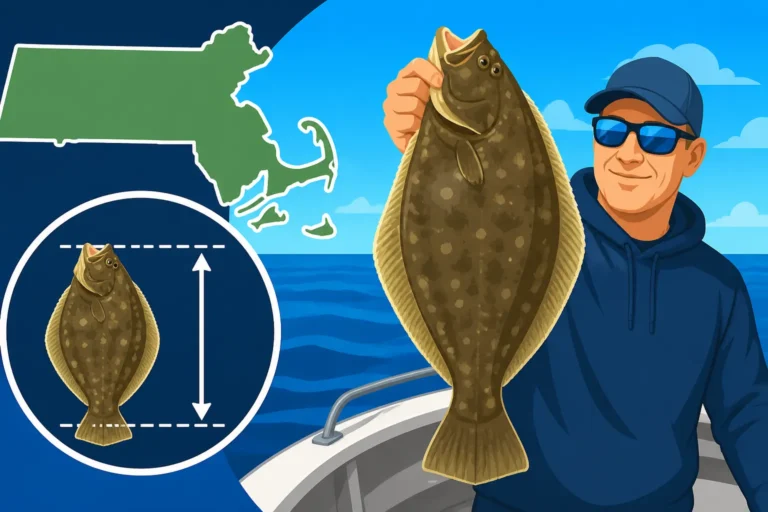
First and foremost, if you're 16 or older, you'll need a Massachusetts Saltwater Recreational Fishing Permit. It's a non-transferable permit required for recreational fishing in the marine waters of the Commonwealth. You can find all the details and how to purchase it in our comprehensive guide, Massachusetts Saltwater Recreational Fishing Permit Explained. There are also specific rules regarding the size and number of fluke you can keep. These change periodically based on stock assessments, so it's vital to check the current Massachusetts Division of Marine Fisheries (DMF) website or the current regulations pamphlet. Currently, for summer flounder, there are different minimum size limits depending on whether you are fishing from shore or from a boat, and there are specific bag limits per person. You can get a detailed breakdown in our article Massachusetts Fluke Size Limits Explained.
Beyond regulations, boating safety is paramount. Always ensure you have all required safety gear aboard, including Coast Guard-approved life jackets for everyone, a functional VHF radio or reliable cell phone, visual distress signals, and a sounding device. Check the marine weather forecast before you head out, and if conditions look dicey, reschedule your trip. Seas can kick up quickly here in Massachusetts, especially in open areas like Nantucket Sound. Finally, practice responsible catch and release for any undersized fluke or fish you don't intend to keep. Handle them gently, minimize their time out of water, and release them carefully to ensure their survival. Fishing responsibly contributes to healthy fish stocks for everyone. For broader regulatory information, check out Massachusetts Recreational Fishing Rules and Bag Limits.
Advanced Tips and Troubleshooting Your Drift
Even with the right gear and a solid understanding of the basics, fluke fishing can throw curveballs. Conditions change, fish move, and sometimes what worked yesterday just isn't cutting it today. Being able to adapt and troubleshoot your approach is what separates a good fluke angler from a great one.
Adjusting to Changing Conditions
Massachusetts weather and sea conditions are famously fickle, and successful fluke anglers are masters of adaptation. What happens when the wind and current oppose each other, causing your boat to drift in one direction while your line and bait want to go in another? This "washout" condition can make it incredibly difficult to stay on the bottom. In these scenarios, you might need to dramatically increase your weight, deploy a sea anchor to align your boat with the current more effectively, or even consider moving to a more protected area where the wind has less influence.
Water temperature and sunlight also dictate fluke behavior. On bright, sunny days, fluke often hug deeper channels or find shaded areas, while on overcast days or during early morning/late afternoon, they might venture into shallower flats. This means you need to be prepared to fish different depths throughout the day or even move to entirely new spots. Don't be afraid to change your presentation if the bites slow down. If bucktails aren't working, try a natural bait strip, or switch up your Gulp! color or size. Sometimes, a subtle change in retrieve speed or the length of your leader can make all the difference. Always be experimenting and observing what works best on any given day.
Common Mistakes and How to Avoid Them
We've all been there: a slow day on the water, and you start wondering what you're doing wrong. Here are some common pitfalls in fluke drift fishing and how to steer clear of them:
- Drifting Too Fast or Too Slow: This is perhaps the most common mistake. If you're drifting too fast, your bait will lift too far off the bottom, or the fish won't have time to react. If you're too slow, you're not covering enough ground. Pay attention to your GPS speed over ground and adjust your weights or use a drift sock to hit that ideal 0.5-2 knot range.
- Not Enough Weight, or Too Much: Using too little weight means you're constantly fighting to touch bottom, and your bait isn't in the strike zone. Too much weight, and you'll constantly snag or prevent your bait from having a natural presentation. The goal is just enough weight to maintain periodic bottom contact with a reasonable line angle (not straight up and down, but not way out behind the boat either).
- Not Keeping Contact with the Bottom: As mentioned, this is critical. If you're not bumping the bottom, you're not where the fluke are looking for food. Learn to "read" your line and rod tip to feel those subtle contacts.
- Missing Subtle Bites: Fluke bites are often light. Don't mistake a gentle tap or increased weight for a snag. Develop a quick, smooth hook set for any unusual sensation.
- Not Exploring Different Depths or Areas: Don't get stuck fishing the same depth or a single spot if it's not producing. If your initial drift is slow, try moving to deeper water, shallower water, or a different type of structure altogether. Have a few backup spots in mind on areas like Buzzards Bay or around Martha's Vineyard.
- Forgetting About Your Massachusetts Fishing License Guide: Always double-check you have your current license before heading out. The wardens are out there, and it's an easy mistake to avoid.
By being mindful of these common errors and actively adjusting your technique to the ever-changing conditions, you'll dramatically increase your success rate and turn those frustrating days into memorable ones filled with tasty summer flounder.
| Fluke Bait/Lure Type | Pros | Cons | Best Use Case |
|---|---|---|---|
| Bucktail Jig | Highly versatile; casts well; great action when tipped; effective in current; can be used aggressively or subtly. | Can snag on rocky bottoms; requires tipping for maximum effectiveness. | Most drift fishing scenarios, especially with a scented soft plastic or natural bait strip. |
| Teaser Rigs | Presents multiple baits/lures; excellent for suspended fluke or adding flash/movement; good when fluke are less aggressive. | Can tangle more easily than a single jig; may require lighter weights to maintain natural action. | Over sandy flats, when fluke are spread out, or in areas with consistent current. |
| Soft Plastics (e.g., Gulp!) | Strong scent and lifelike action; durable; eliminates need for natural bait; available in many shapes and colors. | Can be expensive; some colors/shapes are more effective than others; still best when tipped on a jig. | When natural bait is scarce; for consistent action on a jig; a great option from Amazon. |
| Natural Bait Strips (Squid, Spearing) | Natural scent and texture; highly effective, especially when fishing is slow; traditional favorite. | Less durable; can be picked off by bait stealers; requires handling raw bait. | Tipped on bucktails or teasers; when fluke are finicky; in almost any drift scenario. |
| Live Bait (Mummichogs, Peanut Bunker) | Extremely lifelike presentation; often irresistible to larger fluke; can be very effective. | Requires live bait well/bucket; more fragile than artificials; harder to source. | When targeting trophy fluke; in areas with strong current or near structure. |
Disclaimer
Please remember that fishing regulations, including size limits, bag limits, and seasons, can change. Always consult the latest rules and advisories from the Massachusetts Division of Marine Fisheries (DMF) before heading out on the water. This guide is for informational purposes only and does not constitute legal advice.