Massachusetts Fluke Size Limits Explained
Navigating the world of fishing regulations in Massachusetts can sometimes feel like trying to untangle a hundred yards of monofilament line after a bluefish blitz. It's especially true when you're trying to figure out what's what with popular species like fluke. Many anglers, myself included, have stood on a dock or a beach, holding a beautiful summer flounder, wondering, "Is this one a keeper?" This guide is here to clear up the confusion surrounding Massachusetts fluke size limits, covering everything from why these rules exist to how to ensure you're always fishing within the law.
Why Fluke Size Limits Even Exist in Massachusetts
It’s easy to feel frustrated when you catch a perfectly good fish, only to find it's just a hair under the legal limit and has to go back. But there’s a real, science-backed reason behind these regulations that goes beyond simply making life harder for anglers. The goal is always to balance our passion for fishing with the long-term health of the fish populations we love to pursue.
The Importance of Conservation for Summer Flounder
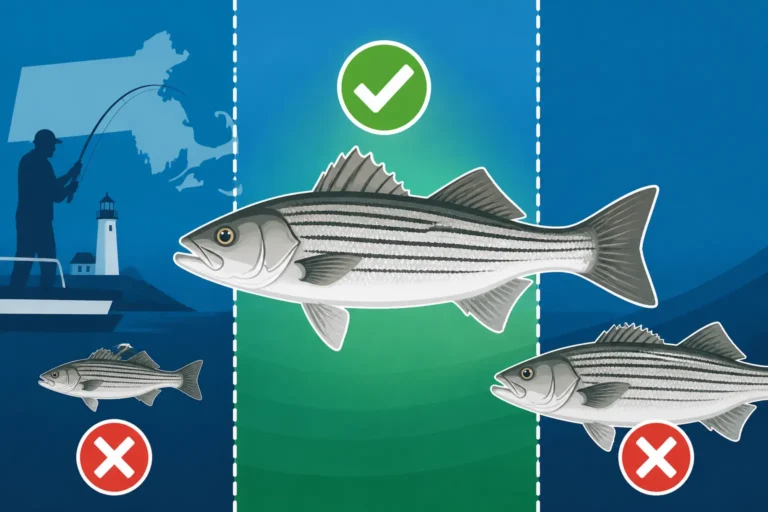
Summer flounder, or fluke as they're commonly known, are a vital part of our marine ecosystem and a highly sought-after game fish. The size limits are primarily put in place to protect juvenile fluke, giving them enough time to grow and, crucially, to reproduce at least once before they can be harvested. Think about it: if we were to keep every small fluke we caught, the population wouldn't have a chance to replenish itself effectively. Over time, this would lead to fewer and smaller fish for everyone, making future fishing trips far less rewarding.
These conservation efforts are essential for maintaining a robust and sustainable fishery. By allowing fish to mature and spawn, we ensure a healthy population cycle, which benefits not only the fluke themselves but also the entire food web they're a part of. It’s a bit like managing a garden; you don’t harvest all your vegetables before they’re ripe, or you won’t have anything for next season.
Balancing Recreational and Commercial Interests
Another significant factor in setting fluke size limits is the need to balance the interests of various user groups. Massachusetts has a vibrant fishing community that includes recreational anglers like us, who enjoy a day on the water, as well as commercial fishermen who depend on these species for their livelihood. Then there are charter boats and head boats, which cater to both. Each group has different methods, gear, and impacts on the fishery.
Fisheries managers, like those at the Massachusetts Division of Marine Fisheries (DMF), face the challenging task of crafting regulations that allow all these groups to operate while still ensuring the long-term sustainability of the resource. The size limits, along with bag limits and season dates, are carefully considered compromises designed to distribute the harvest fairly and protect the species from overexploitation. It's a complex puzzle, and the rules are always evolving based on scientific data and stock assessments to try and keep everyone happy while prioritizing the fish. You can learn more about the broader rules in Massachusetts Recreational Fishing Rules and Bag Limits.
Understanding Massachusetts Fluke Regulations: Shore vs. Boat
One of the most common points of confusion for fluke anglers in Massachusetts is the distinction between regulations for shore-based fishing and boat-based fishing. It might seem arbitrary at first, but there are specific reasons why these differences exist, aiming to manage fishing pressure more effectively across different scenarios.
The Fundamental Differences in Regulations
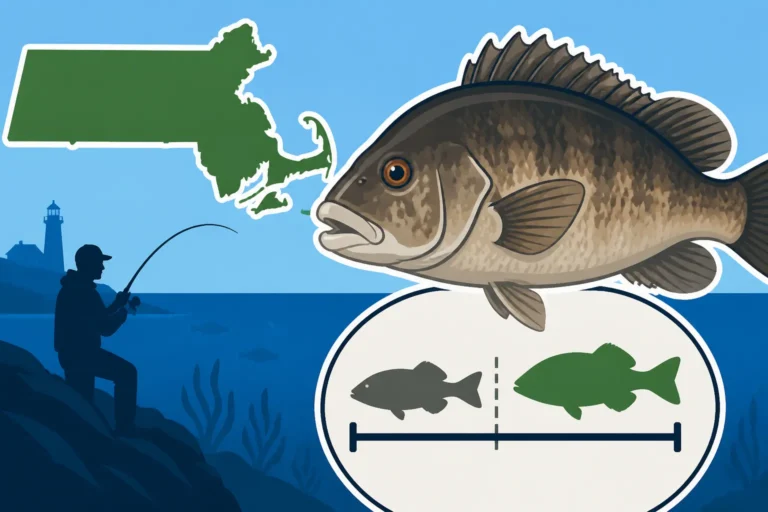
It's not uncommon for coastal states to implement different rules based on where and how you're fishing. For fluke in Massachusetts, these distinctions often stem from the idea that boat anglers typically have access to deeper waters and different fishing grounds where larger fish may be more prevalent. Shore anglers, conversely, are limited to beaches, piers, and jetties, and their catch profile might naturally skew towards smaller fish. The regulations aim to account for these differences in access and typical catch, ensuring that conservation goals are met without unduly burdening one group over another.
While the primary goal is still conservation, these nuanced rules also acknowledge the varied experiences and efforts of different types of anglers. It’s a way of recognizing that casting from a sandy beach has a different impact and opportunity set than trolling from a 25-foot center console. Knowing these distinctions is crucial for anyone planning a fluke fishing trip, as mixing up the rules could lead to an unwelcome interaction with marine law enforcement.
Current Size Limits for Shore-Based Anglers
If you're planning to target fluke from the shore in Massachusetts, whether you're surfcasting from a sandy beach on Cape Cod, jigging from a rocky jetty in Gloucester, or even wading into a shallow estuary, you'll need to pay close attention to the specific minimum size. Shore-based anglers typically have a distinct minimum size requirement for fluke. For example, if the current regulation states an 18-inch minimum for shore, any fluke you catch that measures less than that must be immediately and safely released.
Imagine you're enjoying a beautiful day casting from a Buzzards Bay beach. You hook into a nice fluke, bring it in, and measure it. If it's 17.5 inches, despite its plumpness, it's not a keeper, and back it goes. This rule also generally applies to kayaks or paddleboards launched directly from the shore, classifying them under "shore-based" access for these purposes. Always carry a reliable measuring device; a simple tape measure or a dedicated fish ruler, which you can easily find on Amazon, is an absolute essential for any shore angler.
Current Size Limits for Boat-Based Anglers
For those venturing out on a boat, whether it's your own private vessel, a paid Massachusetts Fishing Charter Costs trip, or a bustling party boat, the minimum size limit for fluke often differs from the shore-based regulation. Boat-based anglers typically face a slightly higher minimum size requirement. This difference reflects the belief that boats can access areas where fluke tend to grow larger, allowing for a more targeted harvest of mature fish.
Let's say you're out on a charter off Nantucket, enjoying a day of drift fishing for summer flounder. You pull up a gorgeous 19-inch fluke. Under a boat-based regulation of, for instance, a 19-inch minimum, that fish would be a legal keeper. However, if it measured 18.5 inches, even if it looks big, it would still need to be released. This ensures that the larger, more reproductively active fish are primarily targeted, contributing to the overall health of the stock. It's always best to check the specific year's regulations on the Massachusetts Division of Marine Fisheries website, as these numbers can adjust. Don't forget to understand the Massachusetts Saltwater Recreational Fishing Permit Explained requirements for anyone on your boat.
Here's a simplified look at how Massachusetts fluke size limits might differentiate between shore and boat, though you must always verify the current year's exact regulations with official sources:
| Fishing Method | Typical Minimum Size (Example, verify current rules) | Notes |
|---|---|---|
| Shore-Based Fishing | 18 inches | Includes beaches, piers, jetties, kayaks launched from shore. |
| Boat-Based Fishing | 19 inches | Includes private boats, charter boats, party boats. Access to deeper waters. |
Practical Tips for Measuring and Handling Fluke
Knowing the regulations is only half the battle; the other half is correctly applying them on the water. Properly measuring your catch and handling any undersized fish with care are crucial skills for any responsible angler. Not only does it keep you compliant with the law, but it also helps ensure the survival of released fish, contributing to the health of the fishery.
The Correct Way to Measure Your Catch
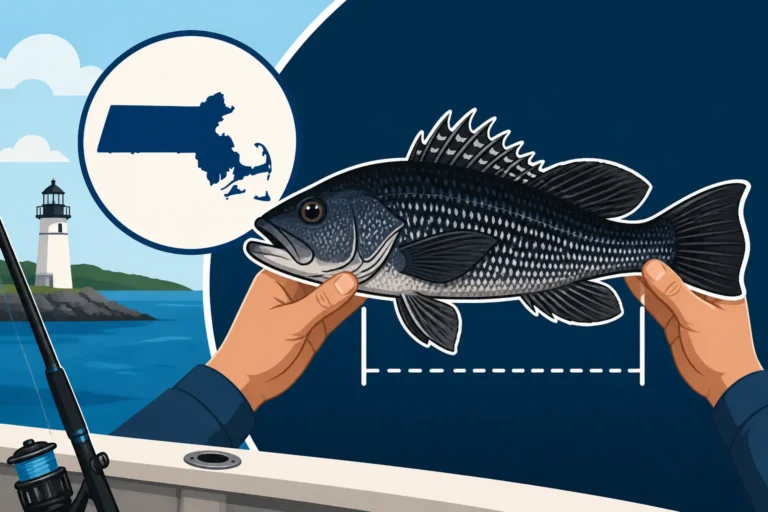
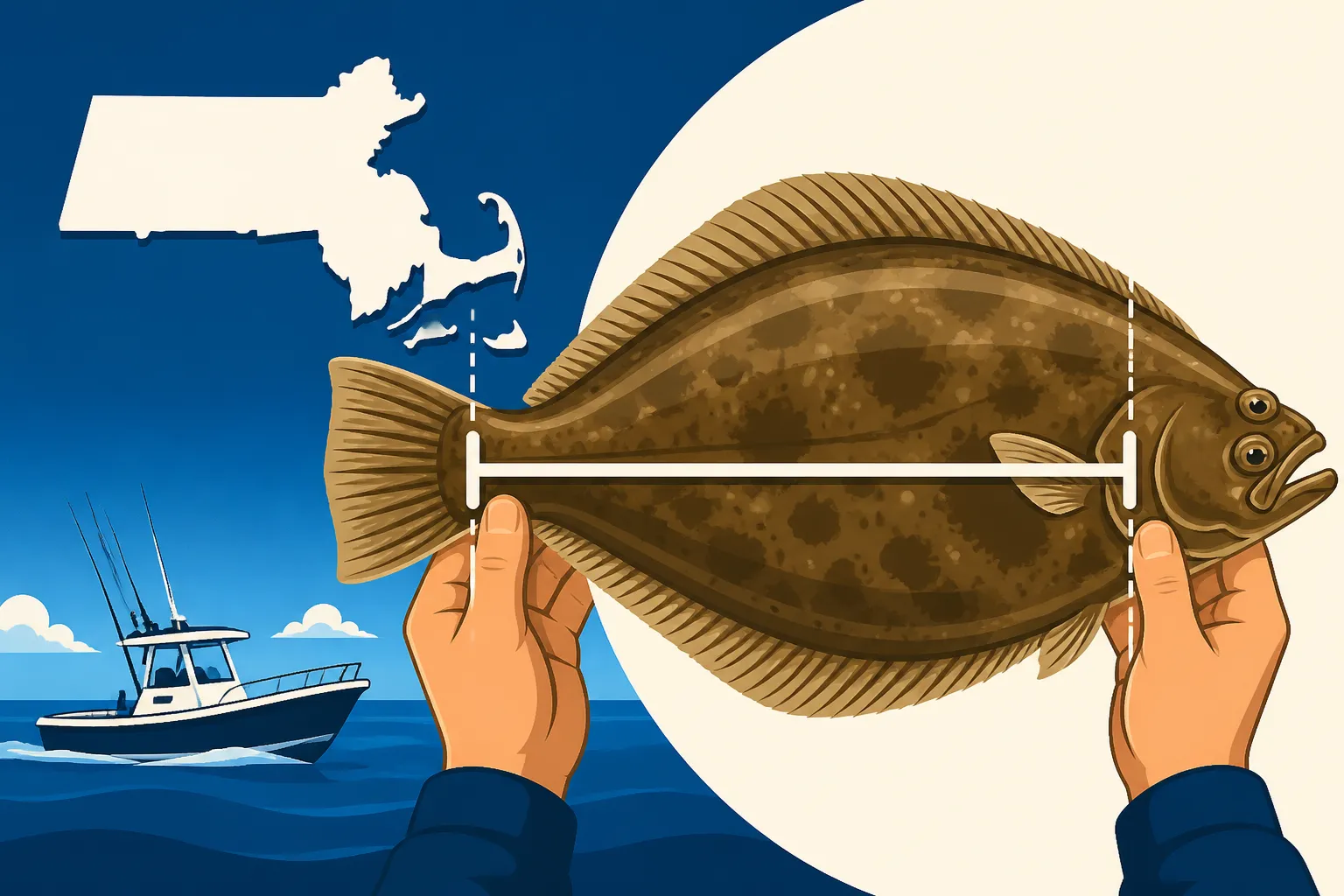
Measuring a fluke accurately is straightforward, but there are a few key steps to get it right. First, you'll need a reliable measuring device. A flat, rigid measuring board is ideal, but a good quality tape measure secured to a flat surface will also work. Always lay the fish flat on its side on a level surface. Close the fish's mouth and place it against a stop at the zero mark. Then, gently pinch the tail lobes together, extending the tail as much as possible, and read the measurement at the very end of the tail.
One common mistake anglers make is measuring along the curve of the fish's body or not fully extending and pinching the tail. This can lead to an inaccurate measurement, potentially resulting in you unknowingly keeping an undersized fish or releasing a legal one. Taking your time and being precise will prevent any headaches down the line. A sturdy fish ruler or tape measure is a small investment that pays off big in peace of mind.
Safely Releasing Undersized Fluke
Catching an undersized fluke is part of fishing, and knowing how to release it safely is paramount. The goal is to minimize stress and injury to the fish, giving it the best chance of survival. First and foremost, try to handle the fish as little as possible and, if you must touch it, wet your hands beforehand. This protects the fish's delicate slime coat, which acts as a barrier against infection.
Minimize the fish's time out of water. If the hook is visible and easily accessible, use a de-hooking tool or needle-nose pliers to remove it quickly. Avoid tearing at the fish's mouth or gills. If the fish is deeply hooked and removing the hook would cause significant damage, it's often better to simply cut the line as close to the hook as possible. Many hooks will rust out over time. Always have a quality de-hooker and a pair of long-nose pliers, which you can find readily available on Amazon, in your tackle box. These simple tools make a huge difference in fish survival.
Gear That Helps You Stay Compliant
Having the right gear on hand makes all the difference when it comes to staying compliant with fluke regulations and ensuring fish welfare. Beyond your rod, reel, and bait, a few key items are absolutely essential. An accurate measuring device, as mentioned, is non-negotiable. Whether it's a dedicated fish ruler or a reliable tape measure, make sure it's clearly marked and easy to read.
Another piece of vital equipment is a good de-hooking tool. These tools allow you to quickly and efficiently remove hooks from a fish's mouth without having to handle the fish excessively, reducing stress and injury. Rubberized landing nets are also excellent, as they are much gentler on a fish's slime coat and fins compared to traditional knotted nylon nets. Investing in these items, easily sourced from fishing tackle shops or platforms like Amazon, is an investment in responsible angling and the future of our fisheries.
Bag Limits, Seasons, and Other Important Considerations
While size limits are a critical piece of the puzzle, they don't tell the whole story. To be a truly responsible and law-abiding angler, you need to be aware of the daily bag limits and the specific season dates for fluke in Massachusetts. These additional regulations work in tandem with size limits to ensure sustainable fishing practices and protect the species.
Daily Bag Limits for Fluke in Massachusetts
Beyond how big a fluke needs to be, you also need to know how many legal-sized fluke you're allowed to keep in a single day. This is known as the daily bag limit. Just like size limits, bag limits are a crucial conservation tool designed to prevent overharvesting. Even if every fluke you catch is a legal size, if you exceed the daily bag limit, you're breaking the rules.
For example, if the current daily bag limit for fluke is 5 fish per person, and you've already kept five legal-sized fluke, any subsequent legal-sized fluke you catch that day must be immediately released. This is often where anglers can get into trouble, especially on a hot bite. It's easy to lose track, but it's your responsibility to monitor your catch. These limits apply per person, so if you're fishing with a group, each individual angler is subject to their own bag limit. This helps manage the total number of fish removed from the population. Understanding your Massachusetts Saltwater Bag Limits by Species is just as important as knowing size limits.
Fluke Season Dates in Massachusetts
Fluke aren't available for harvest year-round in Massachusetts. There's a specific open season during which recreational anglers can target and keep summer flounder. These season dates are carefully determined by fisheries managers, often based on migration patterns, spawning cycles, and stock assessments. Fishing outside of the designated open season, even if you release all fish, can sometimes be restricted, and keeping any fluke is strictly prohibited.
The exact dates for the fluke season can vary slightly from year to year, depending on the health of the stock and regional management decisions. Typically, the season runs through the warmer months when fluke are abundant in our coastal waters. It’s absolutely critical to check the current year's season dates before you head out. A quick check of the Massachusetts Division of Marine Fisheries website will give you the most up-to-date information. Missing this detail could mean your entire day's catch, no matter how legal in size, would have to be released or could even lead to penalties. The information in Massachusetts Fluke Season Opening Date for 2026 could give you a general idea, but always verify for the current year.
Penalties for Non-Compliance
Let's be real: nobody wants to run afoul of the law, especially when you're just trying to enjoy a peaceful day of fishing. However, ignorance of fishing regulations is never an excuse, and violating fluke size or bag limits in Massachusetts can lead to some significant penalties. These can range from substantial monetary fines to the confiscation of your catch and even your fishing gear. In more severe or repeat offenses, you could face the suspension or revocation of your fishing license.
Enforcement officers, whether from the Massachusetts Environmental Police or other agencies, take these violations seriously because they directly impact the conservation efforts for these valuable fish stocks. The frustration of accidentally mismeasuring a fish or miscounting your bag limit is understandable, but the responsibility ultimately falls on the angler. Always double-check regulations, measure carefully, and when in doubt, release the fish. It's a small price to pay for avoiding a hefty fine or a ruined fishing season. Reviewing Penalties for Fishing Without a License in Massachusetts highlights the importance of understanding all regulations.
Where to Find the Latest Massachusetts Fluke Regulations
With regulations changing periodically, sometimes even mid-season, it’s not enough to simply know the rules you learned last year. Staying informed is a vital part of being a responsible angler. Knowing where to go for the most accurate and current information will save you a lot of headaches and keep you on the right side of the law.
Official MassWildlife and DMF Resources
When it comes to Massachusetts fishing regulations, there are two primary, definitive sources you should always consult: the Massachusetts Division of Marine Fisheries (DMF) and MassWildlife. For saltwater species like fluke, the DMF website is your go-to resource. They publish the most current recreational fishing regulations, including specific size limits, bag limits, and season dates. This information is typically updated annually, and sometimes changes are made during the season if conditions warrant.
The official websites are meticulously maintained and provide direct access to the legal texts and summaries of regulations. You can also often find printable versions of the regulations or request a physical copy of the Massachusetts Fishing Regulations Pamphlet, Explained from a MassWildlife office or local bait and tackle shop. Always cross-reference any information you hear on the docks or through social media with these official sources to ensure accuracy.
Staying Up-to-Date on Rule Changes
Regulations, especially for highly managed species like fluke, are not set in stone. They can change due to new scientific assessments of fish stocks, interstate agreements (as many species migrate along the coast), or shifts in management strategies. This means that what was legal last year might not be legal this year, or even next month. It’s a dynamic environment, and staying current is key.
Many anglers find it helpful to subscribe to email newsletters or follow the official social media channels of the Massachusetts DMF. These platforms often provide timely updates on rule changes, season announcements, and other important news. Before every fishing trip, especially at the start of a new season, make it a habit to quickly review the latest regulations. You can also print out a small card with the current rules or save a screenshot on your phone for easy reference on the water. Taking these proactive steps ensures you’re always fishing legally and contributing to the conservation efforts we all benefit from.
Disclaimer
This article is for general informational purposes only and does not constitute professional advice. Laws, prices and regulations vary by location and change over time. Consult a qualified professional for guidance on your specific situation.