Massachusetts saltwater permit rules for pier and bridge fishing
It can be incredibly confusing trying to figure out if you need a specific permit just to drop a line from a pier or bridge in Massachusetts. You're standing there, rod in hand, ready for a relaxing day, but a nagging thought whispers: "Do I have the right paperwork?" Many anglers find themselves unsure about the exact requirements for saltwater fishing from public access points like piers and bridges. This comprehensive guide is here to clear up that confusion, explaining everything you need to know about the Massachusetts saltwater recreational fishing permit when you're casting from these popular spots.
The Essentials of the Massachusetts Saltwater Recreational Fishing Permit
First things first, let's cut through the red tape: generally speaking, if you're fishing recreationally in Massachusetts' marine waters, you need a Massachusetts Saltwater Recreational Fishing Permit. It doesn't matter if you're on a boat, wading in the surf, or casting from a pier or bridge – the permit is a broad requirement. This often catches folks off guard, especially if they're used to freshwater rules or permits from other states. The permit helps MassWildlife (the Massachusetts Division of Fisheries and Wildlife) and the state's Division of Marine Fisheries (DMF) keep tabs on fishing effort, which is absolutely vital for managing our precious marine resources and ensuring healthy fish populations for years to come.
What's particularly interesting about this permit is that for most recreational anglers, it's technically free to obtain through the state's MassFishHunt system. While it might seem counterintuitive to need a "permit" that costs nothing, it's actually linked to a federal requirement. All states along the Atlantic coast are mandated to register their saltwater recreational anglers with the National Saltwater Angler Registry. Massachusetts chose to implement its own state-run permit system that fulfills this federal requirement, rather than having anglers register directly with the federal government and potentially pay a fee there. So, when you get your free Massachusetts permit, you're essentially being registered with both the state and federal systems simultaneously. This also helps Massachusetts secure federal funding for marine fisheries management and conservation programs, which is a win-win for everyone who loves to fish our beautiful coastline. To dive deeper into what this permit entails, check out our guide on the Massachusetts Saltwater Recreational Fishing Permit Explained.
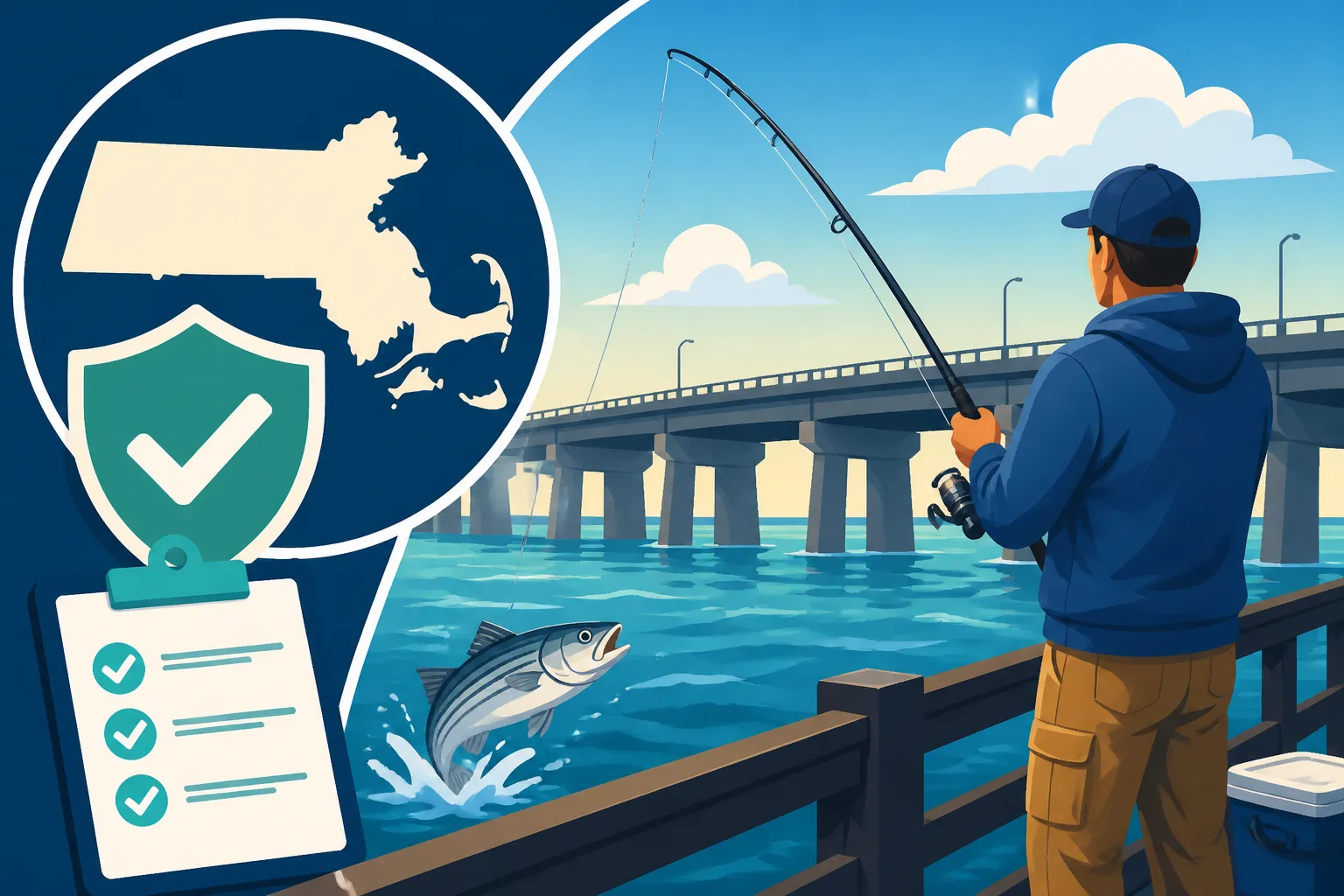
So, when you're looking out from the railing of a public pier in Plymouth, or leaning over the edge of a bridge spanning a tidal creek on Cape Cod, remember that the same general rule applies: if it's saltwater, you need that permit. The convenience of pier and bridge fishing – no boat required, often easy access – doesn't change the underlying regulatory framework. It's about protecting the resource, and every angler playing by the same set of rules helps achieve that.
Understanding Exemptions for Pier and Bridge Fishing
While the general rule is that you need a Massachusetts saltwater recreational fishing permit for pier and bridge fishing, there are some specific exemptions that can apply. Knowing these can save you a bit of hassle and ensure you're compliant without unnecessary permits. It’s always worth double-checking your situation against these exemptions, because nobody wants a citation when they're just trying to enjoy a day on the water.
One of the most common exemptions relates to age. Typically, anglers under the age of 16 do not need a Massachusetts saltwater recreational fishing permit. This is fantastic news for families, as it makes it easier for kids to get out and experience the thrill of saltwater fishing from a pier without any bureaucratic hurdles. Imagine taking your niece or nephew to a spot like the Sandwich Pier, and knowing they can cast away freely while you, as the adult, ensure your permit is in order. This exemption makes fishing more accessible for the younger generation, hopefully inspiring a lifelong love for the sport. For more details on who needs a permit based on age, take a look at our article on Massachusetts Saltwater Permit Age Requirements.
Another important exemption to be aware of are the "Free Fishing Days" that Massachusetts occasionally offers. During these designated periods, both residents and non-residents can fish in fresh and saltwater without a permit. These days are usually set by MassWildlife and the Division of Marine Fisheries and are a wonderful opportunity for newcomers to try fishing or for seasoned anglers to introduce a friend without worrying about licenses. If you're planning a trip around these dates, it's crucial to confirm the specific dates for that year, as they can vary. Keeping an eye on the official MassWildlife calendar is a smart move. Our guide on Free Saltwater Fishing Days in Massachusetts provides all the necessary information on when these opportunities arise.
Finally, if you're fortunate enough to be fishing from a federally permitted for-hire vessel – think charter boats or head boats – you generally don't need your own individual Massachusetts saltwater recreational fishing permit. The captain or owner of the vessel typically holds the necessary permits that cover all passengers onboard. This is a common arrangement and one of the perks of booking a professional fishing trip. However, it's always a good idea to confirm this detail with your charter captain before you embark. For those curious about the specifics of this, our article on Do Charter Passengers Need Their Own Massachusetts Saltwater Permit? can offer more clarity. These exemptions are designed to make fishing more accessible under certain circumstances, but it's vital to ensure you truly meet the criteria before fishing without a permit.
Practicalities of Getting and Carrying Your Permit for Pier and Bridge Access
Acquiring your Massachusetts saltwater recreational fishing permit is straightforward, and thankfully, it's an accessible process for most. The primary method for obtaining your permit is through the MassFishHunt online licensing system. This digital portal, managed by MassWildlife, is designed to be user-friendly, allowing you to create an account, select the appropriate permit (which, for most recreational saltwater anglers, will be the free permit), and complete the transaction in just a few minutes. You'll simply need some basic personal information, and once processed, your permit is issued instantly. This online convenience means you can get your permit 24/7, even if you decide last-minute to head out to a popular pier like Deer Island in Boston Harbor. If you need a step-by-step walkthrough, our guide on How to Buy a Massachusetts Fishing License Online provides detailed instructions.
Once you have your permit, the next crucial step is ensuring you can actually prove you have it while fishing. Massachusetts law requires anglers to carry proof of their permit while actively fishing. This means you can't just say "I have one at home" if a Massachusetts Environmental Police Officer asks to see it. There are several acceptable forms of proof. The easiest and most common is printing a physical copy of your permit from the MassFishHunt system and keeping it with you, perhaps laminated and tucked into your tackle box or wallet. Alternatively, you can often display your permit on your smartphone or other mobile device. Many anglers find the MassFishHunt system makes this simple, as you can log into your account on your phone and pull up your current permits. However, it’s a good practice to ensure your device has enough battery life to last your entire fishing trip! For a comprehensive look at the system, check out our guide on How MassFishHunt Works for Buying a Massachusetts License, and for details on carrying your proof, see Carrying Proof of Your Massachusetts Fishing License.
For those who prefer a more traditional route or don't have easy access to a computer or printer, you can also obtain your permit in person at various authorized vendors across the state. These typically include bait and tackle shops, sporting goods stores, and some town clerks. While these locations can be convenient, especially if you're also picking up bait or new fishing line, it's worth noting that they might have limited hours, and you might encounter a small agent fee for the service, even if the permit itself is free. Whichever method you choose, the key is to have that permit in hand, or readily accessible on your phone, when you're enjoying your time fishing from any of Massachusetts' fantastic piers or bridges.
Here's a quick summary of permit requirements:
| Angler Age | Massachusetts Resident? | Saltwater Permit Required? | Where to Obtain? | Acceptable Proof? |
|---|---|---|---|---|
| Under 16 | Yes / No | No | N/A | N/A |
| 16 and Over | Yes | Yes | MassFishHunt.com or Authorized Vendor | Printed copy, Digital on phone |
| 16 and Over | No (Non-Resident) | Yes | MassFishHunt.com or Authorized Vendor | Printed copy, Digital on phone |
| On Federally Permitted Charter | Yes / No | No (usually covered) | N/A (confirm with captain) | N/A (captain's permit covers you) |
| Free Fishing Days | Yes / No | No | N/A | N/A |
Common Piers and Bridges and Their Specific Rules
Massachusetts boasts a fantastic array of public piers and bridges that offer excellent saltwater fishing opportunities. From the bustling harbors of Boston to the serene inlets of Cape Cod, these spots provide accessible fishing without the need for a boat. However, while the statewide saltwater permit rules are consistent, many of these locations also have their own specific local ordinances, regulations, and operational guidelines that anglers need to be aware of. Ignoring these can lead to frustration, or even fines, so it’s always best to be prepared.
For instance, popular spots like the Sandwich Boardwalk and Pier on Cape Cod, or the pier at Scusset Beach State Reservation, are managed by either the town or the Department of Conservation and Recreation (DCR). While your state saltwater permit is valid, you might encounter specific rules about parking fees, hours of operation, or even restrictions on certain types of bait or gear. Some piers, particularly those in more developed areas, might have prohibitions on casting nets, using treble hooks, or even specific rules about where on the pier you can set up. Always look for posted signs when you arrive; they are your best source of immediate, local information. Knowing these nuances can make the difference between a relaxing day and a stressful one. You can read more about the general guidelines in our detailed article on Massachusetts Rules for Fishing From a Pier or Bridge.
When fishing from bridges, especially those that carry vehicle traffic, safety is paramount. The primary rule here is often about staying out of the way of traffic and not obstructing sidewalks or pathways. Bridges, particularly those spanning tidal rivers like the Merrimack River near Newburyport or the Cape Cod Canal, can offer incredible access to strong currents and migratory fish. However, these spots often come with specific parking limitations, and sometimes even restrictions on where you can stand or set up your gear for safety reasons. You might also find rules about discarded fishing line or bait, which are critical for environmental protection and public safety. For anglers looking to fish in the Boston area, places like the piers around the Boston Harbor Islands or the Deer Island Fishing Pier offer fantastic opportunities, but you'll need to be mindful of heavy foot traffic and local park rules. Our guide to the Best Places to Fish in Boston Harbor, Massachusetts can give you more insights into these specific urban spots.
Beyond the regulatory aspect, preparing for a day of pier or bridge fishing involves some practical gear considerations. Since you're often stationary, you might want a comfortable chair, a bait bucket with an aerator, and a good cooler for your catch. Items like a long-handled net or a gaff can be incredibly useful for landing fish from a height. Many anglers find convenient, compact fishing carts invaluable for hauling their gear from the car to their chosen spot. You can often find a great selection of these practical items, from portable rod holders to specialized bait containers, on sites like Amazon, making it easy to stock up before your next outing. Remember, respecting local rules and being a considerate angler ensures these fantastic public access points remain open and enjoyable for everyone. Always check for specific bag limits and size restrictions for the species you're targeting, as these are part of the broader Massachusetts Recreational Fishing Rules and Bag Limits.
Why These Rules Matter: Conservation and Enforcement
It's easy to look at fishing regulations, especially a "free" permit, and think of them as just another layer of bureaucracy. But these rules, including the requirement for a Massachusetts saltwater recreational fishing permit when fishing from piers and bridges, are incredibly important. They form the backbone of our conservation efforts and ensure that the rich marine ecosystems we all enjoy today will be there for future generations. Every single permit, even the free ones, contributes to a vital data collection system that helps scientists and fisheries managers understand fishing pressure, track angler participation, and ultimately make informed decisions about fish stock management.
Without these permits, it would be much harder for the state's Division of Marine Fisheries to accurately estimate how many people are fishing and how many fish are being caught or released. This data is critical for setting responsible bag limits, size restrictions, and season dates for popular species like striped bass, bluefish, and fluke. These regulations aren't just arbitrary numbers; they are scientifically determined measures designed to prevent overfishing and allow fish populations to thrive. When you obtain your permit, you're directly participating in this essential conservation cycle. If you're curious about how these funds and data translate into action, our article on How Massachusetts fishing license fees fund conservation programs provides a clearer picture.
Of course, regulations are only effective if they are followed and enforced. The Massachusetts Environmental Police are the primary agency responsible for enforcing fishing regulations across the state, including on piers and bridges. If you are caught fishing without the required saltwater permit, or if you violate other fishing regulations such as keeping undersized fish or exceeding bag limits, you could face penalties. These can range from warnings to significant fines, and in some cases, even confiscation of gear. The consequences for fishing without a permit in Massachusetts can be more serious than you might expect, underscoring the importance of simply taking a few minutes to get your free permit. Our guide on Penalties for Fishing Without a License in Massachusetts details what you could be up against if you're not compliant. Ultimately, these rules are in place not to hinder your enjoyment, but to protect the very resource that brings us all so much joy and connection to the natural world.
Disclaimer
The information provided in this guide is for general informational purposes only and is not intended as legal advice. Fishing regulations in Massachusetts can change, and while we strive to keep this information up-to-date, it is the individual angler's responsibility to verify all current rules and regulations with the Massachusetts Division of Fisheries and Wildlife (MassWildlife) and the Division of Marine Fisheries (DMF) before fishing. Always consult the official state regulations and any posted local ordinances at your chosen fishing location.