How big striped bass get in Massachusetts
That deep thrumming pull, the reel screaming, the rod bending almost to its breaking point – that's the dream of every angler chasing striped bass in Massachusetts. We all see those incredible photos online, hear the epic tales, and wonder: just how big do these magnificent fish really get in our local waters? It's a question filled with anticipation and a touch of awe. This guide is here to shed light on the impressive growth potential of striped bass here in the Bay State, from the feisty little "schoolies" that kick off the season to the truly gargantuan "cow" stripers that haunt our dreams, and what it takes to find them.
Understanding Striped Bass Growth Factors in Massachusetts Waters
The size a striped bass attains isn't just a matter of time; it's a complex interplay of environmental conditions, genetics, and food availability. Massachusetts waters, with their rich ecosystems, provide a fantastic environment for stripers, but their growth trajectory is still influenced by many variables.
Environmental Influences on Striper Size
One of the biggest drivers of striped bass growth is the availability of food. Our coastal waters and estuaries are bustling with baitfish like Atlantic menhaden (pogies), mackerel, herring, and squid, especially during the warmer months. When these forage species are abundant, stripers have plenty to eat, leading to faster growth rates and larger overall sizes. Conversely, years with scarce bait can result in slower growth for the entire population.
Water temperature also plays a role. Striped bass thrive in a specific temperature range. When waters are consistently within their comfort zone, they expend less energy regulating their body temperature and more on feeding and growing. Massachusetts sees a wide range of temperatures throughout the year, with stripers migrating in and out of our waters to find optimal conditions. The rich, nutrient-filled waters of areas like Nantucket Sound and Cape Cod are prime feeding grounds where bass can really pack on the pounds.
The Role of Age and Genetics in Achieving Trophy Size
It might sound obvious, but older fish are almost always larger fish. Striped bass are long-lived creatures, capable of surviving for decades. A truly massive "cow" striper has likely seen many seasons, navigating countless dangers and feasting on untold amounts of bait. The longer a fish lives, the more opportunities it has to grow.
Genetics also play a subtle but important role. Just like in any species, some individual striped bass are genetically predisposed to grow larger and faster than others. They might have a more efficient metabolism, a more aggressive feeding instinct, or simply inherit traits that allow them to reach impressive dimensions. While you can't pick your fish's genes, understanding that not every striper will grow to trophy proportions helps set realistic expectations. To learn more about identifying keepers, check out How to Identify a Keeper Striped Bass in Massachusetts.
The Journey from Schoolie to Cow: Striped Bass Size Classes
When anglers talk about striped bass, they often use terms that describe their size. From the smallest "schoolies" to the largest "cows," these classifications help us understand where a fish is in its life cycle and its potential for growth.
The Energetic Schoolie Phase
When the striped bass first return to Massachusetts waters in the spring, or when young fish hatch and grow, we encounter "schoolies." These are typically smaller fish, often ranging from about 18 to 28 inches in length. They earn their name because they tend to travel in large schools, making them a blast to catch on light tackle. While they might not be the giants we dream of, schoolies are crucial for the fishery, representing the future generations of larger fish. They're also perfect for introducing new anglers to the sport. Many anglers enjoy the sheer number of hookups these smaller fish provide, making for an action-packed day on the water.
Keeper Size and Beyond: The Slot Limit
As stripers mature, they grow past the schoolie stage and enter the "keeper" range, which in Massachusetts is governed by a strict slot limit. This regulation allows anglers to keep fish within a specific size window, typically protecting the smaller, juvenile fish and the very largest, most valuable breeding females. Fish in this range are usually 28 to 35 inches and offer a much more substantial fight. Landing a legal keeper is a thrill for many, representing a successful day and a tasty meal. Many anglers turn to live bait or larger lures to target these mid-sized fish, looking for that satisfying bend in the rod. For those looking to upgrade their arsenal for these larger specimens, many anglers find a great selection of high-quality rods and reels on platforms like Amazon, often with detailed reviews from other passionate fishermen. You can dive deeper into these regulations by reading Massachusetts Striped Bass Size and Bag Limit.
Chasing "Cow" Stripers: The True Giants
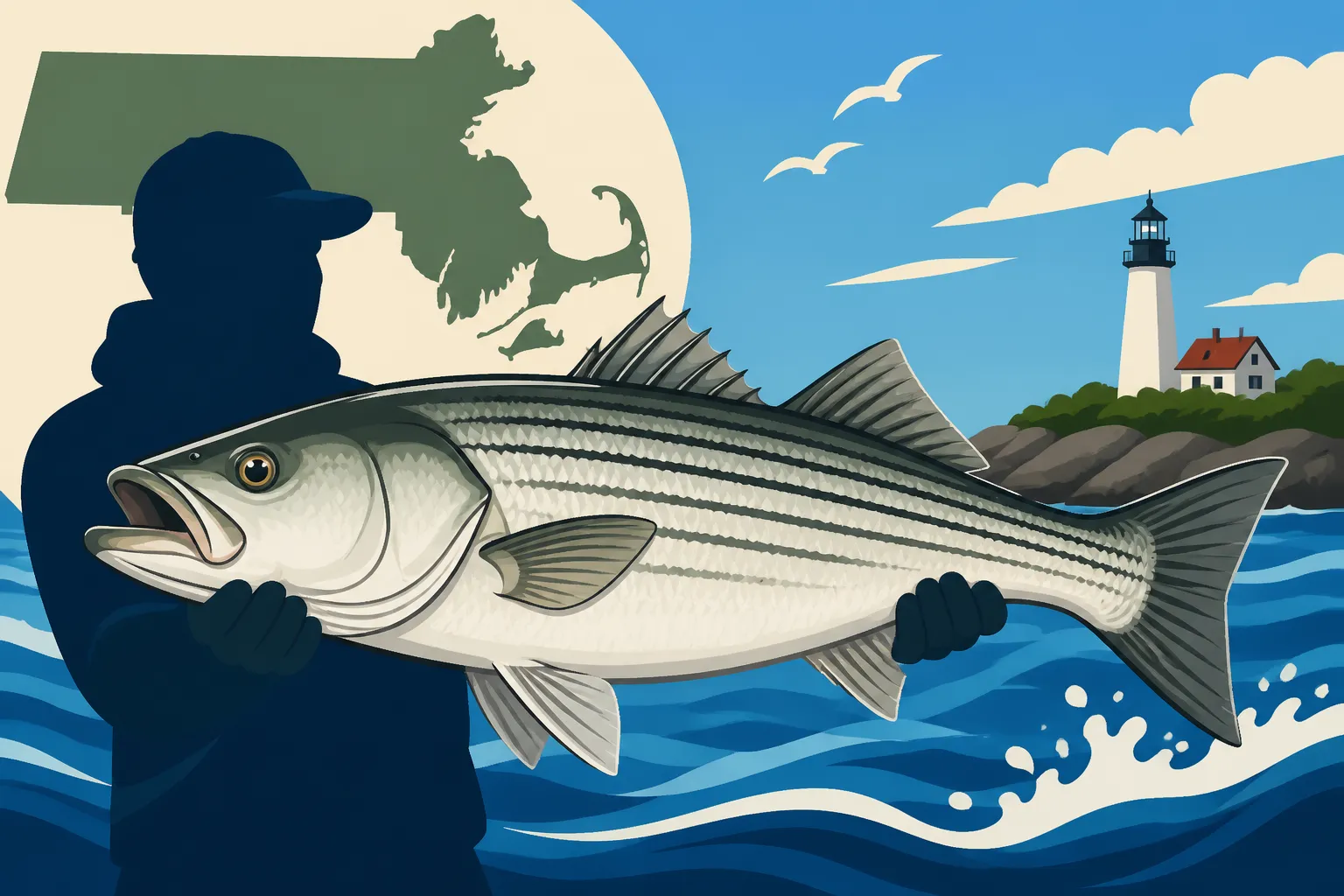
This is where the legend begins: the "cow" striper. These are the truly massive fish, often exceeding 40 inches in length and weighing 30, 40, or even 50 pounds or more. These are the apex predators of our coastal waters, powerful and elusive. Catching a cow striper is often the culmination of years of angling experience, specialized tackle, and a lot of patience. They are typically older, more solitary fish, often found lurking around deep structure, rips, or large bait schools. Targeting these giants often involves using large live baits like eels or mackerel, or formidable topwater plugs and swimmers designed to entice a strike from a formidable predator. While live bait is king for cow stripers, getting the right rigging components, like large circle hooks and heavy leaders, is crucial. You can often stock up on these essentials quickly via Amazon before your next trip. Understanding their habits and migration patterns is key to even having a chance at these titans.
Here's a general idea of how striped bass size classes often break down in terms of length and weight:
| Size Class | Typical Length Range (inches) | Typical Weight Range (pounds) | Characteristics |
|---|---|---|---|
| Schoolie | 18 – 28 | 2 – 8 | Abundant, often in schools, good for light tackle |
| Keeper | 28 – 35 (approximate slot) | 8 – 20 | Legal to harvest (within slot), good fight, strong runners |
| Cow | 35+ | 20+ | Large, powerful, often solitary, trophy potential |
Note: These ranges are approximate and can vary based on the fish's age, health, and specific feeding conditions. Always check current Massachusetts regulations for exact legal size limits.
Massachusetts State Record Striped Bass and Trophy Expectations
Every state has its fishing legends, and Massachusetts is no exception. The state record for striped bass stands as a testament to the incredible potential size of these fish in our waters.
The Elusive State Record Striper
The current Massachusetts state record striped bass is an absolute monster, a fish that weighed over 70 pounds! This incredible catch highlights the fact that truly gigantic striped bass do exist in our waters. While such a catch is exceedingly rare and often the result of immense skill, luck, and persistence, it serves as a powerful reminder of what's possible. It's the kind of fish that puts Massachusetts on the map for serious trophy hunters. Many anglers will spend their entire lives chasing a fish even half that size. For more on regulations that help protect these fish, refer to Massachusetts Recreational Fishing Rules and Bag Limits.
What Defines a Trophy Striped Bass?
For most anglers, a "trophy" striped bass doesn't have to be a state record. It's often defined by personal benchmarks. For some, it's their first fish over 20 pounds. For others, it's cracking the 40-pound mark, or landing a fish over 45 inches. These are still incredibly large fish that represent a significant achievement.
Trophy stripers are typically older, mature females, often referred to as "breeders." These large females are vital to the health of the striped bass population, capable of producing millions of eggs. This is precisely why regulations like the slot limit are so important – they aim to protect these valuable breeders, allowing them to continue spawning and contributing to the next generation of striped bass. Conservation efforts are paramount to ensuring these giants continue to swim in our waters for years to come. Plenty of excellent books on striped bass behavior and tackle recommendations can be found on Amazon, providing a wealth of knowledge to help you understand these magnificent fish.
Practical Tips for Catching Larger Striped Bass in Massachusetts
Chasing bigger striped bass requires a different approach than casually fishing for schoolies. It demands patience, specialized gear, and an understanding of where and when these elusive giants feed.
Gear and Tackle for Trophy Stripers
You can't bring a knife to a gunfight, and the same goes for big striped bass. To effectively target fish over 30 pounds, you'll need robust gear. This means heavier action rods, capable of handling powerful runs and lifting substantial weight. Your reel should have a smooth, strong drag system and ample line capacity, typically spooled with braided line in the 40-65 lb test range, followed by a heavy fluorocarbon leader. For those truly monstrous fish, some anglers go even heavier.
Lures also need to be scaled up. Large wooden or hard plastic swimmers, big poppers, and substantial soft plastics rigged on heavy jig heads are often the ticket. And, of course, live bait—like large eels or mackerel—is often irresistible to a hungry cow striper. Before heading out, make sure you have a reliable measuring tape or bump board. You can find robust, easy-to-read options on Amazon to accurately measure your catch against the slot limit. For specific lure recommendations, take a look at Best Lures for Striped Bass in Massachusetts.
Prime Locations and Best Times to Target Big Bass
Big striped bass are creatures of habit and opportunity. They often gravitate towards areas where large amounts of bait are concentrated or where strong currents create ambush points. Think about places like the Cape Cod Canal with its powerful tides, major inlets and outflows, rocky ledges, deep channels, and offshore humps. Structure is key.
The best times often coincide with low-light conditions – dawn, dusk, and especially night. Large stripers are often more comfortable feeding under the cover of darkness, venturing into shallower areas or closer to shore. Tides also play a critical role, especially in areas like the Cape Cod Canal, where specific tidal flows can trigger intense feeding frenzies. Understanding Best Time of Year to Fish in Massachusetts and specific tidal patterns for locations like Cape Cod Canal Fishing Guide for Massachusetts Anglers will significantly increase your odds.
The Importance of Patience and Persistence
Let's be real: catching a truly large striped bass is not an everyday occurrence for most anglers. It requires dedication, long hours, and often many trips without the desired result. You might spend an entire night casting large plugs into the darkness, or sit for hours with a live eel, and come up empty-handed. But it's that anticipation, that constant possibility of a monster strike, that keeps us coming back.
Learning from each trip, observing the conditions, and adapting your techniques are all part of the journey. Talk to local tackle shop owners, connect with experienced anglers, and immerse yourself in the world of striped bass fishing. Spending long hours chasing big bass means being prepared for the elements. Quality rain gear, polarized sunglasses, and sun protection are all easily accessible on Amazon. The rewards of finally landing that personal best, that true Massachusetts cow striper, are well worth the effort and the wait. It’s a testament to your skill, your knowledge, and your unyielding passion for the sport.
Disclaimer
This article is for general informational purposes only and does not constitute professional advice. Laws, prices and regulations vary by location and change over time. Consult a qualified professional for guidance on your specific situation.