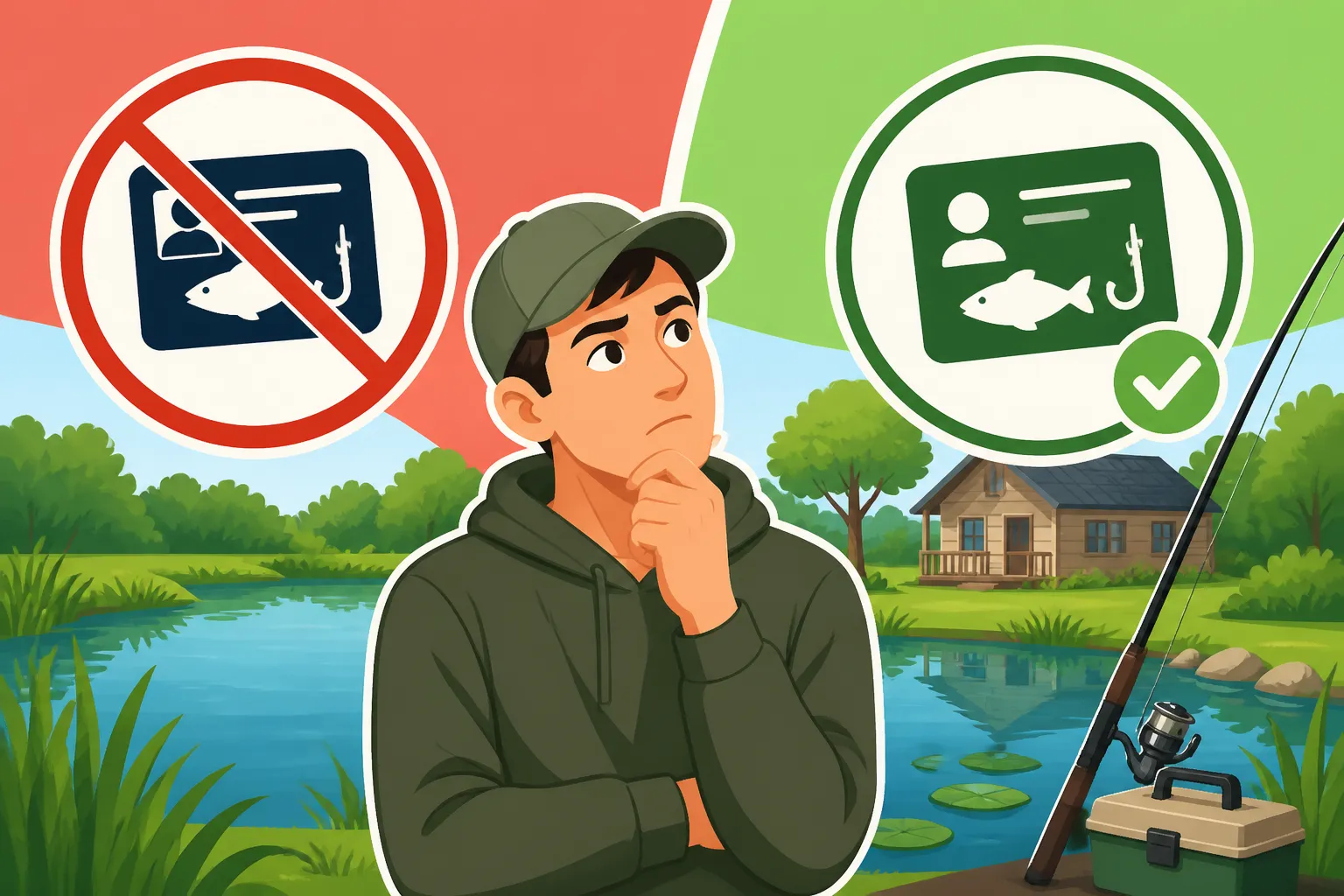
Do You Need a License to Fish a Private Pond in Massachusetts?
It's a question that trips up a lot of anglers, especially those new to fishing in the Bay State or visiting someone with a beautiful property: "Do I really need a Massachusetts fishing license if I'm just casting a line in a private pond?" The assumption for many is that if it's private land, the rules don't apply, but unfortunately, that's often a costly misunderstanding. This guide will unravel the specifics of Massachusetts law concerning fishing licenses in private ponds, helping you navigate the regulations and avoid any unwelcome surprises.
Understanding What "Private Pond" Means in Massachusetts Law
When we think of a "private pond," we often imagine a small body of water entirely contained within someone's property, perhaps a homeowner's backyard or a remote piece of land. However, the legal definition in Massachusetts isn't always as straightforward as you might think, and it's this nuance that often leads to confusion for anglers. The state takes a very broad view when it comes to regulating its natural resources, including fish, regardless of whose land the water sits on.
The Critical Role of Connectivity to Public Waters
The biggest determining factor for whether a "private pond" falls under state fishing license requirements is its connectivity to public waters. If a pond, lake, or even a small stream on private property has any natural inlet or outlet that connects it to a larger river system, a public lake, or even groundwater that feeds into public systems, then it is generally considered part of the public domain for fishing purposes. This means that fish can naturally migrate in and out, making the pond a component of the state's broader fishery.
Think about it this way: if fish can swim into the pond from a river, or out of it into a stream that eventually leads to a larger body of water, then the fish within that pond are essentially state property. MassWildlife, the agency responsible for overseeing fishing regulations, wants to ensure that these interconnected fisheries are managed sustainably. This includes ensuring that anyone extracting fish, even from seemingly private spots, contributes to conservation efforts through license fees and adheres to established bag limits and seasons. So, that beautiful pond fed by a tiny brook on your friend's sprawling estate? It very likely requires a Massachusetts freshwater fishing license.
Riparian Rights Versus Public Resource Management
While a property owner certainly has riparian rights – rights related to the use of water on or adjacent to their land – these rights typically don't extend to exclusive ownership of the fish that reside in interconnected waterways. The Commonwealth of Massachusetts generally asserts ownership of wild animals, including fish, as a public trust resource. This principle underpins the need for fishing licenses even on private property if the water body isn't truly isolated. It's about protecting the broader ecosystem and ensuring fair access and sustainable populations for everyone, not just the landowner. It can feel frustrating when you're on private land and still need a state permit, but it's all part of a larger ecological management plan.
The General Rule: A License is Almost Always Required
Let's be clear: for the vast majority of fishing situations in Massachusetts, a fishing license is a non-negotiable requirement for anyone aged 15 and older. This applies whether you're fly fishing a tranquil river, casting from a boat on a vast lake, or dropping a line into what you might perceive as a private pond. The state doesn't differentiate between catch-and-release fishing and keeping your catch; if you're actively trying to take fish from the water, you need to be properly licensed. Understanding this core principle is the first step to staying compliant and avoiding potential fines. You can find detailed information on the full process in the Massachusetts Fishing License Guide.
Massachusetts' Overarching Fishing License Requirements
The primary reason for these widespread requirements is conservation. The funds generated from fishing license sales directly support MassWildlife's critical work, which includes fish stocking programs, habitat restoration, research, and enforcement. Without these funds, the robust fisheries we enjoy across the state, from trout streams in the Berkshires to bass ponds in Middlesex County, wouldn't be possible. When you purchase a license, you're contributing to the health and future of Massachusetts fishing.
It's also important to remember that there are distinct license types: a Massachusetts freshwater fishing license and a Massachusetts saltwater recreational fishing permit. While private ponds almost exclusively fall under freshwater regulations, it's crucial to ensure you have the correct type of permit for the waters you're targeting. The costs can vary based on residency and age, and you can learn more about these specifics by checking out the Massachusetts Freshwater Fishing License Costs and Rules article. Even if you're just enjoying a day out with the family, make sure everyone who needs one is covered; understanding Massachusetts Fishing License Requirements by Age is key.
Landowner Permission is Separate from License Requirements
Here's a crucial point that often gets overlooked: obtaining landowner permission to access a private pond is entirely separate from the requirement to possess a valid fishing license. Even if the property owner is your best friend or a family member, and they've given you explicit permission to fish on their land, that permission does not exempt you from state licensing laws.
Think of it like driving: you need the car owner's permission to drive their vehicle, but you also need a valid driver's license from the state. Both conditions must be met. Similarly, to fish a private pond that's connected to public waters, you need the landowner's permission to be on the property, and you need a fishing license from MassWildlife. Failing to have either can lead to trouble. Without permission, you're trespassing; without a license, you're violating state fishing regulations, which can lead to significant Penalties for Fishing Without a License in Massachusetts.
Here's a quick overview of common scenarios:
| Pond Type | Connectivity to Public Waters | MassWildlife Stocked? | License Required (for 15+) | Additional Requirement |
|---|---|---|---|---|
| Backyard Pond | Yes (stream, overflow, groundwater) | Doesn't matter | Yes | Landowner Permission |
| "Great Pond" (>10 acres) | Yes (by definition, public access) | Doesn't matter | Yes | Public Access generally assumed |
| Private Pond | No (fully isolated, truly landlocked) | No | No (Rare Exception) | Landowner Permission, Landowner owns fish |
| Private Pond | No (fully isolated, truly landlocked) | Yes | Yes | Landowner Permission |
| Private Pond | No (fully isolated, truly landlocked) | Privately stocked by owner | No (Rare Exception) | Landowner Permission, Landowner owns fish |
The Rare Exception: When a License is Truly Not Required
While the general rule in Massachusetts is to assume a license is needed, there is indeed a very narrow exception for certain types of truly private ponds. However, this exception is far more restrictive than most people realize, and it's vital to understand the stringent conditions that must be met to avoid breaking the law unintentionally.
Truly Isolated, Landlocked Ponds
For a private pond to be exempt from Massachusetts fishing license requirements, it must meet all of the following criteria:
- Entirely Contained: The pond must be located completely within the boundaries of privately owned land. No part of the water body should extend onto adjacent properties or public lands.
- No Natural Inlets or Outlets: This is the most critical factor. The pond must be truly landlocked, meaning it has absolutely no natural connection – no stream, brook, overflow, or even significant groundwater interaction – to any other public waterway. If water from the pond can flow into a public stream, or public stream water can flow into the pond, the exemption is typically void.
- No MassWildlife Stocking: MassWildlife must have never stocked the pond with fish. If the state has at any point introduced fish into the water body, it typically falls under state regulation, regardless of its current connectivity.
- Exclusive Private Ownership of Fish: The fish within the pond must have been either naturally occurring without connection to public waters (which is exceedingly rare for a truly isolated pond) or introduced solely by the private landowner from a legal, private source (like a fish hatchery, not from public waters). In essence, the landowner must legally own the fish.
These conditions are strict because even a temporary or seasonal connection to a public water body can be enough to classify a pond as part of the state's fishery. It's often safer to simply assume a license is required, especially if you're not absolutely certain of the pond's complete isolation and history. You can easily find information on How to Buy a Massachusetts Fishing License Online if you decide to play it safe.
Private Stocking and Aquaculture Operations
If a private landowner creates a pond on their property that is truly landlocked and entirely disconnected from public waters, and they then purchase and stock that pond with fish from a commercial aquaculture operation, then generally, a fishing license is not required for fishing within that specific pond. In this scenario, the fish are considered private property, just like livestock.
However, this is distinct from general recreational fishing. Aquaculture operations themselves are regulated under different permits and laws, focused on commercial food production rather than recreational angling. The fish in these operations are raised in controlled environments, and their sale and possession are governed by specific agricultural or commercial licenses. For the average angler, unless you're visiting a commercial fish farm that specifically allows fishing in its privately stocked, disconnected ponds, this scenario is unlikely to apply directly to your recreational fishing plans.
The key takeaway here is that the truly license-exempt private pond is an anomaly, not the norm. Most water bodies in Massachusetts, even those that appear small and secluded, have some form of hydrological connection that ties them into the broader network of public waters, making state fishing regulations applicable. This is why you'll find the rules in the Massachusetts fishing regulations pamphlet, explained generally cover almost all waters.
Practical Considerations and Ensuring Compliance
Given the complexities and the strictness of the exceptions, the most pragmatic approach for any angler in Massachusetts is to always assume you need a license. It's the safest way to enjoy your time on the water without the worry of encountering legal issues. Purchasing a license is a simple process, and the peace of mind it brings is well worth the small investment.
How to Verify a Pond's Legal Status
If you find yourself in a situation where you believe a private pond might genuinely be exempt from licensing requirements, your best bet is to reach out directly to MassWildlife. They are the authoritative source for clarification on specific water bodies and can provide guidance based on their detailed knowledge of hydrological connections and stocking records. Trying to make an educated guess based on what "looks" isolated could lead to trouble. It's much better to ask than to face a fine. Their website is also an excellent resource for general regulations, including the Massachusetts Recreational Fishing Rules and Bag Limits.
Remember, even if a pond is truly private and exempt from state licensing, you absolutely must have explicit permission from the landowner to be on their property. Fishing without a license is one issue, but trespassing is another entirely, and both can result in legal consequences.
Carrying Proof and Staying Informed
Once you have your Massachusetts fishing license, it's essential to carry proof of it whenever you're fishing. This can be a physical printout or a digital copy on your smartphone. MassWildlife provides convenient ways to access your license information through their MassFishHunt system, making it easy to display if a wildlife official asks to see it. Many anglers find it helpful to carry their license in a waterproof wallet or lanyard, which you can easily find on Amazon, ensuring it's protected from the elements.
Staying informed about current regulations is also crucial. Fishing rules can change year-to-year, affecting everything from bag limits to season dates. Regularly checking the MassWildlife website or obtaining the latest fishing regulations pamphlet ensures you're always up-to-date. This includes understanding niche rules, such as Do You Need a License to Catch and Release in Massachusetts, which also applies to most waters. If you ever need to renew your license, the Massachusetts Fishing License Renewal Guide provides all the necessary steps. Even if you're fishing in a truly private, stocked pond, it's still smart to have general fishing knowledge, and you can find many helpful resources, like fishing knot guides or species identification charts, available on platforms like Amazon.
By taking these steps, you not only protect yourself from potential penalties but also contribute to the long-term health and enjoyment of Massachusetts' incredible fishing resources.
Disclaimer
The information provided in this guide is for general informational purposes only and does not constitute legal advice. Fishing regulations in Massachusetts can be complex and are subject to change. Always consult the official Massachusetts Division of Fisheries and Wildlife (MassWildlife) website or contact them directly for the most current and accurate regulations before engaging in any fishing activity. It is the angler's responsibility to understand and comply with all applicable laws and regulations.