Can One License Cover Both Fresh and Saltwater Fishing in Massachusetts?
It’s a question that trips up countless anglers, new and seasoned alike, every single year: "Can I just buy one fishing license in Massachusetts and be done with it, covering both my freshwater pond excursions and my saltwater trips out on the bay?" This common confusion is totally understandable, especially when other states might have a simpler, all-encompassing license. But here in the Commonwealth, the answer isn't quite as straightforward as we might hope, and misunderstanding it can lead to frustration or, worse, unintended legal trouble. This guide is here to untangle the complexities and clearly explain the Massachusetts fishing license system, ensuring you know exactly what you need to legally and confidently cast your line, whether you're targeting a lunker bass in a local pond or a striped bass from the surf.
Understanding the Massachusetts Fishing License System
Massachusetts, like many states, has a deeply ingrained system that separates the management and licensing of its freshwater and saltwater fisheries. This isn't just about making things complicated; it stems from a long history of conservation efforts, distinct ecosystems, and separate legislative frameworks. For anglers, it means approaching your license purchase with a clear understanding of what type of water you plan to fish.
The Separate Worlds of Freshwater and Saltwater
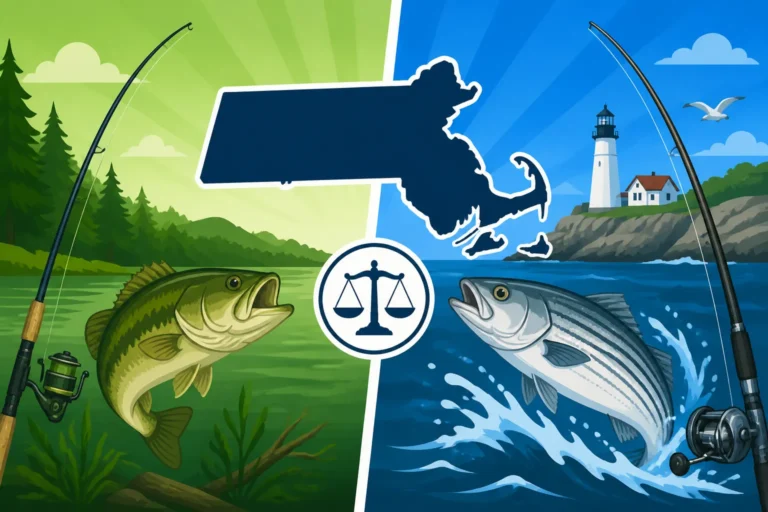
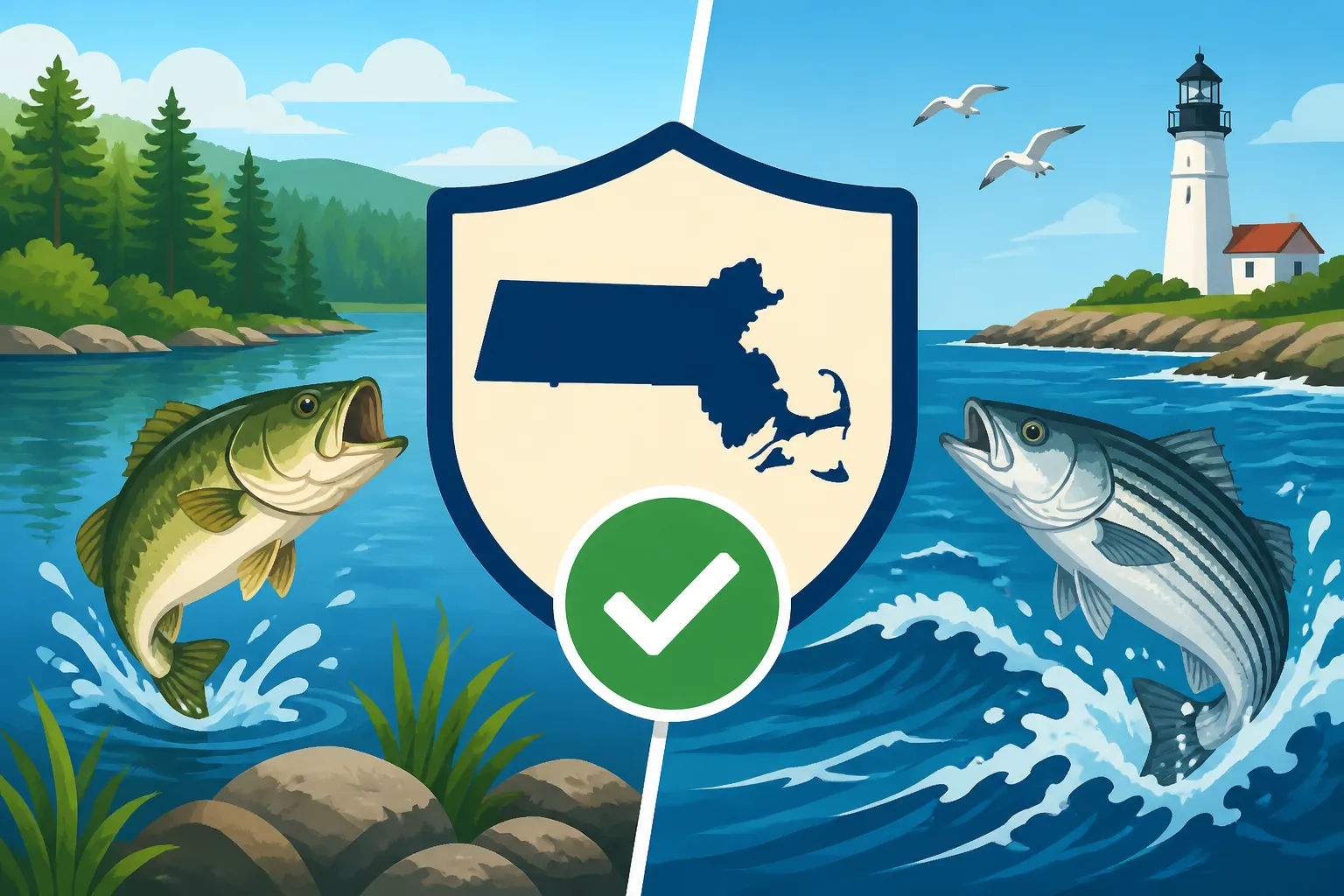
Imagine two distinct worlds, each with its own set of inhabitants, rules, and dedicated caretakers. That's essentially how Massachusetts treats its freshwater and saltwater environments when it comes to fishing regulations. You might be standing on a bridge, casting into a tidal river that's freshwater one minute and saltwater the next, making the distinction feel blurry in practice. However, from a regulatory standpoint, these are largely managed by different divisions within the state, each with specific mandates and funding sources focused on their particular aquatic habitats and species. This separation is crucial to understanding why you'll rarely find a single, magic license that covers everything.
The frustration this causes is real. You've got your gear ready, your cooler packed, and you just want to go fishing without a headache. But then you start looking into licenses and realize it's not a "one and done" deal. This dual system exists because the challenges of managing freshwater ecosystems – like protecting trout streams, stocking ponds, and monitoring invasive species in lakes – are fundamentally different from managing a dynamic coastal environment, dealing with migratory marine species, and balancing commercial and recreational ocean fisheries.
Freshwater Fishing License Explained
A Massachusetts Freshwater Fishing License is your golden ticket to explore the vast network of ponds, lakes, rivers, and streams across the state. If your angling dreams involve chasing largemouth bass, feisty trout, panfish, or pike in the non-tidal waters, this is the license you absolutely need. It's a foundational requirement for almost anyone over the age of 15 who wants to drop a line in these inland bodies of water. You can find detailed information about specific requirements in our guide on the Massachusetts Freshwater Fishing License Costs and Rules.
This license is administered by the Massachusetts Division of Fisheries and Wildlife (MassWildlife), and the fees collected go directly towards supporting their freshwater conservation programs. Think about all those trout stocking efforts you hear about in the spring, the habitat restoration projects, or the research into fish populations in your favorite local lake – your freshwater license helps fund all of that vital work. It's a commitment to maintaining healthy freshwater fisheries for everyone to enjoy. Even if you're just planning a catch-and-release outing, or if you're fishing a private pond that connects to public waters, this license is typically required. It’s not just about what you keep, but about participating in the activity of fishing in these regulated waters.
Saltwater Recreational Fishing Permit Explained
Now, if your passion lies with the ebb and flow of the tides, the salty air, and the thrill of battling a hard-fighting marine species, then the Massachusetts Saltwater Recreational Fishing Permit is what you'll need. This permit allows you to fish in the coastal waters of Massachusetts, including the open ocean, bays, estuaries, and tidal rivers where marine species are found. This covers everything from surfcasting on Cape Cod beaches to deep-sea fishing trips out of Gloucester. Our comprehensive guide on the Massachusetts Saltwater Recreational Fishing Permit Explained offers a deeper dive into this permit.
Unlike the freshwater license, this is technically a "permit" and is overseen by the Massachusetts Division of Marine Fisheries (DMF). The funds generated from these permits are dedicated to marine fisheries management, research, and conservation along our extensive coastline. This includes monitoring populations of striped bass, bluefish, cod, fluke, and many other popular saltwater species, as well as enforcing bag limits and size restrictions to ensure sustainable fishing for generations to come. Even if you're fishing from a pier, a bridge, or a kayak in tidal waters, this permit is mandatory for most individuals aged 16 and older. It’s specifically designed to address the unique ecological and management needs of our diverse marine environment.
Why Two Licenses? The Logic Behind the System
For many anglers, especially those new to Massachusetts or visiting from other states, the requirement for separate freshwater and saltwater authorizations can seem like an unnecessary complication. Why can't we just have one unified license? The reasons are rooted in administrative structures, ecological diversity, and the historical development of conservation efforts in the Commonwealth. It's not about making life harder for you; it's about targeted management for very different environments.
Different Funding and Management Bodies
One of the primary drivers behind the two-license system is the distinct administrative and financial structures that govern freshwater and saltwater resources. In Massachusetts, freshwater fisheries fall under the purview of MassWildlife, a division primarily funded by freshwater license sales, hunting licenses, and federal excise taxes on fishing and hunting equipment. They focus on inland conservation, habitat improvement, and stocking programs.
On the other hand, saltwater fisheries are managed by the Massachusetts Division of Marine Fisheries (DMF). Their funding comes largely from the saltwater recreational fishing permit sales, commercial fishing license fees, and federal grants specifically allocated for marine resources. Their focus is on the health of marine species, coastal habitat protection, and the complex interplay between recreational and commercial fishing industries. Each division has its own budget, its own staff, and its own set of priorities, making a combined license a logistical challenge without a major legislative overhaul. It's not just Massachusetts; many coastal states operate under similar dual-agency models, reflecting the specialized expertise required for each environment. This ensures that the money collected from freshwater anglers directly supports freshwater efforts, and marine anglers' contributions are funneled into marine conservation.
Distinct Ecosystems and Conservation Efforts
Beyond administrative divisions, the ecological realities of Massachusetts provide a compelling reason for separate management. The freshwater ponds, rivers, and lakes are home to species like largemouth and smallmouth bass, trout, pike, and panfish, all adapted to specific inland conditions. Conservation efforts here might involve managing dam removals for riverine fish passage, controlling invasive aquatic plants, or monitoring water quality in landlocked bodies of water. The strategies, equipment, and scientific expertise needed for these tasks are quite specialized.
Contrast this with the dynamic and vast saltwater environment, which hosts an entirely different suite of species – migratory striped bass, bluefish, groundfish like cod and haddock, tuna, and various types of flounder. These species often travel great distances, cross state and international borders, and are subject to different environmental pressures, including ocean currents, coastal development, and commercial fishing impacts. Managing these populations requires different scientific methods, international agreements, and a keen understanding of oceanic ecosystems. One size simply doesn't fit all when it comes to the intricate needs of such diverse aquatic habitats and their inhabitants. Your contribution, whether through a freshwater license or a saltwater permit, directly supports the specific conservation needs of the fish you're targeting.
Historical Context and Evolution of Regulations
The current two-tiered system isn't new; it's evolved over many decades, reflecting a historical progression of environmental awareness and legislative action. In the early days, fishing regulations were often localized and focused on specific species or bodies of water. As understanding of ecosystems grew and fishing pressure increased, more comprehensive state-level management became necessary.
Initially, freshwater resources were the primary focus of state game and fish commissions, leading to the establishment of inland fishing licenses. Saltwater fishing, often seen as an inexhaustible resource, remained largely unregulated for recreational purposes for a much longer time. It wasn't until the early 2000s that a federal mandate through the Magnuson-Stevens Fishery Conservation and Management Act pushed coastal states, including Massachusetts, to establish state-based saltwater recreational fishing permits or participate in a federal registry. This was to better track recreational fishing effort and harvest, which became increasingly important for managing declining marine fish stocks. Thus, the saltwater permit was introduced in Massachusetts, layering onto the existing freshwater license system rather than replacing or merging with it. This historical context helps explain why we have two distinct instruments today – each born from different needs and at different points in time.
Navigating the Waters: When You Need Both, One, or None
The biggest point of confusion for anglers in Massachusetts often comes down to figuring out exactly which authorization they need for a particular fishing trip. It’s not always obvious, especially when you're fishing in areas where freshwater meets saltwater. Let's break down the scenarios to clarify when you might need both, just one, or surprisingly, even none at all.
Scenarios Requiring Both Licenses
This is where many anglers find themselves scratching their heads. You're keen on exploring all the amazing fishing opportunities Massachusetts has to offer, but you don't want to get caught without the right paperwork. Generally, if your fishing plans span across both inland and tidal waters, you'll need both a valid Massachusetts Freshwater Fishing License and a Massachusetts Saltwater Recreational Fishing Permit.
Consider a typical weekend. On Saturday morning, you might want to hit a quiet local pond, like Great Pond in Braintree, to try for some largemouth bass with your favorite rod and reel, perhaps even a new one you picked up from Amazon. For this, you absolutely need your freshwater license. Then, on Sunday, you decide to head to the coast – maybe to surfcast for striped bass off the beaches of Duxbury, or maybe you're joining a friend with a boat for some fluke fishing in Nantucket Sound. For these saltwater excursions, you’ll need your saltwater permit. Since these activities take place in fundamentally different types of water bodies managed by different entities, both authorizations are required. Another common example would be fishing a river system that has distinct freshwater sections upstream and tidal, brackish (saltwater) sections closer to the ocean. If you plan to fish both areas within the same day or week, you'd need both. This ensures you're contributing to the conservation efforts specific to each environment you're enjoying.
When a Single License Suffices
Thankfully, there are plenty of situations where you only need one type of authorization. If you're a dedicated freshwater angler who never ventures past the tideline, then a Massachusetts Freshwater Fishing License is all you'll ever need. You can spend your days targeting trout in the Deerfield River, chasing pike in the Connecticut River, or enjoying panfish in countless ponds and lakes. Similarly, if your fishing exclusively involves the ocean and tidal estuaries – whether you're fishing from a boat out of Plymouth for bluefish or from shore at Plum Island for striped bass – then the Massachusetts Saltwater Recreational Fishing Permit is your sole requirement.
The key here is understanding the "tidal" nature of the water. If the water's level and flow are influenced by the ocean's tides, it's generally considered saltwater for licensing purposes, even if the water itself might sometimes taste less salty in an estuary or river mouth due to freshwater input. Conversely, if the water is entirely isolated from tidal influence, it's freshwater. Many anglers find it easier to simply commit to one type of fishing if they want to avoid the dual licensing. For instance, a college student living near the coast might only ever fish for striped bass, so they'd just need the saltwater permit. Our article on Massachusetts Freshwater vs Saltwater License Differences can help clarify these distinctions further.
Exemptions and Special Cases
Massachusetts does offer some important exemptions to its fishing license and permit requirements, which can save some anglers both time and money. It's crucial to know if you fall into one of these categories.
- Age Exemptions: Generally, residents and non-residents under the age of 15 do not need a freshwater fishing license. For saltwater, individuals under 16 are exempt from needing a Massachusetts Saltwater Recreational Fishing Permit. This is fantastic news for families and helps encourage younger generations to get into fishing. Our guide on Do Kids Need a Fishing License in Massachusetts? provides more details.
- Free Fishing Days: Massachusetts typically designates a few "free fishing days" each year, often in June (for freshwater) and sometimes during other seasons for saltwater. On these specific dates, residents and non-residents alike can fish without a license or permit. It’s a wonderful opportunity to try fishing or introduce someone new to the sport. However, all other regulations, like bag limits and size restrictions, still apply. Check out Free Fishing Days in Massachusetts for the latest information.
- Disabled Veterans and Military Members: Massachusetts offers specific provisions for certain disabled veterans and active-duty military personnel. Eligible disabled veterans can receive a free fishing license. Active military members who are Massachusetts residents may also have specific benefits. These are important programs designed to honor service members. More information can be found in our articles on Massachusetts Fishing License for Disabled Veterans and Massachusetts Fishing License for Military Members.
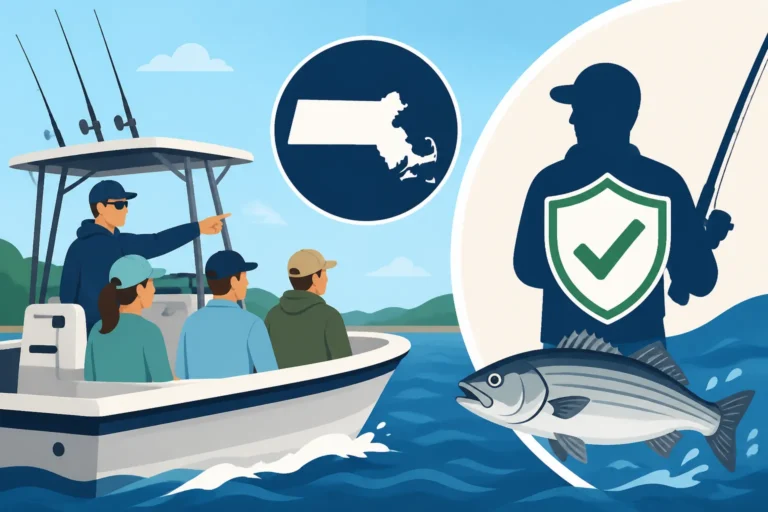
- Charter Boat and Party Boat Passengers: This is a big one. If you're fishing on a for-hire vessel (like a charter boat or a party boat) that holds a valid federal Highly Migratory Species (HMS) permit or a state commercial permit that covers recreational take, you typically do not need your own individual Massachusetts Saltwater Recreational Fishing Permit. The vessel's permit covers everyone on board for the species they are licensed to catch. Always confirm this with your captain when booking. However, if you're on a private boat with friends, everyone aged 16 and over will need their own permit.
It's always best practice to double-check the latest regulations with MassWildlife and DMF directly, as rules can change. When in doubt, it's safer to err on the side of caution and obtain the necessary license or permit.
Practical Tips for Massachusetts Anglers
Navigating the licensing requirements is just one part of the angling adventure in Massachusetts. Once you understand which authorizations you need, the next steps involve actually acquiring them, ensuring you have proof on hand, and staying updated on any changes. Being prepared makes for a much more enjoyable and stress-free fishing experience.
How to Acquire Each License
Getting your Massachusetts fishing licenses and permits is thankfully quite straightforward these days, largely thanks to modern technology. The primary way to purchase both your freshwater fishing license and your saltwater recreational fishing permit is through the MassFishHunt online licensing system.
- Online via MassFishHunt: This is by far the most convenient method. You can access the MassFishHunt portal from any computer or mobile device. If you don't already have an account, you'll need to set one up, which involves providing some basic personal information. Once logged in, you can easily select and purchase your desired licenses and permits. The system is pretty intuitive, guiding you through the process step-by-step. You'll instantly receive a printable copy of your license/permit, or you can opt for an e-license on your smartphone. Our guide on How to Buy a Massachusetts Fishing License Online details this process.
- In-Person at Authorized Vendors: If you prefer a face-to-face transaction or need some help, you can purchase licenses and permits at various authorized vendors across the state. These often include bait and tackle shops, sporting goods stores, and some town clerk's offices. Using the MassFishHunt system, you can even find a list of Massachusetts Fishing License Vendor Locations near you.
- Mail-in Application (Limited): While less common now, some specific permits or renewals might still offer a mail-in option, though it's much slower. The online system is generally preferred for speed and convenience.
Remember, when you purchase a freshwater fishing license, you will also be required to purchase the Wildlands Conservation Stamp. This stamp, required for most fishing and hunting licenses in Massachusetts, is a separate fee that goes towards land acquisition and conservation efforts. It's not optional for most anglers, and our article on The Massachusetts Wildlands Conservation Stamp Explained clarifies who needs to pay it.
Carrying and Displaying Your Licenses
Once you've got your licenses, it's absolutely crucial to carry proof of them while you're fishing. Environmental Police officers routinely check for compliance, and being caught without a valid license or permit can result in fines and a spoiled day on the water.
- Physical Copy: The most traditional way is to print out your license and carry it with you. Many anglers laminate it or keep it in a waterproof holder for protection.
- Digital Copy: The MassFishHunt system allows you to display your license on your smartphone or other mobile device. This is incredibly convenient for many, but always make sure your device is charged, and you can access the document easily. While most officers accept a clear digital display, it's wise to have a backup in case of phone issues or poor reception. Our article on Carrying Proof of Your Massachusetts Fishing License provides more guidance here.
- Combination Licenses: If you're someone who enjoys both fishing and hunting, Massachusetts offers a combination hunting and fishing license. This can simplify your paperwork, as it combines the authorizations into one document. You can learn more about this option in Massachusetts Combination Hunting and Fishing License.
Always keep your license or permit accessible, not buried at the bottom of a tackle box. An officer will expect to see it promptly upon request.
Staying Informed About Regulation Changes
Fishing regulations in Massachusetts are not static; they can change from year to year, or even within a season, especially for highly managed species like striped bass or tautog. These changes are often driven by scientific data, conservation needs, and federal mandates. It's your responsibility as an angler to stay informed.
- MassWildlife and DMF Websites: The official websites for the Massachusetts Division of Fisheries and Wildlife and the Division of Marine Fisheries are the authoritative sources for the most up-to-date regulations. They regularly post news, updates, and the full text of regulations.
- Regulations Pamphlets: When you purchase your license, you'll often be provided with, or directed to, a link for the current fishing regulations pamphlet. Reading this cover-to-cover is a great way to familiarize yourself with all the rules for both freshwater and saltwater species. Our piece on the Massachusetts Fishing Regulations Pamphlet, Explained goes into more detail.
- Local Bait and Tackle Shops: These establishments are goldmines of local knowledge. Staff at shops like Three Lantern Marine & Fishing in Gloucester or Canal Bait & Tackle on Cape Cod often have a keen understanding of the latest rules and can offer practical advice. They also sell essential gear, from specific lures that are trending to heavier lines for bigger fish, which you can often find competitive prices for on platforms like Amazon.
- Fishing Forums and Social Media Groups: While not official sources, many local online fishing communities are excellent places to hear about changes and discuss them with fellow anglers. Just be sure to always verify information from these sources with the official state agencies.
Staying current with regulations isn't just about avoiding penalties; it's about being a responsible steward of our natural resources. By understanding and adhering to the rules, you contribute directly to the health and sustainability of Massachusetts' incredible fishing opportunities for everyone.
Freshwater vs. Saltwater Licensing Summary
To help clarify the distinctions, here's a quick reference table outlining the key differences between the Massachusetts Freshwater Fishing License and the Massachusetts Saltwater Recreational Fishing Permit.
| Feature | Massachusetts Freshwater Fishing License | Massachusetts Saltwater Recreational Fishing Permit |
|---|---|---|
| Waters Covered | Inland lakes, ponds, rivers, streams (non-tidal) | Coastal waters, ocean, bays, estuaries, tidal rivers |
| Administering Agency | Massachusetts Division of Fisheries and Wildlife (MassWildlife) | Massachusetts Division of Marine Fisheries (DMF) |
| Primary Funding Use | Freshwater habitat restoration, trout stocking, inland fish research | Marine fish stock assessment, coastal habitat protection, marine research |
| Age Requirement | Generally required for ages 15+ | Generally required for ages 16+ |
| Mandatory Add-ons | Requires Wildlands Conservation Stamp (for most) | No additional mandatory stamp |
| Online Purchase | MassFishHunt system | MassFishHunt system |
| Physical vs. Digital | Both accepted as proof | Both accepted as proof |
| Typical Species Targeted | Bass, trout, perch, pickerel, pike, crappie, salmon (e.g., at Quabbin) | Striped bass, bluefish, cod, fluke, tautog, tuna, sea bass, scup |
| Reciprocity with Other States | Limited/Rare (check specific agreements) | Limited/Rare (check specific agreements or federal registry participation) |
Keep this table handy as a quick reference when planning your next fishing adventure!
Disclaimer
Please be aware that fishing regulations in Massachusetts are subject to change. While this guide provides comprehensive and up-to-date information at the time of publication, it is always the angler's responsibility to consult the most current official regulations from the Massachusetts Division of Fisheries and Wildlife (MassWildlife) and the Massachusetts Division of Marine Fisheries (DMF) before heading out to fish. This article is for informational purposes only and should not be considered legal advice.