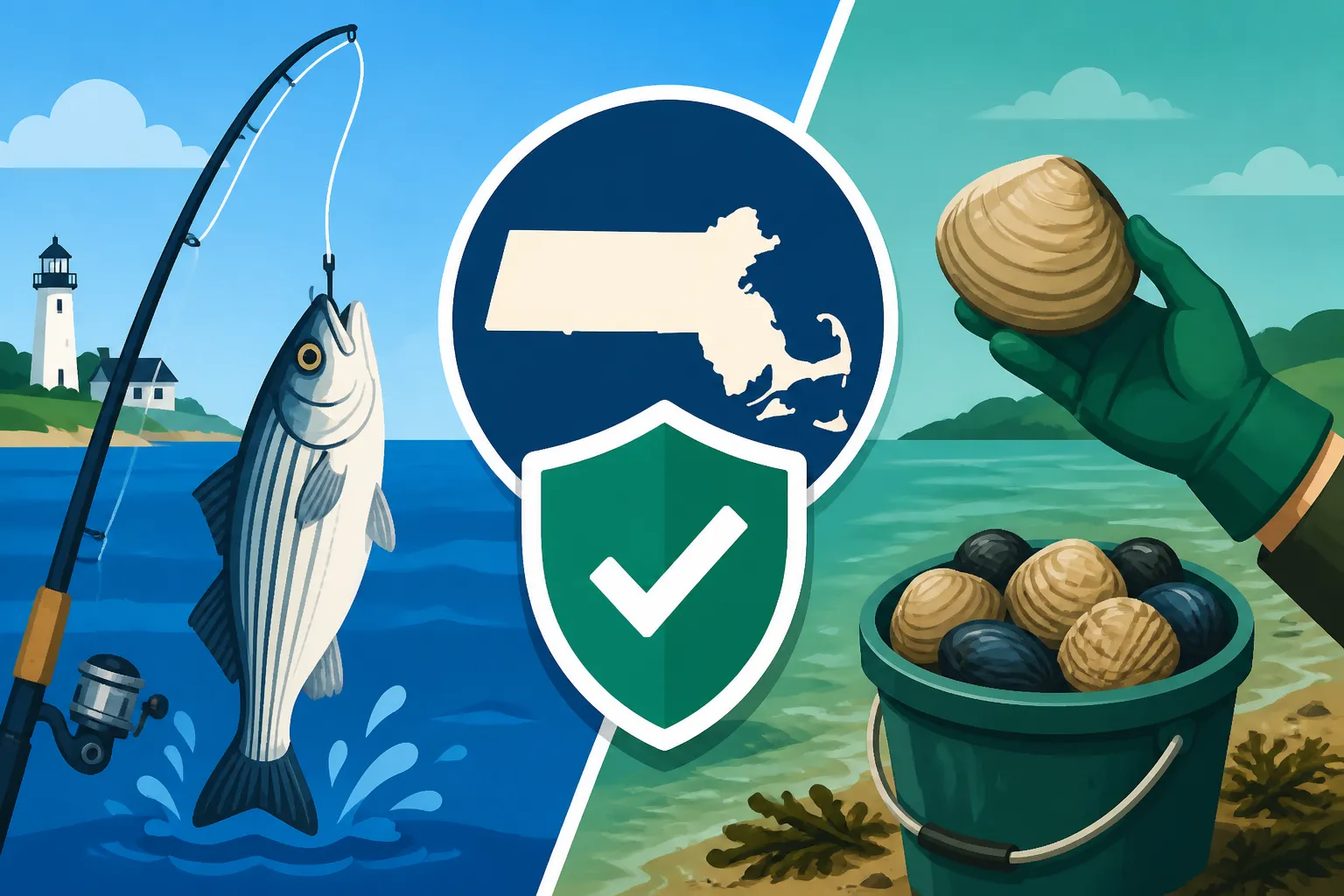
Whether a Massachusetts fishing license covers shellfishing
It's a really common question, and honestly, it's easy to get confused: does that shiny new Massachusetts fishing license in your wallet cover digging for clams or harvesting oysters? You're out there enjoying the coastal waters, maybe reeling in a striped bass, and you glance over at someone raking the flats, wondering if your existing permit gives you the green light to join in. The truth is, while both activities involve harvesting from the waters of our beautiful Commonwealth, the rules and regulations are distinctly different. This guide is here to clear up that confusion once and for all, explaining why your fishing license doesn't extend to shellfishing and what you actually need to do to enjoy digging for those delicious bivalves.
The Straight Answer: Fishing Licenses Do NOT Cover Shellfishing
Let's cut right to the chase because nobody likes to find out they've been breaking the rules the hard way. A standard Massachusetts fishing license, whether it's for freshwater or saltwater finfish, absolutely does not cover shellfishing activities like digging for clams, harvesting oysters, or gathering mussels. These are considered entirely separate endeavors under Massachusetts law, governed by different sets of rules, permits, and often, different authorities.
Why They're Separate Worlds
The reason for this clear separation really boils down to public health, resource management, and the very nature of the organisms being harvested. When you're fishing for finfish, like a largemouth bass in a freshwater pond or a bluefish in the ocean, the primary concerns are usually about maintaining healthy fish populations, ensuring fair chase, and managing catch limits. The state’s Division of Fisheries and Wildlife (MassWildlife) primarily oversees freshwater fishing, while the Division of Marine Fisheries (DMF) handles saltwater finfish at the state level.
Shellfishing, however, introduces a whole new layer of complexity, particularly concerning public health. Shellfish are filter feeders, meaning they draw water through their systems to extract food. This process makes them incredibly susceptible to accumulating toxins from harmful algal blooms (like red tide) or pollutants in the water. Consuming contaminated shellfish can lead to serious illness. Because of this, shellfishing areas require constant monitoring for water quality, and many areas are frequently closed to harvesting, sometimes without much warning, to protect public safety. This critical public health component is why the rules are so stringent and localized.
Understanding the "Recreational" Distinction
While both fin-fishing and shellfishing can be done recreationally, the methods and impact are viewed differently. Recreational fin-fishing typically involves a rod and reel, or similar line-and-hook methods, from a boat or shore. The state provides a comprehensive Massachusetts Fishing License Guide that covers these activities.
Shellfishing, on the other hand, involves active harvesting by hand, with rakes, shovels, or tongs, directly from the seafloor or intertidal zones. This direct interaction with the seabed and the stationary nature of shellfish require a different approach to regulation. It's about managing specific beds, ensuring their sustainability, and, most importantly, protecting consumers from potentially tainted seafood. So, while you might be enjoying some recreational time by the water, the legal framework differentiates between casting a line for fish and digging for clams.
What a Massachusetts Fishing License Actually Covers
So, if your fishing license doesn't cover shellfishing, what exactly does it allow you to do? Let's break down the two main types of Massachusetts fishing licenses: freshwater and saltwater.
Freshwater Fishing Privileges
A Massachusetts freshwater fishing license is your golden ticket to explore the Commonwealth's vast network of ponds, lakes, rivers, and streams. This license permits you to catch a wide variety of freshwater finfish using traditional methods like rod and reel. We're talking about species like largemouth and smallmouth bass, various trout species (rainbow, brown, brook), chain pickerel, perch, and many others. It's truly a wonderful way to enjoy the inland beauty of Massachusetts.
For instance, if you're planning a trip to one of the beautiful lakes in the Berkshires or even a small pond near Boston, your freshwater license is what you need. It allows you to use up to two lines, each with a single hook or lure, for recreational purposes. You'll want to be familiar with the Massachusetts Freshwater Daily Catch Limits for the species you're targeting. And if you're a fan of trout, keeping an eye on the Massachusetts Trout Stocking Schedule can lead to some truly fantastic days on the water. Just remember, this permit is strictly for finfish, and does not permit you to harvest anything else from these waters, even if you spot something tasty.
Saltwater Recreational Fishing Privileges
If your passion lies with the ocean, then a Massachusetts saltwater recreational fishing permit is what you need. This permit allows you to fish for common saltwater finfish species from shore or by boat in the marine waters of Massachusetts. Think reeling in powerful striped bass, feisty bluefish, delicious fluke, or even a tasty cod, all within the designated seasons and bag limits. The cost of this permit can vary, and you can learn more about it in our comprehensive guide, the Massachusetts Saltwater Recreational Fishing Permit Explained.
It's crucial to understand that while this permit covers a vast array of saltwater finfish and opens up incredible opportunities along our coastline, from the shores of Cape Cod to the harbors of Boston, it is exclusively for finfish. Many anglers mistakenly believe that because it's a "saltwater" permit, it covers anything found in saltwater, including clams and oysters. This is a very common misconception. Your saltwater permit will allow you to cast a line for that trophy striper, but it will not give you permission to dig for quahogs on the very same beach. You’ll also want to make sure you’re aware of the Massachusetts Recreational Fishing Rules and Bag Limits for all the species you’re targeting, as these can change.
The World of Massachusetts Shellfishing Permits
Now that we’ve clarified what a fishing license doesn’t cover, let’s talk about what you do need to legally harvest shellfish in Massachusetts. The system for shellfishing is quite different, focusing heavily on local control.
The Local Permit Requirement
This is perhaps the most significant distinction: recreational shellfishing in Massachusetts is primarily regulated and permitted at the municipal level. This means that if you want to dig for clams or harvest oysters, you generally need to obtain a specific permit from the town where you intend to do your shellfishing. It’s not a single statewide permit that covers everything, which can be a bit of a shock to newcomers or those accustomed to the statewide nature of fishing licenses.
Every coastal town in Massachusetts that has shellfishing opportunities will have its own bylaws, permit fees, designated shellfishing areas, and specific rules. These rules are enforced by local harbormasters, shellfish constables, and sometimes even local police departments. This hyper-local approach allows towns to manage their unique shellfish resources effectively, considering local population dynamics, water quality, and public access. So, if you live in Plymouth but want to shell in Duxbury, you'll need a Duxbury shellfish permit. This local variability is why many people ask, "Do you need a separate permit to dig clams in Massachusetts?", and the answer is almost always yes, and it needs to be from the specific town.
Types of Shellfish and Their Regulations
Massachusetts waters are rich with various types of delicious shellfish, each with its own set of rules that often vary by town. The most common recreational targets include:
- Soft-shell clams (steamers): These are perhaps the most popular, known for their tender meat perfect for steaming.
- Hard-shell clams (quahogs): These come in various sizes (littlenecks, cherrystones, chowders) and are versatile for raw consumption, steaming, or chowder.
- Oysters: Found in specific beds, these are often sought after by gourmet foragers.
- Mussels: While sometimes found attached to rocks, designated beds are often managed for harvest.
For each of these species, towns will set their own seasons (some might be year-round, others seasonal), specific size limits (often measured with a gauge), and daily bag limits (how many you can take). These limits are designed to ensure sustainable harvesting and prevent depletion of the beds. Additionally, towns regularly monitor water quality for harmful algal blooms, commonly known as red tide, or other pollutants. When water quality is poor, specific areas or even entire towns will implement closures, making it illegal and unsafe to harvest shellfish. Always check with the local town's harbormaster or shellfish warden for current conditions and regulations before heading out.
How to Obtain a Municipal Shellfish Permit
Getting a shellfish permit is a straightforward process, but it requires knowing which town to contact. Here's a general approach:
- Identify Your Target Town: Decide which town's waters you want to shell in. Each town will require its own permit.
- Contact the Town Hall or Harbormaster's Office: Most towns manage their shellfishing permits through the town clerk's office, the harbormaster's office, or sometimes the conservation commission. A quick search for "[Town Name] Shellfish Permit" on their official town website is usually the best first step.
- Check Residency Requirements: Many towns offer significantly cheaper permits for residents, or in some cases, limit recreational permits to residents only. Non-resident permits, if available, are typically more expensive.
- Understand the Fees and Application Process: You’ll typically need to fill out an application and pay a fee. Some towns allow you to do this online, while others require in-person visits.
- Review the Regulations: Once you have your permit, make sure you understand the specific local regulations regarding open areas, seasons, size limits, and bag limits. Many towns provide a pamphlet with this information.
- Stay Informed About Closures: Before every outing, always check for current closure information due to red tide or pollution. This information is usually posted on town websites, at public access points, or available by calling the harbormaster's office.
You might find that some towns even have special rules for specific beds or certain times of year. It’s a bit more legwork than simply knowing how to buy a Massachusetts fishing license online, but the reward of fresh, self-harvested shellfish is absolutely worth it!
Key Differences Between Fishing and Shellfishing Regulations
Understanding why these two activities are regulated so differently can help you navigate the rules more effectively and appreciate the efforts to preserve these valuable resources.
Health and Safety Considerations
As touched upon earlier, this is a monumental difference. While there are some general advisories for certain finfish due to mercury or other contaminants, the immediate and severe health risks associated with shellfishing are far more pronounced. Shellfish closures due to red tide (a bloom of toxic algae) or bacterial contamination (often from heavy rainfall runoff) are common occurrences. These closures are critical for public health, as consuming tainted shellfish can lead to paralytic shellfish poisoning (PSP), diarrhetic shellfish poisoning (DSP), or other severe gastrointestinal illnesses.
Because of these unique health risks, the monitoring and management of shellfishing areas are much more intensive and localized. This constant vigilance and the need for immediate action during contamination events necessitate a permit system distinct from fin-fishing, where the immediate public health risk from water quality is generally lower.
Enforcement and Management
The management structure also differs significantly. For finfish, MassWildlife and the state Division of Marine Fisheries set the overarching rules for recreational fishing across the Commonwealth. So, whether you're fishing the Connecticut River or offshore near Provincetown, the core state rules for species like trout or striped bass apply. Our article, What a Massachusetts freshwater license covers versus a saltwater permit, delves into these distinctions. You can even combine certain permits, as discussed in Can One License Cover Both Fresh and Saltwater Fishing in Massachusetts?.
For shellfishing, while the Division of Marine Fisheries does establish statewide guidelines and monitors water quality, the day-to-day management, issuance of permits, and enforcement of specific harvesting rules fall largely to the individual coastal municipalities. This means that your local harbormaster or shellfish constable is your primary point of contact and authority when it comes to shellfishing. They are responsible for opening and closing areas, enforcing bag and size limits, and ensuring adherence to local ordinances. Ignoring these local regulations can lead to significant fines, much like the Penalties for Fishing Without a License in Massachusetts can be steep for fin-fishing.
Gear and Access Divergence
The tools and access points for each activity also highlight their distinct nature. For fishing, you typically need a rod, reel, line, hooks, and bait or lures. You can often access fishing spots from public piers, bridges (though always check Massachusetts Rules for Fishing From a Pier or Bridge), designated fishing areas, or from a boat launched at public ramps. Gear is widely available, and you can find a huge selection of fishing tackle, lines, and even portable fishing chairs on platforms like Amazon.
Shellfishing, on the other hand, requires different implements: clam rakes, shovels, baskets, and often appropriate footwear like waders or rubber boots. These specialized tools are designed for digging into mud or sand flats. Access to shellfishing areas is also much more restricted. You can't just dig anywhere you find clams; you must stick to areas designated as open by the town, which are typically well-marked or outlined on town maps. Purchasing gear for shellfishing, like sturdy clam rakes or durable waders, can also be done through online retailers such as Amazon, ensuring you have the right equipment for a successful and legal harvest.
Here’s a quick overview to highlight the differences:
| Feature | Massachusetts Fishing License (Freshwater/Saltwater) | Massachusetts Shellfish Permit (Municipal) |
|---|---|---|
| What it Covers | Finfish (e.g., bass, trout, striped bass, flounder) | Shellfish (e.g., clams, oysters, mussels) |
| Regulatory Authority | MassWildlife (fresh), DMF (salt, state level) | Local Municipality (towns) & DMF (state level) |
| Primary Concern | Resource management, species limits | Public health, resource management, specific bed access |
| Common Methods | Rod & reel, line fishing | Digging, raking, hand-picking |
| Where to Obtain | MassFishHunt, vendors (statewide) | Local town hall, harbormaster's office |
| Residency Impact | Resident/nonresident pricing | Often resident-exclusive or significantly cheaper for residents |
| Key Safety Check | None (for license, though advisories exist) | Always check for red tide/pollution closures |
In conclusion, while both fishing and shellfishing connect us to the incredible aquatic resources of Massachusetts, they operate under entirely separate regulatory frameworks for very good reasons. Your Massachusetts fishing license is a fantastic tool for catching finfish, but when it comes to digging for clams or harvesting oysters, you'll need to turn your attention to the local municipal authorities for the correct permits and current regulations. Happy fishing, and happy (legal) shellfishing!
Disclaimer
The information provided in this guide is for general informational purposes only and does not constitute legal advice. Fishing and shellfishing regulations in Massachusetts are subject to change. Always consult the most current regulations published by the Massachusetts Division of Fisheries and Wildlife (MassWildlife), the Division of Marine Fisheries (DMF), and the specific municipal authorities where you plan to fish or shell for the most accurate and up-to-date information before engaging in any activities. Compliance with all applicable laws and regulations is your responsibility.