Wachusett Reservoir Fishing Guide for Massachusetts Anglers
You drive past Wachusett Reservoir on Route 140 or Route 12, see that huge sheet of clear water, and wonder why nobody is out there in a boat. Then you notice anglers lined up along the shore with long rods and realize this place plays by its own rules. This guide explains how Wachusett Reservoir fishing works, where to go, and how to catch its trout, salmon and bass.
Understanding Wachusett Reservoir Before You Fish It
Wachusett Reservoir is not a lake in the usual sense. It is a drinking water supply for metropolitan Boston, owned and protected by the Commonwealth and managed by the Department of Conservation and Recreation’s Division of Water Supply Protection. That single fact explains almost every rule you will run into. Everything about fishing here, from how you reach the water to what you can bring, is shaped by the need to keep the water clean for millions of people downstream.
For anglers, that protection is a blessing in disguise. The reservoir stays cold, deep and clear, the shoreline is mostly undeveloped forest, and fishing pressure is limited by the access rules. The result is one of the best shore fisheries in New England, with lake trout, landlocked salmon, smallmouth bass and other species that many Massachusetts anglers never get a shot at close to home.
A Short History of the Reservoir
The reservoir was built around the turn of the twentieth century by damming the South Branch of the Nashua River at Clinton. Construction flooded parts of several towns, and the stone dam and its surrounding structures remain impressive landmarks today. The Old Stone Church in West Boylston, which stands alone near the shoreline, is a reminder of the communities that were displaced when the valley was flooded.
Today the reservoir touches Clinton, Boylston, West Boylston and Sterling. It works alongside Quabbin Reservoir to the west, and water flows between the two systems. If you fish both, you will notice that Quabbin allows boats under permit while Wachusett is shore only. Our Quabbin Reservoir Fishing Guide for Massachusetts Anglers covers those differences in detail.
Why the Water Is So Clear and Cold
The reservoir is deep in places and fed by tributaries like the Quinapoxet and Stillwater rivers, as well as water transferred from Quabbin. Strict watershed protection limits runoff, development and pollution, and the result is water clarity that surprises first-time visitors. On a calm spring morning you can see rocks and weed edges well out from shore.
That clarity has real consequences for anglers. Fish can see you, your line and your shadow. Light lines, natural colors and a careful approach matter more here than on a typical bass pond. The deep, cold water also supports coldwater species year-round, which is why lake trout and salmon thrive here while many warmer lakes in central Massachusetts cannot hold them.
The Species You Can Expect
Wachusett is famous for lake trout, a deep-water char that moves into casting range when the water is cold. Landlocked salmon are present as well, and catching one from shore is a highlight for many local anglers. Rainbow and brown trout show up, and smallmouth bass are common along rocky shorelines. Largemouth bass, yellow perch, white perch, pickerel and panfish round out the mix, along with rainbow smelt that provide forage for the trout and salmon.
| Species | Where It Holds | Best Seasons | Typical Approach |
|---|---|---|---|
| Lake trout | Deep water, moves shallow when cold | Opening weeks and late fall | Casting spoons, bottom fishing |
| Landlocked salmon | Open water, near smelt | Spring and fall | Spoons and streamers near the surface |
| Smallmouth bass | Rocky points and drop-offs | Late spring through early fall | Tubes, jigs and soft plastics |
| Rainbow and brown trout | Shoreline and inlets | Spring and fall | Small spoons, spinners, bait |
| Largemouth bass | Weedy coves | Summer | Soft plastics and topwater |
| White and yellow perch | Shoreline structure | Spring through fall | Small jigs, worms |
Rules and Access at Wachusett Reservoir
The rules at Wachusett are the first thing every angler needs to understand, and they are stricter than most public waters in the state.
Shore Fishing Only
There is no boating at Wachusett Reservoir. No canoes, no kayaks, no float tubes. All fishing takes place from designated shoreline areas, and wading is not allowed. If you have read Can You Fish Wachusett Reservoir From a Boat? you already know this, but it surprises many newcomers who arrive with a kayak on the roof.
Ice fishing is also prohibited, and the reservoir has a defined fishing season with closed months in winter. Swimming is not allowed, and neither are pets on the watershed lands. Even where you can see water from the road, not every stretch of shoreline is open; some areas are restricted for water supply protection or sensitive habitat. The current rules are posted at access gates and on DCR’s own pages, and our guide to Wachusett Reservoir Fishing Access Rules in Massachusetts lays out what anglers need to know.
The Fishing Season and Hours
The reservoir opens for fishing in early spring and closes in late fall, with the exact opening and closing dates set each year. Fishing hours are tied to sunrise and sunset rather than set clock times, so the legal window changes over the season. Opening day is a big event locally, because lake trout and salmon are often within casting range of shore when the water is still cold.
Always check the current season dates before you go. For the latest schedule, see When Wachusett Reservoir’s 2026 season opens, which tracks opening announcements each year.
Licenses and Other Requirements
You need a valid Massachusetts freshwater fishing license to fish Wachusett. There is no separate reservoir permit for shore fishing, but you must follow the watershed rules in addition to the state’s general fishing regulations. That includes length and bag limits for trout, salmon and bass, and any special restrictions DCR applies to bait or tackle in the watershed.
For the license side, the Massachusetts Fishing License Guide explains options for residents and visitors, and License requirements for fishing at Wachusett Reservoir covers the specifics of fishing this water legally.
Where to Fish Wachusett Reservoir From Shore
With no boats allowed, picking the right stretch of shoreline is the biggest decision you will make.
Access Gates and Parking
Shoreline access is through numbered gates along the roads that ring the reservoir. Parking is often limited to small pull-offs, and some lots fill early on opening weekend and pleasant spring days. Do not block gates, park only where it is allowed, and expect to walk from your car to the water. The walk can be short at some gates and considerably longer at others.
Which gates are open can change, and some may be closed for maintenance or habitat protection. Before your first trip, read Which gates are open for Wachusett Reservoir fishing and plan two or three alternatives so you are not stuck if your first choice is full.
Areas Near the Dam and Clinton
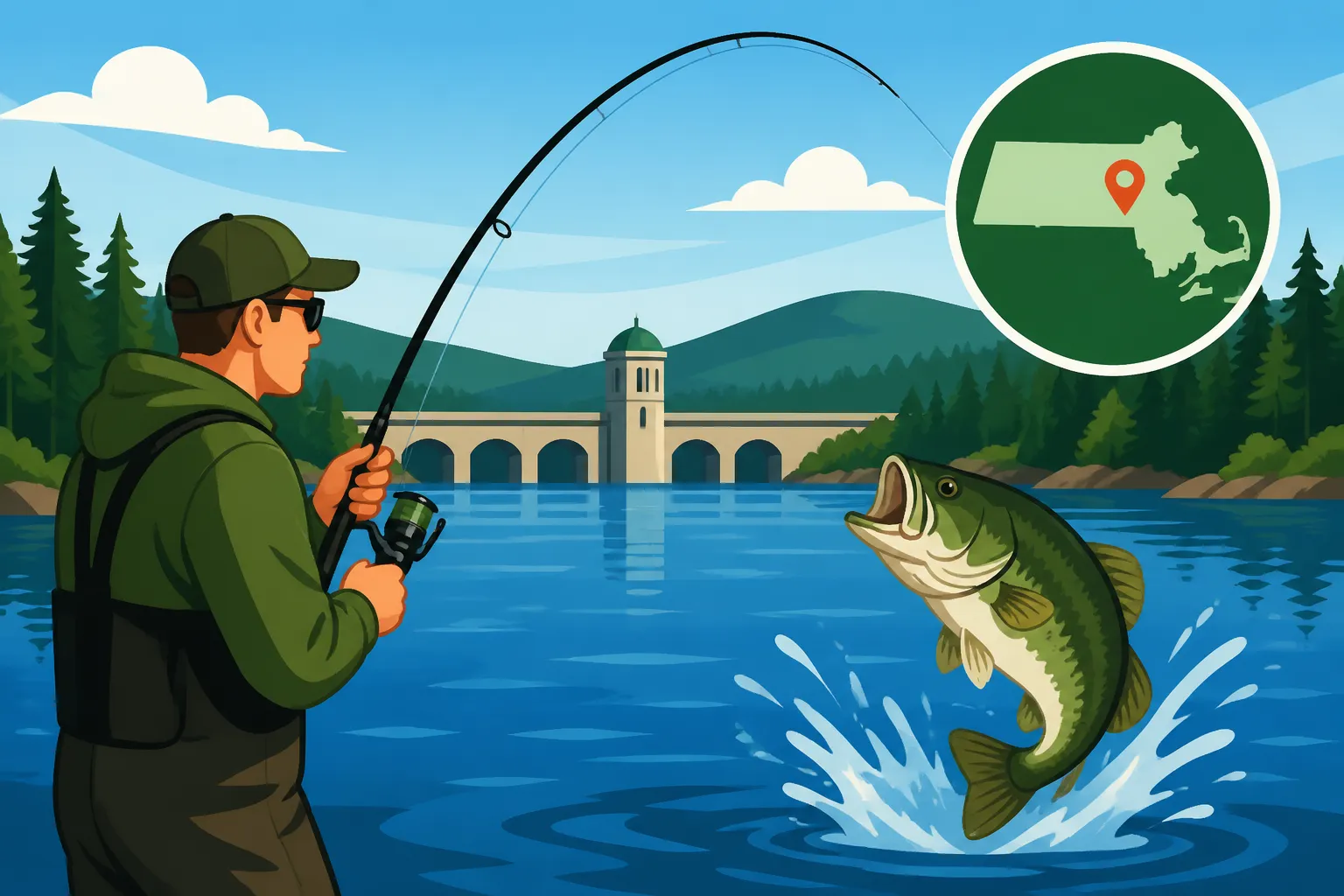
The area around Wachusett Dam in Clinton draws anglers because deep water lies close to shore and rocky structure holds bass and trout. On cold spring mornings, lake trout can cruise the drop-offs within reach of a long cast. This part of the reservoir is also one of the most scenic, with historic stonework and wide views across the water.
Because it is popular, give other anglers room. A good rule is to leave enough space that your casts cannot cross, and to ask before setting up near someone who is already fishing. The same courtesy you would want on a busy trout stream applies here.
West Boylston, Boylston and the Route 140 Shoreline
The West Boylston side, including the area near the Old Stone Church, is easy to reach and offers a mix of shallow flats and deeper drop-offs. In spring, smelt and baitfish move along these shorelines and trout and salmon follow. Later in the season, smallmouth bass hold on rocky points and around boulders.
The shorelines along Route 140 and Route 12 offer many access points within a short walk. These areas can be productive throughout the season, though summer heat pushes trout and salmon deep and out of reach. If you are new to the reservoir, Wachusett Reservoir Shore Fishing Access Points is a good companion to this section, and it is worth bookmarking before your first visit.
Reading the Shoreline
Even from shore, you can find better water by reading the landscape. Look for points that extend into the reservoir, where deeper water is closer to your cast. Rocky shorelines usually indicate steeper drop-offs, while sandy or gravel beaches often mean gradual slopes. Wind blowing into a shoreline can push baitfish and warmer surface water toward you, which brings feeding fish closer.
A simple approach for scouting a new stretch:
- Walk the shoreline before setting up and look for points, rock piles and weed edges.
- Watch for surface activity, such as smelt flickering or gulls diving.
- Make fan casts to cover water at different angles and depths.
- Count your lure down to find the depth where strikes happen.
- Move every thirty to forty minutes if nothing is happening.
Techniques for Lake Trout and Salmon
Lake trout and salmon are the reason many anglers make the drive to Wachusett, and they reward specific tactics.
Opening Weeks: Fish Are Close
When the season opens, surface water is still cold and both lake trout and salmon can be found shallow. This is the best time of year to catch a big laker from shore. Long casts with heavy spoons are the classic approach. Many anglers use spinning rods in the eight to ten foot range to reach farther, paired with reels spooled with light monofilament or braid and a fluorocarbon leader.
Spoons in silver, gold and blue imitate smelt, the main forage. Cast, let the spoon sink toward the bottom, then retrieve with a steady pace and occasional pauses. Many strikes come on the drop or right after a pause. Others prefer bottom fishing with bait where it is allowed; if you do, check the current watershed bait rules first, because some baits may be restricted to protect the water supply.
Late Fall: The Second Window
As water cools in the fall, lake trout move shallow again and salmon become more active near the surface. The weeks before the season closes can be excellent. Fall days are shorter and colder, so dress in layers and plan your trip around the warmest part of the day when fish are most active. Our article on Best season for Wachusett Reservoir shore fishing compares spring and fall windows in more detail.
The fall pattern rewards patience. Fish the same productive areas you found in spring, but expect fish to be more scattered. Dawn and dusk are often the best times, and overcast days can extend the bite through midday.
Summer: Deep and Difficult
By early summer, surface water warms and lake trout and salmon retreat to the cold depths, often far beyond casting range. Shore anglers can still catch them occasionally by fishing deep with heavy lures or bait at first light, but most anglers switch to smallmouth bass and panfish during the warmest months. If you want trout and salmon in summer, consider other water or a guided trip on a lake where boats are allowed.
Choosing Your Gear
A typical Wachusett setup for trout and salmon looks like this:
- A spinning rod between eight and ten feet long, medium-light to medium power.
- A reel that holds plenty of six to ten pound line.
- A fluorocarbon leader for the clear water.
- A selection of spoons from about a quarter ounce to an ounce, in silver, gold and blue.
- A landing net with a long handle, since you cannot wade out to land fish.
Bass, Panfish and Other Opportunities
Wachusett is not only a coldwater fishery. Bass and panfish keep anglers busy when trout go deep.
Smallmouth Bass on Rocky Shorelines
Smallmouth bass are abundant along rocky points and drop-offs, and they can be caught from late spring through early fall. Tubes, ned rigs, drop shots and small jigs work well. In the clear water, natural colors like green pumpkin and brown tend to outperform brighter colors. Our Massachusetts Smallmouth Bass Fishing Guide covers techniques that translate well to Wachusett.
Smallmouth often hold deeper than anglers expect in clear water. Work your bait slowly along the bottom and pay attention to changes in rock size or bottom composition. When the wind picks up, fish the windblown side, where bass often move shallow to feed.
Largemouth Bass and Panfish
Largemouth bass can be found in weedier coves, particularly in summer. Soft plastics and topwater lures in low light are reliable. Perch and other panfish are abundant and make excellent targets for families and beginners. A light rod, a small jig or worm and a bobber can produce steady action from many shoreline spots.
For families planning a first trip, perch fishing is a great way to introduce kids to Wachusett without the long casts and patience that lake trout demand. Just remember the pet and swimming restrictions when packing for a family outing.
Fly Fishing From the Shoreline
Fly anglers can do well at Wachusett, especially in the opening weeks and late fall when trout and salmon cruise close to shore. Because wading is not allowed, a fly rod in the seven to nine weight range helps punch long casts into the wind, and an intermediate or sinking line gets streamers down to cruising fish. Smelt imitations in white, gray and olive are the obvious choice, and classic New England streamer patterns have caught salmon here for generations.
Backcasting room is the biggest challenge. Many access points have trees, brush or rocks right behind you, so roll casts and single-hand spey techniques are worth learning. Pick spots with open shoreline, keep an eye on other anglers walking behind you, and be ready to strip line quickly, because a salmon that hits close to shore will often run straight out and jump.
On calm evenings in late spring and early summer, trout and salmon sometimes rise to insects near the surface. A floating line and a small dry fly or emerger can produce memorable fish in those moments, though the opportunities are shorter and less predictable than the streamer bite. Carry a few dries just in case.
When Wachusett Is Not the Answer
Some days, the shore-only rules or crowding make Wachusett frustrating. If you want to fish from a boat, there are many lakes and ponds nearby that allow boating. Best ponds near Wachusett Reservoir for boat fishing lists options within a short drive. For trout in moving water, Where to fish near Worcester for trout highlights stocked rivers and streams.
Guided trips are another option. Because boats are not allowed at Wachusett, guides who work the area generally focus on nearby lakes, Quabbin, or rivers instead. Platforms like FishingBooker can help you compare guides in central Massachusetts and read reviews from past clients. Rates vary, so check the guide’s FishingBooker listing for current pricing and what is included.
Wachusett Through the Seasons
Because the reservoir closes in winter and fish move dramatically with water temperature, timing your trips matters as much as picking a spot.
Early Spring: Cold Water and Big Fish
The first weeks after opening are the most anticipated of the year. Water temperatures are low, smelt are moving along the shorelines, and lake trout and salmon follow them into casting range. Crowds are heaviest now, especially on the first weekend, so arrive early or plan a weekday trip. Dress for cold, wind and occasional sleet, because April on the shore of a big reservoir can feel more like winter than spring.
Fish tend to bite best when the wind pushes into a shoreline and stirs the surface. Calm, bright days can be tough in the clear water, so lighter leaders and slower retrieves help. If you only have a handful of days to fish Wachusett each year, many regulars would tell you to spend most of them in this window.
Late Spring and Summer: A Shift to Bass
As the water warms through May and June, trout and salmon retreat deeper, and smallmouth bass take center stage. Bass move onto rocky flats and points to spawn and feed, and they stay accessible from shore through the summer. Early mornings and evenings are best, since bright midday sun can push fish deeper and make them wary.
Summer also brings more casual visitors to the shoreline roads, so parking can be tight on weekends. Fishing a weekday evening often gives you more room and better fishing. Panfish provide steady action through this period, which makes it a good time to bring newer anglers.
Fall: The Final Push
From September through the end of the season, cooling water brings trout and salmon shallow again. Leaves turn, crowds thin out, and the reservoir becomes one of the most beautiful places in central Massachusetts to spend a morning. Days are shorter, so plan around the legal fishing hours and remember that the season ends before winter sets in.
| Season | Primary Targets | Crowd Level | Key Tip |
|---|---|---|---|
| Opening weeks | Lake trout, salmon | Heavy | Arrive early, cast long spoons |
| Late spring | Smallmouth, trout | Moderate | Fish rocky points at dawn |
| Summer | Smallmouth, panfish | Moderate | Fish early and late |
| Fall | Lake trout, salmon, bass | Light | Fish windblown shorelines |
Planning a Successful Trip
A little planning goes a long way at Wachusett, where parking, rules and conditions all affect your day.
Packing List and Practical Tips
Bring everything you need to the water, because there are no stores along most of the shoreline. A typical packing list includes:
- Your Massachusetts fishing license, in printed or digital form.
- Rods, reels and a compact tackle selection for your target species.
- Layers, rain gear and sturdy footwear for rocky, uneven shoreline.
- Water, snacks and a bag to carry out all trash, including fishing line.
- A long-handled net and pliers for releasing fish.
Leave pets, boats and float tubes at home, and do not plan to wade.
Respecting the Watershed
Remember that Wachusett is a drinking water supply. Carry out everything you bring, including cigarette butts, bait containers and line. Use designated parking, stay on established paths where possible, and avoid disturbing restricted areas. These steps keep the reservoir open to anglers and protect the water that so many people depend on.
Common Mistakes at Wachusett
The most frequent mistake is arriving with gear that cannot be used, like a kayak or float tube, and then losing half the morning finding another plan. The second is fishing too close to other anglers on popular stretches. A third is using line that is too heavy and too visible for the clear water, which costs bites from wary trout and salmon.
Another common error is ignoring the clock. Legal hours are tied to sunrise and sunset, and wardens and DCR staff do enforce them. Finally, many first-timers stay in one spot for hours without a bite. On a big reservoir, moving to find active fish is often the difference between a skunk and a memorable day.
Using Guides and Booking Platforms
If you want instruction before trying Wachusett on your own, a guided day on nearby water can teach you casting, retrieves and reading water that carry over directly. FishingBooker and similar services list guides across Massachusetts. If you are new to the state, booking through FishingBooker can also help you find a guide who explains local regulations and seasonal patterns.
Whatever route you take, Wachusett rewards anglers who show up prepared, follow the rules and put in the time. A spring morning on the shoreline, casting a spoon into clear, cold water while the sun rises over the reservoir, is one of the great experiences in Massachusetts fishing.
Disclaimer
This article is for general informational purposes only and does not constitute professional advice. Laws, prices and regulations vary by location and change over time. Consult a qualified professional for guidance on your specific situation.