Where to catch black sea bass on Cape Cod
There's nothing quite like the thrill of a hard-fighting black sea bass tugging at your line, but let's be honest, trying to figure out where to even begin looking for them on a vast and popular coastline like Cape Cod can feel like searching for a needle in a haystack. Many anglers get frustrated wasting precious fishing time casting into barren water, wondering if they're missing some secret spot. This guide is here to cut through the confusion and help you pinpoint the most productive areas to catch black sea bass around Cape Cod, giving you the insider knowledge to make your next trip a success.
Understanding Black Sea Bass Behavior Around Cape Cod
Before we dive into specific locations, it's really helpful to understand what makes black sea bass tick. These aren't your typical open-water cruisers; they're structure-oriented fish, meaning they love to hang out around rocks, reefs, wrecks, and other bottom features. Understanding their preferences is key to finding them consistently, rather than just hoping for a lucky cast.
Prime Season for Black Sea Bass on Cape Cod
One of the biggest questions everyone has is, "When are they even here?" It's a valid concern, because fishing for them out of season is just a quick way to get skunked. Black sea bass typically arrive in Massachusetts waters, including around Cape Cod, in late spring as water temperatures warm up. We're generally talking late May into early June. They stick around through the summer months, offering fantastic fishing opportunities, and then start to move offshore or south as the water cools in the fall, usually by late October or early November.
What this means for you is that the window is wide open during those summer months. You'll find them abundant and aggressive. Sometimes, you'll even get a bonus shot at them during a strong fall bite if conditions hold, but you absolutely want to focus your efforts from June through September for the most consistent action. Knowing the precise Massachusetts Black Sea Bass Season Dates can help you plan your trips perfectly.
Preferred Habitats and Bottom Structure
Black sea bass are creatures of comfort, and their comfort zone is almost always associated with some kind of structure on the bottom. Think about it from their perspective: structure provides ambush points for prey, shelter from predators, and often holds concentrations of baitfish and crabs – all the things a growing sea bass needs. This is why you'll rarely find them over vast, flat sandy bottoms unless they're migrating.
Around Cape Cod, this translates to specific types of spots. We're talking about rocky reefs, ledges, boulder fields, mussel beds, and even man-made structures like bridge pilings, jetties, and wrecks. They don't usually hang in super deep water close to shore; often, 10 to 60 feet of water is their sweet spot, though you can find them deeper, especially later in the season. The key takeaway here is to look for areas on your chart where the bottom contours change drastically or where structure is clearly marked. They love a good current as well, as it brings food right to them.
Essential Gear for Cape Cod Black Sea Bass
Getting the right gear can make all the difference between feeling every subtle bite and just staring at a motionless rod tip. Many anglers get overwhelmed by the sheer amount of fishing tackle out there, but for black sea bass, you really don't need anything super specialized. The biggest frustration often comes from using gear that's too heavy or too light, leading to missed bites or snapped lines.
For rod and reel, a medium-light to medium power spinning rod, about 6'6" to 7'6" in length, paired with a 3000-4000 size reel, is perfect. This setup offers enough backbone to handle a feisty sea bass but is sensitive enough to detect those often subtle bites. Spool your reel with 15-20 lb braided line, which offers incredible sensitivity and strength for its diameter. Then, attach a 3-5 foot leader of 20-30 lb fluorocarbon. Fluorocarbon is less visible in the water and more abrasion-resistant, which is crucial when fishing around rocky bottoms.
As for terminal tackle, we'll get into baits and rigs more specifically later, but having a good selection of jigs (like bucktail jigs, soft plastics on jig heads, or diamond jigs) in weights from 1/2 oz to 2 oz, along with some bank sinkers or egg sinkers and snelled hooks (sizes #1 to 3/0), will cover most scenarios. A sturdy pair of pliers for hook removal is also a must-have, as these fish have pretty tough mouths.
Top Spots for Black Sea Bass on Cape Cod
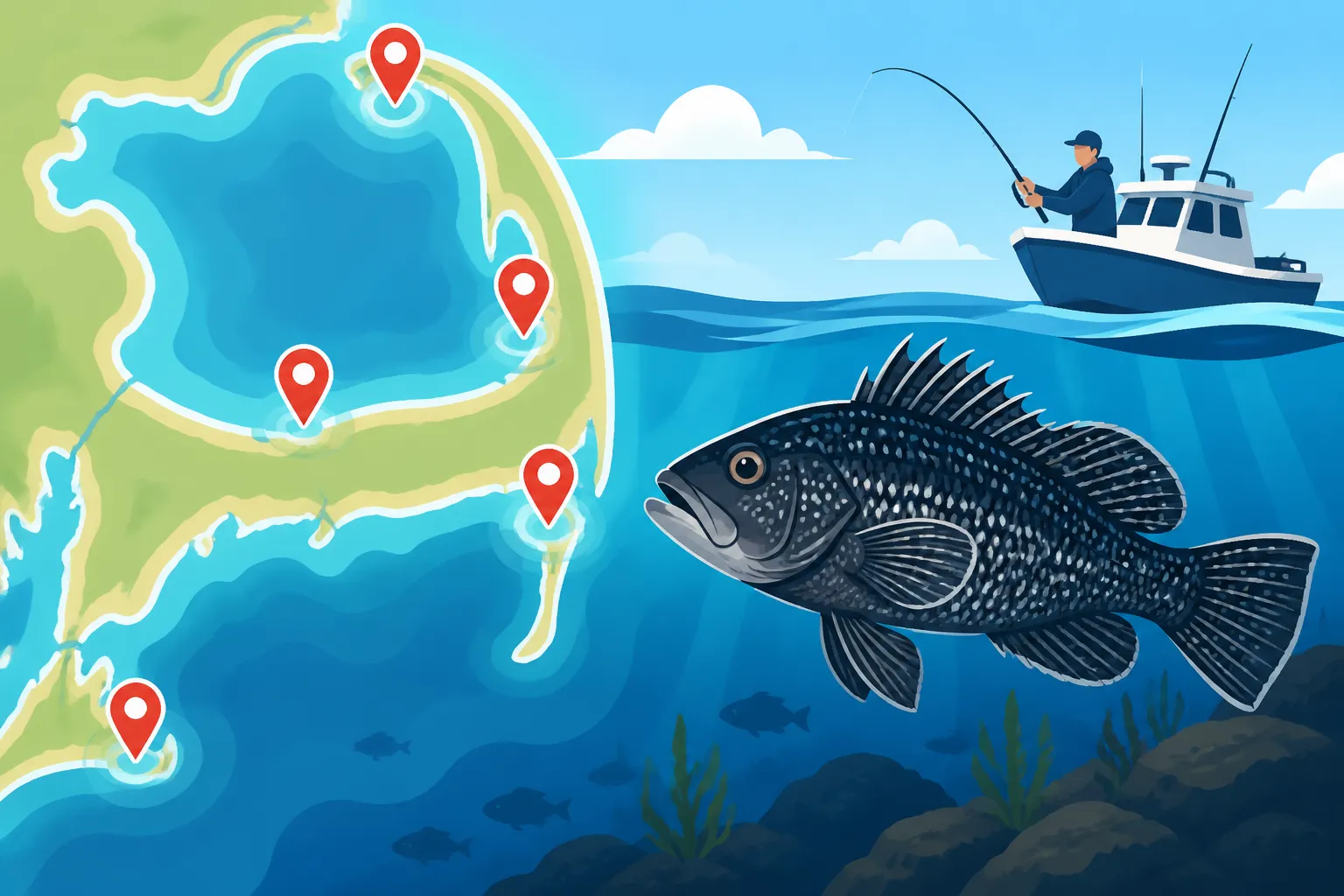
Now for the good stuff: where exactly can you find these tasty bottom dwellers around the Cape? Cape Cod offers an incredible variety of environments, from the protected waters of Buzzards Bay to the open sounds and even parts of Cape Cod Bay. Each area has its own charm and challenges, but all hold black sea bass if you know where to look.
Nearshore Reefs and Rocky Outcrops
When people think of prime black sea bass territory, they often imagine offshore wrecks, but many fantastic spots are much closer to shore. All along the southern and western coasts of Cape Cod, there are countless nearshore reefs and rocky outcrops that serve as perfect habitat. These are often accessible by smaller boats, kayaks, or even some dedicated shore anglers with proper casting gear and knowledge of specific access points.
Think about areas just a few hundred yards off the beaches from Falmouth down through Hyannis. Many of these spots are remnants of glacial activity, leaving behind boulder fields and rocky ledges that are magnets for sea bass. You'll need a good chartplotter or depth finder to identify these humps and bumps that rise off the bottom. Drop your anchor or drift slowly over them, and you're likely to find fish. Just remember that these spots can be popular, so be courteous to other anglers. For a broader overview of places to target, check out the guide on the Best Saltwater Fishing Spots on Cape Cod, Massachusetts.
Buzzards Bay Hotspots
Buzzards Bay is arguably one of the best black sea bass fisheries in Massachusetts, and for good reason. Its intricate bottom structure, ranging from rocky ledges to mussel beds and scattered boulders, provides ideal habitat. The bay's relatively protected waters make it accessible even on days when the open ocean is too rough. Towns like Falmouth, Woods Hole, and New Bedford serve as excellent launching points for exploring Buzzards Bay.
Some particularly productive areas within Buzzards Bay include the numerous small islands and rocky points along its shores, like those near Cleveland Ledge Light or the Elizabeth Islands. The waters around Cuttyhunk and Nashawena islands are also renowned. Look for areas with strong tidal currents, especially around passages and points. You'll often find sea bass stacked up on the down-current side of these structures, waiting for food to drift by. Many anglers head here specifically for their black sea bass limit. This area is so good it has its own comprehensive guide: the Buzzards Bay Fishing Guide, Massachusetts.
Nantucket Sound and Vineyard Sound Access
Moving further south, Nantucket Sound and Vineyard Sound offer expansive waters with their own unique black sea bass opportunities. While these sounds are generally shallower and more sandy in many areas, there are still plenty of rocky patches, mussel beds, and humps that hold fish. These sounds are particularly good for drifting, allowing you to cover a lot of ground and find scattered schools.
Towns like Hyannis, Dennis, and Harwich on the Nantucket Sound side, and Falmouth and Woods Hole on the Vineyard Sound side, provide excellent access. The rocky areas around the Elizabeth Islands (on the Vineyard Sound side) continue to be highly productive. In Nantucket Sound, focus on the edges of channels, deeper depressions, and any marked wrecks or artificial reefs. The deeper water as you approach Martha's Vineyard and Nantucket can also hold larger fish. You can find more detailed information about these waters in the Nantucket Sound and Martha's Vineyard Fishing Areas in Massachusetts guide.
Cape Cod Bay Deeper Structure
While Buzzards Bay and the Sounds might get more attention for black sea bass, don't overlook Cape Cod Bay. It's generally deeper and colder than the southern waters, but it absolutely holds black sea bass, especially on its western and northern edges where more rocky structure exists. The fishing here can be fantastic, particularly if you have a boat capable of reaching some of the slightly deeper offshore humps and ledges.
Look for areas with significant depth changes, particularly near Provincetown or along the Truro and Wellfleet coasts where ledges and glacial deposits create ideal habitat. Artificial reefs, if marked on your charts, are also worth investigating. The trick here is often finding the structure in the first place, as it can be more spread out than in Buzzards Bay. A good fish finder is invaluable. Often, you'll be targeting them alongside other species like cod or tautog in these deeper, rockier environments.
| Location Type | Typical Depth (feet) | Bottom Structure | Access Type | Best Season (Peak) | Notes |
|---|---|---|---|---|---|
| Nearshore Reefs | 15-40 | Rocks, Ledges, Boulders | Boat, Kayak, Shore | June – September | Easily accessible, can get crowded. Look for current breaks. |
| Buzzards Bay | 10-60 | Rocks, Mussel Beds, Ledges | Boat, Kayak | June – October | Renowned fishery, often calmer waters. Excellent structure. |
| Nantucket Sound | 20-50 | Sand/Rock Mix, Channels | Boat, Kayak | July – September | Good for drifting, focus on channel edges and deeper holes. |
| Vineyard Sound | 25-70 | Rocks, Ledges, Patches | Boat | June – October | Deeper structure can hold bigger fish. Strong currents around islands. |
| Cape Cod Bay (Deeper) | 40-100+ | Ledges, Humps, Wrecks | Boat | July – October | More spread out, requires good electronics. Often target other species. |
Techniques for Targeting Cape Cod Black Sea Bass
Knowing where to go is half the battle, but knowing how to fish for them is the other crucial half. Black sea bass aren't usually picky eaters, but presenting your bait or lure effectively makes a huge difference in your success rate.
Effective Baits and Lures
Black sea bass are opportunistic feeders, meaning they'll eat a wide variety of things. This gives you a lot of options, which is great for adapting to what's working on any given day.
Natural Baits:
- Squid: This is perhaps the king of black sea bass baits. Strips of fresh or frozen squid fished on a high-low rig or a simple dropper loop rig are incredibly effective. It's tough, stays on the hook well, and sea bass absolutely love it.
- Clams: Particularly surf clams or steamers, can be deadly. They're soft, so they can get picked off easily, but the scent trail is irresistible. Fish them on smaller hooks.
- Crabs: Small green crabs, fiddler crabs, or even pieces of larger crabs are excellent, especially for bigger sea bass. Pinch off the legs and break the shell to expose some meat.
- Chunky Baitfish: Small pieces of mackerel, bunker (menhaden), or even a live sand eel can entice them.
Artificial Lures:
- Bucktail Jigs: These are classics for a reason. Tip them with a piece of Gulp! (squid, grub, or shrimp) or a strip of natural squid for added scent and appeal. Jig them slowly just off the bottom. Weights from 3/4 oz to 2 oz are standard depending on depth and current.
- Soft Plastic Jigs: Grubs, paddle tails, or even creature baits rigged on a leadhead jig work wonders. Again, Gulp! baits are incredibly effective due to their scent dispersion. Chartreuse, white, and pink are popular colors.
- Metal Jigs/Diamond Jigs: While not as common for black sea bass as for other species, small diamond jigs can work, especially if jigged vertically near structure.
- Squid Jigs (small): Sometimes, if they're really feeding on squid, smaller squid jigs (often used for catching squid) can be irresistible.
Don't be afraid to experiment! Sometimes a subtle change in bait, color, or even the size of your offering can turn a slow bite into a hot one.
Popular Rigs and Presentations
The way you present your bait is just as important as the bait itself. For black sea bass, you're primarily going to be focused on getting your offering right on or very near the bottom where they live.
- High-Low Rig (Dropper Loop Rig): This is probably the most common and effective rig. It consists of a leader with two snelled hooks tied off on dropper loops, usually 12-18 inches apart, with a sinker at the very bottom. This allows you to present two baits at different depths off the bottom, increasing your chances of a bite. It’s also great for using different baits at once.
- Knocker Rig: A simple but effective rig where a sliding egg sinker sits directly on top of your hook. This provides a very direct connection to the fish and is great for feeling subtle bites.
- Jigging: When using bucktail or soft plastic jigs, simply drop your jig to the bottom, then lift it a foot or two with a sharp snap of the rod tip, and let it flutter back down on a semi-slack line. The bite often comes as the jig falls. Repeat this motion as you drift or slowly retrieve.
- Drifting: Often, drifting over rocky bottom or ledges is the most productive method. It allows you to cover more ground and present your bait to a wider area. Adjust your sinker weight to ensure your bait is constantly making contact with the bottom but not dragging excessively.
The key with all these presentations is to stay in contact with the bottom. Black sea bass aren't going to rise far off the structure to eat, so if your bait isn't where they are, you won't catch them. Pay attention to how the current is affecting your line and adjust your weight accordingly.
Tides and Conditions to Watch For
Just like with most saltwater fishing, tides play a huge role in black sea bass success. They're generally most active during moving tides, either incoming or outgoing. This is when currents are strongest, stirring up the bottom and dislodging food, and also carrying baitfish past their ambush points. A slack tide, when the water isn't moving, can often lead to a slower bite.
Beyond tides, keep an eye on weather and water temperature. They prefer warmer water, so a cold front can sometimes slow the bite down. Clear, calm days are often pleasant for fishing, but sometimes a bit of chop on the water can actually help, breaking up the surface and making your presentation look more natural. Always prioritize safety, though; rough seas are not worth the risk for a few fish.
Planning Your Black Sea Bass Trip: Logistics and Regulations
Getting ready for your black sea bass adventure involves more than just tackle; you need to understand the local rules and consider how you'll get to those prime spots. It's much better to be prepared than to face a fine or a wasted trip.
Massachusetts Regulations and Limits
Massachusetts has specific regulations for black sea bass, and these can change annually, so it's absolutely crucial to check the latest rules before you head out. These regulations usually cover the season dates, the minimum size limit for fish you can keep, and the daily bag limit (how many you can keep per person). Failing to adhere to these rules can result in penalties for fishing without a license in Massachusetts.
As an example, recent regulations for recreational anglers have often set a minimum size limit around 15 inches and a bag limit of 5 fish per person per day, but again, these are subject to change by the Massachusetts Division of Marine Fisheries (DMF). Always carry proof of your Massachusetts Saltwater Recreational Fishing Permit Explained and a measuring device. When fishing, if you catch a black sea bass that's under the legal size, release it gently and quickly to maximize its chances of survival. This is part of responsible angling that helps maintain healthy fish populations. You can find all the current details on Massachusetts Saltwater Bag Limits by Species.
Chartering a Trip for Black Sea Bass
If you don't have your own boat or want to learn from experienced local captains, booking a fishing charter is an excellent option. Cape Cod is home to numerous skilled captains who specialize in targeting black sea bass, and they'll take you directly to the hot spots, often providing all the necessary gear and bait. This can be especially helpful if you're unfamiliar with the local waters or want to try new techniques.
Many charter boats operate out of ports like Falmouth, Hyannis, Harwich, and even some out of Plymouth that will head into Buzzards Bay. Websites like FishingBooker make it super easy to find and compare different charter options. You can search by location, target species, and even read reviews from other anglers to ensure you're picking the right trip for your group. A good charter captain will not only put you on fish but also share valuable insights into the local fishery, helping you learn for future trips. For more information on finding the right guide, take a look at the Cape Cod Fishing Charters Guide for Massachusetts Anglers.
Best Practices for Sustainable Fishing
As anglers, we all have a responsibility to protect the resources we enjoy. Black sea bass populations have rebounded in recent years, but maintaining that health requires all of us to do our part.
- Know and Follow Regulations: This is the most basic and vital step. Adhering to size and bag limits ensures that enough fish are left to reproduce and grow.
- Handle Fish Carefully: When releasing undersized fish or those you don't intend to keep, handle them minimally and gently. Wet your hands before touching them to protect their protective slime coat. Remove hooks quickly and, if deep-hooked, cut the line as close to the hook as possible.
- Use Appropriate Gear: Fishing with gear that is too light can prolong the fight, stressing the fish unnecessarily. Conversely, gear that is too heavy can make it hard to detect subtle bites, leading to more deep-hooked fish.
- Dispose of Trash Properly: Pack out everything you pack in. Leaving trash, especially fishing line, is detrimental to marine life.
- Report Violations: If you see someone breaking fishing laws, report it to the Massachusetts Environmental Police. This helps protect the fishery for everyone.
By understanding the black sea bass, knowing where to find them on Cape Cod, employing effective techniques, and fishing responsibly, you're well on your way to enjoying some fantastic angling experiences. Remember, a successful trip isn't just about the number of fish you catch, but the knowledge you gain and the enjoyment of being out on the water.
Disclaimer
Please remember that fishing regulations, seasons, and bag limits are subject to change. Always consult the most current regulations published by the Massachusetts Division of Marine Fisheries (DMF) before any fishing trip. This guide is for informational purposes only and does not constitute legal advice.