Best bottom fishing spots near Provincetown
It can be incredibly frustrating when you're geared up for some serious bottom fishing, maybe even imagining a cooler full of cod or a nice tautog dinner, only to realize you don't actually know the best spots to drop your line, especially around a vast area like Provincetown. You want to make the most of your time on the water, not just drift aimlessly. This guide will meticulously break down the top bottom fishing locations near Provincetown, covering everything from the iconic Stellwagen Bank to hidden inshore gems, ensuring your next trip is a successful one.
Understanding Bottom Fishing in the Provincetown Region
Bottom fishing is a fantastic way to target a wide variety of species that prefer to hang out near the seafloor, often around structure like rocks, wrecks, or ledges. Around Provincetown, you're in a truly special part of the Massachusetts coast, where the confluence of different water bodies and the proximity to a major underwater geological feature create an incredibly rich ecosystem. It's not just about dropping a line; it's about understanding the underwater world here.
Why Provincetown is a Bottom Fishing Mecca
Provincetown, situated at the very tip of Cape Cod, offers anglers unparalleled access to some of New England's most productive fishing grounds. Its unique geographic location means you're just a short run from both the deep, nutrient-rich waters of Stellwagen Bank and the shallower, structure-laden areas of Cape Cod Bay and the Outer Cape. This diversity means a vast array of species call these waters home at different times of the year.
Think about it: from the sheer drop-offs and rocky expanses that attract groundfish like cod, haddock, and pollock, to the sandy flats and shallower reefs that hold fluke, black sea bass, and scup, the options are practically endless. The strong tides and currents in this area constantly stir up nutrients, creating a food chain that supports everything from tiny baitfish to large predatory species. It's a dynamic environment that, once understood, can lead to some truly epic catches. Many anglers find themselves drawn back here year after year, testament to the consistent action and variety available.
Common Bottom Dwellers You'll Encounter
When you're rigged up for bottom fishing near Provincetown, you're looking to connect with some fantastic fish. Each species has its own quirks and preferred habitats, making the pursuit all the more exciting.
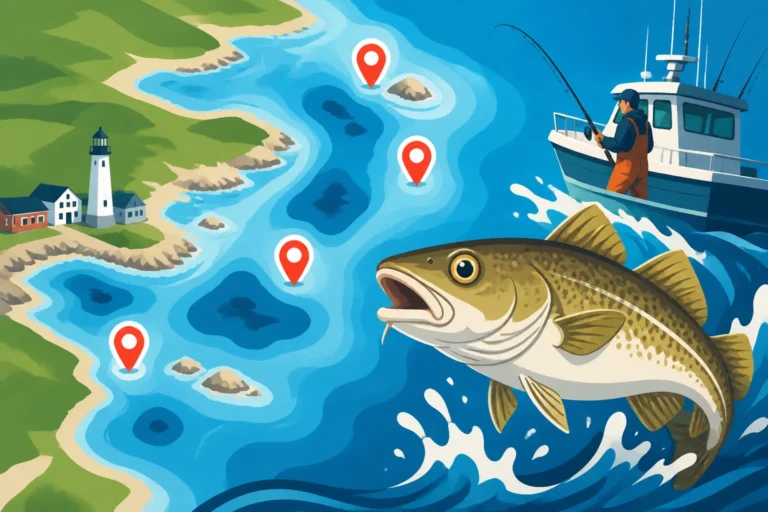
- Cod and Haddock: These are the classic New England groundfish. Cod are stout, powerful fighters found over rocky bottoms and wrecks, while haddock prefer softer, sandy or muddy bottoms but often intermingle with cod. They're both delicious table fare and provide a good fight on appropriate gear. You'll typically find them in deeper, colder waters, especially out on Stellwagen Bank. Knowing the current Massachusetts Recreational Cod Fishing Rules is crucial for keeping these prized fish.
- Fluke (Summer Flounder): If you're fishing in shallower, sandier areas, especially during the warmer months, fluke are a prime target. These flatfish are ambush predators that lie in wait, often camouflaged against the seafloor. They put up a surprisingly strong fight and are excellent to eat. Keep an eye on the Massachusetts Fluke Season Opening Date for 2026 to ensure you're fishing legally.
- Black Sea Bass: Another warm-water favorite, black sea bass love rocky structures, wrecks, and mussel beds. They're feisty, excellent eating, and often found closer to shore than cod or haddock. Their season and bag limits can be quite specific, so a quick check of the Massachusetts Black Sea Bass Season Dates is always a good idea.
- Tautog (Blackfish): Known for their powerful bite and stubborn fight, tautog are masters of rocky, snaggy bottoms. They feed primarily on crabs and shellfish. These fish are a challenge to catch but are incredibly rewarding. Their season and limits, which you can find by checking Massachusetts Tautog Season Dates and Bag Limits, are often different from other species.
- Scup (Porgy): Often underestimated, scup are abundant, aggressive, and make for a fun day of fishing, especially for families. They're found over various bottom types, particularly around rocky areas and reefs, and are known for schooling in large numbers.
- Pollock: Often caught while targeting cod and haddock, pollock are fast swimmers that can be found mid-water or near the bottom over deep structure. They hit hard and fight well.
The diversity of species means you might start your day targeting one fish and end up with a mixed bag, which is always an exciting prospect for any angler.
Top Bottom Fishing Spots Near Provincetown
Okay, let's get down to the nitty-gritty: where exactly should you be dropping your lines? The areas around Provincetown are rich with productive bottom fishing grounds, each with its own character and best times to fish.
Stellwagen Bank: The Legendary Deepwater Grounds
Without a doubt, Stellwagen Bank is the crown jewel of bottom fishing near Provincetown. This enormous underwater plateau, a mere 6 miles north of Race Point, is a National Marine Sanctuary and an ecological powerhouse. It rises dramatically from the surrounding deep waters, creating incredible upwellings that bring nutrients to the surface, attracting massive amounts of baitfish and, consequently, large predatory fish.
- Northwest Corner: This area is legendary. It's characterized by steep drop-offs and a mix of rocky and gravelly bottom. This is prime territory for cod and haddock, especially during the spring and fall. The depth here can range from 150 to over 300 feet. You'll often find fish schooled up along the edges of the bank or nestled into depressions. It's a long run, but the payoff can be huge. The current can be strong, so heavy weights are a must.
- Middle Bank: Slightly shallower in some areas than the Northwest Corner, Middle Bank still offers excellent opportunities for cod, haddock, and pollock. The bottom structure here is varied, with plenty of ledges and rocky patches where fish can hide. It's a good alternative if the currents are too strong further north, or if you're looking for slightly less boat traffic, though Stellwagen is rarely "un-crowded" on a good day.
- Southeast End/Wildcat Knoll: As you move towards the southeast, the bank gradually tapers off, but there are still plenty of productive areas, including Wildcat Knoll. This area is known for holding good numbers of cod and haddock, and sometimes even hake and cusk in the deeper pockets. It can be a little further run depending on where you launch from in Provincetown, but it’s another excellent choice when the fish are concentrated.
Fishing Stellwagen requires a sturdy boat, good navigational equipment (a reliable fishfinder is non-negotiable), and a willingness to handle deep water and potentially strong currents. But for sheer numbers and size of groundfish, it's tough to beat. Many charters departing from Provincetown will make a bee-line for the Bank, and you can often find great options if you search for Massachusetts Deep Sea Fishing Charters on platforms like FishingBooker.
Nearshore Reefs and Wrecks within Cape Cod Bay
While Stellwagen Bank gets a lot of attention, don't overlook the closer-to-shore opportunities within Cape Cod Bay itself. These spots are often more accessible for smaller boats and can offer excellent fishing for different species.
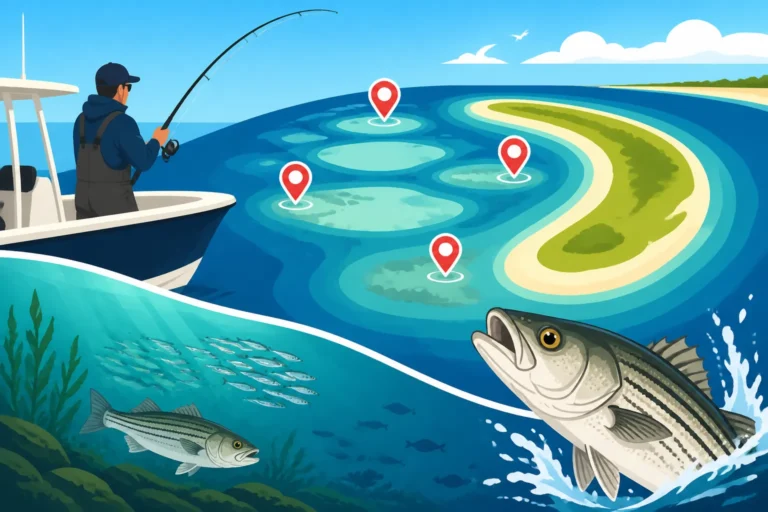
- Wood End and Race Point Areas: Just outside Provincetown Harbor, the waters around Wood End and Race Point can be surprisingly productive. While known for striped bass, the rocky outcrops and subtle changes in bottom contour here also hold black sea bass and tautog, especially in the spring and fall. These areas are shallower, often in the 20-60 foot range, making for a different kind of bottom fishing experience. You’ll need to be mindful of currents, especially around Race Point, but it’s a short run from the harbor. For more general information about fishing this specific area, check out the Provincetown Harbor Fishing Guide.
- Man-Made Structures and Rock Piles: Within Cape Cod Bay, there are numerous lesser-known rock piles, humps, and even some artificial reefs that hold fish. These aren't always marked on standard charts, and often require local knowledge or a good deal of time spent exploring with a fishfinder. However, once found, they can be phenomenal for black sea bass, scup, and even some keeper fluke. Look for sudden depth changes or areas where your fishfinder marks significant bottom irregularities. These are the kinds of spots where booking a local guide through platforms like FishingBooker can really pay off, as they've often spent years finding these honey holes.
- Inshore Fluke Grounds: For summer flounder, look for sandy or mixed-bottom areas that are not too deep, often between 30-80 feet. These can be found all along the Cape Cod Bay side. Fluke often congregate near channels, depressions, or edges where sand meets a rocky patch. Drifting is often the most effective method here.
These nearshore spots are fantastic when the weather keeps you from venturing far offshore or when you're looking for a shorter, more relaxed trip. They also offer a different array of target species, perfect for diversifying your catch.
Fishing the Outer Cape — East of Provincetown
While Provincetown is on the bay side, access to the Outer Cape's ocean side is also relatively easy, offering even more bottom fishing variety, especially for those seeking warmer water species in summer.
- Chatham and Outer Cape Shoals: Venturing east and south of Provincetown, towards areas like Chatham, you'll find vast stretches of sandy shoals and rips. While these are famous for striped bass and bluefish, they also hold excellent populations of fluke and scup during the warmer months. These can be challenging to navigate due to shifting sands and strong currents, so caution is advised. However, areas around these shoals, where baitfish congregate, can be very productive. For a broader look at fishing these waters, take a peek at Chatham and the Outer Cape Fishing Spots.
- Wreck Fishing off the Outer Cape: The treacherous waters off the Outer Cape have claimed many ships over the centuries, creating a scattering of wrecks that now serve as artificial reefs. These wrecks are magnets for many bottom species, including black sea bass, tautog, and even cod in the deeper, cooler wrecks. Finding these requires accurate GPS coordinates and a good fishfinder, but the rewards can be substantial. Just be prepared for snags!
When considering any fishing trip near Provincetown, always remember that conditions can change rapidly. A detailed check of the marine forecast is essential, especially when heading out to Stellwagen Bank or the exposed Outer Cape waters. And, of course, make sure your Massachusetts Saltwater Recreational Fishing Permit Explained is current before you even leave the dock.
Gear, Techniques, and Essential Tips for Successful Bottom Fishing
Having the right gear and knowing how to use it makes all the difference when bottom fishing, especially in the varied waters around Provincetown. It’s not just about having a rod; it’s about having the right rod and knowing how to present your bait effectively.
Rods, Reels, and Terminal Tackle
Bottom fishing often requires robust equipment, as you're dealing with potentially heavy weights, strong currents, and hard-fighting fish.
- Rods: For deep-water cod and haddock on Stellwagen Bank, you'll want a medium-heavy to heavy conventional rod, typically 6 to 7 feet long, with a fast action to detect subtle bites. For shallower, inshore species like fluke or black sea bass, a medium-action spinning or conventional rod in the 6.5 to 7.5-foot range with a sensitive tip works well. The sensitivity allows you to feel the bottom and subtle takes, which is critical.
- Reels: Conventional reels are standard for deep-water bottom fishing, particularly for cod and haddock, as they handle heavy lines and weights better and offer greater cranking power. Look for models like the Penn Fathom or Shimano Torium. For inshore work, a quality spinning reel in the 4000-6000 size class spooled with braided line is perfect for casting and jigging.
- Line: Braided line, in the 30-60 lb test range for most bottom fishing, is highly recommended. Its thin diameter means less drag in the current, allowing you to use lighter weights, and its no-stretch property provides excellent sensitivity to feel bites and bottom structure. Always use a monofilament or fluorocarbon leader (30-50 lb test) to absorb shock and provide abrasion resistance against sharp rocks and fish teeth.
- Rigs:
- High-Low Rig: This is a classic for cod, haddock, scup, and black sea bass. It consists of two dropper loops with hooks (usually 5/0 to 8/0 octopus or circle hooks) above a sinker (often 8 oz to 2 lbs, depending on depth and current).
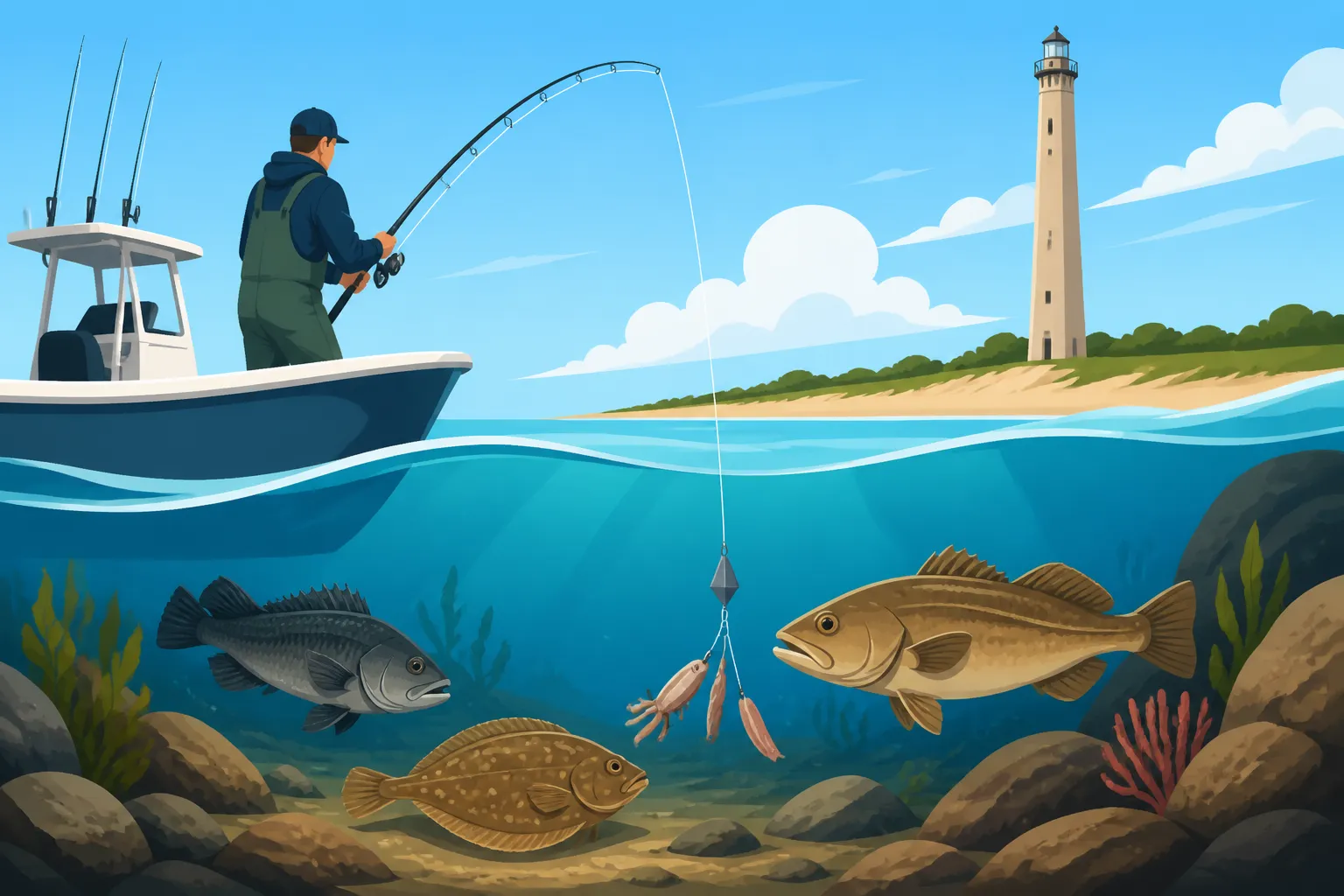
- Fluke Rig (Sinker-Slider): For fluke, a rig with a sliding sinker above a swivel, then a 2-3 foot leader to a single hook (1/0 to 4/0) often tipped with a spinner blade or bead, is very effective.
- Jigs: Heavy metal jigs (4 oz to 16 oz or more for deep water) can be incredibly effective for cod, pollock, and haddock, especially when tipped with a piece of clam or squid. Vertical jigging is an active and exciting way to catch these fish.
Baits and Lures that Get Results
The right bait is often the key to unlocking a good bottom bite.
- Clams: Fresh surf clams are king for cod and haddock. Their scent trail is irresistible. Strip the clam from the shell, leaving a small piece of the tough foot attached for durability on the hook.
- Squid: Strips of fresh or frozen squid are versatile and effective for almost all bottom species, including fluke, black sea bass, scup, and even cod and haddock. It's tough, stays on the hook well, and has great visual appeal.
- Green Crabs: These are the absolute top bait for tautog. Smaller crabs (quarter to half dollar size) are fished whole, while larger ones can be broken or cut.
- Gulp! Baits: Berkley Gulp! soft plastics, especially the 4-inch swimming mullet or grub styles, are incredibly effective for fluke and black sea bass. They release a powerful scent and have a lifelike action when drifted or jigged. They can often outperform natural bait.
- Vertical Jigs: As mentioned, metal jigs like diamond jigs, hammered jigs, or butterfly jigs can be deadly for cod, haddock, and pollock. Drop them to the bottom, reel up a few cranks, and impart a vigorous jigging motion.
Always try to match your bait to what the fish are likely feeding on, and don't be afraid to experiment. Sometimes, a subtle change can make all the difference.
Navigation, Fish Finders, and Local Knowledge
Modern electronics have revolutionized bottom fishing. A good GPS plotter allows you to mark productive spots and navigate precisely, while a powerful fish finder helps you locate structure and, more importantly, the fish themselves. Look for areas where baitfish are congregated, or where you see distinct marks on or just above the bottom. These are usually your target species.
Beyond electronics, local knowledge is invaluable. Talking to charter captains, bait shop owners, and experienced local anglers can provide insights that no chart can offer. Platforms like FishingBooker can also help you connect with local captains who can share their expertise, even if you're not booking a full charter. For general insights into fishing around the region, you might explore resources like Best Fishing Spots on Cape Cod, Massachusetts or Best Time of Year to Fish in Massachusetts.
Seasonal Strategies and Local Wisdom for Provincetown Anglers
Understanding the seasonal movements of fish is paramount to consistent success in bottom fishing around Provincetown. What works in April might be completely ineffective in August.
Best Times of Year for Different Bottom Species
The Massachusetts fishing season is a dynamic one, influenced heavily by water temperature and species migration.
- Spring (April – June): This is prime time for cod and haddock on Stellwagen Bank as they move in closer to feed after spawning. Black sea bass and tautog seasons typically open in late spring, and they'll be found on inshore rocky structures as water temperatures rise. You can consult the comprehensive Massachusetts Fishing Seasons Explained for exact dates and regulations.
- Summer (July – August): Fluke fishing peaks during these warmer months, with fish readily found in sandy areas and channels throughout Cape Cod Bay and off the Outer Cape. Scup are also abundant and aggressive. Black sea bass remain strong targets. Cod and haddock might move to deeper, cooler waters on Stellwagen Bank, but can still be caught.
- Fall (September – November): This is arguably one of the best times for a mix of bottom species. Cod and haddock return to shallower parts of Stellwagen Bank, often aggressively feeding before winter. Tautog fishing can be excellent on inshore structures, and black sea bass are still around. Fluke might be less common, but larger fish can still be found. The weather can be less predictable, but the fishing can be phenomenal.
- Winter (December – March): Bottom fishing becomes more challenging in winter due to harsh weather and colder temperatures. Cod and pollock can still be caught on Stellwagen Bank, often in deeper water, but it requires venturing out in often rough conditions. Many anglers shift focus to ice fishing for freshwater species or wait for spring.
Weather, Tides, and Local Nuances
Always keep an eye on the marine forecast. Offshore trips to Stellwagen Bank demand calm conditions, as a slight chop inshore can translate to significant waves miles offshore. Strong winds can make boat control difficult and uncomfortable.
Tides and currents play a huge role in bottom fishing. Strong currents can make it difficult to hold bottom, requiring heavier sinkers and making bite detection challenging. However, current also moves bait and stimulates feeding. Often, the beginning or end of a strong current, or a slack tide period, can be most productive, offering a window where fish feed actively without battling extreme currents. For many species, the hour before and after a high or low tide can be particularly active.
Finally, never underestimate the value of learning from others. If you're new to the area, consider booking a trip on a local party boat or head boat. These trips are often more affordable than private charters and provide a fantastic way to learn the ropes, see how the locals fish, and get a feel for the productive spots without needing all your own gear. Many local bait and tackle shops are also treasure troves of information; don't be shy about asking questions when you go to pick up your bait. They'll often give you the freshest intelligence on what's biting where. Remember to always respect local regulations, including the Massachusetts Saltwater Bag Limits by Species, to ensure the longevity of these incredible fisheries for future generations.
Comparative Look at Bottom Fishing Targets
To help visualize your options, here’s a quick comparison of common bottom fishing targets near Provincetown:
| Species | Primary Habitat | Best Season | Common Baits/Lures | Typical Depth | Key Features |
|---|---|---|---|---|---|
| Cod / Haddock | Stellwagen Bank, deep wrecks | Spring, Fall | Clams, Jigs, Squid | 150-300+ ft | Deep water, strong currents, delicious |
| Fluke (Summer Flounder) | Sandy flats, channels, nearshore | Summer | Squid, Gulp!, Live Bait | 30-100 ft | Ambush predator, often drift fished, great table fare |
| Black Sea Bass | Rocky reefs, wrecks, inshore | Late Spring, Summer, Fall | Clams, Squid, Jigs, Gulp! | 20-100 ft | Aggressive, excellent eating, loves structure |
| Tautog (Blackfish) | Rocky shorelines, wrecks, ledges | Spring, Fall | Green Crabs | 10-60 ft | Tough fight, "toggin'" specific gear, shellfish eater |
| Scup (Porgy) | Mixed bottom, reefs, inshore | Summer, Fall | Clams, Squid | 10-80 ft | Abundant, great for families, good fighters |
| Pollock | Stellwagen Bank, deep structure | Year-round | Jigs, Bait | 100-300+ ft | Often with cod, powerful fight |
Disclaimer
Fishing regulations, seasons, and bag limits are subject to change. Always consult the latest Massachusetts Division of Marine Fisheries (MassDMF) regulations before heading out on the water. This guide is for informational purposes only and does not constitute legal advice regarding fishing laws.