Jigging and Popping for Bluefin Tuna
There's nothing quite like the adrenaline rush of a bluefin tuna hitting your line, and for many anglers in Massachusetts, the hunt for these powerful pelagics becomes an obsession. But let's be honest, chasing bluefin with traditional trolling methods can sometimes feel a bit… passive. If you're looking for a more interactive, heart-pounding way to hook into these giants, then jigging and popping are techniques you absolutely need to master. This guide will dive deep into the world of jigging and popping for bluefin tuna in Massachusetts, equipping you with the knowledge to actively engage these incredible fish.
Understanding Bluefin Tuna Behavior in Massachusetts Waters
Before you even think about casting a line, it's crucial to understand the bluefin tuna themselves. These aren't your average backyard pond fish; they are apex predators, built for speed and power, and their behavior is heavily influenced by their environment and prey. In Massachusetts, bluefin tuna follow distinct patterns as they migrate through our rich waters, primarily feasting on abundant baitfish.
Reading the Water and Identifying Signs
Successful bluefin tuna anglers are master observers. They don't just fish; they read the ocean. The presence of bluefin is often telegraphed by a variety of signs that seasoned captains and sharp-eyed anglers learn to spot. This includes bird activity – diving gannets, terns, and shearwaters often indicate baitfish pushed to the surface, which is exactly where hungry tuna will be lurking. If you see birds actively crashing the surface, especially larger flocks, it's a strong indicator that tuna might be in the vicinity. Keep an eye out for "nervous water," where baitfish are frantically trying to escape, or even the tuna themselves "breaking" the surface as they slash through schools of herring, mackerel, or sand eels.
Sometimes, the signs are more subtle. A slight change in water color, a current seam, or even specific temperature breaks can hold concentrations of bait, and therefore, tuna. Investing in good electronics, like high-quality sonar and radar, becomes invaluable here. Modern fishfinders can show you bait balls and even the tell-tale "arches" of tuna underneath, sometimes even indicating their depth and how they are relating to the bait. Understanding these subtle cues can make all the difference between a quiet day on the water and an epic bluefin encounter.
Preferred Forage and Habitat
Massachusetts waters are a veritable buffet for bluefin tuna, especially during their migratory periods. Their diet largely consists of species like mackerel, herring, sand eels, squid, and even smaller bonito and false albacore. Knowing what they're eating helps you "match the hatch" with your lures. If tuna are gorging on small sand eels, a long, slender jig or a smaller popper might be more effective. If they're busting on large mackerel, a bigger, more aggressive lure will stand a better chance.
Bluefin tuna in Massachusetts can be found in a variety of habitats, from offshore canyons to shallower banks and even in the bays and sounds closer to shore, particularly around Cape Cod. Areas like Stellwagen Bank, Jeffreys Ledge, and the waters east of Cape Cod and the islands are prime feeding grounds. However, they also push into areas like Cape Cod Bay and even sections of the Cape Cod Canal during strong bait runs. The depth can vary wildly, from several hundred feet offshore to as shallow as 30-50 feet in some inshore areas. The key is finding where the bait is concentrated, often near underwater structure, temperature breaks, or current lines that funnel food. Understanding their migratory patterns is also critical; for detailed insights, check out our guide on Massachusetts Bluefin Tuna Charters.
Essential Gear for Jigging and Popping
Jigging and popping for bluefin tuna is not for the faint of heart, nor for light tackle. These fish are incredible fighters, and your gear needs to be up to the monumental task. Skimping on quality here will almost certainly lead to heartbreaking break-offs and lost fish.
Rods and Reels Built for Battle
For jigging, you'll want a heavy-duty spinning or conventional rod, typically 5'6" to 7'6" in length, with a fast to extra-fast action and a heavy power rating. These rods are designed to handle heavy braided lines, throw jigs far, and withstand the immense pressure of a fighting tuna. Look for rods rated for 80-200 lb braid and capable of lifting significant weight. Popular options come from brands like Shimano, Daiwa, and Ocea.
Reels are arguably the most critical component. For jigging, high-capacity, heavy-duty spinning reels in sizes 14000 to 20000 or conventional reels like a 2-speed 16 or 20 are standard. Key features include an extremely smooth, powerful drag system (capable of at least 40-60 lbs of drag), robust gearing, and high line capacity. Many anglers prefer reels like the Shimano Stella, Daiwa Saltiga, or Penn Slammer, renowned for their durability and performance under extreme conditions. For popping, you'll almost exclusively use heavy-duty spinning reels, as they excel at long casts and quickly retrieving poppers. The same size range (14000-20000) applies, prioritizing casting distance and drag power.
Lines, Leaders, and Connections
When it comes to line, heavy braided line is non-negotiable. Monofilament simply doesn't have the strength, low stretch, or sensitivity required. You'll want to spool up with 60 to 100 lb test braid, ensuring you have at least 400-500 yards on your reel to account for long runs. Brands like PowerPro Hollow Ace or Daiwa J-Braid Grand are popular choices for their strength and abrasion resistance. Some anglers opt for hollow core braid, which allows for a seamless splice connection to a heavy fluorocarbon leader, maximizing strength without a bulky knot.
Your leader system is equally important. Bluefin tuna have incredibly abrasive mouths, and a thin leader will be cut quickly. You'll need 80 to 150 lb test fluorocarbon leader material. The length of your leader can vary, but generally, 6 to 10 feet is a good starting point for jigging, allowing for some stretch and shock absorption. For popping, a slightly shorter leader might be preferred for easier casting, but never skimp on strength. Connections between your main line, leader, and lure are critical. Solid rings, heavy-duty split rings, and strong swivels are a must. Learn to tie strong knots like the FG knot for braid-to-fluorocarbon connections, or use crimps for heavy leaders if you're not confident in your knots. You can find a vast selection of these specialized fishing components on Amazon, often with detailed reviews from other bluefin anglers.
The Right Lures: Jigs and Poppers
This is where the fun really begins! The world of bluefin tuna lures is diverse, but for jigging and popping, we focus on specific types.
Jigs:
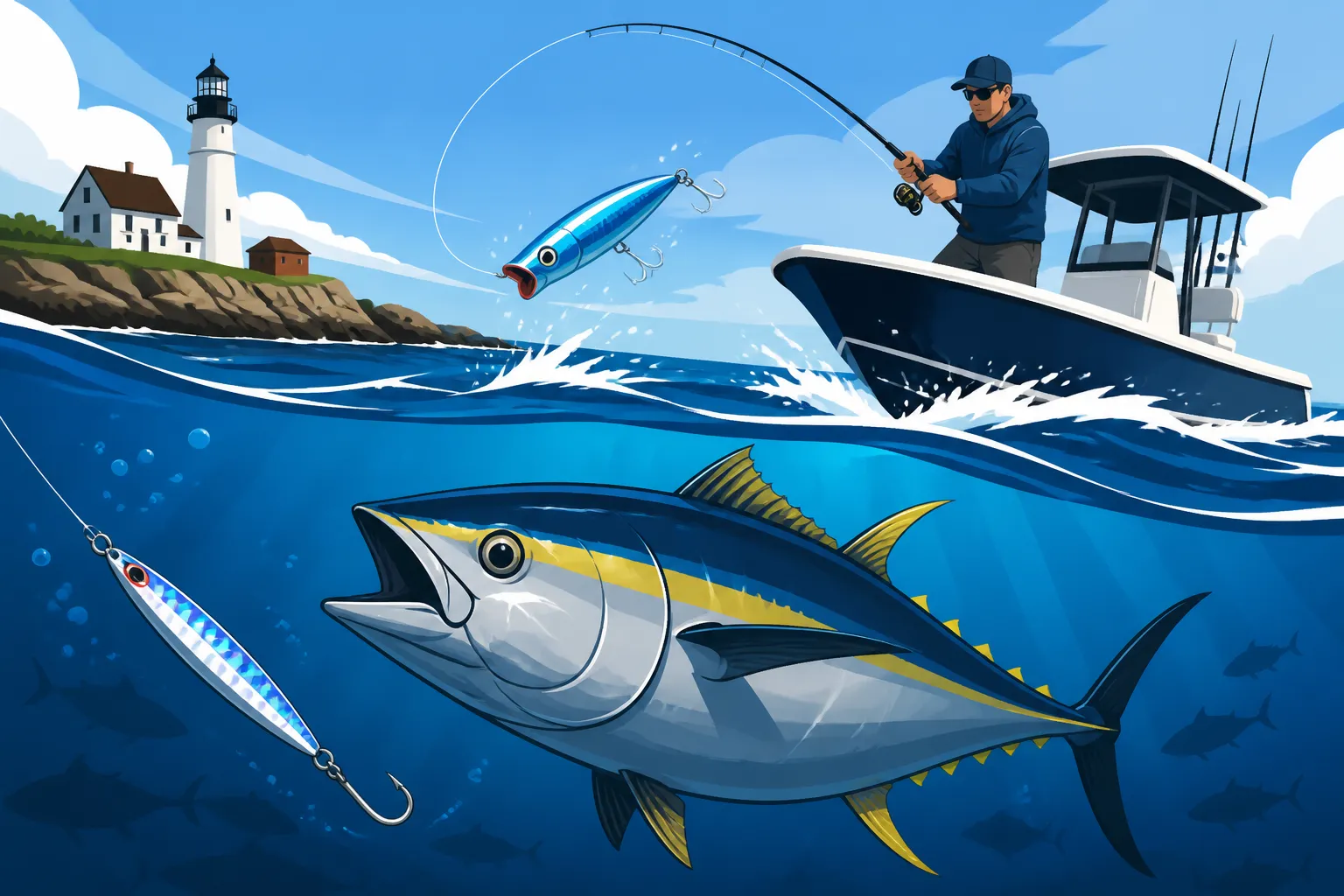
- Vertical Jigs (Speed Jigs / Butterfly Jigs): These are long, slender metal jigs designed to be dropped quickly to depth and then retrieved with a rapid, erratic motion, mimicking a fleeing baitfish. They come in various weights (from 150g to 400g+ depending on depth and current) and colors. Silver, blue/silver, pink, and glow-in-the-dark are common and effective. Brands like Shimano Butterfly, Daiwa Saltiga, and RonZ are highly regarded.
- Slow Pitch Jigs: While less common for the largest bluefin, slow pitch jigs can be incredibly effective when tuna are feeding on smaller, injured baitfish or when they are finicky. These jigs have a unique fluttering action on the fall and are worked with a slower, rhythmic retrieve.
Poppers:
- Cup-Faced Poppers: These lures have a concave front that creates a significant "splash" and "pop" when retrieved vigorously. This disturbance mimics a feeding tuna or a struggling baitfish, drawing aggressive strikes. Sizes typically range from 150g to 250g, and colors often imitate mackerel, herring, or squid. Popular brands include Halco, Yo-Zuri, and Nomad Design.
- Stickbaits / Walkers: While not technically "poppers," these surface lures are often used in similar scenarios. They typically have a more elongated body and a subtle walk-the-dog or side-to-side action. They are particularly effective when tuna are feeding on smaller bait and are less inclined to chase a massive splash, offering a more refined presentation. Shimano Orca and Daiwa Dorado are excellent examples.
| Lure Type | Action/Presentation | Ideal Conditions | Target Depth Range | Pros | Cons |
|---|---|---|---|---|---|
| Vertical Jig | Fast, erratic darting, fleeing baitfish | Tuna feeding deep, marked on sonar | Mid-column to Bottom | Highly effective on deep fish, less wind-affected | Can be physically demanding, requires specific rod action |
| Slow Pitch Jig | Fluttering, dying baitfish on the fall | Finicky tuna, lighter bites, deep water | Mid-column to Bottom | Entices subtle bites, less physical than speed jigging | Slower retrieve, less "flashy" for aggressive fish |
| Cup-Faced Popper | Loud splash and "pop," struggling surface bait | Tuna feeding on surface, visible busts | Surface | Triggers aggressive, visual strikes, exciting | Can be tiring to work, less effective on deep fish |
| Stickbait/Walker | Side-to-side "walk," fleeing surface bait | Tuna feeding on surface, calmer conditions | Surface | More subtle than poppers, good for finicky surface feeders | Less audible disturbance than poppers, requires skilled retrieve |
Jigging Techniques for Bluefin Tuna
Jigging is a highly active and rewarding way to target bluefin tuna. It requires precision, endurance, and a good understanding of how to present your lure effectively in the water column.
Vertical Jigging Strategies
Vertical jigging involves dropping a heavy jig straight down to the depth where tuna are holding, then retrieving it with a specific action. The most common approach is to drop the jig past the fish, then retrieve it rapidly through the strike zone. This often means cranking the reel handle quickly while simultaneously sweeping the rod tip up and down, creating an erratic, dying baitfish action. The goal is to provoke a reactionary strike.
When you mark fish on your sonar, pay close attention to their depth. If tuna are at 150 feet, drop your jig to 200 feet and work it up through the fish. Vary your retrieve speed and jigging motion until you find what triggers a bite. Sometimes a fast, continuous retrieve is best; other times, a series of quick snaps followed by a pause can be more effective. The key is experimentation. If you're fishing with friends, try different jig weights, colors, and retrieve styles until someone gets hit, then try to replicate that success. Remember, these powerful fish often strike on the fall or when you pause, so be ready for a sudden, jarring hit at any moment. You'll want to review your drag settings before heading out – a properly set drag is crucial when a tuna strikes. For more on general fishing regulations, check out Massachusetts Recreational Fishing Rules and Bag Limits.
Speed Jigging and Butterfly Jigging
Speed jigging is exactly what it sounds like: a high-speed, high-energy retrieve designed to mimic a fleeing baitfish. You'll typically drop a slender, hydrodynamic jig to the desired depth and then crank it up as fast as you can, incorporating sharp upward sweeps of the rod. This technique is incredibly effective when tuna are actively feeding and highly aggressive. The rapid movement often triggers a chase and strike response. This is physically demanding work, so be prepared for a workout!
Butterfly jigging, popularized by Shimano, is a variation that uses wider, often asymmetrical jigs that flutter and glide more on the retrieve and fall. The retrieve is often a rhythmic combination of short lifts and drops, allowing the jig to "swim" and flash. The beauty of butterfly jigs is their versatility; they can be worked fast for aggressive tuna or with a more subtle, slower retrieve for finicky fish. Many experienced anglers prefer the feel and action of butterfly jigs for their ability to entice bites from less active fish. Whether speed jigging or butterfly jigging, the moment of the strike is explosive – you'll know it when it happens! Having a good harness and gimbal belt can save your back during these intense fights.
Popping Techniques for Bluefin Tuna
Popping for bluefin tuna is arguably one of the most visually exciting ways to catch them. There's nothing quite like watching a massive bluefin explode on your surface lure.
Casting and Retrieving Poppers
Successful popping starts with good casting. You need to be able to cast heavy poppers a significant distance, often into the wind, to reach breaking fish. Heavy spinning gear is essential for this. Once your popper lands, the retrieve is key. The goal is to create as much commotion as possible on the surface to mimic a struggling baitfish or a tuna feeding frenzy.
For cup-faced poppers, you'll typically retrieve with a series of sharp, downward sweeps of the rod tip, reeling in the slack as you do so. This makes the popper "gurgle" and "splash," pushing water forward. Experiment with the rhythm: sometimes a continuous, aggressive pop is best, other times a few pops followed by a pause can be more enticing. Often, tuna will hit during that pause, so stay vigilant! Cast your popper beyond the visible feeding activity and retrieve it through the chaos. This makes it appear as if your lure is trying to escape the feeding fish, a natural trigger for a predator.
Walk-the-Dog and Splash-and-Pause Methods
While cup-faced poppers create a lot of noise, stickbaits and certain poppers excel at the "walk-the-dog" technique. This involves a rhythmic twitching of the rod tip while reeling in slack, causing the lure to glide from side to side across the surface. It's a more subtle, sinuous action that can be deadly when tuna are shy or feeding on smaller bait. It imitates an injured or disoriented baitfish, an easy target for a hungry tuna. Mastering this technique takes practice, but the payoff can be huge.
The "splash-and-pause" method, as the name suggests, combines aggressive surface commotion with periods of stillness. You might give your popper two or three hard pops, then let it sit motionless for a few seconds. This mimics a struggling baitfish that momentarily gives up, only to try and flee again. Often, the strike will come when the lure is completely still, or just as you begin to retrieve again. This method requires patience and trust in your lure's ability to entice a bite even when not actively moving. You might find a great selection of these specialized lures available for purchase on Amazon, giving you a wide variety of sizes and colors to experiment with.
Timing Your Bluefin Tuna Jigging and Popping Trips
Success in bluefin tuna fishing, especially with active techniques like jigging and popping, is heavily dependent on timing. Being in the right place at the right time is paramount.
Prime Seasons and Weather Windows
In Massachusetts, the bluefin tuna season typically kicks off in late spring, usually May or June, with smaller "schoolie" tuna arriving, followed by larger giants through the summer and into the fall. The peak time for jigging and popping often coincides with the presence of abundant baitfish and warmer water temperatures, generally from July through October. This is when the tuna are most active and feeding aggressively on the surface. For a comprehensive overview of when different species are biting, consult our guide on Massachusetts Saltwater Fishing Seasons.
Weather plays a massive role. Calm seas and light winds are ideal for both jigging and popping. For popping, calm conditions allow for easier casting and a clearer presentation of your surface lure. For jigging, less drift makes it easier to keep your jig vertical and work it effectively. Strong winds and heavy chop can make accurate casting impossible and make it difficult to feel subtle bites while jigging. Always keep a close eye on marine forecasts and be prepared to reschedule if conditions aren't favorable. It’s also wise to check a guide on the Best Month for Bluefin Tuna Charters off Massachusetts to help plan your trips.
Tides, Currents, and Their Impact
Tides and currents are powerful forces in the ocean and significantly influence bluefin tuna behavior. Strong tidal currents often concentrate baitfish into specific areas, such as rips, shoals, or channel entrances. Tuna will patrol these areas, waiting for an easy meal. For jigging, understanding current direction and speed is critical for controlling your jig's presentation and getting it to the desired depth. You might need heavier jigs in stronger currents.
For popping, strong currents can sometimes create turbulent areas where baitfish are disoriented, making it a prime location for surface strikes. However, overly strong currents can also make it difficult to work your popper effectively, pulling it too quickly or making it swim unnaturally. Many anglers find the period around slack tide, or the beginning and end of a strong current, to be particularly productive. These transition periods often see baitfish become more vulnerable or tuna move more actively. Observing how the current interacts with local structure, like the edges of Stellwagen Bank, can reveal hotspots.
Safety and Best Practices on the Water
Bluefin tuna fishing is an exhilarating sport, but it comes with inherent risks. Safety should always be your top priority, both for yourself, your crew, and the fish you're pursuing.
Onboard Safety and Teamwork
Fishing for bluefin tuna, especially giants, is a team sport. Even on a private boat, you'll need at least one or two other people to help with boat handling, gaffing, and managing the fight. Before you even leave the dock, ensure everyone on board knows their role and the safety protocols. This includes knowing where the safety equipment is (PFDs, first-aid kit, fire extinguisher), how to operate the VHF radio, and what to do in an emergency.
When a tuna is hooked, communication is key. The angler in the fighting chair or on stand-up tackle needs to communicate with the boat operator about the direction of the fish. The boat operator, in turn, needs to maneuver the boat to keep the line clear of props and keep the fish in a favorable position for the angler. Be aware of your surroundings: heavy jigs and poppers can be dangerous projectiles during casting or if a fish throws the hook. Always wear appropriate footwear, sunglasses to protect your eyes, and a hat. Having a well-stocked cooler with plenty of water and snacks, and even a good quality tackle box from brands available on Amazon, will keep everyone comfortable and focused during long days on the water.
Conservation and Responsible Angling
Bluefin tuna are a highly prized and managed species. As responsible anglers, it's our duty to adhere strictly to all regulations to ensure the sustainability of the fishery. This includes understanding the specific size limits, bag limits, and seasons for bluefin tuna in Massachusetts. These rules are subject to change, so always consult the latest regulations from the Massachusetts Division of Marine Fisheries or NOAA Fisheries before heading out. Our guide on Bluefin Tuna Size Limits off Massachusetts provides detailed information.
When jigging and popping, you often hook tuna with single, barbless hooks, which can aid in a clean release if you plan to let the fish go. If you are keeping a fish, ensure it is dispatched quickly and humanely. For released fish, minimize the fight time as much as possible, handle the fish carefully (preferably in the water), and ensure it is revived before release. Avoid dragging fish onto the boat if you intend to release them, as this can severely damage their internal organs. Consider taking photos quickly and getting the fish back in the water promptly. Remember, the goal is not just to catch fish, but to ensure future generations can also experience the thrill of jigging and popping for these magnificent creatures.
Disclaimer
Please note that fishing regulations, including seasons, bag limits, and size limits, are subject to change. Always consult the latest rules and regulations published by the Massachusetts Division of Marine Fisheries (DMF) and NOAA Fisheries before engaging in any fishing activity. This guide is for informational purposes only and should not be considered a substitute for official regulations or professional safety advice.