How to Catch Largemouth Bass in Massachusetts Ponds
There’s nothing quite like the thrill of a largemouth bass striking your lure, but let’s be honest, those beautiful green fish in Massachusetts ponds can sometimes feel like elusive ghosts. You spend hours casting, trying every trick in your book, and still, the bite just isn’t there. It’s a common frustration, especially with the diverse and often challenging waters we have here in the Bay State. This comprehensive guide is designed to cut through that guesswork, giving you the insights and techniques you need to consistently hook into chunky largemouth bass across Massachusetts' many freshwater havens.
Understanding Largemouth Bass Behavior in Massachusetts Ponds
Before you even think about tying on a lure, truly understanding the largemouth bass you're pursuing in Massachusetts' diverse ponds is absolutely key. These aren't just fish that randomly swim around; they have routines, preferences, and instincts that, once you learn to read them, can dramatically improve your success. It’s about thinking like a bass, anticipating their next move, and knowing where they’ll be and why.
Habitat Preferences and Foraging Habits
Largemouth bass are creatures of comfort and opportunity. In our Massachusetts ponds, they gravitate towards areas that offer three critical things: cover, food, and favorable water conditions. Think about the aquatic jungle—lily pads, fallen trees, brush piles, docks, submerged rocks, and even thick aquatic vegetation like hydrilla or milfoil. These aren't just pretty features; they’re vital ambush points where bass hide, waiting to pounce on unsuspecting prey.
They are opportunistic predators, and their diet in Massachusetts ponds is quite varied. Young bass will feast on insects, small minnows, and crustaceans. As they grow, their palate expands to include larger baitfish like golden shiners, sunfish, and yellow perch. They’re also not shy about devouring frogs, crawfish, and even ducklings or small rodents that fall into the water. This diverse diet means you need to present lures that mimic these different prey items effectively. A big, juicy topwater frog over lily pads or a plastic crawfish worked along the bottom near rocky structure can be incredibly effective, precisely because it imitates what they naturally hunt.
The Impact of Water Temperature and Clarity
Water temperature is arguably the most crucial factor influencing largemouth bass behavior. These fish are cold-blooded, meaning their metabolism directly correlates with the water temperature. In Massachusetts, our ponds experience significant seasonal temperature swings, from icy winters to warm summers, and bass adjust their activity levels accordingly.
During the colder months, when water temperatures dip below 50°F (10°C), bass become sluggish. Their metabolism slows down, and they'll move to deeper, more stable water, often suspending or resting near structure. They won't chase fast-moving baits, so slow presentations are critical. Conversely, in the warmer summer months (above 70°F or 21°C), bass are highly active. Their metabolism is in overdrive, and they'll feed aggressively, often in shallower water during low-light conditions or moving to deeper, cooler areas during the midday heat. Understanding these temperature zones will guide your choice of location and retrieve speed.
Water clarity also plays a significant role. In clear ponds, bass rely heavily on sight, making natural-looking lures and finesse techniques more effective. You'll also need to be stealthier in your approach, as they can spot you easily. In murky or stained water, bass rely more on their lateral line (which detects vibrations) and scent. Here, louder, bulkier lures with strong vibrations or those emitting scent are often more productive. Darker colors, which create a strong silhouette against the stained water, can also perform well.
Finding Prime Largemouth Bass Pockets in Massachusetts
Successfully catching largemouth bass often boils down to finding them first. Massachusetts is dotted with thousands of ponds, from tiny kettle ponds nestled in state forests to larger, more developed impoundments. Knowing what to look for, beyond just "water," is critical to pinpointing where bass are likely to congregate and feed. It's about breaking down the pond into fishable sections and identifying the high-percentage areas. You can find excellent places to start your search by looking into some of the Best Freshwater Ponds and Lakes in Massachusetts.
Reading the Water for Key Structure and Cover
When you arrive at a Massachusetts pond, take a moment to "read" the water. Look for visible signs of structure and cover—these are bass magnets.
- Weed Lines and Mats: Think beyond just open water. Bass love to patrol the edges of weed beds or even hide beneath dense mats of vegetation, ambushing prey. Look for distinct edges where shallow weeds meet deeper water or where a break in a dense mat creates an opening. Punching through these mats with heavy jigs or Texas-rigged plastics can yield explosive strikes.
- Fallen Trees and Brush Piles: Any submerged timber provides excellent cover. Bass will position themselves in the branches, waiting for baitfish to swim by. These are often high-percentage spots, but be prepared for snags! Flipping jigs, creature baits, or even slow-rolling spinnerbaits around these areas can be deadly.
- Docks and Piers: Man-made structures like docks offer shade, cover, and often extend into deeper water, creating an ideal ambush point. Bass will hold under these structures, especially on sunny days. Skipping jigs or soft plastics far under docks, where other anglers can't reach, is a pro move.
- Rocky Bottoms and Boulders: Rocky areas, particularly those with scattered boulders or ledges, provide hiding spots for crawfish and baitfish, which in turn attract bass. Lipless crankbaits, jigs, and Carolina rigs are excellent choices for working these types of areas.
- Contour Lines and Drop-offs: While not always visible, these are crucial. Look for areas where shallow flats quickly drop off into deeper water. Bass will often hold along these depth changes, especially during transitions in weather or season. Your fish finder, if you have one, will be invaluable here, but even without it, look for clues on the bank that might indicate a steep drop-off.
Targeting Different Depths for Seasonal Success
Bass move vertically in the water column depending on the season and time of day. What works in spring might be useless in summer or fall.
- Spring: As Massachusetts ponds warm up in early spring, bass move from their deeper wintering holes into shallower, sun-warmed areas to feed and eventually spawn. Look for north-facing coves, shallow flats, and areas protected from wind. Here, they’re often focused on feeding to regain energy before the spawn. Later in spring, during the spawn, bass will be found on beds in very shallow, hard-bottomed areas. Finesse worms or small jigs are excellent for sight fishing beds, though many anglers prefer to leave spawning fish undisturbed.
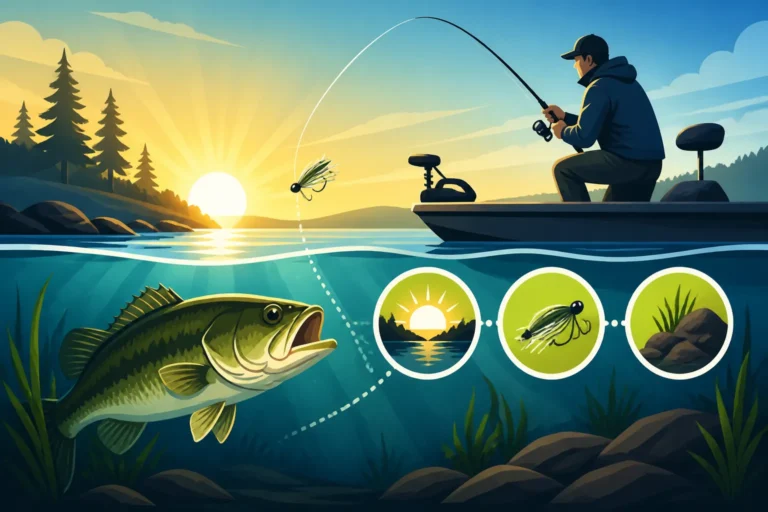
- Summer: Summer means warmer water, and bass will often seek cooler, oxygenated zones. This might be deeper water, shade from docks or overhanging trees, or denser weed beds. Early mornings and late evenings see them venturing into shallows to feed, but during the heat of the day, they'll often be deeper. Topwater lures are fantastic during low-light hours, while deeper-diving crankbaits, Texas-rigged worms, or jigging spoons become more effective midday.
- Fall: As water temperatures cool down in the fall, bass go on a feeding frenzy, packing on weight for the upcoming winter. They'll often school up and actively chase baitfish. This can be one of the best times of year for consistent action. Look for them in a variety of depths, often shallower during sunny periods and deeper on cloudy days. Crankbaits, spinnerbaits, and even large swimbait presentations can be very effective as they mimic baitfish aggressively.
- Winter: During winter, when ice may cover many Massachusetts ponds, bass retreat to the deepest, most stable water. They become lethargic and are harder to catch. Ice fishing with small jigs, spoons, or tip-ups baited with live shiners can still produce, but presentations need to be extremely slow and subtle. The Massachusetts Freshwater Fishing Season Calendar can help you align your tactics with the typical seasonal patterns.
Essential Gear for Largemouth Bass Fishing
Having the right tools for the job can make a huge difference in your bass fishing success. You don't need to break the bank, but investing in quality gear tailored to bass fishing will pay dividends. Many of these items are readily available on platforms like Amazon, offering a wide selection to suit every budget.
Rods, Reels, and Line Choices
Your rod, reel, and line are the direct connection to the fish, so choosing wisely is crucial.
- Rods: For largemouth bass in Massachusetts ponds, you'll generally want a versatile setup. A medium-heavy power, fast action spinning rod (6'6" to 7'2") is a great all-around choice for soft plastics, jigs, and lighter crankbaits. For heavier cover, larger lures, or punching through dense vegetation, a medium-heavy to heavy power, fast action casting rod (6'8" to 7'6") is indispensable. The "fast action" means the rod bends mostly in the tip, giving you sensitivity for detecting bites and backbone for setting hooks.
- Reels: Spinning reels (size 2500-3000) pair well with spinning rods for lighter lures and finesse techniques. Baitcasting reels (with a gear ratio between 6.x:1 and 7.x:1) are for casting heavier baits and provide more power for fighting larger bass and retrieving lures quickly. A good quality reel from brands like Shimano or Daiwa will offer smooth casting and a reliable drag system.
- Line: This is often overlooked but critical.
- Monofilament (Mono): Affordable, good knot strength, and offers stretch, which can be forgiving for treble hook baits. Ideal for crankbaits and topwaters. Test weights range from 8-15 lb.
- Fluorocarbon (Fluoro): Virtually invisible underwater, highly sensitive, and sinks. Excellent for finesse techniques, jigs, and Texas-rigged plastics. It has less stretch than mono, giving you better feel. Test weights usually 10-20 lb. Brands like Seaguar or Berkley offer great options.
- Braided Line (Braid): Extremely strong for its diameter, no stretch, and highly sensitive. Ideal for heavy cover, punching through mats, and topwater frogs where you need to muscle fish out. It's also great for a main line with a fluorocarbon leader. Test weights typically 20-50 lb. Look for PowerPro or Sufix on Amazon.
Lure Selection: A Pond Angler's Arsenal
The world of bass lures is vast, but for Massachusetts ponds, a core selection will cover most situations.
- Soft Plastics: These are incredibly versatile.
- Worms (e.g., Senkos, Texas-rigged worms): Essential for finesse fishing, especially around structure or when the bite is tough. Try different colors like green pumpkin, black, or junebug.
- Creature Baits/Jigs: Mimic crawfish or small baitfish. Perfect for flipping into heavy cover or working along the bottom. Pair with a weedless hook.
- Swimbaits: Great for imitating baitfish. Use paddle-tail versions for a realistic swimming action.
- Topwater Lures: Explosive and exciting.
- Poppers/Walk-the-Dog baits: Create commotion on the surface. Best in low-light conditions or over shallow cover.
- Frogs: Designed for fishing over lily pads and dense mats. Weedless design allows you to retrieve them through seemingly impenetrable cover.
- Crankbaits: Cover a lot of water and elicit reaction strikes.
- Shallow-divers: Good for early spring or over shallow flats.
- Medium/Deep-divers: Essential for targeting bass holding deeper during summer or fall. Experiment with colors that mimic local baitfish (e.g., perch, shiner patterns).
- Lipless Crankbaits: Great for covering open water, vibrating to attract bass in stained water.
- Spinnerbaits and Chatterbaits: Excellent for covering water, especially around weed edges and submerged timber. The flash and vibration can be irresistible. Consider buying a variety of these on Amazon to have options for different water conditions.
Top Techniques for Largemouth Bass in Massachusetts Ponds
Now that you've got your gear and you know where to look, it's time to talk about how to present your lures effectively. Different situations call for different techniques, and mastering a few key ones will significantly elevate your game on Massachusetts ponds.
Finesse Fishing for Tricky Bites
Sometimes, bass are just plain picky, especially in clear water or pressured ponds. This is where finesse techniques shine. They involve lighter line, smaller lures, and subtle presentations to trigger bites from wary fish.
- Wacky Rigging: This is a fantastic, simple technique. Take a soft plastic stick bait (like a Yamamoto Senko), and hook it directly through the middle. When it sinks, both ends wiggle enticingly. Cast it near docks, fallen trees, or weed lines, letting it fall naturally on a slack line. The slow, tantalizing shimmy is often irresistible to even the most reluctant bass. This presentation excels in situations where bass are suspended or just not actively chasing.
- Ned Rig: Originating in the Midwest, the Ned Rig has taken the bass world by storm. It consists of a small, mushroom-shaped jig head paired with a short, buoyant soft plastic worm. It stands straight up on the bottom, mimicking a foraging minnow or crawfish. Cast it out, let it sink, and then slowly drag or hop it along the bottom. It's subtle, effective, and perfect for catching bass when they're lethargic or in clear, cold water.
- Drop Shot: The drop shot rig places your weight at the bottom of the line, with your hook tied above it, holding a soft plastic worm or bait horizontally in the water column. This allows you to fish a specific depth very precisely, suspending your bait right in front of the bass's face. It's excellent for vertically fishing structure, over submerged brush, or when you see bass on your fish finder at a certain depth. It’s a subtle presentation that can coax bites when nothing else will.
Power Fishing for Aggressive Bass
When bass are active and aggressive, power fishing is the way to go. These techniques involve covering water quickly, making noise, and triggering reaction strikes.
- Crankbaiting: Tying on a crankbait allows you to rapidly cover large areas, exploring different depths and structures. Choose a crankbait that dives to the depth you want to fish. Cast it out and retrieve it with a steady, varying speed. Let it deflect off rocks, wood, or the bottom—those deflections often trigger strikes. The erratic action and vibrations of a crankbait are highly effective for searching out active fish, especially during the pre-spawn and fall feeding frenzies. Make sure to match your crankbait colors to local baitfish where possible, or use bright, attention-grabbing colors in stained water.
- Spinnerbait and Chatterbait Fishing: These lures combine flash, vibration, and often a skirted profile to imitate baitfish. Spinnerbaits, with their rotating blades, are fantastic for cutting through vegetation and deflecting off cover. Chatterbaits, with their vibrating blade, create a unique, irresistible wobble and thump. Both are excellent for covering water along weed lines, over submerged grass, or around fallen timber. Experiment with retrieve speeds – sometimes a slow, steady roll is best, other times a stop-and-go retrieve will get more attention.
- Topwater Explosions: Nothing beats the adrenaline rush of a largemouth bass exploding on a topwater lure. These baits are fished on the surface and are most effective during low-light conditions (dawn, dusk, cloudy days) or over shallow, heavy cover like lily pads. Poppers, with their cupped faces, create a "bloop" sound and splash. Walk-the-dog baits (like a Zara Spook) have a side-to-side gliding action. Frog lures are specifically designed to be worked over thick mats of vegetation where other lures would snag. The key is to work them with pauses, mimicking an injured or unaware prey item. This type of fishing is often discussed in guides like "How to Catch Largemouth Bass in Massachusetts Ponds", highlighting the excitement of surface strikes.
Mastering Different Lure Retrieves
The retrieve isn't just about reeling in line; it's about giving your lure lifelike action.
- Steady Retrieve: The simplest, yet effective for many lures, especially crankbaits and spinnerbaits. Varying the speed can make a big difference.
- Stop-and-Go: Cast, retrieve a few feet, pause, then retrieve again. This mimics a wounded baitfish and can trigger strikes as the lure starts moving again after a pause. Great for jerkbaits, lipless crankbaits, and even some soft plastics.
- Twitching and Jerking: For topwater lures and some soft plastics, sharp twitches of the rod tip give the lure an erratic, darting action. For jerkbaits, aggressive jerks followed by long pauses are key.
- Dragging and Hopping: Primarily for bottom-contact lures like jigs, Ned rigs, and Texas-rigged worms. Drag the lure slowly across the bottom, or lift your rod tip to make it hop, letting it fall back to the bottom on a semi-slack line. The bite often comes on the fall.
- Punching and Flipping: For extremely heavy cover, like dense weed mats or thick brush. This involves quickly dropping a heavy weighted jig or Texas-rigged creature bait into small openings in the cover. It's a precise, aggressive technique requiring stout gear to extract big bass from heavy cover.
Here’s a quick overview of popular lure types and their optimal conditions:
| Lure Type | Best Conditions | Target Depth | Ideal Retrieve | Key Benefits |
|---|---|---|---|---|
| Soft Plastics | Clear to stained water, around structure, finesse | All depths | Drag, hop, twitch, slow fall (wacky rig) | Versatile, natural look, subtle action, weedless |
| Topwater Lures | Low light, over shallow cover (lily pads, grass) | Surface | Pop, walk-the-dog, slow glide with pauses | Exciting strikes, good for heavy cover |
| Crankbaits | Covering water, targeting specific depths, reaction | Shallow to deep | Steady retrieve, deflect off structure, stop-and-go | Covers water fast, strong vibration, reaction bites |
| Spinnerbaits | Around weed lines, timber, stained water | Shallow-medium | Steady retrieve, slow roll, lift-and-drop | Flash & vibration, good in cover, versatile |
| Jigs (Skirts) | Flipping/pitching heavy cover, bottom fishing | Bottom | Hop, drag, swim, subtle shakes | Mimics crawfish/baitfish, powerful hooksets |
| Chatterbaits | Weed edges, open water, stained conditions | Shallow-medium | Steady retrieve, stop-and-go, rip-and-fall | Unique vibration & thump, excellent attraction |
Seasonal Strategies for Massachusetts Largemouth Bass
Fishing for largemouth bass in Massachusetts ponds isn't a one-size-fits-all endeavor. The changing seasons dictate where bass will be, how active they are, and what lures they’ll respond to. Adapting your approach with the turning of the calendar is essential for consistent success.
Springtime Spawning and Post-Spawn Action
Spring is a time of transition and high anticipation for bass anglers in Massachusetts. As ice melts and water temperatures slowly climb into the 50s and low 60s Fahrenheit, largemouth bass shift from their deeper wintering holes to shallower, warmer waters. This movement is driven by two primary instincts: feeding after a long, dormant winter, and eventually, spawning.
- Pre-Spawn (Water Temp 50-60°F): This is often considered one of the best times to catch big bass. They're hungry and actively feeding to build energy for the spawn. Look for them in shallow coves, bays, and flats that warm up quickly. Crankbaits that mimic baitfish, spinnerbaits retrieved slowly along weed lines, and jigs worked patiently around submerged wood can be incredibly effective. Bass will be looking for easy meals, and covering water to find those active fish is key.
- Spawn (Water Temp 60-70°F): Once water temperatures consistently reach the low to mid-60s, bass move into very shallow, protected areas to build nests (beds) and spawn. These beds are often hard-bottomed areas near cover. Male bass guard the eggs and fry aggressively. While it's possible to sight-fish these bass with soft plastics (like Texas-rigged worms or small creature baits), many anglers opt to avoid targeting spawning fish to allow for successful reproduction.
- Post-Spawn (Water Temp 70°F+): After the spawn, bass are often exhausted and scattered. Females will move to slightly deeper water to recover, while males remain shallower guarding the fry for a short period. This can be a challenging time. Focus on areas near deeper water where bass can recuperate, but also be ready to ambush baitfish. Topwater lures, weightless worms, and light jigs can work as bass slowly regain their energy and start feeding again. This phase often overlaps with the general Massachusetts Fishing Seasons Explained for many species.
Summer Heat and Fall Feeding Frenzy
Summer and fall bring their own unique challenges and opportunities for bass anglers. Understanding the bass's response to rising and falling water temperatures is paramount.
- Summer (Water Temp 70-85°F): The heat of a Massachusetts summer often pushes bass into deeper, cooler, and more oxygenated water during the brightest parts of the day. Look for them around deeper structure, submerged hydrilla beds, shady docks, or brush piles. Early mornings and late evenings are prime times for topwater action in the shallows as bass move up to feed. During midday, switch to deeper techniques like Texas-rigged worms, deep-diving crankbaits, or jigging spoons. Pay attention to shady areas, as even a small patch of shade can hold a significant bass. Don't be afraid to try night fishing in summer; bass often become much more active and bold after dark.
- Fall (Water Temp 50-70°F): As autumn colors paint the Massachusetts landscape, water temperatures begin to drop, and largemouth bass go on a full-blown feeding frenzy. This is their last chance to gorge themselves before the long, lean winter. Bass will often school up and follow baitfish migration patterns. This can be an incredibly productive time for power fishing. Crankbaits, spinnerbaits, and large swimbaits that imitate schools of baitfish are incredibly effective. Focus on main lake points, channel swings, and areas where baitfish are congregating. Bass will move between various depths throughout the day, so be prepared to adjust. This intense feeding behavior is why many consider fall a peak time for trophy bass.
Overcoming Common Largemouth Bass Fishing Challenges
Every angler, from beginner to seasoned veteran, faces days when the bass just aren’t biting. It’s part of the game. But instead of throwing in the towel, understanding common challenges and having a few troubleshooting tactics up your sleeve can turn a frustrating day into a successful one.
Dealing with Tough Bites and Pressured Waters
Massachusetts ponds, especially those easily accessible or well-known, can experience significant fishing pressure. Bass in these waters become "educated" – they've seen every lure, felt every hook, and are much warier.
- Downsize and Lighten Up: When bass are pressured, they become more sensitive to unnatural presentations. Switch to lighter line (e.g., 8-10 lb fluorocarbon or braid with a fluorocarbon leader), smaller lures (e.g., 4-inch worms instead of 7-inch, smaller jigs), and use the most natural colors possible.
- Finesse is Your Friend: This is precisely when finesse techniques like the Ned Rig, wacky rig, or drop shot truly shine. The subtle, lifelike action of these rigs is less threatening and more appealing to wary bass. Slow down your retrieve significantly.
- Stealth and Distance: Approach your spots quietly. Avoid loud noises, casting shadows over the water, or stomping around on the bank. Make longer casts to avoid spooking fish that might be holding in shallower, clearer water.
- Fish Different Times: Try fishing during off-peak hours, like mid-week, or even at night during the warmer months when other anglers aren't around. Sometimes a simple change in timing is all it takes.
- Explore New Spots: If your usual honey holes aren't producing, don't be afraid to explore less obvious areas of the pond. Sometimes the smallest, most overlooked pocket of cover holds the biggest, least-pressured fish. Resources like "MassFishHunt account setup guide" can help you locate new public access ponds.
Adapting to Weather Changes and Environmental Factors
The weather in Massachusetts is notoriously unpredictable, and it directly impacts bass behavior. Being able to adapt on the fly is a hallmark of a successful angler.
- Cold Fronts: A sudden drop in temperature after a warm spell can shut bass down almost completely. After a cold front, bass will often move deeper and become much less active. This is a prime time for extremely slow retrieves with finesse baits (jigs, Ned rigs, slow-moving worms) fished meticulously on structure. They might only strike if the bait is practically handed to them.
- Rainy Days: Overcast, rainy days can sometimes be fantastic for bass fishing, especially if the rain is light and steady, not a heavy downpour. The reduced light often brings bass into shallower water, and the natural disturbance can disorient baitfish. Spinnerbaits, chatterbaits, and even topwater lures can be excellent choices on rainy days. Heavy rain can muddy up water and drop temperatures, requiring adjustments.
- Wind: Wind can be a blessing or a curse. A light chop on the water can break up the surface, making bass feel more secure and less likely to see you. It can also push baitfish into certain areas, concentrating bass. Focus on the "wind-blown banks" where bait is gathered. However, too much wind can make casting difficult and create strong currents, making presentations challenging. On very windy days, seek out protected coves or leeward sides of islands.
- Water Levels and Clarity: Sudden changes in water level (due to heavy rain or drought) can displace bass and make them uneasy. High water might push them into newly flooded cover, while low water concentrates them in remaining deeper areas. Always observe the current conditions and consider how they might impact the bass's location and mood. If you're fishing in a new area, a quick check on the Massachusetts Recreational Fishing Rules and Bag Limits for the specific waterbody is always a good idea.
Disclaimer
Please remember that fishing regulations, including licensing requirements, bag limits, and seasons, can change. Always consult the official Massachusetts Division of Fisheries and Wildlife (MassWildlife) website or the current fishing regulations pamphlet before heading out. This guide is for informational purposes only and should not replace official state resources. Be safe, respect the resource, and tight lines!