How to fight a bluefish without losing your line
There's nothing quite as frustrating as battling a powerful fish, feeling that exhilarating tug and surge, only to have the line go slack right when you're about to land it. If you've spent any time fishing for bluefish in Massachusetts, you know this feeling all too well. Their aggressive nature, razor-sharp teeth, and relentless fight can turn a promising hook-up into a tale of the one that got away in seconds. This guide is dedicated to helping you understand these toothy predators, equip yourself properly, and master the techniques needed to successfully bring bluefish to the boat or shore without losing your line, your lure, or your sanity.
Understanding the Bluefish Challenge
Bluefish are absolute powerhouses, a true joy to catch for their sheer fighting spirit, but they're also notorious for being incredibly tough on an angler's gear. They don't just nibble; they strike with a vengeance, often inhaling lures and baits with enough force to snap lesser lines. Losing a bluefish isn't a sign of bad luck; it's often a testament to their unique anatomy and aggressive nature.
Why Bluefish Are So Tough on Tackle
Let's be real: bluefish are built to destroy. Their mouths are an arsenal of incredibly sharp, cone-shaped teeth that are perfectly designed for slicing through baitfish—and unfortunately, fishing lines. When a bluefish bites, it's not a gentle peck; it's a full-on attack. These fish tend to roll and thrash their heads violently once hooked, creating immense pressure on your line and leader, especially if it gets near those notorious choppers.
Beyond their teeth, their fighting style is nothing short of relentless. Unlike some fish that might make a few strong runs and then tire, bluefish often put up a prolonged, energetic battle. They'll make explosive runs, dart in unexpected directions, and often shake their heads violently at the surface. This combination of sharp teeth, aggressive strikes, and a powerful, unpredictable fight puts a tremendous strain on every component of your tackle, from the hook all the way up to the reel's drag system. It's why many anglers find themselves constantly retying or even completely replacing chewed-up leaders after a good bluefish session.
Common Ways Anglers Lose Bluefish
If you've lost a bluefish, chances are it falls into one of a few common categories. The most prevalent, and perhaps the most disheartening, is the dreaded bite-off. You feel the hit, set the hook, and then suddenly, nothing. A quick inspection of your line reveals a cleanly severed end, a grim reminder of those razor teeth. This usually happens when a bluefish completely engulfs the bait or lure, or when the line rubs against its jaws during the fight.
Another frequent culprit is line breakage under strain. This isn't always about the teeth; sometimes it's simply the sheer power of the fish coupled with an overlooked weak spot in your line. Maybe your knot wasn't tied perfectly, or your main line had some unseen abrasion from rubbing against rocks, barnacles, or even your own boat hull. Bluefish runs are explosive, and if your drag is too tight or your line compromised, something's gotta give. It's a humbling experience to watch your rod bend almost double, only for the line to snap with a heartbreaking crack.
Finally, hooks pulling free or bending out is another common way bluefish escape. Their hard mouths, combined with their head-shaking antics, can create leverage that twists hooks, especially if they're not sharp enough or too light-wire. A dull hook might only get a shallow purchase, easily ripping free during a violent head shake. Similarly, a hook that's too weak for the size and power of the fish can simply straighten out under the pressure of a strong bluefish, leaving you with an empty hook and a story to tell. Understanding these common failure points is the first step toward preventing them.
Essential Gear Upgrades for Bluefish
Tackling bluefish successfully often comes down to one thing: having the right gear. Trying to catch them with light freshwater bass tackle is a recipe for disaster and frustration. You need to upgrade your setup to match their power and their penchant for destruction. It's an investment, but one that pays off in landed fish and fewer lost lures.
Choosing the Right Rod and Reel Setup
When it comes to bluefish, think robust. You'll want a rod that has enough backbone, or "power," to handle their powerful runs and enough flexibility, or "action," in the tip to absorb their head shakes without tearing the hook out. For most inshore and nearshore bluefish fishing in Massachusetts, a medium-heavy to heavy action rod, typically 7 to 8 feet in length, is a solid choice. This length gives you good casting distance and leverage when fighting a fish.
As for the reel, a sturdy spinning reel in the 4000 to 6000 size range, or a conventional reel designed for saltwater, will serve you well. The most crucial feature is a smooth, reliable drag system. Bluefish will make blistering runs, and a sticky or inconsistent drag will quickly lead to snapped lines or pulled hooks. Make sure your reel has plenty of line capacity too; a screaming bluefish can peel off a surprising amount of line in a hurry. You'll be glad for that extra spool capacity when a big one decides to head for open water. Brands like Penn, Shimano, and Daiwa offer excellent saltwater-specific reels known for their durability and strong drag systems.
The Importance of Strong Line and Leaders
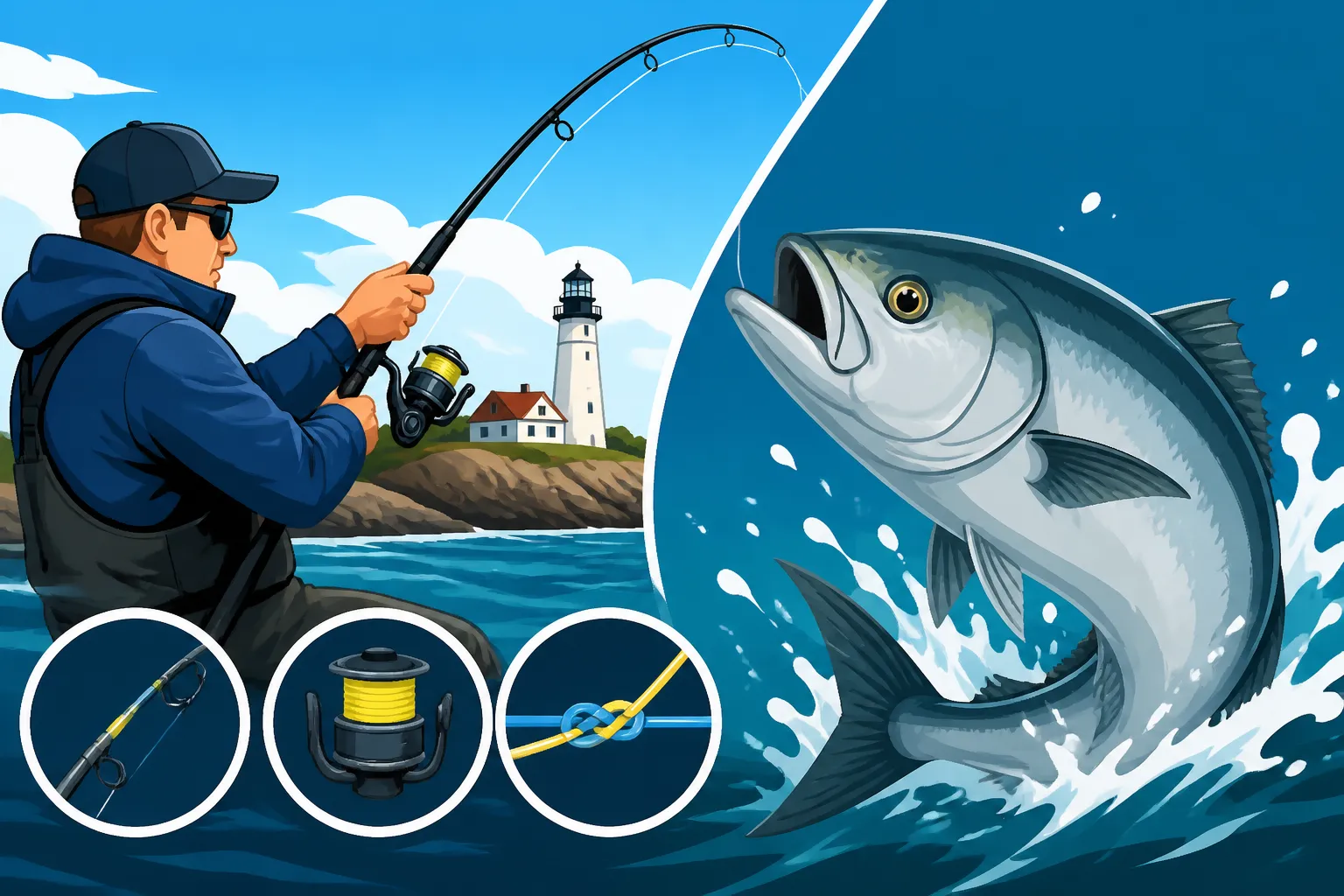
This is where many anglers either succeed or fail with bluefish. Your main line needs to be tough, and your leader needs to be virtually bluefish-proof. For your main line, braided line is a fantastic choice for bluefish. Its incredible strength-to-diameter ratio means you can spool up with 30-50 lb test braid without sacrificing much reel capacity. Braid also offers superior sensitivity, helping you feel even subtle bites and ensuring a solid hookset. You can find a great selection of high-quality braided lines on Amazon.
Now, let's talk about the leader – this is your frontline defense against those teeth. Straight fluorocarbon or monofilament leaders, while strong, are often no match for a bluefish's bite. You absolutely need to step up to wire leader or very heavy, bite-resistant fluorocarbon. A 6-inch to 12-inch section of single-strand, multi-strand, or even a heavy-duty fluorocarbon leader (80-100 lb test or more) is highly recommended. The wire leader is nearly impossible for a bluefish to bite through, making it the most reliable option. Many anglers opt for a small, strong swivel to connect the wire leader to their main line, preventing line twist, and then a sturdy snap or loop knot to attach their lure. For a wide variety of pre-made wire leaders and bulk wire to make your own, check out offerings on Amazon.
Here's a quick comparison of common leader materials:
| Leader Material | Pros | Cons | Best Use for Bluefish |
|---|---|---|---|
| Monofilament (Mono) | Good abrasion resistance, stretches | Easily bitten through by bluefish | Not recommended for direct leader to lure |
| Fluorocarbon (Fluoro) | Nearly invisible underwater, low stretch | Can still be bitten through by sharp teeth | 40-60lb for lighter tackle (may still get bit off); 80-100lb+ offers more protection. |
| Single-Strand Wire | Virtually bite-proof, very strong | Can kink, visible, requires special knots | Most reliable for preventing bite-offs |
| Multi-Strand Wire | Flexible, bite-proof, kink-resistant | More visible than fluoro, can fray over time | Excellent all-around bite protection |
Remember to check your leader frequently for nicks or damage, even with wire. Bluefish are masters of finding weak spots.
Selecting Bluefish-Resistant Lures and Hooks
Bluefish aren't particularly picky eaters, but they are incredibly powerful. This means your lures and hooks need to withstand a beating. When choosing lures, prioritize durable materials. Metal lures like casting spoons, jigs, and diamond jigs are excellent choices because they can handle repeated strikes and won't get chewed up like soft plastics or hard plastics with thin walls. Plugs and poppers made from tough plastic or wood are also great, but inspect them for cracks or bite marks after each fish. You can find a vast array of durable bluefish lures on Amazon.
The hooks on your lures are just as, if not more, important. Many out-of-the-box lures come with treble hooks that might be too weak or small for larger bluefish. Consider upgrading to stronger, corrosion-resistant treble hooks or even swapping them out for stout single hooks. Single hooks can be safer for both you and the fish (especially for release) and tend to hold better in a bluefish's bony mouth, reducing leverage for the fish to twist free. Ensure your hooks are always needle-sharp; a sharp hook penetrates quickly and securely, giving the fish less chance to throw it. Always check out the Massachusetts Recreational Fishing Rules and Bag Limits before heading out to ensure you're compliant with all regulations.
Mastering the Fight: Techniques to Land Bluefish
Having the right gear is half the battle, but knowing how to use it effectively is the other, equally critical, half. Fighting a bluefish requires a blend of finesse and brute strength, understanding when to apply pressure and when to let the fish run.
Setting the Hook and Initial Runs
When a bluefish hits, it's usually not a question of whether it's a strike, but how violently it strikes! Their aggressive nature means they often hook themselves, but a firm, sweeping hookset is still crucial to ensure the hook gets a solid hold in their tough mouth. Once you feel that initial weight and surge, reel down quickly to take up any slack, then sweep your rod upward or to the side, maintaining constant pressure. Don't go for a gut-wrenching yank that might pull the hook free or snap your line.
After the hookset, brace yourself for the initial run. Bluefish are speed demons, and they'll often make a strong, fast sprint away from you. This is where your smoothly operating drag system comes into play. Do not try to stop the fish cold. Let the drag do its job, smoothly paying out line as the fish pulls. Keep your rod tip up, creating a bend that acts as a shock absorber. Applying too much pressure at this stage can lead to a snapped line or the hook tearing out. Think of it as a controlled tug-of-war, where you're letting the bluefish exert its energy against the resistance of your drag, not against a brick wall. This initial burst of energy is often the most critical point in the fight.
Playing the Fish: Rod Pumping and Drag Management
Once the initial powerful run subsides, it's time to start working the fish toward you. This is typically done through a technique called "pumping and reeling." With your rod tip still up, gently lower the rod tip towards the water, reeling in any slack created as you do so. Then, smoothly raise the rod tip back up, pulling the fish closer. Repeat this motion, steadily gaining line. The key here is smooth, continuous pressure. Avoid jerky movements that could give the bluefish a chance to shake free.
Throughout the fight, vigilant drag management is paramount. Your drag should be set tight enough to apply significant pressure, but loose enough to allow the fish to take line when it makes a fresh run. If the fish surges again, resist the urge to clamp down on the spool or try to horse it in. Let the drag scream; it's doing its job! Many anglers lose bluefish by overtightening their drag in a panic, leading to line breaks. Conversely, a drag that's too loose will make the fight last forever, tiring you out and giving the fish more opportunities to rub the line or find an obstacle. Learn to make micro-adjustments to your drag during the fight if needed, but generally, set it before you start fishing and trust it. You're trying to tire the fish out, not break its spirit (or your line) in one go.
Handling the Bluefish at Boatside or Shore
The final moments of the fight, when the bluefish is at the boat or shore, are often the most chaotic and dangerous. Bluefish, even when seemingly exhausted, can summon a final burst of energy, thrashing violently. And those teeth are still incredibly dangerous.
If you're fishing from a boat, a sturdy gaff or a large, rubberized landing net is your best friend. A gaff provides a quick, secure way to boat the fish, but it is lethal and should only be used if you intend to keep the fish. For catch and release, a large net is ideal. Carefully guide the fish headfirst into the net. Once in the net, keep the fish subdued and away from your body. For even more control, a dedicated lip gripper tool can be invaluable, allowing you to securely hold the fish by its jaw while keeping your fingers far from its teeth. You can find robust options for nets, gaffs, and lip grippers on Amazon.
When fishing from shore, it's often best to slide the bluefish onto the sand or a flat, clear patch of rock if possible. Never try to grab a bluefish by hand near its mouth. Once it's on the ground, use long-nose pliers or a hook remover tool to quickly and safely unhook it. If the fish is particularly feisty, you can place a foot gently on its body to stabilize it while you remove the hook, ensuring you avoid its head. Always prioritize safety for yourself and the fish. For tips on managing your catch, you might want to review our guide on Massachusetts Bluefish Bag Limit and Season.
Post-Catch Care and Conservation
Whether you plan to keep your bluefish for the table or release it to fight another day, how you handle it immediately after the catch makes a huge difference. Responsible angling practices ensure the sustainability of our fisheries and the quality of your meal.
Safe Release Practices for Bluefish
For those times when you've caught your limit, or simply want to practice catch-and-release, handling bluefish correctly is essential for their survival. First and foremost, minimize the time the fish is out of the water. Bluefish, like all fish, struggle to breathe when exposed to air, and prolonged exposure dramatically reduces their chances of survival.
If the hook is easily accessible, use long-nose pliers or a dehooker to remove it quickly while the fish is still in the water or held gently over the water. If the fish has swallowed the hook deeply, cutting the line as close to the hook as possible is often the best option. Stainless steel hooks will eventually corrode, and the fish's body will likely expel the hook over time. Avoid excessive handling; if you must touch the fish, wet your hands first to protect its delicate slime coat, which is crucial for disease prevention.
Once the hook is removed, gently revive the fish by holding it upright in the water, facing into a gentle current, allowing water to flow over its gills. Don't just toss it back in; ensure it's strong enough to swim away on its own. It's a rewarding feeling to watch a healthy bluefish swim off, knowing it will continue to contribute to the vibrant marine ecosystem. Check out How to Catch Bluefish in Massachusetts for more species-specific tips.
Preparing Bluefish for the Table
Bluefish have a bit of a mixed reputation at the dinner table. Some folks absolutely love them, while others find their strong, oily flavor a bit much. A lot of this comes down to how they're handled immediately after being caught. If you plan to keep your bluefish, the absolute best thing you can do for flavor is to bleed the fish immediately. As soon as it's landed, make a cut to sever the gills or the artery leading to the tail (near the caudal fin) and let it bleed out thoroughly, ideally in a bucket of seawater or over the side of the boat. This removes much of the blood that contributes to the "fishy" taste.
After bleeding, get the fish on ice as quickly as possible. A cooler full of ice (not just a few cubes!) is crucial. The colder you keep the fish, the better the quality of the meat will be. Rapid cooling stops bacterial growth and prevents the meat from breaking down. When you get home, fillet the fish promptly and trim away any dark red lateral line meat, as this also contributes to a stronger flavor. Bluefish is excellent grilled, baked, or smoked. Don't be shy about experimenting with marinades and bold seasonings to complement its rich flavor. Remember, properly handled bluefish can be a delicious and underrated meal!
Massachusetts Bluefish Fishing Season Overview
Understanding when and where to target bluefish can significantly improve your chances of a successful outing. While bluefish are generally considered a warm-water species, they visit Massachusetts waters throughout a good portion of the year, providing ample opportunity for anglers.
Bluefish typically arrive in Massachusetts waters in late spring, usually around May, as water temperatures begin to rise. Their presence becomes more consistent through the summer months, and they remain abundant well into the fall, often through October, sometimes even into early November, depending on how long the water stays warm. During these warmer months, they can be found throughout the state's coastal waters, from the sandy beaches of Cape Cod to the rocky shores north of Boston. You'll find them crashing bait schools in bays, harbors, estuaries, and along the open coastline. For more details on species distribution, consider exploring Saltwater Fish Species in Massachusetts.
When targeting bluefish, especially from shore, look for signs of baitfish schools or diving birds, which often indicate bluefish are actively feeding. Tides also play a significant role, with moving water around inlets, rips, and channels often being prime bluefish territory. Consider exploring some of the Best Saltwater Fishing Spots on Cape Cod, Massachusetts or even venturing out to Cape Cod Canal Fishing Guide for Massachusetts Anglers where bluefish are frequently encountered. Just ensure you're always aware of current regulations, as the Massachusetts Saltwater Bag Limits by Species can change.
Disclaimer
Please remember that fishing regulations, including bag limits, size limits, and seasons, can change. Always consult the official Massachusetts Division of Marine Fisheries (DMF) or Massachusetts Division of Fisheries and Wildlife (MassWildlife) websites or publications for the most current and accurate information before heading out on your fishing trip. This guide is for informational purposes only and should not be considered a substitute for official regulatory documents.