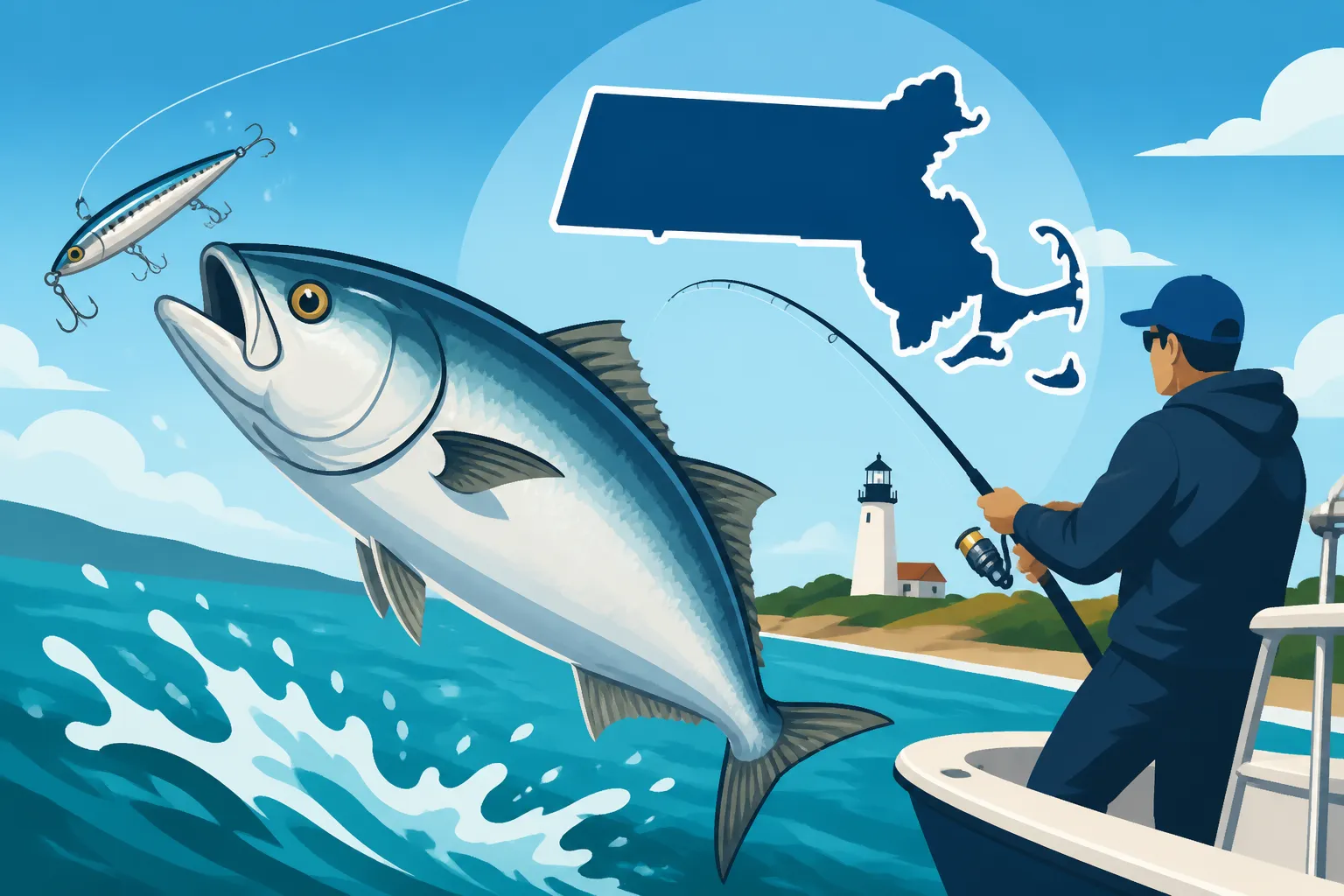
How to Catch Bluefish in Massachusetts
There's nothing quite like the electrifying jolt of a bluefish hitting your line. One moment you're enjoying the quiet rhythm of the waves, and the next, your rod is bent double, the reel is screaming, and pure adrenaline is coursing through you. But let's be honest, those toothy critters can be a real challenge to pin down in Massachusetts waters. They're notorious for their aggressive strikes, their ability to chew through lesser tackle, and their tendency to move around, leaving anglers scratching their heads. This guide is dedicated to helping you unravel the mysteries of these powerful predators, from understanding their habits to mastering the techniques that will put more blues on your hook.
Understanding Massachusetts Bluefish: The Aggressive Opportunist
Bluefish are truly one of a kind. They're a favorite target for many anglers across Massachusetts, not just because they put up an incredible fight, but also because they are relatively abundant and can be found in a wide variety of coastal habitats. Known scientifically as Pomatomus saltatrix, these fish are built for speed and aggression, making them apex predators in their ecosystems. For anglers, this translates into heart-pounding action and sometimes, a lot of lost tackle if you're not prepared!
What Makes Bluefish So Unique?
What truly sets bluefish apart is their insatiable appetite and ferocious feeding habits. They are opportunistic hunters, often traveling in large, fast-moving schools that will attack almost anything in their path. Whether it's baitfish like mackerel, menhaden, or herring, or even smaller schooling fish, bluefish will slash and tear through them with their incredibly sharp, scissor-like teeth. This aggressive nature is both their charm and their challenge. You'll often hear stories of bluefish "blitzes" where they drive baitfish to the surface, creating a chaotic, foamy feeding frenzy that's visible from a distance – a sure sign that it's time to cast.
Unlike some other species, bluefish aren't particularly shy. They respond well to fast, erratic retrieves that mimic a panicked baitfish, and they're not afraid to strike at a lure multiple times until they hook up. Their powerful runs and head shakes, combined with their sharp teeth, mean that many a battle with a bluefish ends with a snapped line or a chewed-off leader. This is why having the right gear and understanding their behavior is absolutely crucial for success. Their powerful tail allows for explosive bursts of speed, making them formidable opponents once hooked, often darting in unexpected directions.
Prime Bluefish Season in Massachusetts
If you're wondering when to target these toothy fighters, the bluefish season in Massachusetts generally kicks off in late spring, usually around May, and extends well into the fall, sometimes even into November, depending on water temperatures. The warmest summer months, from July through September, are often considered prime time, when bluefish are most abundant and actively feeding in coastal waters. As the water warms, large schools migrate north along the Atlantic coast, making their way into Massachusetts bays, estuaries, and offshore waters. You'll find them closer to shore in the warmer months, making them accessible to surf anglers and small boaters. For a more detailed look, you might want to check out information on When Bluefish Season Starts in Massachusetts.
The arrival of bluefish coincides with the presence of their favorite prey species. As baitfish like mackerel, menhaden, and squid move into shallower, warmer waters, the bluefish follow, creating excellent fishing opportunities. Later in the season, as water temperatures begin to drop in the fall, bluefish often exhibit another strong feeding surge, bulking up for their migration south. This "fall run" can be just as, if not more, productive than the summer months, offering a final chance to tangle with these robust fish before they depart Massachusetts waters. The duration and intensity of the bluefish presence can vary year to year, influenced by factors like water temperature, bait abundance, and prevailing weather patterns.
Bluefish Regulations: Size and Bag Limits
Before you even cast a line for bluefish in Massachusetts, it's vital to be aware of the current regulations. These rules are put in place to manage fish populations and ensure sustainable fishing for future generations. For bluefish, there are specific size and bag limits that anglers must adhere to. These regulations can change, so always consult the latest information from the Massachusetts Division of Marine Fisheries (DMF) or look into resources like Massachusetts Saltwater Bag Limits by Species and Massachusetts Recreational Fishing Rules and Bag Limits.
Currently, for recreational anglers in Massachusetts, the general rule has been a daily bag limit of 3 bluefish per person, with no minimum size limit. However, it's absolutely critical to double-check these specifics each year as they are subject to change based on stock assessments and management decisions. For example, if you're fishing on a for-hire vessel like a charter boat or a head boat, the bag limit might be more generous, often set at 5 bluefish per person per day. This distinction is important because you wouldn't want to accidentally exceed the limit for private recreational fishing if you're out on your own boat or from shore. Understanding these nuances, especially when considering Massachusetts Bluefish Bag Limit and Season, ensures you're fishing legally and responsibly. Penalties for violating fishing regulations can range from fines to confiscation of catch and gear, so it's always best to be informed.
Essential Gear for Massachusetts Bluefish Fishing
Catching bluefish requires gear that can stand up to their aggressive nature and sharp teeth. You wouldn't bring a butter knife to a sword fight, and you shouldn't bring ultralight tackle to a bluefish brawl. Having the right rods, reels, line, and terminal tackle is paramount to not only landing these powerful fish but also preventing frustrating break-offs and lost lures. Preparing your setup correctly will save you a lot of headaches and money in the long run.
Rods, Reels, and Line: Building a Solid Setup
When it comes to rods for bluefish, you'll want something with a medium-heavy to heavy action and a good backbone. This strength is necessary to handle their powerful strikes and hard fights. A rod between 7 and 9 feet is often ideal for casting lures a good distance, whether you're fishing from a boat or surfcasting from the beach. For surfcasting, a longer rod, perhaps 9 to 11 feet, can give you the extra casting distance needed to reach distant schools or deep troughs. Look for rods made from durable graphite or composite materials that can absorb the shock of a bluefish strike.
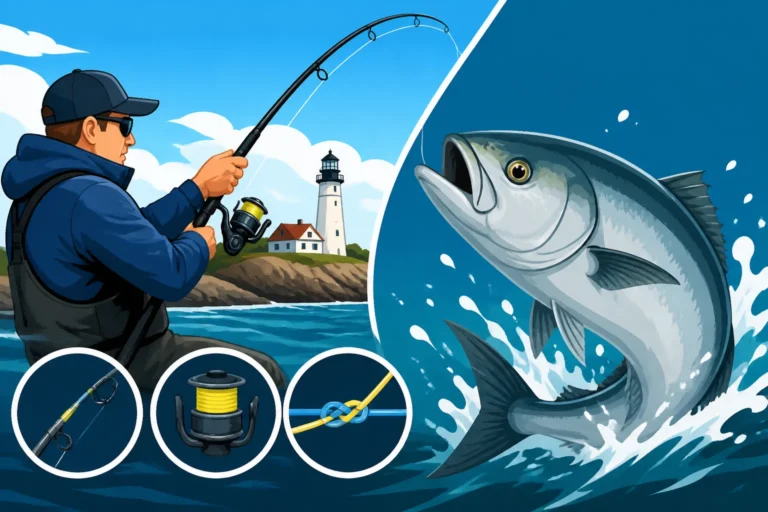
Pair your robust rod with a strong, corrosion-resistant spinning reel or a conventional reel. Spinning reels in the 5000-8000 size range are popular for their versatility and ease of use, especially for casting. Make sure the reel has a smooth, reliable drag system, as bluefish can make powerful, line-stripping runs. For your fishing line, braided line is often the preferred choice for bluefish. Its lack of stretch provides excellent sensitivity for feeling strikes and helps with powerful hooksets. Opt for braid in the 30-50 lb test range. While braid is strong, it's crucial to connect it to a leader, as bluefish teeth will slice through braid in an instant. For a general overview of the species, you might be interested in our guide on Bluefish Fishing in Massachusetts.
Lures and Baits: What Bluefish Can't Resist
Bluefish are not picky eaters, which is a blessing and a curse. They'll strike at a wide variety of lures and baits, which means you have plenty of options, but also that you might lose a few to their razor-sharp teeth. Metal casting lures, often called "metals" or "jigs," are incredibly effective. These include classic diamond jigs, Kastmasters, or Tsunami Pro Holographic lures. Their weight allows for long casts, and their flashy, erratic action mimics a wounded baitfish perfectly. Colors like silver, chartreuse, and blue/silver are often top producers. When selecting your arsenal, our guide on Best Lures for Bluefish offers more in-depth recommendations.
Poppers and other topwater lures are also a blast to fish for blues, especially during a surface blitz. The explosive strikes on topwater are truly unforgettable. Stick with durable, hard plastic poppers, as softer plastics will be shredded quickly. Live bait can be incredibly effective too. Mackerel, menhaden (pogies), mullet, or even large shiners can entice bluefish. You can fish these on a treble hook under a float or free-line them. Cut bait, such as chunks of mackerel or bunker, can also work, especially when bottom fishing or chumming. Many anglers find great success with a variety of lures, and if you're looking for a broad selection, checking out options on Amazon can give you a good idea of what's available and popular.
Terminal Tackle: Keeping Them Hooked
This is where many anglers lose their battle with bluefish. Because of their incredibly sharp teeth, standard monofilament or fluorocarbon leaders just won't cut it. You absolutely need a wire leader, or at least a very heavy fluorocarbon leader (80-100 lb test) for a fighting chance. Many anglers prefer steel wire leaders, either single-strand or braided, ranging from 6 to 12 inches in length. These are typically attached to your main line with a strong swivel and then to your lure or hook with another strong snap swivel or a robust leader knot.
When rigging for bluefish, invest in high-quality swivels and snap swivels that can withstand the force of their strikes and fight. Black swivels are often preferred over shiny ones to reduce visibility. For hooks, ensure they are stout and sharp. Bluefish have powerful jaws, and a flimsy hook will bend or break. Circle hooks are excellent when using bait, as they tend to hook the fish in the corner of the mouth, reducing the chances of the hook being swallowed and minimizing leader cut-offs. Regardless of your choice, regularly inspect your terminal tackle for any signs of wear and tear, especially after battling a few blues. It's a small investment that makes a huge difference.
Top Techniques for Landing Massachusetts Bluefish
Bluefish are not subtle creatures, and your fishing techniques should reflect that. They respond well to aggressive presentations and fast action. Whether you're casting from shore, trolling from a boat, or soaking some live bait, understanding how to provoke a strike and keep them hooked is key to a successful outing.
Casting and Retrieving: Lures from Shore and Boat
Casting lures is arguably the most popular and exhilarating way to catch bluefish. Whether you're positioned on a jetty, a rocky shoreline, a beach, or a boat, the principle is the same: get your lure out there and retrieve it in a way that screams "easy meal" to a hungry bluefish. When casting metal jigs or spoons, a fast, erratic retrieve with occasional pauses or jerks often triggers a strike. Think of it as mimicking a frantic baitfish trying to escape. Cast as far as you can, let the lure sink to your desired depth (or retrieve immediately for topwater), and then crank it in. If you're fishing a strong current, casting slightly upstream and letting the lure sweep down can also be very effective.
For topwater poppers, the retrieve is all about creating commotion on the surface. A "walk-the-dog" retrieve, where you twitch the rod tip to make the lure sashay back and forth, or a series of sharp jerks to make the popper "spit" water, will grab a bluefish's attention. Remember, bluefish often attack from below, so that surface commotion is like ringing the dinner bell. When fishing from a boat, you have the advantage of mobility. Look for signs of baitfish, diving birds, or surface activity, then motor upwind or upstream of the action and cast into the fray. This allows your boat to drift over the feeding zone, providing repeated casting opportunities. Surfcasters looking for prime locations might find our guide on Best Shore Fishing Spots in Massachusetts quite helpful.
Trolling for Trophy Bluefish
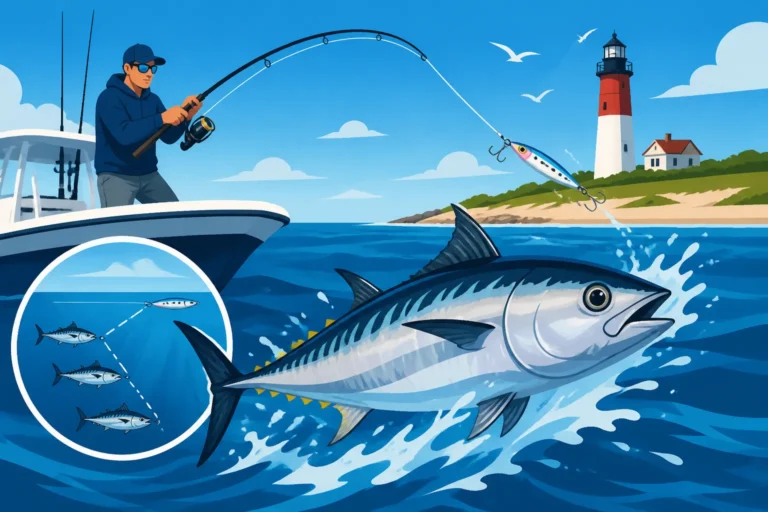
Trolling is a highly effective method, especially for covering a lot of water and finding schools of bluefish that might be spread out or holding deeper. It’s also a great way to target larger, more solitary bluefish that might not be actively busting on the surface. When trolling for bluefish, speed is often your friend; a faster troll, typically between 4 to 7 knots, can trigger their predatory instincts. Experiment with different speeds until you find what works.
You can troll a variety of lures, including swimming plugs, lipped crankbaits, or even rigged baits like dead or live mackerel. Wire line or heavy braided line with a long monofilament or fluorocarbon leader is often used for trolling to get lures down to depth, especially without additional weight. Sometimes, a planer or a trolling weight might be necessary to reach the desired depth where the fish are holding. Using multiple rods with different lure types and depths can help you identify what the bluefish are keying in on that day. Keep an eye on your fishfinder for signs of bait or fish holding in the water column. Trolling along prominent rips, channel edges, or around structure can be very productive.
Live Bait and Chumming Strategies
When bluefish are being finicky or you want to ensure a hook-up, live bait is often the answer. Nothing beats a struggling live baitfish for enticing a strike. Mackerel, menhaden (pogies), or even large shiners are excellent choices. You can fish live bait in several ways: free-lining it with just a hook and leader, using a balloon or bobber to keep it at a specific depth, or slow-trolling it behind the boat. For free-lining, cast your bait out and let it swim naturally, allowing the current to carry it. The key is to let the bluefish take the bait without feeling too much resistance.
Chumming can significantly increase your success rate, especially when fishing from an anchored boat. The idea is to create a scent trail and a steady stream of bait pieces to attract bluefish to your boat and keep them there. Ground fish, such as bunker or mackerel, released slowly into the water, can create an irresistible trail. While chumming, you'll typically fish with chunks of the same bait on a hook, letting them drift naturally back into the chum slick. This method requires patience and a good supply of chum, but when the bluefish arrive, the action can be non-stop. Just be ready for multiple hook-ups!
Best Bluefish Fishing Spots in Massachusetts
Massachusetts offers an incredible diversity of fishing environments, and bluefish can be found in many of them throughout their season. From the sandy beaches of the Outer Cape to the rocky structures of the North Shore, knowing where to focus your efforts can make all the difference.
Cape Cod and the Islands: Bluefish Hotbeds
Cape Cod is legendary for its bluefish action. The Outer Cape, with its vast stretches of beach like Nauset Beach and Coast Guard Beach in Eastham, provides excellent surfcasting opportunities for blues pushing bait close to shore. The currents and rips along the Elizabeth Islands and Vineyard Sound are also prime locations, often holding large schools of feeding fish. For detailed information on specific locations, be sure to consult Best Saltwater Fishing Spots on Cape Cod, Massachusetts.
Perhaps one of the most famous bluefish destinations is the Cape Cod Canal. The Canal, with its strong currents and abundant baitfish, is a magnet for all kinds of predatory fish, including bluefish. Anglers casting from the shorelines of the Canal often do exceptionally well, especially during strong tides. Access points like the Mass Maritime Academy side or the Scusset Beach side can be incredibly productive. For a comprehensive overview, definitely check out our Cape Cod Canal Fishing Guide for Massachusetts Anglers. Martha's Vineyard and Nantucket also boast fantastic bluefish fishing, particularly in their harbors, rips, and along their extensive shorelines. The areas around Wasque Point on Martha's Vineyard and Great Point on Nantucket are particularly renowned.
North Shore and South Shore Destinations
Moving north from Boston, the Massachusetts North Shore offers equally impressive bluefish opportunities. Places like Plum Island, with its miles of pristine beach, are excellent for surfcasting. The Merrimack River estuary near Newburyport is another hotspot, as bluefish often follow baitfish into the river mouth. Rocky coastlines and jetties around Gloucester and Rockport, like those near Dogtown Common or along the Annisquam River, can hold large bluefish. The deep waters and strong currents off Cape Ann are also great for boat anglers trolling for larger specimens.
To the south of Boston, the South Shore and Buzzards Bay region are also bluefish magnets. Areas around Plymouth, Duxbury, and Scituate offer good beach and jetty access. Buzzards Bay is particularly known for its strong currents and rocky structure, which bluefish love. The various coves, inlets, and islands within Buzzards Bay provide ample ambush points for these aggressive predators. New Bedford Harbor, despite its industrial activity, can also be a surprising spot, especially around its entrance and outer areas where bait congregates. Identifying rips, eddies, and points where current pushes baitfish is key in these areas.
Identifying Productive Bluefish Waters
The secret to consistently finding bluefish isn't just knowing the famous spots; it's learning how to "read" the water and identify active feeding grounds. The first thing to look for is baitfish activity. If you see schools of small fish jumping, showering, or moving erratically on the surface, bluefish are likely nearby. Another clear indicator is diving birds, especially gulls and terns. They're often circling and diving into the water because bluefish are driving bait to the surface, making it easy pickings for the birds.
Structure and current are also crucial. Bluefish love areas where current creates rips, eddies, or funnels baitfish. This includes inlets, jetties, channel edges, and points. These structures provide ambush points where bluefish can wait for an easy meal to be swept by. Pay attention to tide charts; often, the incoming or outgoing tide, or the peak of the tide, can be the most productive times. Finally, water temperature plays a role. While bluefish tolerate a range, they prefer warmer waters, typically above 60°F (15°C). As a general rule, in Massachusetts, if the water is warm and there's bait, there's a good chance you'll find bluefish.
Handling and Caring for Your Bluefish Catch
So, you've hooked and landed a Massachusetts bluefish – congratulations! Now comes the crucial part: handling your catch safely and preparing it properly for consumption. Bluefish have a reputation for being challenging to handle due to their thrashing, sharp teeth, and surprisingly slimy skin. However, with the right approach, you can ensure a safe experience for yourself and a quality meal.
Safe Handling and De-hooking
The most important thing to remember when handling a bluefish is their teeth. These are not fish you want to lip grip without protection. Always use a good pair of fish pliers or a de-hooker to remove the hook, and keep your fingers well clear of their mouth. If the fish is particularly feisty, a fish gripper (like a BogaGrip or similar tool) can be invaluable for securing its jaw without putting your hands at risk. Some anglers also carry a sturdy pair of fishing gloves made from cut-resistant material for added protection.
When you bring a bluefish aboard a boat or onto shore, try to keep it contained. A cooler with some ice can serve as a temporary holding spot if you plan to keep the fish. If you're practicing catch-and-release, handle the fish as little as possible. Hold it horizontally by the tail and use your pliers to quickly remove the hook. If the hook is deeply set, it might be better to cut the line as close to the hook as possible, as aggressively digging it out can cause more harm. Releasing bluefish quickly and gently back into the water gives them the best chance of survival. Remember, they are tough fighters even out of water, so be prepared for some serious flopping! For tips on keeping fish on the line once hooked, consider reading How to Fight a Bluefish Without Losing Your Line.
Bleeding and Icing for Best Taste
Bluefish sometimes get a bad rap for their taste, but much of this comes down to improper handling after the catch. Bluefish meat can be a bit strong or "fishy" if not handled correctly, largely due to its high oil content and dark bloodline. The key to improving their flavor and texture is to bleed them immediately after landing. This process removes blood from the flesh, which is where much of the strong flavor resides.
To bleed a bluefish, make a quick, clean cut to the gills with a sharp knife. You can also make a cut along the throat or sever the caudal artery near the tail. Allow the fish to bleed out thoroughly, ideally by placing it head-down in a bucket of seawater or letting it hang over the side of the boat for a few minutes. After bleeding, get the fish on ice as quickly as possible. A cooler full of ice (not just a few cubes!) will rapidly cool the fish down, slowing down spoilage and preserving the quality of the meat. Keeping them cold and bleeding them properly are the two most important steps to ensure your bluefish is delicious.
Preparing Bluefish for the Table
Once you've bled and iced your bluefish, the next step is to prepare it for cooking. Bluefish have relatively large scales, so a good scaler or a sturdy knife to remove the skin is necessary. Many anglers prefer to fillet bluefish because of their bone structure and to easily remove the dark bloodline. When filleting, pay special attention to the lateral line, which often contains the darkest, strongest-tasting meat. You can simply cut this section out, or some people prefer to remove the skin and then slice off this darker strip of flesh entirely.
Bluefish is an oily fish, which means it’s fantastic for grilling, smoking, or baking. The oil helps keep the fish moist and flavorful. When grilling, consider a marinade or a simple rub with herbs and spices. Because of its stronger flavor, bluefish stands up well to bolder seasonings. Some popular preparations include grilling with lemon and dill, baking with a crumb topping, or even smoking it for a delicious, flaky treat. For those wondering about the culinary aspect, our article Are Bluefish Good to Eat? provides more insights into making the most of your catch. Many anglers attest that fresh, properly handled bluefish, especially if eaten on the day it's caught, can be an incredibly satisfying meal.
Common Challenges and Troubleshooting for Bluefish Anglers
Fishing for bluefish, while exciting, isn't always smooth sailing. These fish can present a unique set of challenges that can test an angler's patience and tackle. Knowing how to anticipate and overcome these common hurdles will make your time on the water more productive and enjoyable.
Dealing with Toothy Critters and Cut-offs
One of the most frequent and frustrating challenges when targeting bluefish is their ability to cut lines. Their razor-sharp teeth are designed for slicing through baitfish, and they'll make short work of most monofilament or fluorocarbon leaders, especially lighter ones. If you're experiencing frequent cut-offs, the first thing to check is your leader material and strength. Are you using a wire leader? If not, start. If you are, is it heavy enough? Sometimes, even a stout fluorocarbon leader (e.g., 50-60 lb test) can be compromised by a bluefish's bite if it gets the line deep in its mouth. Upping your leader game to 80-100 lb test fluorocarbon or, ideally, a multi-strand steel wire leader is crucial.
Another common issue is when bluefish, particularly larger ones, engulf your entire lure. This means the leader and even part of your main line can come into contact with their teeth during the fight, leading to unexpected break-offs. To mitigate this, consider longer wire leaders – sometimes 12 to 18 inches can provide that extra buffer zone. Also, inspect your leader and the first few feet of your main line after every fish, or even after a few strong bites, for any nicks or fraying. A small amount of damage can quickly turn into a snap, especially during a hard fight. Keeping extra leaders pre-tied and ready for quick changes is a smart strategy to get back to fishing faster.
Locating Moving Schools
Bluefish are known for their nomadic behavior; they're often on the move, chasing baitfish schools. This means that a spot that was red-hot yesterday might be completely devoid of fish today. One of the biggest challenges is consistently locating these moving schools. Relying on visual cues is paramount. Keep a keen eye on the horizon for signs of feeding activity. Look for:
- Diving Birds: Gulls, terns, and even gannets diving into the water are almost always a sign that bluefish (or other predators) are pushing bait to the surface. Head towards the commotion!
- Surface Busts: Explosions on the water's surface, often with baitfish jumping out of the water, clearly indicate predators are feeding. This is usually the easiest way to spot them.
- Boats Congregated: While not always foolproof, if you see a cluster of fishing boats in an area, it's often because someone has found fish. Approach respectfully and observe before joining in.
Using a fishfinder can also help, especially if bluefish are holding deeper or if you're marking schools of bait. Pay attention to changes in bottom structure, rips, and current breaks, as these are natural ambush points where bluefish might congregate. Don't be afraid to move if a spot isn't producing; covering ground, whether by boat or by walking the beach, is often the key to finding active fish.
Adapting to Changing Conditions
Massachusetts weather and water conditions can change rapidly, and bluefish fishing can be highly dependent on these factors. What works one day might not work the next. This requires anglers to be adaptable and willing to change their tactics.
Tides and Currents: Bluefish are heavily influenced by tides and currents. Stronger currents often bring more bait and can make fish more aggressive. Learning the optimal tide stages for your chosen fishing spot is crucial. For instance, the Cape Cod Canal thrives on strong current flows, but some areas might be better on an incoming tide, others on an outgoing.
Weather and Wind: A strong wind can make casting difficult and create choppy conditions that hide surface activity. In these conditions, you might need to switch to heavier lures to cut through the wind or focus on bottom fishing. On calm days, topwater action might be exceptional. Similarly, bright, sunny days might push fish deeper, while overcast conditions could bring them closer to the surface.
Bait Availability: The type and abundance of baitfish can dictate what lures or baits bluefish prefer. If they're feeding heavily on small sand eels, a slender metal jig might be best. If large pogies are present, a big swimming plug or live pogy might be more effective. Keep an eye on what bait is around and try to "match the hatch." Don't be afraid to experiment with lure types, sizes, and retrieve speeds until you unlock what the bluefish are biting on that particular day. An angler's ability to observe, adapt, and experiment is often the hallmark of a successful bluefish hunter.
Disclaimer
Fishing regulations, seasons, and licensing requirements can change. While we strive to provide accurate and up-to-date information, it is your responsibility to consult the latest official regulations from the Massachusetts Division of Marine Fisheries (DMF) before engaging in any fishing activity. This guide is for informational purposes only and should not be considered legal advice.