Best technique for catching bonito off Cape Cod
There's nothing quite like the electrifying pull of a bonito on your line off the coast of Cape Cod. These speed demons are prized for their aggressive strikes and incredible fighting ability, but they can also be notoriously elusive, leading to frustrating days of fruitless casting. If you've been struggling to connect with these torpedo-shaped speedsters, this guide is for you. We're going to dive deep into the most effective techniques, the right gear, and the perfect timing to significantly improve your chances of landing bonito in Massachusetts waters.
Unraveling the Enigma of Bonito
Bonito are a fantastic, hard-fighting game fish that offer an incredible challenge and reward for anglers. They're often mistaken for their larger, tuna cousins due to their similar streamlined bodies and incredible speed, but they have their own unique characteristics and behaviors that demand a specific approach. Understanding these nuances is the first step to consistently hooking up.
Understanding Bonito Behavior and Habitat
Bonito, specifically the Atlantic bonito (Sarda sarda), are pelagic fish, meaning they live in the open ocean rather than inshore near the bottom. However, during certain times of the year, particularly from late summer into early fall, they move closer to shore along the New England coast, including around Cape Cod. They are primarily visual predators, relying on their keen eyesight and speed to ambush baitfish. Think of them as the oceanic equivalent of a cheetah, built for bursts of incredible acceleration.
They travel in schools, often quite large ones, and feed voraciously when they find bait. Their diet consists mainly of small baitfish like sand eels, silversides, and peanut bunker. When these bait schools are abundant, bonito will be right there, creating a chaotic scene of splashes and boils as they slash through the schooling fish. This makes understanding bait movements absolutely crucial. They prefer clear, warmer water, which is why their appearance often coincides with the peak of summer and early autumn.
When and Where to Find Bonito on Cape Cod
Timing is everything when it comes to bonito. Generally, these fish arrive in Massachusetts waters, especially around Cape Cod, starting in July and extending through September, sometimes even into early October if the water stays warm enough. They follow the warming waters and, most importantly, the bait. Look for them when the sand eels are thick in the rips or when schools of peanut bunker are getting hammered.
As for "where," Cape Cod offers several prime locations. The infamous rips off Monomoy Island near Chatham are legendary for their bonito and false albacore runs. The strong currents here concentrate baitfish, making it a buffet for these fast-moving predators. Shore-based anglers will find opportunities along the Outer Cape beaches, especially during periods of strong tides that push bait closer to shore. The waters around Vineyard Sound and Nantucket Sound are also highly productive, particularly near prominent points, shoals, and rips. Places like Squibnocket Point on Martha's Vineyard or the East End of Nantucket often see strong bonito action. Don't forget the inlets and harbors on the south side of the Cape, which can also hold bait and, consequently, bonito. For more detailed insights, you might want to check out Bonito and False Albacore off Cape Cod and Best Saltwater Fishing Spots on Cape Cod, Massachusetts.
Essential Gear for Chasing Bonito
Fishing for bonito isn't like casting for fluke or bottom fishing for tautog. Their speed and power require a specific setup to ensure you can not only cast to them effectively but also handle their furious runs without losing your fish or breaking your gear. You don't need heavy-duty tuna gear, but a light to medium-light setup designed for fast-moving inshore pelagics is ideal.
Rods, Reels, and Line Setups
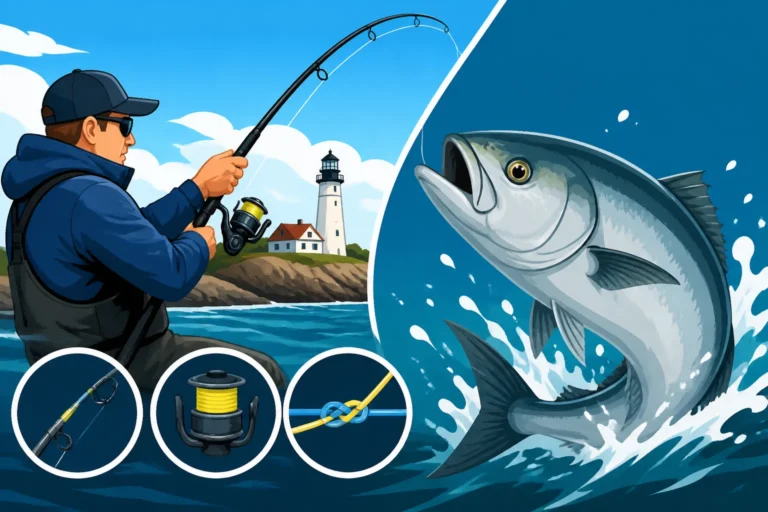
For bonito, you'll want a fast-action spinning rod, typically in the 7 to 8.5-foot range. This length gives you the casting distance needed to reach breaking schools of fish and the leverage to fight them effectively. A rod rated for 10-20 lb test line is usually perfect, offering enough backbone without being overly stiff. The "fast action" refers to how much the rod bends; a fast-action rod bends mostly in the top third, allowing for quick hook sets and accurate casting.
Pair this with a high-quality spinning reel in the 3000 to 4000 size range. Look for a reel with a smooth drag system, as bonito are known for their scorching first runs. A good drag is paramount to preventing break-offs. I've found reels from brands like Penn, Shimano, or Daiwa in this size category perform exceptionally well for these hard fighters. For line, braided line is almost universally preferred due to its low stretch, incredible strength-to-diameter ratio, and superior casting distance. A 15-20 lb braided line is generally sufficient. You'll want to spool up a good 150-200 yards, as a big bonito can spool you surprisingly fast on a light drag setting. Remember to check out your Massachusetts Saltwater Recreational Fishing Permit Explained before heading out.
The All-Important Lures and Rigging
Bonito are extremely opportunistic and primarily feed on small baitfish. Therefore, your lure selection should mimic these prevalent forage species. Speed is key, so small, fast-moving lures are the order of the day.
Here's a breakdown of effective lure types:
- Metal Jigs/Casting Lures: These are perhaps the most popular and effective. Small, slender jigs in the 1/2 to 1 oz range that imitate sand eels or silversides are deadly. Brands like Deadly Dick, Kastmaster, or Gibbs are perennial favorites. The key is to cast them far and retrieve them fast.
- Small Plugs/Minnow Imitations: Diving or surface plugs that are sleek and have a tight wobbling action can also be very effective, especially when bonito are feeding on slightly larger baitfish like peanut bunker. Again, size matters here; think 3-5 inches.
- Soft Plastics: While less common for the main bonito bite, small soft plastic swimbaits or jerk shads rigged on a jig head can sometimes entice a bite, especially if the fish are a bit finicky. The key is still a fast, erratic retrieve.
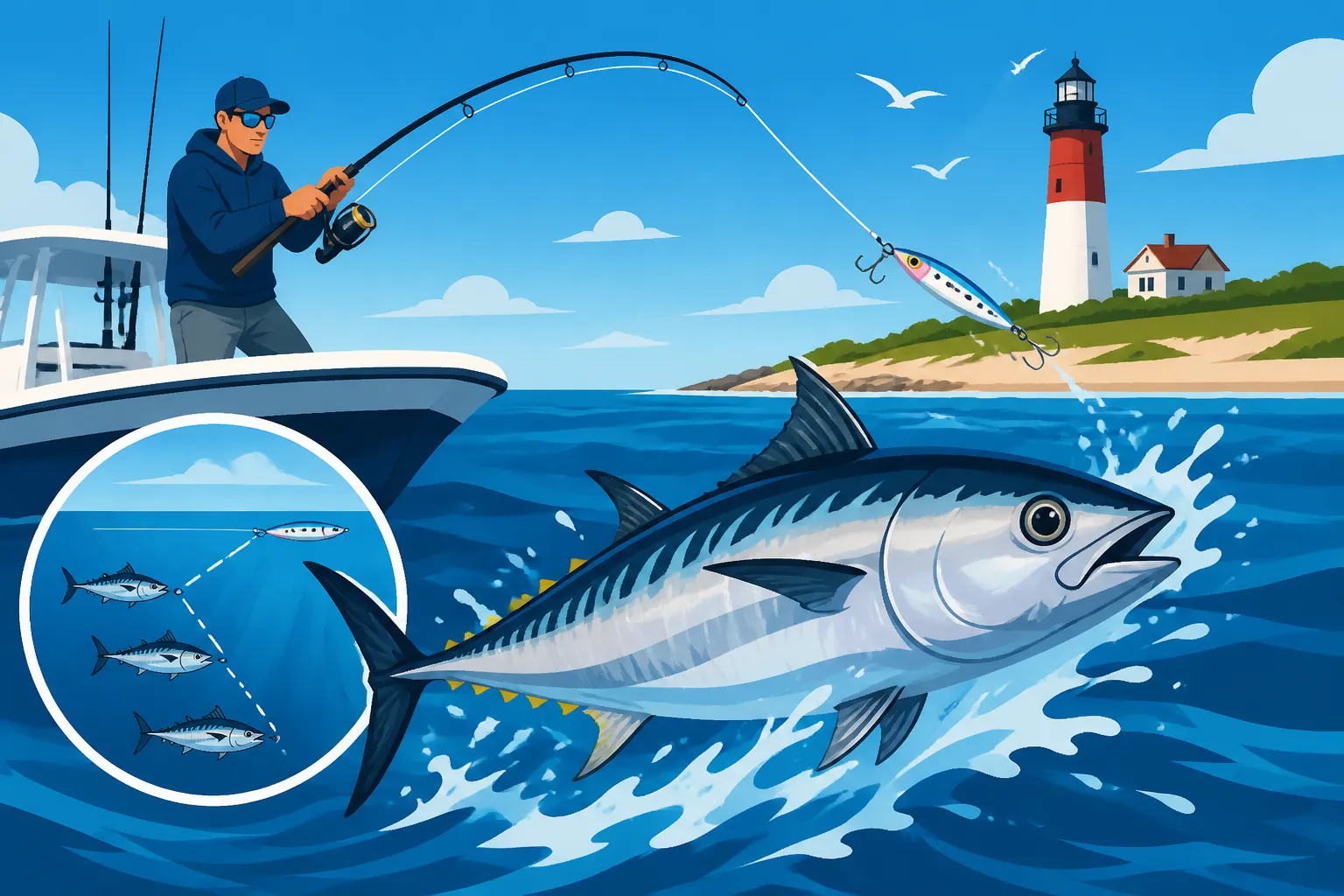
- Teasers: Sometimes, adding a small plastic teaser fly or soft plastic on a dropper loop a foot or two in front of your main lure can trigger a strike. It creates the illusion of a small school of bait, making your main lure look like a straggler.
For rigging, a fluorocarbon leader is non-negotiable. Bonito have excellent eyesight, and fluorocarbon is nearly invisible underwater. More importantly, their razor-sharp teeth can fray and snap monofilament easily. A 15-25 lb fluorocarbon leader, about 2-3 feet long, tied to your braided mainline with a strong knot like an FG knot or an Albright knot, is standard. Ensure your knots are strong and neat; a weak knot is often the point of failure with these powerful fish. You can find a fantastic selection of these specialized lures and fluorocarbon leaders on platforms like Amazon, making it easy to stock up before your next trip. You can also explore Best lures for striped bass in Massachusetts as some crossover lures might apply.
| Lure Type | Best Imitates | Ideal Weight/Size | Retrieval Style | Notes |
|---|---|---|---|---|
| Metal Jigs | Sand Eels, Silversides | 1/2 – 1 oz | Fast, erratic retrieve, jigging | Classic choice. Flash and speed are key. |
| Small Plugs | Peanut Bunker | 3-5 inches | Steady fast retrieve, twitching | Good for surface action or slightly deeper presentations. |
| Soft Plastic Shads | Silversides, Small Bait | 3-4 inches (on jig head) | Fast, jigging, steady retrieve | Can be effective when fish are picky. |
| Teasers | Small Baitfish | 1-2 inches | Ahead of main lure, provides schooling effect | Increases visibility and strike potential. |
Top Techniques for Hooking Bonito
Once you have your gear ready, it's time to learn how to present your lures to these finicky, fast-moving targets. Bonito fishing is highly active and requires constant engagement, whether you're casting from shore or trolling from a boat. The common thread across all techniques is speed and an understanding of where the fish are holding and feeding.
Mastering Casting and Retrieval Methods
Casting is perhaps the most exhilarating way to catch bonito. It's often done from shore, jetties, or small boats when you encounter breaking schools of fish. The moment you spot the tell-tale splashes of bonito hitting bait, precision and speed are paramount.
Your goal is to cast beyond the breaking fish and retrieve your lure through the school. A fast, steady retrieve is crucial; bonito rarely hit a slow-moving lure. Many anglers incorporate erratic twitches or pauses to mimic a struggling baitfish, which can trigger a reaction strike. The "sweeping" retrieve is very popular: cast, let your lure sink for a few seconds, then sweep your rod tip from side to an aggressive side, reeling down quickly on the slack, then repeat. This gives the lure a darting, fleeing action that bonito find irresistible. If you're using metal jigs, vary your retrieve depth and speed until you find what the fish are keying in on. Sometimes they want it right on the surface, other times a little deeper. Don't be afraid to experiment, as conditions can change rapidly. Remember to maintain constant tension on your line; bonito hit hard and fast, and any slack can mean a missed hookset. If you're fishing from the beach, learning How to surf cast on Cape Cod beaches will give you a significant advantage.
The Art of Jigging for Bonito
While casting to visible surface activity is thrilling, bonito sometimes hold deeper or are found in rips and channels where jigging becomes more effective, particularly from a boat. Vertical jigging is especially potent when using metal jigs. The idea is to drop your jig down to the desired depth (often where you see bait on your fishfinder or where you know the structure is) and then work it aggressively.
This involves a series of sharp upward rod snaps, followed by allowing the jig to flutter back down on a semi-slack line. The strike often happens on the fall, so pay close attention. Vary the speed and intensity of your jigs. Sometimes a slow, methodical lift-and-drop works, other times a frantic, rapid jigging motion is what gets their attention. This technique is particularly effective in areas with strong currents, like the deeper channels around Monomoy or in Vineyard Sound. The current helps give the jig a natural, lifelike motion, even on the retrieve. Keep an eye on your sonar for bait schools and bonito arches, and drop your jigs directly into them.
Trolling for Elusive Bonito
Trolling is a highly effective method for covering a lot of water and locating bonito, especially when they aren't actively breaking the surface. It's particularly useful from a boat in open water areas of Nantucket Sound, Vineyard Sound, or along the Outer Cape. The goal is to present lures at a consistent depth and speed, mimicking baitfish moving through the water column.
Small metal jigs, swimming plugs, or even small surgical tubes are excellent choices for trolling. Use a small inline planer or lead core line to get your lures down to the desired depth, which can vary from just below the surface to 10-20 feet deep, depending on where the bait is holding. A trolling speed of 5-8 knots is a good starting point, but like casting, experimentation is key. Watch your fishfinder for bait and bonito, and adjust your speed and depth accordingly. You can run multiple lines with different lures and at different depths to figure out what the fish are responding to. When a bonito hits a trolled lure, it's usually a violent strike, so be ready for the rod to double over! For tips on similar fishing around specific areas, check out How to catch false albacore near Chatham.
Maximizing Your Bonito Fishing Success
Catching bonito requires more than just good gear and technique; it demands keen observation, adaptability, and an understanding of the conditions around you. These fish are constantly on the move, and successful anglers are those who can quickly adjust to their behavior.
Reading the Water and Environmental Cues
Bonito are extremely sensitive to their environment, and paying attention to subtle cues can make all the difference. One of the most obvious signs is bird activity. Diving birds, especially terns and gulls, are often a dead giveaway that baitfish are being pushed to the surface from below, a classic sign of bonito (or false albacore) feeding frenzies. Head towards the working birds, but approach cautiously to avoid spooking the fish.
Tides and currents are also crucial, particularly in areas like the rips off Chatham or near the Cape Cod Canal. Bonito often feed most aggressively during a strong incoming or outgoing tide, as the current concentrates baitfish into predictable lanes. Understanding the local tide charts for your chosen fishing spot is essential. Water temperature plays a role as well; bonito prefer warmer water, typically above 60 degrees Fahrenheit. If the water is too cold, they'll likely be elsewhere. Keep an eye on water clarity, too; bonito are visual predators and prefer clear water where they can easily spot their prey.
Handling Your Catch and Local Regulations
Once you've managed to hook and land a bonito, handling it properly is important, whether you plan to keep it for the table or release it. Bonito are incredible table fare, with rich, flavorful meat, excellent for grilling or searing. If you plan to keep one, dispatch it quickly and bleed it immediately by cutting the gills. This improves the quality of the meat significantly. Get it on ice as soon as possible.
If you're releasing bonito, do so with care. They fight hard and can be exhausted. Handle them minimally, use wet hands if possible, and remove the hook quickly. If the fish is deeply hooked, consider cutting the line as close to the hook as possible. Support the fish in the water until it's strong enough to swim away on its own. Remember to always be aware of the current Massachusetts Saltwater Bag Limits by Species for bonito, as regulations can change. Being a responsible angler means understanding and adhering to all local fishing laws. And while you're learning about different species, it's useful to know the Difference between a bonito and a tuna so you can correctly identify your catch.
Bonito fishing off Cape Cod is an experience unlike any other. It combines the thrill of the chase with the challenge of a powerful, elusive fish. By understanding their behavior, equipping yourself with the right gear, and applying these proven techniques, you'll be well on your way to enjoying some of the most exciting light tackle fishing Massachusetts has to offer. Don't forget, a great source for all your fishing tackle needs, from lures to leaders, can always be found on Amazon, ensuring you're fully prepared for your next bonito adventure! Best Time of Year to Fish in Massachusetts will give you a broader context for planning your trip.
Disclaimer
This article is for general informational purposes only and does not constitute professional advice. Laws, prices and regulations vary by location and change over time. Consult a qualified professional for guidance on your specific situation.