Best hook size for stocked trout in Massachusetts
You've just arrived at your favorite Massachusetts pond, fresh trout have been stocked, and you're ready to fill your creel, but then you cast out, and nothing. It's a common frustration, isn't it? One minute you're picturing a beautiful rainbow trout on your line, the next you're wondering if your bait presentation is all wrong, or worse, if your hook size is spooking every fish in the water. This guide is here to untangle that very specific dilemma, helping you choose the best hook size for those finicky stocked trout, so you can spend less time guessing and more time reeling in your catch.
Understanding Stocked Trout Behavior
When you're chasing after stocked trout in Massachusetts, it's easy to assume they'll just bite anything. After all, they're hungry, right? Well, yes, but their journey from a hatchery raceway to a local pond or stream profoundly shapes their behavior, especially when it comes to what they're willing to bite and, crucially, how sensitive they are to your tackle. Ignoring this unique aspect of stocked trout behavior is one of the quickest ways to come home empty-handed.
The "Pellet Head" Mentality
Think about it: most trout stocked by MassWildlife grow up in a hatchery environment. Their entire lives revolve around a feeding schedule where food, typically in the form of pellets, is consistently provided. They don't have to hunt, stalk, or discern between natural prey and a cleverly disguised hook. This creates what many anglers affectionately call "pellet heads"—trout that are initially quite eager to eat, but often lack the natural caution of their wild counterparts. They're programmed for easy meals.
When they first hit the water in your favorite Massachusetts pond, like those stocked annually in sites around the Quabbin Reservoir or the many ponds across the state, they're still in this pellet-focused mindset. They're looking for something that either resembles their familiar hatchery food or is presented in a way that doesn't immediately scream "danger." This means a large, obtrusive hook can be a significant turn-off, even if the bait itself is appealing. They might nip at it, mouth it, and then spit it out, or worse, just ignore it entirely. This is why paying close attention to the subtleties of your presentation, starting with hook size, is so vital during those crucial first few days after stocking.
The Transition to Wild Forage
Now, these stocked trout don't stay "pellet heads" forever. Given a little time in their new home, they start to adapt. Their instincts kick in, and they begin to recognize and feed on natural forage like aquatic insects, small minnows, worms, and even crustaceans. This transition period varies depending on the water body, the specific trout species, and how much natural food is available. A few days or a week after being released, they might become much more wary, and their feeding patterns will shift.
During this adaptation phase, their discerning nature increases. A hook that might have been ignored but not actively spooked a "pellet head" can now be a complete deal-breaker for a trout starting to key in on natural insects. They’ll notice the unnatural shape, the glint of metal, or the awkward presentation of a too-large hook. This is where truly understanding the nuances of hook size, line diameter, and overall stealth becomes paramount. You're no longer just feeding a hungry fish; you're trying to fool a creature that's learning to survive in a wild environment. To learn more about when these opportunities arise, check out our guide on the Massachusetts Trout Stocking Schedule.
Decoding Hook Sizes for Massachusetts Stocked Trout
Choosing the right hook size for stocked trout isn't just a suggestion; it's often the difference between a successful outing and a frustrating one. The general principle is to match your hook size to your bait and the size of the trout you anticipate catching, but with stocked trout, there's an even greater emphasis on subtlety.
The General Rule of Thumb
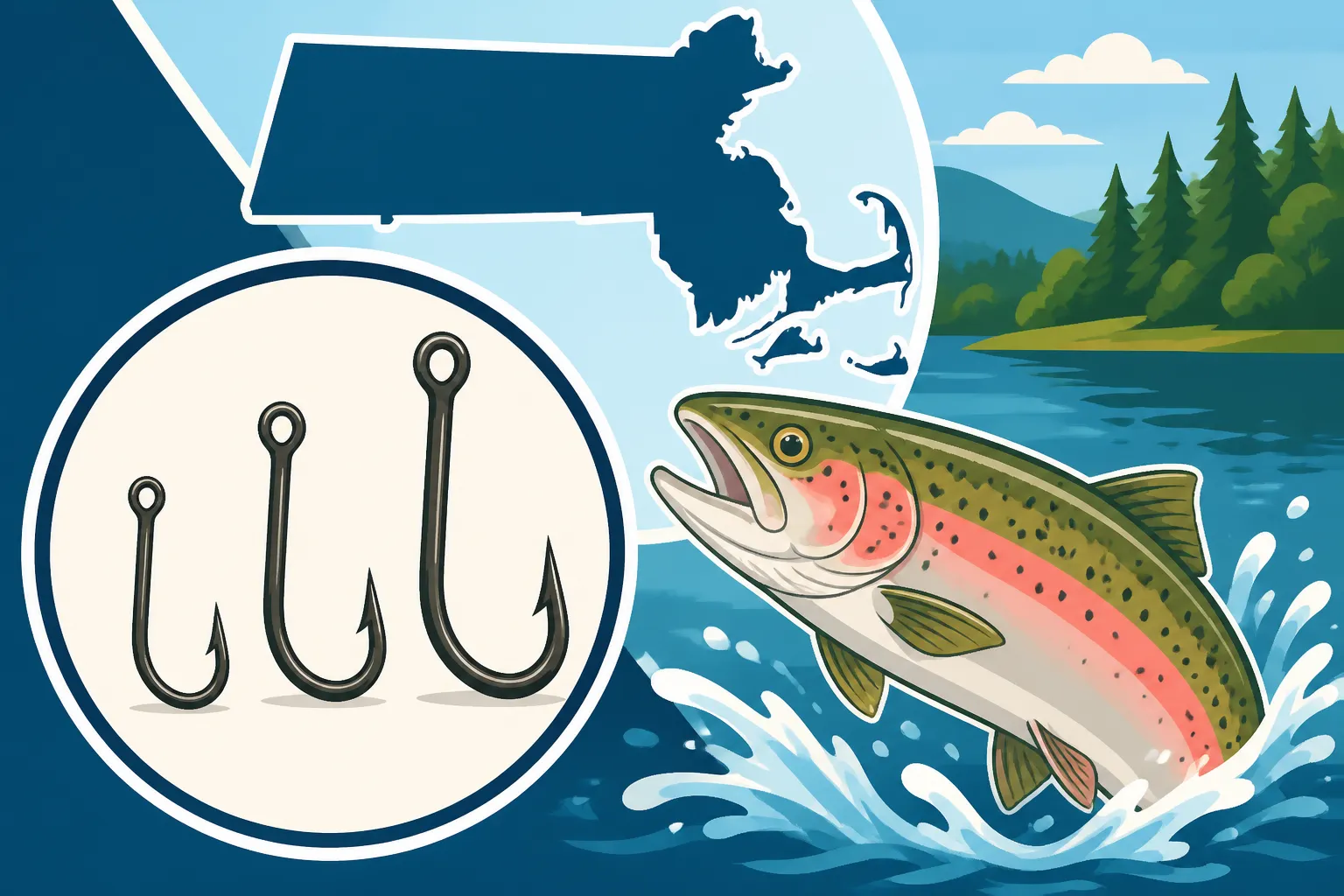
For stocked trout in Massachusetts, especially rainbow and brook trout which are common in many of the state's public ponds and streams, a good starting point is to lean towards smaller hooks. We're generally talking about sizes ranging from #10 down to #18. Yes, that sounds small, but remember the "pellet head" mentality and their relatively small mouths. A larger hook might look intimidating or simply be too big to fit comfortably in their mouth, leading to missed bites or spit-outs.
The key here is stealth and natural presentation. A smaller hook is lighter, less visible, and allows your bait to move more freely and naturally in the water, mimicking real food items. This is particularly important when fishing in clear water where trout have excellent visibility. If you're using light line, a tiny hook just disappears, making your offering that much more enticing. Many veteran anglers will even bend down the barb on their hooks, or use barbless hooks, not just for easier release, but because it further reduces the hook's profile and allows for deeper penetration with less effort.
Specific Hook Size Recommendations by Bait/Lure Type
Let's get down to the nitty-gritty of specific hook sizes, depending on what you're tossing out there. Keep in mind that these are general guidelines, and local conditions can always warrant minor adjustments. When you're stocking up, especially if you're buying online from a retailer like Amazon, it's smart to grab a few different sizes to experiment with.
- PowerBait or Dough Baits: These are classic stocked trout baits, often resembling the pellets they grew up eating. For these, a size #14 to #18 treble hook (if legal in your specific waterbody, always check local regulations, as some waters prohibit trebles) or a size #10 to #14 single egg hook is ideal. The smaller treble hooks ensure maximum hookup ratio with dough baits, which trout tend to nibble and mouth. Single egg hooks are designed to present the bait buoyantly and naturally, often floating it just off the bottom. If you're finding fish are just picking at it, go smaller.
- Worms (Garden Worms, Mealworms, Waxworms): Live bait is often irresistible. For a small piece of a nightcrawler, a single mealworm, or a waxworm, opt for a size #10 or #12 bait holder hook (these have small barbs on the shank to keep the bait in place) or a snell hook. The goal is to hook the worm once or twice, allowing it to wriggle naturally. A larger hook will kill the action and look unnatural. If you're fishing with whole nightcrawlers for larger, older stocked trout that have adapted to their environment, you might step up to a #8. For more details on effective live bait strategies, check out our guide on Best Bait for Trout Fishing in Massachusetts.
- Corn or Marshmallows: Small, subtle offerings like these call for tiny hooks. A size #14 or #16 single egg hook is perfect for threading a few kernels of corn or a mini marshmallow. The smaller the hook, the less likely the trout will detect it, and the more naturally your bait will drift or float.
- Small Lures (Spinners, Spoons, Jigs): Many stocked trout will hit small inline spinners like a Rooster Tail or Panther Martin, or tiny spoons and jigs. Most of these lures come pre-rigged with hooks, usually trebles. If you can, replace the treble with a single, barbless hook of a similar size (e.g., a size #8 or #10 single hook). This makes catch and release easier and often results in fewer snagged fish, especially in busy, recently stocked areas. For micro-jigs or soft plastics, use a size #10 or #12 jig hook with a small plastic body. Our guide on Best Lures for Stocked Trout in Massachusetts offers more insights into effective artificial presentations.
Here's a quick reference table to help visualize these recommendations:
| Bait/Lure Type | Recommended Hook Size (Single Hook) | Recommended Hook Size (Treble Hook, if legal) | Notes |
|---|---|---|---|
| PowerBait / Dough Baits | #10 to #14 Egg Hook | #14 to #18 Treble Hook | Aim for small, buoyant presentation. |
| Worms (Mealworm, Waxworm) | #10 to #12 Bait Holder Hook | N/A | Allow natural movement; use smaller pieces of nightcrawler. |
| Corn / Marshmallows | #14 to #16 Egg Hook | N/A | Maximize natural drift, minimize hook visibility. |
| Small Spinners / Spoons | #8 to #10 Single Replacement Hook | Stock Treble (often #10 to #14) | Consider replacing trebles with singles for easier release and less drag. |
| Micro Jigs / Soft Plastics | #10 to #12 Jig Hook | N/A | Match hook size closely to the plastic's body for best action. |
Beyond Hook Size: Other Factors for Stocked Trout Success
While selecting the perfect hook size is absolutely crucial for fooling Massachusetts stocked trout, it's just one piece of a larger puzzle. To truly maximize your success, you need to think about your entire presentation, from your line to your approach, because stocked trout can be surprisingly cautious, even if they're hungry.
Line Selection and Leader Material
You could have the smallest, most perfectly camouflaged hook, but if it's tied to a line that's as thick as a telephone wire, those trout are still going to bolt. Stocked trout, especially soon after release, can be very sensitive to heavy line. Their hatchery upbringing means they haven't learned to associate thick lines with danger, but they certainly notice anything that looks unnatural or creates drag.
For most stocked trout fishing in Massachusetts ponds and streams, I recommend using a main line in the 2 to 4-pound test range. Anything heavier can be easily seen in clear water and can inhibit the natural movement of your bait. Even better, consider a leader. A leader, typically 2-4 feet of fluorocarbon line, tied to your main line, offers several advantages. Fluorocarbon is nearly invisible underwater because it refracts light similarly to water. It's also more abrasion-resistant than mono, which is great if you're fishing around rocks or submerged brush. For stocked trout, a 2 or 3-pound fluorocarbon leader is often ideal. This creates a nearly invisible connection to your bait, giving it the most natural presentation possible. Companies like Seaguar and Berkley offer excellent fluorocarbon leader materials that you can find readily.
It's all about making your offering appear as unattached and natural as possible. Light line and a fluorocarbon leader are your best friends in achieving this illusion. For optimal performance, ensure your knots connecting the leader to the main line are strong and clean, like a uni-to-uni knot or a double surgeon's knot.
Bait Presentation and Stealth
Even with the right hook and the perfect line, how you present your bait and how you approach the water can make or break your day. Remember, stocked trout are initially eager, but they can quickly become wary, especially in heavily pressured waters.
- Natural Drift vs. Still Fishing: If you're fishing in a stream or river, always try to present your bait so it drifts naturally with the current, as if it were unattached food. This is called a "dead drift" or "free drift." For pond fishing, whether you're using PowerBait floating off the bottom with a small sinker or a worm under a bobber, ensure there's minimal tension on the line and that your bait looks like it's just sitting there, waiting to be eaten. Avoid heavy weights that make your bait plunge unnaturally. For those fishing on one of the many state-stocked ponds, understanding how to make your bait look irresistible is paramount.
- Stealthy Approach: Stocked trout, particularly after they've been in the water for a few days, are not oblivious to their surroundings. Loud noises, heavy footsteps along the bank, or casting a long shadow over the water can easily spook them. Approach your fishing spot quietly, move slowly, and try to stay low, especially in clear, shallow water. If you're fishing a popular spot right after stocking, you might find the trout are less wary of human presence due to the sheer volume of anglers, but it's always better to err on the side of caution. For tips on when trout are most active, read our guide on the Best Time of Day to Catch Stocked Trout in Massachusetts.
- Reading the Water: Pay attention to where the trout are holding. Look for rises, subtle swirls, or even visual sightings in clear water. They often congregate near structures like submerged logs, rocks, or weed lines, or in areas with slightly deeper water. Casting directly on top of them can sometimes spook them, so try to cast slightly upstream or to the side and let your bait drift into their zone. Observe what other successful anglers are doing, but don't be afraid to experiment with your own presentations and retrieve speeds. Different conditions, like those immediately following a trout stocking, as detailed in How soon after stocking you can catch trout, might require different approaches.
By combining the right hook size with appropriate line and a thoughtful approach, you'll significantly increase your chances of hooking into those beautiful Massachusetts stocked trout and enjoying a truly rewarding day on the water.
Disclaimer
Please note that fishing regulations, including hook size restrictions and bag limits, can change. Always consult the latest Massachusetts Department of Fish and Game (MassWildlife) regulations before heading out. This guide is for informational purposes only and should not replace official state guidelines.