Best lures for the Cape Cod Canal
Fishing the Cape Cod Canal is an experience unlike any other in Massachusetts, but let's be honest, it can also be incredibly frustrating. The powerful currents, the sheer size of the waterway, and the legendary striped bass that patrol its waters demand a specific approach and, more importantly, the right lures. If you've ever stood on the banks, watching other anglers haul in fish while your offerings just refuse to sink or get swept away, you know the struggle is real. This guide is here to cut through the confusion, helping you understand the best lures for the Cape Cod Canal and how to use them effectively to turn those frustrating outings into triumphant ones.
The Unique Challenges of the Cape Cod Canal
Before we dive into the tackle box, it’s crucial to truly understand what makes the Cape Cod Canal ("the Ditch," as locals affectionately call it) such a beast to fish. It’s not just a big river; it's a dynamic, man-made waterway connecting Buzzards Bay to Cape Cod Bay, funneling massive volumes of water with incredible force. This unique environment dictates everything, especially your lure selection and presentation.
Understanding the Current and Bottom Structure
The Canal is famous for its swift, relentless currents, which can reach speeds of 4-6 knots or more during peak tides. This isn't your average pond or even typical ocean fishing. If your lure isn't heavy enough or designed properly, it simply won't get down to where the fish are holding, particularly the elusive striped bass that often hug the bottom structure. You'll spend all your time reeling in slack line as your lure skims the surface or gets carried far downstream, rendering it useless.
Beyond the current, the bottom of the Canal is a minefield of rocks, ledges, and debris. This complex structure provides excellent hiding spots for baitfish and predators, but it’s also a snag hazard nightmare. Losing expensive lures is a common frustration, especially when you're trying to work the bottom where the big fish often feed. Knowing how to choose lures that can navigate this terrain, or at least minimize snags, is key. Many anglers swear by the "heavy and hard" approach, opting for durable lures that can withstand a beating against the rocks and strong current.
The Target Species and Their Habits
While a variety of fish pass through the Canal, the undisputed king is the striped bass. These powerful fish are the main draw, and understanding their feeding habits in the Canal's unique environment is paramount. Stripers in the Ditch are often found hugging the bottom, especially during periods of strong current, waiting for baitfish to be swept past them. They’re opportunistic feeders, and they need to conserve energy, so they'll often hold in eddies or behind structure, darting out to ambush prey.
Bluefish are another popular target, especially during warmer months. These aggressive predators will readily smash topwater plugs and fast-moving swimming lures. You'll often find them feeding more actively higher in the water column than stripers, making them a great target for surface lures when conditions are right. Less common, but still present, are tautog, scup, and even some types of flounder, though targeting these bottom dwellers requires specialized techniques usually involving bait. For most anglers, though, it's all about those powerful stripers and toothy bluefish. To truly excel, you might want to dive deeper into articles like this one on how to catch striped bass in Massachusetts.
Essential Lure Types for the Ditch
When it comes to the Cape Cod Canal, not just any lure will do. You need specific tools designed to combat the current and appeal to the predatory instincts of the fish. These are the workhorses that serious Canal anglers rely on.
Heavy Jigs and Soft Plastics
This category is arguably the most crucial for consistent success in the Canal, especially when targeting striped bass holding deep. The key word here is "heavy." You're typically looking at jigs ranging from 2 ounces up to a whopping 6 ounces or even more, depending on the current and depth.
-
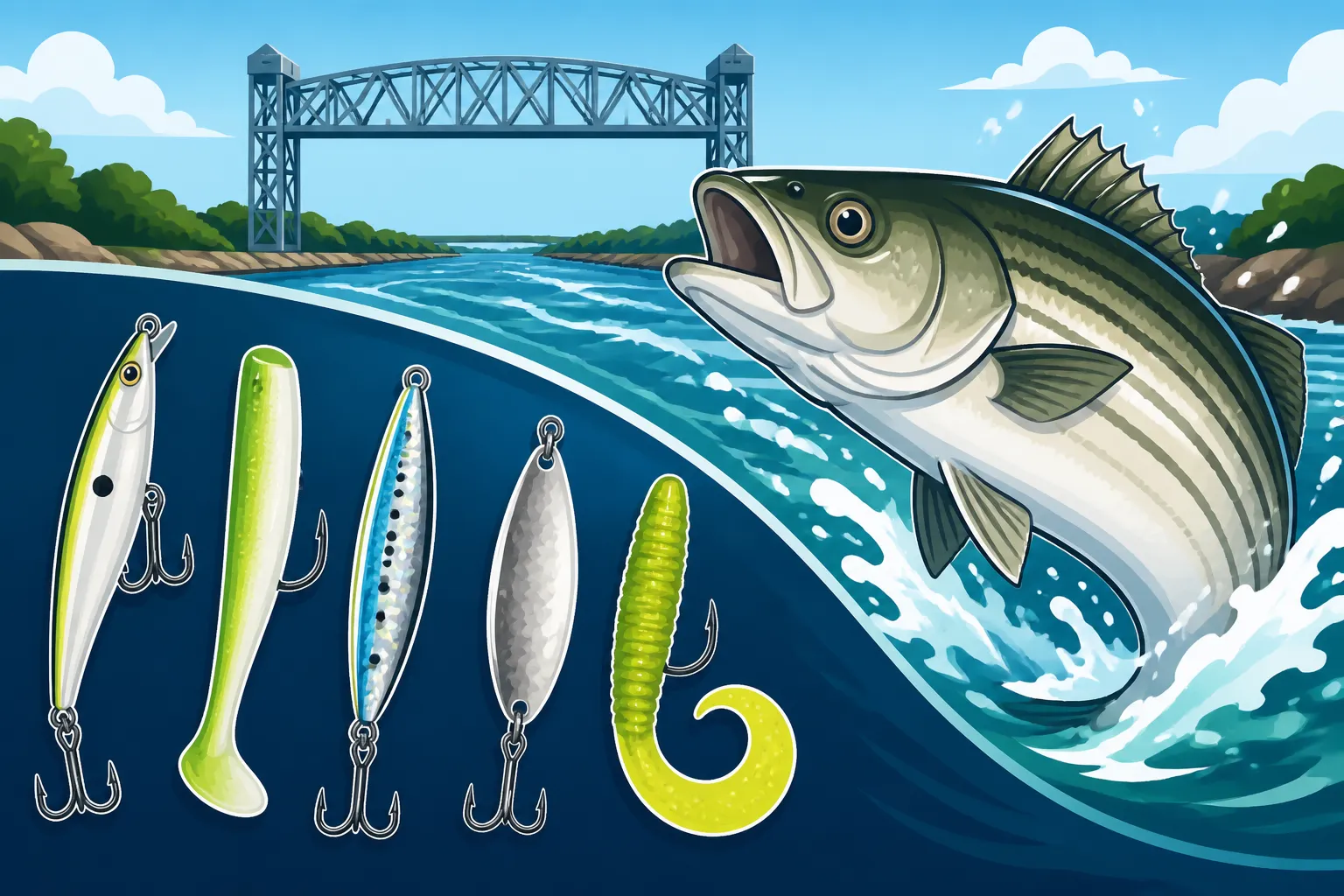
Bucktail Jigs: These classic lures are simple, effective, and incredibly versatile. They consist of a lead head molded with a hook, dressed with deer hair (bucktail) or synthetic fibers. The weight allows them to sink fast and stay near the bottom. The pulsating action of the bucktail in the current is irresistible to stripers. They come in various colors, but white, chartreuse, and olive are perennial favorites. You can tip them with a soft plastic trailer (like a curly tail grub or a Berkley Gulp! Swimming Mullet) for added appeal. When working bucktails, aim to cast them slightly upstream and let them sink and tumble naturally along the bottom, occasionally hopping them with a sharp lift of the rod. This mimics a wounded baitfish struggling against the current. Many anglers have perfected their jigging techniques for Cape Cod Canal stripers with these versatile lures.
-
Lead Jigs (Diamond Jigs, AOK Jigs, Gibbs Canal Jigs): These are essentially heavy pieces of lead, often shaped like a slender baitfish, with a treble or single hook. Their density allows them to cut through the current and get down quickly. Brands like Gibbs have specific "Canal Jigs" designed for the unique conditions, featuring heavy weights and robust hardware. Diamond jigs, often adorned with a tube worm or surgical hose tail, are incredibly effective. AOK Tackle's jigs are also popular for their castability and rapid sink rate. The trick is to cast them out, let them hit the bottom, and then either reel them back with a steady retrieve, imparting a wobbling action, or jig them vertically in areas where fish are schooling. They're particularly effective when stripers are feeding on sand eels or other slender baitfish.
-
Soft Plastics (Paddletails, Swim Shads): When paired with a heavy jig head, large soft plastics become Canal weapons. Companies like Hogy and RonZ make robust soft plastics designed to be fished on heavy jig heads. These often mimic various baitfish like mackerel, bunker, or eels. The paddletail creates a thumping vibration as it swims, attracting fish from a distance. The beauty of soft plastics is their realistic action and versatility. You can slow-roll them along the bottom, jig them aggressively, or even retrieve them faster higher in the water column. Popular colors include chartreuse, white, pink, and olive. Look for models specifically designed for saltwater use, with durable plastic that can withstand toothy bluefish and aggressive strikes from stripers. Finding these on platforms like Amazon is quite easy, ensuring you have a good stock.
| Lure Type | Target Species | Ideal Conditions | Common Weights (oz) | Pros | Cons |
|---|---|---|---|---|---|
| Bucktail Jigs | Striped Bass, Bluefish | All tides, especially strong current | 2-6+ | Versatile, effective, classic, durable | Can snag on bottom, need good technique |
| Lead Jigs | Striped Bass, Bluefish | Strong currents, deep water | 2-8+ | Sinks fast, casts far, good for fast retrieve | Less natural action, mostly vertical jigging |
| Soft Plastics (on heavy jig heads) | Striped Bass, Bluefish | All tides, mimics various baitfish | 2-6+ | Realistic action, versatile, various profiles | Can be torn by bluefish, jig heads expensive |
| Topwater Plugs | Bluefish, Striped Bass | Slack tide, low light, calmer water | 1-3 | Exciting strikes, covers water | Not effective in strong current or deep fish |
| Swimming Plugs | Striped Bass, Bluefish | Moderate current, mimicking baitfish | 1.5-4 | Realistic swim, good diving depth | Can be costly, vulnerable to snags |
Topwater Plugs for Surface Action
There’s nothing quite like the explosive strike of a striped bass or bluefish on a topwater plug. While not always the most productive for consistent numbers in the strong currents of the Canal, topwater fishing shines during specific conditions, offering an exhilarating visual experience.
-
Poppers: These plugs feature a concave face that "cups" water and creates a loud "pop" or "splash" when retrieved with a twitching motion. The commotion mimics a struggling baitfish on the surface, drawing predatory fish up from the depths. They work best during periods of slack tide or when the current is less aggressive, especially at dawn, dusk, or under low light conditions. Poppers are fantastic for bluefish, which are notorious for their surface aggression. When striped bass are feeding on top, often chasing schools of mackerel or herring, a popper can be deadly. Brands like Super Spook or Guppy Lures are popular choices. Experiment with different retrieval speeds and pauses to find what triggers a strike.
-
Walk-the-Dog Baits: These lures don't pop; instead, they glide from side to side across the surface when retrieved with a rhythmic twitch of the rod tip. This "walk" mimics an injured baitfish or a struggling creature on the surface. They are incredibly effective for both stripers and bluefish, especially when fish are a bit shy of the louder commotion of a popper. They require a bit more practice to master the retrieve, but once you get it down, the action is mesmerizing to fish. Again, slack or slow current conditions are ideal.
-
Darters: While technically not always "topwater" in the traditional sense, some darters can be worked near the surface with a unique, erratic swimming action. These lures are often retrieved with long sweeps of the rod, causing them to dive and dart. They're excellent imitators of sand eels or small baitfish. While many darters are designed to dive, if retrieved quickly in light current, they can elicit explosive surface strikes, particularly at night. These can be found at local tackle shops or online retailers.
Swimming Plugs and Lipless Crankbaits
When fish are holding just below the surface or mid-water column, or when you want to cover a lot of water with a realistic baitfish imitation, swimming plugs and lipless crankbaits are your go-to options.
-
Lipless Swimming Plugs (e.g., Daiwa SP Minnow, Yo-Zuri Mag Darter): These plugs are designed to have a natural, wobbling swim action that closely imitates various baitfish. Many are weighted to cast long distances, which is essential for covering water in the Canal. The Daiwa SP Minnow is a legendary lure in the Northeast, particularly effective for striped bass. These plugs come in various diving depths, allowing you to target fish at different levels of the water column. You typically retrieve them with a steady reel, but don't be afraid to add a twitch or pause to entice a strike. Colors that mimic local baitfish, like mackerel, bunker, or herring, are always a good bet. Consider having a few different sizes and colors on hand to adapt to changing conditions and bait profiles.
-
Diving Plugs (e.g., Bomber Long A, Rapala X-Rap Magnum): These plugs feature a lip that causes them to dive to a specific depth when retrieved. They are excellent for targeting fish that are holding a bit deeper than topwater but not quite on the bottom. Like lipless swimmers, they mimic baitfish and are very effective when fish are actively feeding on schools. Their diving capability allows you to present a bait in a consistent zone. While some are designed for trolling, many can be cast effectively, especially the larger, more robust models. They're often retrieved with a slow, steady motion, letting the plug do its work.
When choosing any of these lures, especially for the Canal, pay close attention to the hardware. Strong split rings and treble hooks are crucial. The fish here are big and powerful, and flimsy components will lead to heartbreak. Many anglers upgrade their hooks and rings on new lures before even tying them on.
Strategies for Presenting Your Lures in the Canal
Having the right lure is only half the battle. Knowing how to present it effectively in the challenging environment of the Cape Cod Canal is what truly sets successful anglers apart.
Matching the Hatch and Current Speed
One of the most critical aspects of successful Canal fishing is "matching the hatch"—meaning, using a lure that closely resembles the size, shape, and color of the baitfish currently present in the water. Keep an eye on the water for signs of baitfish, like schools of silversides, mackerel, or bunker. Look for birds diving, which often indicates bait being pushed to the surface by predatory fish. If you see slender baitfish, opt for slender jigs or minnow plugs. If you see larger, broader bait, consider wider profile soft plastics or chunkier swimming plugs.
Beyond the type of bait, you need to match your lure's weight to the current speed. This is paramount. If the current is ripping, you'll need a heavier jig or a faster sinking plug to reach the bottom. If the current is slower, you can get away with lighter offerings. A common mistake is using too light a lure, which results in it being swept away without ever reaching the strike zone. You'll often be casting significantly upstream of your target area and allowing the current to carry the lure down and across, bringing it into the feeding zone. This tactic is especially effective for working bottom-hugging stripers. You'll also find a lot of useful information on how to fish a falling tide at the Cape Cod Canal, which directly impacts lure choice and presentation.
Retrieval Techniques for Different Lures
Each lure type has its own optimal retrieval style, and mastering these can significantly increase your hook-up rate.
-
For Heavy Jigs and Soft Plastics: The "sweep and drop" or "lift and reel" technique is often best. Cast upstream, let the jig sink to the bottom (you'll feel a slight slackening of the line as it touches down), then lift your rod tip sharply to move the jig a few feet. As you drop the rod tip, quickly reel in the slack and let the jig flutter back down. Repeat this motion, keeping contact with the bottom. Sometimes a steady, slow retrieve, just fast enough to keep the lure from snagging, is all it takes. The goal is to mimic a bottom-feeding creature or a baitfish struggling against the current. Vary your retrieve until you find what the fish are responding to.
-
For Topwater Plugs: This is all about commotion and visual appeal. For poppers, a sharp twitch of the rod tip, followed by reeling in slack, creates the characteristic "pop." Vary the rhythm – sometimes a steady pop-pop-pop works, other times a long pause after a single pop can be deadly. For "walk-the-dog" baits, a consistent, rhythmic twitch of the rod tip (pointing slightly downward) while reeling in slack is key to making the lure sashay across the surface. The lure should glide gracefully side-to-side without jumping out of the water.
-
For Swimming Plugs: A steady retrieve is often all that's needed for these lures to perform their natural swimming action. However, don't be afraid to experiment. Add a pause, a twitch, or vary your retrieve speed. Sometimes a sudden acceleration, followed by a pause, can trigger a reluctant strike. When the current is slower, you can retrieve these plugs faster to create more flash and vibration. For insights into the fishing throughout the year, check out our guide on fishing the Cape Cod Canal by season.
Choosing the Right Gear for Heavy Lures and Strong Fish
Using the right rod, reel, and line setup is non-negotiable when fishing the Canal. You're casting heavy lures, often 3-6 ounces, and battling powerful fish in strong currents.
-
Rods: You'll need a stout, powerful spinning rod, typically 9 to 11 feet in length. Longer rods aid in casting heavy lures further and provide better line control over the current. Look for rods rated for casting weights in the 2-6 oz range or even higher. A medium-heavy to heavy power rod with a fast action is generally preferred. Popular brands like St. Croix, Tsunami, and Lamiglas offer excellent surf rods suitable for the Canal.
-
Reels: A robust, saltwater-rated spinning reel with excellent drag is essential. Look for sizes in the 6000-8000 class (e.g., Penn Spinfisher, Shimano Saragosa, Daiwa BG). Your reel needs to hold a good amount of heavy braided line and have a smooth, reliable drag system that can handle long runs from powerful stripers.
-
Line: Braided line is the standard for Canal fishing due to its incredible strength-to-diameter ratio, zero stretch for maximum sensitivity, and superior casting distance. You'll typically want 40 to 65-pound test braid. Attach a leader of 30 to 50-pound fluorocarbon or monofilament using a strong knot like an FG knot or an Albright knot. The leader provides abrasion resistance against rocks and the toothy grins of bluefish.
Remember, the Cape Cod Canal is a demanding environment. Having reliable gear is just as important as having the right lures. The strong currents and aggressive fish will test your tackle to its limits. For more on setting up your rig, consider reviewing topics like the best rod and reel setup for surfcasting.
Disclaimer
Fishing regulations, seasons, and licensing requirements in Massachusetts can change. Always consult the latest official Massachusetts Division of Fisheries and Wildlife (MassWildlife) regulations before heading out. This guide is for informational purposes only and should not be considered a substitute for official legal advice or regulations.