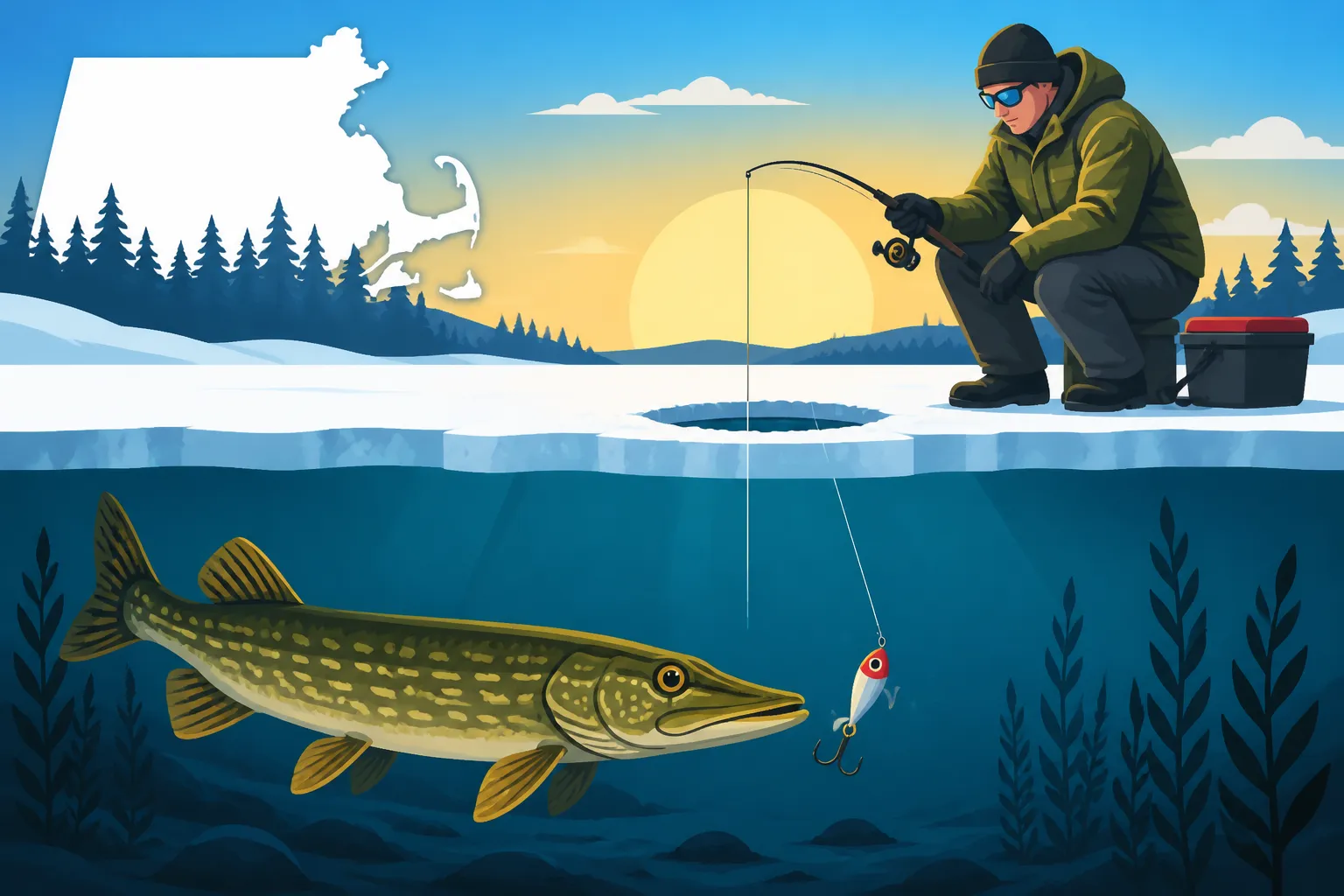
How to catch pickerel through the ice
There's nothing quite like the crisp, quiet solitude of a Massachusetts winter day out on the hard water. But let's be honest, sometimes the fish aren't exactly jumping through the ice, leaving you to wonder if you've chosen the right spot or the right technique. If you're looking for consistent action and a fish that's eager to bite, even in the coldest temperatures, then chain pickerel are your winter fishing heroes. This guide will walk you through everything you need to know to reliably catch these feisty predators through the ice, turning those slow days into memorable ones.
Why Pickerel Are a Winter Angler's Best Friend in Massachusetts
Many anglers, especially those new to ice fishing, can get discouraged by long periods of inactivity. It's frustrating to drill a dozen holes, set up all your gear, and then stare at empty flags all day. That's where the chain pickerel steps in to save the day. These aggressive, toothy critters are often very active under the ice, providing a much-needed thrill when other species might be sluggish. They're widespread across Massachusetts' freshwater bodies, from smaller ponds to larger lakes, making them an accessible target for almost anyone with a fishing license.
They might not be the biggest or flashiest fish in the pond, but their sheer willingness to strike keeps spirits high, especially when you're introducing kids or new anglers to the sport. Plus, they put up a surprisingly good fight on light ice fishing tackle, bending rods and peeling line, which is exactly what you want when battling the cold. Their predatory nature means they're always on the hunt, even when the water temperatures drop, making them a fantastic fish to target when you want to feel that satisfying tug on your line.
Essential Gear for a Successful Pickerel Ice Fishing Trip
Before you even think about stepping onto the ice, having the right gear is non-negotiable. Not just for catching fish, but for your safety and comfort as well. Pickerel are known for their sharp teeth, so specialized tackle and safety equipment are key to a smooth and enjoyable outing. You don't need to break the bank, but a few core items will make all the difference.
Tip-Ups: The Classic Pickerel Catcher
When it comes to ice fishing for pickerel, the tip-up is arguably the most effective tool in your arsenal. These simple devices allow you to spread out your lines, covering a wider area and increasing your chances of finding actively feeding fish. A classic wooden tip-up with a sturdy spool and a sensitive flag mechanism is ideal. You want something reliable that can withstand the elements and clearly signal a bite. Many anglers swear by heritage brands, but even a good quality, affordable option found on Amazon will do the trick.
For your line, a 20 to 30-pound braided line is a good choice for the main spool, as it's durable and resistant to ice abrasion. However, the real secret to pickerel success lies in your leader. Given their sharp teeth, a fluorocarbon or even a light wire leader (around 10-15 pounds test) is crucial to prevent bite-offs. Attach this to a sharp, size 4 or 6 treble hook for live bait. Some anglers prefer a single hook when using dead bait, but the treble hook offers a better hook-up ratio for those aggressive takes. Remember, having several tip-ups allows you to strategically place them along different depths or structures, maximizing your coverage.
Jigging Rods: For the Active Angler
While tip-ups are fantastic for passive fishing, jigging for pickerel can be incredibly rewarding and keep you warm through active movement. A lightweight ice fishing rod, typically 24-30 inches long, paired with a small spinning reel spooled with 6-8 pound fluorocarbon or monofilament line, is perfect. The rod should have a sensitive tip to detect subtle bites but enough backbone to handle a feisty pickerel.
When you're jigging, you're actively trying to entice a strike by mimicking injured baitfish. The beauty of this technique is that you can move from hole to hole, actively searching for fish rather than waiting for them to come to you. If a hole isn't producing, you simply pick up and move, drilling another one a short distance away. This active approach can be particularly effective on days when fish are scattered or less aggressive, as you're directly presenting the lure to them.
Baits and Lures That Pickerel Can't Resist
Pickerel are not picky eaters, which is great news for ice anglers. Their predatory instincts mean they're usually up for a meal, especially a lively one.
- Live Shiners: Without a doubt, live shiners are the king of pickerel baits. A 2-4 inch shiner hooked lightly through the back (above the lateral line, avoiding the spine) or through both lips will swim naturally and attract attention. Keep them lively in a bait bucket with an aerator, especially on colder days. You can often find excellent bait tanks and aerators on
Amazonto keep your shiners frisky. - Dead Bait: Don't underestimate dead bait, especially if live bait isn't readily available or if you're targeting bigger, lazier pickerel. A fresh, dead shiner or even a chunk of mackerel can be effective. The key is freshness and proper presentation; let it sit naturally on the bottom or suspend it a foot or two off.
- Jigging Lures: For active jigging, a variety of lures work well. Small spoons, typically 1/8 to 1/4 ounce, in silver, gold, or bright colors like chartreuse or orange, are excellent. Tip them with a small piece of bait (a shiner head or a maggot) for added scent and appeal. Jigging raps, small swimbaits, or even simple lead-head jigs with a soft plastic tail (grub or paddle tail) can also entice strikes. The key is to experiment with different sizes, colors, and retrieve speeds to see what the fish prefer on any given day.
Safety First: Must-Have Ice Fishing Essentials
Safety should always be your top priority when ice fishing. Don't let the excitement of a potential catch override common sense.
- Ice Claws: These are simple, handheld spikes connected by a cord that you wear around your neck. If you fall through the ice, they provide a grip to pull yourself out. They're inexpensive and vital.
- Spud Bar: Before venturing onto new ice, use a spud bar to test the thickness. If it goes through easily with one or two strikes, the ice is too thin.
- Life Vest/Flotation Suit: While not always practical for every angler, a personal flotation device (PFD) or a specialized flotation suit offers peace of mind and significantly increases your chances of survival if you go through.
- Rope: A long rope (50+ feet) with a loop can be thrown to someone who has fallen in to help pull them to safety.
- Proper Clothing: Layers, waterproof outer shell, insulated boots, hat, and gloves are critical to staying warm and preventing hypothermia. Read up on Massachusetts Ice Fishing Safety and Ice Thickness before you head out, and always check local conditions.
- Tools for the Fish: Because pickerel have sharp teeth, bring long-nosed pliers or a jaw spreader to safely unhook them. This protects both you and the fish.
Strategies and Techniques for Success on the Ice
Having the right gear is only half the battle. Knowing where to go and how to present your offerings will significantly boost your success rate. Pickerel are creatures of habit, and understanding their winter behavior is key.
Scouting and Hole Placement: Finding the Pickerel's Lair
Pickerel, like many predatory fish, relate to structure. In winter, this usually means weed beds, submerged timber, or sharp drop-offs. When scouting a new pond or lake in Massachusetts, look for these features on a topographic map or via a fish finder.
- Weed Edges: Often, pickerel will patrol the edges of remaining green weed beds, ambushing unsuspecting baitfish. Drill a series of holes along these edges.
- Shallow Coves: Early and late in the ice fishing season, shallow coves can hold warmer water and offer food, attracting pickerel.
- Transition Areas: Where a shallow flat drops off into deeper water, or where a hard bottom meets a soft, mucky bottom, are prime feeding zones.
- Inlets/Outlets: Areas with some current from a stream inlet or outlet can concentrate baitfish and, consequently, pickerel.
Don't be afraid to drill multiple holes and move around. A portable ice auger makes this much easier. Once you've drilled your holes, use a scoop to clear out the ice chips, allowing your line to run freely and giving you a clear view of any activity. For more insights into specific locations, you might want to explore resources on Best Ice Fishing Ponds in Massachusetts.
Setting Your Tip-Ups for Maximum Coverage
Once you've identified potential hot spots, it's time to deploy your tip-ups. The general rule of thumb is to spread them out to cover different depths and structures within a reasonable distance.
- Vary Depth: Set some tip-ups just a foot or two under the ice, others mid-water column, and some closer to the bottom, especially if there are weeds down there. Pickerel can suspend at various depths depending on the water body and time of day.
- Strategic Spacing: If you're fishing a weed line, place some tip-ups right on the edge, some slightly inside the weeds (if sparse enough), and some just outside in slightly deeper water.
- Hooking the Bait: For live shiners, hook them lightly through the dorsal fin (avoiding the spine) or through both lips. This allows them to swim naturally and attract attention. Set the hook so the shiner is suspended at your desired depth.
- Keep an Eye Out: Always keep your eyes peeled for flags. When a flag pops up, approach the hole quietly but quickly. Don't rush in stomping your feet, as vibrations can spook the fish. Carefully grab the line, feel for the fish taking line, and when you feel a steady pull, give a gentle but firm tug to set the hook. This is where the thrill of Tip-Up Fishing for Pickerel and Perch in Massachusetts truly comes alive!
Active Jigging Techniques: Enticing the Strike
Jigging is a fantastic way to engage with the fish and can often trigger strikes from pickerel that might ignore a stationary tip-up.
- The Rip and Pause: Drop your lure to the desired depth (often just above structure or where you see fish on your sonar). Give a sharp, upward jerk ("rip") of about 6-12 inches, then let the lure flutter back down on a semi-slack line. Pause for 3-10 seconds. Many bites occur on the fall or during the pause, as the lure resembles a dying baitfish.
- Subtle Twitching: Sometimes, a more subtle approach is needed. Lightly twitch your rod tip, causing the lure to dance gently in place. This is especially effective in clear water or when fish are less aggressive.
- Vertical Presentation: Jigging works best with a vertical presentation. Keep your line directly under your hole. If you're drifting due to current, try a heavier jig or move to a less current-affected area.
- Electronics are Your Friend: A small flasher or sonar unit can be invaluable for jigging. It shows you the depth, the bottom structure, and most importantly, where the fish are in the water column and how they're reacting to your lure. This feedback loop is essential for refining your technique. For more comprehensive approaches, refer to Ice Fishing Techniques for Massachusetts Ponds.
Handling Your Catch and Understanding Regulations
Catching a pickerel is exciting, but knowing how to handle it safely and responsibly, especially given their sharp teeth, is essential. Furthermore, staying informed about local regulations ensures you're fishing legally and contributing to conservation efforts.
Safe Handling and Release: Protecting Yourself and the Fish
Pickerel are toothy critters, and those teeth are designed to hold onto slippery prey. This means you need to be careful when unhooking them.
- Tools are Key: Always have a pair of long-nosed pliers handy. When you land a pickerel, use the pliers to grasp the hook and gently remove it. Avoid putting your fingers anywhere near its mouth. A jaw spreader can also be useful to hold the mouth open if the hook is deep.
- Control the Fish: Hold the fish firmly but gently. If you're planning to release it, minimize its time out of the water. Support its body horizontally, avoiding hanging it vertically by the jaw or line, which can damage its internal organs.
- The "Glove" Method: Some experienced anglers wear a thick glove on their non-dominant hand to cradle the fish, offering some protection from the teeth while they work the hook out with pliers.
- Clean Cut: If a fish is deeply hooked and removing the hook would cause excessive damage, it's often better to simply cut the line as close to the hook as possible. The hook will eventually rust away.
- Photography: If you want a photo, get it quickly and release the fish promptly. Get low to the ice, support the fish with both hands, and release it gently back into the hole, allowing it to swim away on its own. Seeing it swim off strong is the best part!
Massachusetts Pickerel Regulations: Know Before You Go
Fishing regulations in Massachusetts are put in place to protect fish populations and ensure sustainable angling for future generations. While pickerel are generally abundant, it's crucial to be aware of any specific rules that might apply to them or to the particular water body you are fishing.
- Fishing License: First and foremost, you'll need a valid Massachusetts Fishing License Guide. This applies to almost all freshwater fishing in the state, including ice fishing for pickerel. You can learn about the details and costs in the Massachusetts Freshwater Fishing License Costs and Rules guide.
- Daily Catch Limits and Size Restrictions: While pickerel typically have generous limits, these can vary by water body. It's important to consult the current MassWildlife freshwater fishing regulations pamphlet or their website. There might be a daily limit on the number of pickerel you can keep, and occasionally, a minimum size limit. This is part of the broader Massachusetts Recreational Fishing Rules and Bag Limits that all anglers must follow. Always double-check the Massachusetts Freshwater Daily Catch Limits for the specific body of water you intend to fish.
- Number of Lines: Generally, in Massachusetts, you are allowed to fish with up to five lines when ice fishing (this often applies to tip-ups and jigging rods combined). However, always confirm this, as rules can change or have specific exceptions.
- No Live Smelt: It's illegal to use live smelt as bait in Massachusetts. Stick to legally acquired shiners or other appropriate baitfish.
By respecting these regulations, you're not just avoiding potential fines; you're actively participating in the conservation of Massachusetts' valuable fisheries. Always check the latest regulations before each season, as they can sometimes be updated.
Table: Pickerel Ice Fishing Techniques at a Glance
| Feature / Technique | Tip-Up Fishing for Pickerel | Jigging for Pickerel |
|---|---|---|
| Patience Level | Low to moderate (waiting for flag) | High (active engagement, constant movement) |
| Coverage Area | Wide (multiple lines spread out) | Focused (one hole at a time) |
| Bait/Lure Type | Live shiners, dead bait | Spoons, jigging raps, soft plastics (often tipped with bait) |
| Active Engagement | Passive (wait for flag), then active fight | Highly active (constant rod movement, searching) |
| Best For | Covering large areas, less active days, introducing new anglers | Locating active fish, stimulating bites, staying warm |
| Key Gear | Tip-ups, sharp hooks, leaders, live bait bucket | Sensitive ice rod, small spinning reel, lures, fish finder |
| Benefits | Can catch multiple fish simultaneously, good for socializing | Constant action, can trigger strikes, helps stay warm |
| Drawbacks | Can be slow if fish aren't cruising, gear can freeze up | Requires constant attention, only one line active |
This article is for general informational purposes only and does not constitute professional advice. Laws, prices and regulations vary by location and change over time. Consult a qualified professional for guidance on your specific situation.