Ice Fishing Techniques for Massachusetts Ponds
Venturing out onto the frozen surface of a Massachusetts pond, eager to drop a line, can be both exhilarating and a little daunting. The unpredictable winter weather, the challenge of locating fish under a blanket of ice, and the sheer cold can make it tough for even seasoned anglers. But don't let that chill your enthusiasm! This comprehensive guide will equip you with the knowledge and practical techniques to confidently tackle ice fishing on Massachusetts ponds, helping you transform those chilly outings into rewarding adventures.
The Basics of Massachusetts Ice Fishing – Getting Started Safely
Before you even think about drilling your first hole, understanding the fundamentals of safe and prepared ice fishing is absolutely paramount. Massachusetts winters can be fickle, with ice conditions changing rapidly, sometimes even within a single day. Proper preparation ensures both your safety and a more enjoyable experience.
Ice Safety: More Than Just a Number
When it comes to ice fishing, the phrase "no ice is safe ice" is more than just a catchy slogan; it’s a crucial reminder. While many guidelines suggest a minimum of four inches of clear, solid ice for individual foot travel, and more for groups or equipment, these are just starting points. The reality on Massachusetts ponds can be far more complex. Factors like snow cover insulating the ice, currents from inlets or outlets, natural springs, and even recent temperature fluctuations can dramatically alter ice integrity.
Clear, "black" ice is typically the strongest, but snow-covered or "white" ice can be deceptively weak. Always be on the lookout for pressure ridges, which indicate shifting ice, and avoid areas near docks, bridges, or aerators where ice may be thinner. Carrying essential safety gear is non-negotiable. This includes a spud bar or an ice auger to constantly check ice thickness as you move, a set of ice picks worn around your neck for self-rescue, a rope for assisting others, and ideally, a personal flotation device (PFD) or a specialized floatation suit. Never, ever fish alone, and always inform someone of your plans, including your exact location and expected return time. For a deeper dive into staying safe, check out our guide on Massachusetts Ice Fishing Safety and Ice Thickness.
Essential Gear for Your First Ice Fishing Trip
Once you've got safety locked down, it's time to talk gear. You don't need to break the bank to get started, but having the right tools makes all the difference when battling the elements and the fish. The core items are surprisingly simple, yet each plays a vital role in your success and comfort on the ice.
First up is an auger. For beginners or those on a budget, a hand auger is perfectly adequate for punching holes through typical Massachusetts pond ice, especially in the 6-10 inch range. If you get serious, a power auger – whether gas, propane, or battery-powered electric models like those from ION or Eskimo – will save you a lot of effort, particularly when drilling many holes or through thicker ice. Then there's shelter. A portable shanty, either a flip-over model or a hub-style tent, offers invaluable protection from the biting winds and cold, allowing you to stay out longer and focus on fishing. Many experienced anglers find these essential for enduring a full day on the ice, especially in the more open, exposed ponds of Central and Western Massachusetts.
For actual fishing, you'll need specialized ice fishing rods and reels. These are much shorter than conventional rods, typically ranging from 24 to 36 inches, designed for jigging vertically over a hole. They offer incredible sensitivity to detect those subtle winter bites. Pair them with small spinning reels spooled with quality monofilament or fluorocarbon line (2-6 lb test for panfish and trout, up to 8-12 lb for larger bass and pickerel). A small tackle box with a variety of jigs and spoons, easily found on Amazon, is essential. Lastly, dressing warmly in layers is paramount. Think thermal base layers, a fleece mid-layer, and a waterproof, windproof outer shell. Insulated boots, warm gloves or mittens, and a good hat will keep you comfortable. For more detailed recommendations, our guide on Best Ice Fishing Gear for Massachusetts Winters has you covered.
Understanding Fish Behavior Under the Ice
Ice fishing isn't just about punching holes; it's about understanding what's happening beneath your feet. Fish don't disappear in winter, but their world changes dramatically, and so does their behavior. Knowing how they react to colder water and limited light is key to consistently finding and catching them.
Where Fish Go When Waters Freeze Over
When the water temperature drops and ice forms, fish metabolism slows down considerably. They become less active, requiring less food and expending less energy. This means they often gravitate towards specific areas of a pond or lake where conditions are most favorable. For many species, this means deeper water, where temperatures are more stable and typically a few degrees warmer than the surface, especially closer to the bottom.
However, "deeper" isn't always the only answer. Fish still relate heavily to structure. You'll often find them congregating near submerged weed lines, particularly green weeds that continue to produce oxygen, or along distinct drop-offs, humps, and points. These areas provide cover, ambush points, and often hold baitfish. In shallower ponds, especially those with heavy snow cover that blocks sunlight, oxygen levels can become critical, sometimes forcing fish to shallower, more oxygenated areas near inlets or springs. Understanding the underwater topography of your chosen pond, perhaps using bathymetric maps, can give you a significant advantage in locating these winter havens.
The Slow and Subtle Bites of Winter
Forget the aggressive strikes you might experience in summer. Winter bites are notoriously subtle, requiring extreme patience and sensitive equipment. Because their metabolism is slower, fish don't chase prey with the same gusto. They're conserving energy, and their takes often feel more like a slight weight, a faint tick, or simply your line going slack.
To combat this, your presentation needs to be incredibly slow and deliberate. Small baits, tiny jigs, and minimal movement are the order of the day. A sensitive ice fishing rod, often equipped with a spring bobber, becomes your best friend, signaling even the slightest disturbance to your line. Many anglers find themselves staring intently at their rod tip, waiting for that almost imperceptible twitch. The colder the water, the more subtle the bite, making it a true test of an angler's focus and dedication. Don't be surprised if a "bite" feels more like your lure just got heavier or changed its drift ever so slightly – often, that's your cue to set the hook.
Top Techniques for Massachusetts Ice Fishing
With your gear in hand and an understanding of winter fish behavior, it's time to dive into the core techniques that will put fish on the ice. These methods are tailored to the unique challenges and opportunities presented by Massachusetts' frozen ponds.
Jigging: The Art of Attracting Fish Below
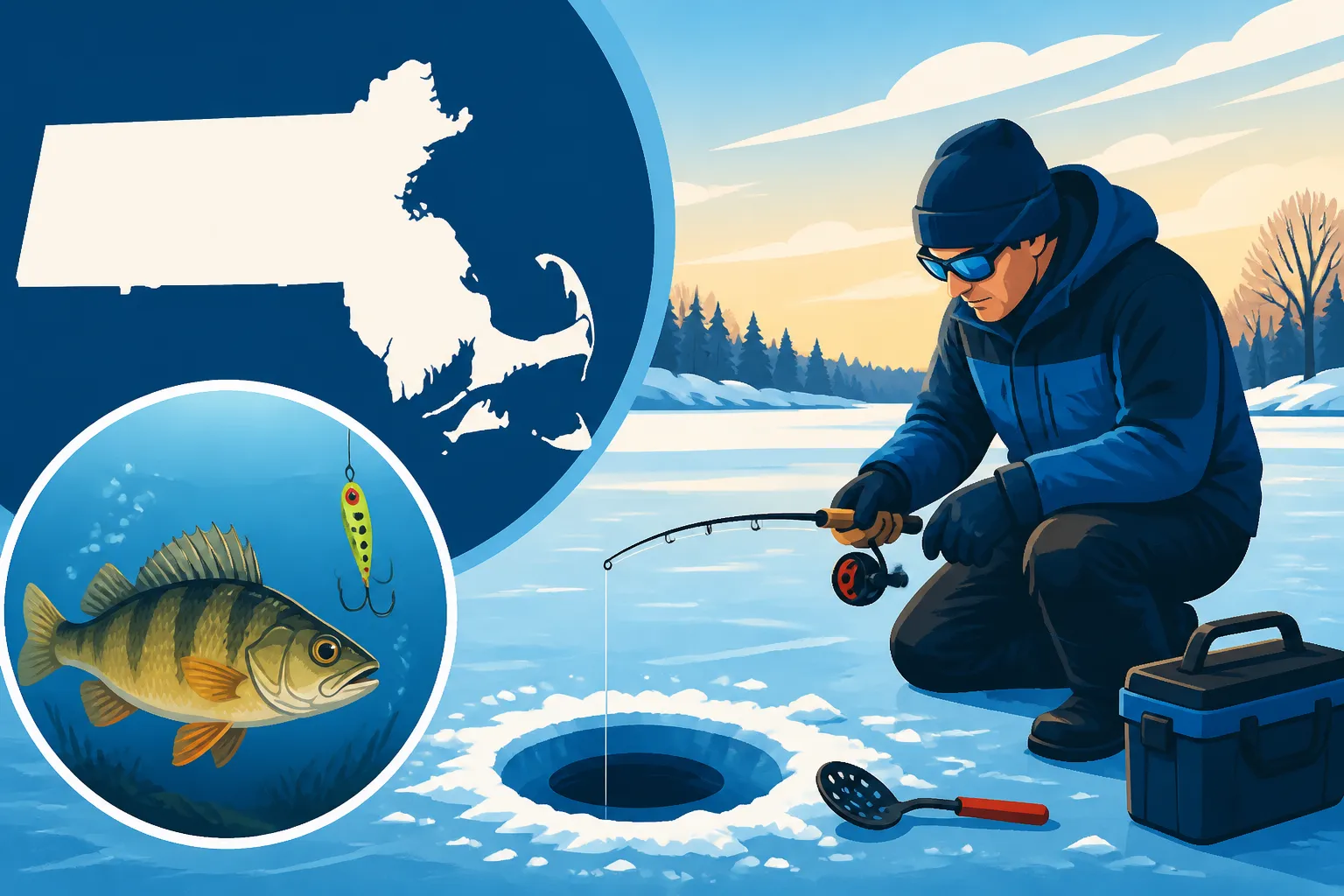
Jigging is perhaps the most active and engaging form of ice fishing, allowing you to directly present a lure to fish and entice a strike. The basic principle is simple: drop a weighted lure (a jig) down the hole and impart subtle movements to imitate struggling baitfish or insects. The key is in the subtlety during winter.
For panfish like perch, crappie, and bluegill, tiny tungsten jigs tipped with a wax worm, a piece of corn, or a small plastic grub are deadly. You'll want to use a light rod and line, and often a spring bobber, to detect their incredibly light takes. For larger fish like trout, bass, and pickerel, slightly bigger jigs, jigging spoons like a Swedish Pimple or a Kastmaster, or even vertical jigging Rapalas can be highly effective. The technique involves a short lift, followed by a pause, then a gentle quiver. Experiment with different lift heights, pauses, and even "deadsticking" your jig motionless for several seconds. Often, the strike comes on the fall or during a pause. Using a flasher or fish finder is a game-changer for jigging, as it allows you to see fish approaching your lure and how they react to your presentation, letting you adjust in real-time. Finding a good, reliable flasher, even a basic model, can be a major boost to your success, and many anglers research these on Amazon before heading to a specialty shop.
Tip-Up Fishing: Passive Power for Predatory Fish
While jigging is active, tip-up fishing is a more passive, yet incredibly effective, technique for targeting larger, more predatory fish. A tip-up is a device that spans an ice hole, holding a baited line in the water. When a fish takes the bait, it triggers a flag to "tip up," signaling a bite. This allows you to cover more water by setting multiple lines, which is often crucial when fish are scattered. Remember to check Massachusetts two-pole fishing rules regarding the number of lines you can legally fish simultaneously.
The go-to bait for tip-ups in Massachusetts is live bait, particularly shiners (like golden shiners or fatheads), which mimic the natural forage of many predatory species. Rig your shiner on a small treble or circle hook, usually with a split shot or two to keep it at your desired depth, and a fluorocarbon leader for stealth or a steel leader if you're specifically targeting toothy pickerel. Set your tip-ups along drop-offs, near weed beds, or over deep channels where larger fish might cruise. Once a flag goes up, approach cautiously, grab the line, and hand-line the fish in. The anticipation of a flag popping up is one of the greatest thrills of ice fishing! To learn more about this exciting method, read our guide on Tip-Up Fishing for Pickerel and Perch in Massachusetts.
Deadsticking and Other Subtle Approaches
Beyond active jigging and tip-up spreads, there are other subtle techniques that can pay off, especially on particularly slow days or for finicky fish. One popular method is "deadsticking" or using a second, often unweighted, rod (where permitted by state regulations, which typically allow multiple rods if actively attended) with a simple bait presentation.
Imagine you're actively jigging with one rod, and just a foot or two away, your second rod is simply holding a small worm, grub, or a piece of PowerBait a few inches off the bottom under a tiny bobber. This "dead" rod, with its motionless or barely moving bait, can often entice bites from fish that are too lethargic or wary to hit an actively jigged lure. The subtle scent and natural presentation can be irresistible. Many anglers keep their live bait, like shiners, fresh and lively in a well-insulated bait bucket, which you can find conveniently on Amazon, right beside their holes to quickly re-bait their deadsticks or tip-ups. Sometimes, the simplest, most unassuming presentation is the one that gets the job done when everything else fails.
Targeting Popular Massachusetts Ice Fish Species
Massachusetts ponds offer a diverse array of fish species to target through the ice. Each species has its preferred habitats and responds best to specific techniques. Understanding these nuances will significantly increase your catch rates.
Panfish Perfection: Perch, Crappie, and Bluegill
Panfish are often the bread and butter of Massachusetts ice fishing, providing consistent action and being relatively easy to locate. Yellow perch, crappie, and bluegill are abundant in many ponds and reservoirs across the state. They tend to school up in winter, often found near submerged weed lines, along drop-offs, or suspended in the water column over deeper basins.
For these smaller but feisty fish, the key is finesse. Small tungsten jigs (1/32 to 1/16 oz) in various colors (chartreuse, pink, glow-in-the-dark) tipped with a single wax worm, a couple of maggots, or a tiny soft plastic bait are incredibly effective. A very light rod with a sensitive tip or a spring bobber is crucial for detecting their often-barely-there bites. Once you find a school, the action can be non-stop. Keep moving to find them, and once you do, stay on top of them. Our guides on Yellow Perch Fishing in Massachusetts and Crappie Fishing in Massachusetts Ponds offer species-specific tips to help you fill your bucket.
Frosty Trout: Rainbows, Browns, and Brooks
Massachusetts boasts a fantastic trout stocking program, and these cold-water beauties are a prime target for ice anglers. Rainbow, brown, and brook trout are stocked in numerous ponds and lakes across the state, offering exciting opportunities once the ice forms. They often cruise deeper basins, near inlets or outlets, or suspend themselves in the middle of the water column, actively searching for food.
Successful trout ice fishing often combines jigging and tip-up tactics. For jigging, small jigging spoons, like a Kastmaster or a Swedish Pimple, can entice aggressive strikes. Tiny jigging Rapalas or tubes also work well, especially for suspended fish. Tip your jigs with a small piece of worm, a kernel of corn, or PowerBait. For tip-ups, a small live shiner or a large golden shiner, suspended about halfway down in the water column or just above the bottom, is often irresistible to a cruising trout. Keep an eye on the latest Massachusetts Trout Stocking Schedule to find recently stocked ponds, as freshly introduced trout can be more active initially. Dive deeper into general tactics with our Trout Fishing in Massachusetts guide.
Battling Bass and Pickerel Through the Ice
For those seeking a bigger fight, largemouth bass, smallmouth bass, and chain pickerel offer thrilling battles through the ice. Largemouth bass typically hold tight to submerged structure like weed beds, brush piles, and fallen trees, often in shallower to mid-depth areas. Smallmouth bass prefer rocky bottoms, humps, and deep drop-offs. Chain pickerel, with their voracious appetites, can be found almost anywhere there are baitfish, frequently lurking in or near weed beds.
When targeting these larger predators, tip-ups rigged with lively medium to large shiners are undoubtedly the most effective method. A big shiner struggling beneath the ice is a beacon for hungry bass and pickerel. Set your tip-ups strategically around known structure or along contour lines. For largemouth, try placing tip-ups right on the edge of a deep weed line. For smallmouth, focus on rocky points or humps. While jigging can sometimes work for these species (larger spoons or blade baits), the passive effectiveness of a well-placed live bait under a tip-up is hard to beat. The sight of a tip-up flag flying high, indicating a solid fish on the other end, is a truly exhilarating moment in the stillness of winter. For more specific advice, check out our articles on Largemouth Bass Fishing in Massachusetts and Chain Pickerel Fishing in Massachusetts.
Maximizing Your Massachusetts Ice Fishing Success
Beyond the basic techniques, there are several advanced strategies and considerations that can dramatically improve your ice fishing results. These tips focus on efficiency, adaptation, and leveraging technology to your advantage.
Electronics: Flashers and Underwater Cameras
In the world of ice fishing, electronics have become as essential as a good auger for many serious anglers. A flasher, also known as a vertical sonar unit, provides real-time feedback on what's happening beneath your hole. It shows you the bottom, any fish swimming by, and crucially, your lure. This allows you to fine-tune your presentation, see how fish react to your jigging motions, and adjust your depth instantly. Brands like Vexilar, Marcum, and Humminbird (with their Ice Helix series) offer various models, from beginner-friendly units to advanced setups. While some of these high-end units are often researched on Amazon, many anglers prefer to purchase them from dedicated sporting goods stores where they can get expert advice and support.
Even more captivating are underwater cameras. These devices, lowered into your hole, transmit live video footage to a screen above the ice. You can actually see the fish, their size, how they interact with your bait, and even identify the species. While less practical for covering wide areas, a camera is invaluable for scouting a new spot, verifying fish presence, or simply observing fish behavior to become a better angler. Combining a flasher for wide coverage with a camera for close-up inspection can be a powerful duo for dissecting a new fishing spot.
Staying Mobile and Adapting to Conditions
One of the biggest mistakes an ice angler can make is staying glued to a single hole. Fish move, and conditions change. The most successful ice anglers in Massachusetts are almost always the most mobile ones. Don't be afraid to drill multiple holes, even dozens, across different depths and structures. This "hole hopping" strategy allows you to quickly locate active fish. If a hole isn't producing after 15-20 minutes, move on to the next.
Beyond mobility, continuous adaptation is key. If fish are hitting a certain color jig, stick with it. If they're shying away, try a smaller size, a different color, or switch to live bait. Pay attention to changes in weather, like approaching fronts or sudden drops in barometric pressure, as these can influence fish activity. On sunny days, fish might be more active in shallower, sun-warmed water, while on cloudy days, they might be deeper. Each body of water in Massachusetts has its own personality under the ice, from small local ponds to the larger, deeper Quabbin Reservoir (which has its own specific permit rules). The angler who observes, learns, and adapts will consistently outfish those who stick to a rigid plan.
| Fish Species | Typical Location | Best Techniques | Preferred Bait/Lures |
|---|---|---|---|
| Yellow Perch | Weed lines, drop-offs, bottom in deeper areas | Jigging, Deadsticking | Small tungsten jigs (wax worms, maggots), small spoons |
| Black Crappie | Suspended over deeper water, brush piles, weed edges | Jigging, Deadsticking | Small jigs (plastic grubs, minnows), tiny spoons |
| Bluegill | Weed beds, shallow flats, near bottom structure | Jigging, Deadsticking | Tiny jigs (wax worms, maggots), small teardrop jigs |
| Rainbow Trout | Cruising basins, suspended, near inlets/outlets | Jigging, Tip-ups | Small spoons, jigging Rapalas, PowerBait, small shiners |
| Brown Trout | Deeper structure, near cover, bottom-oriented | Tip-ups, Jigging | Live shiners, larger spoons, large jigs |
| Chain Pickerel | Weed beds, shallow cover, ambush points | Tip-ups | Lively medium-to-large shiners |
| Largemouth Bass | Weed lines, brush piles, submerged timber, drop-offs | Tip-ups, Jigging | Lively medium-to-large shiners, larger jigging spoons |
Disclaimer
Please remember that fishing regulations, including those for ice fishing, can change. Always consult the latest Massachusetts Division of Fisheries and Wildlife (MassWildlife) regulations before heading out on the ice. Safety is paramount; never take unnecessary risks.