Topwater Fishing for Bass in Summer
The summer months in Massachusetts, often referred to as the "dog days," can be incredibly frustrating for bass anglers. The scorching sun and rising water temperatures make bass lethargic and send them deep into cover, making traditional presentations a tough sell. But don't throw in the towel just yet! This comprehensive guide will show you how to unlock some of the most exciting action on the water: topwater fishing for bass during the summer, turning those challenging conditions into thrilling blow-ups.
Understanding Summer Bass Behavior and Why Topwater Shines
When the mercury climbs and the summer sun beats down, many anglers assume bass fishing shuts down. And while it's true that the fish often become less active during the brightest, hottest parts of the day, they don't stop eating entirely. You just need to adjust your approach to match their changed habits, and that's where topwater lures truly excel.
The Dog Days of Summer and Bass Habits
Imagine yourself on a blazing hot day – you're probably not running a marathon at noon, right? Bass are much the same. As water temperatures rise, particularly in shallower ponds and lakes across Massachusetts, bass seek refuge from the intense heat and bright sunlight. They'll gravitate towards cooler, deeper water, or, more commonly, thick cover that offers shade and ambush points. Think dense lily pads, thick mats of submerged vegetation, fallen trees, dock pilings, and shaded banks. These areas provide not only thermal comfort but also safety from predators and a perfect spot to wait for an unsuspecting meal to swim by.
The frustration for many anglers comes from casting traditional baits into open water or just outside the cover, only to be met with silence. Bass in summer often become more "lazy" in their feeding habits, preferring to ambush prey from the safety of their shaded hideouts rather than expend energy chasing down a fast-moving meal in open, bright water. This shift in behavior requires a shift in presentation – one that brings the food directly to their doorstep, often with a commotion that triggers an instinctive strike.
Why Topwater Lures are Irresistible
Topwater lures don't just mimic baitfish; they imitate distressed, struggling, or vulnerable prey right on the surface. This is a crucial distinction, especially in summer. A bass might ignore a fast-moving crankbait or a subtle jig if it's hunkered down under a thick mat of weeds. But a frog lure gurgling and sputtering right over its head, or a popper creating a tantalizing splash, can trigger an instinctual, aggressive reaction. It's less about a gentle meal and more about an irresistible opportunity – or even an annoyance – that they simply can't let pass.
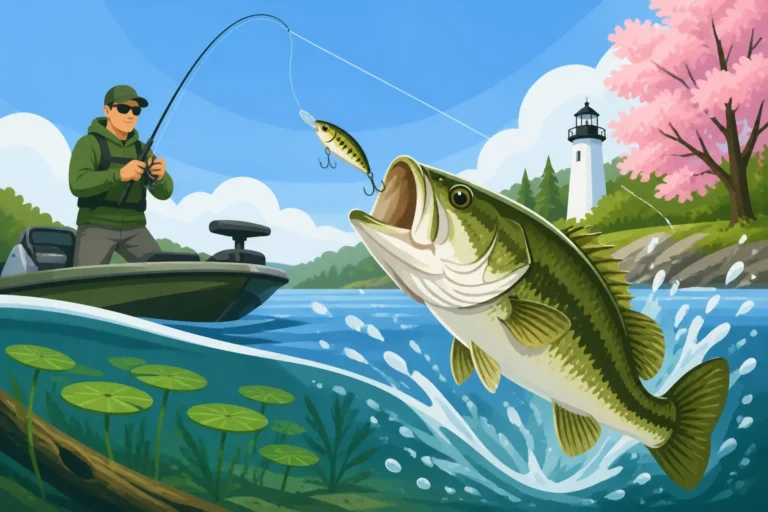
The thrill of topwater fishing is undeniable. There's nothing quite like watching a massive bass explode from beneath a lily pad, creating a violent swirl as it engulfs your lure. It’s visual, it’s exciting, and it often leads to some of the most memorable strikes you'll ever experience. Beyond the pure adrenaline rush, topwater lures are also incredibly effective because they allow you to fish in places other lures can't go. Their weedless designs or buoyant nature let them glide over and through thick vegetation, woody debris, and other challenging cover where big bass hide. This means you can present your bait exactly where the fish are holding, increasing your chances exponentially. For more details on local regulations and where to find fish, check out our guide on the Massachusetts Freshwater Daily Catch Limits.
Essential Topwater Lure Types for Massachusetts Waters
Massachusetts boasts an incredible array of freshwater ponds, lakes, and rivers where bass thrive. To tackle these diverse environments, you'll want to have a few different types of topwater lures in your arsenal. Each has its unique action and excels in specific conditions, allowing you to adapt to whatever the bass are telling you. Many of these effective lures can be found easily on platforms like Amazon.
Poppers and Chuggers: The Classic Attack
When most anglers think of topwater fishing, the popper is often the first lure that comes to mind, and for good reason! These lures feature a concave or cupped face that "pops" or "chugs" water forward when retrieved with a sharp twitch of the rod tip. This creates an irresistible disturbance on the surface, mimicking a struggling baitfish, a frog jumping, or even a small animal falling into the water.
Poppers and chuggers are incredibly versatile, working well in a variety of situations. They are fantastic when bass are actively feeding near the surface or when you need to draw fish out of relatively open cover, like sparse lily pads or the edges of docks. The key to their effectiveness lies in the pause. Often, the most violent strikes occur when the lure is sitting motionless after a series of pops, giving the bass time to hone in and commit to the attack. Experiment with the cadence – a few quick pops followed by a long pause, or a steady series of chugs. Brands like Heddon and Rapala offer excellent popper options.
Walk-the-Dog Baits: Subtlety and Action
If poppers are the loud, attention-grabbing party hosts, walk-the-dog baits are the smooth, confident dancers. These slender, cigar-shaped lures are designed to be retrieved with a specific "walking" motion, gliding from side to side across the water's surface. This creates a subtle yet highly enticing sashaying action that perfectly imitates a wounded baitfish struggling on the surface. Unlike poppers, which create a more abrupt splash, walk-the-dog baits offer a continuous, fluid movement that can be incredibly effective when bass are a bit more finicky or in clearer water where excessive commotion might spook them.
Learning the "walk-the-dog" retrieve takes a little practice, but once you get it down, it's incredibly rewarding. It involves rhythmic twitches of the rod tip while reeling in slack, causing the lure to zig and zag. These baits are excellent in open water, along weed lines, or over submerged grass beds where bass might be cruising for an easy meal. They are also fantastic on calm mornings or evenings when the water is glassy, as their subtle action is highly visible and draws fish from a distance. Zoom, for instance, offers some great soft plastic baits that can be rigged to walk.
Frogs and Rats: Mastering the Mats
For many Massachusetts anglers, summer bass fishing means one thing: throwing frogs into thick, seemingly impenetrable cover. These lures are often made of soft plastic with weedless hook designs, allowing them to glide effortlessly over lily pads, hydrilla mats, and dense slop where other lures would snag instantly. The realism of these baits, often with lifelike legs or tails, can be uncanny, fooling even the most wary bass hiding beneath the canopy.
Frog and rat lures are your go-to when bass are tucked deep into heavy vegetation to escape the midday sun. They represent an easy, protein-packed meal that literally lands on their doorstep. The key here is not just getting the lure into the thick stuff, but also working it slowly and deliberately. Let it sit in open pockets, twitch it to make it look like a real frog or rodent trying to cross the mat, and then pause. The strikes are often explosive and come with little warning. You'll want a heavy-action rod and strong braided line to wrench these fish out of the thick cover. Learning how to Catch Largemouth Bass in Massachusetts Ponds will often involve these methods.
Prop Baits and Buzzbaits: Noise and Commotion
Sometimes, bass need a little more convincing, especially if they're holding in slightly deeper water or are less aggressive. That's where prop baits and buzzbaits come in. Prop baits feature small propellers on the front, back, or both, creating a sputtering, spitting, and gurgling commotion as they're retrieved. This high-action, noisy presentation is designed to grab attention and trigger reaction strikes from curious or territorial bass. They're excellent for covering water quickly and drawing fish from a distance, particularly in stained water or on breezy days when other subtle topwaters might be overlooked.
Buzzbaits, on the other hand, feature a wire arm with a propeller blade that churns water as it's reeled in. This creates a distinct, loud "buzzing" sound and a visible wake, signaling an easy meal to any bass in the vicinity. Buzzbaits are meant to be retrieved steadily, just fast enough to keep the blade spinning on the surface. They're fantastic for fishing along grass lines, over submerged stumps, or around dock edges, drawing out aggressive bass that are ready to commit. Both prop baits and buzzbaits are excellent for triggering strikes in low-light conditions or when you're trying to locate active fish.
Gear Up for Topwater Success: Rods, Reels, and Line
Having the right topwater lures is only half the battle. To effectively present these baits and, more importantly, land those explosive summer bass, you need to be properly equipped. The right rod, reel, and line combination will make a huge difference in your casting accuracy, lure action, hook-setting power, and overall fishing experience.
The Right Rod: Power and Sensitivity
When it comes to topwater fishing for bass, especially in the thick cover often found in Massachusetts ponds and lakes, a sensitive rod with sufficient power is non-negotiable. You'll typically want a baitcasting rod in the medium-heavy to heavy power range, with a fast or extra-fast action.
Here's why:
- Power (Medium-Heavy to Heavy): This provides the backbone needed to cast heavier topwater lures (like larger frogs or walk-the-dog baits) a good distance. More importantly, it gives you the leverage to pull a big bass out of dense lily pads or thick submerged weeds once it strikes. Trying to extract a decent bass from heavy cover with a light rod is a recipe for heartbreak and lost fish.
- Action (Fast or Extra-Fast): "Action" refers to where the rod bends. A fast or extra-fast action means the rod bends mostly in the tip section, while the rest of the blank remains stiff. This is crucial for precise casting accuracy, especially when you're trying to land a frog bait in a small pocket within a weed mat. It also provides the quick tip responsiveness needed to impart the walking action on a Zara Spook or the popping action on a Chug Bug. And when that fish blows up, the fast tip allows for a quick, powerful hookset. Rods between 6'10" and 7'6" are generally ideal, offering a good balance of casting distance and maneuverability.
Reel Talk: Gear Ratios and Line Capacity
For topwater fishing, a good quality baitcasting reel is typically preferred over spinning gear, especially when fishing heavier lines and in heavy cover. The reel you choose should complement your rod and be able to handle the demands of working topwater lures.
- Gear Ratio: This is a critical factor. You'll generally want a baitcasting reel with a moderate to high gear ratio, something in the 7.1:1 to 8.1:1 range. A higher gear ratio means the spool turns more times with each crank of the handle, allowing you to quickly retrieve slack line. This is essential for several reasons:
- Working Lures: It helps you maintain contact with your lure and effectively impart the specific retrieve (walking, popping).
- Hooksets: After a bass strikes, you often need to quickly reel in slack before setting the hook to ensure a solid connection.
- Fighting Fish: A fast retrieve allows you to quickly gain line on a hard-fighting bass and keep it from burying itself back into cover.
- Line Capacity and Drag: Ensure your reel has sufficient line capacity for the braided line you'll likely be using (more on that next). A smooth, reliable drag system is also important, even with heavier line. While you'll be fighting fish aggressively, the drag still needs to function properly to prevent line breaks during powerful runs, especially with larger fish that might have swallowed the hook deep.
Line Choices: Braided vs. Mono for Topwater
The line you spool onto your reel is just as important as your rod and reel, particularly for topwater presentations. Each line type has distinct advantages and disadvantages.
- Braided Line (The Topwater King): For most topwater applications, especially when fishing frogs or heavy walk-the-dog baits in thick cover, braided line is the undisputed champion.
- Zero Stretch: This is the biggest advantage. When a bass blows up on your lure, braided line provides an instantaneous, powerful connection, allowing for rock-solid hooksets even at long distances. There's no stretch to absorb the force of your hookset.
- Incredible Strength: Braided line offers superior strength for its diameter compared to monofilament. This means you can use a lighter diameter line with higher breaking strength, which is crucial when trying to horse a bass out of a dense mat of vegetation.
- Cuts Through Weeds: Its thin diameter and smooth coating help braided line slice through vegetation, reducing friction and preventing your line from getting bogged down in the cover.
- Sensitivity: While not as crucial for visible topwater strikes, the zero stretch also transmits every bump and twitch back to your rod, giving you excellent feel for your lure's action.
- Recommendation: Typically 30-65 lb test braided line is used for most topwater bass fishing. Brands like PowerPro or Spiderwire offer excellent options that are readily available, including on Amazon.
- Monofilament Line (The Niche Player): While braided line dominates, monofilament (mono) still has a place in some topwater scenarios.
- Buoyancy: Mono floats naturally, which can be an advantage for some smaller, lighter topwater lures where you want to keep the line on the surface without it dragging the lure down.
- Stretch: While a disadvantage for hooksets in heavy cover, the inherent stretch in mono can sometimes be beneficial with treble-hooked lures (like poppers or prop baits) in open water. It acts as a shock absorber, preventing hooks from tearing out of a fish's mouth during aggressive head shakes.
- Invisibility: Mono is generally less visible in clear water than braid, which might be a factor for extremely wary bass.
- Recommendation: If using mono, stick to 12-17 lb test, but generally, use braid for most topwater work. You can always use a short monofilament leader if you're concerned about line visibility, though it's less critical for violent topwater strikes.
Proper gear selection is key to making your summer topwater adventures not just successful, but genuinely enjoyable.
Mastering Topwater Techniques and Presentation
Having the right lures and gear is a fantastic start, but the true magic of topwater fishing lies in how you present your bait. It’s not just about casting it out; it’s about making that lure dance, twitch, and sputter in a way that screams "EASY MEAL!" to a lurking bass. This section will walk you through the nuances of reading the water, precise lure retrieves, and that ever-so-critical hookset.
Reading the Water and Spot Selection
Summer bass are largely dictated by two factors: comfort and ambush. Your job is to identify spots that provide both. In Massachusetts' diverse aquatic environments, this means looking for specific types of cover and structure.
- Shaded Areas: Above all, bass seek shade during the bright summer months. This could be the shadow cast by a tall tree overhanging a bank, the underside of a dock, or the deep shade provided by a large patch of lily pads. Bass will often hold right on the edge of these shadows, ready to dart out.
- Heavy Vegetation: Lily pads, hydrilla mats, cattails, and thick grass beds are prime real estate for summer bass. These provide not only shade but also a rich ecosystem of baitfish, frogs, and insects. Look for pockets, holes, or edges within these mats, as these are natural ambush points. Our guide on Best Freshwater Ponds and Lakes in Massachusetts highlights many spots perfect for this.
- Submerged Structure: Underwater rocks, brush piles, fallen trees, and stumps also offer crucial cover and ambush points. While you can't always see these, look for visual cues like slight disturbances on the surface, changes in water color, or exposed branches.
- Current Breaks: In rivers like the Connecticut River or Merrimack River, look for areas where the current breaks, such as eddies behind rocks or fallen trees. Bass will use these spots to conserve energy and wait for food to be swept by.
Approach these spots quietly, especially if you're fishing from a boat or kayak. Long casts are often beneficial to avoid spooking wary fish. The goal is to land your lure softly and accurately near or on the desired target, minimizing splash if possible unless you're aiming for a noisy popper entrance.
Retrieve Techniques for Each Lure Type
This is where the artistry comes in. Each topwater lure demands a specific approach to unlock its full potential.
- Poppers and Chuggers:
- Cast: Aim for precise casts to pockets, points of cover, or along weed lines.
- Retrieve: Let the lure sit motionless for a few seconds after splashdown. This "dead stick" pause can be deadly. Then, give a sharp, downward twitch of the rod tip, causing the lure to "pop" or "chug." Reel in the slack and let it sit again. The cadence is everything. Experiment with one pop, then a long pause; two quick pops, then a shorter pause; or even a steady, rhythmic chugging motion. The bass will tell you what they prefer on any given day. Remember, the pause is often when the strike occurs, so be ready!
- Walk-the-Dog Baits:
- Cast: These often require a more open area to allow for their full action, but can still be fished along edges.
- Retrieve: This takes practice. After casting, lower your rod tip towards the water (around 9 o'clock). Twitch the rod tip with a downward motion while simultaneously reeling in a small amount of slack. As the lure swings to one side, twitch again as it swings to the other. It's a rhythmic "twitch-reel-twitch-reel" motion that creates the signature side-to-side walk. Don't reel too fast; the goal is to keep the lure walking, not pulling it straight. Keep your eye on the lure to ensure it's performing correctly.
- Frogs and Rats:
- Cast: Accuracy is paramount. Land these directly on top of weed mats, into dense lily pads, or tight against structure.
- Retrieve: This is often a slow, deliberate process. After landing, let the frog sit for a moment. Then, give subtle twitches of the rod tip to make it hop, gurgle, or slide across the cover. Work it into any open pockets you find, and definitely let it pause there. The key is to make it look like a real frog struggling to get across the mat. If a bass is under there, the combination of movement and the "easy meal" presentation is often too much to resist. Be patient; these strikes can be sudden.
- Prop Baits and Buzzbaits:
- Cast: Prop baits can be cast to specific targets and then twitched or retrieved steadily. Buzzbaits are designed for covering water.
- Retrieve (Prop Baits): Can be worked like a popper with twitches and pauses, or retrieved at a slow, steady pace to create a continuous sputtering action. Experiment with both.
- Retrieve (Buzzbaits): The most straightforward retrieve. Cast it out and immediately begin reeling just fast enough to keep the blade turning and the lure on the surface. You want to create that distinctive "buzz." Work it along weed lines, over submerged cover, and parallel to banks. The noise and commotion are designed to draw aggressive strikes.
The Critical Hookset
This is perhaps the biggest hurdle for new topwater anglers, and it can be incredibly frustrating to see a massive blow-up only to miss the fish. The instinct is to set the hook the instant you see the splash. Don't do it!
Bass often "mouth" the lure first, or simply push water as they attack. If you set the hook on the initial splash, you'll likely pull the lure away from the fish before it has fully engulfed it.
Here's the golden rule for topwater hooksets: Wait until you feel the weight of the fish or see your line start to move off before setting the hook.
It sounds simple, but in the heat of the moment, it's incredibly difficult to resist. Your heart will be pounding, but try to count "one Mississippi, two Mississippi" in your head, or just tell yourself to "feel the fish" before swinging. When you do feel that solid weight or see the line moving, then lay into a powerful, sweeping hookset. This ensures the bass has the lure fully in its mouth, leading to a much better hook-up ratio and fewer missed opportunities. Many anglers get discouraged by missed topwater strikes, but remember, patience is the ultimate virtue here!
Timing and Conditions: Maximizing Your Topwater Window
Even with the perfect lures and masterful techniques, timing is still a huge factor in topwater success during the summer. Bass, like most creatures, are heavily influenced by environmental conditions. Understanding when and where to present your topwater offerings can dramatically increase your chances of connecting with a hard-hitting fish.
Best Times of Day: Dawn, Dusk, and Overcast
The intense summer sun is a topwater angler's biggest challenge. As a result, the prime windows for topwater action often occur when the light is low and the temperatures are cooler.
- Dawn Patrol: This is arguably the absolute best time for summer topwater fishing. As the sun begins to peek over the horizon, bass that have been cruising and feeding under the cover of darkness are still active and often willing to hit a surface bait. The cooler morning air and water temperatures make them more comfortable. The low light also makes it harder for bass to see your line or detect the artificial nature of your lure, resulting in more aggressive strikes. Get to your spot before the sun is fully up to capitalize on this magical hour.
- Dusk and Evening: Similarly, as the sun begins to set and the shadows lengthen, bass become more active again. The water temperature starts to cool, and they move out from their midday hiding spots to feed. Topwater baits worked during the evening hours can be incredibly productive, often yielding strikes right up until it's too dark to see your lure.
- Overcast and Rainy Days: Don't let a cloudy sky or a light summer drizzle deter you! Overcast conditions are fantastic for topwater fishing throughout the day. The reduced sunlight makes bass feel more comfortable venturing out of deep cover, and the diffused light often keeps them actively feeding closer to the surface. A light rain can even stir up baitfish and insects, making bass more opportunistic. Just be mindful of heavy thunderstorms – safety first!
On bright, sunny afternoons, topwater action usually slows significantly. During these times, focus your efforts on the absolute densest, darkest cover you can find, and work your lures very slowly and patiently, often with extended pauses between twitches.
Weather and Water Conditions
Beyond the time of day, other environmental factors play a significant role in determining when and where topwater will be most effective.
- Water Temperature: While summer means warm water, there's a sweet spot. Extremely hot water (e.g., above 85 degrees Fahrenheit) can make bass so lethargic that even topwater becomes a tough sell. Conversely, if there's a cool front that drops water temperatures, bass might become more active. The ideal summer range for topwater seems to be between 70-80 degrees, where bass are warm but not overly stressed.
- Wind: A light breeze can actually be your friend. A slight chop on the water's surface breaks up the sunlight, making your line less visible and masking some of the artificiality of your lure. It also creates some natural surface disturbance that can make your topwater bait blend in. However, too much wind can make it difficult to cast accurately, work your lure effectively, and feel subtle bites. On very windy days, focus on protected coves or leeward shores.
- Cloud Cover: As mentioned, cloudy days are fantastic. The diffused light reduces shadows and makes bass more willing to feed higher in the water column.
- Water Clarity: Topwater can work in both clear and stained water. In clear water, a more subtle approach with walk-the-dog baits or smaller poppers might be best, especially on calm days. In stained or murky water, noisier lures like buzzbaits and chuggers that create a lot of vibration and disturbance can be incredibly effective at drawing fish's attention.
Seasonal Nuances in Massachusetts
While this guide focuses on summer, it's worth noting that "summer" itself isn't a monolithic block in Massachusetts. Early summer (June) often sees bass still recovering from the spawn, aggressively feeding, and often hitting topwaters well, especially around shallow cover. Mid-summer (July and early August) is when the "dog days" truly set in, demanding the precise techniques and timing discussed above. By late summer (late August into September), as nights get longer and water temperatures slowly begin to drop, bass start to transition into their fall patterns, often becoming even more aggressive and willing to chase a wider variety of topwater baits for longer periods throughout the day. For a complete understanding of annual fishing opportunities, be sure to check the Massachusetts Freshwater Fishing Season Calendar.
Topwater Lure Selection at a Glance
To help you quickly decide which topwater lure might be best for your current Massachusetts fishing conditions, here's a handy table summarizing their key characteristics. Remember, experimentation is always your best bet! Many of these options can be conveniently found for purchase on Amazon.
| Lure Type | Best Conditions | Key Action | Recommended Gear |
|---|---|---|---|
| Popper/Chugger | Open water, weed edges, calm conditions, low light | Popping, spitting, gurgling, pausing | Med-Hvy rod, fast action; 30-50lb braid |
| Walk-the-Dog | Open water, clear water, subtle presentation | Side-to-side sashay, gliding | Med-Hvy rod, fast action; 30-50lb braid |
| Frog/Rat | Heavy weed mats, lily pads, thick cover | Hopping, sliding, gurgling | Hvy rod, extra-fast action; 50-65lb braid |
| Prop Bait | Light chop, stained water, aggressive fish | Sputtering, bubbling, buzzing | Med-Hvy rod, fast action; 30-50lb braid |
| Buzzbait | Covering water, low light, slightly stained water | Constant buzzing, noisy wake | Med-Hvy rod, fast action; 30-50lb braid |
Whether you're exploring the small ponds near Framingham or larger lakes in other parts of the state, having a well-rounded approach to topwater can make all the difference. Don't forget to keep an eye on the Massachusetts Fishing Regulations Pamphlet, Explained for any specific rules for the waters you're fishing.
Disclaimer
Please note that fishing regulations, including licensing requirements, bag limits, and seasons, can change. Always consult the latest official Massachusetts Division of Fisheries and Wildlife (MassWildlife) regulations before heading out on the water. This guide is for informational purposes only and does not supersede state or local fishing laws.