Largemouth Bass Fishing in Massachusetts
If you've ever spent a beautiful morning on a Massachusetts pond, casting repeatedly without a single bite, only to see another angler haul in a hefty largemouth bass, you know the mix of excitement and frustration this incredible fish can bring. Massachusetts is home to some fantastic largemouth bass fishing, but cracking the code requires understanding their habits, knowing where to look, and mastering the right techniques. This comprehensive guide will equip you with everything you need to improve your success and truly enjoy chasing these elusive, hard-fighting fish across our diverse waters.
Understanding Largemouth Bass in Massachusetts
Largemouth bass are arguably one of the most popular freshwater game fish in Massachusetts, and for good reason. They are aggressive, put up a fantastic fight, and are found in almost every corner of the state where suitable habitat exists. But to consistently catch them, you first need to understand the fish itself.
Biology and Characteristics
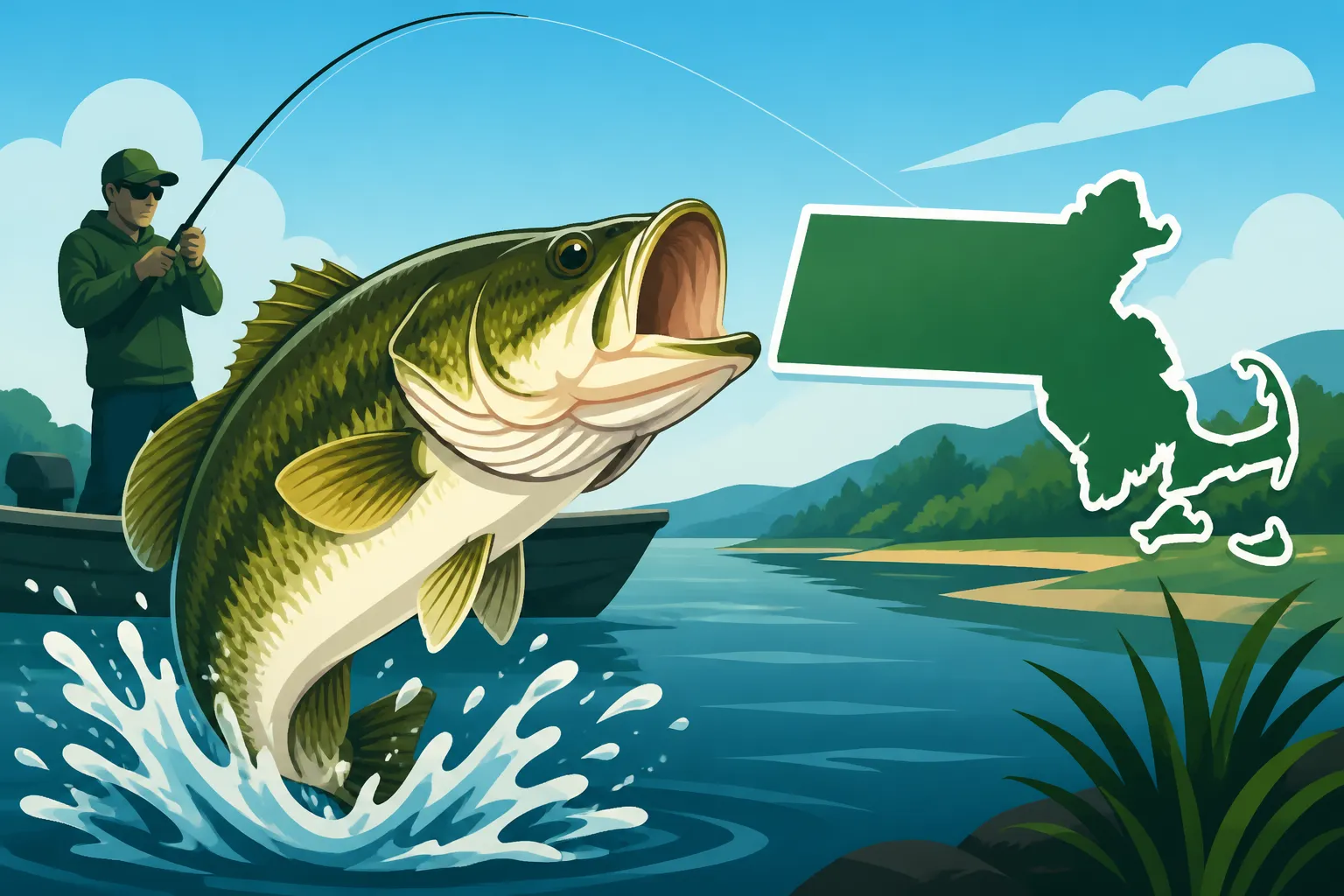
Largemouth bass, Micropterus salmoides, are easily recognized by their distinct large mouth, where the jaw extends beyond the back of the eye. They typically have a dark green, mottled pattern on their sides, often with a prominent lateral line that looks like a dark stripe. Their bodies are stout and muscular, built for explosive strikes and powerful dives. These fish are predatory by nature, using ambush tactics to surprise their prey. Their keen eyesight, combined with the ability to detect vibrations through their lateral line, makes them incredibly efficient hunters in various water conditions.
What makes them so appealing to anglers is their aggressive nature. They're not shy about hitting a well-presented lure, and when they do, the fight is often an exhilarating tug-of-war. From small feisty "bucks" to massive, broad-shouldered "sows," every largemouth presents a unique challenge. Their diet is quite varied, consuming everything from smaller fish like shiners and sunfish to frogs, crayfish, and even small ducklings or mice if the opportunity arises. This broad diet means that a wide array of baits and lures can be effective, which adds to the fun and experimentation of bass fishing.
Preferred Habitat
Largemouth bass are creatures of structure and cover. They thrive in warmer, shallower waters compared to their smallmouth cousins and prefer areas with abundant vegetation, submerged timber, rock piles, and dock pilings. Think of anything that provides them with an ambush point or shade from the sun. In Massachusetts, this means they'll be found along lily pad fields, under overhanging trees, near fallen logs, in dense weed beds, and around man-made structures like old submerged foundations or brush piles.
These areas provide them with both protection from predators (when they are smaller) and prime real estate to ambush unsuspecting prey. They use dense cover to hide, darting out quickly to snatch a meal before retreating. The type of bottom also plays a role; they often prefer soft, muddy, or silty bottoms where vegetation can flourish, but they will also relate to gravel and rock in certain areas, particularly during spawning. Understanding this preference for cover is fundamental to finding them, as simply casting into open water is often far less productive.
Seasonal Movements
Largemouth bass are highly influenced by water temperature and the changing seasons. Their behavior, depth, and feeding patterns shift dramatically throughout the year, requiring anglers to adapt their strategies. In spring, as water temperatures rise, they move into shallow areas for spawning. During summer, they often retreat to deeper, cooler water or seek dense overhead cover to escape the heat, becoming most active during low-light conditions.
As fall approaches and water temperatures begin to drop, they enter a "feeding frenzy" phase, aggressively bulking up for the lean winter months. Finally, in winter, their metabolism slows considerably, and they become lethargic, often congregating in deeper holes or near thermal refuges. Knowing these general seasonal patterns is like having a roadmap; it tells you where to start looking and what types of presentations might be most effective. Ignoring these seasonal shifts is one of the quickest ways to come home empty-handed.
Where to Find Largemouth Bass in Massachusetts
Massachusetts offers an incredible variety of waters that hold largemouth bass, from expansive lakes to intimate ponds and winding rivers. The key is knowing what to look for in these different environments.
Ponds and Lakes
Massachusetts is dotted with countless ponds and lakes, many of which are prime largemouth bass territory. These bodies of water are typically characterized by varying depths, extensive shorelines with plenty of cover, and often abundant aquatic vegetation. The best ponds and lakes for largemouth bass will have a good mix of shallow, weedy flats for spawning and feeding, and deeper sections where bass can retreat during hotter periods. Look for areas with lily pads, cattails, submerged grass beds, and fallen trees.
When scouting a new pond or lake, pay attention to points, coves, and areas where creeks or streams feed into the main body of water. These "transition zones" are often hotbeds for bass activity. Large, healthy populations of baitfish, frogs, and crayfish are also strong indicators of a good bass fishery. Many anglers find success in less-pressured waters, so don't be afraid to explore smaller, overlooked ponds. MassWildlife provides excellent resources, including depth maps and stocking information, which can be invaluable for finding new spots. For a deeper dive into specific locations, check out Best Freshwater Ponds and Lakes in Massachusetts.
Rivers and Flowages
While often associated with ponds and lakes, largemouth bass can also thrive in slower-moving rivers and flowages across Massachusetts. The Connecticut River, for instance, holds excellent populations, particularly in its oxbows and calmer backwater sections. Here, largemouth bass will relate to current breaks, fallen trees, brush piles, and any structure that offers respite from the main flow and an ambush point. Areas where tributaries enter the main river often create eddies and slack water, concentrating baitfish and, consequently, bass.
River bass tend to be incredibly strong due to constantly fighting currents, making for an exhilarating battle. When fishing rivers, focus on the slower sections, coves, and side channels. Heavy cover is still king; look for undercut banks, dense submerged vegetation, and log jams. Unlike lake fishing where you might cover a large area, river fishing often involves targeting specific pockets and current seams. Understanding how the current moves and where bass might position themselves to conserve energy while still feeding is crucial for success in these flowing waters.
Specific Hotspots and Access Points
While I can't name every secret spot (anglers would never forgive me!), I can offer general guidance on common types of locations that consistently produce bass in Massachusetts. Reservoirs like Wachusett and Quabbin, while known for trout and salmon, also hold impressive largemouth bass in certain shallower arms and coves, though access can be restricted, so always check local regulations. Smaller, community ponds like those found around Framingham can be fantastic for both numbers and size. Best ponds for bass fishing near Framingham would be a great resource to explore if you're in that area.
Beyond specific water bodies, remember the "micro" hotspots:
- Docks and Boathouses: Provide shade, cover, and often attract baitfish.
- Bridge Pilings: Offer current breaks in rivers and vertical structure in lakes.
- Roadbeds and Foundations: Submerged remnants of old structures are bass magnets.
- Riprap: Rock-lined banks or causeways hold heat and attract crayfish.
- Timber: Fallen trees, stumps, and brush piles are classic bass hideouts.
Always consult local regulations and access points before heading out. Respect private property and always practice "leave no trace" ethics to keep our fishing spots beautiful for everyone.
Essential Gear for Largemouth Bass Fishing
Having the right tools for the job can make a world of difference when targeting largemouth bass. You don't need to break the bank, but investing in quality gear tailored to bass fishing will enhance your experience and success.
Rods and Reels
For largemouth bass, most anglers opt for baitcasting setups, though spinning gear certainly has its place, especially for lighter lures or for beginners.
Baitcasting Rods and Reels: These are ideal for throwing heavier lures, working through dense cover, and handling bigger fish. A medium-heavy (MH) power rod, typically 6'6" to 7'6" in length, is a versatile choice. This power allows you to cast a wide range of bass lures, from jigs to crankbaits, and has enough backbone to pull a fish out of thick weeds. The action (how much the rod bends) is often moderate-fast to fast, providing sensitivity for detecting bites and quick hook sets. Pair this with a baitcasting reel with a gear ratio between 6.4:1 and 7.5:1. A faster retrieve (higher gear ratio) is great for quickly taking up slack and working topwater lures, while a slightly slower one can be better for deep crankbaits or spinnerbaits.
Spinning Rods and Reels: These shine for lighter presentations like wacky-rigged worms, weightless plastics, or smaller finesse baits. A medium (M) power spinning rod, 6'6" to 7'0", with a fast action, is a great all-around choice. This setup offers excellent casting distance for lighter lures and sensitivity for subtle bites. Combine it with a good quality spinning reel in the 2500-3000 size range, spooled with appropriate line. Many anglers keep both a baitcasting and a spinning setup rigged and ready, allowing them to quickly adapt to changing conditions or lure choices. Finding the right balance of quality and price can be done by checking out various options on Amazon, which often has a wide selection and customer reviews to help you decide.
Line and Leaders
The choice of fishing line is critical for bass fishing, impacting everything from casting distance to sensitivity and strength.
Monofilament: A classic choice, monofilament (mono) is easy to cast, has good knot strength, and offers stretch, which can be forgiving with aggressive fish and reduce hook pulls. It's often used for topwater lures or crankbaits where the stretch helps prevent hooks from tearing out. A 10-17 lb test is common for general bass fishing.
Fluorocarbon: This line is nearly invisible underwater, making it excellent for clear water conditions and wary fish. It has less stretch than mono, providing more sensitivity and direct contact with your lure, which is great for feeling subtle bites. It also sinks, making it ideal for jigs and soft plastics. Common strengths range from 10-20 lb test. Fluorocarbon can be a bit stiffer and harder to cast on baitcasters, but its benefits often outweigh the drawbacks.
Braided Line: Braided line has virtually no stretch, offering extreme sensitivity and incredible strength-to-diameter ratio. It's fantastic for fishing in heavy cover (like dense lily pads or thick weeds) because its abrasion resistance and cutting power can slice through vegetation. It floats, making it perfect for topwater frogs and buzzbaits. However, it's highly visible, so many anglers use a fluorocarbon leader (6-20 lb test, depending on conditions) when fishing braid, connecting them with a strong knot like an FG or Alberto knot. For different fishing line options and to compare brands, Amazon is a great place to browse.
Lures and Baits
This is where the fun really begins! Largemouth bass will hit an astonishing array of artificial lures and natural baits. Having a diverse tackle box is key to adapting to different conditions and fish moods.
- Soft Plastics: These are incredibly versatile. Think plastic worms (Texas-rigged, Carolina-rigged, wacky-rigged), creature baits, senkos, and swimbaits. They mimic various prey and can be fished in countless ways. A well-rigged plastic worm can entice even the most stubborn bass.
- Jigs: Flipping jigs, football jigs, and swim jigs are excellent for targeting bass in heavy cover or on the bottom. They often imitate crayfish or baitfish and can be tipped with a soft plastic trailer for added bulk and action.
- Crankbaits: These diving lures imitate baitfish and come in various shapes and sizes, designed to run at specific depths. Square bills are great for deflecting off cover in shallow water, while deep divers are for offshore structure.
- Spinnerbaits and Chatterbaits: Both produce flash and vibration, making them effective search baits. Spinnerbaits are excellent in moderate cover, while chatterbaits excel in sparse vegetation or when bass are aggressive.
- Topwater Lures: Frogs, poppers, walking baits, and buzzbaits create exciting surface commotion, triggering aggressive strikes, especially during low-light conditions or over dense submerged weeds.
- Live Bait: Shiners, crayfish, and even nightcrawlers can be incredibly effective, especially for hesitant or less aggressive bass. Just be sure to check local regulations on bait collection and use.
Many anglers find it helpful to start with a selection of proven bass lures and expand their collection over time. You can often find starter kits or specific lure types for bass on Amazon, allowing you to experiment without committing to expensive, specialized gear right away. Remember, it's not always about having the most expensive lure, but presenting the right one in the right way.
Top Techniques for Catching Largemouth Bass
Successful largemouth bass fishing isn't just about having the right gear; it's about understanding and executing various fishing techniques effectively. Each method is designed to present a lure in a way that triggers a bass's predatory instincts.
Pitching and Flipping
This technique is essential for targeting bass in tight, heavy cover – think dense lily pads, thick brush, or under overhanging trees. Instead of a long cast, pitching and flipping involve a short, controlled presentation where the lure quietly enters the water with minimal splash, ideally right into the bass's ambush zone.
Flipping is typically used for very close-range presentations (5-20 feet). You use a long rod (7' to 8'), letting out line until the lure is hanging near the reel. Then, you swing the lure like a pendulum, guiding it with your off-hand to land softly in the target. It's about precision and stealth.
Pitching is for slightly longer distances (20-40 feet) and involves a gentle underhand cast, using the rod tip to propel the lure forward. The goal is the same: a quiet entry and pinpoint accuracy. Both techniques require practice to master, but they are invaluable for getting your bait into places other anglers can't reach, often resulting in bigger, less pressured fish. Jigs, creature baits, and heavy Texas-rigged worms are prime choices for pitching and flipping, as their compact profile allows them to penetrate cover effectively.
Topwater Action
There's nothing quite like the explosive strike of a largemouth bass blowing up on a topwater lure. This technique is exhilarating and highly effective, especially during early mornings, late evenings, or overcast days when bass are actively feeding near the surface.
Topwater lures like poppers, walking baits (e.g., a "Zara Spook" style lure), buzzbaits, and hollow-bodied frogs create commotion on the water's surface, mimicking struggling baitfish, frogs, or rodents.
- Poppers: Work these with short jerks and pauses, creating a "chugging" sound.
- Walking baits: Require a rhythmic "walk-the-dog" retrieve, making the lure zig-zag across the surface.
- Buzzbaits: Simply reel steadily to make the prop blade gurgle and splash.
- Frogs: Best fished over dense mats of lily pads or grass, mimicking a frog hoping across the vegetation.
The key to topwater success is often patience and varying your retrieve. Sometimes a slow, deliberate retrieve with long pauses is best, while other times a fast, erratic retrieve triggers a reaction strike. Don't be too quick to set the hook; wait until you feel the weight of the fish before striking. For a more in-depth look at this exciting method, check out Topwater Fishing for Bass in Summer.
Jigging and Worming
These are fundamental techniques for targeting bass that are holding deeper, suspended, or tucked into moderate cover. They are often considered "finesse" techniques, but can be scaled up for power fishing as well.
Jigging: This involves working a jig (often a lead head with a skirt, possibly with a soft plastic trailer) along the bottom. You cast, let it sink, then use a series of lifts, hops, and drags to mimic a crayfish scurrying along or a baitfish feeding. Football jigs are great for rocky bottoms, while swim jigs are effective when retrieved through sparse vegetation. Jigs are phenomenal for feeling structure and getting bites from less active fish.
Worming: This refers to fishing soft plastic worms in various rigs. The Texas rig (hook embedded in the plastic to make it weedless) is perhaps the most famous, allowing you to drag and hop a worm through cover without snagging. The Carolina rig involves a weight and bead above a swivel, with a leader to the worm, allowing the worm to float enticingly above the bottom. The Wacky rig (hook inserted through the middle of the worm) provides an irresistible, shimmying action on the fall. Learning how to properly How to fish plastic worms for largemouth bass is a game-changer for many anglers, as soft plastics are arguably the most consistent bass producers. The key to both jigging and worming is paying close attention to your line for subtle "thumps" or changes in tension, as bass often pick up these baits gently.
Seasonal Strategies for Massachusetts Largemouth Bass
The beauty of largemouth bass fishing in Massachusetts is the dynamic challenge presented by the changing seasons. What works in April won't necessarily work in August, and understanding these shifts is crucial for consistent success.
Spring Spawning and Pre-Spawn Frenzy
Spring is a time of renewed activity and incredible fishing opportunities as largemouth bass shake off their winter lethargy.
Pre-Spawn: As ice melts and water temperatures climb into the 40s and 50s, bass begin to move from their deeper wintering holes towards shallower spawning flats. This is a "feeding frenzy" phase as they bulk up for the energy-intensive spawning process. Look for them on points, humps, and the edges of flats near deep water access. Lipless crankbaits, spinnerbaits, and jerkbaits fished aggressively can be incredibly effective during this period, covering water to find active fish. As the water warms further into the mid-50s, bass will become more concentrated and responsive to slower presentations like jigs and Texas-rigged plastics.
Spawn: Once water temperatures reach the high 50s to low 60s, bass move onto shallow flats with hard bottoms (sand, gravel) to build nests and spawn. During this time, male bass guard the nests aggressively. They might not be feeding actively, but they will strike anything perceived as a threat to their eggs or fry. Sight fishing for bedding bass with soft plastics (like tubes or creature baits) or jigs can be effective, but remember to practice catch and release quickly and gently to avoid disturbing the reproductive cycle. Respecting the fish during this vulnerable time ensures future generations of bass.
Summer Deep Water and Early Morning Bites
Summer in Massachusetts can be challenging for largemouth bass anglers due to warmer water temperatures and increased boat traffic. However, it also offers some fantastic fishing if you adapt your approach.
During the heat of the day, bass often retreat to deeper, cooler water or seek refuge in the densest, shadiest cover available. Look for them in areas like:
- Deep weed lines
- Brush piles and submerged timber in deeper zones
- Thermoclines (a layer where water temperature changes rapidly)
- Shade from docks, overhanging trees, or bridge pilings
Deep-diving crankbaits, Carolina-rigged worms, football jigs, and drop-shot rigs are excellent for targeting these deeper fish. However, the real magic of summer often happens during low-light conditions. Early mornings and late evenings, when the sun is off the water, can trigger aggressive feeding binges in shallower water. This is prime time for topwater lures like frogs fished over mats or walking baits worked over open water. Even night fishing can be incredibly productive, as bass move shallow under the cover of darkness. Best time of day to catch largemouth bass in summer will give you even more insights into maximizing your summer outings.
Fall Feeding Frenzy and Winter Slowdown
As autumn colors begin to show and water temperatures start to drop into the 60s and 50s, largemouth bass enter another intense feeding period. This "fall feeding frenzy" is their last chance to gorge themselves before winter's lean months.
Fall: Bass will become incredibly active, often schooling up and chasing baitfish aggressively. Look for them to move shallower than their summer haunts, relating to points, humps, and the edges of flats where baitfish are abundant. Crankbaits (both shallow and deep runners), spinnerbaits, jerkbaits, and swimbaits are highly effective for covering water and locating these active schools. As the water cools further, bass will gradually transition to deeper structures, often congregating in main lake basins, deep channels, or around significant submerged cover. This is a great time to focus on vertical presentations like spoons, blade baits, and jigs. This can be one of the most rewarding times to be on the water, with fish often putting on a tremendous fight.
Winter: Once water temperatures drop below 45-50 degrees and ice forms on many Massachusetts waters, largemouth bass become very lethargic. Their metabolism slows dramatically, and they conserve energy by suspending in deeper water or hugging tight to the bottom in deep holes or around specific thermal features. Ice fishing for bass is possible, often requiring a slow, subtle approach. Small jigs, blade baits, or spoons jigged slowly near the bottom can entice a strike. Without ice, open water winter fishing means targeting the deepest parts of ponds and lakes, focusing on very slow presentations of jigs or Ned rigs. Bites will be extremely subtle, often just a slight "mushy" feeling on the line, making highly sensitive gear essential. Persistence and patience are key for winter bass.
Conservation and Regulations for Largemouth Bass
Responsible angling ensures that Massachusetts's excellent largemouth bass fisheries remain healthy and productive for generations to come. Understanding and adhering to regulations and practicing good conservation habits are paramount.
Size and Bag Limits
Massachusetts has specific regulations for largemouth bass, which can vary slightly by water body or change over time. It's imperative to always consult the current Massachusetts Guide to Freshwater Fishing Regulations published by MassWildlife before heading out. Generally, there are statewide possession limits for largemouth bass. For example, there might be a daily creel (bag) limit, meaning you can only keep a certain number of fish per day, and often a minimum size limit. A common scenario might be a 12-inch minimum length and a 5-fish daily bag limit, but these figures are subject to change.
The purpose of these regulations is to protect the bass population, especially the larger, breeding-size fish. Keeping undersized fish can severely impact the future health of the fishery. Always carry a measuring device and know how to properly measure your catch (from the tip of the snout to the end of the tail with the lobes compressed) to ensure you are in compliance. Ignorance of the law is not an excuse, and penalties for violations can include fines and loss of fishing privileges. For more details on this, you might find Is There a Size Limit for Largemouth Bass in Massachusetts? helpful.
Catch and Release Practices
While regulations allow for keeping a certain number of bass, many dedicated largemouth bass anglers, especially those targeting larger fish, practice catch and release exclusively. This helps maintain strong populations of trophy-sized bass and ensures a healthy genetic pool. If you plan to release your catch, doing it correctly is vital for the fish's survival.
Here are some best practices for catch and release:
- Minimize Handling: Touch the fish as little as possible. If you must handle it, do so with wet hands to protect its slime coat, which is crucial for disease resistance.
- Support the Fish: When holding a bass, support its body horizontally. Never hold a large bass vertically by its jaw alone, as this can severely damage its jaw and internal organs.
- Quick Hook Removal: Use needle-nose pliers or a dehooking tool to remove the hook as quickly and gently as possible. If the fish is deeply hooked, it's often best to cut the line as close to the hook as possible rather than tearing internal organs.
- Revive If Necessary: If the fish seems stressed, hold it gently in the water, facing into any current, until it can swim away under its own power.
- Consider Barbless Hooks: Crushing the barb on your hooks can make hook removal faster and easier, reducing stress on the fish.
Respecting the Resource
Fishing for largemouth bass in Massachusetts is a privilege, and with that comes a responsibility to protect our natural resources. This extends beyond just following regulations.
- Leave No Trace: Always pack out everything you pack in. This includes fishing line, lure packaging, and any trash. Litter degrades the environment and is harmful to wildlife.
- Avoid Spreading Invasive Species: Clean your boat, trailer, and gear thoroughly between fishing trips to different water bodies. Invasive aquatic plants and animals can severely harm native ecosystems.
- Report Violations: If you witness illegal fishing activity or pollution, report it to MassWildlife.
- Educate Others: Share your knowledge of ethical angling and conservation practices with fellow anglers, especially newer generations.
By being mindful of our impact, we can all contribute to healthy, thriving largemouth bass populations and enjoyable fishing experiences for years to come.
Troubleshooting Common Largemouth Bass Fishing Challenges
We've all been there: you're out on a beautiful Massachusetts pond, conditions look perfect, and you're just not getting bites. It happens to the best of us! When the bass seem to have lockjaw, it's time to troubleshoot and adapt.
Adjusting to Conditions
Largemouth bass are highly sensitive to changes in their environment. What worked yesterday might not work today if the weather or water conditions have shifted.
- Weather Changes: A sudden cold front, a shift in wind direction, or post-storm conditions can drastically affect bass behavior. During a cold front, bass often become lethargic and move to deeper, more stable water or dense cover. You'll need to slow down your presentation considerably, using finesse baits like Ned rigs, jigs, or slow-dragged worms. Post-storm, especially after heavy rain, water clarity might decrease, and bass might move closer to inflowing creeks, targeting disoriented baitfish.
- Water Clarity: In clear water, bass rely heavily on sight, making natural colors and fluorocarbon leaders more effective. In stained or murky water, bass rely more on their lateral line, so lures with strong vibration or bright colors (chartreuse, white) can be more visible and detectable.
- Sunlight vs. Clouds: Bright, sunny days often push bass into shade or deeper cover, making pitching and flipping into heavy cover or fishing deep structure more productive. Overcast days or low-light conditions (dawn/dusk) often bring bass shallow and make them more aggressive, ideal for topwater or spinnerbaits.
When facing tough conditions, step back and consider what has changed. How would you react if you were a bass in these conditions? This simple empathy exercise can often guide you to the right adjustment.
Lure Changes and Presentation Tweaks
If you're not getting bites, don't keep doing the same thing. This is perhaps the most common mistake. Instead, start systematically changing your approach.
- Color Changes: If a green pumpkin worm isn't working, try black and blue, junebug, or even white. Sometimes a subtle color shift can make all the difference. For hard baits, switch from a natural baitfish pattern to a more aggressive chartreuse or fire tiger.
- Size Changes: Are you throwing a 6-inch worm? Try a 4-inch or even an 8-inch. Sometimes a downsize (finesse fishing) is needed when fish are finicky, while other times a bigger profile triggers a reaction strike from a trophy fish.
- Action Changes: If a straight retrieve isn't working, try adding pauses, jerks, or varying your retrieve speed. If a fast-moving crankbait isn't producing, switch to a slow-dragged jig or a weightless senko that falls slowly. The way you work the lure (your "presentation") is often more important than the lure itself.
- Lure Type Changes: This is the big one. If you've been throwing crankbaits all morning, switch to a soft plastic. If plastics aren't working, try a jig or a spinnerbait. Work through different lure categories to see what the bass might be responding to on that particular day. Having a variety of lures readily available in your tackle box is helpful for these on-the-water adjustments.
The table below outlines a few common scenarios and potential lure adjustments:
| Scenario | Initial Lure Type | If Not Biting, Try These Lures / Changes | Key Adjustment Principle |
|---|---|---|---|
| Bright Sun, Clear Water | Spinnerbait / Crankbait | Texas-rigged worm (natural colors), Jig, Drop-shot (finesse) | Deeper, slower, more subtle |
| Overcast, Choppy Water | Jig / Worm | Spinnerbait, Buzzbait, Topwater popper (louder colors) | More vibration, surface commotion |
| Dense Cover, No Bites | Flipping Jig | Weightless Senko, Wacky rig, Smaller creature bait (quieter entry) | Finesse, stealth, slower fall |
| Post-Front, Cold Water | Crankbait (fast) | Ned rig, Small jig, suspending jerkbait (long pauses) | Very slow, finesse, suspended |
| Active Baitfish Schools | Topwater / Swimbait | Jerkbait, Lipless crankbait, A-rig (mimic school) | Match baitfish, erratic action |
Location Scouting and Patterning
Sometimes, the problem isn't your lure or technique, but simply that you're not fishing where the bass are.
- Move Around: Don't get stuck in one spot. If you've fished an area thoroughly without success, move to a different type of structure or cover. If you're fishing shallow weeds, try a deeper weed line. If points aren't working, try a sheltered cove.
- Cover Different Depths: Bass can be anywhere in the water column. If you're fishing shallow, try a deep presentation. If you're fishing the bottom, try a suspending bait.
- Search for the "Pattern": When you do catch a fish, pay close attention. What was the exact depth? What kind of cover was it on? What was the water temperature? What was the lure color and retrieve speed? Was it a male or female? Try to replicate those conditions elsewhere on the lake. If you catch another fish under similar circumstances, you've started to establish a "pattern" for the day, which can lead to more consistent success. Finding the pattern is often the key to unlocking a challenging day of fishing. This systematic approach is invaluable.
Advanced Tips for Massachusetts Largemouth Bass Anglers
Once you've mastered the basics, there are always ways to refine your skills and elevate your largemouth bass fishing game in Massachusetts. These advanced tips focus on deeper understanding and leveraging technology.
Reading the Water
Becoming truly proficient at bass fishing involves more than just casting; it's about interpreting what the water is telling you. This "reading the water" skill takes time and experience, but here are some things to focus on.
- Subtle Clues: Look for swirls on the surface, nervous baitfish jumping, or birds diving (which often indicates baitfish schools being driven to the surface). These are direct indicators of feeding activity.
- Wind and Current: Wind creates current, which can push baitfish and oxygen into certain areas, making them prime bass holding spots. Wind also creates a "chop" on the water that breaks up the surface, providing bass with cover to ambush prey. Learn how wind affects different areas of the lake.
- Water Color and Stains: Different water colors can indicate fertility, runoff, or depth. Tannic (tea-stained) water often means bass rely more on vibration. Clear water means more stealth is needed.
- Topography and Contour: Understand how the bottom changes. Submerged points, humps, creek channels, and drastic depth changes are all high-percentage areas. Visualize the underwater landscape as you cast. Over time, you'll develop an intuition for where bass ought to be based on these visual cues and your knowledge of their preferred habitats.
Understanding Forage and Mimicry
Largemouth bass are opportunistic predators, but they often key in on specific types of forage depending on the season and location. Understanding what they're eating is a significant advantage.
- Baitfish: Shiners, herring, alewives, and perch are common bass food. If bass are chasing baitfish, lures that imitate these (like crankbaits, swimbaits, jerkbaits, or spinnerbaits in silver, white, or natural baitfish colors) will be most effective.
- Crayfish: Often found on rocky bottoms, crayfish are a staple in a bass's diet. Jigs (especially football jigs) and creature baits in brown, green pumpkin, or black and blue are excellent crayfish imitations, best worked along the bottom.
- Frogs: In weedy, lily pad-laden waters, frogs are a key food source. Hollow-bodied frogs and topwater poppers that mimic frog movements are deadly in these areas.
- Insect Hatches: While less common for largemouth bass, large insect hatches can sometimes bring smaller bass and panfish to the surface, and larger bass might follow.
- Mimicking Distress: Bass are attracted to easy meals. Lures that exhibit erratic, wounded movements (like a dying baitfish or a struggling frog) often trigger aggressive strikes, even from non-feeding fish. Pay attention to what's in the water around you – if you see frogs, use a frog lure. If you see schools of shiners, use a shiner-colored swimbait.
Electronics and Mapping
Modern electronics have revolutionized bass fishing, giving anglers an unprecedented view into the underwater world. While not strictly necessary for success, they can be powerful tools.
- Sonar (Fishfinders): Standard 2D sonar helps you identify bottom contours, submerged cover (like brush piles or old timber), and often shows arches indicating fish. Down-imaging and side-imaging technologies provide photographic-like views of the bottom and structure, allowing you to clearly see stumps, rock piles, and even individual fish. This allows you to pinpoint exact locations of bass-holding structure without blindly casting.
- GPS and Mapping: Detailed electronic maps (often integrated with your fishfinder, or through apps like Navionics or C-MAP) show depth contours, navigation aids, and can be used to mark waypoints for productive spots. This is invaluable for consistently returning to productive areas, understanding the underwater terrain, and safely navigating unknown waters.
- Trolling Motors with Spot-Lock: Advanced trolling motors now offer "spot-lock" or "anchor mode" features, allowing you to hold your boat in a precise position over a specific piece of structure with the press of a button. This frees you up to fish efficiently without worrying about drifting off your target.
- Understanding What You See: Having electronics is one thing; understanding how to interpret the images is another. Spend time learning what different readings mean. Many manufacturers provide tutorials, and there are countless online resources. Don't let the technology overwhelm you; start with the basics (depth, bottom composition, basic fish arches) and build your skills from there. Leveraging these tools can significantly reduce search time and increase your fishing efficiency.
Largemouth bass fishing in Massachusetts offers a rewarding pursuit for anglers of all skill levels. By understanding their behavior, knowing where to find them, and mastering various techniques and seasonal adjustments, you'll be well on your way to more memorable days on the water. Remember, every outing is a learning experience, and the most successful anglers are those who are always observing, adapting, and enjoying the process.
Disclaimer
This article is for general informational purposes only and does not constitute professional advice. Laws, prices and regulations vary by location and change over time. Consult a qualified professional for guidance on your specific situation.