Best time of day to catch largemouth bass in summer
Summer can be a tough time for targeting largemouth bass in Massachusetts, especially when those hot, sunny days make the water feel like bathwater. It's frustrating to head out with high hopes, only to find the bass completely shut down, seemingly vanished from their usual haunts. You know they're there, but getting them to bite feels like a riddle. This guide is here to unravel that mystery, showing you exactly when to hit the water for the best chance at catching largemouth bass during the warmer months, and how to adjust your tactics to match their summer moods.
Understanding Largemouth Bass Behavior in Summer Heat
The scorching Massachusetts summer sun doesn't just make us humans sluggish; it profoundly impacts our finned friends, the largemouth bass. Their entire world changes when water temperatures rise, dictating where they live, what they eat, and most importantly, when they'll be willing to bite your line. Grasping these fundamental shifts is the first step to unlocking summer bass success.
The Impact of Water Temperature on Bass Activity
Think of bass like us on a really hot day. When it’s sweltering, our energy levels drop, and we seek shade and hydration. Bass are no different. As surface water temperatures climb into the 80s, their metabolism actually speeds up initially, making them need to feed more. But there's a tipping point. Beyond a certain comfort zone, often in the high 70s to low 80s, the water holds less dissolved oxygen, and the bass become stressed and lethargic. They're still in the water, but they're not actively cruising or chasing bait. Instead, they’re seeking thermal refuge – pockets of cooler water where they can conserve energy and find a bit more oxygen. This might be deeper water, areas with springs, or even just dense shade. If you’re casting in wide-open, shallow sun-baked areas during midday, you’re likely fishing where no active bass want to be.
Where Bass Hide During Midday Summer Heat
During the peak heat of a summer day, largemouth bass are masters of concealment, not because they’re trying to avoid anglers, but because they’re trying to avoid the discomfort of warm, bright conditions. They gravitate towards areas that offer both cooler temperatures and protection from predators (including us!).
- Deep Water: This is often their primary retreat. Lakes and ponds with distinct depth changes will see bass drop down to the thermocline – the layer of water where the temperature rapidly changes – where the water is significantly cooler and more oxygenated. This could be 15, 20, or even 30 feet deep depending on the water body. They'll relate to submerged structures like humps, ledges, or old creek channels down there.
- Heavy Cover: Think dense lily pad fields, thick mats of hydrilla or milfoil, fallen trees, or even overhanging docks and boat lifts. This vegetation and structure provide crucial shade, blocking the sun's rays and creating cooler microclimates underneath. It also offers excellent ambush points, allowing bass to conserve energy while waiting for an unsuspecting meal to swim by.
- Shady Areas: Any natural or artificial shade can attract bass. Overhanging trees along shorelines, bridges, culverts, or even the shadows cast by large boulders can provide temporary relief. These spots might not be deep, but the reduction in direct sunlight makes them much more hospitable. When fishing a spot like the Best largemouth bass lake near Worcester, identifying these shaded havens can be key to a successful outing.
The Golden Hours: Prime Fishing Windows for Summer Bass
While the midday sun can be brutal, summer fishing for largemouth bass is far from a lost cause. In fact, some of the most exciting and productive fishing happens during specific "golden hours" when conditions swing back into the bass's favor. These are the times you truly want to be on the water in Massachusetts.
Early Mornings: The Dawn Patrol Advantage
Without a doubt, early morning is often the single best time of day to target largemouth bass during the summer. As the sun barely peeks over the horizon, the water temperatures are at their coolest point after the overnight chill. The low light conditions give bass a huge advantage over their prey, making them feel safer to move out of their deep or heavy cover retreats and hunt in shallower water.
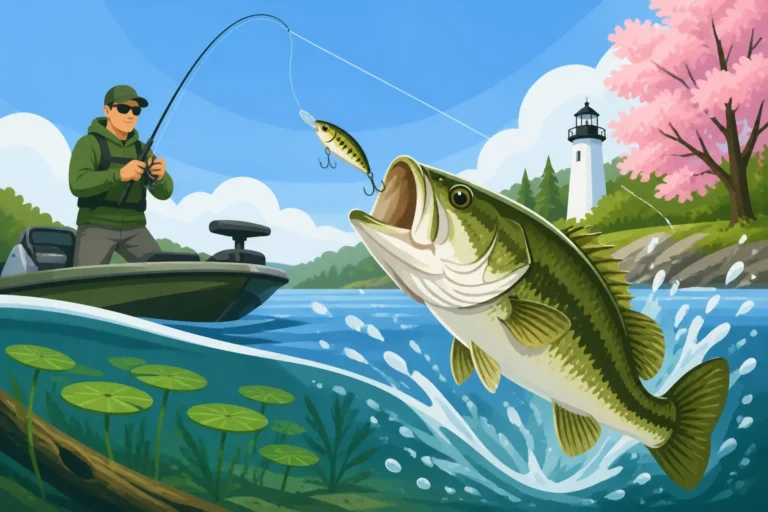
Imagine a still, fog-kissed pond as the first sliver of orange appears. Bass, which might have been feeding opportunistically throughout the night, are still active and looking for one last good meal before the sun gets high. This is your prime window for exciting topwater action. Think about throwing a frog bait across lily pads, a noisy popper in open pockets, or a walking bait along the edges of weed lines. The cooler water also means they’re more willing to chase, so quicker retrieves with spinnerbaits or shallow-diving crankbaits can be incredibly effective. Getting out before the sun fully clears the treeline, often between 5 AM and 8 AM, can make all the difference, transforming a slow day into an unforgettable one. It's truly a magical time to be on the water.
Late Evenings: The Dusk Bite and Beyond
Just as morning offers a prime window, the late evening, from dusk into twilight, provides another fantastic opportunity. As the sun begins its descent, casting long shadows across the water, those scorching surface temperatures start to drop. The diminishing light signals to bass that it's time to emerge from their midday sanctuaries and resume their hunt.
This "dusk bite" can be just as furious as the morning bite, sometimes even more so as bass make a final push to feed before settling down for the night, or ramping up for nocturnal feeding. You might find them cruising the same shallow flats, weed edges, and points they were in the morning. Soft plastics, like Texas-rigged worms or Senkos, worked slowly along cover, can be deadly. Spinnerbaits, chatterbaits, and even topwater lures (especially noisier ones like buzzbaits or prop baits) can draw aggressive strikes as the light fades. Keep an eye out for baitfish activity; if you see shiners or bluegill nervously flickering at the surface, you know the bass are likely close by and on the prowl. This is often the best time for Topwater Fishing for Bass in Summer as the surface cools and visibility lowers.
The Overnight Shift: Night Fishing for Summertime Giants
When the daytime heat is simply unbearable, or you're looking for an adventure, don't overlook night fishing for largemouth bass. While it requires a different approach and a healthy dose of courage (especially if you're not used to navigating in the dark!), night fishing can be incredibly productive, often yielding some of the biggest bass of the season. During the hottest summer months, many trophy-sized bass become almost exclusively nocturnal.
Under the cover of darkness, water temperatures drop significantly, and the bass feel much more secure moving into shallower, open areas where they wouldn't dare venture during daylight. Your senses become heightened; you'll rely more on feel and sound. Dark-colored jigs, large worms, and slow-moving topwater baits like Jitterbugs or poppers can be phenomenal. The key is to use lures that create a strong silhouette against the moonlit sky or displace a lot of water to help bass locate them. Always prioritize safety: bring a reliable headlamp (you can find excellent, waterproof options on Amazon), tell someone where you're going, and know your fishing spot well. Fishing the overnight shift is a unique experience, offering a quiet solitude and the thrill of battling a big bass that you can barely see until it's boatside.
Adapting Your Approach for Midday Success (When You Can't Avoid It)
Let's be real: sometimes you just can't hit the water during those prime early morning or late evening hours. Maybe you have work, family commitments, or you're just on a fishing trip and have limited time. But don't despair! While challenging, catching largemouth bass in the midday summer sun in Massachusetts is absolutely possible if you adjust your tactics. It demands patience and a willingness to fish differently.
Deep Water Strategies
When the sun is high and bright, bass will often retreat to the coolest, deepest parts of the lake or pond. This is where your electronics (if you have them) become invaluable, helping you pinpoint submerged structures like humps, ledges, brush piles, or old roadbeds. If you don't have electronics, rely on maps and local knowledge to identify deeper areas.
- Jigs and Deep-Diving Crankbaits: These are your bread and butter for deep water. A heavy football jig or a skirted jig with a bulky trailer can be slowly dragged or hopped along the bottom, mimicking crawfish or other bottom-dwelling prey. Deep-diving crankbaits, retrieved quickly enough to get them to their maximum depth, can be excellent for covering water along breaks and ledges, often triggering reaction strikes.
- Texas-Rigged Worms and Jigs: For targeting individual pieces of cover in deeper water, a Texas-rigged plastic worm or creature bait is highly effective. You can punch it through thick vegetation or drop it precisely beside a submerged log. The key is to fish these baits slowly, allowing them to truly "soak" in the strike zone. You can find a vast selection of soft plastics and jig heads on Amazon, perfect for rigging up.
- Carolina Rigs: This rig allows you to present a soft plastic bait a foot or two off the bottom, above potential snags, while a heavy weight keeps it in contact with the deeper structure. It’s excellent for dragging across flat, deep areas where bass might be scattered.
Remember that bass in deep water might not be as aggressive as those in low light, so subtle twitches and long pauses in your retrieve are often more effective.
Heavy Cover Tactics
If your local waters don't have significant depth, or if you know the bass are relating to specific shallow cover, then going into the thick stuff is your best bet. Heavy cover provides crucial shade and ambush points, making it a comfortable haven for bass even on the hottest days.
- Punching Mats: This is an aggressive technique for targeting bass buried deep within dense mats of lily pads, hydrilla, or duckweed. You'll need heavy gear – a stout rod, strong braided line, and a tungsten weight of 1 ounce or more – to punch a creature bait or jig through the mat into the dark water below. Once through, let it sink, give it a few jiggles, and be ready for an immediate strike. This is a highly effective way to pull out big fish.
- Flipping and Pitching Docks: Docks provide shade and structure, acting as bass magnets. Use jigs, Texas-rigged worms, or creature baits to silently flip or pitch your lure into the darkest recesses under the dock, around pilings, or near boat lifts. Many of the techniques for How to fish plastic worms for largemouth bass apply here, focusing on precise presentations.
- Weedless Lures: Whether you're casting into dense milfoil or around flooded timber, weedless lures are essential. Bladed jigs (like a Chatterbait with a plastic trailer), weedless swim jigs, and, of course, soft plastics rigged Texas-style, allow you to retrieve your lure without constantly snagging. Remember, bass hiding in this cover are often looking for an easy meal, so a well-placed, weedless offering can be irresistible.
Slow and Steady Wins the Race
When bass are lethargic due to heat, they’re generally not going to chase down a fast-moving bait. Your presentation needs to be slowed way down. This is the antithesis of power fishing.
- Dead-Sticking and Long Pauses: Often, the most effective retrieve is barely a retrieve at all. Cast a Senko, a weightless worm, or a jig near cover and let it sink slowly. Once it hits bottom, let it sit. And sit. And sit some more. Many strikes happen on the fall or during these prolonged pauses. Sometimes, giving your line a tiny slack-line twitch is all it takes to entice a reluctant bass.
- Subtle Lure Choices: Stick with lures that have natural, subtle actions. Instead of a noisy crankbait, opt for a creature bait with flapping appendages, a soft plastic worm with a paddle tail, or a jig with a pulsating skirt. These lures create movement even with minimal input from you, mimicking a struggling or easy meal.
- Focus on Precision: Rather than casting widely, focus on making highly accurate casts to specific pieces of cover or structure. One perfectly placed cast, fished slowly and patiently, is far more effective than ten haphazard casts during these tough midday conditions. It all comes down to presenting an easy target directly in front of a finicky bass.
Factors Influencing Summer Bass Timing Beyond the Clock
While the clock is a crucial guide, it’s not the only factor dictating when largemouth bass decide to turn on. The world of a bass is constantly influenced by environmental cues, and savvy anglers pay attention to these subtle (and not-so-subtle) changes to truly maximize their summer fishing success in Massachusetts. Understanding these additional influences can help you decide when to head out, even if it's not strictly "prime time."
Weather Conditions and Cloud Cover
The weather doesn't just affect our comfort; it dramatically impacts bass behavior, especially in summer.
- Overcast Days: A heavily overcast or rainy day in summer can feel like a gift from the fishing gods. The clouds act like a giant diffuser, reducing light penetration and preventing the water from heating up as quickly. On these days, bass may extend their active feeding periods well into what would typically be midday doldrums. You might find them in shallower water, chasing bait, and even hitting topwater lures later in the morning. Don't be afraid to go out on a cloudy summer day when others stay home; it can be incredibly productive for How to Catch Largemouth Bass in Massachusetts Ponds.
- Fronts and Storms: Changes in barometric pressure, particularly before and after a summer storm front, can trigger feeding frenzies or shut downs. Just before a storm hits, falling pressure often energizes bass, leading to aggressive feeding. After a cold front passes, the bluebird skies and high pressure usually cause bass to become very sluggish and difficult to catch. They'll hug tight to cover or retreat to deeper water, demanding an even slower, more finessed approach. Keep an eye on the forecast, and if you can, plan your trips around approaching fronts rather than just after they've passed.
Forage Availability and Feeding Patterns
Bass are apex predators, and their movements are almost always tied to the availability and movement of their prey. Understanding what bass are eating and where that food source is located is critical.
- Baitfish Schools: Largemouth bass will follow schools of baitfish like shiners, alewives, or bluegill. If you see baitfish flickering on the surface or showing up on your fish finder, bass are likely nearby. During summer, these baitfish often congregate around specific types of cover or structure. Observing the baitfish can tell you where the bass are focusing their efforts, and also which lures to use that "match the hatch." For example, if you see small bluegill, a bluegill-patterned crankbait or swimbait might be the ticket.
- Insect Hatches: While not as prominent as for trout, certain insect hatches, particularly those occurring in the early morning or late evening, can attract bass to the surface. Dragonflies, damselflies, and other large insects emerging from the water or flying low can become an easy meal, leading to some exciting topwater blow-ups.
- Crawfish Activity: Crawfish are a staple in a bass's diet, especially in rocky or hard-bottomed areas. They are more active in low light conditions, meaning bass will target them more aggressively in the early morning, late evening, or at night. Jigs, which effectively imitate crawfish, are particularly effective when bass are feeding on these crustaceans.
Local Knowledge and Experimentation
No matter how many articles you read or how much advice you get, nothing beats time on the water and building your own personal knowledge base.
- Observe Your Specific Lake or Pond: Every body of water in Massachusetts is unique. A pond near Framingham might fish differently than a larger lake. What works in one place might not work in another. Pay attention to water clarity, vegetation types, predominant baitfish, and bottom composition. Keep a journal of your trips: date, time, weather, water temperature, lures used, and results. Over time, you'll start to see patterns emerge that are specific to your favorite spots. This is how you really dial in How to Catch Largemouth Bass in Massachusetts.
- Don't Be Afraid to Experiment: If the bass aren't biting during the "golden hours" or on your go-to lures, don't be afraid to change things up. Try different depths, different retrieve speeds, and different lure colors or styles. Sometimes, a subtle change in bait profile or a slight adjustment to your retrieve is all it takes to trigger a strike. For instance, if soft plastics aren't working, try a chatterbait or a spinnerbait. Be adaptable, and remember that even a slow day on the water is a day well spent, especially if you learn something new. After all, isn't that part of the joy of fishing?
| Time of Day | Bass Behavior | Key Conditions | Recommended Lure Types |
|---|---|---|---|
| Pre-Dawn | Actively feeding, moving shallow | Coolest water, low light | Topwater (poppers, frogs), shallow crankbaits, spinnerbaits |
| Early Morning | Active, seeking last meal before sun gets high | Rising sun, water still cool, dim light | Topwater, shallow crankbaits, spinnerbaits, jerkbaits |
| Midday (Hot & Sunny) | Lethargic, retreating to deep water or heavy cover | Hottest water, brightest light, low oxygen | Deep jigs, Texas-rigged worms/creatures, punching baits, deep crankbaits |
| Late Afternoon | Slowly becoming more active, moving towards cover | Water gradually cooling, increasing shadows | Soft plastics, jigs, swimbaits, slower crankbaits |
| Dusk/Evening | Actively feeding again, moving shallow/edges | Cooling water, low light, bass feeling secure | Topwater (buzzbaits, prop baits), spinnerbaits, jigs, plastic worms |
| Night | Often highly active, especially larger bass | Dark, coolest water, increased oxygen | Dark jigs, large worms, noisier topwater (Jitterbug) |
Disclaimer
This article is for general informational purposes only and does not constitute professional advice. Laws, prices and regulations vary by location and change over time. Consult a qualified professional for guidance on your specific situation.