Freshwater panfish found in Massachusetts
Many anglers, myself included, often get caught up in the pursuit of the big game fish – the trophy striped bass, the elusive brown trout, or the hard-fighting largemouth bass. But if you’re overlooking the smaller, yet incredibly abundant and feisty fish swimming in nearly every pond, lake, and slow-moving river in Massachusetts, you're missing out on some of the most consistent and enjoyable fishing experiences our state has to offer. This guide is dedicated to bringing these unsung heroes of freshwater fishing into the spotlight, helping you discover the diverse world of panfish and how to catch them right here in the Bay State.
What Exactly are "Panfish" Anyway?
When you hear the term "panfish," it might conjure up images of tiny fish barely worth the effort. But trust me, that's far from the truth! These incredible species are often the backbone of our local fisheries, providing endless entertainment and some truly delicious meals.
The Definition and Appeal of Panfish
Simply put, panfish are generally smaller freshwater fish that are, as their name suggests, typically sized perfectly to fit in a frying pan. They don't usually grow to be behemoths like a muskie or a big lunker bass, but what they lack in sheer size, they more than make up for in fight, abundance, and accessibility. Think of them as the friendly, welcoming committee of the aquatic world. They're prolific breeders, often schooling in large numbers, which means a slower fishing day can quickly turn into a productive one when you find a school of willing panfish.
For kids just starting out, or for seasoned anglers looking for a relaxing day on the water without the pressure of a trophy hunt, panfish are absolutely ideal. They hit baits and lures aggressively, making them incredibly fun to catch on light tackle. Plus, many panfish species are absolutely delicious, offering sweet, flaky white meat perfect for a fresh-caught dinner. It’s easy to dismiss them as "just sunfish" or "just perch," but savvy anglers know that these species are a goldmine of year-round fishing opportunities and a vital part of our freshwater ecosystems.
Why Panfish are Perfect for Massachusetts Anglers
Massachusetts is blessed with an incredible network of ponds, lakes, and rivers, and most of them are absolutely teeming with panfish. This makes them incredibly accessible for just about anyone, regardless of their fishing experience or the fancy gear they own. You don't need a high-powered bass boat or expensive electronics to find them. They're often right there, close to shore, in coves, near docks, or hiding among lily pads.
This abundance means that even if you're fishing a popular spot, you stand a good chance of finding panfish. They provide consistent action, which is fantastic for keeping younger anglers engaged and preventing those "boring" moments we've all experienced on slower fishing trips. Moreover, panfish are a year-round target. When the ice forms over our ponds and lakes, species like yellow perch and crappie become prime targets for ice fishing, offering a different kind of angling challenge and keeping us on the water even in the depths of winter. The low barrier to entry, from the gear you need to the ease of finding them, truly makes panfish the perfect target for Massachusetts anglers looking for consistent fun.
The Most Common Panfish Species You'll Find in Massachusetts
Massachusetts waters are home to a delightful variety of panfish, each with its own unique charm and angling appeal. Knowing what to look for and where can drastically improve your success and enjoyment.
Sunfish: The Colorful Gems of Our Ponds
The sunfish family is arguably the most recognizable group of panfish, and for good reason! They're vibrant, feisty, and found almost everywhere there's freshwater.
Bluegill
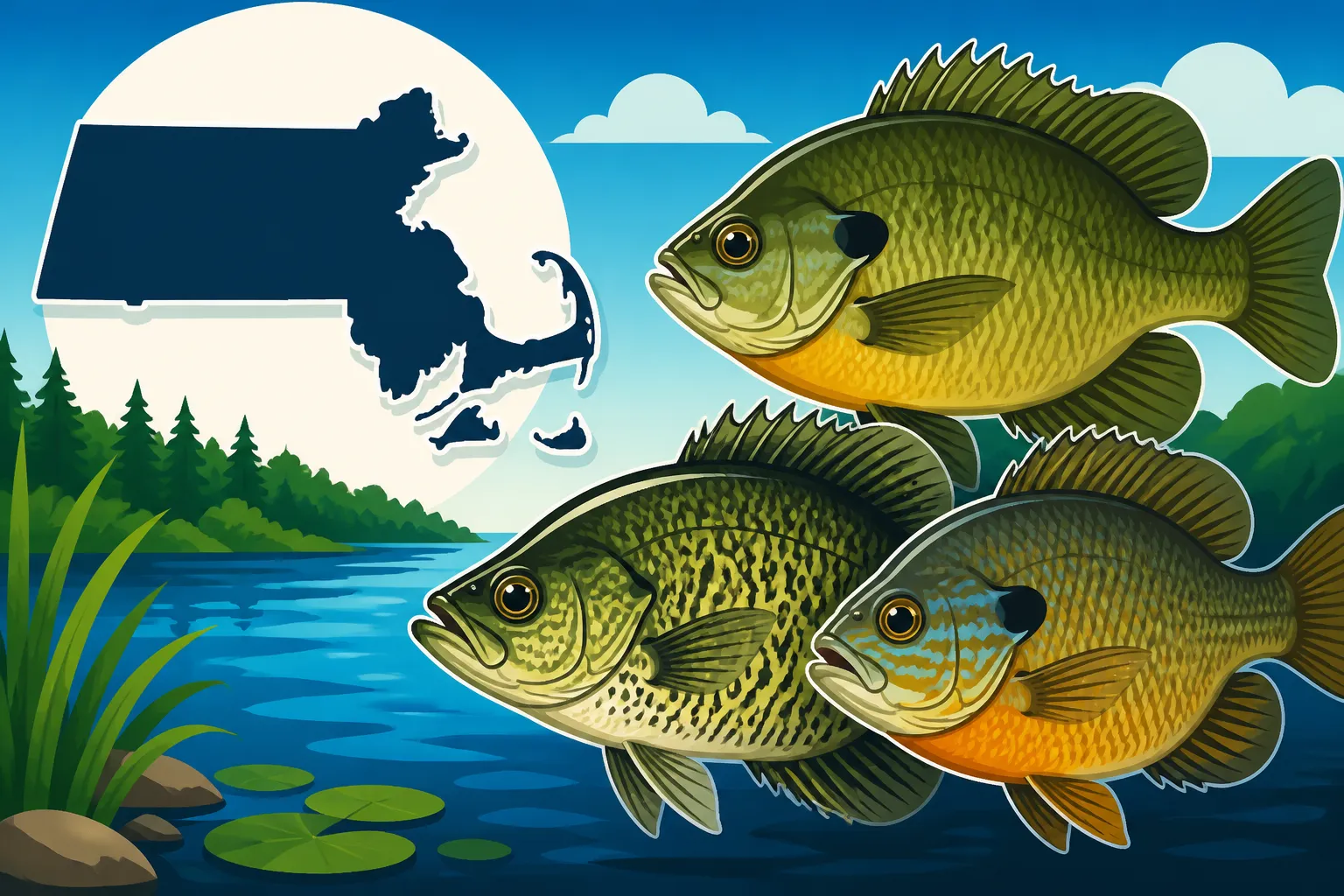
If you've ever cast a line into a Massachusetts pond, chances are you've encountered a bluegill. These little powerhouses are easily identified by their deep, plate-like bodies, dark blue-black opercular flap (the "ear"), and often a vertical barring pattern on their sides. They love warm, weedy waters, congregating around docks, submerged brush, and lily pads. Bluegill are notorious for their aggressive bites, often tugging hard on even the lightest line. They'll readily take small pieces of worm, crickets, or even bread. For artificials, tiny jigs, often dressed with a grub or a piece of Gulp!, are incredibly effective. You can find a wide assortment of these small jigs and baits on Amazon to get started. Don't let their size fool you; catching a stringer of bluegill on ultralight tackle offers a surprisingly spirited fight and an even better dinner.
Pumpkinseed
The pumpkinseed sunfish is arguably the prettiest of the sunfish species found in Massachusetts. They share a similar body shape to the bluegill but are adorned with iridescent blue and green streaks, especially on their opercular flap, which features a distinctive red or orange spot at its tip. They prefer similar habitats to bluegill – quiet, vegetated waters. Like bluegill, they are eager biters and will fall for the same baits and small lures. Catching a pumpkinseed is always a treat, not just for the tug on the line, but for their stunning, jewel-like colors. If you want to dive deeper into identifying these beautiful fish, check out our guide on What a pumpkinseed sunfish is.
Redbreast Sunfish and Green Sunfish
While not as common or widespread as bluegill and pumpkinseed in many parts of Massachusetts, you might also encounter redbreast and green sunfish. Redbreast sunfish are characterized by their strikingly long, black opercular flap that often extends well past the eye, and an overall more elongated body shape. They tend to prefer flowing water, like smaller rivers and stream edges, but can also be found in ponds. Green sunfish, on the other hand, have a larger mouth relative to their body size compared to other sunfish and often exhibit a darker, more olive-green coloration with small iridescent spots. They are known for being particularly aggressive, often outcompeting other panfish for food. They'll hit just about anything, making them a fun, albeit less common, catch.
Crappie: Speckled Eaters of the Deep
Crappie are another favorite among Massachusetts panfish enthusiasts, renowned for their delicate, delicious fillets and willingness to school up in large numbers.
Black Crappie
Black crappie are easily distinguished by their silvery bodies dappled with irregular black spots, giving them a "speckled" appearance. They possess a deep, compressed body and a relatively large mouth. Unlike sunfish that often hug the shallow cover, black crappie prefer deeper water and tend to associate with submerged structures like brush piles, fallen trees, bridge pilings, and old dock structures. They are schooling fish, so where you catch one, you're likely to find more. The best baits for crappie are small live minnows, usually fished under a bobber, or tiny jigs tipped with a soft plastic grub. Vertical jigging over structure is a highly effective technique, especially during colder months or when they move to deeper haunts. Anglers specifically targeting these tasty fish will find a lot of useful information in our Crappie Fishing in Massachusetts Ponds guide.
White Crappie
While black crappie are more prevalent in Massachusetts, white crappie are also present in some waters. They look very similar to their black crappie cousins but typically have more organized, often vertical, black bars or spots along their sides rather than irregular speckles. Their habits and preferred techniques are largely identical to black crappie, so if you're catching one, you're likely to encounter the other.
Perch: The Striped and Golden Delights
Perch are a truly beloved panfish, especially when the ice fishing season rolls around. They offer a great fight and are considered by many to be among the best-tasting freshwater fish.
Yellow Perch
The yellow perch is an instantly recognizable panfish, with its distinctive golden-yellow body and 6-8 dark vertical stripes that extend from its back down its sides. They have two dorsal fins, the first of which is spiny. Yellow perch are schooling fish that prefer cooler, deeper waters, often congregating along weed lines or drop-offs in lakes and large ponds. They are incredibly popular among both open water and ice anglers because they are eager biters and fantastic table fare. Small pieces of worm, live minnows, or tiny jigs and spoons are all highly effective. When fishing through the ice, tip-ups with minnows or small jigging spoons are the go-to methods. For a more in-depth look at targeting these delicious fish, check out our Yellow Perch Fishing in Massachusetts article.
White Perch
White perch are often mistaken for juvenile striped bass due to their similar body shape and silvery coloration, but they are a distinct species and a fantastic panfish in their own right. A key difference is that white perch lack the continuous lateral lines found on striped bass, and their belly is usually plain white without any stripes. They are an adaptable species, found in both freshwater lakes and ponds, as well as brackish estuaries and even saltwater along our coast. White perch are aggressive feeders and will readily take small baits like worms or pieces of clam, as well as small spinners and jigs. They can provide fast-paced action, especially when you find a schooling group. If you've ever wondered about separating these lookalikes, our guide on What a white perch is and where it's found offers a deeper dive, and you might also be curious Are White Perch Good to Eat?.
Essential Gear and Techniques for Massachusetts Panfish
One of the greatest things about panfishing is that you don't need a boatload of expensive gear to get started. Simple, effective setups are often all you need for a day of fun.
Simple Setups for Big Fun
When it comes to panfish, simplicity is key. You're not casting heavy lures or fighting giant fish, so light and sensitive tackle will be your best friend.
Rods, Reels, and Line
A light or ultralight action spinning rod, typically in the 5 to 6.5-foot range, paired with a small spinning reel (size 1000 or 2000) is absolutely perfect. This setup allows you to feel even the slightest nibble and makes the fight from a modest panfish feel like a true battle. You can find excellent, affordable rod and reel combos for panfishing that come pre-spooled with line on Amazon, making it easy to get started without breaking the bank. For line, 4-6 pound test monofilament or fluorocarbon is ideal. It's light enough not to spook wary fish, yet strong enough to handle any panfish you're likely to encounter, and even the occasional surprise bass or pickerel.
Hooks, Bobbers, and Baits
Small, sharp hooks are crucial. Size 6 or 8 Aberdeen-style hooks are great for worms, while even smaller size 10 hooks work well for crickets or corn. A simple clip-on bobber is perfect for suspending your bait at the desired depth, and a few small split shot sinkers will help cast your bait and keep it down. For bait, live options like earthworms, mealworms, wax worms, or crickets are incredibly effective. Many anglers also have success with common household items like small pieces of bread, corn, or even cheese. If you prefer artificials, tiny soft plastic grubs or tubes on 1/32 or 1/16 ounce jig heads, small inline spinners (like those from Panther Martin or Rooster Tail, readily available on Amazon), and micro spoons are all panfish magnets.
Where to Find and How to Catch Them
Panfish are creatures of cover and congregation. Understanding their typical haunts will significantly boost your success.
Habitat Hotspots
For sunfish, focus on shallow, vegetated areas. Look for lily pads, weed beds, submerged logs, brush piles, and the shaded areas around docks or overhanging trees. They love places where they can ambush insects and small minnows, and quickly dart into cover if a predator approaches. Crappie and yellow perch, especially larger specimens, often prefer slightly deeper water but will still relate to structure. Think about drop-offs, the edges of weed lines, submerged timber, bridge pilings, or rock formations. During spring and fall, they might move shallower to spawn or feed aggressively before winter.
Techniques for Success
- Still Fishing with a Bobber: This is the quintessential panfishing technique. Rig your line with a small sinker about 6-12 inches above a small hook, bait it up, and set your bobber to suspend the bait just above any perceived structure or slightly off the bottom. Cast it out, let it sit, and watch that bobber!
- Slow Retrieve with Small Lures: Cast a tiny jig or spinner near cover and retrieve it slowly and steadily. Experiment with pauses and twitches to entice bites. This is a very active way to fish and can cover more water, helping you locate schools.
- Vertical Jigging: Particularly effective for crappie and perch, especially when they are schooled up in deeper water or through the ice. Drop a small jig directly down to the fish (often visible on a fish finder, if you have one) and gently jig it up and down. This technique is a staple for those enjoying Ice Fishing Techniques for Massachusetts Ponds.
Responsible Panfishing Practices
While panfish are abundant, practicing responsible angling ensures these resources remain healthy for future generations.
Catch and Release vs. Keeping for Dinner
Panfish are excellent table fare, and keeping a reasonable number for a fresh meal is part of the enjoyment of fishing. However, selectively harvesting can help maintain a balanced fishery. Consider releasing the larger, healthier individuals to ensure good breeding stock, and keeping some of the smaller, but still legal, fish for the pan. Always check the current Massachusetts Freshwater Daily Catch Limits before your trip, as regulations can change.
Local Regulations and Conservation
It's crucial to always be aware of and follow local fishing regulations. Most panfish species in Massachusetts have very liberal or no explicit daily bag limits, but special regulations may apply to certain water bodies or during specific seasons. For instance, you will need a valid Massachusetts fishing license to fish in most public waters. If you're unsure about the requirements, our Massachusetts Fishing License Guide is a great resource. You can also consult the Massachusetts fishing regulations pamphlet, explained for all the nitty-gritty details. Knowing and respecting these rules helps MassWildlife manage our precious aquatic resources and ensures that these fantastic panfish continue to thrive for everyone to enjoy. After all, protecting these fish and their habitats is key to ensuring that even the simple pleasure of catching a pumpkinseed remains possible.
Comparison of Common Massachusetts Panfish
Here's a quick overview of some of the most common panfish you'll encounter in Massachusetts:
| Species | Typical Size (Inches) | Primary Habitat | Common Baits/Lures | Flavor Profile (when kept) |
|---|---|---|---|---|
| Bluegill | 4-8 | Weedy shallows, docks, submerged brush | Worms, crickets, small jigs, tiny spinners | Mild, sweet, flaky |
| Pumpkinseed | 4-7 | Weedy shallows, quiet coves, lily pads | Worms, crickets, small jigs | Mild, sweet, flaky |
| Black Crappie | 6-12 | Submerged structure, brush piles, deep weed edges | Minnows, small jigs, soft plastic grubs | Very mild, flaky, delicate |
| Yellow Perch | 6-10 | Cooler, deeper water, weed lines, open basins | Worms, minnows, small spoons, jigging raps | Mild, firm, excellent |
| White Perch | 5-10 | Lakes, ponds, estuaries, brackish water | Worms, pieces of clam, small spinners, jigs | Mild, slightly richer |
Panfish are an absolute joy to fish for in Massachusetts, offering consistent action, delicious table fare, and an accessible entry point into the world of angling. Whether you're a seasoned pro looking for a relaxing day or introducing a new generation to the thrill of a bending rod, don't overlook these incredible, feisty fish. They truly embody the simple pleasures of freshwater fishing.
Disclaimer
This article is for general informational purposes only and does not constitute professional advice. Laws, prices and regulations vary by location and change over time. Consult a qualified professional for guidance on your specific situation.