Rules for keeping salmon caught at Quabbin Reservoir
For anglers venturing into the vast, pristine waters of Quabbin Reservoir, the excitement of a potential salmon catch is palpable. However, the unique and vital conservation efforts surrounding this magnificent body of water mean that fishing regulations, especially for a prized species like Atlantic Salmon, aren't always straightforward. This guide aims to demystify those rules, ensuring you're fully prepared to enjoy your Quabbin experience responsibly and legally, whether you're hoping to land a trophy or simply appreciate the beauty of this special fishery.
Understanding Quabbin Reservoir's Unique Fishing Regulations
Quabbin Reservoir isn't just another fishing spot; it's a vital public drinking water supply for millions of Massachusetts residents, which means it operates under a very specific set of regulations designed to protect water quality and preserve its delicate ecosystems. This unique status profoundly impacts everything from permitted boat types to, you guessed it, the rules for keeping your catch. Many anglers, especially those new to Quabbin, can find these rules a bit overwhelming compared to typical state fishing laws, leading to understandable confusion.
Why Quabbin Reservoir is Different
The history of Quabbin is deeply rooted in public health and environmental stewardship. Created in the 1930s by flooding four towns, it quickly became a sanctuary for wildlife and a meticulously managed fishery. Because it's a drinking water source, there are strict rules about what you can bring onto the reservoir, how you can access it, and what activities are permitted. This isn't just about fishing; it's about safeguarding a critical resource. Unlike most public waters in Massachusetts where a general state fishing license covers you for freshwater, Quabbin requires additional steps and adherence to a stricter code of conduct. This extra layer of regulation can feel like a hurdle, but it's what preserves the reservoir's incredible ecological health and outstanding fishing opportunities.
General Quabbin Fishing Permit Requirements
Before you even think about dropping a line or planning to keep a salmon, you absolutely need to understand the entry requirements. While a valid Massachusetts freshwater fishing license is a fundamental prerequisite for fishing anywhere in the state, Quabbin Reservoir demands an extra layer of permitting. You'll need to secure specific Quabbin fishing permits, which cover things like shore fishing access or launching a Quabbin-approved boat. These permits are managed by the Department of Conservation and Recreation (DCR), not directly by MassWildlife, which can sometimes be a point of confusion for new visitors. For a comprehensive overview, you might want to check out our guide on Quabbin Reservoir Fishing Permits and Rules in Massachusetts. Without these specific DCR permits, even with a state license in hand, you won't be allowed to fish. Always ensure you have all your paperwork in order before heading out; having everything printed out or easily accessible on your phone, perhaps stored in a waterproof case you got from Amazon, can save you a lot of hassle.
Specific Rules for Keeping Salmon at Quabbin Reservoir
Now, let's get to the heart of the matter: what happens when you hook into one of Quabbin's magnificent Atlantic Salmon? These fish are truly special, and the rules governing their retention reflect their importance to the fishery. It’s crucial to know these regulations before you even cast your line, as misidentification or ignorance of the rules can lead to significant penalties.
Atlantic Salmon at Quabbin: A Special Case
The Atlantic Salmon at Quabbin Reservoir are often a landlocked strain, a remnant of historic stocking programs aimed at creating a unique trophy fishery. Unlike their anadromous (sea-run) cousins that migrate to the ocean, these fish spend their entire lives in the cold, deep waters of the reservoir. They are powerful fighters and a truly rewarding catch. However, their presence is carefully managed. The DCR and MassWildlife work diligently to maintain this population, often through stocking efforts. This means every salmon caught and kept is part of a larger, delicate balance. Understanding the life cycle and conservation status of Atlantic Salmon at Quabbin Reservoir helps put the strict regulations into perspective. It's not just a fish; it's a symbol of Quabbin's ecological health.
Size and Bag Limits for Salmon
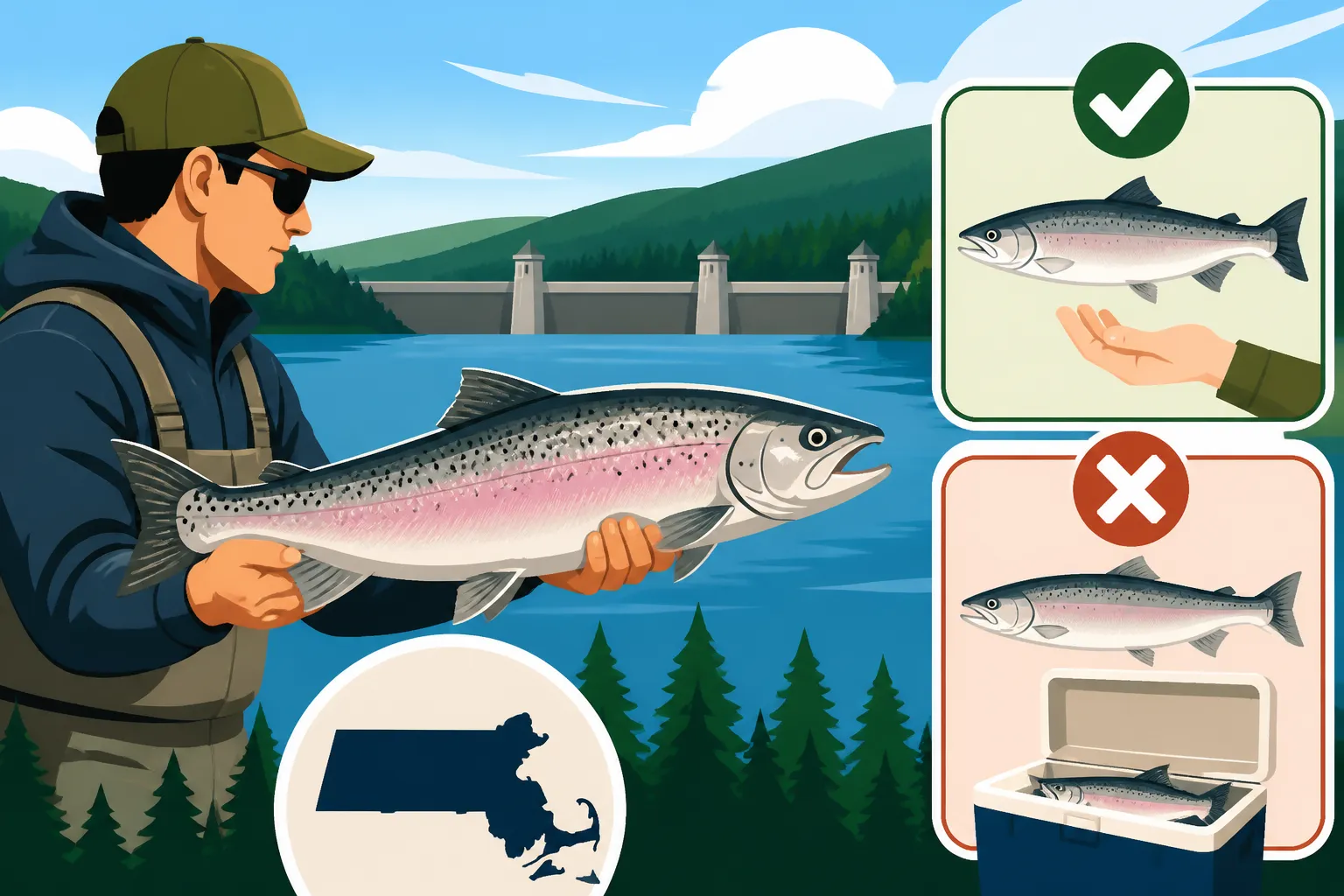
This is the critical information you need to etch into your memory. For Atlantic Salmon at Quabbin Reservoir, the rules are very clear and quite restrictive to protect this valuable sportfish. As an angler, you are typically allowed to keep a maximum of one (1) Atlantic Salmon per day, and that fish must meet a minimum size requirement. While specific lengths can change over time, historically, this has been a minimum length of 18 inches. It's absolutely vital to verify the current regulations directly from the official DCR Quabbin fishing regulations pamphlet, which you can often pick up at visitor centers or access points.
Imagine you've hooked a beautiful salmon. The first thing you do after a successful fight and bringing it boat-side (or shore-side, if permitted) is to measure it carefully. If it's under 18 inches, it must be immediately and carefully released. If it's 18 inches or longer, and it's your first salmon of the day, congratulations – you have a keeper! But if you've already kept one, any subsequent salmon, regardless of size, must be released. These rules are non-negotiable and strictly enforced by DCR Rangers. Having a reliable measuring tape on hand, perhaps a retractable one you found on Amazon, is not just a good idea, it's essential for compliance.
Here's a quick summary of the usual rules:
| Species | Minimum Length (inches) | Daily Bag Limit | Notes |
|---|---|---|---|
| Atlantic Salmon | 18 | 1 | Verify current regulations with DCR. |
| Lake Trout | 18 | 2 | No more than one may be over 21 inches. |
| Brown Trout | 15 | 2 | Verify current regulations with DCR. |
| Rainbow Trout | None | 3 | No minimum size, but often stocked larger. |
Note: These figures are based on general historical regulations for Quabbin Reservoir and serve as a guide. Always consult the most current official DCR regulations before fishing, as rules can and do change.
These specific limits are put in place to ensure that enough salmon survive to reproduce (or contribute to the stocking program) and to provide a sustainable fishery for all. They are part of the larger Massachusetts Recreational Fishing Rules and Bag Limits but with Quabbin's own strict additions.
Importance of Identifying Your Catch Accurately
Quabbin Reservoir is home to several species of trout and salmon, and correctly identifying your catch is absolutely paramount to adhering to the regulations. An Atlantic Salmon can sometimes be confused with a brown trout, particularly if you're excited or unfamiliar with the subtle differences. Brown trout, for instance, have a different size and bag limit at Quabbin (typically a 15-inch minimum, two fish bag limit).
Atlantic Salmon generally have a more streamlined body, deeply forked tail, and usually fewer, more scattered spots (often X-shaped) above the lateral line, with very few or no spots on the tail fin. Brown trout, on the other hand, tend to have more pronounced spots, often haloed, extending onto the tail. They also often have an orange or red spot here and there. While these distinctions might seem minor in the heat of the moment, they are critical. If you accidentally keep a brown trout thinking it's a salmon, or vice versa, you could face a violation. Carrying a waterproof fish identification card or having a reliable app on your phone (backed up with a power bank, also easily found on Amazon) that helps with Massachusetts Fish Identification Guide can be incredibly helpful. When in doubt, it’s always best to release the fish unharmed.
Navigating the Quabbin Fishing Experience
Fishing at Quabbin is an incredible experience, but it requires diligent preparation and adherence to rules that go beyond just knowing your fish limits. From the gear you bring to how you approach catch and release, every aspect is designed to preserve this unique environment.
Required Equipment and Safety Protocols
Beyond your fishing license and DCR permits, Quabbin has specific gear requirements, especially if you're boating. For instance, if you're on a boat, everyone on board must have a Coast Guard-approved life jacket, and often you're required to wear it, not just have it stowed. This is a non-negotiable safety rule, and DCR Rangers regularly check for compliance. You can learn more about this in Is a Life Jacket Required to Boat at Quabbin Reservoir?. You'll also need appropriate safety gear like a whistle, paddles, and a bailing device. When it comes to fishing tackle, using certain types of bait or lead-based sinkers might be restricted due to environmental concerns, so always check the latest regulations. Bringing extra lines, lures, and even a small first-aid kit, all of which you can assemble from Amazon, is always a wise choice for a day out on the water.
Access points are carefully managed, and parking is often limited to designated areas. Understanding How to get a Quabbin Reservoir boat permit and which gates are open is crucial for a smooth start to your day. Remember, the DCR boat launches are the only authorized locations for launching boats onto the reservoir, and private boat motors may have restrictions.
Understanding Catch and Release Practices
For any fish that doesn't meet the legal retention requirements—whether it's an undersized salmon, a brown trout you mistook for a salmon, or simply an additional salmon after you've already kept your one-fish limit—responsible catch and release is absolutely paramount. Quabbin's waters are cold and deep, which generally favors fish survival, but proper technique is still essential.
When practicing catch and release, minimize the fish's time out of water. Use a rubberized net to protect their slime coat, and handle them gently with wet hands if you must touch them. Remove hooks quickly using forceps or pliers, especially if they're barbed (many anglers at Quabbin opt for barbless hooks to make release easier). If the fish is bleeding or deeply hooked, it's particularly important to release it quickly and gently, allowing it to recover in the water. Remember, just because you need a license to fish doesn't mean you have to keep every legal catch. In fact, many dedicated anglers release healthy legal fish to help sustain the population, a practice often encouraged by the spirit of the Do You Need a License to Catch and Release in Massachusetts? guidelines. This ethical approach ensures that these precious fish populations thrive for future generations.
Where to Find Official Quabbin Regulations
Given the importance of accuracy, always go to the source for the latest rules. The official Quabbin Reservoir fishing regulations are published by the Massachusetts Department of Conservation and Recreation (DCR). You can typically find a printed pamphlet at the DCR visitor centers located at Quabbin Park and other access areas. Additionally, the DCR website usually hosts the most up-to-date digital versions of these regulations.
Do not rely solely on hearsay or outdated guides. Regulations, especially those pertaining to sensitive fisheries like Quabbin, can be updated annually or even seasonally. Before every trip, it's a good habit to quickly verify the current rules to avoid any misunderstandings. This vigilance is a cornerstone of responsible angling and complements your broader understanding of the Massachusetts Fishing License Guide. Remember, the DCR rangers are there to protect the resource and its users, so they are a valuable source of information if you have specific questions at the reservoir.
Respecting the Resource and Ensuring Future Fishing
The privilege of fishing Quabbin Reservoir comes with a significant responsibility. By understanding and adhering to all regulations, you're not just avoiding fines; you're actively participating in the conservation of one of Massachusetts' most treasured natural resources. Every angler plays a role in maintaining the health and vitality of this unique ecosystem.
The Role of Anglers in Salmon Conservation
Anglers are often the first line of defense for aquatic ecosystems. At Quabbin, your responsible actions directly contribute to the conservation of Atlantic Salmon and other fish species. This means strictly following bag and size limits, practicing careful catch and release, and properly disposing of all trash—even tiny bits of fishing line or bait containers. Litter can contaminate the water supply and harm wildlife.
Furthermore, being mindful of bait restrictions and invasive species prevention is vital. Some common baits might be prohibited at Quabbin to prevent the introduction of foreign organisms. Always clean your boats and gear thoroughly before and after visiting Quabbin to prevent the spread of invasive plants or aquatic species. These seemingly small actions collectively have a huge impact on maintaining the pristine nature of Quabbin and ensuring that future generations can also enjoy its fishing opportunities and clean drinking water. Your responsible approach contributes to the overall success of the Quabbin Reservoir Fishing Guide for Massachusetts Anglers.
Reporting Your Catch and Violations
In some special fisheries, anglers might be asked to report their catches, especially for specific species. While it's not always a requirement for Atlantic Salmon at Quabbin, being observant and cooperative with DCR officials is always beneficial. They collect data to help manage the fishery effectively.
More importantly, if you witness a violation of fishing regulations or environmental rules at Quabbin Reservoir, it's your responsibility as a conservation-minded angler to report it. This could include someone exceeding bag limits, using prohibited equipment, or engaging in polluting activities. Contacting DCR Rangers or MassWildlife enforcement with details (date, time, location, description of individuals or vessels) helps protect the resource for everyone. You are an important steward of the environment, and your vigilance ensures that the spirit of these regulations is upheld. Even knowing something as simple as the Quabbin Reservoir 2026 boat fishing season opening date helps you understand the rhythm of the reservoir's management. Your responsible participation, whether it's through careful angling or reporting concerns, helps safeguard this incredible asset.
Disclaimer
This article is for general informational purposes only and does not constitute professional advice. Laws, prices and regulations vary by location and change over time. Consult a qualified professional for guidance on your specific situation.