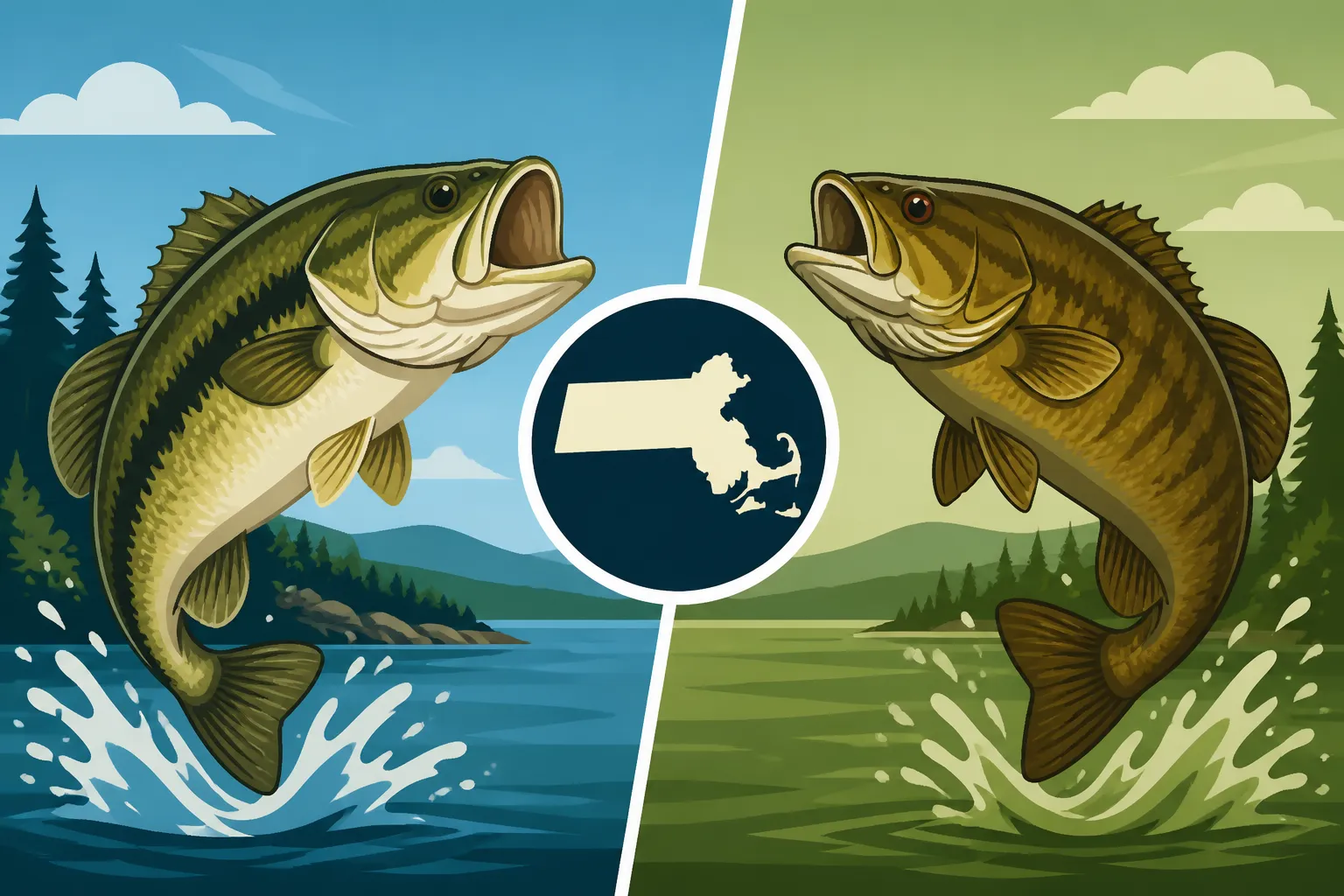
Difference between largemouth and smallmouth bass
It's incredibly common for anglers, especially those new to the diverse waters of Massachusetts, to confuse a largemouth bass with its equally feisty cousin, the smallmouth bass. While both are fantastic game fish that offer thrilling fights, understanding the nuances between them can dramatically improve your fishing success and help you pinpoint the best locations and techniques. This guide will help you confidently identify the "largie" from the "smallie" and unlock more enjoyable fishing experiences across the Commonwealth.
Decoding the Visual Cues: How to Tell Them Apart
The most straightforward way to distinguish a largemouth from a smallmouth bass often comes down to a few key physical characteristics. Once you know what to look for, it becomes second nature. It's not just about size, as both can grow quite large, but rather specific anatomical features that give them away. Don't worry, you don't need a biology degree to master this; just a keen eye.
The Mouth and Jawline
This is, by far, the most iconic and reliable identifier, hence their names! A largemouth bass has a mouth that extends well past the rear of its eye when closed. Imagine a horizontal line drawn from the back of the eye; the largemouth's jaw will typically extend past that line. It looks like it could swallow a pretty good-sized baitfish whole, and indeed, they often do! This large gape is perfectly adapted for ambushing prey in thick cover.
The smallmouth bass, on the other hand, has a jaw that doesn't extend past the back of its eye. Its mouth appears more proportional to its head, often ending directly under the pupil or just slightly behind it. This difference is consistent across all sizes of both species, making it an excellent primary identification method. If you're ever in doubt, gently open the fish's mouth and look at where the jaw hinge aligns with the eye.
Dorsal Fin Distinction
Another significant physical difference lies in their dorsal fins. The dorsal fin is the prominent fin located on the fish's back. In a largemouth bass, the spiny front portion of the dorsal fin is almost completely separated from the soft-rayed rear portion. There's a distinct, deep notch between the two sections, making them look like two separate fins. You can often easily put your finger in this notch. This separation allows for greater flexibility and control, perhaps aiding in their quick, darting strikes from cover.
For a smallmouth bass, the dorsal fin appears to be a single, continuous fin. While there might be a slight dip or indentation between the spiny and soft-rayed sections, it's nowhere near as pronounced as the largemouth's deep notch. It looks much more unified and flowing, reflecting its preference for open water maneuvering rather than tight ambush points. Understanding this feature can be particularly helpful if the fish is a bit worn or discolored, making mouth identification tricky.
Coloration and Body Shape
While coloration can vary greatly depending on water clarity, diet, and habitat, there are general patterns to look for. Largemouth bass typically have a distinct, often broken or continuous, dark lateral line running horizontally along their sides. Their overall body color can range from dark green to olive, with a lighter, sometimes white or yellowish, belly. Their body tends to be a bit more robust and football-shaped, especially when mature.
Smallmouth bass usually boast more bronze, golden, or brownish tones, often with prominent vertical bars or tiger-like stripes along their sides, especially when caught from clear water. These bars can sometimes be subtle, but they are generally present instead of a horizontal line. Their eyes often have a reddish tint. Smallmouths also tend to have a more streamlined, torpedo-shaped body, which is ideal for powerful swimming and chasing prey in current. If you compare two fish of similar length, the smallmouth will often appear leaner and more muscular.
Habitat and Behavior: Where and How They Live
Knowing where to find largemouth and smallmouth bass is just as crucial as knowing how to identify them. Their preferred environments dictate their behavior, feeding patterns, and ultimately, how you should approach fishing for them. Massachusetts offers diverse aquatic landscapes, from shallow, weedy ponds to deep, rocky rivers, each favoring one species over the other.
Largemouth Bass: The Ambush Predator of Weedy Waters
Largemouth bass are typically found in warmer, shallower, and often murkier waters. Think of your classic New England pond with lily pads, submerged timber, thick weed beds, and fallen trees. They love cover because they are ambush predators. They'll patiently wait, hidden in dense vegetation or next to a submerged structure, for an unsuspecting baitfish, frog, or crawfish to swim by, then explode from cover with a powerful strike. They are masters of camouflage in these environments.
You'll find largemouth thriving in many of the Commonwealth's ponds and slower-moving rivers. Spots like Lake Quinsigamond, Long Pond in Lakeville/Freetown, and countless smaller local ponds offer prime largemouth habitat. They are often less tolerant of strong currents and prefer still or slow-moving water where they can set up their ambushes effectively. Their diet is incredibly varied, consuming almost anything that fits in their large mouth, from small panfish and shiners to ducklings and small rodents. If you're looking to target these species, searching for suitable cover is always a good starting point. How to Catch Largemouth Bass in Massachusetts provides a lot more detail on this.
Smallmouth Bass: The Fighter of Clear, Rocky Ledges
Smallmouth bass, in contrast, prefer cooler, clearer, and often deeper waters. They are frequently associated with rocky bottoms, gravel shoals, current, and open water structures. Think big lakes, clean rivers with good flow, and reservoirs. In Massachusetts, prime smallmouth territory includes the Connecticut River, the larger sections of the Merrimack River, Quabbin Reservoir, and Wachusett Reservoir. They are less dependent on dense cover and are more likely to chase down their prey in open water.
Smallmouth are often considered stronger fighters for their size, known for their acrobatic jumps and powerful runs, a testament to their preference for current and open spaces. They feed heavily on crawfish, minnows, and insect larvae. Their streamlined bodies are perfectly adapted for navigating currents and pursuing prey actively. When targeting smallmouth, look for drop-offs, rocky points, submerged humps, and areas with current, rather than dense vegetation. Their behavior is more akin to a schooling predator, often found in groups around structural elements. If you're traveling to larger water bodies, understanding these habitat preferences will guide your choice of fishing spots. Massachusetts Smallmouth Bass Fishing Guide delves deeper into these tactics.
| Feature | Largemouth Bass | Smallmouth Bass |
|---|---|---|
| Mouth Extent | Past the rear edge of the eye | Does not extend past the rear edge of the eye |
| Dorsal Fin | Deep, distinct notch between spiny and soft sections | Appears continuous, slight dip at most |
| Coloration | Dark green to olive, prominent horizontal lateral line | Bronze to brown, often with vertical bars/stripes |
| Body Shape | More robust, football-shaped | More streamlined, torpedo-shaped, often muscular |
| Preferred Habitat | Warm, shallow, weedy, murky water, heavy cover | Cooler, clear, rocky, deep water, current, open structure |
| Feeding Style | Ambush predator | Active pursuit predator |
Fishing Techniques and Gear Considerations
Since largemouth and smallmouth bass inhabit different environments and exhibit distinct behaviors, it makes sense that the most effective fishing techniques and even gear choices would vary. While there's certainly overlap, fine-tuning your approach for each species can lead to a much more productive day on the water.
Lure and Bait Selection
For largemouth bass, because they are ambush predators hiding in cover, baits that can be worked through or around heavy vegetation are key. Soft plastic worms, jigs, spinnerbaits, and weedless frogs are absolute staples. Topwater lures, especially frog imitations or poppers, are incredibly exciting to use over lily pads or shallow grass beds. Crankbaits that mimic baitfish darting through structure can also be highly effective. The idea is to make a commotion near their hiding spot to trigger a reaction strike. You can find a fantastic selection of these lures on Amazon, perfect for building out your tackle box for those local ponds.
Smallmouth bass, being more active hunters in open, rocky areas, respond well to baits that imitate their primary forage: crawfish and minnows. Tube jigs, drop shot rigs, Ned rigs, and small swimbaits are deadly for smallmouth, often fished along rocky bottom structures or vertical breaks. Small crankbaits and jerkbaits that imitate baitfish can also be incredibly effective, especially when retrieved with erratic pauses. For fly anglers, streamers that look like minnows or crawfish patterns are excellent. Since they're often chasing prey, a slightly faster retrieve can sometimes be the ticket. Don't forget to check Amazon for some of the latest smallmouth-specific baits.
Rods, Reels, and Line Choices
When it comes to tackle, versatility is important, but optimizing for each species can make a difference. For largemouth bass, especially when fishing heavy cover, a medium-heavy to heavy power rod with a fast action is often preferred. This setup allows you to cast heavier lures, set the hook firmly, and pull fish out of thick weeds or wood. Baitcasting reels are very popular for largemouth fishing, especially when using jigs, plastics, or larger crankbaits, as they offer excellent casting control and power. Fluorocarbon or braided line, in heavier tests, is common, providing abrasion resistance and strength for dealing with snags.
For smallmouth bass, particularly when fishing clear water and lighter presentations, a medium power rod with a fast to extra-fast action might be more suitable. This offers better sensitivity for detecting subtle bites and enough backbone to handle those aggressive runs and jumps. Spinning reels are often favored for smallmouth, especially when using lighter jigs or finesse techniques, as they allow for easy casting of lighter baits. Lighter fluorocarbon or monofilament lines are often preferred for their low visibility in clear water and stretch, which can be beneficial during those powerful leaps. Always check your knots and line regularly, as fishing around rocks can be tough on your gear.
Massachusetts-Specific Fishing Considerations
Angling in Massachusetts means embracing a wide variety of waters, and knowing which bass species dominates certain areas will give you a significant advantage. The Commonwealth boasts habitats perfectly suited for both, but rarely do they coexist in equal numbers in the exact same spot.
Prime Largemouth Waters in Massachusetts
If you're looking for largemouth, you'll be spoiled for choice across Massachusetts. Many of the state's natural ponds, man-made lakes, and slow-moving rivers are teeming with them. Southeastern Massachusetts, in particular, has an abundance of shallow, fertile waters perfect for largemouth. Think about places like Long Pond in Lakeville, Assawompset Pond, or even many of the smaller municipal ponds around greater Boston. These waters often have extensive areas of submerged weeds, lily pads, and plenty of shoreline structure. Best Freshwater Ponds and Lakes in Massachusetts can give you more ideas for targeting largemouth.
In these environments, focusing on transitions—where weeds meet open water, or where a drop-off occurs near a shallow flat—can be incredibly productive. Early mornings and evenings often provide the best topwater action, while during the brighter, hotter parts of the day, pitching jigs or Texas-rigged worms into dense cover can entice strikes from larger, more cautious fish. Remember, patience is key when fishing for largemouth in heavy cover; they often need a moment to react to your presentation.
Premier Smallmouth Fisheries in Massachusetts
For those who crave the hard-fighting smallmouth, Massachusetts delivers with several truly exceptional fisheries. The Connecticut River, particularly its middle and lower sections within the state, is renowned for its strong smallmouth population. Here, you'll find plenty of current, rocky bottom, and deeper pools where smallmouth congregate. Connecticut River Fishing in Massachusetts offers great insights into this fantastic fishery.
Beyond the Connecticut River, the vast and deep waters of the Quabbin Reservoir and Wachusett Reservoir also hold impressive populations of smallmouth. These reservoirs feature extensive rocky shorelines, deep drop-offs, and clear water, providing ideal habitat. Boating or shore fishing around these structures with appropriate smallmouth tactics can yield some truly memorable catches. Quabbin Reservoir Fishing Guide for Massachusetts Anglers and Wachusett Reservoir Fishing Guide for Massachusetts Anglers are invaluable resources if you plan to visit these iconic locations.
When fishing for smallmouth in these larger, clearer waters, subtle presentations can often be more effective. Pay attention to water temperature and depth, as smallmouth will move to deeper, cooler water during the hottest parts of summer. Also, consider fishing during periods of low light or overcast conditions, which can bring them shallower to feed more aggressively.
Legalities and Conservation in Massachusetts
While knowing the difference between a largemouth and a smallmouth is great for your fishing strategy, it's also important for understanding Massachusetts fishing regulations. While both are bass species, their individual populations and management might occasionally lead to different guidelines, though generally, the state's freshwater bass regulations apply broadly. It's always best practice to consult the current Massachusetts fishing regulations pamphlet provided by MassWildlife before heading out, especially for specifics like daily limits and minimum sizes, which can vary.
Catch and release is a popular and highly recommended practice for both species, particularly for larger bass, to help maintain healthy populations. However, if you do decide to keep a fish for the table, ensure it meets all legal requirements. Handling fish gently, especially when practicing catch and release, is vital for their survival. Using appropriate tools like a net or lip grippers can minimize stress and injury. By understanding these distinctions and fishing responsibly, you contribute to the overall health and enjoyment of Massachusetts' incredible freshwater fisheries. Massachusetts Freshwater Daily Catch Limits offers general guidance on this topic.
Remember, fishing is not just about catching fish; it's about connecting with nature, understanding the aquatic environment, and respecting the creatures within it. The more you learn about species like largemouth and smallmouth bass, the richer your Massachusetts fishing adventures will become.
Disclaimer
This article is for general informational purposes only and does not constitute professional advice. Laws, prices and regulations vary by location and change over time. Consult a qualified professional for guidance on your specific situation.