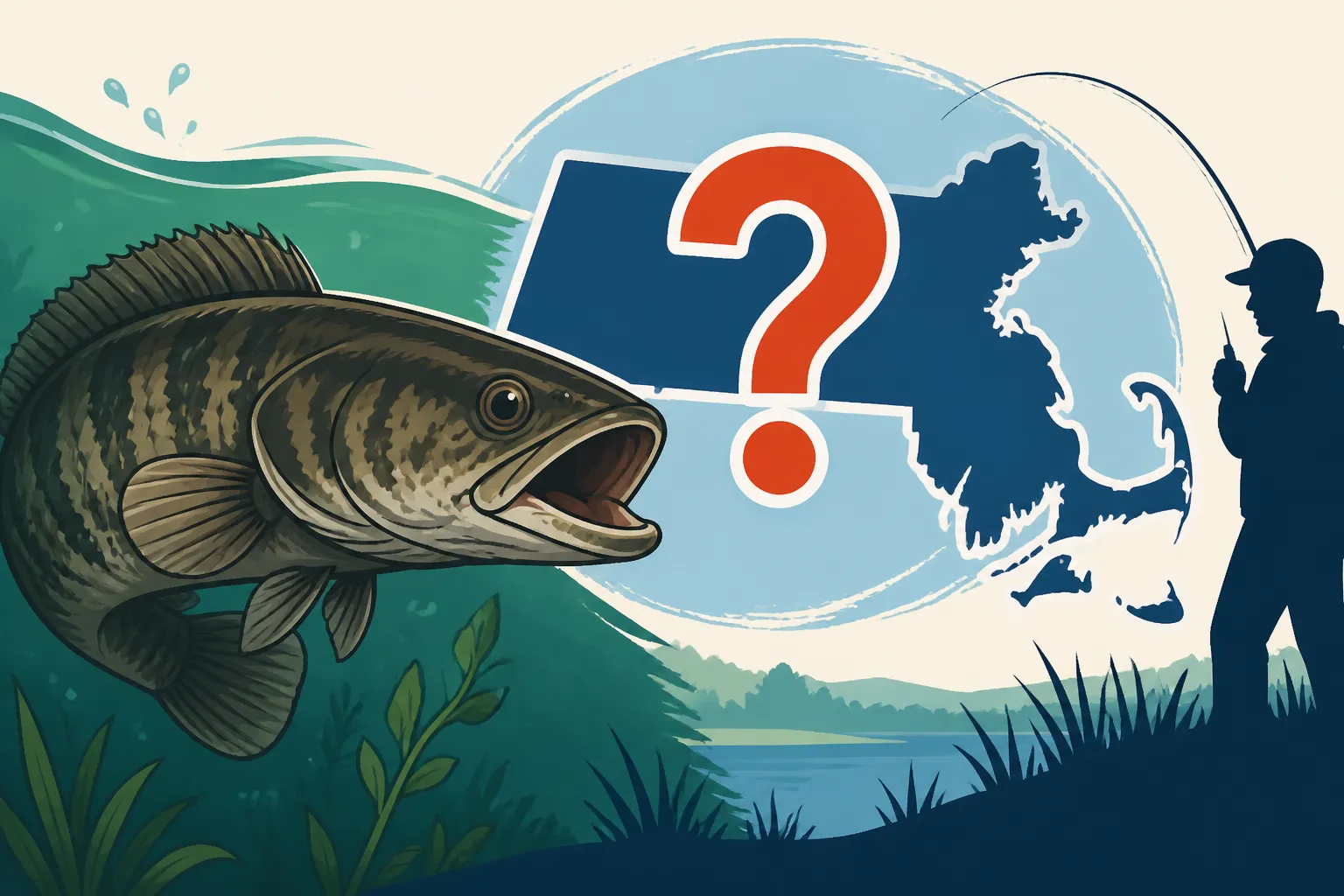
Are Northern Snakehead Found in Massachusetts?
The mere mention of "Northern Snakehead" can send a shiver down an angler's spine, especially here in Massachusetts. We all cherish our diverse native fish populations, from the spirited brook trout to the feisty largemouth bass, and the thought of an aggressive, air-breathing invader wreaking havoc on our local ecosystems is a legitimate concern. This guide will dive deep into whether these notorious fish have made their way to the Bay State, why they're such a worry, how to identify them, and what every responsible angler needs to know and do to protect our precious waters.
Are Northern Snakehead Presently in Massachusetts Waters?
It's a question that keeps many Massachusetts anglers vigilant: have Northern Snakehead established a presence in our ponds, lakes, and rivers? The good news, as of current official reports, is that there are no established, reproducing populations of Northern Snakehead documented in Massachusetts. This isn't to say there haven't been isolated incidents or misidentifications, but MassWildlife, our state's primary agency for fish and wildlife management, has not confirmed any widespread or breeding populations.
Understanding MassWildlife's Stance and Ongoing Vigilance
MassWildlife takes the threat of invasive species, including the Northern Snakehead, extremely seriously. Their monitoring efforts are continuous, and they rely heavily on public reports to track potential incursions. If there were a confirmed sighting, particularly one indicating a breeding population, MassWildlife would likely issue public alerts and implement specific management plans. The absence of such widespread alerts is a positive sign, but it's not an invitation to let our guard down. A single individual fish, potentially released illegally, could be the start of a much larger problem. This is why every angler's awareness is absolutely critical. We're talking about protecting our Massachusetts Fish Identification Guide and all the species we love to pursue.
The Nuance of "Isolated Incidents" Versus "Established Populations"
It's important to distinguish between a lone fish being caught or spotted and an established, reproducing population. A single Northern Snakehead, while concerning, doesn't necessarily mean an invasion is underway. It could be an illegally released aquarium pet, or a fish transported accidentally. However, an established population implies that multiple fish of varying sizes, including juveniles, are found, indicating successful spawning and survival. This is the nightmare scenario we're all working to prevent. MassWildlife's focus is on preventing that critical second step: the establishment of a self-sustaining population. Our beautiful Best Freshwater Ponds and Lakes in Massachusetts depend on this vigilance.
Why Northern Snakehead Pose Such a Significant Threat
The reason for the intense concern surrounding Northern Snakehead isn't just hype; it's rooted in their documented impacts in other states where they've unfortunately become established. These fish are not just another species; they are top-tier predators with characteristics that make them particularly destructive to native ecosystems.
Disrupting Native Ecosystems and Food Chains
Northern Snakehead are voracious predators. They feed on a wide variety of prey, including fish, frogs, crayfish, and even small mammals and birds. Imagine a species introduced into a pond, a pond currently thriving with Freshwater Fish Species in Massachusetts like largemouth bass, yellow perch, and sunfish. The snakehead will compete directly with native predators for food and habitat, and prey directly on native fish, including juvenile game fish and forage species. This can lead to a significant decline in native populations, disrupting the delicate balance of the food chain. For instance, they might decimate baitfish populations that support our cherished trout and bass, or directly consume smaller Chain Pickerel Fishing in Massachusetts or sunfish, impacting the entire aquatic community.
Impressive Adaptability and Reproductive Capabilities
What makes the Northern Snakehead particularly alarming is their incredible resilience and adaptability. They possess several traits that enable them to thrive and spread rapidly:
- Air Breathing: Unlike most fish, Northern Snakehead can breathe atmospheric oxygen using a primitive lung-like organ. This allows them to survive in low-oxygen waters where native fish might perish, and even to survive out of water for several days if kept moist. This ability also means they can potentially "walk" short distances over land from one water body to another, especially during wet conditions.
- Rapid Reproduction: They are prolific breeders, capable of spawning multiple times in a single season. Both parents guard their nests and young, providing a high survival rate for their offspring. This rapid reproductive cycle means that if even a few individuals establish themselves, their numbers can explode quickly.
- Tolerance to Varied Conditions: Northern Snakehead can tolerate a wide range of water temperatures and conditions, from murky, stagnant ponds to flowing rivers. This broad tolerance makes them suitable for many different aquatic environments across Massachusetts.
These combined factors explain why they are classified as an invasive species with such high potential for ecological damage. Protecting our waters requires us to understand and prevent the spread of Invasive Fish Species in Massachusetts Waters.
How to Accurately Identify a Northern Snakehead
Accurate identification is paramount if we are to prevent the establishment of Northern Snakehead in Massachusetts. Many native fish can be mistaken for a snakehead due to similar body shapes or markings, leading to false alarms. However, there are distinct features that, once learned, make identification much clearer.
Key Physical Characteristics of Northern Snakehead
When you're looking at a fish and suspect it might be a Northern Snakehead, here are the critical features to examine:
- Body Shape: They have a long, slender, cylindrical body, very much resembling a snake. This is their most distinguishing feature.
- Dorsal Fin: They possess a very long dorsal fin that runs almost the entire length of their back, with no break or separation. It’s a continuous, uninterrupted fin.
- Anal Fin: Similarly, their anal fin is also quite long, though not as long as the dorsal, extending about two-thirds of the way down their belly.
- Pectoral Fins: Their pectoral fins are relatively small and rounded.
- Head: The head is snake-like, flattened on top, with a large mouth and sharp, conical teeth. Their eyes are typically located more towards the top of their head.
- Coloration: They are typically mottled brown, gold, or tan, with a darker, blotchy pattern along their sides, often described as "snake-like" markings. Their belly is usually lighter.
- Pelvic Fins: The pelvic fins are located directly under the pectoral fins.
It's common to confuse Northern Snakehead with native species like the bowfin, burbot, or even a large eel or Chain Pickerel Fishing in Massachusetts. If you're unsure, there are many excellent field guides available on platforms like Amazon that can help you distinguish between species.
Distinguishing Northern Snakehead from Look-Alikes
Let's break down the differences between a Northern Snakehead and some of its common look-alikes found in Massachusetts:
| Feature | Northern Snakehead | Bowfin (Native) | Burbot (Native) | American Eel (Native) | Chain Pickerel (Native) |
|---|---|---|---|---|---|
| Body Shape | Long, slender, cylindrical, snake-like | Robust, cylindrical, more stout | Eel-like, mottled, slender rear body | Very long, slender, serpentine | Long, slender, pike-like |
| Dorsal Fin | Very long, runs almost entire back, uninterrupted | Very long, undulating, extends over half the back | Short, two distinct dorsal fins (one very short) | Continuous with caudal and anal fins | Single, short dorsal fin far back on body |
| Anal Fin | Long, runs about two-thirds of belly | Short, well-separated from caudal | Long, runs over half the belly | Continuous with caudal and dorsal fins | Single, short anal fin far back on body |
| Tail Fin | Rounded | Rounded, often with a distinct dark spot ("eyespot") | Rounded | Rounded, part of continuous fin | Forked or slightly notched |
| Pelvic Fins | Directly under pectoral fins | Throat area, under head | Throat area, under head | Absent | Directly under pectoral fins |
| Head | Snake-like, flattened, large mouth, sharp teeth | Flat head, large mouth, no distinct snake pattern | Flattened head, single barbel on chin | Small, conical head | Duck-bill snout, sharp teeth |
| Breathing | Air-breather, can survive out of water | Uses gills, can gulp air in low oxygen | Gills only | Gills only, can survive out of water briefly | Gills only |
| Key Indicator | Very long, uninterrupted dorsal fin | Large, rounded tail spot | Single barbel on chin, two dorsal fins | No paired fins, continuous dorsal/anal/caudal fins | Distinct chain-link pattern on sides |
Always observe the fish carefully. Pay close attention to the dorsal fin length and the presence of any unique spots or barbels. A good resource for checking fish species, or even identifying unknown ones, can be found on Amazon, with many books on Massachusetts Fish Identification Guide.
Your Role: What to Do If You Encounter a Northern Snakehead
This is the most crucial part of protecting Massachusetts' aquatic environments. If you believe you have caught or even just observed a Northern Snakehead, your actions are absolutely vital. Remember the simple but powerful protocol: "Catch, Kill, Report."
The "Catch, Kill, Report" Protocol
This isn't just a suggestion; it's a critical directive from MassWildlife for invasive species like the Northern Snakehead. Here's what it entails:
- Do Not Release It: Under no circumstances should you return a suspected Northern Snakehead to the water, dead or alive. Releasing it would counteract all efforts to prevent its spread. Even if you're not 100% sure of the identification, err on the side of caution.
- Kill It Humanely: This might sound harsh, but it's essential. The preferred method is to either sever the head or gut the fish. Ensure it is dead and cannot survive or reproduce. This is a difficult but necessary step to protect our native species. You might even consider a good pair of puncture-resistant gloves, easily found on Amazon, if you ever have to handle a potentially invasive species.
- Document and Report: This is where you become a crucial part of the surveillance network.
- Take Photos: Get clear, close-up photos of the fish from multiple angles, especially its head, mouth, and entire body, including the dorsal and anal fins. Having a quality camera on hand, perhaps a waterproof one you found on Amazon, is crucial for documentation.
- Note Location: Accurately record the exact location where you caught or observed the fish (GPS coordinates if possible, or a very specific description of the water body, town, and nearest landmarks).
- Contact MassWildlife: Immediately report your sighting to MassWildlife. You can typically find their contact information (phone number for urgent reports, email for less urgent) on their official website. Provide them with all the details you've gathered. They will likely want to collect the specimen for confirmation.
Why Immediate Reporting Matters
Every minute counts when dealing with an invasive species. Early detection is often the key to successful eradication or containment. Your prompt report could be the difference between a single isolated incident and a full-blown infestation that causes irreversible damage to our lakes and rivers. MassWildlife needs this information to assess the threat and deploy resources effectively. Remember, adhering to Massachusetts Recreational Fishing Rules and Bag Limits is always important, but an invasive species requires extraordinary measures.
Protecting Massachusetts Waters: Beyond Reporting
Our responsibility as anglers extends beyond just reporting a sighting. Proactive measures are the best defense against invasive species taking hold in the first place. Every one of us has a role to play in safeguarding our fishing future.
Preventing the Spread of All Aquatic Invasive Species
The principles we apply to preventing Northern Snakehead also apply to a host of other aquatic invasive species, from plants to other fish. The "Clean, Drain, Dry" protocol is your best friend:
- Clean: Inspect and remove all visible mud, plants, fish, or animals from your boat, trailer, waders, fishing gear, and any equipment before leaving the launch area.
- Drain: Pull your boat's drain plug and drain all water from your boat, livewell, bait bucket, and bilge before leaving the launch.
- Dry: Allow all equipment to thoroughly dry for at least 5 days before using it in a different water body. If drying isn't possible, consider high-pressure washing or hot water treatment.
Never, ever move fish or bait from one water body to another. This is often how invasive species are accidentally (or sometimes intentionally, and illegally) spread. Even small minnows or aquatic plants can carry eggs or larvae of invasive organisms. Understanding Massachusetts Fishing License Requirements by Age and other regulations goes hand-in-hand with these protective practices.
The Power of Angler Education and Awareness
Your knowledge is one of the most potent tools in this fight. The more anglers who understand what to look for, why it matters, and what to do, the stronger our collective defense becomes. Talk to your fellow anglers, share information, and encourage responsible practices. Stay informed by checking MassWildlife's official resources regularly for updates on Massachusetts Freshwater Fishing Season Calendar and invasive species alerts. Invest in a fishing tackle box organizer from Amazon to keep your gear tidy and avoid accidentally transferring aquatic hitchhikers. Our collective vigilance is the best way to ensure that our amazing Massachusetts fisheries remain vibrant and healthy for generations to come.
Disclaimer
This article is for general informational purposes only and does not constitute professional advice. Laws, prices and regulations vary by location and change over time. Consult a qualified professional for guidance on your specific situation.