Difference Between Bluefish and Striped Bass
For many anglers hitting the rich waters of Massachusetts, distinguishing between a bluefish and a striped bass can sometimes be a challenge, especially when the action is hot and the fish are biting aggressively. While both are highly sought-after game fish that often inhabit the same coastal areas, they each have distinct characteristics and behaviors that every angler should know. This guide will help you understand the key differences, from their physical appearance and feeding habits to the best ways to catch them and the specific regulations you need to follow here in the Bay State.
Unpacking the Physical Distinctions
At first glance, especially in the heat of a fishing frenzy, bluefish and striped bass might seem similar in their sleek, powerful forms. Both are formidable predators, but a closer look reveals several clear distinctions that can help you quickly identify your catch. Knowing these details isn't just for bragging rights; it's crucial for adhering to specific fishing regulations and ensuring you're handling each species appropriately.
Body Shape and Coloration
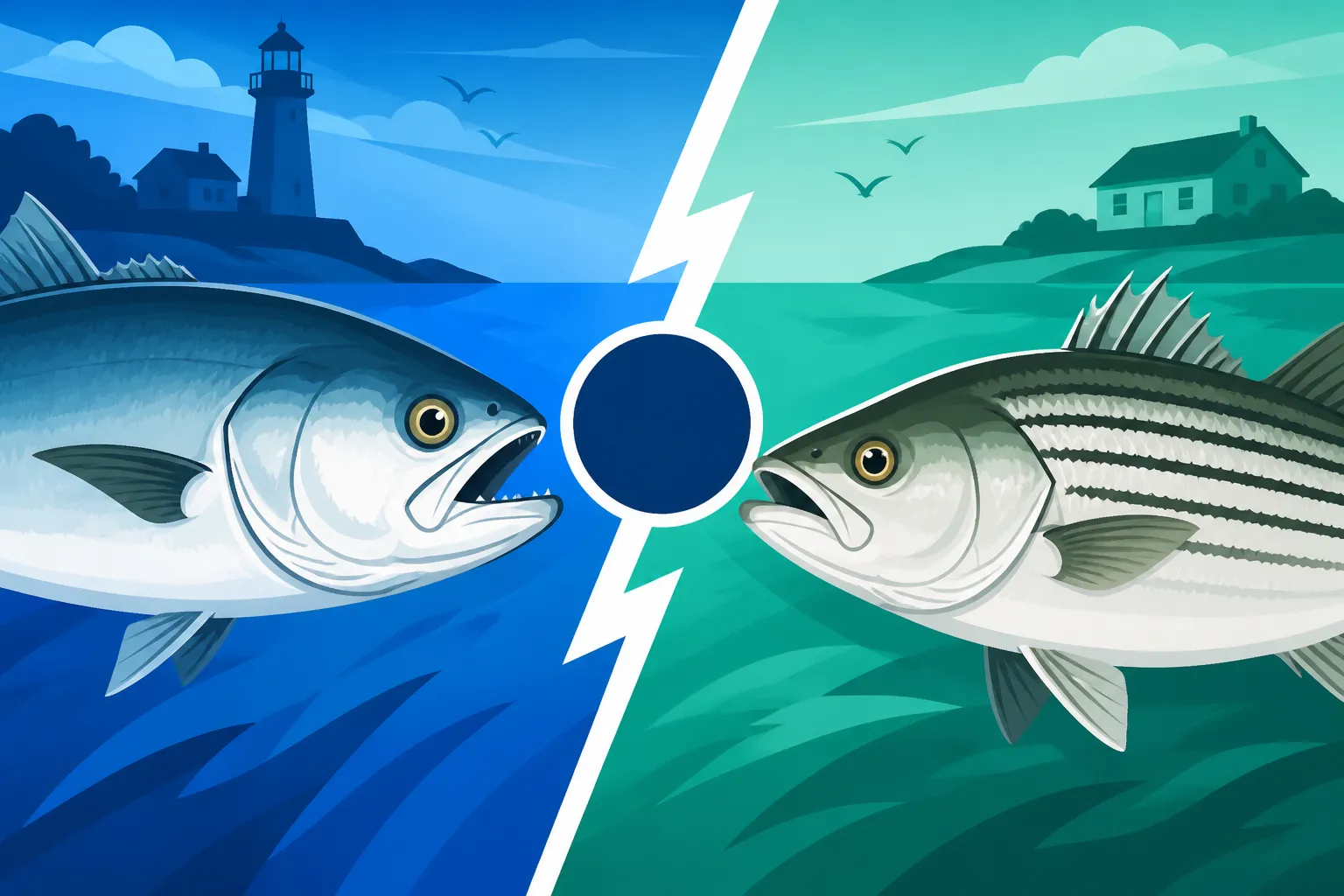
When you pull a fish out of the water, its overall silhouette and color patterns are usually the first clues. Striped bass, often called "stripers" by local anglers, tend to have a more elongated, torpedo-like body that is stout and muscular. Their most defining feature, which gives them their name, is the series of seven or eight distinct, dark horizontal stripes running from behind their gills all the way to their tail. Their coloration generally ranges from dark olive or black on the back, fading to silvery sides and a white belly. These stripes are typically unbroken and very prominent, making identification relatively straightforward for an observant eye.
Bluefish, on the other hand, possess a more compressed, somewhat chunkier body shape, especially around the shoulders, which tapers noticeably towards the tail. They are often described as having a more "football-like" or "blocky" build compared to the striper's sleek profile. Their backs are usually a vibrant greenish-blue or steel blue, transitioning to silvery sides and a white belly. Unlike stripers, bluefish lack any horizontal stripes; their sides are generally unmarked, though some might have a faint, indistinct pattern. The iridescent blue-green sheen on their back is quite striking in direct sunlight, giving them their common name.
Mouth and Teeth Structure
Perhaps the most telling difference, and one you should certainly note before handling either fish, lies in their mouths and teeth. This isn't just an anatomical detail; it speaks volumes about their feeding styles and the kind of tackle you might need.
A striped bass has a moderately sized mouth, which is terminal (meaning it opens at the very front of the head). Inside, you'll find small, rough teeth arranged in patches on the tongue and jaws. These teeth are more like sandpaper than sharp blades, designed for gripping prey rather than tearing it apart. While you still need to be careful when unhooking a striper, their teeth are not typically a significant hazard to an angler's fingers unless you're careless. This dental structure allows them to crush and hold various prey, from crabs and clams to baitfish.
Bluefish, however, are equipped with a mouth that truly earns them their reputation as aggressive, voracious predators. Their mouth is large and powerful, featuring rows of razor-sharp, cone-shaped teeth that are clearly visible and can inflict serious damage. These teeth are designed for slicing and tearing, allowing them to effectively incapacitate their prey with brutal efficiency. Many an angler has learned the hard way that a bluefish's bite is no joke, often capable of severing fishing lines, lures, and even fingers if not handled with extreme caution. Always use pliers or a dehooking tool when dealing with a bluefish to avoid injury. Many experienced anglers keep a pair of long-nosed pliers handy, perhaps even one of the robust, corrosion-resistant options you might find on Amazon, specifically for bluefish encounters.
Fin Structure and Tail Shape
Examining the fins and tail can also provide clear clues. While both fish have dorsal and pectoral fins, their configurations differ in subtle but important ways.
Striped bass have two distinct dorsal fins. The first is spiny, with sharp rays that can prick if not handled carefully, while the second dorsal fin is soft-rayed and positioned further back on the body. Their caudal (tail) fin is typically broad and deeply forked, indicating a fish built for powerful, sustained swimming, ideal for navigating strong currents and pursuing prey. The clean, defined edges of their fins contribute to their streamlined appearance.
Bluefish also have two dorsal fins, but unlike the striper, the first dorsal fin is shorter and more triangular, and it folds neatly into a groove along their back when not extended. The second dorsal fin is similar in length to their anal fin and located further back. Their tail fin is strong and deeply forked, much like the striper's, reflecting their speed and agility in open water. However, the overall impression of a bluefish's fins might be slightly less refined, contributing to their more aggressive, less streamlined look compared to a striper. Pay attention to the size and shape of the spiny dorsal fin; the bluefish's first dorsal is often smaller and less imposing than that of a striped bass.
Behavior and Habitat: Understanding Their Lifestyle
Beyond their looks, bluefish and striped bass exhibit fascinating differences in how they live, hunt, and move through the waters of Massachusetts. These behavioral distinctions are key to understanding where and when you might encounter each species, and how best to target them.
Feeding Habits and Aggression
This is where the true personalities of these fish shine, or rather, where the bluefish's brutal efficiency truly stands out. Striped bass are opportunistic predators with a varied diet. They hunt by ambush, often lurking in structure or current seams, waiting to engulf unsuspecting prey. They also school up to "herd" baitfish, making them effective hunters. While they can be aggressive, especially when competing for food, their attacks are generally calculated, and they are known for their strong, steady fights rather than explosive, destructive bites. Their diet includes a wide array of items: menhaden, herring, mackerel, squid, eels, crabs, and even worms. This adaptability allows them to thrive in many environments.
Bluefish, however, are the undisputed gladiators of the inshore waters. They are notoriously aggressive, often described as having a "feeding frenzy" mentality. When a school of bluefish encounters bait, they will slash and tear through it with their razor-sharp teeth, often leaving a trail of mangled, uneaten fish. This intense feeding behavior is why they are often found with half-digested fish in their stomachs or why you might see baitfish jumping frantically out of the water to escape a bluefish blitz. They hunt in large, coordinated schools, driving baitfish to the surface in spectacular displays of raw power. Their aggression isn't limited to prey; they'll often attack anything that moves, including other fish (even other bluefish!) and lures, sometimes even snapping at boat propellers. This makes them incredibly exciting to catch but also demands respect for their formidable bite.
Preferred Water and Structure
While both species are found in coastal Massachusetts waters, they can have slightly different preferences for their aquatic real estate. Striped bass are highly adaptable and can be found in a wide range of saltwater and brackish environments. They frequent estuaries, rivers, rocky shorelines, sandy beaches, inlets, and offshore reefs. You'll find them holding near structure like jetties, bridge pilings, submerged rocks, and mussel beds, where they can ambush prey or hide from strong currents. They also tolerate varying water temperatures, allowing them to move into shallower, warmer waters in spring and fall, and deeper, cooler waters in the summer. They are often found in the notorious rips and currents of places like the Cape Cod Canal Fishing Guide for Massachusetts Anglers, where the moving water brings abundant food.
Bluefish also thrive in coastal waters but generally prefer more open, schooling environments. While they will cruise along beaches and near structure, they are more often found in open bays, sounds, and offshore waters where large schools of baitfish congregate. They are less tied to bottom structure than stripers and are more pelagic, meaning they spend more time in the open water column. They prefer warmer water than stripers and tend to move further offshore or south during colder months. You'll often find them chasing bait in expansive areas like Buzzards Bay or off the Outer Cape. When you see gulls diving and a frantic disturbance on the surface, it's often a school of bluefish tearing through baitfish.
Migration Patterns
Both bluefish and striped bass are migratory species, moving up and down the Atlantic coast throughout the year, but their exact timing and routes can differ. Striped bass undertake extensive migrations, spending winters in offshore waters or in the southern parts of their range (like the Mid-Atlantic states). As spring warms the waters, they begin their journey northward, arriving in Massachusetts in waves from April through June. They typically remain in Massachusetts waters through the summer, feeding heavily, before beginning their southbound migration in the fall, from September through November. This predictable pattern makes them a highly anticipated seasonal target for anglers. You can learn more about when to target them in When striped bass arrive in Massachusetts waters.
Bluefish also exhibit strong migratory patterns, following the warming waters and baitfish schools. They generally arrive in Massachusetts later than stripers, typically showing up in late May or early June, as water temperatures rise. They spend the summer months gorging on baitfish in our waters, often venturing further offshore than stripers. Their departure in the fall also tends to be later, often lingering into October or even early November, chasing the last schools of bait before heading south. Their movements are often more erratic and tied directly to the availability of their preferred forage, making them a bit less predictable than stripers at times.
Tailoring Your Approach: Fishing Techniques
Given their distinct behaviors and physical attributes, it's no surprise that while many techniques can catch both, some methods and tackle choices are better suited for one over the other. Knowing these nuances can dramatically increase your success rate and prevent frustrating gear loss.
Lures and Baits
When it comes to tempting these predators, your choice of lure or bait can make a big difference. Striped bass are often caught on a wide variety of offerings. Live bait like eels, bunker (menhaden), mackerel, and herring are incredibly effective, especially for larger fish. For artificials, soft plastics like paddletails, swim shads, and stick baits are popular. Topwater poppers and walk-the-dog lures can be thrilling, especially during low light conditions or when stripers are busting on the surface. Deeper diving plugs and jig-and-soft-plastic combinations work well in strong currents or when fish are holding near the bottom. Many anglers will stock up on a diverse range of proven striper lures, perhaps picking up some essential casting lures or soft plastics from Amazon for their next trip. For a deeper dive, check out Best Lures for Striped Bass in Massachusetts.
Bluefish, due to their aggressive nature and sharp teeth, require a different approach. While they will hit many of the same lures as stripers, the key difference is durability and the use of wire leaders. Metal spoons, casting jigs, and robust poppers are excellent choices, as they can withstand the punishing bite of a bluefish. Soft plastics and traditional plugs, while effective, will often be shredded in short order, leading to constant retying and replacement. For live bait, cut bait like chunks of mackerel or bunker are very effective, but again, a wire leader is almost essential to prevent bite-offs. If you're targeting bluefish specifically, always have a good supply of extra lures and pre-rigged leaders. Information on effective bluefish lures can be found in Best Lures for Bluefish.
Rod and Reel Setups
Matching your gear to the target species and conditions is crucial. For striped bass, especially the larger cow stripers that patrol Massachusetts waters, a medium-heavy to heavy spinning or conventional rod, typically 7-10 feet in length, is appropriate. This provides the casting distance and backbone needed to handle powerful runs and heavier lures. Pair this with a robust reel spooled with 30-50 lb braided line, which offers sensitivity and strength. A fluorocarbon leader of 30-60 lb test is usually sufficient to prevent abrasion on rocks and provide a bit of invisibility in clear water.
When targeting bluefish, especially the larger "chopper" blues, the setup is similar, but there's a greater emphasis on line and leader strength. While the rod and reel can be the same as for stripers, the leader material is a critical consideration. Many anglers opt for a short section of heavy monofilament (80-100 lb) or even a wire leader directly to the lure to prevent bluefish from cutting through the line with their razor teeth. A 20-30 lb braided main line is common, but again, the leader is where you want the maximum protection. The sheer power and head-shaking behavior of a bluefish demand a strong rod and a reel with a smooth, reliable drag system.
Fighting and Handling
The way these fish fight also reflects their unique characteristics. Striped bass are known for their strong, steady runs and powerful head shakes. They typically stay deep and put up a sustained battle, testing your endurance and the drag of your reel. Landing a big striper is often a grind, a true test of strength. Once landed, they tend to be relatively calm, allowing for careful unhooking and release (if not destined for the dinner table). Handle them gently, supporting their weight horizontally, especially if you plan to release them, to minimize stress.
Bluefish, true to their aggressive nature, are explosive fighters. They make violent, short runs, thrash erratically, and leap from the water in spectacular aerial displays. Their fight is often described as erratic and unpredictable, full of sudden changes in direction and powerful head shakes, all designed to throw the hook or shred the line. This makes them incredibly exciting to catch. However, once you get them boatside or on the beach, their aggression doesn't stop. They will snap and bite at anything, so extreme caution is advised. Many anglers use a lip gripper or BogaGrip-style tool, which you can easily find on Amazon, to safely control a bluefish without putting hands near its mouth. Always have a pair of sturdy pliers ready to remove hooks, and consider a fishing glove if you must handle them directly.
Regulations and Management: Staying Legal
Understanding and adhering to fishing regulations is paramount for all anglers in Massachusetts. Both bluefish and striped bass are subject to specific rules regarding size, bag limits, and seasons, which are in place to ensure sustainable populations for future generations. Ignoring these rules can result in significant penalties. You can find comprehensive details in the Massachusetts Fishing License Guide.
Massachusetts Size and Bag Limits
The regulations for striped bass are particularly stringent and can change. Generally, Massachusetts observes a "slot limit" for striped bass, meaning you can only keep fish that fall within a specific length range. This protects both smaller, immature fish and larger, breeding adults, helping to sustain the population. The daily bag limit is typically one fish per angler. These regulations are designed to manage one of the most popular recreational fisheries on the East Coast. It's crucial to check current regulations before each outing, as these numbers can be updated annually. For a more detailed breakdown, refer to Massachusetts Striped Bass Size and Bag Limit and How to Measure a Striped Bass for the Slot Limit.
Bluefish regulations tend to be more generous than those for striped bass, reflecting their more robust population status and faster growth rates. While specific numbers can vary, there's usually a minimum size limit and a daily bag limit that allows anglers to keep more fish. Bluefish are often considered a good option for anglers looking to fill a cooler when striper limits are tight. However, like all species, their regulations are subject to change based on scientific assessment and management goals, so always verify the current rules. Massachusetts Bluefish Bag Limit and Season provides more specific figures.
| Feature | Striped Bass | Bluefish |
|---|---|---|
| Appearance | Elongated, 7-8 distinct dark stripes | Compressed, greenish-blue back, no stripes |
| Mouth/Teeth | Moderate mouth, small, rough teeth | Large mouth, razor-sharp, cone-shaped teeth |
| Aggression | Opportunistic, strong, steady fighters | Highly aggressive, slashing, explosive fights |
| Habitat | Estuaries, rivers, rocky shores, structure | Open bays, offshore, schooling baitfish |
| Primary Diet | Varied: baitfish, crabs, eels, worms | Primarily baitfish (menhaden, mackerel) |
| Massachusetts Bag Limit | Typically 1 fish (slot limit) | More generous (check current regulations) |
| Taste (General) | Mild, flaky, often preferred | Stronger, oilier, best fresh |
Conservation Efforts
Both striped bass and bluefish are subjects of extensive conservation and management efforts by state and federal agencies, including the Massachusetts Division of Marine Fisheries (DMF). These efforts involve scientific research, stock assessments, and the implementation of regulations like size and bag limits to ensure healthy fish populations.
For striped bass, management has been particularly focused due to historical overfishing and concerns about declining spawning stock biomass. Regulations are often adjusted to try and rebuild the population while still allowing for recreational fishing. Anglers play a vital role by respecting limits, practicing catch-and-release responsibly, and reporting their catches when required. The health of the striped bass fishery is a constant topic of discussion among recreational and commercial fishermen alike.
Bluefish populations are generally considered healthy, but they are also monitored closely. Management aims to prevent overfishing and ensure a sustainable harvest. Anglers contributing to data collection, adhering to Massachusetts Recreational Fishing Rules and Bag Limits, and reducing wasteful practices (like discarding fish damaged by bluefish blitzes) are all crucial for the long-term health of both species. Programs often encourage the use of circle hooks when fishing with natural baits to reduce gut hooking and improve survival rates for released fish.
Culinary Considerations: From Water to Plate
After a successful day on the water, many anglers look forward to enjoying their catch. Both bluefish and striped bass are excellent eating fish, but they have distinct flavors and textures that influence how they are best prepared. Knowing these differences can help you make the most of your Massachusetts fishing experience.
Taste and Texture
Striped bass are widely regarded as one of the best-tasting fish in the Northeast. Their flesh is white, flaky, and firm, with a mild, sweet flavor that is highly prized. They have a moderate fat content, which keeps the meat moist during cooking. Because of their delicate flavor, stripers are incredibly versatile in the kitchen, lending themselves well to baking, grilling, broiling, or pan-frying. Many prefer to keep "schoolie" or smaller slot-sized stripers for eating, as their flesh can be even more tender and less prone to drying out. The high quality of striper meat is a significant draw for anglers who enjoy fresh seafood.
Bluefish, on the other hand, have a more assertive, richer, and oilier flavor compared to striped bass. Their flesh is darker, firmer, and has a more pronounced "fishy" taste, which some anglers love and others find too strong. This higher oil content means they spoil more quickly if not properly handled, so it's critical to bleed them immediately upon catch and keep them on ice. The strong flavor is due to certain compounds in their diet and metabolism. While still delicious when fresh, bluefish's distinct taste means it's often prepared with stronger seasonings or cooking methods that complement its richness. For more on this, you might be interested in Are Bluefish Good to Eat?.
Preparation and Storage
To get the best out of your striped bass, proper handling from the moment it's caught is key. If you plan to keep a striper, bleeding it immediately after landing helps improve the flavor and extends its freshness. Get it on ice as quickly as possible. When preparing, fillets can be grilled, baked whole, pan-seared, or even used for fish tacos. Due to its mild flavor, it pairs well with light seasonings, lemon, herbs, and butter. Fresh striped bass fillets can be stored in the refrigerator for a couple of days or frozen for longer-term enjoyment. Vacuum sealing helps prevent freezer burn and maintains quality.
For bluefish, immediate and proper handling is even more critical due to its oilier nature. Bleeding and icing down a bluefish quickly will significantly improve its taste and keep it from developing an overly strong flavor. Many anglers prefer to cook bluefish fresh, as its flavor can intensify over time, even when frozen. Popular preparations include grilling, baking, or smoking, often with robust marinades, herbs like dill, or stronger spices to complement its rich taste. Some even prefer to remove the darker, bloodline meat from the fillets, which can further reduce the "fishy" flavor. If freezing, make sure it's vacuum-sealed tightly and consumed within a few months for the best quality.
Conservation and Ecosystem Role
Both bluefish and striped bass are apex predators in the Massachusetts marine ecosystem, playing critical roles in maintaining the health and balance of their habitats. Understanding their broader impact helps us appreciate the importance of responsible fishing and conservation efforts.
Impact on Forage Fish
As powerful predators, both stripers and blues exert significant pressure on forage fish populations. Striped bass are known to feast on schools of menhaden (bunker), herring, mackerel, and sand eels. Their presence helps keep these baitfish populations in check, preventing overpopulation that could strain the ecosystem's resources. A healthy striped bass population signifies a robust food web beneath them. When stripers are on a feeding frenzy, it can be an incredible sight, demonstrating their importance in the food chain.
Bluefish are even more aggressive and consume vast quantities of baitfish. Their ferocious feeding frenzies can decimate schools of menhaden, herring, and other small fish, creating a highly visible impact on the surface of the water. While their feeding can seem destructive, it's a natural process that helps regulate baitfish populations and contributes to the overall health of the marine ecosystem. However, excessive fishing pressure on either the predators or their prey can create imbalances, highlighting the need for careful management.
Challenges and Future Outlook
Both species face ongoing challenges, including habitat degradation, climate change, and, historically, overfishing. For striped bass, the health of critical spawning grounds in rivers like the Chesapeake Bay is paramount, as is ensuring adequate numbers of forage fish throughout their migratory range. Ongoing scientific assessment and adaptive management are key to maintaining a healthy striped bass population, and every angler's adherence to Massachusetts Recreational Fishing Rules and Bag Limits contributes to this effort. The future of striped bass fishing depends heavily on continued conservation and responsible angling practices.
Bluefish, while currently less of a conservation concern than striped bass, are still subject to environmental pressures. Their migratory patterns are sensitive to ocean temperature changes and the availability of their primary food sources. Maintaining clean coastal waters and protecting crucial foraging habitats are vital for ensuring bluefish continue to thrive in Massachusetts. Anglers, by practicing ethical fishing, supporting conservation initiatives, and staying informed about current regulations, are essential partners in securing a healthy future for both these magnificent fish and the vibrant marine ecosystems they inhabit.
Disclaimer
This article is for general informational purposes only and does not constitute professional advice. Laws, prices and regulations vary by location and change over time. Consult a qualified professional for guidance on your specific situation.