Massachusetts fluke minimum length when fishing from a boat
Navigating the myriad of fishing regulations in Massachusetts can sometimes feel like trying to untangle a particularly stubborn knot in your fishing line. It's especially frustrating when you've finally hooked that beautiful fluke, only to wonder if it's actually a keeper, and whether the rules are different because you're out on the boat instead of on shore. This guide is here to clear up that confusion, specifically detailing the minimum length requirements for fluke (also known as summer flounder) when you're fishing from a boat in the waters of Massachusetts.
Understanding Fluke Regulations in Massachusetts
Massachusetts is a prime destination for fluke fishing, with its rich coastal waters offering fantastic opportunities to target these delicious flatfish. But with great fishing comes great responsibility, and that includes understanding and adhering to the regulations designed to keep our fisheries healthy and thriving for years to come.
Why Minimum Lengths Matter for Fluke
You might wonder why there are so many rules about fish sizes. It's not just to make things complicated for us anglers, I promise! Minimum length requirements are a cornerstone of responsible fisheries management. For fluke, like many other species, these rules are in place to ensure that a significant portion of the population has the chance to reach maturity and reproduce at least once before being harvested.
Think of it this way: if we constantly take all the smaller, younger fish, fewer of them will grow up to spawn, which means fewer new fish for future generations. These regulations are scientifically determined to protect the breeding stock and maintain a sustainable population. It's all about balancing the fun of fishing with the long-term health of the ecosystem. It's a collective effort, and every angler playing by the rules contributes to a healthier fishery. You can dive deeper into the general rules in our Massachusetts Recreational Fishing Rules and Bag Limits guide.
The Specifics: Fluke Minimum Length from a Boat
Alright, let's get right to the heart of the matter. When you're out on the boat, cruising the Massachusetts coastline, and you pull up a fluke, the minimum length requirement is absolutely crucial. Currently, for recreational anglers fishing from a boat in Massachusetts waters, the minimum length for summer flounder (fluke) is typically 17 inches.
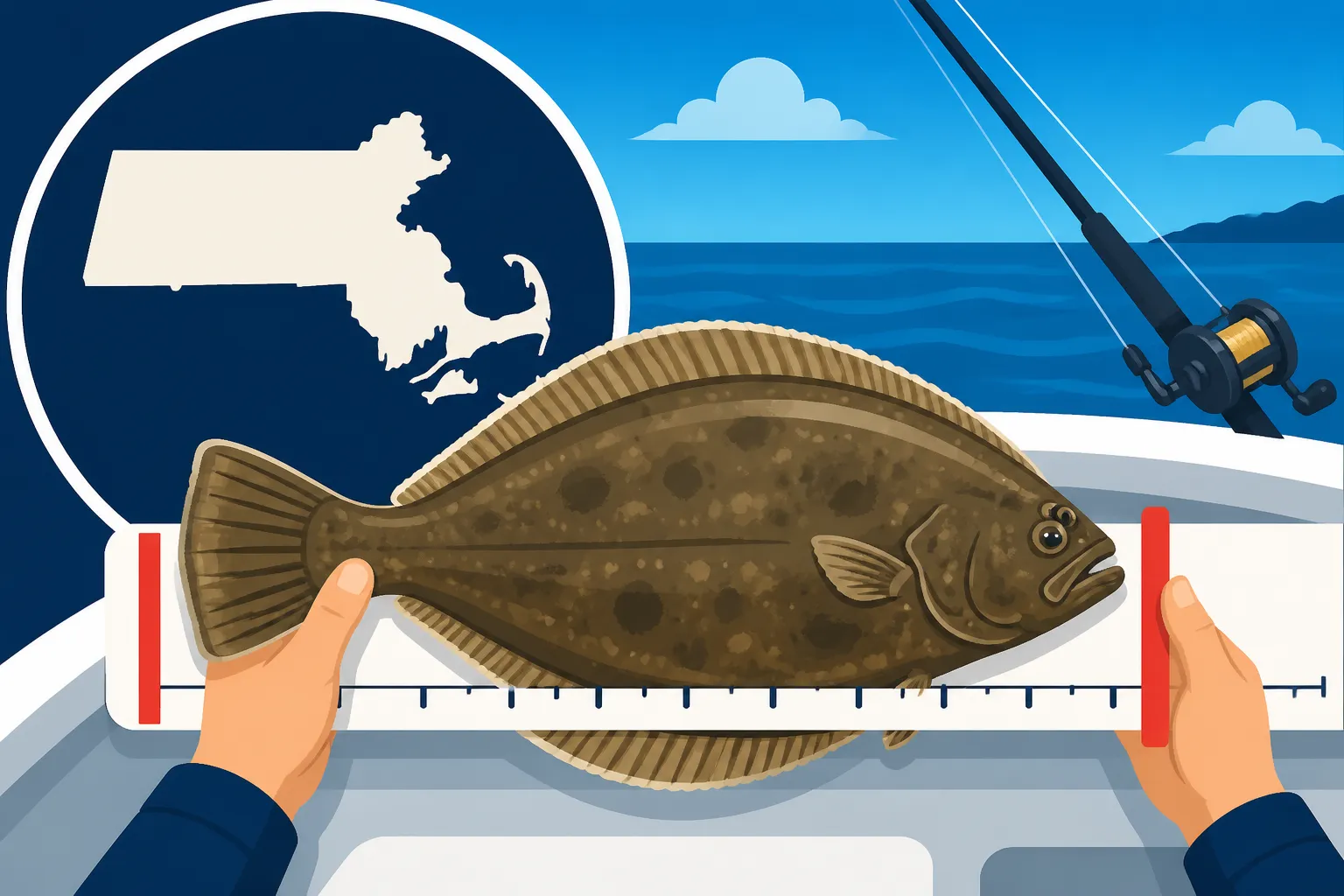
This measurement is taken from the tip of the snout to the end of the tail, with the tail pinched together to get the maximum length. It's a hard and fast rule, and it doesn't matter if you're in Nantucket Sound, Buzzards Bay, or off the coast of Gloucester – if you're fishing from a boat, that 17-inch minimum applies. Always double-check the latest regulations from the Massachusetts Division of Marine Fisheries (DMF) before you head out, as these rules can change from season to season to adapt to the health of the fish stock.
Shore Fishing vs. Boat Fishing: Are the Rules Different?
This is a common question, and it's a valid one! For some species, state regulations might indeed have different size or bag limits depending on whether you're casting from a pier, surfcasting from a beach, or fishing from a boat. These differences often arise due to variations in access to certain fish populations, the typical size of fish encountered in different zones, or even the type of gear predominantly used.
When it comes to fluke in Massachusetts, the minimum length requirement has historically seen variations between shore-based and boat-based anglers. While the boat-based minimum is generally 17 inches, it's really important to know if there's a different rule for shore anglers, as that can sometimes be a bit more lenient or have specific nuances. So, if you plan to switch from boat fishing to surfcasting, make sure to verify the specific Massachusetts Fluke Size Limits Explained for each scenario. For instance, a fluke caught from a pier might have a slightly different minimum length requirement than one caught from a private boat offshore. The reason for these differences usually comes down to biological factors and management strategies, aiming to distribute fishing pressure and protect different segments of the fish population.
How to Accurately Measure Your Fluke
So, you've caught a beautiful fluke, and you need to know if it meets that 17-inch mark. Measuring a lively fish accurately, especially on a rocking boat, can be a little tricky, but with the right tools and technique, it becomes second nature.
Essential Measuring Tools and Techniques
The most crucial tool for accurate measurement is a reliable measuring device. This could be a dedicated fish measuring board, a flexible tape measure, or even a sturdy ruler. Many anglers prefer a "bump board" or a rigid measuring tape that has a fixed end. This allows you to place the fish's snout firmly against the stop and then extend it along the length of the board. You can find a good selection of durable, waterproof measuring tools on Amazon that are perfect for boat use. Make sure whatever you use is clearly marked and easy to read, even when wet or under bright sunlight.
Here’s the step-by-step technique:
- Position the Fish: Gently lay the fluke on its side on your measuring device. Ensure its snout (the tip of its closed mouth) is against the fixed end of your bump board or the zero mark of your tape.
- Straighten the Fish: Fluke can be a bit squirmy! Gently press down on its body to ensure it's as straight as possible along the measuring surface. Avoid bending or curving the fish.
- Pinch the Tail: This is the critical part for most species, including fluke. Gently squeeze the two lobes of the tail fin together, extending it as far as it will go.
- Read the Measurement: Take your reading at the outermost tip of the pinched tail. If it hits or exceeds 17 inches, congratulations, you've got a keeper! If it falls short, it's time for a careful release.
Practicing this a few times, perhaps even on a previously caught fish you're keeping, will make you much quicker and more accurate when you're out on the water.
Handling Fluke for Measurement and Release
Proper fish handling isn't just good sportsmanship; it's vital for the survival of any undersized fish you release. A fish that's been poorly handled has a much lower chance of making it.
When you bring a fluke aboard, try to:
- Minimize Time Out of Water: Get that measurement done quickly and efficiently. Every second out of water is stressful for the fish.
- Use Wet Hands: If you need to touch the fish, wet your hands first. Dry hands can remove the fish's protective slime coat, making it vulnerable to disease.
- Support the Fish: If you're holding it, support its body horizontally. Don't hold it vertically by the jaw or tail, which can damage its internal organs or spine.
- Avoid Excessive Squeezing: Handle the fish gently. Squeezing too hard can cause internal injuries.
- Unhook Carefully: Use de-hooking tools if possible, especially if the hook is deep. Barbless hooks can also make unhooking easier and faster.
- Release Gently: Lower the fish back into the water headfirst, ensuring it's upright and able to swim away on its own power. Sometimes a gentle push forward in the water helps revive it.
These practices contribute directly to the health of the fluke population, making sure those smaller fish get a chance to grow up and contribute to future catches.
Common Measurement Mistakes to Avoid
Even experienced anglers can sometimes make simple mistakes when measuring. Being aware of these common errors can save you from potential issues or accidentally keeping an undersized fish.
Here are a few things to watch out for:
- Not Pinching the Tail: This is arguably the most frequent error. If you don't pinch the tail, you'll get a shorter measurement, potentially leading you to release a legal fish or, worse, misunderstand the true length. The "pinched tail" rule exists for a reason: to standardize the measurement.
- Measuring from the Wrong Point: Always measure from the tip of the snout. Don't start from the eye, gill plate, or any other point.
- Curving the Fish: A fluke might naturally curve its body, especially if it's thrashing. Make sure it's as straight as possible along the measuring device for an accurate reading. A good, rigid bump board helps immensely here compared to a flexible tape measure on an uneven surface.
- Ignoring the Rule: The regulations are there for a reason. Don't "eyeball" it if you're unsure. A quick, accurate measurement is always the best approach. Investing in a good quality bump board, like many available on Amazon, will make this process much easier and more reliable.
By avoiding these common mistakes, you'll ensure you're always compliant with the regulations and doing your part for conservation.
Beyond Length: Other Important Fluke Regulations in Massachusetts
While the minimum length is critical, it's just one piece of the puzzle. Massachusetts has other important rules for fluke that every boat angler needs to be aware of.
Daily Bag Limits and Possession Limits
Beyond just the size, there's also a limit to how many fluke you can keep in a single day. This is known as the "daily bag limit." For recreational anglers in Massachusetts fishing from a boat, there is typically a daily bag limit that specifies the maximum number of legal-sized fluke you can harvest per person per day. This number is set to prevent overfishing and distribute the catch more evenly among anglers.
Then there's the "possession limit," which sometimes differs. A possession limit refers to the total number of fish you can have in your possession at any given time, whether it's on your boat, in your cooler, or at home. Often, the possession limit is the same as the daily bag limit, but for some species or in certain situations, it might be higher (e.g., if you're on a multi-day trip). It's always crucial to check the current Massachusetts Division of Marine Fisheries (DMF) regulations to confirm the exact numbers for fluke, as these can change. You can find more details in our Massachusetts Saltwater Bag Limits by Species article.
| Aspect | Regulation Detail |
|---|---|
| Minimum Length | 17 inches (from tip of snout to pinched tail) when fishing from a boat. Note: Shore fishing limits may differ, always verify current DMF regulations. |
| Daily Bag Limit | Typically a set number of legal-sized fluke per angler per day. This number can vary season to season. |
| Possession Limit | Usually corresponds to the daily bag limit. Total number of legal-sized fluke an individual can have in possession. |
| Season Dates | Specific open and closed periods for fluke fishing. Fishing outside these dates, even for legal-sized fish, is prohibited. |
| Gear Restrictions | While less common for fluke specifically, general saltwater fishing gear rules apply. Check for any limitations on hooks, bait, or methods. Ensure your hooks are appropriate to minimize harm to released fish. |
| Proof of Permit | If required, ensure you have your valid Massachusetts Saltwater Recreational Fishing Permit Explained readily available, whether printed or on your phone. |
Fluke Season Dates and Closures
Just like many other fish species, fluke have specific seasons when they can be legally targeted and harvested. It's not an open-season-all-year-round kind of deal. These season dates are put in place to protect fluke during critical periods, such as spawning, or to help manage the overall population health.
Fishing for fluke outside of the designated open season, even if the fish meets the minimum length and you adhere to the bag limit, is illegal. The exact opening and closing dates for fluke season in Massachusetts can vary year to year, depending on stock assessments and management decisions by the DMF. For example, the season might typically run from late May or early June through late September or October, but these dates are subject to change. Always consult the official MassWildlife or DMF website or pick up the latest fishing regulations pamphlet before your trip. You can also check our guide on Massachusetts Fluke Season Opening Date for 2026 for more general information.
Gear Restrictions and Best Practices
While fluke fishing generally doesn't come with a lot of highly specific gear restrictions beyond general saltwater rules, a few best practices can make you a more effective and responsible angler.
- Hook Type: While not always mandated, using circle hooks when fishing with natural bait can reduce gut-hooking, improving the survival rate of released fish. This is especially important for any undersized fluke you'll be sending back to grow bigger.
- Leader Material: Fluke have surprisingly sharp little teeth, and they can abrade lighter monofilament leaders. Fluorocarbon leaders offer better abrasion resistance and are less visible in the water, which can be an advantage.
- Weight for Drifting: When drift fishing for fluke, which is a very popular and effective method from a boat, having a variety of sinker weights is key. You'll need to adjust your weight based on current, depth, and wind speed to keep your bait or lure near the bottom where fluke reside. Many anglers swear by a "hi-lo" rig or a basic bucktail jig tipped with bait.
- Appropriate Tackle: Using tackle that's suitable for the size of fluke you expect to catch is also a good practice. While fluke are not typically huge fighters, having a rod with enough backbone and a reel with a smooth drag ensures you can land them efficiently without unnecessarily tiring out the fish or breaking your gear. You can explore more techniques in Drift Fishing Techniques for Summer Flounder.
- Respect Marine Life: Always be mindful of other marine life. Avoid disturbing seabirds, seals, or other species, and never discard trash or fishing line overboard. What seems like a small piece of line can be deadly for marine animals.
By following these best practices, you're not just fishing; you're actively participating in the stewardship of Massachusetts' marine resources.
Responsible Angling and Conservation Efforts
Every time we cast a line into the rich waters of Massachusetts, we become part of a larger ecosystem. Responsible angling is more than just following the rules; it's about contributing to the long-term health and abundance of our cherished fish species.
Why Conservation of Fluke is Crucial
The health of our fluke population directly impacts the quality of fishing for everyone. Fluke, or summer flounder, are a vital part of the marine food web and a highly sought-after species by both recreational and commercial anglers. If we don't actively work to conserve them, we risk declining stocks, stricter regulations, and ultimately, a less enjoyable fishing experience for all.
Conservation efforts ensure that fluke have sufficient numbers to reproduce, grow, and maintain a healthy genetic diversity. This helps them withstand environmental pressures and provides a stable fishery year after year. Every angler who measures carefully, adheres to bag limits, and practices proper catch-and-release techniques is playing an active role in this crucial conservation work. It’s a shared responsibility that ensures future generations can enjoy the same fantastic opportunities for fluke fishing that we do. Our Massachusetts Saltwater Fishing Seasons guide can give you an overview of how seasons play into this.
Reporting and Staying Informed
Knowledge is your most powerful tool on the water. Regulations can, and do, change. What was true last year might be slightly different this season. It's your responsibility as an angler to stay up-to-date with the latest information.
- Official Sources: Always refer to the official Massachusetts Division of Marine Fisheries (DMF) website or MassWildlife for the most current regulations. They typically publish an annual fishing regulations pamphlet that summarizes all the rules. You might even find a digital version that you can access on your phone while out on the boat. Having a copy of the Massachusetts Fishing Regulations Pamphlet, Explained is always a good idea.
- Sign Up for Alerts: Many state fisheries departments offer email or text alerts for regulation changes. Signing up for these can be a convenient way to stay in the loop.
- Report Violations: If you witness someone openly violating fishing regulations (e.g., keeping undersized fish, exceeding bag limits, or fishing out of season), it's important to report it. These actions harm the resource we all value. You can usually find contact information for environmental police or fisheries enforcement on the DMF website. Reporting helps deter illegal activities and protects the fishery for everyone else.
Contributing to Sustainable Fisheries
Beyond just following the rules, there are other ways you can contribute to sustainable fisheries in Massachusetts.
- Support Conservation Organizations: Many non-profit organizations are dedicated to marine conservation and sustainable fishing practices. Supporting them, either through membership or donations, helps fund research, habitat restoration, and advocacy efforts.
- Participate in Citizen Science: Sometimes, fisheries managers ask anglers to participate in data collection, such as tagging programs or voluntary harvest reporting. Your involvement can provide valuable information that helps scientists make better management decisions.
- Advocate for Healthy Habits: Educate other anglers, especially newer ones, on the importance of regulations and proper handling techniques. Share your knowledge of How to Catch Fluke in Massachusetts responsibly. Leading by example makes a huge difference.
- Minimize Environmental Impact: Beyond fishing itself, think about your broader impact. Properly dispose of all trash, use biodegradable products when possible, and maintain your boat to prevent spills or pollution. Our waters are a precious resource, and it's up to all of us to protect them.
By embracing responsible angling, we ensure that the joy of fluke fishing from a boat in Massachusetts remains a cherished activity for generations to come.
Disclaimer
This article is for general informational purposes only and does not constitute professional advice. Laws, prices and regulations vary by location and change over time. Consult a qualified professional for guidance on your specific situation.