Invasive Fish Species in Massachusetts Waters
There's nothing quite as disheartening for a Massachusetts angler as casting a line into a familiar pond or river, only to realize the ecosystem you love is under threat from intruders. Invasive fish species can wreak havoc on our precious native populations and the delicate balance of our waterways, often going unnoticed until the damage is severe. This guide is here to help you understand what these unwanted guests are, why they're such a problem, how to identify them, and most importantly, what you can do to protect the incredible fishing heritage we cherish here in Massachusetts.
Understanding Invasive Fish Species in Massachusetts
When we talk about invasive fish, we're not just referring to any fish that's not native to a particular spot. The term "invasive" carries a much heavier meaning, implying a significant threat to our environment. It's a real concern, and understanding the nuances is the first step in becoming a responsible steward of our waters.
What Makes a Fish "Invasive"?
An invasive species is a non-native organism that causes or is likely to cause economic or environmental harm, or harm to human health. Think about that for a moment: it's not enough for a fish to simply be "from somewhere else." To be truly invasive, it needs to be actively detrimental. Many non-native species are introduced to new areas and simply coexist without issue, sometimes even becoming part of the local fishery. However, a fish earns its "invasive" title when it outcompetes native species for food and habitat, introduces diseases, disrupts food webs, or alters the physical environment. For example, a species like the carp, though long established, continues to be considered invasive due to its destructive feeding habits that muddy waters and uproot vegetation.
The distinction between a non-native fish and an invasive one is critical. A brown trout, while not native to North America, is widely stocked and managed in Massachusetts and generally doesn't exhibit the aggressive, ecosystem-altering behaviors that would label it "invasive" in most contexts here. Contrast that with something like the northern snakehead, which can rapidly colonize new waters, decimate native fish populations, and has few natural predators in our local waterways. This isn't just an academic definition; it drives the management strategies and the urgency of preventing their spread.
Ecological Impacts on Native Fish and Habitats
The consequences of invasive fish species gaining a foothold in Massachusetts waters can be devastating. Our native fish, like brook trout, yellow perch, and various bass species, have evolved over millennia to thrive in specific conditions and interact within established food chains. When an invasive species arrives, it often throws this delicate balance into chaos. For instance, some invasive fish are voracious predators that directly prey on native fish, their eggs, or their fry. Others are highly competitive, outcompeting native species for limited food sources or prime spawning grounds. Imagine a scenario where a native species struggles to find enough insects or small baitfish because an invasive species is simply more efficient at foraging, leaving the native fish malnourished and less capable of reproducing.
Beyond direct competition and predation, invasive fish can physically alter aquatic habitats. Common carp, for example, are notorious bottom feeders that stir up sediment, increasing turbidity and making it harder for sight-feeding fish to find food, and for aquatic vegetation to grow. This loss of vegetation impacts everything from invertebrate populations (a food source for many fish) to cover for juvenile fish. Diseases can also be introduced, to which native fish have no natural immunity, leading to widespread die-offs. The ripple effects can be observed throughout the entire ecosystem, affecting bird populations that rely on fish, and even water quality. Our goal is to protect the vibrant biodiversity of Massachusetts, and invasive species pose a significant threat to that vision.
Common Invasive Fish Species in Massachusetts
While Massachusetts has done a decent job of keeping some of the more infamous invasive species at bay compared to other states, we do have our share of concerns. It's vital for every angler to be aware of these species and their characteristics, not just to avoid spreading them, but also to report them if encountered. Knowing what you're looking for can make all the difference.
Northern Snakehead: A Growing Threat
The northern snakehead (Channa argus) is one of the most feared invasive fish, and for good reason. Originally from Asia, these fish are incredibly adaptable and possess several traits that make them particularly dangerous to native ecosystems. They are known as "frankenfishes" by some due to their elongated bodies, broad heads with snake-like patterns, and sharp teeth. What makes them truly alarming is their ability to breathe air and survive out of water for short periods, even "walking" short distances over land to find new water bodies, especially after heavy rains. Imagine a fish literally moving from one pond to another!
If northern snakehead were to establish widespread populations in Massachusetts, the implications would be severe. They are aggressive, top-tier predators that will eat almost any other fish, as well as amphibians and even small mammals. They have no natural predators here, and their rapid reproductive rate means populations can explode quickly. This would put immense pressure on native fish populations, potentially leading to local extinctions and a drastic reduction in angling opportunities for species we know and love. While sightings in Massachusetts have been isolated and generally contained, vigilance is paramount. If you ever catch one, do not release it. Kill it immediately, freeze it, and report it to MassWildlife right away. This is one species we absolutely cannot afford to let get a foothold.
Carp Species: Common and Destructive
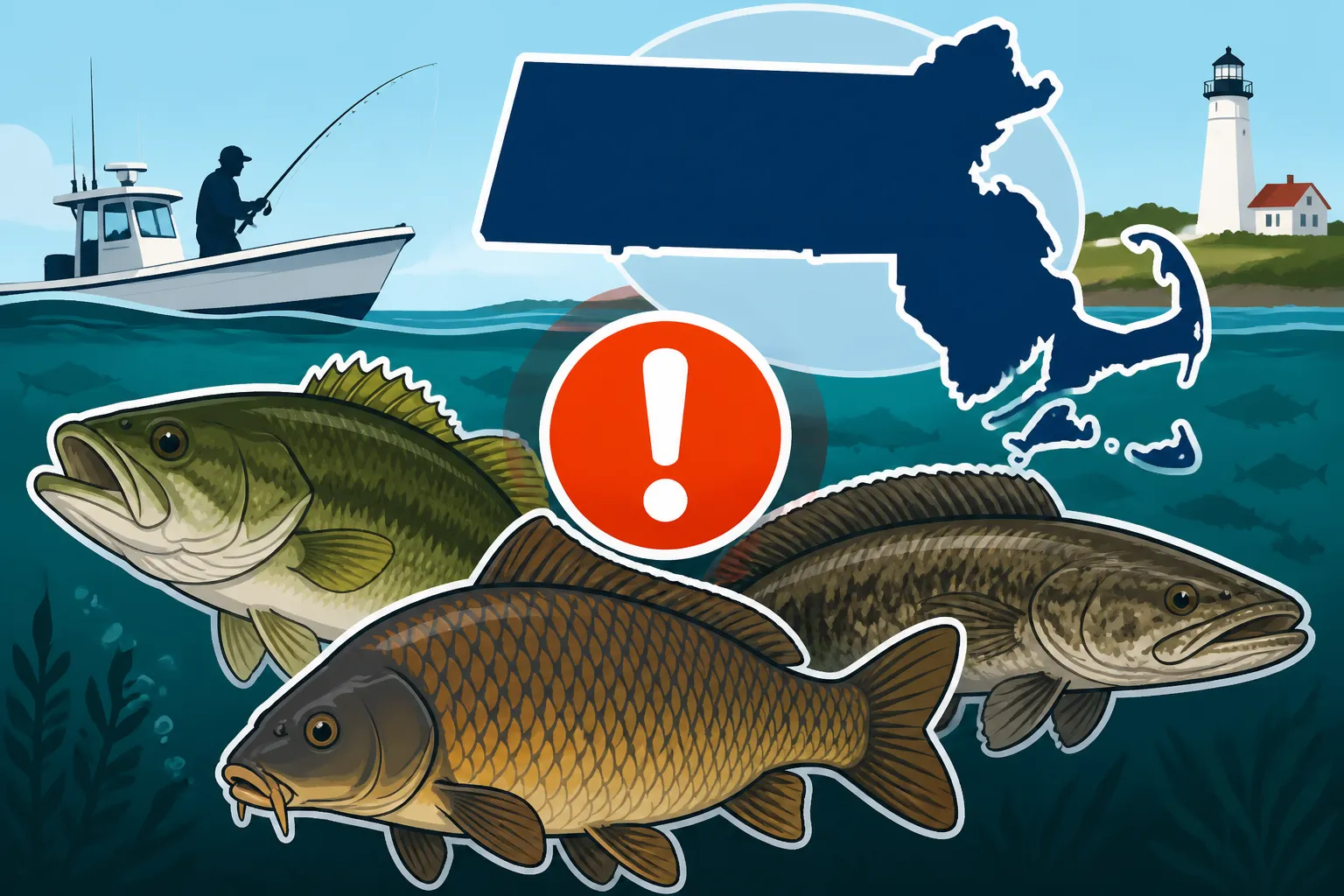
When people talk about "carp" in Massachusetts, they are usually referring to the common carp (Cyprinus carpio), a species that has been present in North American waters for well over a century. While long-established, it is still classified as an invasive species due to its profound ecological impact. These large, robust fish are easily identifiable by their large scales, two barbels on each side of their upper jaw, and generally bronze or golden coloring. They are bottom-feeders, often rooting around in the substrate to find insects, crustaceans, and plant matter.
This bottom-feeding habit is precisely why common carp are so destructive. As they churn up the bottom, they release sediment and nutrients into the water column, leading to increased turbidity (cloudiness) and stimulating algal blooms. This makes the water murky, reduces sunlight penetration for aquatic plants, and can lower dissolved oxygen levels, all of which are detrimental to native fish and other aquatic life. The destruction of aquatic vegetation by carp also removes critical habitat and food sources for many species. While some anglers enjoy targeting carp for their fighting ability, it's important to understand the significant impact they have on the health of our fishing waters. Catching and removing them can actually be a positive contribution to ecosystem health. Other carp species, like Grass Carp (which can be sterile and used for aquatic vegetation control in some managed ponds) and various "Asian carp" species (like Bighead and Silver Carp), are also a concern, though widespread populations of the latter have not yet become established in Massachusetts.
Goldfish and Rudd: Pet Escapes and Their Impact
You might be surprised to learn that common goldfish (Carassius auratus) and Rudd (Scardinius erythrophthalmus) are also considered invasive fish species in Massachusetts. These often end up in our ponds and rivers not through intentional stocking, but usually as discarded pets or bait. It’s a classic example of how seemingly harmless actions can have significant ecological consequences. Goldfish, often released from backyard ponds or aquariums, can grow to surprisingly large sizes in the wild and revert to a dull, olive-brown color, making them hard to distinguish from native carp species. Rudd are European minnows that were introduced as baitfish and quickly established populations in many areas. They are typically bronze or silvery with reddish fins, especially the pectoral, pelvic, and anal fins.
Once established, both goldfish and rudd can outcompete native panfish like yellow perch and sunfish for food and habitat. Goldfish, like carp, are bottom-feeders that can stir up sediment, contributing to water quality issues. Rudd are particularly problematic because they are prolific breeders and primarily consume aquatic vegetation and insects, competing directly with native forage fish and disrupting the base of the food web. Their ability to hybridize with golden shiners, a native baitfish, also poses a genetic threat, potentially diluting the gene pool of native species. This highlights the critical message: never release bait or unwanted pets into local waterways. What seems like a kind gesture can inadvertently introduce a new invasive problem.
| Invasive Fish Species | Key Identification Features | Primary Ecological Impact | Action if Caught |
|---|---|---|---|
| Northern Snakehead | Snake-like head, long dorsal fin, sharp teeth, air breather, patterned body. | Aggressive predator, displaces natives, can "walk" on land. | DO NOT RELEASE. Kill, freeze, report to MassWildlife. |
| Common Carp | Large scales, 2 barbels on upper jaw, bottom-feeder, often bronze/gold. | Increases water turbidity, destroys aquatic vegetation, outcompetes natives. | Harvest (if legal), do not return to original water body if moving elsewhere. |
| Goldfish | Can grow large, dull olive/brown in wild, no barbels, often mistaken for carp. | Outcompetes native panfish, contributes to turbidity, genetic threat via hybridization. | Harvest (if legal), do not release into new waters. |
| Rudd | Silvery/bronze body, reddish fins (especially pectoral/pelvic/anal), small mouth. | Outcompetes native forage fish, disrupts food web, hybridizes with golden shiners. | Harvest (if legal), do not release into new waters. |
Preventing the Spread of Invasive Fish Species
The fight against invasive species is largely a battle of prevention. Once an invasive species establishes a breeding population in a new water body, it's incredibly difficult, and often impossible, to fully eradicate it. This is why every angler, boater, and outdoor enthusiast plays a critical role in stopping the spread. It's not just about what the state does; it's about our collective responsibility.
Clean, Drain, Dry: Your First Line of Defense
The "Clean, Drain, Dry" protocol is probably the most important habit any angler or boater can adopt. It’s a simple set of steps that, if followed diligently, can dramatically reduce the risk of spreading aquatic invasive species (AIS), including fish, plants, and microscopic organisms, from one water body to another.
First, Clean your boat, trailer, and all fishing gear. Before leaving any launch area, remove all visible plants, mud, and debris. This includes fishing lines, nets, waders, and even your tackle box. Don't forget anchors and anchor lines, where weeds and tiny organisms can easily cling. For extra diligence, consider using a stiff brush and hot, soapy water if you’re moving between different water bodies, especially if one is known to have invasive issues. You can find robust scrub brushes and dedicated boat cleaning solutions on platforms like Amazon that make this task easier and more effective.
Second, Drain all water from your boat, livewells, bait buckets, and bilge. This means pulling the plug on your boat before you leave the ramp and making sure all compartments are completely empty. Water can harbor juvenile fish, eggs, larvae, or microscopic hitchhikers. This is particularly important for bait buckets; never transport water from one fishing spot to another, especially if you plan on using live bait. Dispose of unused bait properly – either in a trash can or on land away from any water body, never dump it back into the water.
Finally, Dry everything thoroughly. If possible, allow your boat and gear to dry completely for at least 5 days before using it in another water body. If that's not feasible, a shorter dry time combined with thorough cleaning is still better than nothing. Sunlight and desiccation are powerful tools against many aquatic organisms. This simple regimen, though it might add a few minutes to your trip, is the single most effective way you can personally contribute to preventing the spread of these harmful invaders.
Proper Bait Disposal and Pet Releases
Beyond cleaning your gear, how you handle bait and unwanted pets is a huge part of prevention. This often overlooked aspect is a major pathway for invasive species introductions. Many of the goldfish and rudd populations we see in Massachusetts today started as someone's discarded pet or leftover bait.
Never, ever release live bait into any water body other than the one from which it was originally caught, and even then, it's often best to simply dispose of it. The bait you buy from a tackle shop, or even bait you catch yourself from one pond, could unknowingly carry fish eggs, juvenile invasive fish, or pathogens that are alien to a new ecosystem. Once you're done fishing, leftover live bait should be put in the trash, composted, or frozen for future use if it's legal to do so and safe for your specific species. The small inconvenience of proper disposal vastly outweighs the potential environmental damage of an accidental introduction.
The same strict rule applies to aquarium fish and plants. That goldfish you've had for years might seem harmless, but releasing it into a local pond is essentially playing ecological roulette. It could introduce diseases, grow to an enormous size, and outcompete native species, as we discussed with goldfish and rudd. If you have an unwanted pet fish, contact a local pet store, an educational institution, or a humane society for options, but never, ever release it into the wild. Educating friends and family about this critical responsibility is also a huge part of protecting our Massachusetts Freshwater Fishing License Costs and Rules and keeping our waters healthy for everyone.
Identifying and Reporting Invasive Fish
Knowing what to look for and who to tell when you spot something unusual is crucial in the fight against invasive species. Early detection is often the only chance we have at containing or even eradicating a new invasion. Don't underestimate the power of your keen angler's eye!
Key Identification Features to Watch For
Many invasive fish can look similar to native species, which is why careful observation is key. It's not always about size or color, but often subtle morphological differences or behavioral traits. For instance, the northern snakehead has a distinct, elongated body and a very prominent, long dorsal fin running almost the entire length of its back, coupled with its unique, almost reptilian head shape. Contrast this with our native bowfin, which can look similar but has a shorter, rounded anal fin and a distinctive black spot at the base of its tail. Having a good field guide or a reliable app on your phone can be invaluable when you’re out on the water. Many excellent identification resources are available, and you can even find comprehensive fish identification guides on Amazon that are waterproof and easy to carry in your tackle box.
For carp species, pay attention to the barbels around their mouths – common carp have two pairs, while many native species do not. Goldfish, as mentioned, can be tricky once they revert to their wild coloring, but they lack barbels and often have a more rounded body profile than native suckers. Rudd are often distinguished by their reddish fins. When you catch something that looks "off," take a moment to look at its mouth, fin placement, body shape, and coloration. Don't rush to release it if you have any doubts. Take a clear photo from multiple angles, especially showing its head and fins, before making a decision. This evidence can be incredibly helpful for biologists. Remember, your detailed observation could be the first critical warning sign.
How and When to Report a Sighting
If you suspect you’ve caught an invasive fish, particularly something as concerning as a northern snakehead, your immediate action is paramount. The first rule for a snakehead is: Do NOT release it. Kill it humanely, bag it, and freeze it. Then, immediately report your sighting to MassWildlife. You can typically find their contact information on their official website or within the Massachusetts Fishing Regulations Pamphlet, Explained. They will want details about where and when you caught it, as well as clear photographs. The exact location is incredibly important for their rapid response teams.
For other invasive species like carp, goldfish, or rudd, while you don't necessarily need to kill and freeze every one you catch (unless directed by specific regulations), it's generally encouraged to harvest them if allowed and if you intend to consume them or dispose of them properly. Do not transport them live to another water body. If you notice a sudden surge in a particular non-native species in a new area, or see something truly unusual, it's always best to err on the side of caution and report it to MassWildlife. This proactive reporting helps conservation agencies monitor populations and deploy targeted management strategies. Your vigilance is a key component in protecting Massachusetts Recreational Fishing Rules and Bag Limits and ensuring healthy fisheries for future generations.
Management and Control Efforts in Massachusetts
Massachusetts wildlife agencies are actively working to manage and prevent the spread of invasive aquatic species. These efforts involve a multi-pronged approach, including monitoring, public education, and sometimes direct intervention. As anglers, understanding these efforts can empower us to better participate in conservation.
State-Led Initiatives and Research
MassWildlife, along with other state and federal partners, is at the forefront of invasive species management. Their work includes extensive monitoring programs, where they survey water bodies to detect new invasions or track the spread of existing ones. This often involves electrofishing, netting, and citizen science programs. When a new invasive species, like the northern snakehead, is detected, rapid response protocols are activated. These can include intensive netting, trapping, or even targeted rotenone treatments in small, contained ponds to try and eradicate the population before it spreads. This is a massive undertaking, requiring significant resources and scientific expertise.
Research is another critical component. Scientists are continually studying the biology and behavior of invasive species to better understand their impacts and develop more effective control methods. This includes looking into population dynamics, reproductive rates, and potential vulnerabilities. Public education campaigns, like the "Clean, Drain, Dry" initiative, are also heavily supported by the state to inform anglers and boaters about their role in prevention. These efforts are often funded through revenue from fishing licenses and conservation stamps, underscoring why it's so important to purchase your Massachusetts Fishing License Guide and adhere to all regulations. Every little bit helps support the vital work of protecting our natural resources.
The Role of Anglers in Active Management
While state agencies lead large-scale management, individual anglers have a profound impact, not just through prevention but through active participation. Think of yourself as an informed sentinel for our waterways. When you're out fishing, you're not just enjoying a pastime; you're also an extra set of eyes and ears.
Firstly, adhere strictly to all fishing regulations, especially those regarding bait use and species limits. Understanding the specific rules for different water bodies, like those for Quabbin Reservoir Fishing Permits and Rules in Massachusetts or Wachusett Reservoir Fishing Access Rules in Massachusetts, can prevent accidental introductions or spread. If a particular invasive species is listed as "harvest highly encouraged" or "do not release," take that seriously. In some cases, like with common carp or rudd, actively targeting and removing these fish can actually help reduce their numbers and alleviate pressure on native populations. It’s a tangible way to contribute to ecosystem health.
Furthermore, being an advocate for responsible fishing practices among your peers is invaluable. Share the "Clean, Drain, Dry" message, explain the dangers of releasing bait or aquarium pets, and encourage others to report suspicious sightings. The more eyes we have on the water, the better our chances of protecting the incredible diversity of fish species that call Massachusetts home. Your commitment to these principles is what truly safeguards our shared natural heritage.
Disclaimer
This article is for general informational purposes only and does not constitute professional advice. Laws, prices and regulations vary by location and change over time. Consult a qualified professional for guidance on your specific situation.