Why striped bass chase menhaden
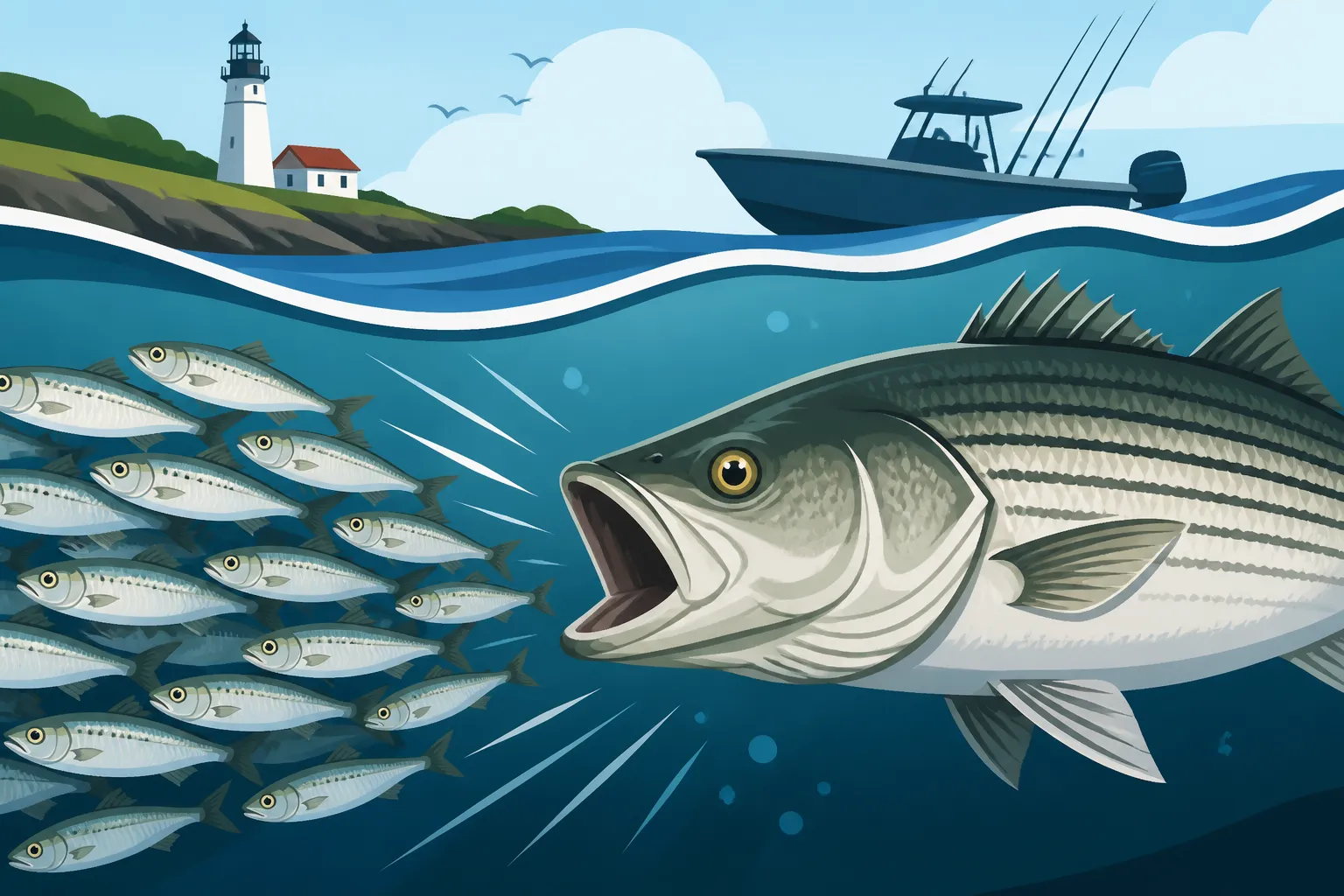
If you've spent any time fishing Massachusetts waters, you've likely seen it: the surface of the ocean erupting into a frothing chaos, gulls screaming overhead, and the unmistakable flashes of silver as baitfish scatter in terror. It's a striped bass blitz, and more often than not, the unlucky stars of this feeding frenzy are menhaden, those oily, silvery baitfish that seem to drive stripers absolutely wild. But why are striped bass so utterly fixated on menhaden? This guide will dive deep into the fascinating predator-prey relationship between striped bass and menhaden, helping you understand this crucial dynamic in our local fishing scene.
The Menhaden Mystique: Why Striped Bass Can't Resist These Baitfish
There’s a reason why when menhaden show up in numbers, the striped bass aren't far behind. It’s not just about convenience; it’s about survival, energy, and a classic case of a predator honing in on an incredibly valuable food source. Anglers throughout the Commonwealth eagerly await the arrival of these baitfish each spring and lament their departure in the fall, understanding that where the "bunker" (as menhaden are often called) go, the stripers follow.
A Calorie-Rich Feast
Imagine you're a striped bass, a powerful migratory fish that travels hundreds, sometimes thousands, of miles along the coast each year. You're constantly burning energy, growing, and getting ready to spawn. What do you need? Calories, and lots of them! This is where menhaden truly shine as a prey item. They are incredibly oily and packed with fat and protein, making them a high-octane meal for any predator. When a school of menhaden moves into an area, it's like a buffet opening up for the striped bass.
For a striper, expending energy to chase down smaller, less nutritious baitfish might not be worth the effort. But a dense school of menhaden offers a significant caloric reward for a comparatively lower energy output, especially when they can be corralled and attacked efficiently. This rich food source directly contributes to the robust growth and health of the striped bass population in our waters. Understanding this caloric imperative is key to grasping When striped bass arrive in Massachusetts waters and When striped bass leave Massachusetts in the fall.
Schooling Behavior and Vulnerability
Menhaden are well-known for their incredibly dense schooling behavior. They pack themselves together in vast, shimmering masses, sometimes stretching for acres across the surface of the water. This is a defensive mechanism, an attempt to confuse predators by presenting a single, overwhelming target rather than individual fish. However, this strategy also has a significant drawback: it makes them incredibly vulnerable to coordinated attacks from larger predators like striped bass.
When a school of menhaden is pushed to the surface or into a tight ball, it becomes a literal wall of fish. Striped bass can tear through these schools, gulping down multiple fish with each pass. The sheer abundance and concentration of menhaden mean that stripers don't have to work as hard to find individual meals. They just need to find the school, and the feast begins. This vulnerability is a major reason why menhaden are such a favored food source – they're relatively easy to catch in bulk once located.
The Menhaden's Life Cycle and Massachusetts Presence
Menhaden are migratory, moving north into New England waters, including Massachusetts, during the warmer months and retreating south as temperatures drop. Their arrival in spring often coincides almost perfectly with the return of large migratory striped bass to our shores. It’s a natural rhythm that dictates much of our fishing season. As the waters warm, menhaden move into bays, estuaries, and along the coastline, bringing the stripers with them.
From late spring through fall, menhaden are a constant presence, fueling the striped bass fishery. Their availability dictates where stripers will hold, feed, and often determines the overall health and size of the fish we encounter. Their departure in late fall signals a change in the primary diet of resident stripers and often marks the end of prime fishing for many anglers. This cyclical presence makes understanding menhaden patterns essential for successful Striped Bass Fishing in Massachusetts.
The Art of the Hunt: How Striped Bass Attack Menhaden Schools
Witnessing a striped bass blitz on menhaden is one of the most exciting and visually spectacular events in Massachusetts fishing. It's not just random feeding; it's often a highly coordinated and strategic hunt, honed by millions of years of evolution. The sheer power and speed of these predators as they tear through a school of baitfish are something to behold.
Coordinated Predation
Striped bass don't usually hunt menhaden alone when larger schools are present. They often work together, particularly larger fish, to herd and trap the bait. Imagine a pack of wolves circling a flock of sheep – it's a similar strategy. Stripers will often push menhaden schools towards the surface, into shallow water, or against a natural barrier like a jetty or shoreline. This makes the bait even more concentrated and easier to pick off.
Different stripers might take on different roles: some might charge through the middle to break up the school, while others patrol the perimeter, picking off stragglers. The result is a chaotic, thrilling spectacle where the water churns, and menhaden leap frantically from the water in a desperate attempt to escape. For anglers, this means opportunities to cast into the heart of the action, often with immediate results.
Surface Blitzes and Subsurface Ambush
The most iconic and visually stimulating attacks are the surface blitzes. This is when striped bass drive menhaden to the surface, causing the water to boil and erupt. Birds like gulls and terns often join the fray, diving into the melee from above, signaling the action to anglers from a distance. These blitzes can last minutes or hours, moving across vast areas as the stripers chase the frantic bait.
However, not all menhaden attacks happen on the surface. Striped bass are also adept at subsurface ambush. When menhaden schools are holding deeper, perhaps in a channel or over a hum, stripers will still target them. The signs might be more subtle – a quick flash on the sonar, a slight ripple on the surface indicating fish breaking below, or simply finding a concentration of menhaden in a deeper hole. Anglers need to be prepared for both scenarios, as How to Catch Striped Bass From the Surf in Massachusetts might differ from targeting deeper schools from a boat.
The Role of Current and Structure
Just like any good hunter, striped bass use their environment to their advantage. Strong currents can be a powerful ally in herding menhaden. As baitfish struggle against a strong tide, they become more vulnerable and concentrated, making them easier targets for waiting stripers. Rips, eddies, and current seams are prime ambush points where stripers will position themselves, waiting for menhaden to be swept by.
Natural and artificial structures also play a huge role. Points of land, rocky jetties, bridge pilings, and even submerged wrecks can act as barriers or funneling points, allowing stripers to pin menhaden against them. Think of the way stripers will push bait against the walls of the Cape Cod Canal Fishing Guide for Massachusetts Anglers, or how they corner them in the tight corners of Boston Harbor. Understanding these environmental factors can help you predict where and when a menhaden blitz might occur, providing valuable insight into Best Tides for Striped Bass Fishing in Massachusetts.
Angler's Advantage: Mimicking Menhaden for Striped Bass Success
As anglers, our goal is to put ourselves in the best possible position to catch striped bass. And when stripers are keyed in on menhaden, the best way to do that is to "match the hatch" – to present a lure or bait that looks, acts, and even smells like a menhaden. This approach drastically increases your chances of success, turning a chaotic feeding frenzy into a prime fishing opportunity.
Matching the Hatch: Lures and Baits
When striped bass are focused on menhaden, they become incredibly selective. Throwing a tiny sand eel imitation into a school of 10-inch bunker won't often cut it. You need something that mirrors the size, profile, and action of a menhaden.
Here are some go-to options:
- Soft Plastic Swimbaits: These are arguably the most versatile and effective menhaden imitations. They come in various sizes and colors (silver, white, olive, and chartreuse are popular), often with paddle tails that provide a realistic swimming action. Brands like Tsunami, Albie Snax, and even larger Slug-Go style baits can be deadly. You can find a huge selection of these on Amazon.
- Topwater Plugs (Poppers and Walk-the-Dogs): When stripers are driving menhaden to the surface, a topwater lure is exhilarating. Poppers create a loud "blop" and splash, mimicking a struggling baitfish, while walk-the-dog lures glide side-to-side, imitating a wounded menhaden trying to escape. Again, Amazon offers a wide array of options for different conditions.
- Metal Lip Swimmers and Glide Baits: These subsurface lures have a realistic profile and action, often diving a few feet below the surface. They are excellent for stripers feeding just below the commotion or in slightly deeper water.
- Live Menhaden: Nothing beats the real thing! If you can catch live menhaden with a cast net or Sabiki rig, they are unparalleled bait. Present them on a live-lining rig with a circle hook. This is a highly effective, albeit sometimes challenging, method. While you can't buy live bait on Amazon, you can certainly find Sabiki rigs and other live bait gear there. This technique is similar to Live-Lining Eels for Massachusetts Striped Bass, but with a different baitfish.
Remember, the goal is not just to match the size and color, but also the vibe of a struggling menhaden.
| Lure Type | Best Conditions / Behavior | Pros | Cons |
|---|---|---|---|
| Soft Plastic Swimbaits | Subsurface feeding, edges of blitzes, scattered bait | Versatile, realistic action, various sizes/colors | Can be torn by toothy fish (bluefish) |
| Topwater Poppers | Aggressive surface blitzes, low light | Exciting visual strikes, loud commotion | Less effective if fish aren't on surface |
| Walk-the-Dog Lures | Less aggressive surface feeding, calmer water | Subtle, realistic wounded baitfish imitation | Requires specific retrieve technique |
| Metal Lip Swimmers | Subsurface feeding, strong currents, deeper bait | Excellent swimming action, casts well | Can be expensive, may require tuning |
| Jigs (Bucktails) | Deeper water, when menhaden are schooled deep | Very effective, durable, versatile retrieve | Less realistic profile than swimbaits |
Techniques for Targeting Menhaden-Chasing Stripers
Once you’ve selected your lure, how do you present it effectively?
- Casting into a Blitz: When you see stripers actively feeding on the surface, resist the urge to cast directly into the middle of the school. Often, the bigger fish are lurking on the fringes, picking off disoriented bait. Cast beyond the activity and retrieve your lure through the edges, allowing it to mimic an escaping menhaden. A fast, erratic retrieve often triggers strikes.
- Subsurface Attacks: If you suspect menhaden are deeper (perhaps you see birds diving but no surface breaks, or you're seeing bait on your sonar), jigging with a heavy soft plastic swimbait or a bucktail jig can be incredibly effective. Let your lure sink to the depth of the bait and retrieve with a series of lifts and drops, mimicking a wounded menhaden. This often applies to Jigging Techniques for Cape Cod Canal Stripers when they're feeding on menhaden in the deep channel.
- Chasing the Blitz: Striped bass blitzes can move quickly. Be ready to reposition your boat or move along the shore to stay with the action. Pay attention to bird activity – they are your best indicators of where the feeding is occurring.
Understanding the Menhaden Movement
Your success often hinges on finding the menhaden first. Keep an eye out for:
- Bird Activity: Gulls, terns, and ospreys diving or circling are huge giveaways. They often know where the bait is before you do.
- Surface Disturbance: Look for subtle ripples, oily slicks (menhaden are very oily), or actual flashes of bait breaking the surface.
- Bait Schools on Sonar: If you're on a boat, your fish finder is your best friend. Large, dense clouds on the screen usually indicate menhaden.
- Local Reports: Keep an ear to the ground. Fellow anglers and local bait shops are often the first to know Best time of year to catch striped bass at the Cape Cod Canal and where the menhaden have shown up.
By understanding how menhaden move and behave, you can anticipate where the stripers will be and position yourself for the best possible fishing. This knowledge is fundamental for effective How to Catch Striped Bass in Massachusetts.
Ecological Balance: The Importance of Menhaden Beyond Bait
While we anglers might see menhaden primarily as striped bass food, their ecological importance extends far beyond just filling a striper's belly. They are a critical component of the marine ecosystem and play a vital role in maintaining the health of our coastal waters. Protecting these baitfish is crucial for the future of fishing in Massachusetts.
Menhaden as a Keystone Species
Menhaden are often referred to as a "keystone species" because of their disproportionately large impact on their environment relative to their abundance. They occupy a critical position in the food web, acting as both filter feeders and a primary food source for a vast array of predators.
- Filter Feeders: Menhaden feed on phytoplankton and zooplankton, filtering large quantities of water in the process. This helps to clean the water, reducing harmful algal blooms and improving overall water quality in bays and estuaries.
- Forage for Everything: Besides striped bass, menhaden are a crucial food source for bluefish, tuna, whales, dolphins, seals, and numerous bird species. A decline in menhaden populations can have cascading effects throughout the entire ecosystem, impacting everything from commercial fisheries to marine mammal health. Think of it this way: if the base of the food chain is compromised, everything above it suffers.
Conservation and Management
Given their immense ecological importance, the conservation and proper management of menhaden populations are paramount. Efforts are continuously made to ensure sustainable harvests and protect these vital baitfish from overfishing, both for bait and other industrial uses. Healthy menhaden populations mean healthy striped bass populations, which in turn means better fishing for all of us.
When you see a healthy school of menhaden being blitzed by stripers, you're witnessing a natural, thriving ecosystem at work. It's a reminder of the intricate connections within our marine environment and why careful stewardship of all species, even the humble menhaden, is so crucial. Supporting sustainable fishing practices and understanding bag limits, like those described in Massachusetts Striped Bass Size and Bag Limit, helps ensure that both striped bass and their primary forage remain abundant for generations to come.
Disclaimer
This article is for general informational purposes only and does not constitute professional advice. Laws, prices and regulations vary by location and change over time. Consult a qualified professional for guidance on your specific situation.