Tip-Up Fishing for Pickerel and Perch in Massachusetts
The biting cold of a Massachusetts winter doesn't have to mean packing away your fishing gear. In fact, for many of us, it ushers in one of the most exciting seasons: ice fishing! If you've ever felt frustrated by the inactivity of jigging in frigid temperatures, or simply want a relaxing yet effective way to catch fish, tip-up fishing is your answer. This comprehensive guide will walk you through everything you need to know to successfully target pickerel and perch with tip-ups across the Bay State's frozen waters.
Understanding the Magic of Tip-Up Fishing
There's something uniquely satisfying about tip-up fishing. It's a blend of patience and sudden adrenaline, a silent vigil punctuated by the joyous flutter of a flag. For many, it's the quintessential winter angling experience, allowing you to cover more water and increase your chances compared to jigging a single hole.
The Simplicity and Effectiveness of Tip-Ups
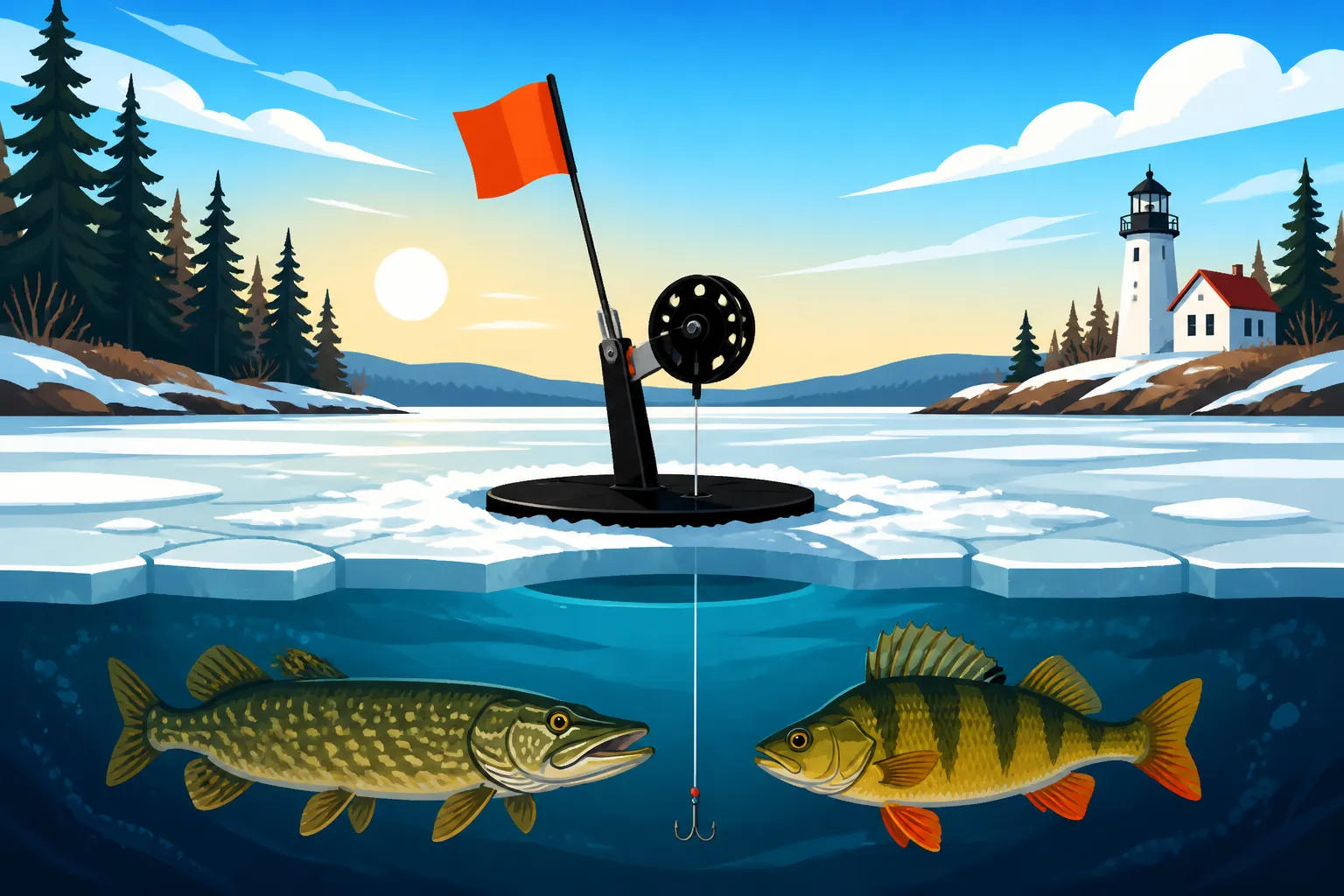
At its heart, a tip-up is a remarkably simple device. It's designed to hold your bait at a set depth beneath the ice, completely hands-free, while a visible flag signals a bite. Imagine this: you've drilled a handful of holes, set your tip-ups, and now you're sipping hot coffee by a portable heater, chatting with friends, or perhaps jigging another hole nearby. Suddenly, a bright orange or red flag pops up against the white landscape – that's your cue! It's a clear, unmistakable signal that a fish has taken your bait, turning a quiet moment into a dash across the ice.
The beauty of tip-ups lies in their ability to fish multiple locations simultaneously, often covering a wider area than you could actively jig. This is particularly effective for species like pickerel and perch, which can be found spread out or in roving schools. Instead of waiting for the fish to come to your single lure, you're presenting multiple opportunities, increasing your odds significantly. It's a truly passive yet productive method that makes ice fishing accessible and enjoyable for everyone, from seasoned anglers to beginners.
How Tip-Ups Signal a Bite
The mechanics of a tip-up are straightforward. Most models consist of a spool of fishing line that's submerged in the water, preventing it from freezing, and a trigger mechanism connected to a flag. When a fish takes the bait and pulls on the line, it trips this mechanism, causing the flag to spring upright. This visual alert is crucial, especially when you have several tip-ups spread across a pond.
The flag’s sudden appearance is what gets your heart racing. It means a fish, likely a hungry pickerel or perch, has grabbed your offering and is swimming away with it. Unlike jigging, where you feel subtle tugs and taps, a tip-up bite is unmistakable. It's a clear invitation to drop your coffee, grab your gloves, and sprint to the hole for a potential battle. This distinct signal allows you to relax and enjoy the winter scenery, knowing you won't miss a strike.
Why Target Pickerel and Perch with Tip-Ups?
Pickerel and perch are fantastic targets for tip-up fishing in Massachusetts. They're widespread, often aggressive eaters, and provide plenty of action on a cold winter day. Plus, they offer a great entry point for new ice anglers or a consistent challenge for veterans.
Understanding Pickerel Habits Under the Ice
Chain pickerel are voracious predators, and they don't slow down much in winter. They're ambush hunters, preferring to lie in wait among submerged vegetation, fallen trees, or along weed lines. When a baitfish swims by, they strike with surprising speed. This makes them ideal candidates for tip-ups, as you can spread your baits along potential ambush points.
In Massachusetts, you'll find pickerel in many freshwater ponds, lakes, and even slower sections of rivers. They often hang out in shallower areas, especially those with some remaining green weeds or structure, even under the ice. When targeting pickerel, you want your baitfish – usually shiners or small minnows – to be swimming just above or within these weed beds. A tip-up allows that bait to swim naturally, enticing a pickerel to commit. They're often one of the first fish to hit a tip-up flag, providing exciting, hard-fighting action.
Locating Perch Schools for Consistent Action
Yellow perch, on the other hand, are schooling fish. Where you find one, you often find many! They're less about ambush and more about cruising open water or gathering around subtle depth changes and structure, actively searching for smaller baitfish, insects, and crustaceans. Their schooling behavior makes them a prime target for tip-ups because once you locate a school, you can often get multiple flags in quick succession.
To find perch, look for areas with moderate depth changes, humps, or near drop-offs. Using a good ice fishing sonar or flasher can greatly assist in locating these schools. Once you mark them, setting up several tip-ups in the vicinity can lead to a banner day. Perch are known for their consistent bites and are excellent eating, making them a highly desirable catch for many ice anglers. They may not pull as hard as a pickerel, but the sheer numbers can make for an incredibly fun and productive outing.
Beyond Pickerel and Perch: Other Common Catches
While pickerel and perch are fantastic targets, the beauty of tip-up fishing is that other species often can't resist a well-presented bait. Depending on the body of water in Massachusetts, you might also find yourself reeling in largemouth bass, especially larger ones that prefer a substantial meal. Bass, much like pickerel, are ambush predators and will readily hit a lively shiner. You might even stumble upon an occasional crappie or bluegill, though they tend to prefer smaller baits often used for jigging.
For those venturing into deeper lakes or reservoirs, there's always the exciting possibility of catching a trout or even a landlocked salmon on a tip-up, particularly if you're using larger shiners. Knowing which species inhabit a particular pond can help you tailor your bait selection and depth. For a more detailed look at the aquatic residents, check out our guide on Freshwater Fish Species in Massachusetts. Each flag is a mystery, and that's part of the thrill!
Essential Tip-Up Gear for Massachusetts Ice Fishing
Having the right gear makes all the difference when you're out on the ice in Massachusetts. Beyond just the tip-ups themselves, you need to think about line, hooks, bait, and crucially, safety equipment to ensure a successful and secure trip.
Choosing the Right Tip-Up Models
There's a surprising variety of tip-up designs out there, each with its own advantages. The most common type is the "traditional" or "cross-stick" model, like the popular Beaver Dam tip-ups. These typically sit over the hole, with the spool submerged, preventing freeze-up. They're robust, reliable, and a favorite among many Bay State ice anglers. Another common design is the "rail" or "windlass" style, which features a wider base that sits parallel to the ice hole. Brands like Frabill offer excellent options in this category. These can be great for stability, especially on windy days.
For Massachusetts winters, where temperatures can swing wildly, look for tip-ups that are well-constructed and resist freezing. Features like an insulated spool housing or a larger diameter spool that can hold more line are always a plus. Consider how many you plan to carry and if they fold down compactly for transport. A good quality tip-up, while a bit more of an investment upfront, will last you many seasons and prevent frustrating malfunctions when that flag finally pops. Many reliable models can be found on online retailers like Amazon.
Line, Leaders, and Hooks: The Connection
Your line setup is critical for tip-up fishing. Most ice anglers opt for a heavier, abrasion-resistant main line on their tip-up spools, often 20-30 pound test braided or Dacron line. This heavier line is not for fighting fish directly, but rather for handling the cold, resistance against ice edges, and for being easy to grasp with cold hands when fighting a fish. To this heavy main line, you'll attach a fluorocarbon leader, typically 6-12 pound test, which is much less visible to fish and provides the necessary stealth. The length of your leader can vary, but 18-36 inches is a good starting point.
When it comes to hooks, a sharp, strong hook is non-negotiable. For pickerel and larger perch, a size 6-10 treble hook or a similar sized single live bait hook is usually effective. For smaller perch, a size 8-12 single hook works well. Some anglers prefer to use a small split shot weight placed 6-12 inches above the hook to keep the bait in the strike zone, especially in current or windy conditions. It's a system designed for durability and invisibility, ensuring your bait swims naturally and effectively.
The Best Baits for Pickerel and Perch
When it comes to tip-up fishing, live bait is king, especially for pickerel and perch. Shiners are perhaps the most popular and effective bait for both species. Golden shiners, fathead minnows, and even smaller pond shiners are all excellent choices. For pickerel, larger shiners (3-5 inches) tend to be more enticing, while perch will readily hit smaller minnows.
Here's a quick reference table for bait selection:
| Target Species | Preferred Live Bait | Hook Size (Treble/Single) | Presentation Tips |
|---|---|---|---|
| Chain Pickerel | Golden Shiners, Smelt, Larger Minnows (3-5") | #6 to #8 Treble / #2 to #1 Single | Hook through dorsal fin or lips; suspend just above weeds. |
| Yellow Perch | Fathead Minnows, Small Shiners (1-2") | #10 to #12 Treble / #6 to #8 Single | Hook through lips; suspend near bottom or in schools. |
| Largemouth Bass | Golden Shiners, Medium Minnows (2-4") | #6 Treble / #2 Single | Hook through dorsal fin; target structure. |
Always make sure your bait is lively. A vigorous minnow or shiner attracts more attention. You can usually find live bait at local tackle shops or larger sporting goods stores. Always check the Massachusetts fishing regulations regarding the use of specific baitfish, as some species are prohibited to prevent the spread of disease or invasive species.
Ice Safety and Essential Accessories
While the thrill of a flag is undeniable, safety on the ice should always be your top priority. Massachusetts winters can be fickle, and ice thickness can vary greatly, even on the same pond. Always carry ice picks around your neck, a spud bar or auger to check ice thickness as you go, and a rope. Dress in layers, wear waterproof boots, and don't forget a first-aid kit, flashlight, and a fully charged cell phone. For more crucial information, consult our guide on Massachusetts Ice Fishing Safety and Ice Thickness.
Beyond safety, consider bringing a small sled to transport your gear, a five-gallon bucket (great for sitting and holding fish), a minnow bucket with an aerator to keep your bait lively, and a scoop to clear slush from your holes. A portable shelter or pop-up shanty can make a cold day much more comfortable. Many of these essential accessories, from ice augers to insulated boots, can be conveniently purchased through platforms like Amazon, ensuring you're well-equipped for your winter adventures.
Setting Up Your Tip-Ups for Success
Success in tip-up fishing isn't just about dropping a line; it's about strategic placement and presentation. Understanding the water you're fishing and how to deploy your gear effectively will significantly boost your catch rates.
Scouting the Perfect Ice Fishing Spot
Just like open-water fishing, location is everything. Before you even drill your first hole, do a little reconnaissance. Look for areas on the pond that have known structure like submerged humps, rock piles, or old weed beds that still hold green vegetation. These are prime hiding spots for pickerel and attractive feeding grounds for perch. Topographical maps, often available online or at bait shops, can reveal valuable underwater contours.
Consider access points, parking, and how far you're willing to walk your gear. On arrival, observe where other anglers are set up – they might be onto something! However, don't just crowd them. Try to understand why they're there. Maybe it's a known drop-off or a channel. Pay attention to changes in snow cover, as it can indicate varying ice thickness, which is a critical safety consideration covered in our How thick ice needs to be for safe fishing in Massachusetts article. A little pre-trip research and on-ice observation can turn a slow day into a memorable one.
Drilling Holes and Deploying Your Tip-Ups
Once you've identified your spots, it's time to drill. A good quality ice auger, either manual, cordless electric, or gas-powered, is indispensable. For pickerel and perch, an 8-inch hole is generally sufficient, allowing enough room to land larger fish. Drill your holes strategically, spreading them out to cover different depths or structural features. For example, if you're fishing a weed line, place some tip-ups right on the edge, some slightly inside, and some in the deeper water just off the weeds.
When deploying your tip-up, first make sure the hole is clear of ice chips and slush. Then, slowly lower your baited line to the desired depth. Adjust the trigger sensitivity so that it's easy enough for a fish to trip the flag but not so sensitive that the wind or a curious minnow sets it off prematurely. Position the tip-up securely over the hole to prevent it from blowing away or falling in, and ensure the flag mechanism is properly set to spring up when a fish bites. You're allowed to use multiple lines, but remember that Massachusetts Recreational Fishing Rules and Bag Limits apply, including the number of lines you can legally fish simultaneously.
Depth Management and Bait Presentation
Proper depth management is crucial for success. For pickerel, who love to ambush from cover, suspending your live bait just above the top of a weed bed or a submerged brush pile is often most effective. If you can't see the cover, use your sonar or even a weighted line to feel for the bottom and measure depth, then bring your bait up a foot or two. This allows the baitfish to swim freely but stay in the strike zone.
For perch, their schooling behavior means they might be anywhere from suspended in the middle of the water column to tight on the bottom. Start by deploying some baits near the bottom and others at various depths to find where the schools are holding. Once you get a flag, adjust your other tip-ups to that productive depth. The goal is always to present your live bait in the most natural way possible, allowing it to swim and attract attention without being tangled or restricted. A good rule of thumb is to hook your shiners lightly through the back, just behind the dorsal fin, being careful not to hit the spine, to keep them lively and appealing.
Retrieving Your Catch and Re-setting
The moment of truth in tip-up fishing is when that flag pops. What happens next can make or break your success. A smooth retrieve and a quick re-set are key to maximizing your catch.
The Thrill of a Flag Up
There's nothing quite like the sight of a brightly colored flag snapping up against a snowy backdrop. It’s an instant jolt of excitement, transforming a peaceful wait into an urgent mission. When you see that flag, don't just dash to the hole. Take a moment to observe the tip-up. Is the spool still spinning? This indicates the fish is actively running with the bait, often a good sign it has committed. If the spool has stopped, the fish might have dropped the bait or is simply holding it.
Approach the hole calmly but quickly. You don't want to spook the fish or give it too much time to swallow the hook too deeply. Before you get right to the hole, scope out the surrounding ice for any hazards. Keep your footing solid, especially if the ice is slick. The anticipation as you near the hole, wondering what awaits below, is a huge part of the tip-up fishing experience.
Fighting and Landing Your Fish
Once you're at the hole, gently grab the main line. You'll often feel the thrumming of a fish on the other end. Don't yank! Instead, slowly pull the line in hand-over-hand, coiling it neatly beside the hole. You'll feel the fish's movements and resistance. If it pulls hard, let it run a bit by letting line slip through your gloved fingers, but maintain tension. This is a direct fight, man versus fish, with no rod bend to cushion the blows.
As the fish nears the hole, be ready. For pickerel, watch out for their sharp teeth. If it's a smaller fish, you can usually lift it out directly. For larger fish, especially feisty pickerel, it helps to have a gaff or a wide-mouthed scoop net designed for ice fishing. Always handle the fish carefully, especially if you plan to release it. Be mindful of Massachusetts size and bag limits; for instance, understanding the Chain Pickerel Fishing in Massachusetts regulations is vital before deciding to keep your catch. Once landed, quickly unhook, measure, and decide whether to keep or release.
Quick Re-setting for More Action
A quick re-set is essential, especially when you've found an active school of perch or if pickerel are hitting consistently. As soon as you've dealt with your catch, check your leader for any nicks or fraying, and ensure your hook is still sharp. If necessary, replace the leader or hook. Re-bait with a fresh, lively minnow.
Clear any ice that has formed in the hole with your ice scoop. Then, carefully lower your re-baited line back to the productive depth. Re-set your tip-up mechanism and deploy the flag, making sure it's ready to signal another bite. The faster you can get your line back in the water, the more opportunities you'll have. If you had several flags in one area, consider drilling a couple more holes nearby. Sometimes, a flurry of activity means a school has just moved in, and keeping baits active will keep them around longer.
Massachusetts Regulations for Tip-Up Fishing
Even when the lakes are frozen, the rules of fishing still apply. Understanding the specific regulations for tip-up fishing in Massachusetts is crucial for a legal and enjoyable outing. It's not just about avoiding fines; it's about responsible angling and conservation.
Number of Lines and Licenses
In Massachusetts, a recreational angler is generally allowed to fish with up to five lines at any given time during ice fishing season. This limit applies to a combination of tip-ups and jigging rods. So, if you're using three tip-ups, you can still actively jig with two rods. Always double-check the current regulations published by MassWildlife, as rules can change. This five-line limit is generous and allows anglers to cover a significant amount of water, greatly increasing their chances of locating fish like perch schools or scattered pickerel.
Beyond the line count, you absolutely need a valid Massachusetts fishing license. Whether you're a resident or a nonresident, adult anglers are required to possess a license. You can easily obtain one online through the MassFishHunt system, or from authorized vendors across the state. For comprehensive details on acquiring your permit, refer to the Massachusetts Fishing License Guide or if you're out of state, the Massachusetts Fishing License for Nonresidents. Don't let a missing license put a damper on your ice fishing adventure!
Size and Bag Limits for Targeted Species
Massachusetts has specific size and bag limits for various fish species, and these apply to ice fishing as well. For chain pickerel, there's usually a daily bag limit (often 5 fish) and a minimum size limit (typically 15 inches), though these can vary. Yellow perch generally have a generous daily bag limit, but again, always consult the most current regulations. There isn't typically a size limit for perch, but you should only keep what you plan to eat and consider releasing smaller individuals to grow.
It's your responsibility to know these limits before you head out. Ignorance of the law is not an excuse. Carrying a measuring tape and being able to identify your catch quickly is essential. MassWildlife publishes an annual guide with all current regulations, often available at tackle shops or online. This information helps ensure sustainable fishing for everyone.
Respecting Public and Private Waters
While many lakes and ponds in Massachusetts are open to public fishing, it's important to be aware of the specific access rules for each body of water. Some reservoirs, like the Quabbin Reservoir or Wachusett Reservoir, have unique regulations that may differ from general statewide rules, including restrictions on bait, boat permits (even for ice shanties sometimes), and access points. For specialized locations, it's always best to check specific guides like the Quabbin Reservoir Fishing Permits and Rules in Massachusetts or Wachusett Reservoir Fishing Access Rules in Massachusetts.
Furthermore, always be respectful of private property. Accessing frozen ponds through private land without permission can lead to trouble. Stick to designated public access points. When on the ice, remember to pack out everything you pack in – leave no trash behind. This ensures these beautiful fishing spots remain enjoyable for everyone for years to come. Common courtesy, such as not setting up your tip-ups too close to other anglers, also goes a long way in fostering a positive ice fishing community.
Disclaimer
Please note that fishing regulations and ice conditions can change rapidly. Always consult the latest MassWildlife regulations before heading out, and prioritize safety by checking current ice thickness reports. This guide is for informational purposes only and does not constitute legal advice.