How water temperature affects trout fishing in spring
Spring in Massachusetts is a magical time for trout fishing, but it can also be incredibly frustrating. One day the trout are biting aggressively, and the next, it feels like the water is empty. This rollercoaster of activity often boils down to a single, critical factor: water temperature. Understanding how water temperature affects trout behavior in the spring is the key to unlocking consistent success, turning those head-scratching moments into triumphant catches. This guide will dive deep into the thermal dynamics of Massachusetts waters during spring, helping you decode trout movements and tailor your tactics for any condition.
The Spring Conundrum: Why Water Temperature is Your Best Friend (or Foe)
Spring in New England isn't just about the calendar date; it's a dynamic period of transition where ice recedes, snow melts, and the natural world awakens. For trout anglers, this means a constant flux in water conditions, particularly temperature. Ignoring the thermometer is like trying to navigate a dense fog without a compass – you might get lucky, but you're probably going to get lost.
Understanding Trout's Comfort Zone
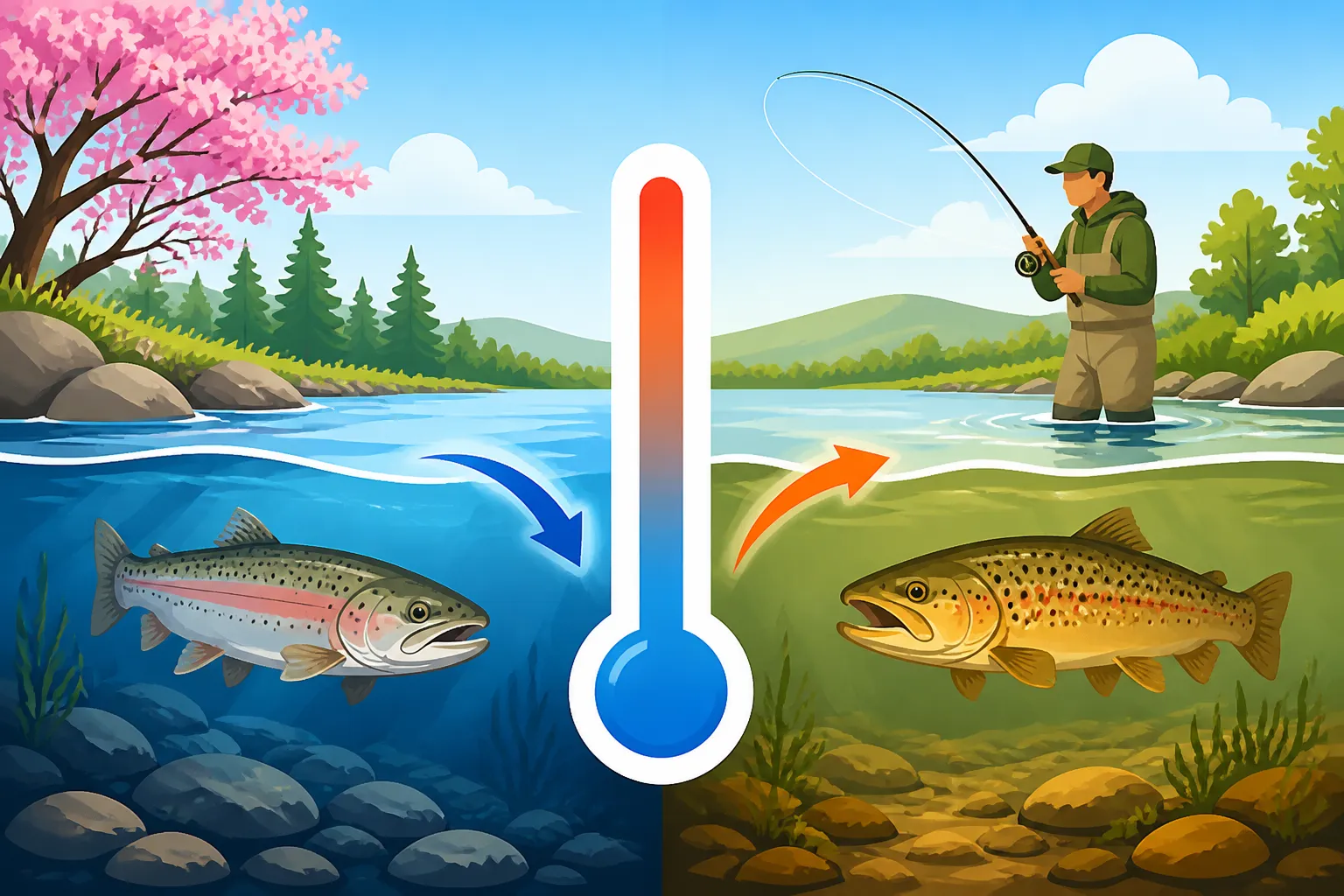
Trout, whether we're talking about the vibrant brook trout, the wily brown trout, or the energetic rainbow trout that Massachusetts stocks each year, are cold-blooded creatures. This means their body temperature, and consequently their metabolism and activity levels, are directly dictated by the temperature of the water around them. They have a relatively narrow range of preferred temperatures where they feel most comfortable, can digest food efficiently, and are most active.
For most trout species, this "sweet spot" typically hovers between the mid-40s and mid-60s Fahrenheit. When the water is too cold, their metabolism slows to a crawl. They become sluggish, conserve energy, and aren't likely to chase down a fast-moving lure. Think of trying to exercise vigorously on a freezing cold morning – your body just isn't ready for it. Conversely, when the water gets too warm, usually above 65-70°F, trout become stressed. Their oxygen levels can drop, and they'll seek out cooler refuges, making them harder to find and even more vulnerable to the stress of being caught. This is why knowing the difference between Brook Trout in Massachusetts Streams and Brown Trout Fishing in Massachusetts, and their respective tolerances, can be so important.
From Ice-Out to Warmer Flows
The spring season kicks off with what anglers often call "ice-out" in ponds and lakes, or the disappearance of significant ice formations in larger rivers. Immediately after ice-out, water temperatures are typically very cold, often just above freezing. This initial period is heavily influenced by melting snow and cold rain, which can keep water temperatures low for weeks, especially in larger, deeper bodies of water or fast-flowing rivers fed by mountain snowmelt.
As spring progresses, however, sunny days and warmer air temperatures start to have a more significant impact. Shallow ponds and the sun-exposed sections of rivers will warm up much faster than deeper lakes or shaded stretches. Rain can also play a dual role: cold rain might temporarily drop water temperatures, while warm spring rains can actually accelerate the warming process. It's a constant push and pull, and what you experience in a small pond in Plymouth might be completely different from a large river in the Berkshires on the same day. These regional differences are why understanding Massachusetts Freshwater Fishing Season Calendar and local conditions is crucial.
Reading the Thermometer: How Water Temperature Dictates Trout Behavior
Paying attention to the water temperature isn't just a suggestion; it's a fundamental part of successful spring trout fishing. It tells you where the trout are likely to be, what they're willing to eat, and how they'll react to your presentation.
Cold Water Blues (Below 40°F)
In the earliest days of spring, especially right after ice-out or during prolonged cold snaps, water temperatures can linger below 40°F. When the water is this cold, trout are generally lethargic. Their metabolism is incredibly slow, meaning they don't need to feed as often or as aggressively. They'll often hold in deeper water, seeking out areas with minimal current where they can conserve energy. Think of them as being in a semi-dormant state.
At these frigid temperatures, trout are unlikely to chase fast-moving lures. Your best bet is to slow everything down. Baits like worms, PowerBait, or small pieces of corn presented on the bottom or under a very slow-moving float can be effective. Small, slowly retrieved jigs or spoons might also entice a strike, but the key word here is slow. You're essentially presenting an easy meal directly in front of their noses, hoping to trigger a reaction strike rather than a chase.
The Golden Window (45-55°F)
This is the holy grail for spring trout fishing. As water temperatures climb into the 45-55°F range, trout truly come alive. Their metabolism picks up, they become more active, and most importantly, they start feeding aggressively to replenish energy reserves lost over winter. This is when you'll find trout moving from deeper wintering holes into shallower areas of ponds and rivers, actively cruising for food.
In this "golden window," trout are much more willing to chase and strike a variety of presentations. Spinners, small stickbaits, spoons, and various live baits all become incredibly effective. If you're a fly angler, this is often when the first significant insect hatches of spring begin – think early caddis or small mayflies – bringing trout to the surface. It's a fantastic time for both Fly Fishing for Trout in Massachusetts Rivers and traditional methods. They're more likely to be found near cover, current seams, and areas where food might be washed their way.
Warming Up (Above 60°F)
As spring transitions towards summer, especially on bright, sunny days or during heat waves, water temperatures can quickly rise above 60°F and even into the high 60s. While trout are still active in the lower end of this range, once temperatures start pushing 65°F and beyond, they begin to feel stressed, particularly species like brook trout which prefer colder water.
When water gets too warm, trout will seek thermal refuges. This means they'll move into deeper pools, find shaded areas under trees or overhanging banks, or congregate around the mouths of cooler feeder streams or springs. Their feeding activity may become sporadic, and they'll be less inclined to exert themselves. For ethical anglers, it's also a time to be extra mindful. Catch and release mortality increases significantly in warmer water because the fish are already stressed. If the water temperature consistently hits 70°F or higher, it might be best to postpone your trout fishing until cooler conditions prevail, or target other species. This concern is especially relevant when considering How to fish for trout in summer when water warms up.
Tactical Adjustments: Fishing Strategies for Different Spring Water Temps
Understanding the temperature is one thing; translating that knowledge into successful fishing techniques is another. Each temperature range demands a specific approach to maximize your chances.
Gear and Presentation for Chilly Waters
When the water is still biting cold (below 40-45°F), your presentation needs to be slow and deliberate. Forget about fast retrieves or flashy topwater lures – the trout just aren't interested in expending that much energy.
- Lure Choice: Opt for smaller, heavier lures that can sink slowly and stay in the strike zone longer. Small jigs (1/32 to 1/8 ounce) tipped with a piece of worm or grub, slow-sinking spoons, or very small inline spinners retrieved at a snail's pace are good choices. For bait, Best Bait for Trout Fishing in Massachusetts often includes worms, salmon eggs, or synthetic baits like PowerBait, all presented near the bottom.
- Line Weight: Light line (2-4 lb test) is often crucial as trout can be very finicky in cold water.
- Retrieve Speed & Depth: Cast upstream and let your offering drift naturally with the current, or simply cast out and let your bait sit on the bottom with minimal weight. If using lures, a slow, methodical retrieve with pauses can trigger strikes. Focus your efforts on deeper pools, eddies, and the slower-moving sections of rivers where trout are holding.
Maximizing Success in the Sweet Spot
Once water temperatures hit that glorious 45-55°F range, it's time to get a bit more aggressive! Trout are hungry and active, often willing to chase. This is the prime time for many of the Best Lures for Stocked Trout in Massachusetts.
- Lure & Fly Choice: Spinners in various sizes and colors (gold, silver, chartreuse), small crankbaits, and even light spoons can be incredibly effective. For fly anglers, this is when nymphs and streamers become deadly, mimicking the aquatic insects that are now more active. As temperatures creep into the upper 40s and 50s, you might even start seeing the first surface activity, making dry flies a possibility.
- Retrieve Speed: You can generally increase your retrieve speed. Trout will often hit a spinner or spoon retrieved at a steady, moderate pace. Experiment with erratic movements or twitching to mimic injured baitfish.
- Target Areas: Trout will be more spread out, exploring different parts of their habitat. Look for them along current seams, at the heads and tails of pools, near submerged structures like rocks and logs, and even in shallower riffles where insects are dislodged. If fishing ponds, focus on drop-offs, weed lines, and areas with emerging insect activity.
Hotter Water Considerations
When temperatures push above 60-65°F, trout start seeking relief. Your strategy needs to shift from finding active feeders to finding comfortable fish.
- Timing: Fish early in the morning or late in the evening when water temperatures are at their coolest. Avoid the middle of the day, especially if it's sunny.
- Location: Target the deepest pools, shaded areas under bridges or overhanging trees, and the mouths of colder tributary streams. In lakes, trout will often move to deeper, cooler thermocline layers.
- Presentation: Keep presentations subtle and minimize fighting time. Small, natural baits or very slow-moving lures are best.
- Ethical Angling: If you do catch a trout in warm water, handle it minimally. Keep your hands wet, remove the hook quickly, and release it gently. Consider using barbless hooks to make release easier. Avoid "hero shots" that keep the fish out of water for too long. If you're consistently catching stressed fish, it's a sign that conditions are too warm for ethical trout fishing.
Locating Trout: Temperature's Influence on Habitat Selection
The type of water body you're fishing – be it a small pond or a sprawling river – will also influence how temperature affects trout location, adding another layer to your angling strategy.
Ponds vs. Rivers: Different Thermal Dynamics
Ponds and rivers heat up and cool down differently, and trout react to these changes in distinct ways.
- Ponds: Smaller, shallower ponds tend to warm up much faster in the spring sunshine. This can be a boon in early spring, as they might reach that "golden window" temperature sooner than larger bodies of water. However, they also warm up past the trout's comfort zone more quickly as spring progresses. In ponds, trout will often move into shallower areas to feed as the water warms, especially around submerged vegetation or structure. As it gets warmer, they'll retreat to deeper, cooler sections or areas with springs if available. Many of Massachusetts' stocked trout end up in these ponds, so understanding their thermal patterns is key.
- Rivers: Rivers, especially those with good current, tend to have more consistent temperatures due to constant water movement, but they are also more influenced by snowmelt and recent rainfall. Fast-flowing sections will generally remain cooler, while slower, wider pools or oxbows might warm more quickly. Trout in rivers will use the current to their advantage, often holding in slower seams adjacent to faster water, where food is brought to them with less effort. They'll also seek out deeper pockets or undercut banks as thermal refuges when water temperatures become less favorable. Massachusetts Freshwater Daily Catch Limits will still apply, regardless of the type of water you're fishing.
Microclimates and Thermal Refuges
Within any given body of water, there are often subtle temperature variations, creating what anglers call "microclimates." Identifying these thermal refuges is a huge advantage, especially when the main body of water isn't at an ideal temperature.
Look for:
- Feeder Streams and Springs: Small, cold streams flowing into a larger river or pond can create plumes of cooler water. Trout will often congregate in these areas, particularly when the main body of water is warming up.
- Deep Pools and Undercut Banks: These areas offer shade and depth, providing cooler water that trout can retreat to.
- Shaded Areas: Overhanging trees, cliffs, or bridges can keep sections of water cooler throughout the day.
- Submerged Structure: Large rocks, logs, or other underwater features can create subtle current breaks and offer shade, attracting trout seeking comfort and cover.
- Inflows/Outflows: In ponds, water entering from underground springs or outflow pipes from other cool sources can create consistent thermal breaks. Similarly, the outflow of a pond into a stream can create a unique temperature zone.
Understanding these spots is critical for targeting Rainbow Trout Stocking in Massachusetts or any other species, as they tend to gravitate toward their preferred thermal environment.
Essential Tools and Best Practices for Temperature-Savvy Anglers
Becoming adept at reading water temperatures and adjusting your tactics isn't difficult, but it does require a few key habits and tools.
The Importance of a Water Thermometer
This might sound obvious, but many anglers overlook this simple, inexpensive tool. A good water thermometer is perhaps the single most valuable piece of gear for spring trout fishing after your rod and reel.
- How to Use It: Don't just check the surface temperature. Dip your thermometer into the water and let it sit for a few minutes to get an accurate reading. In deeper areas, you might want a weighted thermometer or one designed for depth readings. Check the temperature at various spots throughout the day and in different areas of the water body (shallower vs. deeper, sunny vs. shaded).
- Tracking Changes: Keep a small log. Note the air temperature, water temperature, time of day, and your success or lack thereof. Over time, you'll start to see patterns specific to your favorite fishing spots. This data will become invaluable for predicting trout behavior on future trips.
Combining Temperature Data with Other Factors
While water temperature is paramount, it's not the only factor. A truly successful angler combines temperature data with other environmental clues.
- Air Temperature: A string of warm, sunny days will obviously warm the water faster than a cold, cloudy stretch. However, cold nights can also drop water temperatures, especially in shallow areas, so consider the overnight lows.
- Recent Rainfall: Heavy rain can quickly change water levels and temperatures. Cold rain or snowmelt will drop temperatures, while prolonged warm rain can actually elevate them. Rain also often dislodges insects and worms, bringing them into the water, which can trigger a feeding frenzy regardless of a slight temperature dip.
- Snowmelt: In early spring, significant snowmelt can keep rivers and streams exceptionally cold and often high and murky, even on warm days. This makes fishing challenging and generally means trout will be less active.
- Sun Exposure: Sunny days warm water faster, especially in shallower areas. On bright days, trout might seek deeper, shadier areas as temperatures rise. Overcast days, while potentially cooler overall, can sometimes offer more consistent temperatures throughout the day, encouraging trout to be more active for longer periods.
By synthesizing all this information, you can make informed decisions, whether you're planning to fish for Trout Fishing in Massachusetts or any other cold-water species, ensuring you're not just casting blindly, but fishing intelligently.
Spring Trout Fishing Temperature Guide
Here’s a quick overview of how water temperature typically influences trout activity in Massachusetts during the spring months:
| Water Temperature Range | Trout Activity Level | Typical Location | Recommended Tactics | Ethical Considerations |
|---|---|---|---|---|
| Below 40°F | Very sluggish | Deepest pools, minimal current | Slow, subtle presentations; bait on bottom; small jigs | Handle carefully, minimize fight time |
| 40-44°F | Slow to moderate | Deeper areas, transitioning to shallower edges | Slow retrieve, natural baits, small spinners/spoons | Minimal handling, quick release |
| 45-55°F | Highly Active (The Golden Window) | Throughout water column, moving to shallows, current seams | Variety of lures, flies, baits; moderate retrieve; focus on ambush points | Best for catch & release, fish are hardy |
| 56-60°F | Active, but seeking comfort | Current seams, deeper pockets, shaded areas | Moderate retrieve, focus on transitions, insect hatches | Still good for C&R, but minimize stress |
| 61-65°F | Becoming stressed | Deeper, shaded thermal refuges, feeder stream mouths | Slow presentations, early/late fishing; focus on cool spots | Minimize fight, quick wet release; consider switching species |
| Above 65°F | Highly stressed, low oxygen | Seeking deepest, coolest water; very little activity | Avoid fishing for trout; high C&R mortality | Highly recommend avoiding trout fishing |
Note: These ranges are general guidelines. Individual trout species (e.g., brook trout vs. rainbow trout) may have slightly different preferences and tolerances. Always verify specific regulations like Massachusetts Freshwater Daily Catch Limits before fishing.
Disclaimer
This article is for general informational purposes only and does not constitute professional advice. Laws, prices and regulations vary by location and change over time. Consult a qualified professional for guidance on your specific situation.