Best Bait for Trout Fishing in Massachusetts
There are few things more frustrating than heading out to your favorite Massachusetts trout stream or pond, only to find the fish aren't biting, and you're left wondering if you chose the wrong bait. It's a common dilemma; trout can be notoriously picky, and what works one day or in one spot might totally flop in another. This comprehensive guide is here to walk you through the very best bait options for trout fishing across Massachusetts, helping you understand when and where to use them to boost your success.
Understanding Trout Behavior and Diet in Massachusetts
Before we even talk about specific baits, it's really important to get a handle on what makes trout tick. These beautiful fish, whether they're wild natives or recently stocked, have certain instincts and feeding habits that, once understood, can dramatically improve your chances of catching them. Massachusetts offers such a diverse range of trout habitats, from crystal-clear mountain streams to larger, calmer ponds, and each can influence what bait will be most effective.
Wild vs. Stocked Trout Preferences
Let's be honest, there's a world of difference between a wild trout that's spent its entire life foraging for natural food and a stocked trout that grew up in a hatchery. Stocked trout, like the many thousands MassWildlife releases each spring and fall, are often accustomed to eating pellet food. This means their initial reaction to natural baits can sometimes be a bit slower. They're also often quite eager to bite anything that looks remotely like food, especially right after being put into a new water body. They're less wary and more opportunistic, making them a fantastic target for beginners or those looking for more consistent action. For more details on when and where these fish are released, check out the Massachusetts Trout Stocking Schedule.
Wild trout, on the other hand, are much more attuned to their natural environment. They've learned to be wary of predators and to hunt efficiently for insects, small fish, and crustaceans. Their diet is dictated by what's readily available in their specific stream or river, and they can be incredibly selective. Trying to fool a seasoned wild brook trout with a bright, artificial pellet might be a losing battle. For these fish, mimicking their natural diet with subtle, lifelike presentations is key. It's a challenging but incredibly rewarding pursuit, especially if you're targeting brook trout in Massachusetts streams, which are known for their pristine beauty and cunning inhabitants.
Seasonal Changes in Trout Feeding Habits
Just like us, trout's appetites and where they hang out change with the seasons. Spring, after the ice melts, is a prime time. Water temperatures are rising, insects are becoming active, and trout are often coming out of a long, cold winter with a big hunger. This is when they're generally most aggressive, making them receptive to a wider range of baits. You'll find them in shallower areas, actively looking for food.
As summer heats up, especially in smaller streams and ponds, trout tend to become more lethargic and seek cooler, deeper water or shaded areas. Their feeding windows might shrink to early mornings and late evenings when water temperatures are at their lowest. During this time, they might become more selective, focusing on specific insects hatching or tiny baitfish. In the fall, as temperatures cool down again, trout — particularly brown trout and brook trout — can become very active as they prepare for spawning. This renewed aggression makes it another excellent time to target them with a variety of baits. Even in winter, dedicated ice anglers can find success, often needing to present baits more slowly and deliberately near the bottom. Understanding these shifts is crucial for year-round trout fishing in Massachusetts, as outlined in the Massachusetts Fishing Seasons Explained guide.
Top Live and Natural Baits for Massachusetts Trout
When it comes to tempting a trout, nothing quite beats the real thing. Natural baits tap into a trout's instincts, smelling and looking like actual food they'd encounter in their habitat. For many anglers, there's a certain satisfaction in using a classic, tried-and-true live bait.
Worms: The Universal Trout Attractor
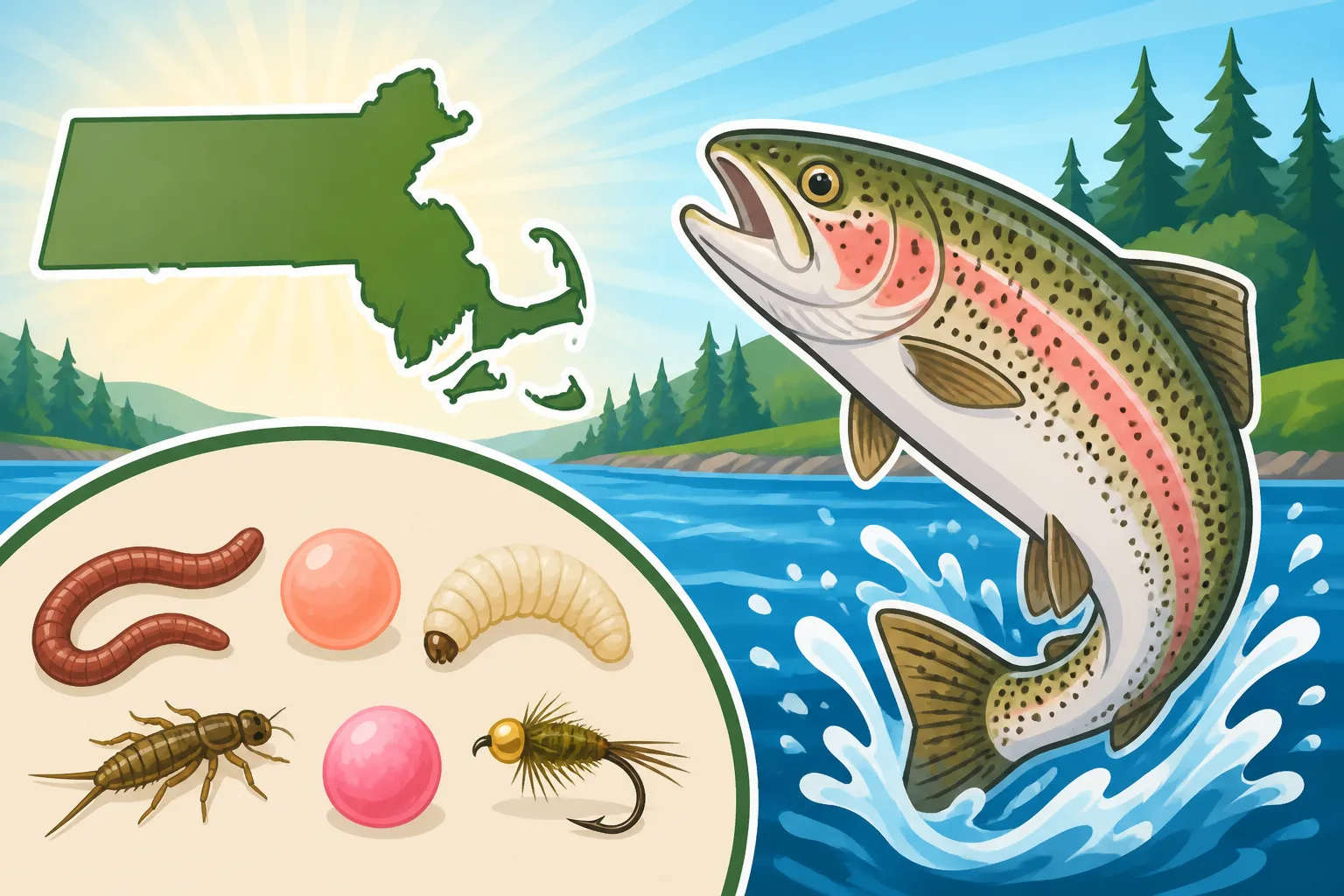
Worms are, without a doubt, the quintessential trout bait. They work everywhere, almost all the time, and for nearly every species of trout. Why? Because worms are a natural food source that often gets washed into rivers and ponds, making them an easy, protein-rich meal for hungry fish. Whether you're fishing for freshly stocked rainbows in a local pond or trying to entice a native brook trout in a mountain stream, a properly presented worm is rarely ignored.
The most common type you'll encounter is the humble nightcrawler. These large, juicy worms are fantastic for their size and scent trail. You can rig them whole, especially if you're targeting larger trout, or break them into smaller pieces for smaller fish or to make them last longer. Garden worms, smaller and more active, also make excellent bait. For rigging, try threading a worm onto a small hook (sizes 8-12 are usually good for trout) so that the hook point is exposed. You can fish them on the bottom with a small weight, suspended under a bobber in still water, or even drift them through currents in a river. Many anglers swear by the effectiveness of a lively worm, making it a staple in their tackle boxes. If you're running low, you can often find bulk packs of live worms available on Amazon, especially if your local bait shop is picked clean during peak season.
Minnows and Other Small Baitfish
For predatory trout, especially larger brown trout or lake trout found in deeper, colder waters, nothing screams "mealtime" like a struggling minnow. These active baitfish mimic a trout's natural prey, triggering an aggressive strike. Minnows are particularly effective in larger ponds, lakes, and wider rivers where trout have grown accustomed to feeding on smaller fish. They can be incredibly potent for targeting those trophy-sized trout that have moved beyond a diet of insects and worms.
When using minnows, presentation is key. You'll want to use a small hook, usually a size 6 or 4, hooked lightly through the back near the dorsal fin (being careful not to hit the spine) or through both lips. This allows the minnow to swim naturally and attract attention. You can fish them under a bobber, allowing them to swim freely, or slowly retrieve them to mimic an injured fish. Shiners are a popular choice in Massachusetts, but smaller perch or other local baitfish can also be effective. Just be sure to check local regulations on baitfish use and possession, as some water bodies may have restrictions to prevent the spread of invasive species. Using a simple wire trap to catch your own local minnows can sometimes yield the freshest, most effective bait.
Insect Larvae and Other Aquatic Invertebrates
Think about a trout's natural diet, and insects instantly come to mind. Caddisfly larvae, stonefly nymphs, mayfly nymphs, and even grasshoppers or crickets are all common inhabitants of trout streams and ponds, making them irresistible to hungry fish. These are the baits that truly "match the hatch" for trout, especially for wild populations. The delicate presentation often required makes this a favorite technique for fly anglers, but bait anglers can also capitalize on these natural offerings.
Magggots, often sold as "spikes" or "waxies," are another excellent choice, particularly for ice fishing or when targeting finicky trout in cold water. Their small size and constant wiggling motion are incredibly enticing. Simply thread one or two onto a small hook (size 14-18) and fish them under a bobber or on a very light leader. Grasshoppers and crickets, available in warmer months, can be deadly when drifted on the surface or lightly weighted to sink slowly. These terrestrial insects are a huge part of a trout's summer diet. If you're feeling adventurous, you can even carefully collect your own caddisfly larvae or stonefly nymphs from under rocks in a stream, rigging them carefully on tiny hooks. The natural scent and appearance of these invertebrates are hard for a trout to resist.
The Best Prepared and Artificial Baits
Sometimes, convenience and consistency win the day. Prepared baits and artificial lures offer anglers a reliable alternative to live bait, often with the added benefit of vibrant colors, strong scents, and ease of storage. These options are particularly effective for stocked trout and can be a game-changer when live bait is hard to come by or when you want to cover a lot of water.
PowerBait and Trout Dough
For many anglers targeting stocked trout in Massachusetts, PowerBait is practically synonymous with success. This specially formulated trout bait comes in various forms – dough, nuggets, and even scented pellets – and an astounding array of colors and scents. Its effectiveness lies in its appealing scent, often infused with fish attractants, and its ability to float, presenting your bait just off the bottom where trout often cruise. This is particularly useful in ponds where trout might be reluctant to pick up food directly from the silty bottom.
To use PowerBait dough, simply pinch off a small piece and mold it around your hook, completely covering the hook point. Make sure it forms a tear-drop shape that will spin naturally in the water, dispersing scent. Nuggets are even easier; just push one onto your hook. The key is to use a light line and a small treble or single hook (size 10-14 is typical) with a sliding sinker rig. This allows the PowerBait to float freely, appearing natural. Favorite colors often vary by location and day, but chartreuse, rainbow, and orange are consistent producers. You can easily stock up on a variety of PowerBait colors and scents on Amazon, ensuring you have options for any day on the water. Another popular option is Berkley's Gulp! Trout Dough, which is biodegradable and also comes in a range of colors and scents, offering a similar effective presentation.
Marshmallows and Corn
While they might sound more like picnic snacks than trout bait, plain old marshmallows and canned corn are surprisingly effective, especially for freshly stocked rainbow trout. These baits capitalize on the opportunistic nature of hatchery-raised fish and offer a subtle, enticing presentation that can be very productive. They're also incredibly cheap and easy to find, making them excellent choices for family fishing trips or when you're just starting out.
Small white marshmallows have a natural buoyancy that allows them to float just like PowerBait, keeping your hook off the bottom. You can simply hook one or two onto a small hook (size 10-14) and fish them with a light split shot or a sliding sinker rig. The gentle wobble in the water and the subtle sweetness can be enough to draw in curious trout. Canned corn, particularly the whole kernel variety, is also a long-standing favorite. Its bright yellow color and soft texture are attractive, and the kernels are small enough to be easily ingested by trout. Hook two or three kernels onto a small hook, again with a light weight, and fish them near the bottom. While not as heavily scented as PowerBait, the natural appeal of corn and marshmallows can often trigger bites when other baits fail. Some anglers even mix a bit of garlic powder with their corn for added attraction. Remember to use these in areas where they are permitted, as some water bodies may restrict chumming or the use of certain food items.
Spinners and Spoons for Aggressive Bites
When trout are actively feeding and feeling aggressive, especially in flowing water or when they're chasing baitfish, nothing can provoke a strike quite like a spinner or a spoon. These artificial lures are designed to mimic small, fleeing baitfish or insects, with their flashing blades and erratic movements triggering a predatory response. They're a fantastic choice for covering water quickly and finding active fish, making them a go-to for anglers in larger rivers and lakes.
Spinners, like the classic Mepps Aglia or Rooster Tail, feature a rotating blade that creates flash and vibration, irresistible to trout. Sizes from 0 to 2 are generally ideal for Massachusetts trout. Cast them upstream or across the current and retrieve them just fast enough to get the blade spinning. The flash and vibration mimic a wounded baitfish or a struggling insect, drawing strikes. Spoons, such as the Kastmaster or Little Cleo, wobble and flutter as they sink or are retrieved, imitating a dying baitfish. Their weight allows for long casts, which is great for reaching distant feeding lanes in larger bodies of water. Silver and gold are classic colors, but brighter options can work well in clear water or on overcast days. To get the most out of these, pair them with light tackle and a sensitive rod to feel those subtle strikes. For more detailed insights into artificial offerings, check out our guide on the Best Lures for Stocked Trout in Massachusetts.
How to Present Your Bait Effectively for Massachusetts Trout
Having the right bait is only half the battle; knowing how to present it effectively is crucial. Even the best bait in the world won't catch fish if it's sitting in the wrong place or presented unnaturally. Trout are visual predators, but they also rely heavily on scent and vibration, so mastering your presentation is paramount.
Essential Rigging Techniques
The way you rig your bait can make all the difference between a frustrating day and a successful one. For trout, light line is almost always your friend. Using 4 to 6-pound test monofilament or fluorocarbon main line, and even lighter leaders (2-4 pound test) is common, especially in clear water where trout can be line-shy.
One of the most versatile setups for bottom fishing with bait like worms, PowerBait, or corn is the sliding sinker rig (also known as a Carolina rig). This involves threading a small egg sinker onto your main line, followed by a small bead, and then tying on a swivel. To the other end of the swivel, you tie a 12-24 inch fluorocarbon leader, with your hook at the end. The sliding sinker allows the fish to pick up the bait without feeling the weight of the sinker, giving you a better chance to set the hook. This is excellent for still water in ponds or slow-moving rivers.
For fishing baits at a specific depth, especially when trout are suspended or when you're targeting eddies in a stream, a bobber rig is indispensable. A slip bobber allows you to adjust your depth easily, while a fixed bobber is great for shallower water. Attach a small split shot or two a few inches above your hook to get the bait down, and let the bobber do the work. This is particularly effective for worms, minnows, or even small pieces of PowerBait. In rivers, a drift rig with minimal weight, just enough to tick the bottom, allows your bait to tumble naturally downstream, mimicking a loose insect or worm. This natural presentation is key for fooling wary wild trout. For those interested in deeper freshwater techniques, exploring topics like How to Catch Largemouth Bass in Massachusetts can provide broader rigging knowledge that might cross over.
Reading the Water and Targeting Holding Spots
Trout aren't randomly distributed in a water body; they have preferred "holding spots" where they feel safe, have access to food, and can conserve energy. Learning to "read the water" is an art that comes with practice, but some general principles apply across Massachusetts.
In rivers and streams, look for areas of current break – behind large rocks, fallen logs, or on the inside bends of the river. These are prime spots where trout can rest out of the main current while waiting for food to wash by. Deep pools are also excellent, offering refuge from predators and stable temperatures. Don't overlook riffles (shallow, fast-moving water over rocks); while trout won't hold in the fastest part, the edges of riffles churn up insects and oxygen, attracting feeding fish. For those seeking true river fishing mastery, diving into Fly Fishing for Trout in Massachusetts Rivers will provide an unparalleled understanding of trout habitat and behavior in flowing water.
In ponds and lakes, trout will often be found near drop-offs, where shallow water transitions to deeper areas. They use these depth changes as highways for cruising and hunting. Submerged structure like weed beds, fallen trees, or rocky points also attract trout, offering cover and food. In shallower water, especially during cooler parts of the day, look for inflow areas where streams or springs enter the pond, bringing cooler, oxygenated water and sometimes food. Pay attention to surface activity – rising fish indicate insect hatches, while splashes might mean trout chasing baitfish. Remember that during the warmer summer months, trout will almost always seek deeper, cooler waters, making structure and depth contours even more important.
Matching the Hatch Even with Bait
While "matching the hatch" is a term most often associated with fly fishing, the concept absolutely applies to bait fishing as well. It simply means using bait that closely resembles what the trout are naturally feeding on at that specific time. If you observe tiny insects hatching and trout rising to the surface, presenting a small piece of worm or a tiny waxworm under a bobber might be more effective than a large chunk of PowerBait on the bottom.
Pay attention to what's in the water or along the banks. Are there lots of grasshoppers jumping around? Try a grasshopper imitation or even a real one. Are caddisflies buzzing about? Consider a caddisfly larva. Even with prepared baits, observing the colors of natural food sources (like the greens and browns of aquatic vegetation or the silver flash of baitfish) can help you choose an appealing color of PowerBait. The more natural your presentation and bait choice, the less suspicious trout will be. Sometimes, a subtle approach, like a tiny salmon egg or a single kernel of corn, is far more effective than an overpowering scent or a flashy lure, especially when targeting wary fish in clear water.
Regional Considerations for Bait Choices in Massachusetts
Massachusetts is a diverse state, offering a wide array of fishing environments. From the tranquil ponds of the Cape to the robust rivers of the Berkshires, what works best for trout bait can change significantly depending on your specific location. Understanding these regional nuances will help you fine-tune your approach and increase your chances of success.
Freshwater Ponds and Lakes
Ponds and lakes across Massachusetts, especially those regularly stocked by MassWildlife, are often where many anglers get their start trout fishing. These waters tend to be more forgiving, and stocked trout, as we've discussed, are typically less wary. As such, a wider variety of baits can be incredibly effective here.
For these still or slow-moving waters, prepared baits like PowerBait (dough or nuggets) and canned corn are absolute staples. Their scent and buoyant properties make them ideal for presenting off the bottom, where hungry trout often cruise. You can also have great success with worms, either on a bottom rig or suspended under a bobber. Small minnows or shiners can also be excellent for targeting larger, more predatory trout, especially brown trout that have grown accustomed to feeding on other fish. In ponds with abundant insect life, a slow-sinking waxworm or small grub can also be very effective. Locations like Lake Chauncy in Westborough or Lake Dennison in Winchendon are prime examples of excellent pond fishing opportunities, offering diverse structures and depths that cater to various bait presentations. To find more great spots, check out our guide on the Best Freshwater Ponds and Lakes in Massachusetts.
Rivers and Streams
Fishing for trout in Massachusetts rivers and streams presents a different set of challenges and opportunities. The flowing water means your bait needs to be presented naturally, mimicking food washing downstream. This is often where wild trout thrive, making a more nuanced approach essential.
For flowing water, natural baits shine. Worms, particularly nightcrawlers or garden worms, are incredibly effective when drifted naturally with the current, often with just a minimal split shot to get them down. Live insect larvae, such as caddisfly or stonefly nymphs (if you can gather them), are also deadly when fished on a very light leader, allowing them to tumble along the bottom. Small spinners or spoons are also fantastic for covering water and triggering aggressive strikes from active fish in currents, especially in larger rivers like the Westfield or Deerfield. When fishing in rivers, it's often about subtle presentations and using the current to your advantage. For truly technical river fishing, our Deerfield River Trout Fishing Spots in Massachusetts guide offers a wealth of localized knowledge and best practices. Remember, too, to check Massachusetts Freshwater Daily Catch Limits for specific rules that apply to rivers and streams.
| Bait Type | Best For | Ideal Conditions | Pros | Cons |
|---|---|---|---|---|
| Nightcrawlers | Wild & Stocked Trout (all sizes) | Any water, especially after rain, moderate flow | Universal appeal, strong scent, readily available | Can be stolen by smaller fish, fragile, messy |
| PowerBait | Stocked Trout (Rainbows, Browns) | Ponds, lakes, slow rivers | Buoyant, strong scent, vibrant colors, easy to use | Less effective for wild trout, can be ignored in fast current |
| Canned Corn | Stocked Trout (Rainbows) | Ponds, lakes, calmer areas | Cheap, easy to use, bright color, subtle flavor | Less scent, can be ignored by wary fish, controversial for "chumming" |
| Minnows/Shiners | Large Wild & Stocked Trout (Browns, Lake Trout) | Lakes, large rivers, deeper water | Mimics natural prey, triggers aggressive strikes | Requires live bait care, may have regulations, can be expensive |
| Waxies/Maggots | Finicky Trout, Ice Fishing, Cold Water | Any water, especially cold/clear conditions | Small, lively, subtle attraction, durable | Small size may attract panfish, limited casting range |
| Spinners/Spoons | Aggressive Trout, Covering Water | Rivers, streams, lakes | Covers ground, triggers reaction strikes, durable | Requires active retrieval, less effective for finicky fish |
Specific Water Body Regulations (e.g., Quabbin, Wachusett)
Massachusetts is home to some incredible, yet highly regulated, fishing destinations like the Quabbin and Wachusett Reservoirs. These massive water bodies are not just impressive in size but also in their diverse trout populations, including lake trout and landlocked salmon, which require different bait strategies and adherence to strict rules.
For example, at the Quabbin Reservoir, there are specific regulations regarding baitfish. You might be restricted to using baitfish harvested directly from the reservoir or purchased from approved vendors to prevent the introduction of invasive species. This means carefully planning your bait supply. While worms and PowerBait are generally permitted and effective for rainbow and brown trout, fishing for the trophy lake trout often involves downrigging with larger shiners or spoons in deeper sections. The sheer size and depth of Quabbin mean that different tactics are needed compared to a small pond. For a deep dive into these unique waters, be sure to consult the Quabbin Reservoir Fishing Guide for Massachusetts Anglers or the Wachusett Reservoir Fishing Guide for Massachusetts Anglers. Always double-check the latest MassWildlife regulations specifically for these reservoirs before heading out, as rules can change seasonally or annually.
These specific locations also often have restrictions on boat types, access points, and even lead weights, so understanding the complete regulatory landscape is just as important as knowing your bait. For instance, using a certain brand of artificial bait, like a specific Rapala lure or a Senko worm for bass, is usually fine, but live bait can be a different story. Therefore, always verify the specific rules for any unique water body you plan to fish to ensure a smooth and legal outing. Sometimes, it's easiest to grab your favorite PowerBait colors or a box of fishing hooks from a reliable source like Amazon before heading to these more remote or regulated areas, just to be sure you have what you need.
Disclaimer
The information provided in this guide is for general informational purposes only and is subject to change. Always consult the most current Massachusetts fishing regulations and local rules from the Massachusetts Division of Fisheries and Wildlife (MassWildlife) before heading out on any fishing trip. Fishing conditions, fish behavior, and regulations can vary significantly by location and season.