Best eel size for live-lining striped bass
Trying to figure out the perfect bait to entice those elusive striped bass in Massachusetts can feel like a never-ending puzzle, especially when you're live-lining. One of the biggest questions I hear from fellow anglers, myself included, is about the ideal eel size for getting the best bite. This guide is going to dive deep into the nuances of selecting, rigging, and presenting live eels, helping you cut through the confusion and increase your chances of landing a trophy striper.
Understanding Why Eel Size Matters for Striped Bass
When you're out on the water, whether it's the churning currents of the Cape Cod Canal or the calmer waters of a back bay, every detail of your presentation counts. And when it comes to live-lining eels for striped bass, size isn't just a number; it's a critical factor that can make or break your day. Stripers are opportunistic predators, but they also have distinct preferences, and a poorly sized eel can be easily ignored or, worse, result in a missed strike.
Matching the Hatch and Predator Instincts
Think about it from the striper's perspective. They're constantly evaluating prey based on size, movement, and how much energy it will take to catch versus the caloric reward. If all the baitfish in an area are small, a massive eel might look unnatural or too much effort. Conversely, if larger baitfish are present, a tiny eel might go unnoticed. The "matching the hatch" principle, often talked about in fly fishing, applies here too. Observing what other bait is around, if possible, can give you a huge clue.
Striped bass, especially the bigger ones, are looking for a substantial meal. An eel that's too small might not trip their "big meal" instinct, while one that's too large could intimidate them or be difficult for them to properly engulf. This is particularly true when you're targeting larger, more experienced fish that have seen it all. They're often more selective and won't waste energy on something that doesn't look like a rewarding catch.
Bait Presentation and Hook-Up Ratios
Beyond what attracts the fish, the size of your eel also directly impacts how it swims and how easily a fish can get hooked. A small eel might be too easily swallowed, leading to gut-hooking, which is detrimental to the fish, especially if you plan to release it. On the other hand, an overly large eel can be awkward for a striper to engulf properly, resulting in short strikes or the fish letting go before it takes the hook.
The goal is to present an eel that looks natural, swims appealingly, and allows for a clean hook-up. This means finding that sweet spot where the eel is tempting but not cumbersome. Too often, anglers focus solely on getting a bite, forgetting that a successful catch involves the fish taking the bait and getting hooked effectively. This balance is key to both conservation and personal success.
Recommended Eel Sizes for Different Scenarios
There’s no one-size-fits-all answer for the "best" eel size because the ideal choice often depends on where you're fishing, the size of stripers you're targeting, and even the time of year. However, we can break down common recommendations that have proven effective for countless Massachusetts anglers.
Standard Live-Lining: 8-12 Inches
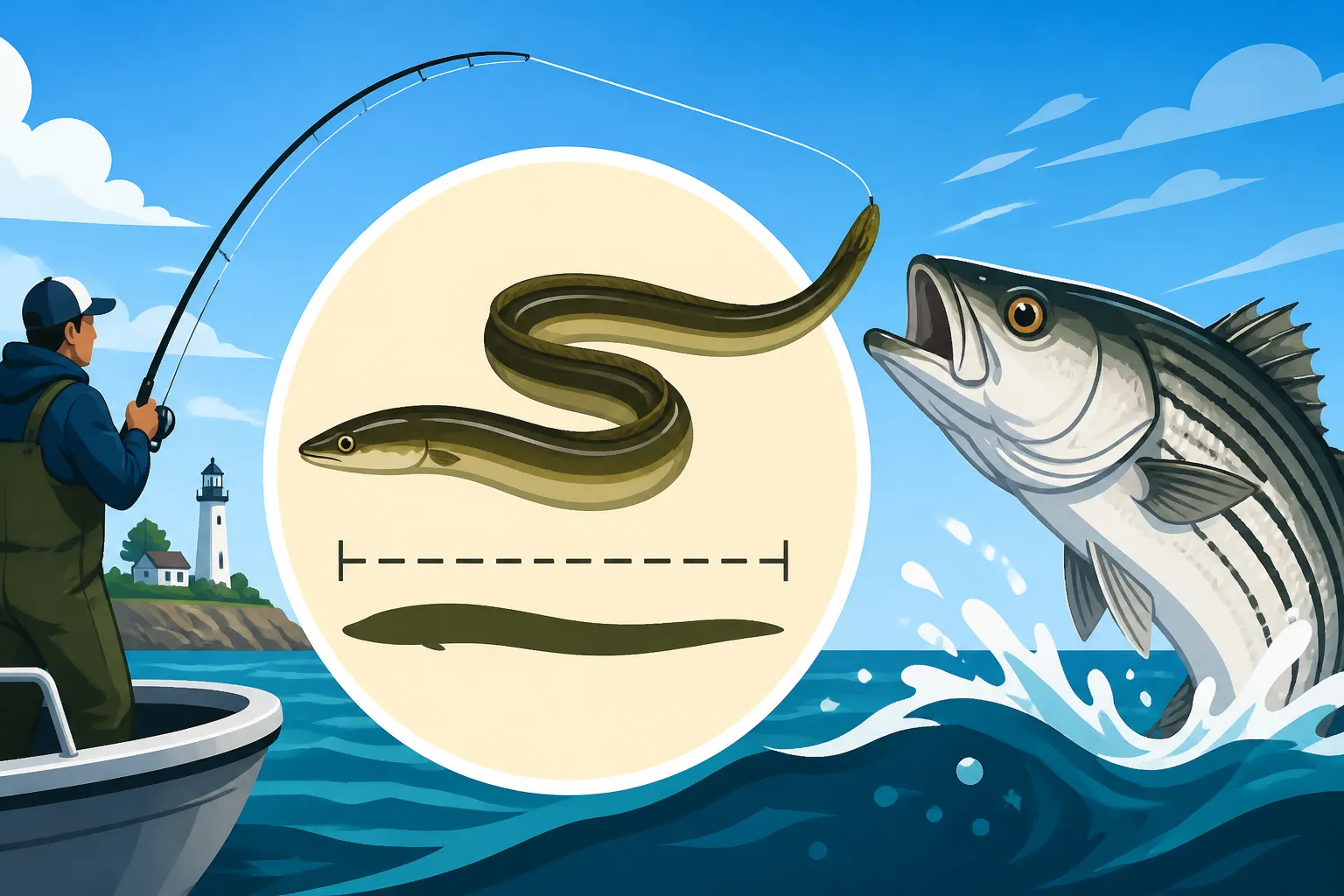
For general live-lining of striped bass in Massachusetts, an eel between 8 and 12 inches is often considered the sweet spot. This range offers a good balance of being substantial enough to attract larger stripers while remaining manageable for most fish to swallow.
- Shore Fishing: If you're casting from shore, especially in areas with moderate currents or structure like jetties and rocky points, an 8- to 10-inch eel is fantastic. It's aerodynamic enough to cast a decent distance and doesn't create too much drag in the current, allowing it to swim naturally. You'll want to ensure you're using appropriate tackle to manage the casting and retrieve of these baits, especially if you're battling the wind off the beach.
- Boat Fishing in Bays and Estuaries: For drifting or slow-trolling in calmer waters, an 8- to 12-inch eel is perfect. It offers a good profile in the water, and you can easily see its action. This size is particularly effective for targeting a wide range of striped bass sizes, from respectable keepers to larger cow bass. Many anglers find these sizes on platforms like Amazon when stocking up on their bait supplies, though local bait shops are often the best source for fresh, lively eels.
Targeting Trophy Stripers: 12-16+ Inches
When you're specifically hunting for that absolute monster striper – a true cow bass – don't be afraid to go big. Eels in the 12-inch to 16-inch range, and sometimes even larger, can be incredibly effective.
- Heavy Current Areas (e.g., Cape Cod Canal): The Cape Cod Canal, with its ferocious currents, demands a larger, more robust bait. A big eel here can withstand the current better and present a more enticing target to the behemoth stripers that frequent these waters. These fish are often looking for the biggest, easiest meal they can find, and a foot-long eel fits that bill perfectly. When fishing the canal, understanding the tides is paramount; checking out resources on the Best tide for fishing the Cape Cod Canal can greatly improve your success.
- Offshore Structure and Deep Water: When fishing from a boat over deeper structure or reefs, larger eels shine. They have a bigger visual presence and can attract stripers from further away. These situations often involve more powerful tackle, allowing you to handle the larger bait and the bigger fish it attracts. Just remember, the larger the eel, the stronger the leader and hook you'll need to ensure a solid connection.
Smaller Eels for Finicky Fish or Smaller Bait: 6-8 Inches
Sometimes, conditions call for a more subtle approach. If stripers are being finicky, or if the predominant bait in the area is smaller, scaling down your eel size can be a smart move.
- Clear, Calm Water: In clear water, fish have a better chance to scrutinize your bait. A more modest 6- to 8-inch eel might appear less intimidating and more natural. This is often the case during daytime fishing when stripers can be more wary.
- Post-Storm Conditions: After a major storm, baitfish can be disoriented or scarce. Smaller eels might represent an easier target for stripers that are still actively feeding but not necessarily chasing large prey.
- Night Fishing for Wary Fish: While many swear by large eels for night fishing, sometimes a smaller eel can be effective, particularly if the fish are shutting down on larger offerings or if you're fishing in shallower, quieter areas. For more tips on nocturnal angling, check out guides on How to fish the Cape Cod Canal at night for stripers.
Here’s a quick table to help summarize these recommendations:
| Fishing Scenario | Recommended Eel Size (Inches) | Target Stripers | Considerations |
|---|---|---|---|
| General Shore Fishing | 8-10 | Mixed sizes | Easier casting, natural swim in moderate current. |
| General Boat/Bay Drifting | 8-12 | Mixed sizes | Good profile, versatile for various conditions. |
| Heavy Current (e.g., Canal) | 12-16+ | Large/Trophy | Withstands current, substantial meal for big fish. |
| Deep Water/Offshore Structure | 12-16+ | Large/Trophy | Strong visual presence, attracts from a distance. |
| Finicky Fish/Small Bait | 6-8 | Mixed, wary fish | More natural in clear/calm water, less intimidating for selective feeders. |
Rigging Your Eel for Maximum Effectiveness
Once you've chosen the perfect eel size, the next crucial step is rigging it correctly. A poorly rigged eel won't swim naturally, might lose its liveliness quickly, or could lead to missed strikes. In Massachusetts, proper rigging is also a matter of regulation, particularly concerning circle hooks for live bait. For a comprehensive overview of general striper fishing, check out our guide on How to Catch Striped Bass in Massachusetts.
The Importance of Circle Hooks
Massachusetts regulations require the use of inline circle hooks when fishing for striped bass with natural bait (including live eels). This isn't just a rule; it's a conservation measure designed to increase the survival rate of released fish. Circle hooks are designed to hook fish in the corner of the mouth, avoiding deeper, more damaging gut-hooks.
- Hook Size: Your circle hook size should correspond to the size of your eel. For an 8- to 12-inch eel, a 7/0 to 9/0 inline circle hook is usually appropriate. For larger eels (12-16+ inches), you might go up to a 10/0 or 12/0. The gap of the hook should be wide enough to encompass the eel's body without being so large that it impedes its swim or becomes easily snagged.
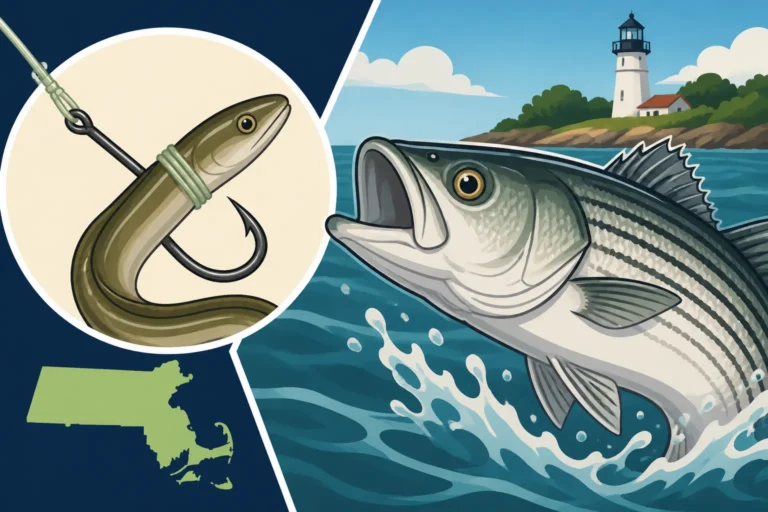
- Hook Placement: When rigging an eel, you want to ensure it remains lively and swims naturally. The most common method is to hook the eel through its lower jaw and out through the top of its snout. This allows the eel to swim freely and minimizes harm while still providing a secure attachment. Some anglers prefer to hook the eel through the eye sockets, believing it's even more secure, but many consider this less humane and it can impact the eel's natural presentation.
Leader Material and Strength
Striped bass have surprisingly good eyesight, especially in clear water, and they have mouths full of sandpaper-like teeth that can abrade lighter lines. Therefore, a robust leader is essential.
- Fluorocarbon vs. Monofilament: Fluorocarbon is often preferred for leaders due to its low visibility underwater and its abrasion resistance. However, heavy monofilament can also work well, especially for night fishing when visibility is less of a concern.
- Leader Test: For live-lining eels, you'll want a leader in the 50-80 lb test range. This provides ample strength to handle large stripers and withstand any abrasive contact with structure or the fish's mouth. The leader should be about 3-6 feet long, connected to your main line with a strong knot like an Albright or an FG knot, or a high-quality barrel swivel. For more detailed instructions, you might find our guide on How to rig a live eel for striped bass particularly helpful.
Weighting Your Eel
Sometimes, you need to get your eel down to where the fish are, especially in deep water or strong currents.
- Egg Sinkers or Fish-Finder Rigs: A popular method is to use a fish-finder rig with an egg sinker. This allows the line to slide freely through the weight, so the fish doesn't feel the resistance of the sinker when it picks up the bait. The weight size will depend entirely on the current and depth; you might use anywhere from 1 ounce to 8 ounces or more in places like the Cape Cod Canal.
- No Weight (Free-Lining): In calmer waters or when fishing shallower depths, free-lining your eel with no weight at all can be incredibly effective. The eel's natural swimming action is unhindered, presenting a very realistic bait. This technique is often used when fishing around visible structure or chum lines.
Handling and Caring for Live Eels
Eels are slippery, strong, and can be quite a handful, but keeping them lively is paramount for successful live-lining. A lethargic eel won't entice a striper the way a wriggling, active one will. Knowing how to properly store and handle them will make your fishing experience much smoother and more productive.
Storage and Transport
Keeping your eels fresh and active starts from the moment you acquire them. Whether you're buying them from a local bait shop or ordering online from a reputable supplier on a site like Amazon (though live bait usually requires specialized shipping), proper storage is key.
- Eel Bags or Buckets: Eels can be stored in a specialized eel bag, which is a mesh bag that keeps them contained but allows water to flow through. For longer periods or easier access, a dedicated bait bucket or cooler is ideal. I often use a 5-gallon bucket with a tight-fitting lid and some coarse salt.
- Water and Aeration: Eels don't necessarily need a lot of water if they're kept cool and moist. A small amount of fresh (not chlorinated) water, just enough to cover them, or damp eel grass, works well. If you're using a bucket, a small aerator can help keep the water oxygenated, especially on warmer days. However, sometimes simply changing the water every few hours with fresh, cool water is sufficient.
- Temperature Control: Eels thrive in cool conditions. During warmer months, keep your eels in a cooler with some ice packs (separated from direct contact with the eels) or in the coolest part of your boat or vehicle. Extreme heat will quickly sap their energy and liveliness.
Handling Eels Without the Slip-and-Slide
Anyone who's ever tried to grab a live eel knows they're masters of escape! Their slimy skin and powerful bodies make them incredibly difficult to hold.
- Gloves: A pair of sturdy, grippy gloves is your best friend when handling eels. Cotton gloves or specialized fishing gloves can provide the necessary grip without harming the eel.
- Rag or Sand: Many anglers keep a damp rag or even a small container of sand on hand. A quick sprinkle of sand on the eel can give you the traction needed to grab and hook it securely. The slime on their skin is what makes them so slick, and sand helps neutralize that.
- Quick and Confident: The key to handling eels is to be quick and confident. Hesitation often leads to them wiggling free. Hold them firmly but gently enough not to injure them, especially around the head for hooking. Remember, a healthy, uninjured eel will swim better and attract more fish.
Advanced Live-Lining Techniques in Massachusetts
Once you've got your eels in order, it's time to put them to work. Live-lining eels is an art, and understanding how to apply different techniques across Massachusetts' diverse waters can significantly improve your catch rate. From the bustling Cape Cod Canal to tranquil shorelines, the approach can vary. You might also want to look into other types of bait, by reviewing our guide on the Best Lures for Striped Bass in Massachusetts to diversify your tactics.
Drifting and Slow-Trolling from a Boat
Boat fishing opens up a world of possibilities for live-lining eels. This method allows you to cover more ground and target specific structures that are out of reach from shore.
- Finding the Right Drift: When drifting, you're letting the current or wind move your boat, carrying your eel along with it. Use your fish finder to locate structure, baitfish schools, or active stripers. Position your boat upcurrent or upwind and let your eel drift naturally into these prime areas. This technique is particularly effective in areas like Buzzards Bay or along the many channels and rips of Nantucket Sound, where the current dictates the drift.
- Controlled Trolling: Slow-trolling, where you use your boat's engine at its lowest speed, gives you more control over your presentation. This is great for tracing contours, following drop-offs, or working along rocky shorelines. The key is to troll just fast enough to give the eel a natural swimming action, but not so fast that it spins unnaturally or looks like it's struggling. A speed of 1-2 knots is often ideal.
Shore-Based Live-Lining Tactics
Don't have a boat? No problem! Live-lining eels from shore can be incredibly productive, especially during the nighttime hours when stripers move closer to shore to feed.
- Piers, Jetties, and Rock Outcrops: These structures provide excellent ambush points for stripers. Cast your eel out and let it drift naturally with the current alongside the structure. Be prepared for aggressive strikes right after your bait hits the water, as stripers might be lurking close by. This is also a fantastic way to access deeper water without a boat. When fishing from a pier, make sure to check local rules regarding fishing permits and access, as covered in Massachusetts Rules for Fishing From a Pier or Bridge.
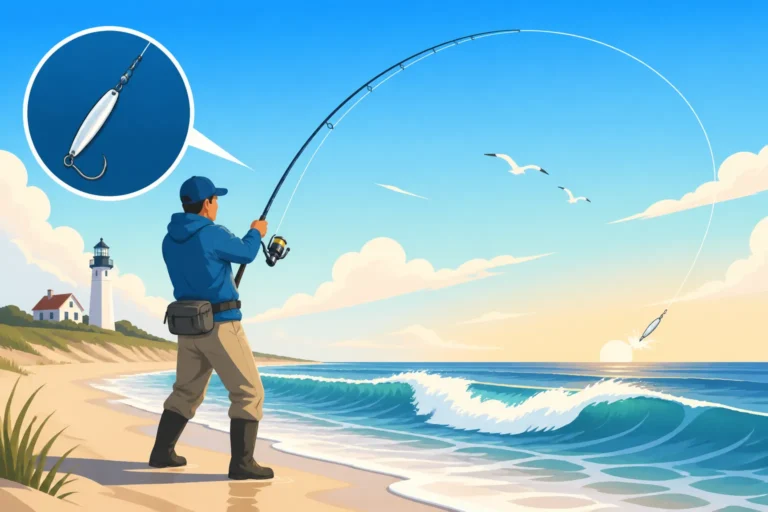
- Beaches and Surfcasting: While often associated with artificial lures, surfcasting with live eels can be deadly, particularly on darker nights. Cast your eel just beyond the breaking waves into the deeper troughs or rips where stripers patrol. The natural movement of the eel in the wash can be irresistible. A longer surf rod will help you get the distance you need for this technique. For a broader perspective on shore-based fishing, our Cape Cod Canal Fishing Guide for Massachusetts Anglers has excellent information.
Night Fishing and Tidal Considerations
Many of the biggest striped bass are caught at night, and eels are a prime bait for these nocturnal hunters.
- Darkness is Your Friend: Under the cover of darkness, stripers are often bolder and less wary, venturing into shallower water to feed. A live eel, with its natural scent and wriggling motion, is a beacon in the dark.
- Tidal Flow: Pay close attention to the tides. For many spots, particularly those with strong currents, the beginning or end of a moving tide (incoming or outgoing) can be incredibly productive. This is when baitfish are often disoriented, and stripers are actively feeding. Understanding When striped bass season starts in Massachusetts and the best times within that season can make a huge difference.
Final Thoughts on Eel Selection and Strategy
Ultimately, the "best" eel size for live-lining striped bass in Massachusetts is a flexible concept that adapts to your specific fishing situation. While a general range of 8-12 inches is a great starting point, being willing to experiment with larger or smaller eels based on the conditions, target fish, and local bait will undoubtedly lead to more success.
Remember that liveliness is often more important than precise size. A healthy, active 8-inch eel will almost always outperform a lethargic 16-inch eel. So prioritize proper handling and storage to keep your eels in top condition.
Always stay informed about the latest Massachusetts fishing regulations, especially regarding circle hooks and slot limits for striped bass. These rules are in place to ensure a healthy fishery for generations to come. For instance, understanding the Massachusetts Striped Bass Slot Limit Explained is crucial for compliance. By combining the right eel size with proper rigging, careful handling, and a strategic approach, you'll be well on your way to experiencing the thrill of battling a Massachusetts striped bass on live eel.
Disclaimer
The information provided in this guide is for general informational purposes only. Fishing regulations and conditions in Massachusetts can change. Always consult the official Massachusetts Division of Fisheries and Wildlife (MassWildlife) website or current fishing regulations pamphlet for the most up-to-date rules and guidelines before engaging in any fishing activity.