Best tide for fishing the Cape Cod Canal
Ask any seasoned angler who's spent time on the Cape Cod Canal, and they'll tell you that cracking the code of its tides is like finding the secret handshake to fishing success. It's incredibly frustrating to invest time, effort, and gear only to find the fish are completely shut down because you hit the wrong stage of the tide. This guide is dedicated to demystifying the powerful tidal currents of the Cape Cod Canal, helping you understand precisely when and how to fish them for the best possible results.
Understanding the Cape Cod Canal's Unique Tidal Dynamics
The Cape Cod Canal isn't just any waterway; it's a man-made marvel that connects Cape Cod Bay to Buzzards Bay, acting as a crucial shortcut for marine traffic and, more importantly for us anglers, a massive funnel for tidal flow. This funnel effect is precisely what makes the Canal such a productive, yet often challenging, fishing ground. The sheer volume of water moving through this narrow passage creates some of the strongest currents on the East Coast, and learning to read these currents is paramount to your success.
The Phenomenon of the Canal's Tidal Exchange
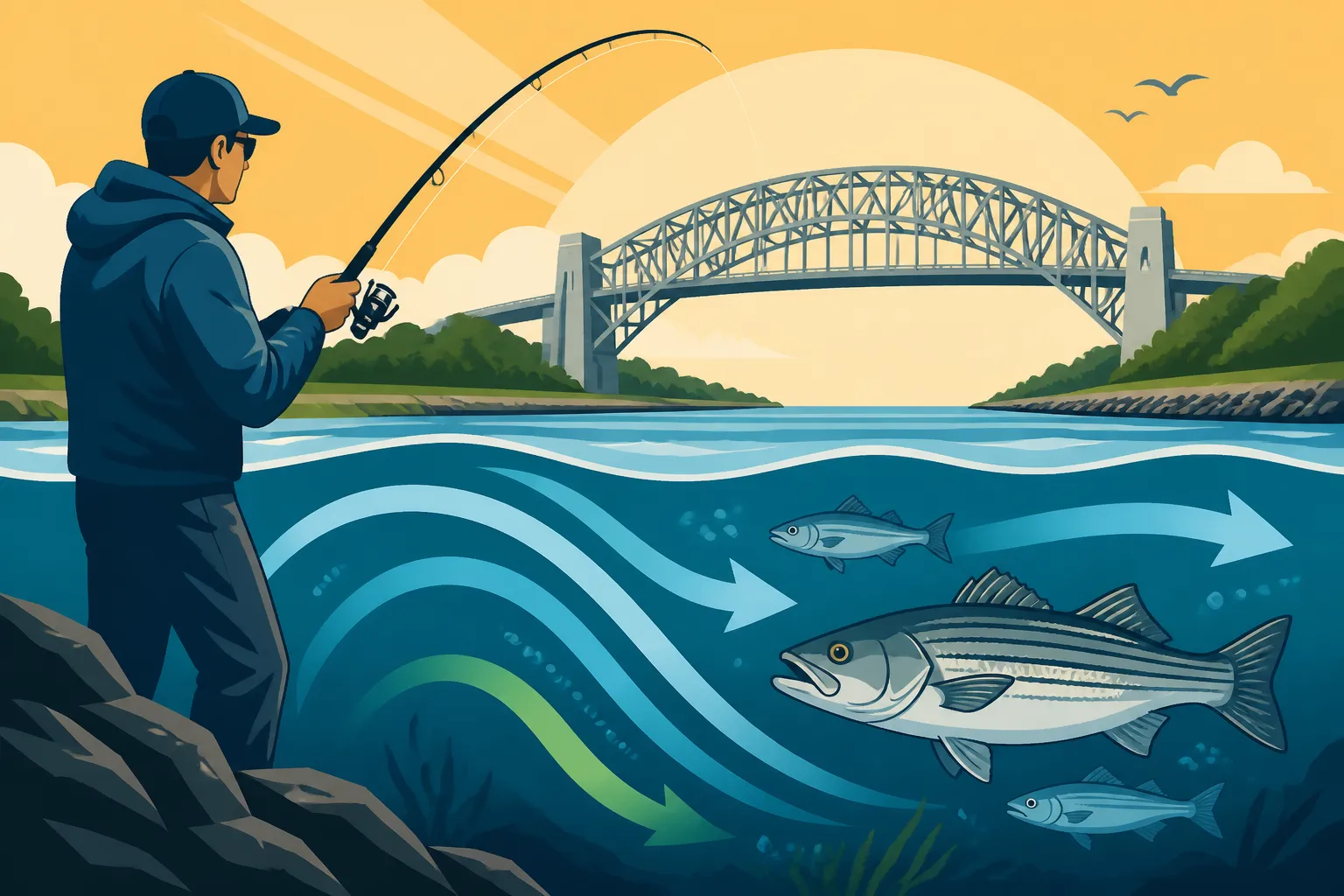
Imagine millions of gallons of water trying to rush through a narrow garden hose. That's essentially what happens twice a day at the Cape Cod Canal. As the tide rises in one bay and falls in the other, an immense pressure differential causes water to surge through the Canal with incredible force. This creates distinct periods of eastward and westward flow, punctuated by relatively brief slack tides. During peak flow, the currents can reach speeds of several knots, making fishing nearly impossible in certain areas. This constant movement brings baitfish, oxygen, and nutrients, which in turn attracts predatory species like striped bass, bluefish, and even tuna.
However, these powerful currents aren't just a simple push and pull. Factors like the moon phase (new and full moons bring stronger "spring" tides, while quarter moons bring weaker "neap" tides), wind direction, and even recent rainfall can influence the exact timing and strength of the currents. Knowing when to expect the strongest or weakest flows is key. Many anglers swear by consulting tide charts specifically for the Canal, which can be found online or at local tackle shops. These charts provide predictions for high tide, low tide, and crucial slack tide periods at both ends of the Canal.
How Different Tidal Stages Impact Fish Behavior
Fish are opportunists, and their behavior in the Canal is dictated almost entirely by these massive tidal movements. They conserve energy when the currents are too strong and become aggressive feeders when conditions are just right. For instance, baitfish like herring, mackerel, and silversides are often swept through the Canal during strong currents. Predatory fish will position themselves in ambush points, waiting for these easy meals to come by.
During the strongest currents, you might find fish holding tight to structure – rocks, jetties, or bridge pilings – trying to escape the powerful flow. They'll dart out to grab passing prey but largely stay out of the main current. As the current begins to slow down, fish become more active, moving out from cover to feed more freely. The transition periods, especially the beginning and end of a strong current, are often the most productive. Slack tide, while offering a chance to fish lighter tackle, can sometimes be less productive for the biggest predators, as the bait is no longer being funneled through. It's a delicate balance that requires keen observation and understanding. For more general insights into fishing this iconic waterway, check out our Cape Cod Canal Fishing Guide for Massachusetts Anglers.
Deciphering the Best Tidal Flows for Different Species
While the Canal is famous for its powerful currents, it's not a "one size fits all" scenario when it comes to fishing. Different species have different preferences, and even within the same species, their behavior can change dramatically based on the stage of the tide. The secret isn't just knowing when the tide is moving, but how it's moving and what that means for your target.
Striper Success: Aligning with the Current
For many, the Cape Cod Canal is synonymous with striped bass fishing. These powerful predators are incredibly attuned to the Canal's currents, using them to their advantage. Generally speaking, the peak of a strong current, whether incoming (eastbound) or outgoing (westbound), is often considered prime time for stripers. Why? Because the strong flow disorients baitfish, pushing them through choke points and making them easy targets.
Stripers will often hold in specific ambush spots: eddies behind prominent rocks, current seams where fast water meets slower water, or along the edges of the main channel. They'll sit with minimal effort, waiting for a meal to be delivered directly to them. This is when large plugs, heavy jigs, and even live eels are most effective. You need to be able to cast far enough and use enough weight to get your lure into the strike zone without it being immediately swept away. Anglers often target specific areas known for holding stripers during certain tidal flows. If you're wondering Where to fish the Cape Cod Canal for striped bass, understanding these tidal preferences will be immensely helpful.
However, not all strong currents are equal. Some experienced Canal Rats prefer a moving tide rather than a ripping tide. A current that is just starting to build, or one that is beginning to slacken, can sometimes be more productive than the absolute peak. This is because fish might find it easier to actively hunt and chase prey when the current isn't at its most extreme.
Bluefish and Other Predators: Adapting to the Flow
While stripers often dominate the Canal, bluefish are also a formidable presence, especially during the warmer months. These aggressive, toothy predators are less particular about current speed than stripers, but they certainly feed on the same principle: ambush disoriented bait. You'll often find bluefish mixed in with stripers, especially during strong tidal flows when baitfish are abundant.
Bluefish respond well to fast-moving lures and topwater plugs, which they'll smash with gusto. Their aggressive nature means they're often willing to chase a lure even in powerful currents, making them an exciting catch when the Canal is ripping. Like stripers, they'll use current breaks and eddies to stage their attacks.
Other species, such as tautog, fluke (summer flounder), and scup, also inhabit the Canal, though they are less frequently targeted in the main current. Tautog are bottom dwellers that prefer structure and will often be found near rocks and pilings, feeding on crabs and shellfish. They are best targeted during slower currents or slack tide, when you can present bait on the bottom without it being immediately dragged away. Fluke, being ambush predators that bury themselves in the sand, also prefer slower moving water, often on the edges of channels or in calmer pockets. Targeting these species effectively requires a different approach, often involving lighter tackle and a more precise presentation than for the pelagic predators.
Practical Strategies for Fishing Specific Tides
Now that we understand the "why" behind the tides, let's dive into the "how." Fishing the Cape Cod Canal isn't just about showing up; it's about preparation, strategy, and often, a bit of grit. Each tidal stage demands a different approach, and being versatile is the mark of a truly successful Canal angler.
Fishing the Slack Tide
Many novice anglers mistakenly believe that slack tide, the period when the current temporarily stops or is at its weakest, is the "best" time to fish because it's easiest. While it certainly offers a reprieve from the fighting currents, it's not always the most productive for the main target species like striped bass and bluefish. With no current to funnel bait, the fish disperse, and finding them can be like looking for a needle in a haystack.
However, slack tide does have its advantages. It allows you to fish lighter tackle, use smaller lures, and target areas that are inaccessible during strong currents. This can be a great time for finesse presentations, targeting specific structure, or even trying for bottom dwellers like tautog or flounder that prefer calmer water. If you're trying to introduce kids to Canal fishing, or simply want a less strenuous experience, slack tide can be a good option. Just be prepared for potentially fewer, but perhaps larger, fish. The window for true slack is often very short, sometimes only 15-30 minutes, so be ready to capitalize on it. You might even find opportunities for species that don't love the rip, which makes it a unique time to fish the Canal.
Dominating the Moving Tide
This is where the magic often happens for striped bass and bluefish. As the current begins to pick up after slack, and especially during its peak, the Canal comes alive. Fish are actively feeding, and the challenge is to present your lure naturally within that powerful flow.
Eastbound Current (Incoming Tide from Buzzards Bay to Cape Cod Bay): During an eastward current, the water is flowing from the warmer, shallower Buzzards Bay into the cooler, deeper Cape Cod Bay. This flow can bring different baitfish, and often means anglers are casting west and retrieving with the current, or casting across it to hit eddies. Popular spots during an eastbound tide include areas like Scusset Beach, which faces Cape Cod Bay, or the various turns and rock piles throughout the Canal that create current breaks on the northern side.
Westbound Current (Outgoing Tide from Cape Cod Bay to Buzzards Bay): A westbound current sees water flowing from Cape Cod Bay into Buzzards Bay. This can be a particularly productive current, as it often flushes out baitfish from the bay and its estuaries. Anglers typically cast east and retrieve with the current, or again, target current seams and eddies that form on the southern side of the Canal. Spots like the Bell Road access, the East End, or the west-facing section of the Canal near Bourne are often hot during a westbound flow. Our guide on How to fish a falling tide at the Cape Cod Canal delves into this in more detail.
For both strong currents, heavy jigs (like those from Guppy Lures or Savage Gear), large swimming plugs, and weighted soft plastics are standard. Anglers will often cast up-current and let their lure swing through the strike zone, mimicking a struggling baitfish being swept by the current. It takes practice to feel the bottom and differentiate a snag from a bite in these conditions. Some of the most effective techniques during these periods are covered in articles like Jigging Techniques for Cape Cod Canal Stripers.
| Tidal Stage | Current Strength | Primary Target Species | Preferred Lures/Techniques | Angler Challenge Level |
|---|---|---|---|---|
| Slack Tide | Very Low / Still | Tautog, Fluke, Scup, Smaller Stripers | Light Jigs, Soft Plastics, Bait on Bottom | Easy |
| Building Tide | Moderate | Striped Bass, Bluefish | Medium Jigs, Swimming Plugs, Topwater | Moderate |
| Peak Tide (Ripping) | Strong / Very Fast | Large Striped Bass, Bluefish | Heavy Jigs, Large Plugs, Live Eels | High |
| Slowing Tide | Moderate | Striped Bass, Bluefish | Medium Jigs, Swimming Plugs, Soft Plastics | Moderate |
Note: This table provides general guidelines. Local conditions and fish behavior can always vary.
Navigating the Tricky Turning Tides
The periods just before and after true slack tide, when the current is either building or slowing down, are often incredibly productive. These are the "turning tides," and they represent a sweet spot where the current is strong enough to move bait, but not so strong that fish can't actively pursue it.
During the initial stages of a building tide, baitfish start to get swept along, and predators begin to stir, moving out from their holding spots. This is a fantastic time for casting medium-sized plugs and jigs. Similarly, as a strong tide begins to wane, the fish often go on a final feeding binge before the current fully dies.
Many anglers plan their trips around these turning tides, arriving an hour or so before peak current or staying an hour after it. Timing is everything, and knowing your tide chart inside and out will give you a significant advantage. If you're looking for an efficient way to plan your outings or even book a guided trip with someone who truly knows the Canal's tides, exploring options on platforms like FishingBooker can connect you with experienced captains who live and breathe these conditions. They often have real-time knowledge that goes beyond simple tide charts.
Beyond the Tide: Other Factors for Canal Success
While understanding the tides is undeniably the most critical component for success when fishing the Cape Cod Canal, it's not the only factor. A great Canal angler combines tidal knowledge with an awareness of other environmental and behavioral elements. Ignoring these can lead to a frustrating day, even if you've perfectly timed the current.
Bait Movement and Presence
No matter how perfect the tide, if there's no bait, there are unlikely to be many fish. The Canal is a transient environment, and the presence of baitfish—whether it's herring, mackerel, bunker (menhaden), or even squid—is a huge draw for predatory species. Keep an eye on local fishing reports, social media groups, and even observation from the banks. If you see birds diving, baitfish showering on the surface, or other signs of life, you're in a good spot.
The type of bait present can also influence your lure choice. "Matching the hatch" isn't just for fly fishing; it applies to the Canal too. If large schools of bunker are pushing through, a large swimming plug or jig that imitates a bunker will likely outperform a smaller offering. Conversely, if schools of smaller silversides are prevalent, a smaller, slender lure might be more effective. Experienced anglers often check the stomachs of any fish they keep to see what they've been feeding on, providing invaluable intel for future trips.
Time of Day and Light Conditions
While the tide is king, the time of day certainly plays a significant role. Dawn and dusk, often referred to as "low light" periods, are almost universally productive for predatory fish, especially striped bass. These periods offer fish a natural advantage in ambushing prey, as their keen eyesight allows them to hunt effectively while baitfish are less aware.
Night fishing on the Canal can also be incredibly productive, particularly for larger striped bass that become more active under the cover of darkness. Many of the biggest stripers caught in the Canal are landed after sunset. In fact, many anglers specifically target the night bite, using large, dark-colored lures or live eels. Considerations for Can You Fish the Cape Cod Canal at Night? are important for safety and effectiveness. Conversely, midday during bright sunshine can often be the slowest fishing, as fish tend to retreat to deeper water or tight cover to avoid the glare. Combining a strong tide with low light conditions is often the ultimate recipe for success.
Weather and Water Conditions
Wind, rain, and water temperature all impact fishing in the Canal. A strong wind blowing against the current can create confused, choppy water, making casting difficult and affecting lure presentation. A strong tailwind, however, can aid in long casts. Rain, especially a gentle drizzle, can sometimes turn on a bite, washing bait into the water and creating a natural disturbance. Heavy downpours, on the other hand, might make conditions unpleasant and temporarily slow things down.
Water temperature is a crucial, though less immediate, factor. Striped bass and bluefish prefer specific temperature ranges. Extremely hot summer water can push fish deeper or make them lethargic, while very cold water can also shut down a bite. Knowing the general water temperatures of Buzzards Bay and Cape Cod Bay can give you an idea of when to expect fish to be active. Changes in water clarity, from sediment stirred up by storms to algal blooms, can also affect how fish feed. For a broader overview of the various elements that come together for a successful outing, consider reading about the Best fishing conditions for the Cape Cod Canal.
Planning a trip with all these variables in mind can feel daunting, but it doesn't have to be. Platforms like FishingBooker can help you find guides who specialize in the Canal and can offer up-to-the-minute advice on conditions, tides, and what's biting. Their expertise can be invaluable for maximizing your chances on this incredible fishery. Remember, while the tide sets the stage, these other factors often dictate whether the show is a blockbuster or a bust.
Final Thoughts on Mastering the Canal's Tides
Fishing the Cape Cod Canal is a truly unique experience, a constant dance with powerful natural forces. You'll find few other places where the tide dictates success so completely. It can be intimidating, frustrating, and at times, utterly perplexing, but when you hit that sweet spot, when the current is ripping just right and the stripers are crashing bait, there's nothing quite like it.
Don't get discouraged if your first few trips aren't banner days. Mastering the Canal's tides and its nuances takes time, observation, and a willingness to learn from every cast. Pay attention to the subtle changes in current speed, the eddies forming around structure, and the behavior of the baitfish. Talk to local anglers – they're a wealth of knowledge, though sometimes a bit secretive!
Remember to always prioritize safety when fishing the Canal. The currents are incredibly strong, and the bottom is often treacherous. Wear appropriate footwear, bring plenty of water, and never turn your back on the water. With patience, persistence, and a deep understanding of the mighty tides, you'll be well on your way to experiencing the legendary fishing the Cape Cod Canal has to offer. For more detailed information, exploring topics like the Best time of year to fish the Cape Cod Canal or even specific regulations such as the Massachusetts Striped Bass Slot Limit Explained will further enhance your preparation.
Disclaimer
The information provided in this guide is for general informational purposes only and is not intended as legal, safety, or professional advice. Fishing conditions, regulations, and fish behavior in the Cape Cod Canal can change rapidly. Always consult official Massachusetts Division of Marine Fisheries (DMF) and local authority resources for the most current rules, safety guidelines, and advisories before planning any fishing trip. Fishing involves inherent risks, and anglers should always exercise caution and prioritize personal safety.