How to jig for perch through the ice
Boy, there's nothing quite like a crisp winter day out on the ice, especially when you're after those feisty yellow perch! But let's be real, ice fishing can feel a little intimidating if you're not sure where to start, and trying to coax a bite from a cold-water perch requires a specific touch. Many anglers find themselves staring down a hole for hours, wondering why the fish aren't cooperating. This guide is going to strip away the guesswork, walking you through the precise jigging techniques, essential gear, and savvy tips you need to confidently target and catch yellow perch through the ice in Massachusetts.
Understanding Yellow Perch Behavior Under the Ice
Catching yellow perch through the ice isn't just about dropping a line; it's about understanding their winter mindset. These fish change their habits significantly when the water turns cold and a thick layer of ice forms overhead. Knowing their preferred haunts and how their feeding patterns shift is the first step to a successful day on the hard water.
Where Perch Hold in Winter
When the lakes and ponds of Massachusetts freeze over, yellow perch tend to congregate. They're schooling fish by nature, and this behavior becomes even more pronounced in winter. You'll often find them tucked away in deeper holes, seeking out more stable water temperatures that are slightly warmer than the shallower areas. Think about those gradual drop-offs that lead to the basin of a pond, or even submerged humps and points that rise up from deeper water. These are prime locations.
They also gravitate towards structure that offers cover and food sources. If there are remnants of old weed beds that haven't completely decomposed, perch will often patrol their edges. Rock piles, sunken timber, or even man-made structures like old boat docks (though these are less common on natural ice fishing spots) can hold concentrations of fish. The key here is that when you find one perch, you're very likely to find a whole school. This is why drilling multiple holes and moving around is so crucial for success, allowing you to scout for those winter congregations. Many of the best ice fishing ponds in Massachusetts will hold strong populations of perch, but knowing where to drill within those ponds makes all the difference.
Perch Feeding Habits in Cold Water
Unlike their energetic summer counterparts, winter perch are moving at a much slower pace. Their metabolism slows down considerably in the frigid water, which means they're not expending as much energy, and therefore, they don't need to feed as aggressively or as frequently. This is where many anglers get frustrated, expecting the same hard strikes they might get in open water.
In reality, winter perch bites are often incredibly subtle. You might feel just a slight tick on your line, a faint "mushy" feeling, or your line might simply go slack or stop moving when it should be falling. It takes a keen eye and a sensitive rod to detect these nuanced takes. They're still feeding, of course, but they're often more interested in smaller, slower-moving baits that require minimal effort to capture. Presenting your offering naturally and patiently becomes paramount, as a fast, erratic retrieve might just spook them rather than entice a bite. Understanding these subtle cues is what separates a good day from a great one when jigging for perch.
Essential Gear for Ice Jigging Perch
Having the right tools for the job can make a world of difference between a frustrating outing and a banner day of perch fishing. When the temperatures drop and the ice thickens, your gear needs to be up to the task of handling the cold, detecting subtle bites, and effectively presenting your lures. Let's break down the core components you'll want in your ice fishing arsenal for yellow perch.
Rods, Reels, and Line
For ice jigging perch, sensitivity is king. You'll want to opt for a light action ice fishing rod, typically in the 24- to 30-inch range. These rods are designed with extremely sensitive tips that can telegraph even the faintest of bites, which, as we discussed, is common with cold-water perch. The shorter length also makes them manageable in tight spaces, like inside an ice shanty or kneeling over a hole. Pair this with a small, lightweight spinning reel, size 500 or 1000, that has a smooth drag. The drag is important because even though perch aren't huge fighters, you'll still appreciate a smooth release of line, especially if you happen to hook into an unexpected, larger fish.
When it comes to line, light is right. Many experienced perch anglers spool up with 2 to 4 lb test monofilament or fluorocarbon line. This light test is crucial for a couple of reasons: it allows your small jigs to descend naturally and have the most realistic action, and it vastly improves your ability to feel those subtle bites. Monofilament has a bit of stretch, which can be forgiving with quick head shakes and cold hands, while fluorocarbon offers minimal stretch and excellent sensitivity, plus it's nearly invisible underwater. Many anglers purchase quality ice fishing lines from retailers like Amazon for convenience and selection. Choosing the right line can make a significant impact on your success rate, especially when fishing in deeper water. For a comprehensive overview of necessary equipment, check out our guide on the Best Ice Fishing Gear for Massachusetts Winters.
The Best Jigs and Baits
This is where the magic happens! Small, flashy, and scent-laden are the keywords for perch jigs. Tungsten jigs are incredibly popular because tungsten is much denser than lead, allowing for a smaller profile jig that still gets down to depth quickly. Teardrop jigs, often tipped with bait, are a classic choice. Small spoons, like the iconic Swedish Pimple or a slender Kastmaster, can imitate struggling baitfish and are excellent for "ripping" to attract attention before slowing down. Horizontal jigs, such as a Rattl'n Flyer, are designed to hang horizontally in the water column, presenting a tempting target.
Color choice can be critical. Glow-in-the-dark jigs are fantastic in deeper, darker water or on overcast days. Chartreuse, orange, silver, and gold are consistently productive colors that mimic natural forage or provide an attractive contrast. But the real secret weapon for perch is tipping your jig with live bait. Wax worms, spikes (fly larvae), and mousies are irresistible to perch, providing both scent and a wiggling visual. A small piece of real worm or a tiny minnow (if allowed by local regulations) can also be incredibly effective. This added attractant often makes the difference between a look and a bite. While the principles might differ slightly, much of the general advice on selecting lures, such as that found in our guide on Best Bait for Trout Fishing in Massachusetts, can apply to finding the right attractants for perch too.
Electronics and Ice Safety
While not strictly required, a flasher or a portable fish finder is an absolute game-changer for ice jigging perch. These devices allow you to see exactly what's happening under the ice in real-time. You can pinpoint the depth of the bottom, identify schools of perch, and even watch your jig as it descends and approaches the fish. This immediate feedback helps you adjust your depth and jigging cadence, dramatically increasing your efficiency and success. Many reliable models are available and can be purchased from online retailers such as Amazon.
Beyond electronics, you'll need a few other essentials for a safe and comfortable day. An ice auger, either a hand auger for thinner ice or a power auger for speed and thicker ice, is a must-have for drilling your holes. A skimmer helps keep your hole free of slush. A sturdy bucket serves double duty as a seat and a place to store your gear, while hand warmers are invaluable on bitter cold days. Don't forget proper winter attire, including cleats or ice creepers for traction on slick surfaces. Most importantly, always prioritize safety by understanding how thick ice needs to be for safe fishing in Massachusetts. Never venture onto ice that looks questionable or hasn't been properly tested.
Mastering the Jigging Technique for Perch
So you've got your gear, you know where perch should be, but how do you actually convince them to bite? Jigging for perch isn't just a random up-and-down motion; it's a nuanced dance designed to trigger their cold-water feeding instincts.
Locating Perch and Drilling Holes
One of the biggest mistakes ice anglers make is drilling one hole and staying put, hoping the fish will magically appear. This is especially inefficient for schooling fish like perch. Instead, adopt a "run and gun" approach: drill a series of holes, often in a zig-zag pattern or along a depth contour. Focus on areas near known drop-offs, submerged humps, or the edges of old weed beds. As mentioned before, a flasher is invaluable here. Before you even drop a line, use your electronics to scan each hole. If you see fish arches or red marks (depending on your flasher), that's where you commit some time. If not, move to the next hole.
Start your scouting mission near structure, but don't be afraid to venture out into deeper basins as well. Perch sometimes suspend in open water, chasing schools of baitfish. By drilling a variety of holes, you increase your chances of intercepting an active school. Remember, when you find one perch, there are likely many more nearby, so be prepared to set up camp once you hit a productive spot. This active search strategy is a hallmark of successful ice fishing.
The Art of the Perch Jig
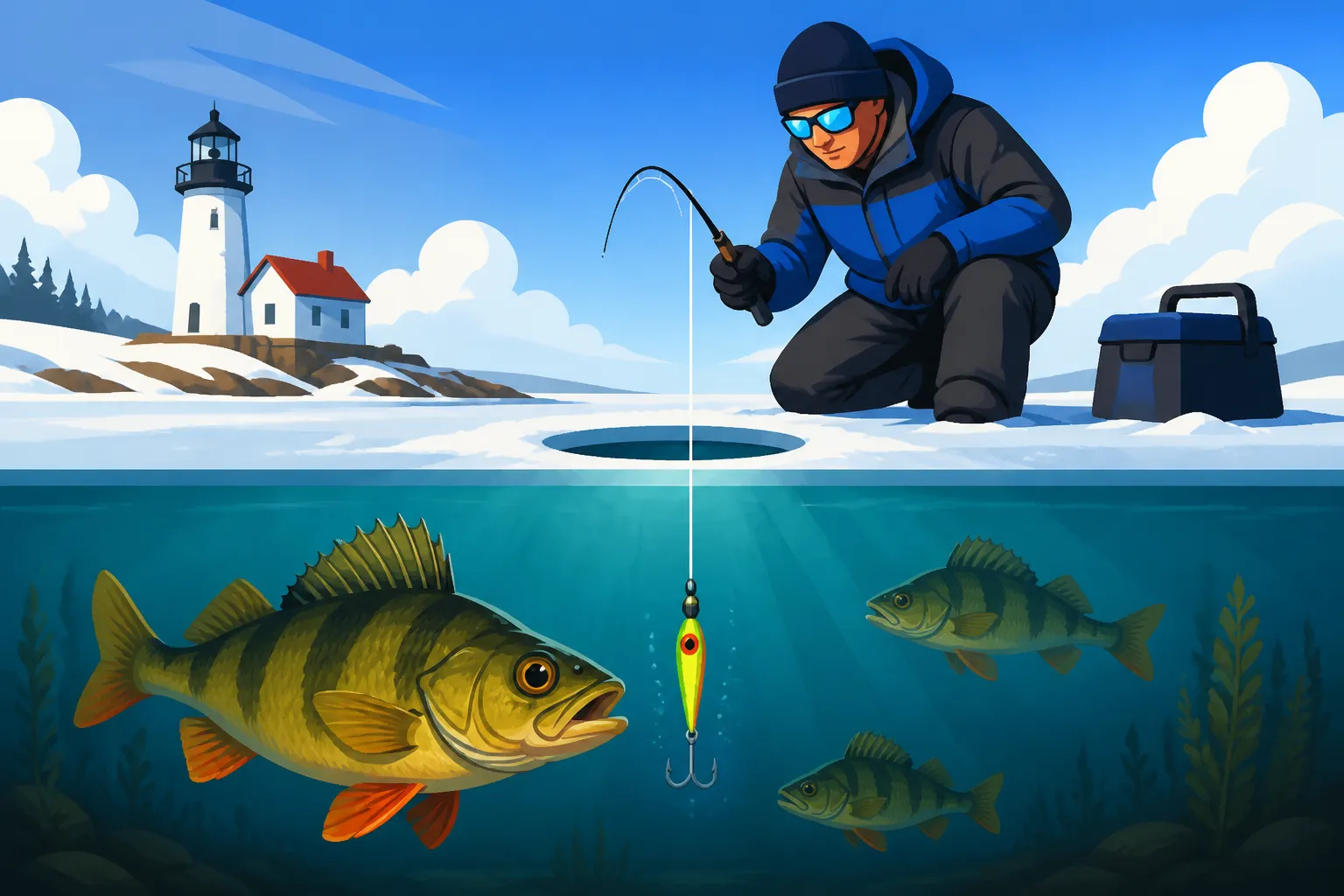
Once you've found a promising hole, it's time to refine your jigging action. Perch in cold water rarely want an aggressive presentation. Start by "pounding the bottom" – let your jig hit the lakebed, then lift it slightly and drop it again a few times. This stirs up sediment, mimicking a feeding minnow or insect, and can draw curious perch in. After that initial commotion, the real finesse begins.
The most effective jigging for perch involves slow, subtle lifts and drops. Think of it as a gentle pulse rather than a violent jerk. Lift your rod tip just a few inches, then slowly lower it, allowing the jig to flutter and fall naturally. Perch often strike on the fall, or even when the jig is completely still. This brings us to a critical, often overlooked step: the pause. After a few lifts and drops, hold your jig absolutely still for several seconds, sometimes as long as 10-15 seconds. Many times, a perch will approach a moving jig but only commit to biting when it appears motionless and easy prey. Vary your retrieve, trying short twitches, longer lifts, and different pause durations. Let the fish tell you what they want by noting when you get bites. Watch your rod tip intently; even the slightest bend or unbend can indicate a bite. For more general approaches to winter fishing, our guide on Ice Fishing Techniques for Massachusetts Ponds offers additional insights.
Hooksetting and Landing Perch
Detecting the bite is one challenge; setting the hook is another. As established, perch bites are often incredibly light. You might not feel a distinct "thump." Instead, look for a slight twitch of your rod tip, a sudden feeling of added weight, or your line simply going slack or moving sideways when it should be falling. Sometimes, it's just a feeling of "mush" or resistance when you try to lift your jig. If anything feels out of the ordinary, assume it's a fish.
When you suspect a bite, don't rear back like you're setting the hook on a largemouth bass with heavy tackle. With light line and small jigs, a gentle, swift upward sweep of your rod is usually sufficient to bury the hook. A violent hookset can easily break your light line or rip the tiny hook out of the perch's mouth. Once hooked, keep steady pressure on the fish. Don't pump the rod aggressively; just reel steadily, letting your rod tip absorb the small head shakes. Bring them up slowly and carefully to avoid losing them at the hole. These tactics, while subtle, are what lead to consistently filling your bucket with these delicious panfish.
Advanced Tips for Consistent Perch Catches
Once you've got the basics down, there are always ways to refine your approach and consistently put more perch on the ice. These advanced tips focus on maximizing attraction, adapting to environmental factors, and practicing responsible angling.
The Power of Scent and Chumming
In the cold, dark water beneath the ice, fish rely heavily on their sense of smell. This is where scent can give you a significant edge. Many commercially available fishing scents, specifically designed for panfish or general freshwater use, can be applied directly to your jigs or bait. These scents release an aromatic trail that can draw in curious perch from a wider area, especially when their visibility is limited or their feeding drive is low. Just a small dab can make a big difference.
Another powerful technique, if allowed by local regulations, is limited chumming. This involves introducing a small amount of attractive material into your fishing hole to draw fish in and hold them there. Crushed wax worms, spikes, corn (again, check regulations – some places prohibit corn due to concerns about wildlife), or even tiny pieces of dead minnow can be dropped down the hole. The idea isn't to feed the fish to satiation, but to create a small, appealing cloud of scent and visual stimulation that makes them investigate your area. Always check the Massachusetts Fishing Regulations Pamphlet, Explained, to ensure your chumming methods are compliant with current rules before you start tossing things down the hole!
Adapting to Conditions
The success of your perch jigging can often hinge on how well you adapt to the day's conditions. Perch activity isn't constant; it ebbs and flows with various environmental factors. Generally, early morning and late afternoon tend to be the most productive periods, mimicking their feeding windows in open water. During midday, the bite can sometimes slow, but don't give up entirely; persistent jigging and moving holes can still produce. This principle is similar to what we'd consider for other species, as outlined in our Best Time of Day to Catch Stocked Trout in Massachusetts guide.
Weather also plays a role. Overcast days, often seen as dreary to us, can actually be excellent for perch fishing as the reduced light penetration makes them feel more secure and active. Conversely, bright, sunny days might push them deeper or make them more cautious. Barometric pressure changes, often associated with approaching or departing weather fronts, can also affect the bite. A stable high-pressure system can be good, but a rapidly dropping pressure before a storm can sometimes trigger a feeding frenzy. Pay attention to the weather patterns and adjust your depth and retrieve accordingly; sometimes a slight tweak is all it takes to find the active fish.
Perch as Table Fare and Conservation
One of the great joys of catching yellow perch is their exceptional taste! They are widely regarded as one of the finest-eating freshwater fish, with firm, white, flaky meat that's delicious whether fried, baked, or broiled. Many anglers specifically target perch for their culinary value, making a day on the ice both fun and rewarding for the dinner table. If you're looking for more details on this popular species, our dedicated guide to Yellow Perch Fishing in Massachusetts has you covered.
However, it's crucial to practice selective harvesting and always adhere to local regulations. Take enough for a fresh meal, but consider releasing the larger, healthier breeders back into the water to ensure robust populations for future seasons. Always be aware of the Massachusetts Freshwater Daily Catch Limits for perch and any other species you might encounter. Responsible angling ensures that everyone can enjoy the fantastic ice fishing opportunities that Massachusetts has to offer for years to come. Remember to check regulations on your Carrying Proof of Your Massachusetts Fishing License as well. Understanding the broader context of Massachusetts Fishing Seasons Explained can also help you plan your winter outings.
Here's a quick look at some popular jig types for yellow perch:
| Jig Type | Description | Common Sizes | Best Bait Tips | Advantages |
|---|---|---|---|---|
| Tungsten Teardrop | Small, heavy for its size, tear-drop shaped. | 1/16 oz – 1/32 oz | Waxworm, spike | Sinks fast, small profile, excellent sensitivity. |
| Horizontal Jig | Designed to hang flat, often with a fin or wing for flutter. | #10 – #14 | Single spike, minnow eye | Natural presentation, good for subtle bites. |
| Small Spoon | Classic jigging spoon, often with a flash or rattle. | 1/8 oz – 1/4 oz | Minnow head, whole spike | Attracts from afar, good for aggressive perch. |
| Glow Jig | Any jig type treated with glow paint. | Varies (1/32 – 1/8 oz) | Waxworm, small plastic | High visibility in dark water. |
| Micro Jig (Plastic) | Tiny jig head paired with a small soft plastic bait (e.g., small grub). | 1/64 oz – 1/32 oz | None (plastic only) | Ultra-finesse, imitates larvae. |
Disclaimer
This article is for general informational purposes only and does not constitute professional advice. Laws, prices and regulations vary by location and change over time. Consult a qualified professional for guidance on your specific situation.