When ice fishing season starts in Massachusetts
The anticipation for ice fishing season in Massachusetts is a unique kind of angler's yearning. We spend months dreaming of hard water, tip-ups popping, and the satisfying crunch of snow under our boots. But unlike open water seasons with their clear start dates, ice fishing in the Bay State doesn't kick off with a precise calendar mark. Instead, it's a dynamic interplay between Mother Nature's chilling grip and our vigilant adherence to safety. This guide is here to demystify when ice fishing season truly begins, focusing on the critical factors, regulations, and preparations you'll need to make sure your first hardwater adventure is both safe and successful.
Understanding the Official Start of Massachusetts Ice Fishing Season
It's a common misconception among newcomers, and even some seasoned anglers, that ice fishing season in Massachusetts has a set opening day. Many imagine it like deer season or trout stocking, where a specific date marks the official go-ahead. However, the reality is far more nuanced and, quite frankly, dependent on the mercury dropping consistently below freezing. The true "start" is dictated by one crucial factor: safe ice thickness, which can vary wildly across the state, even within the same body of water.
The Role of Ice Thickness, Not a Fixed Date
The Massachusetts Division of Fisheries and Wildlife (MassWildlife) doesn't issue a universal "ice-on" date because conditions are simply too localized and variable. What might be safe ice on a small, sheltered pond in the Berkshires could still be dangerously thin open water on a larger lake or pond closer to the coast or in central Massachusetts. This can be incredibly frustrating when you're itching to get out there, especially if you see photos online of folks fishing in other parts of the state. That feeling of missing out, or the temptation to test the ice prematurely, is strong, but it's exactly what leads to dangerous situations.
The primary directive from MassWildlife and all responsible ice fishing advocates is personal responsibility. It's up to each angler to assess the ice conditions before stepping out. Factors like air temperature, wind, snow cover (which can insulate and slow freezing), and underlying currents all play a significant role in how quickly and evenly ice forms. A pond that looks perfectly frozen might have springs or currents that create dangerously thin patches, even if the majority of it seems solid. Therefore, understanding the nuances of ice formation and recognizing truly safe ice is paramount, far more so than waiting for an arbitrary date on a calendar.
Minimum Safe Ice Thickness Guidelines
While there's no official "start date," there are very clear and universally accepted guidelines for minimum safe ice thickness. These aren't just suggestions; they are the bedrock of ice fishing safety. Ignoring them can have dire consequences. It's not about how thick the ice looks from shore, but how thick it actually is when you get out there and start checking. Many experienced anglers will carry an ice chisel or an auger specifically to check ice thickness every few feet as they venture out, especially on early ice or unfamiliar waters.
Clear, solid new ice is generally the strongest. Slushy ice, ice that has thawed and refrozen, or ice that contains air bubbles from trapped snow will be significantly weaker. Always assume the worst until proven otherwise. For a deeper dive into these critical safety measures, you might want to read our guide on Massachusetts Ice Fishing Safety and Ice Thickness, which goes into extensive detail about preventing accidents. Remember, the difference between clear, hard ice and milky, slushy ice can be the difference between a great day of fishing and a truly dangerous situation.
Here's a general guideline for minimum safe ice thickness for various activities, but remember, always check conditions yourself:
| Activity | Minimum Safe Ice Thickness (Clear, Solid Ice) | Notes |
|---|---|---|
| Walking & Ice Fishing | 4 inches | This is the absolute minimum for a single person. Always fish with a buddy, share your plans, and carry safety gear. |
| Snowmobile or ATV | 5-7 inches | Requires consistent, clear ice. Distribute weight, avoid stopping unnecessarily, and be wary of routes over known currents or springs. |
| Small Group Activities | 7-12 inches | For groups of people, or when transporting equipment like larger shanties or heavier sleds. |
| Car or Small Truck | 12-15 inches | Rarely recommended in Massachusetts. Vehicle access is often restricted, and the risk significantly outweighs the convenience. Extreme caution is paramount, and only on designated, consistently frozen bodies of water, if permitted. |
It's crucial to understand that these are minimums for clear, solid ice. If the ice is slushy, fractured, or has been through freeze-thaw cycles, you need significantly more thickness to be safe. Many anglers often prefer to wait until ice is at least 6 inches thick for comfortable, worry-free walking and fishing, just to provide an extra margin of safety, especially if they are bringing a lot of gear or fishing with children.
Navigating Early Season Conditions and Regulations
The lure of early ice is powerful. Anglers, cooped up after the fall run, often get that itch the moment temperatures dip. However, early season conditions are often the most precarious, demanding extra vigilance and adherence to not only ice safety but also general fishing regulations. It’s not just about when the ice is thick enough, but also about being prepared for what you might encounter.
Patience is Key: The Dangers of Early Ice
The period just after the first significant cold snap creates what many call "first ice" or "early ice." While it can offer some of the best fishing of the season – fish are often still active and less pressured – it's also the most dangerous time to be on the water. The ice hasn't had a chance to become consistently thick across the entire body of water. You might find a solid six inches in one spot, only to hit two inches just a few yards away due to an underwater spring, a moving current, or a submerged structure that radiates heat.
Imagine a hypothetical scenario: you've been watching the thermometer for days, seeing those beautiful single-digit temperatures. You hear a rumor that Smith Pond, a favorite spot, has "good ice." You grab your gear, eager to be the first one out. You step onto what seems like solid ice, drill a hole, and find five inches of clear ice – great! But as you walk a little further, towards that promising weed bed you fished in summer, the ice thins dramatically over an old creek channel you didn't even know was there. Suddenly, you're looking at a half-inch of milky ice, or worse, you've stepped through. This isn't just a hypothetical; it happens every year across the country. That feeling of relief mixed with profound danger is something no one wants to experience. Always prioritize safety over catching the first fish of the season.
General Fishing Regulations and Licensing for Ice Fishing
Even when you're drilling holes through a foot of solid ice, you're still fishing, and that means all the standard Massachusetts fishing regulations apply. The most fundamental rule, often overlooked in the excitement, is that you still need a valid freshwater fishing license. This isn't just for open water; it covers all freshwater fishing methods, including ice fishing. If you're unsure about your licensing needs, our guide on Massachusetts Freshwater Fishing License Costs and Rules can provide clarity. You can also learn more about the broader requirements in our Massachusetts Fishing License Guide.
Beyond the general license, MassWildlife has specific rules regarding ice fishing equipment. For instance, in Massachusetts, you're generally allowed to fish with up to five hooks (which includes jigging rods or tip-ups) at any given time. This is a common point of confusion, so it's always best to check the current regulations pamphlet. You can find out Do You Need a License to Fish in Massachusetts Ponds? and understand that even local ponds are typically regulated. It’s also crucial to be aware of species-specific bag and size limits, which are detailed in the Massachusetts Recreational Fishing Rules and Bag Limits. Make sure your tip-ups are clearly marked with your name and address, another key regulation. Don't forget, if you're outfitting your new ice fishing setup, you can find a wide range of tip-ups, jigs, and other essential gear on platforms like Amazon, ensuring you have the right tools to meet regulations.
Essential Preparation Before You Hit the Hardwater
The actual "start" of ice fishing season in Massachusetts isn't just when the ice is thick enough; it's when you are prepared enough. You wouldn't run a marathon without training, and you shouldn't step onto the ice without thorough preparation. This involves checking your gear, assembling your safety equipment, and knowing where to go, all long before the first safe sheet of ice forms.
Gear Check and Maintenance
Once the leaves have fallen and there's a definite chill in the air, that's your cue to start pulling out the ice fishing gear. Don't wait until the day before you plan to go out. The worst feeling is getting to the pond, drilling one hole, and realizing your auger blade is dull or your propane tank is empty. Start by inspecting your auger: are the blades sharp? If not, sharpen or replace them. A dull auger is not only frustrating but also a huge waste of energy when you could be fishing. For those looking for replacement blades or even a brand-new auger, especially electric models that make quick work of thick ice, Amazon often has a good selection available.
Next, check your tip-ups and jigging rods. Is the line still good, or does it need to be replaced after a season of storage? Are your reels functioning smoothly? Make sure all your tackle boxes are stocked with fresh bait, jigs, and bobbers. Test your portable heater if you use one; nothing's worse than a cold shanty. Your ice sled or shanty itself should be checked for any damage from last season. Ensuring all your gear is in top working order saves valuable time on the ice and prevents frustrating delays. Our comprehensive guide on Best Ice Fishing Gear for Massachusetts Winters can help you make sure you haven't forgotten anything crucial.
Safety Equipment Beyond the Ice
While ice thickness is paramount, having the right safety equipment on your person is equally critical. This goes beyond just an auger to check the ice. Every ice angler should carry a set of ice picks or ice claws, worn around your neck, ready to use. If you do go through, these can be literal lifesavers, helping you pull yourself back onto the ice. A whistle to signal for help is also a good idea, as is a length of throw rope, readily accessible in your sled or bucket, for assisting someone else who might go through.
Consider investing in a float suit, especially for early or late season fishing. These specialized suits offer flotation and insulation, significantly increasing your survival time in frigid water. Pack a basic first-aid kit, a fully charged cell phone (in a waterproof bag), and tell someone trustworthy your fishing plan: where you're going, who you're with, and when you expect to return. Having a non-fishing partner know your whereabouts could be the difference in an emergency. Remember, no fish is worth the risk of serious injury or worse. For comprehensive details on vital safety tools, refer back to our article on Massachusetts Ice Fishing Safety and Ice Thickness.
Identifying Prime Early Season Spots
Part of being prepared for the ice fishing season's start in Massachusetts means knowing where to look for safe ice first. Generally, smaller, shallower, and more sheltered ponds tend to freeze over sooner and more consistently than larger, deeper lakes or those with significant current or moving water. Coves and inlets on larger bodies of water are also good candidates for early ice formation because they are protected from wind and current.
While it's important to scout from shore, observing ice formation over a few cold nights, resist the urge to step out until you can visually confirm a substantial sheet. MassWildlife offers maps and information on various public access points and pond depths, which can be invaluable for identifying potential early-season hotspots. For those in the greater Boston area, checking out our guide on Best ponds for ice fishing near Boston might give you some ideas. Always look for areas with minimal current and deep, dark bottom areas that retain less heat. Remember, "first ice" can be great, but it requires careful observation and a cautious approach.
The Seasonal Rhythm: What to Expect Once Ice Forms
Once that glorious, solid sheet of ice has formed and you've safely ventured out, the Massachusetts ice fishing season truly comes alive. It's a different rhythm than open water, requiring specialized techniques and an ongoing respect for the ever-changing conditions.
Target Species and Techniques for Hardwater Anglers
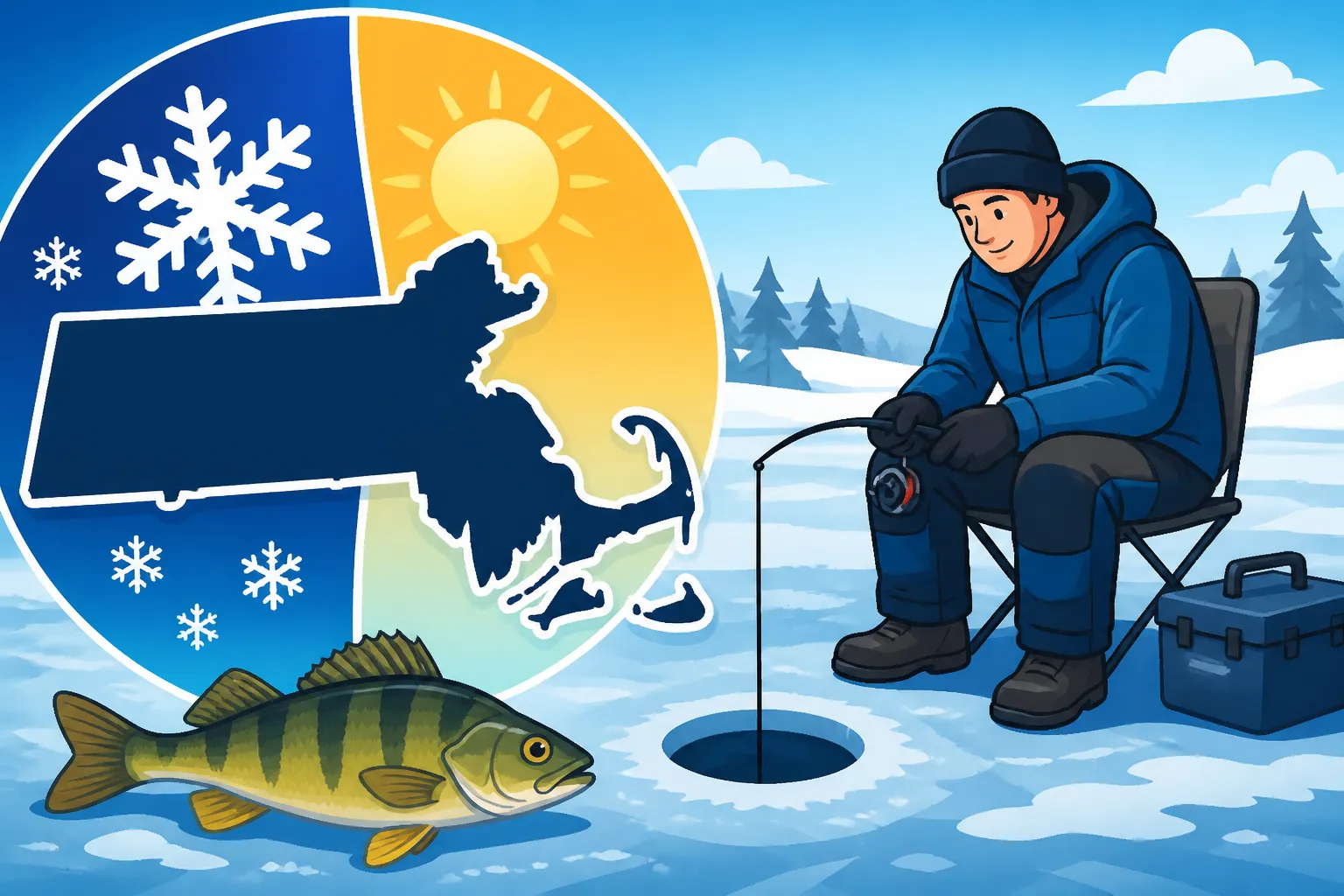
When the ice is finally safe, a whole new world of fishing opens up. Massachusetts ponds and lakes are home to a variety of species that provide excellent winter action. You can expect to target chain pickerel, which are often aggressive under the ice and provide thrilling tip-up action. Yellow perch and crappie are popular panfish targets, offering consistent bites through smaller jigging holes. Many stocked ponds also provide opportunities for rainbow, brown, and brook trout, which remain active throughout the winter months. Even largemouth bass, while less active, can still be caught by patient anglers.
The beauty of ice fishing lies in its simplicity yet effectiveness. For pickerel and larger fish, tip-ups are king. These ingenious devices signal a strike with a flag, allowing you to cover more water. For a detailed look at techniques, our article How to catch pickerel through the ice offers some great pointers. Jigging with small spoons or soft plastics is perfect for panfish and trout, providing a direct, hands-on connection to the fish. When choosing your bait, knowing what works best for different species can make a huge difference, so consider reading up on Best tip-up bait for Massachusetts ice fishing. You’ll find that a well-stocked tackle box, perhaps with some specialized ice fishing jigs and tackle sourced conveniently from Amazon, will give you an edge in targeting various species. For a more general overview of these methods, our Ice Fishing Techniques for Massachusetts Ponds is a fantastic resource.
Weather's Unpredictable Influence
Even after the season has officially "started" with safe ice, the weather remains an ever-present factor. Massachusetts winters can be fickle, often delivering warm spells that can rapidly deteriorate ice conditions. A stretch of unseasonably warm days, especially coupled with rain, can quickly turn solid ice into slush or open water, effectively halting the season. This unpredictable nature means that even once you've been out a few times, you can never become complacent about ice safety. Every time you venture out, you must re-evaluate the conditions.
Similarly, heavy snowfall can insulate the ice, preventing it from thickening further and sometimes even creating slushy layers between the snow and the existing ice. While a fresh blanket of snow can be beautiful, it also hides potential hazards like pressure cracks or areas of thinner ice. This can lead to frustration for anglers, as the season might start strong only to be interrupted by a thaw or hidden dangers. Remaining flexible and always putting safety first is the only way to truly enjoy the fleeting, yet rewarding, ice fishing season in Massachusetts.
Disclaimer
This article is for general informational purposes only and does not constitute professional advice. Laws, prices and regulations vary by location and change over time. Consult a qualified professional for guidance on your specific situation.