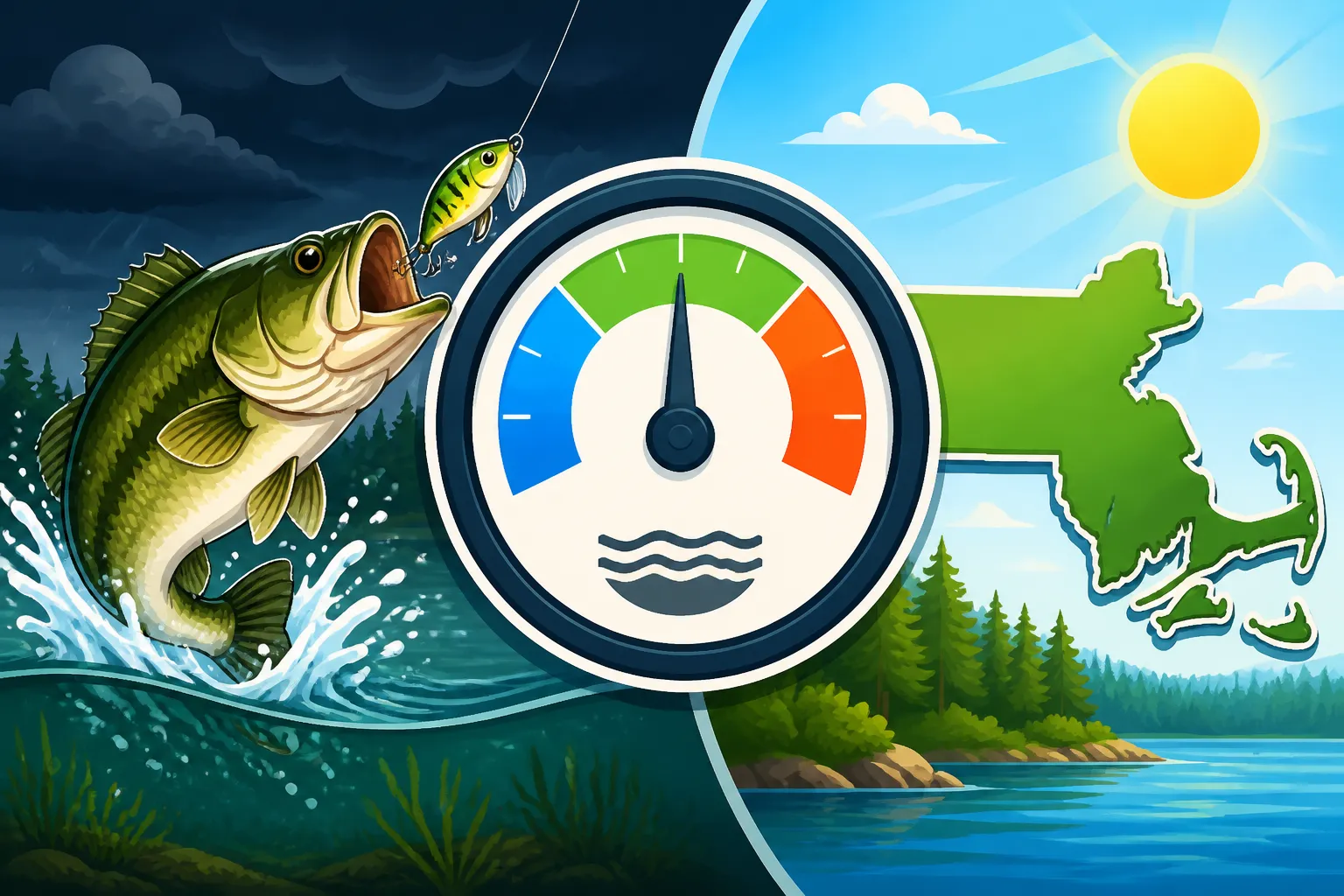
Best barometric pressure for catching bass
It can be incredibly frustrating to hit your favorite bass spot in Massachusetts, feeling optimistic, only for the fish to be completely lock-jawed. We've all been there, casting every lure in our tackle box without so much as a nibble. Often, the unseen culprit isn't your technique or your bait, but something far more subtle: the barometric pressure. This guide will peel back the mystery behind how atmospheric pressure impacts bass behavior and, most importantly, how you can use this knowledge to make your fishing trips more successful, whether you're targeting largemouth or smallmouth in the Bay State.
Understanding Barometric Pressure and Its Impact on Bass
Think of barometric pressure as the invisible weight of the air pushing down on everything, including our beautiful Massachusetts lakes, rivers, and ponds. This pressure is constantly changing, even if we don't always feel it ourselves, and those shifts can have a profound effect on the underwater world, especially on bass.
What is Barometric Pressure?
Simply put, barometric pressure is the force exerted by the atmosphere at a given point. It's literally the weight of the air column above you. When the air is heavy, the pressure is high. When the air is lighter, the pressure is low. These changes are usually measured in inches of mercury (inHg) or millibars (mb). A reading of around 29.92 inHg (1013.25 mb) is considered standard sea-level pressure, but it fluctuates daily and seasonally.
These fluctuations are what drive our weather patterns. High pressure typically brings clear, calm, and often cooler weather, while low pressure systems are associated with clouds, wind, and precipitation like rain or snow. For us anglers, knowing these general weather patterns helps, but understanding the actual change in pressure is the real game-changer for bass fishing.
How Pressure Changes Affect Fish Physiology
Now, why do bass care about this invisible weight? The key lies in their swim bladder. Most fish, including largemouth and smallmouth bass, have an internal organ called a swim bladder, which is basically an air-filled sac that helps them maintain buoyancy in the water column. It's like their personal submarine ballast tank.
When barometric pressure changes, the external pressure on the water changes, and this, in turn, affects the gas inside a fish's swim bladder.
- Falling Pressure: As atmospheric pressure drops, the external pressure on the fish decreases. The gas in their swim bladder expands. To compensate and maintain depth comfortably, the fish has to work a bit more, sometimes by releasing gas or moving to shallower water where the overall pressure is lower. This period often makes bass feel more active, sometimes even a bit agitated. They might move around more, forage aggressively, and generally be in a more "feeding mood."
- Rising Pressure: When atmospheric pressure increases, the opposite happens. The gas in their swim bladder compresses. This can cause discomfort if they don't adjust, and they might need to move deeper to find a depth where the pressure on their bladder equalizes and they feel more comfortable. Often, bass become lethargic and less willing to expend energy during rising or high, stable pressure. They might hunker down on structure or deep cover, making them harder to entice.
It's not just discomfort; these pressure changes also seem to affect their metabolism and hunger cues. Just like you might feel a headache coming on before a big storm, bass sense these shifts and react instinctively.
The Role of Light Penetration and Water Clarity
While barometric pressure directly affects bass physiology, it's also important to remember that pressure systems rarely exist in a vacuum. They bring with them associated weather conditions that further influence bass behavior. For instance, low-pressure systems are often characterized by cloudy skies and rain, which reduce light penetration into the water. This dimming effect can make bass feel more secure venturing out from cover, as they are ambush predators that rely on camouflage and surprise. They become bolder in shallower water, where they might not typically roam under bright, high-pressure sunshine.
Conversely, high-pressure systems typically bring clear skies, bright sunshine, and calm conditions. Intense sunlight penetrates deeply, making bass more prone to seeking deep cover, shade, or heavy vegetation to avoid predators and bright light. In these conditions, their activity often slows down, making them less likely to chase a fast-moving bait. So, while the pressure itself is a primary factor, the light and clarity that come with it amplify or modify the bass's response. This interplay is especially important when you're on a familiar Massachusetts pond, trying to predict where those big largemouths might be hiding.
Decoding Barometric Pressure Trends for Bass Fishing in Massachusetts
Understanding how pressure changes is far more critical than simply knowing if the pressure is currently high or low. It's the trend that often tells the real story of how bass will behave. Let's break down the common scenarios you'll encounter on Massachusetts waters.
High and Rising Pressure: The Post-Front Challenge
This is often the toughest time to catch bass. Imagine a beautiful, clear blue sky day after a cold front has swept through. The sun is shining, but there's a crispness in the air. That's typically stable high pressure, or even worse, rising pressure.
- Stable High Pressure: When high pressure settles in for a few days, bringing clear skies and light winds, bass often become less active. They're not necessarily "off the bite" completely, but they tend to be lethargic and cling tightly to deeper structure, dense cover, or the bottom. They're less willing to chase, preferring a meal that's easy to ambush without much effort. You might find them suspended over deep water or buried in the thickest weeds.
- Rising Pressure (Post-Front): This is the classic "bluebird day" after a storm, and it's notoriously difficult for bass fishing. The pressure is on a steady upward climb, and the fish feel the increasing external pressure. Their swim bladders are compressing, causing discomfort. They often retreat to the deepest, most stable parts of their environment. Their metabolism slows, and they become incredibly finicky. It can feel like they've completely vanished from your usual spots.
Strategies for High/Rising Pressure:
When faced with these challenging conditions in a Massachusetts pond like Lake Quinsigamond Fishing Spots in Massachusetts or a quiet stretch of the Connecticut River Fishing in Massachusetts, you need to slow down, go subtle, and focus on depth.
- Slow Down: Think finesse. Carolina rigs, Texas-rigged worms, drop shots, and jigs fished excruciatingly slowly can be effective. Let your bait sit for long periods.
- Go Deeper: Bass will often move to deeper water, seeking more stable pressure. Target drop-offs, submerged humps, deep weed lines, or even main lake basins if there's structure there.
- Downsize Baits: Sometimes, a smaller, less obtrusive presentation is key. A small grub on a jig head or a tiny plastic worm can be more appealing than a big, aggressive lure.
- Focus on Cover: Even when deep, bass will still relate to cover. Submerged timber, rock piles, and dense clumps of deep weeds are prime holding spots.
Don't expect a fast and furious bite. It's about coaxing a reaction strike or presenting a meal they can't refuse with minimal effort.
Low and Falling Pressure: The Pre-Front Feast
This is often an angler's favorite scenario, especially when chasing trophy bass. Low pressure typically brings cloudy, windy, and often rainy weather, usually preceding a cold front or major storm system.
- Stable Low Pressure: If a low-pressure system has been in place for a while, bass tend to be active and can be found across various depths, though they might be more aggressive in shallower water due to reduced light. They've adjusted to the pressure and are comfortably feeding.
- Falling Pressure (Pre-Front): This is the sweet spot! As the barometric pressure drops, signaling an approaching storm, bass often go on a serious feeding binge. They sense the impending change and instinctually gorge themselves before conditions get tough. Their swim bladders are expanding, and they feel a surge of energy and a need to feed. This is when you can often catch multiple fish, and sometimes, the biggest ones of the day. They're typically found shallower, roaming points, flats, and the edges of weed beds.
Strategies for Low/Falling Pressure:
When the pressure is dropping and a storm is brewing over Otis Reservoir Fishing Spots or any other productive Massachusetts bass lake, it's time to get aggressive and cover water.
- Go Aggressive: Break out your power fishing baits! Spinnerbaits, chatterbaits, lipless crankbaits, squarebill crankbaits, and even topwater lures can be incredibly effective. Bass are willing to chase and strike.
- Target Shallower Water: With reduced light penetration and an active feeding mood, bass will move into shallower areas. Work points, coves, weed lines, lily pad fields, and flooded timber.
- Cover Water: Use search baits that allow you to quickly cover large areas to locate active fish. Don't be afraid to cast widely and frequently.
- Big Baits, Fast Presentations: Don't hesitate to throw larger baits. Bass are looking for a substantial meal. Work your lures quickly, creating commotion and triggering their predatory instincts. You might even find some excellent topwater action, especially in the mornings or evenings, as discussed in Topwater Fishing for Bass in Summer. You can find a fantastic selection of these aggressive baits on Amazon to stock your tackle box for these prime conditions.
Stable Pressure: The Steady Bite
What about when the pressure isn't dramatically rising or falling, but just holding steady? This is a common scenario, and while not as exciting as a pre-front bite, it can still offer consistent action.
- Long-Term Stable High Pressure: If high pressure has been stable for several days, bass will have adjusted. They'll likely be holding tight to structure and cover, similar to rising pressure, but they might be a bit more willing to bite if you present your bait precisely. Their discomfort has subsided, and they've settled into a routine.
- Long-Term Stable Low Pressure: Similarly, if low pressure has been steady, bass will be active and comfortable, but perhaps not in a frantic feeding frenzy. They'll be distributed across different depths and structures, actively foraging.
Strategies for Stable Pressure:
When the pressure is stable, you need to rely on other factors more heavily. This is where understanding seasonal patterns, time of day, and water temperature become paramount, as outlined in guides like Massachusetts Fishing Seasons Explained and Best Time of Year to Fish in Massachusetts.
- Observe and Adapt: Pay close attention to what the bass are telling you. Are they hitting moving baits? Do they prefer plastics? Are they shallow or deep? Start with a versatile approach and narrow down what's working.
- Match the Hatch: Identify the primary forage in the area (shiners, bluegills, crawfish) and select lures that imitate them in size, color, and action.
- Time of Day: Stable conditions mean bass might revert to more predictable patterns, like feeding heavily during low light conditions at dawn and dusk.
- Focus on Key Structures: Work prime bass structures thoroughly, knowing that the fish are likely there, just maybe not aggressively pursuing.
Practical Tips for Using Barometric Pressure in Your Bass Fishing Strategy
Understanding the theory is one thing; putting it into practice on the water is another. Integrating barometric pressure into your fishing strategy doesn't have to be complicated, but it does require a bit of mindful observation.
Monitoring the Pressure: Tools and Habits
You don't need a degree in meteorology to track barometric pressure. Modern technology has made it incredibly easy.
- Weather Apps: Most good weather apps provide current barometric pressure readings and, more importantly, forecasts for pressure trends. Look for apps that show hourly or day-by-day pressure graphs.
- Fishing Apps: Many dedicated fishing apps now incorporate barometric pressure data and even provide "solunar tables" or "fishing calendars" that attempt to predict fish activity based on pressure and moon phase. Take these predictions with a grain of salt, but the raw pressure data is valuable.
- Portable Barometers: For the more dedicated angler, a portable barometer can be a fantastic tool. These small devices give you real-time readings at your specific fishing location, allowing you to confirm what the apps are saying or detect micro-changes. You can find reliable portable barometers on Amazon.
- Keep a Fishing Log: This is an old-school but highly effective method. Jot down the date, location, weather conditions (including barometric pressure and its trend), water temperature, lures used, and catch results. Over time, you'll start to see patterns specific to your local Massachusetts waters and preferred species. Was that epic day at Best largemouth bass ponds in southeastern Massachusetts tied to falling pressure? Your log will tell you!
The key is to pay attention to the trend – is the pressure rising, falling, or stable? A single snapshot of "high pressure" isn't as informative as knowing it's been falling for the last 12 hours.
Adjusting Your Approach to Pressure Changes
Once you know the pressure trend, you can adjust your tactics. This doesn't mean completely overhauling your tackle box, but rather emphasizing certain baits and techniques.
- High/Rising Pressure:
- Lure Selection: Think slow and subtle. Jigs with soft plastic trailers, Texas-rigged worms (like those discussed in How to fish plastic worms for largemouth bass), Carolina rigs, drop shots, and slow-rolling spinnerbaits are excellent choices.
- Presentation: Work baits slowly, with long pauses. Keep them on or near the bottom. Focus on vertical presentations if bass are suspended over structure.
- Location: Target deep structure (rock piles, ledges, humps), submerged timber, thick weed mats, and shady areas. Bass will often be buried deep in cover.
- Low/Falling Pressure:
- Lure Selection: Bring out the power baits! Spinnerbaits, chatterbaits, lipless crankbaits, squarebill crankbaits, jerkbaits, and topwater lures (especially early morning or late evening) will shine. Swim jigs and even larger swimbaits can also be very effective.
- Presentation: Fish aggressively. Use faster retrieves, erratic movements, and cover a lot of water. Trigger reaction strikes.
- Location: Focus on shallower areas. Points, flats, weed edges, docks, laydowns, and any ambush points are prime targets. Bass will often be actively cruising.
- Stable Pressure:
- Lure Selection: This is your chance to experiment and see what the bass prefer. Start with versatile options like jigs, medium crankbaits, or swimbaits.
- Presentation: Vary your retrieve speeds. Try both slow and fast to see what triggers a bite.
- Location: Fish your typical high-percentage spots, but be prepared to explore different depths and types of cover until you find where the bass are holding and what they're biting on.
Combining Pressure with Other Factors
While barometric pressure is a powerful indicator, it's rarely the only factor influencing bass behavior. It's crucial to integrate it with your understanding of other environmental conditions.
- Water Temperature: This is perhaps the most critical factor after pressure. Cold water often means slower fish, regardless of pressure. Warm water can make bass more active, amplifying the effects of falling pressure.
- Light Conditions: As mentioned, cloudy days often lead to more active shallow bass, even under moderate pressure. Bright sun can drive them deep into cover.
- Moon Phase: Many anglers believe moon phases significantly impact fish activity, especially around full and new moons. Combine this with pressure trends for a more holistic view.
- Seasonal Patterns: Bass behave differently in spring, summer, fall, and winter. A guide like How to Catch Largemouth Bass in Massachusetts delves into these seasonal shifts. For example, a cold front and rising pressure in spring might push bass off spawning beds and make them incredibly hard to catch, whereas the same conditions in late fall might just send them deeper but still willing to feed if the water temperature is right.
- Forage Availability: Where are the baitfish? If the pressure is perfect but there's no food, bass won't stick around. Pay attention to schools of baitfish, crayfish activity, and insect hatches.
Think of it as a puzzle. Barometric pressure is a significant piece, but you need to fit it together with water temperature, light, and seasonal patterns to get the full picture and make the most informed decisions on your Massachusetts fishing trip.
Massachusetts Bass Hotspots and Pressure Considerations
Massachusetts offers a diverse range of bass fishing opportunities, from large reservoirs to small, intimate ponds and winding rivers. How barometric pressure affects bass can vary slightly depending on the type of water body.
Lakes and Large Ponds
Larger bodies of water like Lake Quinsigamond, Otis Reservoir Fishing Spots, or even the expansive Best Freshwater Ponds and Lakes in Massachusetts tend to have more thermal stability and deeper sections.
- Deep Water Refuge: During periods of high or rising pressure, bass in these larger lakes often have the option to retreat to deeper water, sometimes seeking out thermoclines or deep structure where pressure changes are less acutely felt. They might suspend over deep humps or school up on deep ledges. This gives them a sanctuary from surface conditions.
- Slower Transitions: The sheer volume of water in larger lakes can sometimes buffer the effects of quick pressure changes, leading to slightly slower transitions in bass behavior compared to smaller, shallower waters. It might take a few hours for them to fully react.
- Targeting Strategy: In these waters, focus on main lake points, submerged islands, deep channels, and offshore humps during tough high-pressure periods. When pressure is falling, don't be afraid to fish shallow main lake flats, coves, and weed lines where active bass will be patrolling.
Rivers and Smaller Ponds
Rivers like the Connecticut River Fishing in Massachusetts and countless smaller, shallower ponds scattered across the state present a different dynamic when it comes to barometric pressure.
- Less Buffer: Smaller, shallower ponds have less water volume and are more directly exposed to atmospheric changes. Bass in these waters might react more quickly and dramatically to pressure shifts. There's less deep water for them to escape to, so they often tuck into the thickest available cover.
- Current as a Factor: In rivers, current plays a huge role. During high pressure, bass might hold even tighter to current breaks and eddies, expending minimal energy. Falling pressure might see them venturing out from these protected spots to feed more aggressively in the current seams.
- Cover is Key: In these environments, especially during high pressure, bass will gravitate towards any available cover: fallen trees, dense lily pads, thick cattails, docks, or undercut banks. They seek shade and physical security when they feel uncomfortable or lethargic. You might need to use specialized gear to extract them from these spots, readily available on Amazon.
- Targeting Strategy: For tough high-pressure days, pitch and flip jigs or Texas-rigged plastics right into the densest cover. On falling pressure days, cast spinnerbaits, crankbaits, or topwaters along weed edges, shoreline cover, and current breaks, letting the fish come out to ambush. In smaller ponds, even a subtle change in pressure can trigger a strong reaction, either positive or negative.
Ultimately, by paying attention to the barometric pressure, understanding its trend, and adjusting your fishing strategy accordingly, you'll gain a significant advantage on the water. It’s a subtle science, but one that can dramatically improve your success rate and turn those "tough days" into "figure-them-out days."
Disclaimer
This article is for general informational purposes only and does not constitute professional advice. Laws, prices and regulations vary by location and change over time. Consult a qualified professional for guidance on your specific situation.