How to fish for winter flounder in Massachusetts
Trying to find a good fishing bite in the dead of winter in Massachusetts can feel like an impossible task. The weather is often brutal, and many of our favorite species have either headed south or moved into deeper waters. But don't despair! There's a persistent, delicious, and often overlooked target that actually thrives in the colder months: the winter flounder. This guide will walk you through everything you need to know to successfully fish for these tasty flatfish right here in the Bay State.
Understanding Winter Flounder and Their Massachusetts Habitat
Winter flounder, scientifically known as Pseudopleuronectes americanus, are truly a unique fish, perfectly adapted to the cold waters of the Atlantic. They offer a rewarding challenge and a delicious payoff for anglers willing to brave the chill. Getting to know their habits and preferred hangouts is the first step to filling your cooler.
What Makes Winter Flounder Unique?
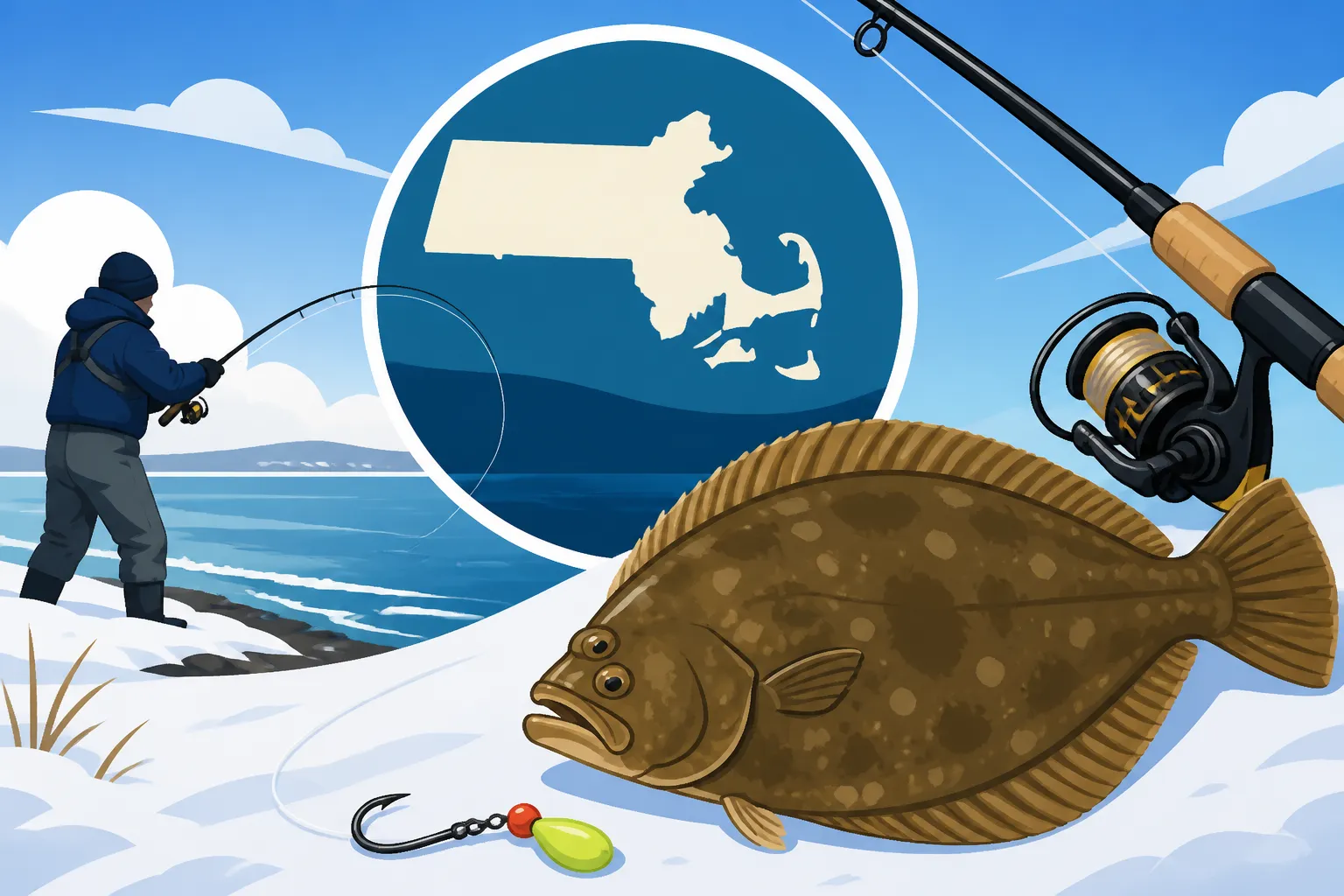
These flatfish are masters of camouflage, typically sporting a dark, mottled upper side that blends seamlessly with the muddy or sandy bottoms they inhabit, and a pure white underside. What’s truly fascinating is how they develop: they start life like a typical fish, but as they mature, one eye migrates to the other side of their head, and they flatten out to lie on the seafloor. This unique adaptation allows them to bury themselves just under the sand or mud, waiting for unsuspecting prey to pass by.
Winter flounder are primarily bottom feeders. Their diet consists mostly of marine worms, small crustaceans, and tiny mollusks that they root out of the sediment. They're not particularly aggressive feeders, often taking a bait with a subtle "tap-tap" rather than a hard strike, which can be a real test of an angler's patience and sensitivity. The "winter" in their name isn't just a coincidence; these fish are most actively found in shallower, inshore areas during the colder months, especially from late winter through early spring, as they prepare for and engage in spawning.
Prime Massachusetts Locations for Winter Flounder
When you're chasing winter flounder in Massachusetts, think shallow, sheltered, and soft-bottomed. These fish love to congregate in areas where the water warms up just a touch faster, or where there's plenty of muddy or sandy substrate for them to hide and feed in. Harbors, estuaries, and protected bays are often goldmines for winter flounder. Think of places like the quieter coves within Boston Harbor or the expansive flats of Buzzards Bay and Nantucket Sound.
Tidal creeks and the shallower portions of larger rivers that lead into saltwater are also excellent spots. These areas often have slightly warmer water temperatures than the open ocean, providing a comfortable environment for flounder. Look for distinct channels, depressions, or the edges of eelgrass beds within these zones, as these structures provide both cover and concentrated food sources. Anglers often find success fishing from piers, jetties, or small boats in these productive areas. Before you head out, make sure you understand the rules. You can find more specific details on what you need by checking out the Massachusetts Saltwater Recreational Fishing Permit Explained and familiarizing yourself with Massachusetts Recreational Fishing Rules and Bag Limits.
Essential Gear for Massachusetts Winter Flounder Fishing
Having the right tackle can make all the difference between a frustrating outing and a successful day of winter flounder fishing. These fish are known for their light bites, so sensitive equipment is key. Investing in gear that allows you to feel those subtle nudges will significantly increase your hook-up ratio.
Rod, Reel, and Line Selection
For winter flounder, you'll want gear that leans towards the lighter side, providing the sensitivity needed to detect those soft takes. A light to medium-light spinning rod, typically between 6 to 7 feet in length, is ideal. Look for a rod with a sensitive tip that can telegraph even the faintest of bites, yet still has enough backbone to handle a good-sized flounder. Paired with this, a small to medium spinning reel, in the 2000 to 3000 series range, offers a good balance of line capacity and smooth operation without being overly heavy.
When it comes to line, many experienced flounder anglers opt for braided line as their main line, usually in the 10 to 15-pound test range. Braided line has virtually no stretch, which significantly enhances sensitivity, allowing you to feel everything that's happening at the business end of your line. To make the rig less visible to these wary fish, tie a fluorocarbon leader (6 to 10-pound test) to your braided main line using a uni-to-uni knot or an FG knot. Fluorocarbon is nearly invisible underwater and is also more abrasion-resistant, which is helpful when fishing over sandy or rocky bottoms. Alternatively, if you prefer the simplicity and shock absorption of monofilament, an 8 to 12-pound test mono line can work well, though you'll sacrifice some sensitivity.
Terminal Tackle for Flounder Rigs
The right terminal tackle is paramount for presenting your bait effectively to winter flounder, which are notoriously picky. You'll want to focus on small, sharp hooks and a rig design that keeps your bait right on the bottom where flounder feed.
Here’s a breakdown of the essential components:
- Hooks: Small, sharp hooks are a must. Sizes typically range from a size 6 up to 1/0, depending on the size of your bait and the average size of the flounder in your target area. Kahle hooks or baitholder hooks are popular choices because they are designed to present bait naturally and have a good hook-up rate.
- Sinkers: You'll need enough weight to keep your bait firmly on the bottom, especially in areas with current. Bank sinkers or bell sinkers are commonly used, with weights typically ranging from 1/2 ounce to 2 ounces. The exact weight will depend on the depth and strength of the current. Always have a variety of sinker sizes on hand.
- Swivels: Small barrel swivels are useful for connecting your leader to your main line and for preventing line twist, especially when drifting.
- Flounder Rigs: While you can certainly buy pre-tied flounder rigs, many anglers prefer to tie their own. A simple high-low rig or a sliding sinker rig are both highly effective.
- High-Low Rig: This setup typically has two snelled hooks (often short, 4-6 inch snells) tied at different points above a sinker, ensuring your baits are presented at varying heights just off the bottom.
- Sliding Sinker Rig (Fish Finder Rig): This rig allows the line to run freely through the sinker, meaning a biting flounder won't feel the weight of the sinker, allowing them to mouth the bait longer. It usually consists of a sinker slider on the main line, a barrel swivel, and a single leader (12-18 inches) with a hook.
You can often find pre-tied flounder rigs on Amazon or at your local tackle shop, which can be a real time-saver if you're new to the game.
Here's a quick comparison of common rig components:
| Component | Description | Typical Size/Weight | Key Benefit |
|---|---|---|---|
| Rod | Light to medium-light spinning rod with sensitive tip | 6-7 feet | High sensitivity for light bites, good casting control |
| Reel | Small to medium spinning reel | 2000-3000 series | Balanced with light rods, smooth retrieval |
| Main Line | Braided line (for sensitivity) or Monofilament (for ease of use) | 10-15 lb braid / 8-12 lb mono | Braid offers superior sensitivity; Mono offers stretch |
| Leader | Fluorocarbon for stealth and abrasion resistance | 6-10 lb | Nearly invisible underwater, protects main line |
| Hooks | Small, sharp Kahle or Baitholder hooks | Size 6 to 1/0 | Effective bait presentation, good hook-up for subtle bites |
| Sinkers | Bank or Bell sinkers to hold bottom | 1/2 oz to 2 oz (adjust for current) | Keeps bait in strike zone, varies by current strength |
| Swivels | Small barrel swivels | Size 10-14 | Prevents line twist |
| Beads | Optional, often used above hooks or between sinker and swivel to protect knots and add attraction | Small plastic or glass beads | Knot protection, subtle attractant |
| Attractors | Small pieces of colored tubing, spinner blades, or scented baits | Tiny tubes (1/2"), small blades, commercially scented baits | Add visual appeal and scent trail (sometimes optional) |
Best Baits for Winter Flounder
When it comes to tempting winter flounder, certain baits stand head and shoulders above the rest. These fish rely heavily on their sense of smell, so natural, scent-rich baits are always your best bet.
- Marine Worms: Without a doubt, bloodworms and sandworms are the undisputed champions for winter flounder. Their natural scent trail and wriggling action in the water are incredibly attractive to flounder. Many anglers will tell you that if you're not using worms, you're missing out on a lot of bites. Present them in small pieces, just enough to cover the hook without impeding its point. You can often find fresh worms at specialty bait shops along the Massachusetts coast, though availability might be seasonal.
- Clams: Pieces of fresh clam, such as sea clams or surf clams, are another highly effective bait. Their strong natural scent disperses well in the water, drawing flounder in. Make sure the clam pieces are small enough for a flounder's mouth but large enough to stay on the hook. Tougher parts of the clam foot tend to hold on hooks better.
- Small Pieces of Squid: While not as consistently effective as worms or clams, small strips of fresh or even frozen squid can work as a reliable alternative or an addition to your primary bait. Squid is durable and has a subtle scent that flounder sometimes find appealing. Many anglers tip a worm-baited hook with a small piece of squid to add visual appeal and durability.
Remember, presentation is key. Many anglers order fresh worms from online bait suppliers or pick them up at specialty bait shops, while simpler options like frozen squid or clam can be found at larger retailers or even on Amazon.
Techniques and Strategies for Success
Catching winter flounder often comes down to patience, sensitivity, and understanding how these bottom-dwelling fish feed. They're not going to chase down a fast-moving lure; instead, they prefer a subtle presentation right in their strike zone.
Reading the Tides and Current
Understanding the tides and current is absolutely critical when fishing for winter flounder in Massachusetts. These fish are most active when the water is moving, as the current helps to carry scent from your bait and dislodge their natural prey from the bottom, making it easier for them to feed. Generally, the beginning of an incoming tide and the end of an outgoing tide are considered the most productive periods. During these times, the current is often strong enough to stimulate feeding but not so strong that it makes it difficult to hold bottom or for flounder to ambush prey.
Slack tide, which occurs at the peak of high or low tide when the water is relatively still, can often be slow for flounder fishing. Without that current to disperse scent or stir up the bottom, flounder tend to be less active. Pay close attention to local tide charts for your chosen fishing spot, as tide timings can vary significantly along the Massachusetts coast. Fishing a few hours before and after the tide change will put you in the prime window for action. For more general insights into local conditions, you might want to look into Massachusetts Saltwater Fishing Seasons.
Effective Fishing Methods
Whether you're fishing from shore or a boat, the core principle for winter flounder remains the same: keep your bait on the bottom and make subtle presentations.
- Shore Fishing: When fishing from a pier, jetty, or beach, cast your rig out and let it settle firmly on the bottom. Once it's down, don't just leave it there. Implement a slow retrieve, often with long pauses, giving the bait time to lie still before moving it again. A common technique is to slowly lift your rod tip a few feet, then slowly lower it, reeling in the slack as you do. This imparts a subtle "hopping" motion to your bait, mimicking natural prey. Fan casting – making casts in different directions from your position – helps you cover more ground and locate schools of flounder.
- Boat Fishing: Drifting is arguably the most effective method for boat anglers targeting winter flounder. By allowing your boat to drift slowly with the tide or wind, you cover a large area, increasing your chances of finding actively feeding fish. Ensure your sinker is heavy enough to maintain bottom contact throughout the drift. If you find a productive patch of bottom, you can anchor up and fan cast around that spot. When anchored, cast out, let your rig hit bottom, and then slowly reel it back in with small drags and pauses. Keeping your baits directly on the bottom is non-negotiable; flounder rarely feed suspended in the water column.
Key Tips for Maximizing Your Catch
Success with winter flounder often comes down to the details. These fish are subtle, and the angler who pays attention to nuance will consistently catch more.
- Scent is Crucial: We've mentioned it before, but it bears repeating: winter flounder rely heavily on their sense of smell. Always use fresh bait, and don't be shy about replacing it frequently if it's been sitting in the water for a while. Tipping your worm with a small piece of clam or a commercially available scent attractant can sometimes provide that extra edge, especially on slower days.
- Keep it on the Bottom: This is fundamental. If your bait isn't on the bottom, you're not going to catch winter flounder. Adjust your sinker weight as currents change, ensuring that you can feel your sinker making occasional contact with the seafloor. Too light, and your bait will lift; too heavy, and you'll miss those subtle bites because the rig is too sluggish.
- Stealth: Especially in shallower areas, noise and disturbance can spook these wary flatfish. Try to keep boat noise to a minimum, and avoid heavy footfalls if fishing from a pier or jetty. A stealthy approach can make a noticeable difference.
- Small Movements: Unlike aggressive predators, flounder bites are rarely violent. You'll often feel a series of light taps or a slight increase in resistance, almost like your line is getting heavy or snagged on something soft. Resist the urge to set the hook hard at the first tap. Instead, let the fish take the bait fully. Often, it's best to feel two or three distinct taps, or a steady pull, before gently lifting the rod to feel for weight and set the hook. A sharp, quick jigging motion will almost certainly pull the bait away from the fish.
- Have Variety: Keeping a variety of terminal tackle and even a few different types of bait on hand, perhaps stored in a tackle box easily accessible from Amazon, can really make a difference. What works one day might not work the next, or in a different spot. Having options means you can adapt to changing conditions and fish preferences. You might also want to consult guides for other local species, like How to Catch Striped Bass From the Surf in Massachusetts, as many surf fishing techniques can be adapted.
When and Where to Find Winter Flounder
Timing and location are everything when targeting winter flounder. Understanding their seasonal movements and preferred specific habitats will put you squarely in the strike zone.
The Best Season and Time of Day
The clue is right in their name: winter flounder are truly a cold-water species. While you might encounter them sporadically throughout the year in certain deeper areas, the prime season for actively targeting them in Massachusetts inshore waters typically runs from late winter through early spring. This usually means from around March to May, depending on how quickly water temperatures rise each year. During these months, the flounder move into shallower bays, estuaries, and harbors, often for spawning. This is when they are most accessible to shore and boat anglers alike.
As the water temperatures warm considerably in late spring and early summer, many winter flounder move back into deeper, cooler offshore waters. So, if you're planning a trip, aim for those colder shoulder months. As for the best time of day, unlike some other species that prefer dawn or dusk, winter flounder are typically active throughout the daylight hours. Their feeding is often more tied to the moving tides and current than specific light conditions. So, rather than worrying too much about the clock, focus on the tidal phase. The general advice on Best Time of Year to Fish in Massachusetts can offer broader context for various species.
Identifying Productive Bottom Structures
Winter flounder are masters of their benthic environment. To consistently find them, you need to think like a flounder and identify the bottom structures that provide them with food and cover.
- Mud Flats and Sandy Depressions: These are classic flounder strongholds. Large, relatively flat areas of mud or sand provide ideal camouflage and are rich in the worms and small crustaceans that make up their primary diet. Look for subtle depressions or troughs within these flats, as flounder often lie in these slightly deeper spots.
- Channels and Edges of Eelgrass Beds: Flounder will often position themselves along the edges of channels or drop-offs, where the current can sweep food past them. The borders of eelgrass beds are also fantastic, as these provide cover and are teeming with small organisms. While flounder generally prefer open bottom, they will lurk just outside these grassy areas, especially if there's a sand or mud transition.
- Utilizing Technology: If you're fishing from a boat, a good depth finder and GPS are invaluable tools. They allow you to identify changes in depth, pinpoint channels, and mark productive spots for future reference. For shore anglers, studying bathymetric charts (available online or at bait shops) can give you a significant advantage in understanding the underwater topography of your chosen location. Pay attention to any public fishing access points near these kinds of habitats; for example, many of the Best Shore Fishing Spots in Massachusetts or even specific areas like Boston Harbor Islands Fishing Spots in Massachusetts will have these features. You'll also want to know the difference between our local flatfish; a quick guide like Difference between fluke and flounder can help clear things up.
Disclaimer
This article is for general informational purposes only and does not constitute professional advice. Laws, prices and regulations vary by location and change over time. Consult a qualified professional for guidance on your specific situation.