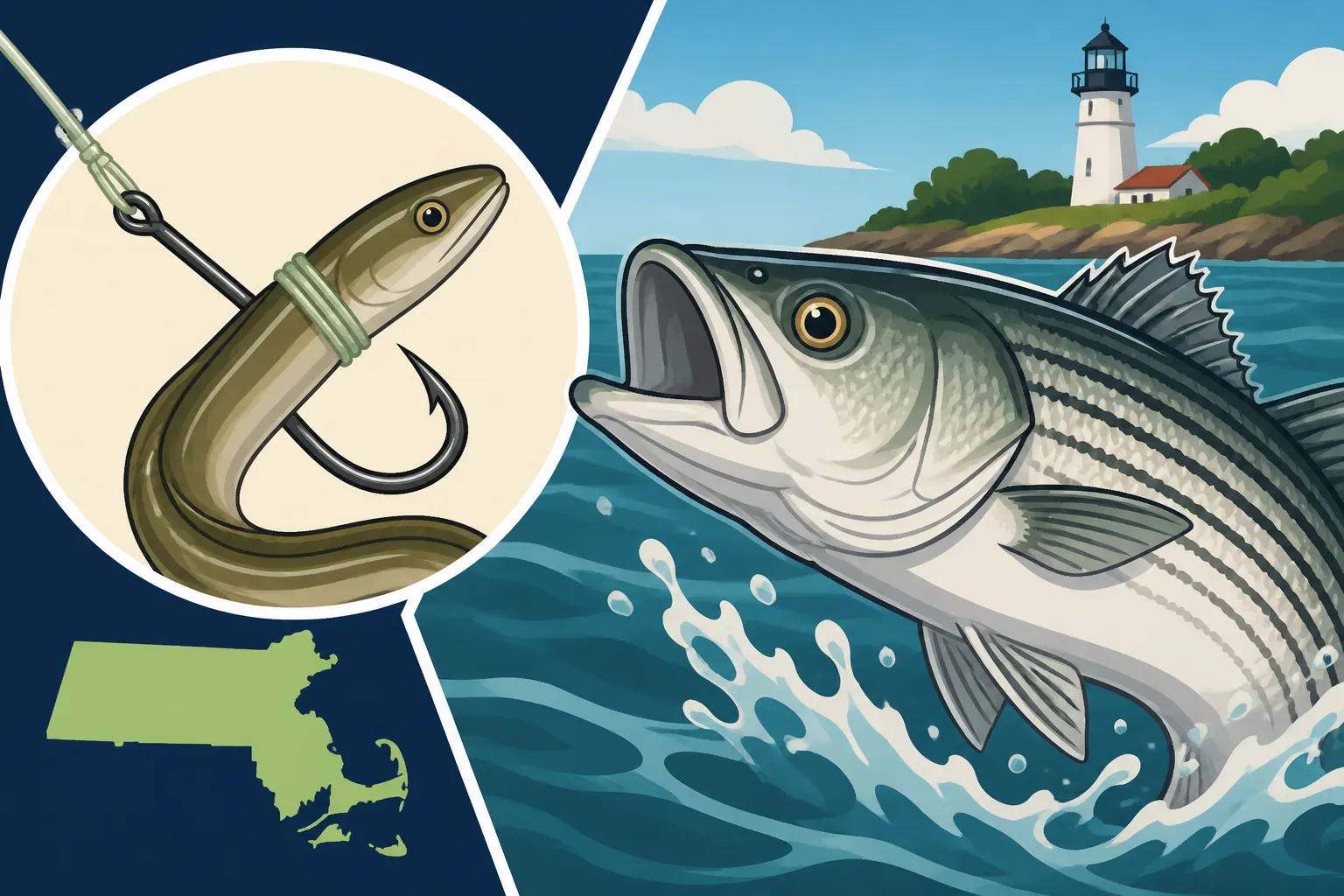
How to rig a live eel for striped bass
There’s nothing quite like the thrill of feeling a big striped bass absolutely smash your line, but sometimes, those elusive giants seem to turn their noses up at everything you throw at them. If you’ve been struggling to entice those larger, more elusive stripers, especially when they’re keyed in on natural forage, then it’s time to talk about one of the most effective baits out there: the live eel. This comprehensive guide is going to walk you through exactly how to rig a live eel for striped bass, ensuring you’re ready to tackle the challenge and land that trophy fish.
Why Live Eels Are a Striped Bass Magnet
Before we even get into the nitty-gritty of rigging, let’s talk about why live eels are such a game-changer for striped bass fishing here in Massachusetts. It’s not just a rumor; there's a good reason why seasoned anglers swear by them, especially when targeting larger fish. Eels are a natural prey item for striped bass, particularly the bigger ones that are looking for a substantial meal. They’re slimy, they’re squirmy, and they put off a strong scent that stripers simply can't resist.
Think about it from a striper's perspective. An eel wiggling through the water column, trying to escape, looks exactly like dinner. Their erratic movements and the oils they release are like a dinner bell ringing loudly under the surface. Unlike artificial lures, which require constant angler manipulation to mimic life, a live eel does all the work for you, presenting an irresistible, natural offering. This is especially true during low-light conditions, like dawn, dusk, or under the cover of night, when stripers are often most active and feed aggressively. Many of the Best Fishing Spots in Massachusetts, particularly those with rocky structures, jetties, or strong currents like the Cape Cod Canal, hold a significant population of eels, making them prime hunting grounds for big bass. When considering your overall strategy, understanding How to Catch Striped Bass in Massachusetts often circles back to using live bait like eels for maximum impact.
The Irresistible Appeal of Natural Movement and Scent
The primary allure of a live eel for striped bass lies in its natural movement and potent scent. When properly rigged, an eel swims with a serpentine motion that no artificial lure can perfectly replicate. This erratic, lively action triggers a predatory instinct in stripers. They don't have to think twice; it looks, feels, and smells like a real meal. This makes them particularly effective when stripers are being finicky or when fishing in areas with heavy current, where the eel's natural swimming action can effectively navigate and present itself without looking "out of place."
Beyond the visual appeal, the scent trail an eel leaves in the water is incredibly powerful. As the eel moves, it constantly exudes natural oils and pheromones, creating an olfactory beacon that stripers can detect from a distance, even in murky water or during dark nights. This combination of visual and olfactory stimulation is what makes live eels often outperform other baits, especially for those trophy-sized fish that have seen it all. It taps into their primal hunting instincts, making it hard for them to pass up what appears to be a vulnerable, easy meal.
Targeting Larger Stripers with Live Eels
While smaller stripers will certainly hit eels, this bait truly shines when you're after the bigger boys. Larger striped bass are often more opportunistic feeders and prefer a substantial meal that offers a good return on their energy investment. A 10-14 inch live eel fits that bill perfectly. These big fish aren't going to chase down tiny baitfish if a juicy eel is swimming by.
Using live eels is a tactic often employed when hunting for trophy fish along the rocky coastlines, around inlets, and particularly in the strong currents of places like the Cape Cod Canal. The technique demands a bit more finesse and specific gear, but the payoff can be immense. When the tide is ripping and big stripers are looking for an easy ambush, a well-presented live eel can be the key to connecting with a fish of a lifetime. Always be mindful of the Massachusetts Striped Bass Size and Bag Limit, and use inline circle hooks to ensure a safe release for any fish outside the legal slot.
Essential Gear for Rigging Live Eels
Alright, let's get down to the nuts and bolts of what you'll need. Rigging a live eel isn't overly complicated, but having the right tools and components makes all the difference, not just for your success but also for the health of the fish you might catch. The goal is to present the eel naturally while ensuring a good hook-up and an easy release if the fish is undersized or you're practicing catch-and-release.
The Right Hooks: In-Line Circle Hooks are Key
When fishing for striped bass with bait in Massachusetts, in-line circle hooks are legally required. This is a crucial regulation designed to reduce gut-hooking and improve the survival rate of released fish. You absolutely cannot use J-hooks or offset circle hooks when targeting stripers with bait. Make sure your hooks clearly state "in-line" on the packaging.
- Size: For live eels ranging from 10 to 16 inches, you'll generally want hooks in the 7/0 to 10/0 range. The specific size depends on the size of your eels and your personal preference, but always ensure the hook's gap is wide enough to clear the eel's body and get a solid bite in the fish's jaw. Brands like Gamakatsu, Owner, and Mustad offer excellent in-line circle hooks. You can find a good selection of these on platforms like Amazon if your local tackle shop doesn't have the exact size or style you're looking for.
- Type: Look for strong, sharp hooks made for saltwater use. Chemical sharpening is a plus. The goal is maximum penetration with minimal effort.
Leader Material and Strength
The leader is the section of line between your main fishing line and your hook. It's crucial for abrasion resistance and stealth.
- Material: Fluorocarbon is generally preferred for leaders when fishing with eels. It's nearly invisible underwater, which can be a huge advantage when targeting wary stripers. It also offers excellent abrasion resistance against rocks, mussel beds, and the rough mouth of a striper. Monofilament can be used, but it's more visible and less abrasion-resistant.
- Pound Test: For striped bass fishing with eels, a leader in the 50-80 lb test range is typical. This provides enough strength to handle powerful stripers and withstand nicks and scrapes. If you're fishing in really gnarly, rocky areas or specifically targeting exceptionally large fish, you might even bump up to 100 lb test, but this can sometimes impact the eel's natural presentation.
- Length: A leader length of 24 to 36 inches is usually sufficient. This provides enough separation from your main line and any swivels, which can be more visible.
Weights and Swivels
Depending on where and how you're fishing, you might need some weight to get your eel down to the strike zone.
- Weights:
- Egg Sinkers: These are often preferred for their ability to slide freely on your main line or leader, allowing the fish to pick up the bait without feeling immediate resistance. Sizes can range from 1/2 oz to several ounces, depending on the current and depth.
- Bank Sinkers/Pyramid Sinkers: Used more for heavier current or surfcasting, where you need to hold bottom.
- Placement: If using a sliding egg sinker, it goes on your main line above your swivel.
- Swivels: A high-quality barrel or ball-bearing swivel (around 80-100 lb test) is essential. It connects your main line to your leader and prevents line twist, especially when casting and retrieving an eel that might be spinning. It also serves as a stopper for sliding weights.
Other Handy Tools
- Eel Rag or Gloves: Eels are incredibly slimy and slippery. An old towel, rag, or a specialized eel glove (often found at bait shops or online retailers like Amazon) is essential for gripping them firmly and safely.
- Hook Remover/Pliers: Crucial for safely unhooking fish, especially when using circle hooks that often catch in the corner of the mouth. Long-nose pliers or specialized de-hookers are best.
- Line Cutters/Knife: For trimming line and leaders.
Here's a quick checklist of the essential gear:
| Item | Description | Purpose |
|---|---|---|
| In-Line Circle Hooks | 7/0 – 10/0, strong, sharp, legally required for striped bass with bait in MA | Secure hook-up, minimize gut-hooking for safe release |
| Fluorocarbon Leader | 50-80 lb test, 24-36 inches long | Stealth, abrasion resistance, strong connection to hook |
| Barrel/Ball Bearing Swivel | 80-100 lb test | Connects main line to leader, prevents line twist, stopper for weights |
| Egg Sinkers | 1/2 oz – 4+ oz (variable based on current/depth) | Get bait to depth, allow free movement |
| Eel Rag/Gloves | Old towel, dedicated eel rag, or textured fishing gloves | Securely grip slippery eels |
| Long-nose Pliers | Sturdy, saltwater-grade pliers | Safely remove hooks, cut line |
| Live Eels | 10-16 inches in length, lively and healthy | The bait itself |
Step-by-Step Guide to Rigging a Live Eel
Now for the main event! Rigging a live eel is straightforward once you know the technique. The key is to secure the eel effectively without hindering its natural swimming action too much, while also ensuring the hook is in a prime position for a solid hook-up in the striper's jaw. Remember to be quick and confident when handling the eel, as they are notoriously slippery!
Handling the Eel Safely and Efficiently
Before you even think about putting a hook in, you need to be able to get a firm grip on that eel. They're slimy, they're strong, and they'll try their darndest to escape your grasp. This is where your eel rag or gloves come into play.
- Preparation: Have all your rigging components ready and within easy reach. This includes your leader tied to your circle hook, and your swivel attached.
- Grab the Eel: Take a firm hold of the eel just behind its head with your eel rag or gloved hand. Don't be timid; a hesitant grip will lead to a lost eel. Grip it tightly enough so it can't squirm free, but don't crush it.
- Positioning: Keep the eel oriented so its head is facing away from you, making it easier to thread the hook without it wrapping around your arm.
Remember, the quicker and more efficiently you handle the eel, the less stress it endures, and the livelier it will be once it hits the water. A lively eel is a more attractive bait.
Hook Placement for Optimal Presentation and Hook-Up
There are a few popular methods for hooking a live eel, each with its own advantages. For striped bass, the goal is often a head-first presentation, mimicking a natural swimming eel.
-
Through the Jaw (Most Common & Recommended): This is arguably the most popular and effective method for live eel fishing.
- Hold the eel firmly by the head.
- Insert the point of your in-line circle hook up through the bottom jaw of the eel.
- Continue pushing the hook point up through the top jaw, bringing it out just in front of the brain cavity, or through one of the "nostrils" (actually sensory pores).
- Ensure the hook shank lies cleanly along the bottom of the eel's jaw. The hook point and bend should be completely exposed, allowing for a clean hook-up in the striper's mouth. This method allows the eel to swim naturally and keeps it alive for a long time, as it doesn't damage vital organs. It also makes for a very aerodynamic cast.
-
Through the Eye Socket (Less Common, Still Effective): Some anglers prefer this method for a slightly different presentation or when using very large eels.
- Carefully insert the hook point through one eye socket.
- Push it out through the other eye socket.
- Again, ensure the hook is exposed and can function properly. This method also allows for a natural swim and good survival.
-
Through the Tail (For Specific Scenarios): While less common for striped bass, hooking through the tail can be used if you want the eel to swim away from you or create a more frantic, injured-prey action.
- Insert the hook point through the top side of the eel's tail, a few inches from the very end.
- Bring the hook out through the bottom side, making sure the hook is fully exposed.
- This method can sometimes lead to the eel "corkscrewing" or tangling the line, but it can be effective in slack current or when retrieved slowly.
Important Note on Hook Placement: Regardless of the method you choose, always make sure the entire hook point and the curve of the hook are exposed and clear of the eel's body. An obstructed hook will lead to missed strikes. With an in-line circle hook, a proper hook-up happens when the fish takes the bait and swims away, allowing the line tension to rotate the hook into the corner of its jaw. If the hook is buried in the eel, it won't rotate correctly.
Attaching the Leader and Weight
Once your eel is hooked, it's time to connect it to your main line setup.
- Leader to Hook: You should have already tied your fluorocarbon leader directly to your in-line circle hook using a strong knot like a Palomar knot or an improved clinch knot. Make sure your knots are cinched down tightly and tested.
- Swivel Connection: At the other end of your leader, tie your barrel or ball-bearing swivel. This will be the connection point to your main line.
- Main Line and Weight (If Used):
- If you're fishing without weight (e.g., free-lining in light current), simply tie your main line directly to the other end of the swivel.
- If you need weight (e.g., fishing in strong currents, deeper water, or surfcasting), thread your chosen egg sinker onto your main line before tying your main line to the swivel. This creates a "Carolina rig" style setup where the weight slides freely on the main line, and the swivel acts as a stopper, preventing the weight from sliding down to the eel. This allows the fish to pick up the eel without feeling the weight, leading to fewer dropped baits.
Once everything is connected, give your rig a gentle tug to ensure all knots are secure. You're now ready to present that irresistible live eel to a hungry striped bass! For more details on overall regulations, check out the Massachusetts Recreational Fishing Rules and Bag Limits, and ensure your setup complies with all local laws.
Tips for Successful Live Eel Fishing
Rigging the eel is just one part of the equation. To truly succeed with live eels for striped bass, you need to understand how to present them, when to fish them, and how to properly fight the fish once it strikes. These additional tips will greatly increase your chances of landing that trophy striper.
Casting and Presenting Your Eel
How you get that eel into the water can make all the difference. Eels are delicate, and a harsh cast can kill them or rip them off the hook.
- Gentle Casting: Avoid the "helicopter" cast or any violent whipping motions. A smooth, deliberate lob cast is usually best. Think of it as gently placing the eel rather than flinging it. The goal is to keep the eel lively and on the hook.
- Reading the Current: Eels are most effective when they're allowed to drift naturally with the current. If you're fishing in a river, inlet, or the Cape Cod Canal, cast your eel slightly up-current and let it wash downstream. The eel will swim against the current, creating a very natural presentation. This is similar to the principles discussed in Fishing the Cape Cod Canal by Season, where current is king.
- Targeting Structure: Striped bass love structure – rocks, jetties, bridge pilings, submerged wrecks, and drop-offs. Cast your eel near these areas, as stripers will often lie in wait, ambushing prey that drifts by. Pay attention to how the current interacts with the structure; that's often where the fish will be.
The Strike, Hook Set, and Fight
This is where many anglers, especially those new to circle hooks, make mistakes. With an in-line circle hook, you do not set the hook like you would with a J-hook.
- The Bite: A striped bass bite on an eel can range from a subtle tap to a rod-wrenching strike. Sometimes they'll "mouth" the eel, and you'll feel a slight pressure or a series of taps. Other times, they'll just smash it and run.
- Resist the Urge to Set: When you feel the bite, do not yank the rod back to set the hook. This is the most common mistake. Instead, keep your rod tip pointed towards the water or slightly lifted, and simply let the fish take the bait.
- Engage the Reel: Once the fish starts to pull line consistently, slowly tighten your drag, or gently raise your rod tip to load the bend into the rod. The fish's continued movement, combined with the pressure from your rod and line, will cause the circle hook to rotate and set itself cleanly in the corner of the fish's jaw.
- Fight the Fish: Once the hook is set, fight the fish as you normally would. Use your rod's flex to absorb runs, and retrieve line when the fish pauses. Remember to keep the line tight; slack line can lead to dropped fish. When you bring the fish boat-side or to shore, have your net ready and try to minimize the fight time, especially if you plan to release the fish.
Best Times and Conditions for Eel Fishing
While eels can be effective at various times, certain conditions definitely make them shine.
- Night Fishing: This is arguably the prime time for live eel fishing. Striped bass are nocturnal hunters, and the darkness gives them a huge advantage when ambushing prey. Eels are also naturally more active at night. Focus on incoming and outgoing tides during dark hours.
- Low Light Conditions: Dawn and dusk also offer excellent opportunities. The reduced light provides cover for both the eel and the feeding stripers.
- Moving Water: Strong currents are your friend when eel fishing. As mentioned, the current enhances the eel's natural presentation, making it irresistible. The best tide for striped bass often correlates with strong water movement, which helps distribute the eel's scent and makes it appear more natural.
- Structure: Focus on areas with significant underwater structure – rock piles, jetties, bridge abutments, and riprap. These are prime ambush points for stripers.
- Water Temperature: Eels are most effective in warmer water during the spring, summer, and fall. As the water cools in late fall, their activity slows down, and stripers may switch to other forage.
Care and Storage of Live Eels
Keeping your eels lively is paramount. A sluggish or dead eel is far less effective.
- Container: Store your eels in a cool, aerated container, like a bait bucket with a battery-operated aerator, or a specialized eel tube.
- Water: Use cool, clean saltwater if possible. Change the water regularly, especially if it gets warm or dirty.
- Quantity: Don't overcrowd your eels. Give them enough space to avoid stressing them out.
- Handling: Minimize handling them with bare hands. The slime coating is their natural protection, and repeated handling can strip it off, making them more susceptible to disease. Use your eel rag when you absolutely need to handle them.
By following these tips, you'll not only master the rigging process but also improve your overall success rate when using live eels to target those magnificent Massachusetts striped bass.
Conclusion
Mastering the art of rigging and fishing with live eels for striped bass in Massachusetts is a rewarding endeavor that can significantly elevate your angling success. It’s not just about tossing a bait in the water; it’s about understanding the subtle nuances of presentation, timing, and responsible fishing practices. By using the correct in-line circle hooks, choosing the right leader, and confidently executing the rigging techniques we’ve discussed, you’ll be presenting one of the most irresistible baits known to striped bass.
Remember, patience and observation are key. Pay attention to the tides, the currents, and the specific structures where big stripers are known to lurk. And most importantly, enjoy the process! There’s a unique satisfaction that comes from outsmarting a powerful striped bass with a natural bait. So, grab your gear, prepare your eels, and get ready to feel that unforgettable tug on the other end of the line.
Disclaimer
The information provided in this guide is for educational and informational purposes only. Fishing regulations, including those pertaining to gear, seasons, and bag limits, can change frequently. Always consult the latest Massachusetts Division of Marine Fisheries (MassDMF) regulations before heading out on the water. It is the angler's responsibility to know and abide by all current laws and regulations.