Minimum age to need a fishing license in Massachusetts
The question of who needs a fishing license, especially when it comes to kids and teenagers, can feel like navigating a maze of rules and regulations. It’s a common point of confusion for families eager to introduce their children to the joys of casting a line in Massachusetts waters, and no one wants to accidentally break the law. This comprehensive guide is here to untangle those rules, clarify the minimum age requirements for both freshwater and saltwater fishing, and ensure your next family fishing trip is stress-free and fully compliant with Massachusetts law.
Understanding Massachusetts Fishing License Requirements for Youth
Massachusetts, like many states, has specific age guidelines for when an individual needs a fishing license. These rules are designed to balance the need for conservation funding with the desire to encourage youth participation in outdoor activities. The primary distinction often revolves around age, with a slight but important difference between freshwater and saltwater fishing.
The General Rule for Young Anglers
For most types of fishing in Massachusetts, particularly in freshwater environments, the general rule is quite straightforward: anyone aged 15 and older needs a fishing license. This means that if you have a child who is 14 years old or younger, they can legally fish in freshwater bodies across the Commonwealth without needing to purchase their own license. It's a wonderful way to introduce younger kids to angling without the added bureaucratic hurdle or expense for parents.
This age exemption for younger children is rooted in a desire to foster a love for fishing and the outdoors from an early age. Imagine a parent taking their 8-year-old out to a local pond for the first time; requiring a license for that child might deter families from even starting. By removing that barrier, MassWildlife hopes to cultivate the next generation of anglers and conservationists. It allows for casual, low-stakes experiences that can spark a lifelong passion.
However, it's crucial to remember that while the child may not need a license, any accompanying adult aged 15 or older who plans to fish themselves – or even just actively assist the child in a way that constitutes fishing (like repeatedly casting for them) – will need a valid Massachusetts fishing license. This guide will focus specifically on the child's requirement, but it’s a good reminder for parents to always check their own status.
Specific Age Brackets and Exemptions
Let's break down the age specifics a bit more clearly, as it's not just a blanket "under 15" rule for everything. For freshwater fishing, the hard line is drawn at age 15. A child who is 14 years old can fish without a license. The day they turn 15, they are then legally required to possess a valid freshwater fishing license. This applies whether they are a Massachusetts resident or a non-resident visiting the state.
The rules for saltwater recreational permits have a slightly different threshold. For saltwater fishing in Massachusetts, whether from shore, a pier, or a boat, individuals need a recreational saltwater fishing permit if they are 16 years of age or older. This means a 15-year-old can fish in the ocean without a permit, but as soon as they celebrate their 16th birthday, that permit becomes a legal necessity. This distinction between freshwater (15+) and saltwater (16+) can sometimes catch people off guard, so it’s important to keep both in mind, especially if you enjoy both types of fishing. For more detailed information on this, you can look into whether Do Kids Need a Fishing License in Massachusetts?.
These age brackets are not arbitrary. They reflect legislative decisions made to balance revenue generation for conservation programs with making the sport accessible. It’s also important to note that these age-based exemptions apply to the general fishing license or saltwater permit. Specific access requirements for certain sensitive areas, like the Quabbin Reservoir, might have additional rules that apply regardless of age, though these typically pertain to permits for boats or specific fishing zones rather than the general license requirement itself.
Why Age-Based Exemptions Matter for Families
The age exemptions for fishing licenses in Massachusetts aren't just technicalities; they represent a thoughtful approach to engaging communities, particularly families, with the natural world. These policies serve several important purposes, making fishing a more approachable and enjoyable activity for everyone.
Encouraging Youth Participation in Fishing
One of the most significant reasons for these age exemptions is to actively encourage youth participation in fishing. Think about it: a family on a budget might hesitate to spend money on multiple licenses for children who are just starting out and might not even stick with the hobby. By waiving the fee and requirement for younger kids, Massachusetts removes a potential financial and bureaucratic barrier. This makes it much easier for parents and guardians to introduce their little ones to the simple pleasure of casting a line and waiting for a bite. Many families find accessible and affordable fishing gear, from basic rod and reel combos to tackle boxes, readily available on platforms like Amazon, further lowering the barrier to entry.
These early experiences are invaluable. Fishing teaches patience, observation, and a respect for nature. It gets kids away from screens and into the fresh air, fostering a connection with local ecosystems. MassWildlife actively supports youth engagement through various programs and events, understanding that today's young anglers are tomorrow's stewards of our natural resources. The license exemption is a direct policy that aligns with this mission, ensuring that fishing remains a family-friendly activity that can be enjoyed by all ages, regardless of their prior experience.
Practical Considerations for Parents and Guardians
While children under the age requirement are exempt from needing a license, parents and guardians need to be mindful of their own licensing status. If you, as an adult aged 15 or older, plan to actively participate in fishing—meaning you'll be holding a rod, casting, reeling, or otherwise trying to catch fish—you absolutely need your own valid Massachusetts fishing license (freshwater) or saltwater recreational permit (saltwater). Your child's exemption doesn't extend to you.
Consider a common scenario: you're at a pond with your 10-year-old. Your child is holding their own rod and reeling in sunfish. You're simply supervising and helping them untangle lines or bait hooks. In this instance, as long as you are not actively fishing yourself, you do not need a license. However, if your child is struggling, and you take their rod to cast it for them, or if you decide to pick up a second rod and fish alongside them, then you would need your own license. The distinction is about active participation versus supervision. Always err on the side of caution; if you're touching a rod in an attempt to catch fish, you should have your license. Families preparing for such trips often turn to reliable sources like Amazon for durable, beginner-friendly fishing rods and essential tackle that stand up to enthusiastic young anglers.
Understanding these nuances is key to a hassle-free outing. It's about personal responsibility. The rules are designed to be permissive for kids while still ensuring that adults who are contributing to the fishing pressure are properly licensed, with their fees going towards vital conservation efforts.
Navigating Freshwater vs. Saltwater Licenses for Young Anglers
Massachusetts offers distinct licenses for freshwater and saltwater fishing, and the age requirements, while similar, have a small but significant difference that every angler, especially those with young companions, should be aware of.
Freshwater License Age Requirements
As we've touched upon, for fishing in Massachusetts' freshwater lakes, ponds, rivers, and streams, the minimum age requirement for a license is 15 years old. This means that if you are 14 or younger, you are welcome to fish without a license. This applies to all the beautiful freshwater fishing spots across the state, from the tranquil ponds of the Berkshires to the larger lakes like Lake Quinsigamond and the Connecticut River.
This age rule is consistent across the board for general freshwater access. However, it's worth noting that while the license requirement is clear, certain specific freshwater bodies might have additional access rules that apply to all visitors, regardless of age. For instance, large reservoirs like Quabbin Reservoir and Wachusett Reservoir have their own specific regulations regarding boat access, fishing methods, and even special permits for certain activities. While a 14-year-old still wouldn't need a state freshwater fishing license to fish there, their guardian would need to ensure all other site-specific rules are followed. You can find more information on these unique situations by checking resources like the Quabbin Reservoir Fishing Permits and Rules in Massachusetts guide.
So, if your child is planning to spend their summer days reeling in bass, trout, or panfish from a local pond, they're generally in the clear until their 15th birthday. This flexibility helps to make freshwater fishing an accessible and enjoyable pastime for young people throughout their formative years, allowing them to hone their skills and develop an appreciation for aquatic environments without jumping through too many hoops.
Saltwater Recreational Permit Age Rules
When it comes to the vast expanse of Massachusetts' coastal waters, including bays, harbors, and the open ocean, the age requirement for a recreational saltwater fishing permit shifts slightly. Here, the minimum age is 16 years old. This means that anyone under the age of 16 can fish recreationally in saltwater without needing to purchase a permit. So, a 15-year-old can surfcast for striped bass from a Cape Cod beach or jig for black sea bass from a boat without needing a permit.
This one-year difference from the freshwater license requirement often surprises people, but it’s an important distinction to remember. While a 15-year-old might need a freshwater license, they are still exempt from the saltwater permit. The moment they turn 16, however, they must obtain a Massachusetts Saltwater Recreational Fishing Permit to continue fishing in coastal waters legally. This permit is crucial for anyone engaging in recreational saltwater fishing, whether from shore, pier, private boat, or even on certain charter or party boats (though some larger vessels may cover passengers under a blanket permit). For a deeper dive into these specific age requirements for the permit, you can refer to Massachusetts Saltwater Permit Age Requirements.
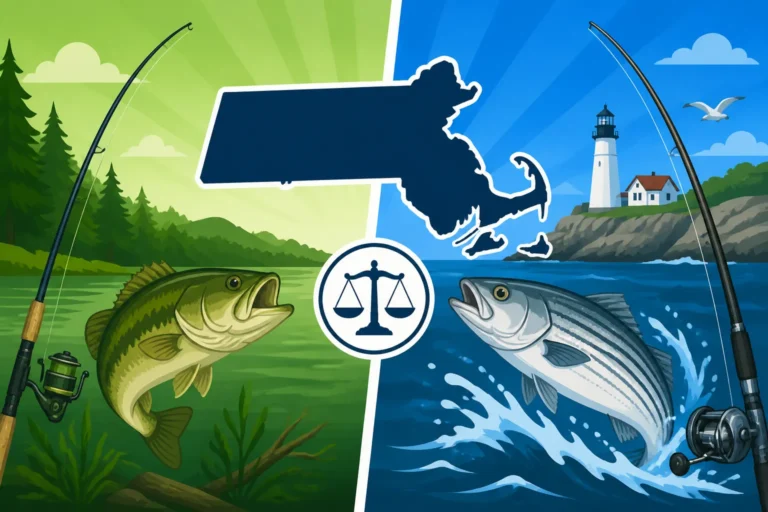
The slight age difference between freshwater and saltwater licensing is an important detail for anglers who enjoy both environments. To help clarify, here’s a simple comparison table:
| Fishing Type | Minimum Age for License/Permit |
|---|---|
| Freshwater | 15 years old |
| Saltwater | 16 years old |
Understanding these specific age thresholds for both environments is key to staying compliant and enjoying the incredible fishing opportunities Massachusetts has to offer, regardless of whether you're targeting brook trout in a stream or bluefish off the coast. This is also covered further in the Massachusetts Freshwater vs Saltwater License Differences article.
Other Important Considerations for Massachusetts Youth Fishing
Beyond the basic age requirements, there are a few other critical aspects that young anglers and their families in Massachusetts should understand. These include special fishing days, additional stamps, and how to stay informed and compliant.
Free Fishing Days and Youth Opportunities
Massachusetts offers designated "Free Fishing Days" each year, which are fantastic opportunities for anyone to try fishing without needing a license or permit, regardless of age. These days are a perfect chance for families to introduce fishing to children who might be on the cusp of needing a license, or simply to enjoy a day on the water without the usual requirements. Even if your child is younger than the minimum age, these days offer an added layer of freedom and fun for the entire family. For more information on these special dates and what they entail, be sure to check out the details on Free Fishing Days in Massachusetts.
It’s important to clarify that on these specific free fishing days, the age rules are essentially moot for everyone. Whether you’re 8, 14, 25, or 70, you can fish without a state freshwater license or saltwater permit. However, all other fishing regulations, such as bag limits, length limits, and gear restrictions, still apply. These days are usually promoted by MassWildlife, often coinciding with events designed to get more people, especially youth, interested in fishing. Keep an eye out for local fishing derbies or instructional clinics during these periods; they are excellent ways to get hands-on experience and learn from seasoned anglers.
The Wildlands Conservation Stamp
When an angler in Massachusetts purchases an annual freshwater fishing license, they are also typically required to purchase the Wildlands Conservation Stamp. This stamp contributes crucial funds directly to the conservation and management of the state's natural resources and open spaces. However, if you're wondering if your child will need this stamp, the answer hinges on their age and whether they are required to buy a license in the first place.
Since the Wildlands Conservation Stamp is mandatory with the purchase of an annual freshwater fishing license for those 15 and older, it follows that any child under 15 who is not required to have a license is also exempt from needing the stamp. Once a child turns 15 and needs to buy their first annual freshwater license, the Wildlands Conservation Stamp will be an automatic addition to that purchase. This ensures that only those who are required to be licensed are contributing to this specific conservation fund. For a full breakdown of this stamp and its purpose, you can read the detailed explanation of The Massachusetts Wildlands Conservation Stamp Explained.
Carrying Proof and Online Resources
For teenagers who are required to have a fishing license or saltwater permit (15+ for freshwater, 16+ for saltwater), it's imperative that they carry proof of their license or permit while fishing. This can be a physical printed copy or, increasingly commonly, a digital version on their smartphone. Massachusetts makes it relatively easy to obtain and carry proof of your license. The primary system for purchasing and managing licenses is MassFishHunt.
Teenagers can easily purchase their first license online through the MassFishHunt portal. This digital platform allows for quick and convenient acquisition, printing, or display on a mobile device. You can learn more about this process in our guide on How to Buy a Massachusetts Fishing License Online and get familiar with the system by visiting How MassFishHunt Works for Buying a Massachusetts License. It's a good idea for any young angler transitioning into the licensed age bracket to get comfortable with these online resources. Beyond just purchasing licenses, the MassFishHunt system also serves as a hub for understanding current regulations, checking trout stocking schedules, and reporting harvests. Many anglers also find great deals on essential fishing gear, from tackle boxes to wading boots, on platforms like Amazon, making it easy to prepare for a successful fishing season.
What Happens When a Child Turns 15 or 16?
The birthdays marking the transition into adulthood are exciting for many reasons, but for young anglers in Massachusetts, they also signify a new responsibility: acquiring their own fishing license. Understanding this transition is key to staying legal on the water.
The Transition to Needing a License
The moment a child celebrates their 15th birthday, the clock starts ticking for freshwater fishing. From that day forward, if they plan to fish in any freshwater body in Massachusetts, they are legally required to possess a valid freshwater fishing license. This isn't something that can be put off until the next fishing trip; the requirement becomes immediate. Similarly, for saltwater fishing, the 16th birthday marks the point when a recreational saltwater fishing permit becomes mandatory. There’s no grace period.
This transition highlights the importance of planning ahead. If your child's 15th birthday falls in the middle of a prime fishing season, you'll want to ensure they have their license ready to go. The worst-case scenario is getting caught fishing without a license, which can lead to fines and a less-than-pleasant experience with environmental police. It’s always best to be proactive and make sure that, as soon as that birthday passes, the appropriate license or permit is secured. Think of it as a rite of passage for serious young anglers, a step towards becoming fully responsible members of the fishing community.
Obtaining the First License
Getting that first fishing license or saltwater permit is a straightforward process, especially with the online MassFishHunt system. For a teenager turning 15 or 16, they can easily set up an account on MassFishHunt. Once an account is established, they can purchase either an annual freshwater fishing license or a saltwater recreational permit directly. The system guides them through the process, which usually takes only a few minutes. They will need to provide some personal information, and then they can pay with a credit card.
Alternatively, licenses can also be purchased in person at authorized vendors across the state, such as bait and tackle shops or some town clerks' offices. This can be a good option for a first-time licensee, as the vendor can answer any questions and provide a physical license on the spot. The cost of a Massachusetts Resident Fishing License Cost is quite affordable, especially for the privileges it grants. Remember, for freshwater licenses, the Wildlands Conservation Stamp will be an additional, mandatory fee. While purchasing the license, it’s also a good time to ensure they have all their gear in order. Amazon, for example, offers an extensive selection of beginner-friendly rods, reels, and tackle boxes that are perfect for a newly licensed angler stepping up their game, making it convenient to prepare for their new legal fishing status.
Common Misconceptions and Clarifications
Even with clear rules, misunderstandings about fishing license requirements, especially for younger anglers, can persist. Let's clear up some of the most common myths and ensure everyone is on the same page.
"Just Catch and Release" Does Not Exempt You
A very common misconception, particularly among new or casual anglers, is the idea that if you're only planning to catch and release fish, you don't need a license. This is absolutely incorrect in Massachusetts. The act of "fishing" itself, regardless of your intent to keep or release your catch, is what triggers the license requirement (for those over the minimum age). Whether you plan to immediately return every fish to the water or fill a cooler for dinner, if you are actively attempting to catch fish, you must be properly licensed if you are aged 15 or older for freshwater, or 16 or older for saltwater.
This rule is in place because the act of fishing, even catch-and-release, still exerts pressure on fish populations. It contributes to angling effort, and the funds generated from license sales are crucial for managing these fish stocks, maintaining access points, and funding conservation efforts that benefit all aquatic life. Simply put, if you're holding a rod and reel with a line in the water, the intent of your harvest doesn't change your legal obligation. For more on this, check out Do You Need a License to Catch and Release in Massachusetts?.
Fishing with an Adult's License is Not Allowed
Another critical point to understand is that fishing licenses and permits are strictly individual. A common thought might be, "My dad has a license, so I can use his if I'm over the age limit but forgot mine." This is not permissible under Massachusetts law. Each angler who is required to be licensed must possess their own valid license or permit. Licenses are non-transferable and are tied to a specific individual.
Attempting to fish with someone else's license, or simply fishing without one when required, can lead to serious consequences. Environmental police officers regularly patrol fishing areas, and they will check for proper licensing. The penalties for fishing without a license in Massachusetts can include fines, and in some cases, even confiscation of gear or other legal repercussions. These penalties are designed to deter illegal fishing and uphold the integrity of the state's conservation funding model. It's far simpler, safer, and more responsible to ensure every angler who is of age has their own, current license. You can find detailed information on the repercussions of non-compliance in Penalties for Fishing Without a License in Massachusetts. It’s easy to stay informed and compliant, especially with accessible resources like official state guides or even fishing etiquette manuals often found on platforms like Amazon, ensuring a smooth and enjoyable experience for everyone on the water.
Disclaimer
Please remember that fishing regulations and license requirements can change. While this guide aims to provide the most current and accurate information, it is always your responsibility to verify the latest regulations directly with the Massachusetts Division of Fisheries and Wildlife (MassWildlife) before heading out. This content is for informational purposes only and does not constitute legal advice.