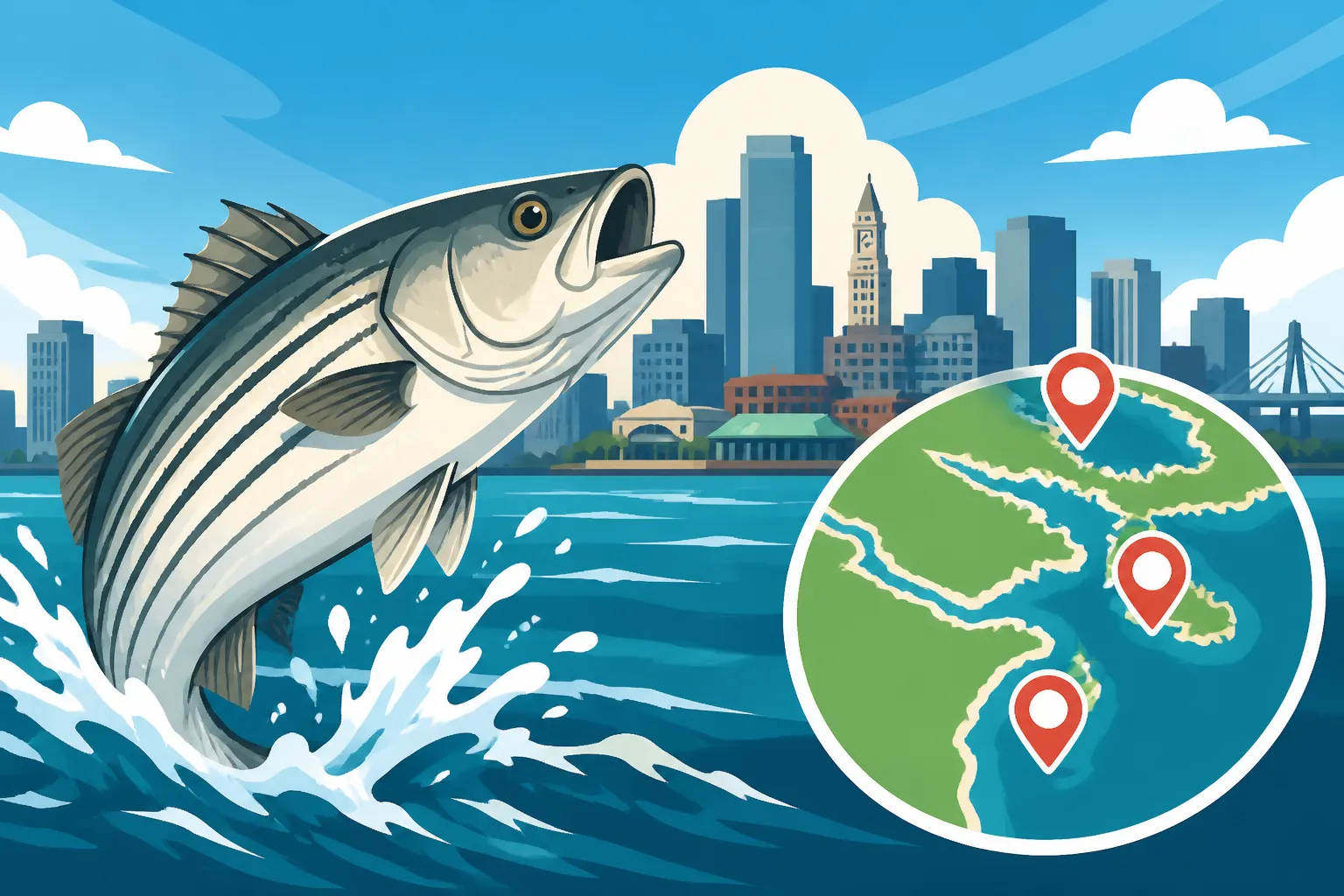
Where to catch striped bass in Boston Harbor
Fishing for striped bass in Boston Harbor can feel like trying to find a needle in a haystack, especially with the sheer size of the harbor and its constant activity. Many anglers get overwhelmed by the urban environment and aren't sure where to start, leading to frustrating days without a bite. This guide is here to break down the best strategies and pinpoint the top locations within Boston's iconic waters to help you successfully target these powerful fish.
Understanding Boston Harbor's Appeal for Striped Bass
Boston Harbor might seem like an unlikely fishing paradise amidst the city's hustle and bustle, but for striped bass, it's a bustling buffet and a perfect habitat. This intricate network of islands, estuaries, and deep channels offers everything a striper could want, from abundant baitfish to a labyrinth of structure perfect for ambushing prey.
Why Stripers Love Boston Harbor
Striped bass are opportunistic predators, and Boston Harbor's unique ecosystem provides an ideal environment for them to thrive. The harbor is teeming with various baitfish species, including pogies (menhaden), mackerel, herring, and silversides, which serve as the primary food source for migrating stripers. These baitfish congregate in the nutrient-rich waters of the harbor and its estuaries, attracting the larger predators. Think of it like a grocery store for fish – easily accessible and always stocked!
Beyond the food supply, the physical characteristics of Boston Harbor make it incredibly attractive to stripers. There's a fantastic mix of shallow flats, rocky shorelines, deep shipping channels, and countless pieces of submerged structure like old piers, wrecks, and bridge pilings. These features provide ambush points, shelter from strong currents, and temperature breaks. The constant tidal flow also acts like a conveyor belt, bringing fresh food past waiting fish. It's a dynamic environment that constantly offers new opportunities for a hungry striper.
Prime Seasons for Striped Bass in the Harbor
Knowing when to cast your line is just as important as knowing where. The striped bass season in Massachusetts typically kicks off in the spring and continues strong into the fall. Generally, the first schoolie stripers, those smaller but feisty adolescents, start showing up in Boston Harbor as early as April, particularly as water temperatures begin to rise and baitfish move into shallower areas.
By late May and into June, the larger "cow" stripers, the real trophies, begin to arrive in significant numbers, following the substantial baitfish migrations. This early summer period is often considered prime time, with fish actively feeding after their long migration. As summer progresses, the fishing remains excellent, though the bass might move into deeper, cooler water during the heat of the day, making dawn and dusk fishing particularly productive. The fall, from September through October, offers another fantastic opportunity as stripers aggressively feed to build reserves for their southward migration. These cooler months can often yield some of the largest fish of the season as they engage in what's known as the "fall run." If you're wondering When striped bass season starts in Massachusetts, it's a good idea to keep an eye on water temperatures and local fishing reports.
Top Spots to Target Striped Bass from Shore in Boston Harbor
For many anglers, especially those without a boat, shore fishing is the most accessible way to get in on the action. Boston Harbor offers several fantastic shore-based locations where you can tangle with stripers, often within eyesight of the city skyline.
Northern Shoreline Hotspots
When it comes to shore fishing on the northern side of Boston Harbor, a few spots consistently stand out as striper magnets.
Castle Island in South Boston is perhaps one of the most iconic and easily accessible fishing locations in the entire harbor. Its rocky shores, riprap, and proximity to deeper channels make it an excellent spot for both bait and lure fishing. Anglers can cast from the seawall, around Fort Independence, or from the causeway that leads to the island. The strong currents around the island often push baitfish close to shore, creating perfect ambush points for striped bass. Early mornings and late evenings, especially during a moving tide, are prime times to fish here. Parking is usually available, though it can get crowded on nice days. It’s also a great spot to bring the family, as there’s plenty of space to explore.
Further out, Deer Island in Winthrop offers incredible shore access and some serious striper potential. Known for its strong currents, particularly around the sewage treatment plant outfall (which ironically attracts baitfish), and extensive seawalls, it's a favorite among local surfcasters. The rock jetties and the long stretch of shoreline provide ample opportunities to cast into productive waters. Just be prepared for a bit of a walk to some of the prime spots. The currents here are no joke, so using heavier lures or bait rigs is often necessary to get down to where the fish are holding. Remember to always check the local regulations, including the Massachusetts Striped Bass Slot Limit Explained before heading out.
Southern Shoreline and Islands Access
Moving to the southern side of the harbor, and venturing out to some of the accessible islands, reveals even more prime striped bass territory for the shore-bound angler.
Nut Island in Quincy is another fantastic spot that often gets overlooked by those focused solely on the city proper. This peninsula offers extensive public access with a long walkway that extends into the harbor, providing excellent casting opportunities into deeper water and productive currents. The rocky bottom and proximity to the mouth of the Weymouth Fore River mean it's a natural funnel for baitfish and, consequently, stripers. It's particularly good for soaking bait like mackerel or seaworms, but also for casting plugs and soft plastics. The views of the harbor are spectacular, and it’s generally less crowded than Castle Island.
While requiring a ferry ride, some of the Boston Harbor Islands themselves offer unique shore fishing experiences. Places like Spectacle Island, Lovells Island, or Georges Island have rocky shorelines and structure that can hold stripers, especially during strong tidal flows. Access can be limited to certain areas, so always check with the Department of Conservation and Recreation (DCR) or the National Park Service for current rules and ferry schedules. These islands offer a more remote and wild fishing experience, far from the urban bustle. Exploring Boston Harbor Islands Fishing Spots in Massachusetts can reveal some true hidden gems.
Boating for Striped Bass in Boston Harbor
For anglers with access to a boat, Boston Harbor truly opens up, offering unparalleled opportunities to reach prime fishing grounds that are inaccessible from shore. The ability to move with the tides and target specific structures makes boat fishing incredibly effective for striped bass.
Navigating the Inner Harbor and Estuaries
The inner reaches of Boston Harbor, including the mouths of its major rivers, are hotbeds for striped bass, especially in the spring and fall. These areas often warm up faster and are rich in baitfish.
The Charles River and Mystic River mouths, despite their proximity to heavy boat traffic and city infrastructure, are surprisingly productive. Stripers will push far up these rivers, particularly on incoming tides, chasing baitfish like herring. Fishing around bridge pilings, docks, and submerged structures in these areas can be incredibly rewarding. Casting soft plastics or live bait around these structures, especially during low light conditions or moving tides, can yield impressive results. Just be mindful of other boaters and safe navigation. If you're interested in exploring the Charles further, you might want to read our guide on Charles River Fishing in Boston.
Beyond the river mouths, the numerous docks, piers, and moored boats within the inner harbor provide constant cover and ambush points. While it can be challenging to fish without bothering other boaters, focusing on the edges of channels, mooring fields, and areas with current breaks can be productive. Early morning is often the best time to navigate these busy areas before recreational traffic picks up. For those without their own vessel, considering a charter boat can be an excellent way to experience these spots, and platforms like FishingBooker can help you find reputable captains who specialize in these waters.
Outer Harbor Islands and Rips
Venturing into the outer harbor opens up even more possibilities, with significant structure and powerful tidal rips that consistently attract large schools of striped bass.
The waters around the Brewster Islands, including Little Brewster (home to Boston Light) and Great Brewster, are legendary striper grounds. The strong currents, rocky bottoms, and numerous ledges create ideal conditions for striped bass to feed. Targeting the rips and current seams, particularly during outgoing tides, with large topwater plugs, swimming plugs, or live mackerel, can result in explosive strikes. The same goes for the area around Graves Light, a prominent lighthouse marking a dangerous but fish-rich reef system. These offshore structures are deep-water havens for baitfish and, subsequently, large stripers.
Another critical area is President Roads, the main shipping channel entrance into Boston Harbor. The depth changes, strong currents, and proximity to both the inner and outer harbor make it a significant migratory route and feeding ground for stripers. Trolling tube-and-worm rigs or live bait along the edges of these channels can be highly effective. If you’re not comfortable navigating these waters yourself, especially with the commercial traffic, booking a guided trip is a fantastic option. Many excellent Massachusetts Striped Bass Charters operate out of Boston, and a quick search on sites like FishingBooker will show you plenty of experienced captains ready to put you on the fish. These captains know the local waters like the back of their hand and can teach you the ropes.
Essential Techniques and Gear for Boston Harbor Stripers
Successfully catching striped bass in Boston Harbor isn't just about showing up; it's about understanding their behavior and employing the right tactics with the appropriate gear. Adaptability is key, as conditions and baitfish patterns can change rapidly.
Best Lures and Baits
When it comes to enticing striped bass, having a diverse tackle box is crucial. The choice of lure or bait often depends on the time of year, what baitfish are prevalent, and whether you're fishing from shore or boat.
For lures, soft plastic paddle tails rigged on jig heads are incredibly versatile and effective, mimicking many of the harbor's baitfish. Brands like Z-Man, Keitech, and Bass Assassin offer various sizes and colors, with white, chartreuse, and olive green being consistent producers. Swimming plugs, such as the SP Minnow from Daiwa or smaller lipped swimmers, are excellent for covering water and imitating herring or mackerel. Topwater plugs, like poppers or walk-the-dog lures, create a commotion on the surface that can trigger aggressive strikes, especially during low light conditions or when stripers are actively busting bait on the surface. For a more in-depth look, check out our guide on Best Lures for Striped Bass in Massachusetts.
As for baits, live mackerel are arguably the king of striper baits in the harbor when they're available. Drifting live mackerel through rips or along channel edges from a boat can be incredibly productive for larger fish. Live eels are another phenomenal option, particularly for targeting nocturnal stripers around structure like bridges and docks. They're irresistible to big bass and can be fished from both shore and boat. Clams and seaworms, while perhaps less exciting, are highly effective bottom baits for enticing stripers, especially schoolies, from shore or anchored boats. Using a simple hi-low rig with a weight to get your bait down can work wonders in these scenarios. Remember to always respect local regulations on collecting or possessing baitfish.
Tidal Influence and Fishing Strategies
Understanding the tides in Boston Harbor is paramount to consistent success. Striped bass are highly influenced by tidal movements, which dictate baitfish patterns and their own feeding behavior.
Generally, a moving tide is far more productive than slack tide. As the tide rushes in or out, it creates currents that disorient baitfish and concentrate them in certain areas, making them easier targets for stripers. Many anglers prefer the last two hours of an incoming tide and the first two hours of an outgoing tide, as these periods often offer the strongest currents and most active feeding windows. However, different spots fish better on different tides; for instance, a shallow flat might only be accessible and productive on a high tide, while a deep rip might be best on a strong outgoing tide. You can find more specific information in our guide to the Best Tides for Striped Bass Fishing in Massachusetts.
Beyond the tide, fishing strategies vary. For shore anglers, casting parallel to shore, working your lure through current seams, or positioning yourself where currents bring bait past a structure are key. For boat anglers, drifting with the current, trolling, or anchoring strategically up-current from known striper haunts are common and effective tactics. Pay attention to bird activity; diving birds often indicate baitfish being pushed to the surface, which is a sure sign of actively feeding fish below. A reliable fish finder can also be your best friend for locating bait balls and schools of stripers, especially in deeper channels. If you're considering a Boston fishing charter, many are available, and booking one through a platform like FishingBooker ensures you're fishing with experienced local captains.
Here's a quick reference for some top Boston Harbor striper spots:
| Location | Accessibility | Target Technique | Best Conditions | Notes |
|---|---|---|---|---|
| Castle Island | Shore/Foot | Lures, Bait (worms, clams) | Moving tide (in/out), Dawn/Dusk | Public access, easy parking, can get crowded. |
| Deer Island | Shore/Foot | Surfcasting, Lures | Strong currents, Moving tide | Long walks to spots, intense currents, great for bigger lures. |
| Nut Island | Shore/Foot | Lures, Bait (mackerel, worms) | Incoming tide, Dawn/Dusk | Less crowded than Castle Island, good for families. |
| Charles River Mouth | Boat | Live Bait, Soft Plastics | Incoming tide, Around bridges/docks | Watch boat traffic, good for spring and fall. |
| Mystic River Mouth | Boat | Live Bait, Soft Plastics | Incoming tide, Structure fishing | Similar to Charles River, check for herring runs. |
| Brewster Islands | Boat | Live Bait, Plugs | Strong rips, Outgoing tide | Offshore, exposed, can be very productive for large fish. |
| Graves Light | Boat | Live Bait, Jigging | Strong rips, Moving tide | Exposed, deep water, can hold large schools. |
| President Roads | Boat | Trolling, Live Bait | Channel edges, Tidal transition periods | Heavy commercial traffic, important migration route. |
Remember to always consult current Massachusetts fishing regulations regarding seasons, size limits, and bag limits for striped bass, which are subject to change. For specific permit requirements, you can learn more about the Massachusetts Saltwater Recreational Fishing Permit Explained.
Disclaimer
Please be aware that fishing conditions, regulations, and access points can change. Always check the latest rules and advisories from the Massachusetts Division of Marine Fisheries (MassDMF) and the Massachusetts Environmental Police before heading out. Safety should always be your top priority when fishing in Boston Harbor.