Massachusetts Smallmouth Bass Fishing Guide
Massachusetts is a state truly blessed with diverse fishing opportunities, but for many anglers, the feisty smallmouth bass holds a special place. If you've ever felt the sheer power of a smallie on the end of your line, you know it's a battle unlike any other – they leap, they dive, and they absolutely refuse to give up. This guide is all about helping you understand these incredible fish, where to find them in our beautiful Commonwealth, and how to successfully hook into some memorable Massachusetts smallmouth.
Understanding Massachusetts Smallmouth Bass
Smallmouth bass are incredible game fish, often celebrated for their tenacious fighting spirit and acrobatic displays once hooked. But to truly appreciate them, and to become a more successful angler, it's important to grasp their unique characteristics and preferences, especially when compared to their more common cousin, the largemouth bass.
Smallmouth vs. Largemouth: Key Differences
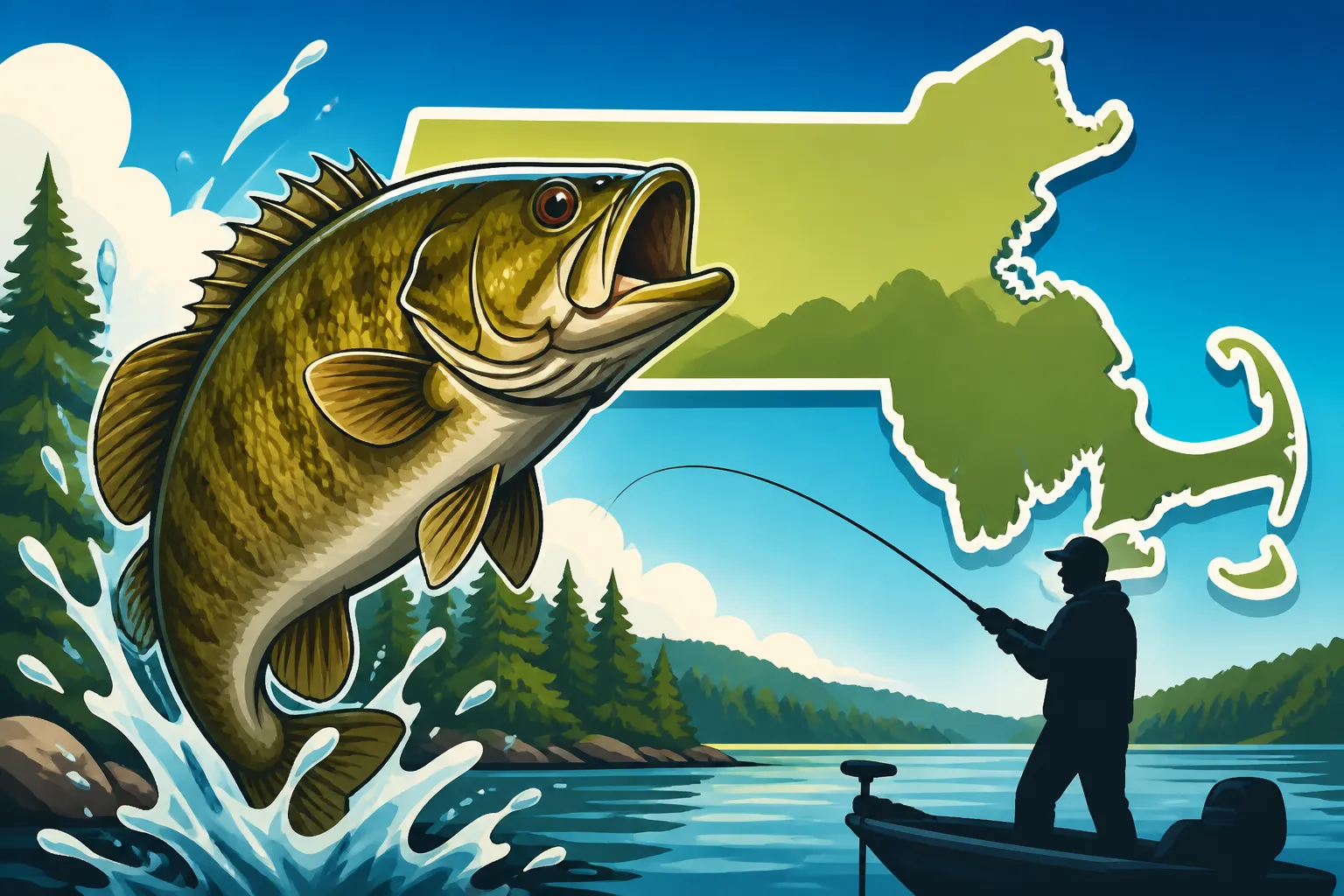
When you first start out, it can be easy to confuse a smallmouth bass with a largemouth, especially if you're not used to seeing them side-by-side. However, they have some distinct differences that are key to identifying them and, more importantly, understanding where to find them. The most obvious difference is in their mouths – a largemouth's jaw extends well past its eye, while a smallmouth's jaw typically doesn't extend beyond the middle of its eye. Beyond that, smallmouth bass usually have vertical bars or mottled patterns on their bronze-colored bodies, earning them the nickname "bronze backs," whereas largemouths are typically green with a distinct horizontal stripe down their side.
But it's not just about looks; their fighting styles are worlds apart. Largemouths are known for powerful, head-shaking runs and burrowing into cover. Smallmouths? They're the acrobats! They’ll jump out of the water, tail walk, and make quick, darting runs that can really test your drag and your reflexes. I remember one particular day on the Connecticut River, I thought I had a decent largemouth on, given the initial heavy tug. Then, out of nowhere, this fish burst from the water, shaking its head violently, and I immediately knew it was a smallie. It fought like a fish twice its size, making me appreciate the distinction even more. If you want a deeper dive into these differences, check out our guide on Largemouth vs Smallmouth Bass in Massachusetts.
Preferred Habitats and Behavior
Understanding where smallmouth bass like to hang out is crucial to finding them. Unlike largemouth bass, who prefer the warmer, weed-choked waters of shallow ponds and lakes, smallmouths are creatures of cooler, clearer, and often deeper water. They absolutely adore structure, but not just any structure. Think rocky bottoms, ledges, submerged boulders, gravel beds, and areas with current, especially in rivers. In lakes and reservoirs, they'll congregate around points, humps, and steep drop-offs. They thrive in places where baitfish and crayfish can hide among the rocks.
Their behavior is also quite different. Smallmouths are often found schooling, sometimes in impressive numbers, especially during the colder months when they group up in deeper holes. They're opportunistic feeders, keying in on whatever prey is most abundant, be it emerald shiners, alewives, or crayfish. You might find them ambushing prey from behind a boulder in a river current, or chasing schools of baitfish in open water in a large reservoir. They are truly masters of their environment, adapting their feeding and holding patterns to the contours and conditions of these rocky, clear-water habitats.
Massachusetts Smallmouth Bass Regulations
Before you even think about casting a line for smallmouth, it's absolutely vital to be aware of the current fishing regulations in Massachusetts. These rules are in place to protect our fish populations and ensure healthy fisheries for everyone, now and in the future. Generally, for smallmouth and largemouth bass in Massachusetts, there's a specific open season, a minimum size limit, and a daily bag limit. These can vary slightly by water body or even change year to year, so always, always consult the most current Massachusetts fishing regulations pamphlet or the MassWildlife website before heading out.
For instance, you'll need a valid Massachusetts fishing license, which you can learn more about in our Massachusetts Fishing License Guide. It’s easy to get caught up in the excitement of the catch, but knowing and adhering to these rules is part of being a responsible angler. Many smallmouth anglers, myself included, practice catch and release, especially for larger fish, to help sustain the population. It's truly a rewarding feeling to release a healthy, feisty smallie back to its rocky home, knowing it can spawn and grow even bigger. We also have a more general guide on Massachusetts Recreational Fishing Rules and Bag Limits that can provide broader context.
Top Smallmouth Bass Fishing Spots in Massachusetts
Massachusetts offers some fantastic opportunities for smallmouth bass fishing, whether you prefer the challenge of river currents or the vastness of deep, clear lakes. Knowing where to go is half the battle, and luckily, the Commonwealth has several prime locations that consistently produce quality smallmouth.
Massachusetts Rivers Known for Smallmouth
Rivers are often where smallmouth bass truly shine, and Massachusetts has a few that are absolutely legendary among smallie enthusiasts. The moving water, the rocky structure, and the abundant food sources create ideal conditions for these hard-fighting fish.
First and foremost, the Connecticut River is a powerhouse for smallmouth bass. As it winds through western Massachusetts, the river offers miles of prime habitat. You'll find smallies in eddies, behind current breaks caused by boulders and fallen trees, and along rocky shorelines. Access points are plentiful, from boat ramps in towns like Gill, Deerfield, and Hadley to numerous spots for wade fishing where safe. Target areas with noticeable current, especially where the river bottom transitions from sand or mud to rock. Fishing from a small jon boat or kayak allows you to cover more water and reach those less-pressured spots. I've spent countless hours on the Connecticut, slowly drifting downstream, casting crankbaits or tubes into every promising seam and pocket, and it rarely disappoints. Our Connecticut River Fishing in Massachusetts guide offers even more insights into this remarkable waterway.
Then there's the Deerfield River, particularly the stretches below the dams. While the Deerfield is renowned for its trout fishing (and for good reason!), it also holds a respectable population of smallmouth bass, especially in the slightly warmer sections or larger pools. These fish are generally tougher to find than trout, but when you hook one, it’s a memorable fight in that pristine mountain river setting. While it might take a bit more exploration, the reward of a bronze back in this scenic river is unparalleled.
Further west, the Housatonic River in the Berkshires provides another excellent smallmouth fishery. With its rocky bottoms, varied currents, and numerous pools, it's a quintessential smallmouth river. Access can be found in towns like Stockbridge and Great Barrington. Again, a canoe or kayak can be a game-changer here, allowing you to navigate the river's bends and reach productive stretches that might be inaccessible from shore. Focus on areas with strong current next to calmer pockets, where smallies will sit and ambush prey. Our detailed guide on Housatonic River Fishing in the Massachusetts Berkshires can give you even more specific spots and tactics.
Lakes and Ponds with Thriving Smallmouth Populations
While rivers are fantastic, some of Massachusetts' largest and deepest reservoirs are also incredible smallmouth bass destinations. These waters often hold true trophy-sized smallies, although they can be more challenging to locate in the vast expanses.
The Quabbin Reservoir is arguably Massachusetts' crown jewel for smallmouth bass. This massive, deep, and incredibly clear body of water in central Massachusetts is an absolute smallmouth factory. Smallies here are often found relating to the countless submerged rocky humps, islands, and old roadbeds. Fishing here requires a boat (or launching a rental from one of the designated boat launches) and a good fish finder to locate the structure in the deep water. Target points and drop-offs, especially those with a rocky composition. The clear water means these fish can be a bit spooky, so long casts and stealth are often key. Just remember to familiarize yourself with the strict regulations and permit requirements for fishing here by reading our Quabbin Reservoir Fishing Permits and Rules in Massachusetts guide, as they are very particular about access and boat usage.
Another fantastic option is the Wachusett Reservoir, also known for its deep, cold, and clear waters, similar to Quabbin. Wachusett holds an impressive population of large smallmouth bass, often caught jigging or trolling in deeper sections. Like Quabbin, it's got a lot of rocky structure, and finding those underwater anomalies with your electronics can lead to some incredible fishing. Shore access is available at various gates, but boat fishing is highly regulated, typically only allowing approved DCR boats. For more details on accessing this challenging yet rewarding fishery, check out our Wachusett Reservoir Fishing Guide for Massachusetts Anglers.
Beyond these giants, smaller, clearer lakes and ponds across the state can also hold excellent smallmouth populations. Lakes like Otis Reservoir in the Berkshires, with its rocky shoreline and good depth, offer consistent smallmouth action. These places are often less pressured than the major reservoirs, making for a more relaxed and equally rewarding fishing experience. It pays to research local ponds, looking for those that advertise clear water and rocky or gravelly bottoms. You might just stumble upon your new favorite smallmouth honey hole! For a broader view of where to cast your line, take a look at our Best Fishing Spots in Massachusetts article.
Essential Gear for Smallmouth Bass Anglers
When it comes to smallmouth bass fishing, having the right gear can truly make a difference. These fish are notorious fighters, and they often inhabit areas with abrasive structure like rocks and boulders. Investing in suitable rods, reels, line, and lures will not only increase your success rate but also your enjoyment and confidence on the water.
Rods, Reels, and Line Selection
For smallmouth bass, you'll generally want a setup that offers a good balance of sensitivity, casting distance, and fighting power.
Rods: A medium-light to medium power spinning rod, typically 6'6" to 7'2" in length, with a fast action, is a fantastic all-around choice. This setup provides the sensitivity needed to detect subtle bites, especially when fishing soft plastics in deeper water or in current. The fast action means the rod tip bends easily for excellent feel, but the backbone quickly transitions to power, giving you leverage to set the hook and fight a strong fish. For anglers who prefer baitcasting, a similar power and action rod (perhaps leaning towards medium power) works well, especially for throwing heavier reaction baits like crankbaits or spinnerbaits.
Reels: A high-quality spinning reel in the 2000-3000 size range, or a low-profile baitcasting reel with a smooth drag system, is ideal. Smallmouths make powerful runs and often try to bury themselves in structure, so a reliable, consistent drag is paramount to preventing break-offs. You want a reel that can handle the stress without locking up or becoming jerky under pressure.
Line: This is where things get interesting, as different line types excel in different situations.
- Monofilament (Mono): A good choice for topwater lures or crankbaits due to its stretch, which can prevent hooks from tearing out during aggressive strikes. It's also budget-friendly. A 6-10 lb test is common.
- Fluorocarbon (Fluoro): My personal favorite for most smallmouth applications. It's nearly invisible underwater, extremely sensitive, and abrasion-resistant – a huge plus when fishing around rocks. Its low stretch allows for excellent feel and solid hooksets. I typically use 8-12 lb test fluorocarbon for jigs, tubes, and jerkbaits. You can find some excellent fluorocarbon lines on Amazon if you're looking to stock up.
- Braided Line (Braid): Incredible for sensitivity and strength with zero stretch. It's fantastic for detecting light bites in deep water or strong current, and for fishing heavy cover. However, its visibility can be an issue in clear water, so it's often paired with a fluorocarbon leader (6-10 feet) for stealth. I often run 15-20 lb braid with a fluoro leader for my jigging setups.
Choosing the right combination often comes down to personal preference and the specific technique you're employing, but having versatility in your line choices will definitely give you an edge.
Lures and Baits That Smallmouth Love
Smallmouth bass are opportunistic and aggressive feeders, but they do have their favorites. Carrying a variety of lure types will prepare you for different conditions and moods of the fish.
Crankbaits: These are a must-have, especially those with crayfish patterns or natural baitfish colors. Smallmouth absolutely devour crayfish, so a crankbait that mimics one, especially one that dives and deflects off rocky bottoms, can be deadly. Medium-diving crankbaits (4-10 feet) are excellent for covering flats and points, while deep-diving models are essential for probing those deep humps and ledges in reservoirs. Look for brands known for their realistic finishes and strong vibrations.
Jerkbaits: When smallmouth are chasing baitfish, a jerkbait can be irresistible. These lures suspend in the water column and, with sharp jerks of the rod, dart erratically, mimicking a wounded baitfish. They are particularly effective in cooler water conditions, like spring and fall, when smallies are actively feeding. Work them with a "twitch, twitch, pause" retrieve to trigger strikes.
Soft Plastics: This category is vast, but a few standouts for smallmouth include:
- Tube Jigs: Perhaps the quintessential smallmouth lure. Their hollow body and tentacles perfectly imitate crayfish and gobies. Rigged on an internal jig head, they spiral downward enticingly. Cast them into rocky pockets, drop-offs, and current seams.
- Grubs and Swimbaits: Small grubs (2-4 inches) on jig heads are incredibly versatile for river smallmouth, imitating various baitfish. Small paddle-tail swimbaits are also highly effective, especially when smallies are focused on shiners.
- Drop-Shot Worms: For deep, finicky fish, especially in clear reservoir waters, a drop-shot rig with a small, straight-tail worm or creature bait can be deadly. It allows your bait to hover tantalizingly in the strike zone, independent of the weight.
Spinnerbaits: While often associated with largemouth, smaller, single-blade spinnerbaits (like a Colorado blade for vibration or an Indiana blade for flash) can be very effective in stained water or around sparse cover in rivers.
Topwater Lures: There's nothing quite like a smallmouth blowing up on a topwater lure at dawn or dusk! Poppers, walking baits, and prop baits can all elicit explosive strikes when smallies are feeding on the surface.
When it comes to stocking your tackle box, I often turn to online retailers like Amazon. They offer a vast selection of lures from all the top brands, often with detailed reviews from other anglers, which can be super helpful when trying to decide on new baits or replenishing your favorites.
Kayak and Boat Considerations
The right vessel can open up a world of smallmouth fishing opportunities, especially in Massachusetts' diverse waters.
Kayaks and Canoes: For river fishing, especially on the Connecticut, Deerfield, or Housatonic, a kayak or canoe is often the ideal choice. They allow you to quietly access remote stretches, maneuver through currents, and fish effectively from a low profile. Many smallmouth hot spots in rivers are unreachable from shore, making a paddle craft invaluable. Just ensure you have proper safety gear, including a PFD, and understand the river conditions before launching.
Motorized Boats: For the large reservoirs like Quabbin and Wachusett, a motorized boat is almost essential, allowing you to cover vast amounts of water and reach deep-water structures. Bass boats or even sturdy aluminum jon boats equipped with a reliable outboard and a good fish finder will give you the ability to locate schools of smallmouth relating to submerged humps, points, and ledges. An electric trolling motor is also a huge asset for quietly positioning yourself over structure or working shorelines.
Regardless of your choice, make sure your vessel is equipped for the type of water you'll be fishing and that you prioritize safety. A quality anchor system is also a must, especially in rivers where you'll want to hold your position against the current while working a specific pocket or seam.
Effective Smallmouth Bass Fishing Techniques
Smallmouth bass are incredibly intelligent and adaptable fish, which means successful angling often requires a combination of observation, strategic casting, and varied retrieves. No single technique works every time, but understanding how to approach different scenarios will definitely stack the odds in your favor.
Reading the Water and Locating Fish
The first step to catching smallmouth bass is knowing where to cast. Smallies are creatures of structure and current, so learning to "read the water" is paramount.
In Rivers: Look for classic current breaks. These are areas where the flow of the river is interrupted, creating calmer pockets where smallmouth can rest and ambush prey. This includes the downstream side of large boulders, fallen trees, bridge pilings, and sharp bends in the river. Seams where fast water meets slow water are prime feeding lanes. Also, pay attention to depth changes; smallmouth will often hold at the base of a drop-off or along a distinct ledge. I remember one crisp autumn morning on the Housatonic, casting a small crankbait into an eddy behind a partially submerged tree. The first cast didn't produce, but on the second, as the lure swept past the edge of the swift current, a smallie absolutely hammered it. They were holding right at that current break, waiting for an easy meal.
In Lakes and Reservoirs: Smallmouth typically gravitate towards rocky bottom structures in deeper, cooler water. This means focusing on points, humps, steep drop-offs, and submerged rock piles. Your fish finder becomes your best friend here. Look for sudden changes in depth, hard bottom returns, and most importantly, baitfish schools or individual fish arches holding tight to that structure. Smallmouth are often found suspended just off these features, especially if there's an abundance of baitfish. In the vastness of the Quabbin Reservoir, finding these subtle underwater contours with your electronics is the key to unlocking consistent action.
Seasonal Movements: Smallmouth bass also follow predictable seasonal patterns. In spring, they'll be shallower, relating to rocky spawning flats. In summer, they often retreat to deeper, cooler water. And in fall, they'll school up and feed aggressively in preparation for winter, often moving between deep structure and shallower feeding grounds. Adapting your location based on the time of year is crucial. Our Best Time of Year to Fish in Massachusetts guide can offer general insights into these seasonal shifts.
River Fishing Strategies for Smallies
Fishing for smallmouth in rivers demands a slightly different approach than lake fishing, largely due to the constant current.
Working with the Current: A common and effective strategy is to cast your lure upstream or diagonally upstream and retrieve it as it drifts downstream, allowing the current to impart a natural action to your bait. This mimics a natural forage fish or crayfish being swept downstream. For jigs and soft plastics, this might mean a slow drag or short hops along the bottom. For crankbaits, you'll be cranking against the current, letting it help with the dive and wobble.
Targeting Structure: Systematically work every piece of structure you can identify. Make multiple casts to the same current break or rock pile from different angles. Sometimes, a small change in presentation or entry point is all it takes to trigger a strike. Don't be afraid to try different lure types on the same piece of structure if your first choice isn't producing.
Wade Fishing: For smaller rivers or accessible stretches of larger ones, wade fishing can be incredibly productive. It allows for a stealthy approach and precise lure placement. Always prioritize safety: wear a good pair of wading boots for traction, use a wading staff for balance, and be aware of currents and sudden drop-offs. If you plan to wade, make sure you know the river bottom and current strength well.
Lake and Reservoir Tactics
When you're fishing the bigger, deeper bodies of water for smallmouth, your tactics will shift to account for the depth and lack of current.
Vertical Jigging and Drop-Shotting: These techniques are phenomenal for targeting smallmouth that are holding tight to deep structure, especially when they're less active or spooked by boat traffic.
- Vertical Jigging: Position your boat directly over a marked hump, point, or school of fish. Drop a heavy jig (like a blade bait, football jig, or a heavy tube jig) straight down and work it with short, sharp lifts and drops. The goal is to keep the lure in the strike zone as long as possible.
- Drop-Shotting: This finesse technique keeps your bait suspended above a weight, making it incredibly effective for finicky smallmouth. It allows you to present a small plastic worm or creature bait right at their eye level, even if they're hugging the bottom or suspended slightly above it.
Trolling: Covering large expanses of water to find actively feeding smallmouth or schools of fish can be done effectively by trolling. Use deep-diving crankbaits or swimbaits that can reach the depths where smallies are holding. Pay close attention to your fish finder; once you mark fish or structure, you can either continue trolling that area or stop and switch to a more precise casting or jigging technique.
Electronics are Key: In lakes and reservoirs, a good sonar unit is indispensable. Learn how to interpret your fish finder to identify bottom composition, depth contours, baitfish schools, and individual fish arches. Side imaging and down imaging can reveal hidden structure and fish far from your boat, helping you pinpoint those smallmouth hotspots. The more you use your electronics, the better you'll become at translating those signals into successful fishing spots.
Seasonal Guide to Massachusetts Smallmouth Bass Fishing
Understanding the seasonal movements and behaviors of smallmouth bass is crucial for consistent success. Their patterns shift dramatically with water temperature, affecting where they are found and what they’re willing to strike. Fishing effectively means adapting your strategy throughout the year.
Spring: Pre-Spawn and Spawn Frenzy
Spring is a time of renewed activity for smallmouth bass in Massachusetts, as water temperatures begin to rise and they shake off the lethargy of winter. This season can be broken down into pre-spawn and spawn phases, each offering fantastic fishing opportunities.
Pre-Spawn: As ice thaws and water temperatures climb into the 40s and low 50s, smallmouth begin to move from their deep wintering holes towards shallower staging areas. They're looking for rocky points, gravelly flats, and other hard-bottomed areas near deeper water, typically at depths of 10-25 feet. During this period, they are often incredibly aggressive as they feed heavily to build up energy for spawning. This is a fantastic time to throw jerkbaits, crankbaits, or even lipless crankbaits that cover water quickly and draw reaction strikes. Look for them concentrated in these transition zones, often in large schools. The fish are hungry and willing to chase, making for some truly memorable days on the water.
Spawn: Once water temperatures consistently reach the mid-50s to low 60s, smallmouth will move into even shallower, protected areas to spawn. They'll create circular beds on gravel or rocky bottoms, often in depths of 2-10 feet, especially areas protected from heavy wind and current. Male smallmouth will guard these beds aggressively. During this phase, presenting tube jigs, soft plastic creature baits, or even small jigs directly onto or near the beds can elicit defensive strikes. However, many anglers choose to leave spawning fish undisturbed to ensure successful reproduction. It’s always important to consider the health of the fishery. After the spawn, the males will continue to guard the fry for a period, making them still somewhat vulnerable near the beds.
Summer: Deep Water and Early Morning Bites
As summer heats up and water temperatures rise into the 70s, smallmouth bass will generally move to deeper, cooler, and more oxygenated waters. This doesn't mean they stop biting, but it does mean you'll need to adjust your tactics significantly.
Migration to Deeper Water: Smallmouth in lakes and reservoirs will often retreat to depths of 20-50 feet or more, seeking out thermal refuges. Look for them on offshore humps, deep points, rock piles, and along the edges of submerged weed lines (if the water is clear enough for weeds to grow deep). In rivers, they'll often be in the deepest pools, near strong current breaks, or in shaded areas. Your electronics become absolutely critical during the summer to locate these deep-water havens and the schools of baitfish they often follow.
Dawn and Dusk Fishing: While smallmouth can be caught throughout the day in summer, the early morning hours and late evening twilight often provide the best bite. During these times, smallmouth may temporarily move shallower to feed on baitfish that have also migrated into more accessible areas. This can be a prime time for topwater lures, especially walk-the-dog baits, or for casting crankbaits along rocky shorelines and points. As the sun climbs higher, they’ll typically retreat to the comfort of deeper water.
Targeting Thermoclines: In larger, deep lakes and reservoirs, smallmouth will often suspend along the thermocline – the layer where warm surface water meets cooler, deeper water. This can be a goldmine for fish, as baitfish also congregate here. Vertical jigging with blade baits, drop-shotting, or even slow-trolling deep-diving crankbaits at the right depth can be incredibly effective. Pay attention to the depth at which you're getting bites, as that will indicate the most productive part of the water column.
Fall: Feeding Blitz Before Winter
Fall is another fantastic season for smallmouth bass fishing in Massachusetts, often rivaling spring in terms of action. As water temperatures begin to drop, smallmouth become incredibly active, going on a feeding blitz to pack on fat reserves for the long winter ahead.
Schooling Behavior: As fall progresses, smallmouth tend to gather in larger schools. These schools will actively roam open water, chasing schools of baitfish like shiners and alewives. They also often gravitate towards major structural elements like extensive rock piles, humps, and long points in lakes and reservoirs. Finding one fish in fall often means finding many, and you can have incredible multi-fish catches if you locate a good school.
Transition to Deeper Flats Near Structure: While they're aggressive, they'll also start to transition towards their wintering areas. This means you’ll often find them on deeper flats adjacent to steep drop-offs or large structural features. They'll move onto these flats to feed, then quickly retreat to the safety of deeper water. Long casts with jerkbaits, swimbaits, and crankbaits are excellent for covering these areas. Blade baits and heavy jigs are also very effective when you've located a school in deeper water. The fall bite can last well into late autumn, as long as the water isn't completely frozen over. They’ll remain active until the water temperatures drop into the low 40s, at which point they'll retreat to their deep wintering holes.
No matter the season, understanding these general patterns will give you a significant advantage. For a general overview of fishing throughout the year, our article Massachusetts Fishing Seasons Explained provides a great starting point, and for more specific seasonal insights, check out Best Time of Year to Fish in Massachusetts.
Conservation and Responsible Angling
Catching smallmouth bass in Massachusetts is a thrilling experience, but it's important to remember that as anglers, we have a responsibility to protect these incredible fish and their habitats. Practicing responsible angling ensures that future generations can enjoy the same opportunities we do today.
Catch and Release Best Practices
Many smallmouth anglers, including myself, advocate for catch and release, especially for larger breeding fish. Smallmouth are known for their resilience, but improper handling can still lead to delayed mortality. Here are some best practices to ensure a healthy release:
- Minimize Handling Time: The less time a fish spends out of water, the better. Have your camera ready if you want a quick photo, but prioritize getting the fish back into the water quickly.
- Wet Hands: Always wet your hands before touching a fish. Dry hands can remove the protective slime coat, making the fish more susceptible to disease.
- Support the Fish: When holding a smallmouth for a photo or release, support its body horizontally with one hand under the belly. Avoid holding large fish vertically by the jaw alone, as this can damage their internal organs and jaw structure.
- Use Barbless Hooks or De-Barb: Crushing the barb on your hooks with pliers makes hook removal much easier and less damaging to the fish. This is especially helpful if the fish swallows the hook.
- Proper Unhooking Tools: Keep a pair of long-nosed pliers or forceps handy for quick and safe hook removal. If a fish is deeply hooked, it's often better to cut the line as close to the hook as possible rather than tearing sensitive tissue trying to remove it.
- Revival Techniques: If a fish seems sluggish or stressed after a fight, gently hold it upright in the water, facing into the current (if in a river) or moving it back and forth to force water over its gills. Only release the fish when it can swim away under its own power.
By following these simple guidelines, we significantly increase the chances of a released smallmouth surviving to fight another day, contributing to a healthier fishery. Our guide on Do You Need a License to Catch and Release in Massachusetts? also touches on these important considerations.
Protecting Smallmouth Habitats
Smallmouth bass rely on clean, healthy environments to thrive. As anglers, we are often the first to notice changes in water quality or habitat degradation.
- Leave No Trace: Always pack out everything you pack in. This includes fishing line, lure packaging, food wrappers, and anything else you bring to the water. Fishing line, in particular, can be deadly to wildlife.
- Respect Private Property: Always be mindful of land ownership and access points. Trespassing not only creates bad press for anglers but can also lead to restricted access to public waters.
- Understand Water Quality: Be aware of local water quality advisories, especially those related to pollution or harmful algal blooms. Avoid fishing or releasing fish in obviously contaminated areas. Smallmouth bass, like all fish, are sensitive indicators of ecosystem health.
- Report Concerns: If you notice significant pollution, habitat destruction, or illegal fishing activities, report them to MassWildlife or other relevant authorities. Being proactive helps protect our resources.
Smallmouth bass often inhabit clear-water environments, making them particularly susceptible to pollution. By being good stewards of the land and water, we ensure that the places we love to fish remain vibrant and productive for years to come.
Becoming a Better Smallmouth Angler
Improving your smallmouth fishing skills is a journey of continuous learning and adaptation. There's always something new to discover, and the best anglers are often the most observant and persistent.
- Observe and Adapt: Pay attention to what's happening around you. Are smallmouth surfacing to feed? Are baitfish scattering? What's the water clarity, temperature, and current speed? Each piece of information can give you clues about where the fish are and what they're doing. If your current technique isn't working, don't be afraid to change lures, depths, or retrieve speeds.
- Keep a Fishing Journal: This is an invaluable tool. Note down details like date, time, weather conditions (air temp, water temp, cloud cover, wind), fishing location, lures used, depths fished, and catch results. Over time, you'll start to see patterns emerge that can significantly improve your success. This could be as simple as a notebook you keep in your tackle bag, or even an app on your phone.
- Experiment with New Techniques: Don't get stuck in a rut. While it's great to have confidence in a few go-to lures, constantly challenge yourself to learn and master new techniques. Try different soft plastic rigs, experiment with various crankbait sizes and colors, or learn to finesse fish with a drop-shot. This expands your arsenal and makes you more versatile when conditions change.
- Learn from Others: Join local fishing clubs or online forums dedicated to Massachusetts fishing. Experienced anglers are often willing to share tips and insights, and you can learn a tremendous amount from their knowledge and experience. Attending local fishing shows or seminars can also expose you to new ideas and gear.
- Read and Research: The more you understand smallmouth biology, behavior, and the specific characteristics of the waters you fish, the better you'll become. There are countless resources available, from books and magazines to online articles and videos.
Ultimately, becoming a better smallmouth angler is about passion, patience, and a willingness to learn. Every trip to the water, whether successful or not in terms of fish caught, is an opportunity to gather more information and refine your skills. Keep learning, keep casting, and enjoy the incredible fight of the Massachusetts smallmouth bass! For even more specific tactics, you might find our guide How to Catch Smallmouth Bass in Massachusetts Rivers particularly useful.
Disclaimer
This article is for general informational purposes only and does not constitute professional advice. Laws, prices and regulations vary by location and change over time. Consult a qualified professional for guidance on your specific situation.