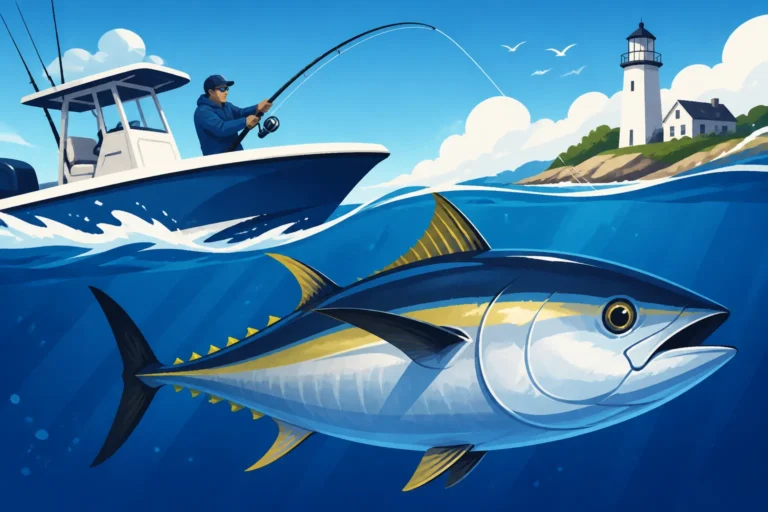
How big bluefin tuna get off Cape Cod
Oh, the legendary bluefin tuna off Cape Cod! If you've ever dreamt of battling one of these magnificent creatures, or even just seen pictures of anglers dwarfed by their catches, you know the question isn't just "do they get big?" but "how colossally big can they get?" It's a question that sparks awe and a healthy dose of respect among even the most seasoned Massachusetts anglers. This guide dives deep into the incredible dimensions of bluefin tuna found in our waters, explaining not just their size, but what contributes to it and what it means for those who chase them.
The Astounding Dimensions of Bluefin Tuna Off Cape Cod
There's a reason bluefin tuna have achieved almost mythical status among offshore fishermen. They're not just big; they're some of the most powerful and massive fish in the ocean, and the waters off Cape Cod are a prime hunting ground for them. When we talk about "how big" these fish get, we're really talking about a spectrum, but at the top end, it's truly mind-boggling.
Unpacking the "How Big": Length and Weight Expectations
Let's not mince words: a bluefin tuna, even a "small" one by a commercial fisherman's standards, is still a very substantial fish. What anglers sometimes call "schoolies" or "rangers" might range from 40 to 100 pounds, and those are often the younger, feistier fish that offer an incredible fight on lighter tackle. But off Cape Cod, particularly during the peak seasons, we're talking about much larger specimens.
Medium-sized bluefin tuna typically fall into the 150-300 pound range. These are the fish that truly test an angler's mettle, requiring specialized gear and often a solid hour or more of grueling battle. They possess immense strength and speed, capable of stripping hundreds of yards of line in blistering runs. They're built like torpedoes, incredibly muscular, and can grow to lengths that span a small boat.
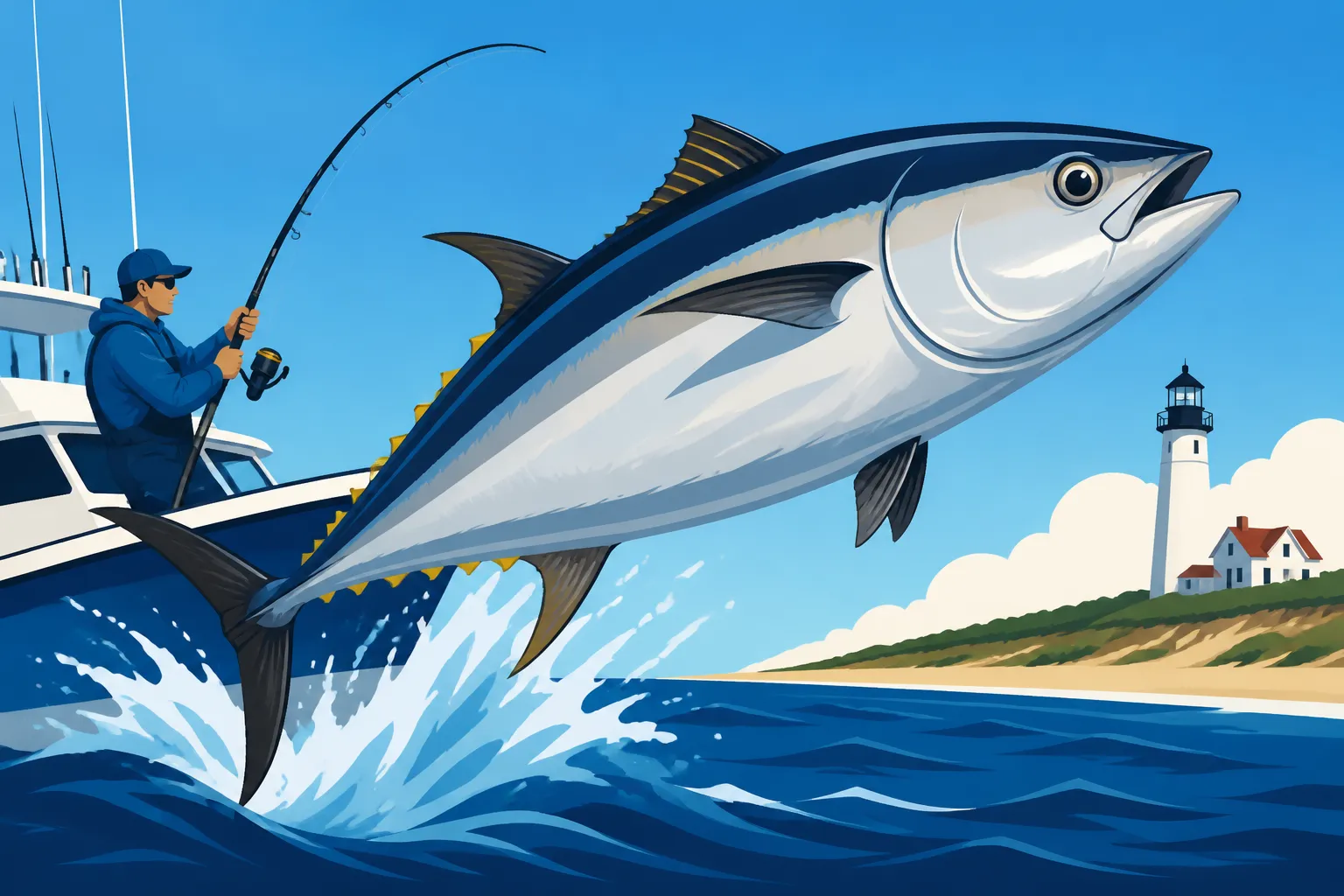
Then, there are the giants. The true, awe-inspiring bluefin that can easily tip the scales at 500, 600, 800 pounds, and sometimes even over 1,000 pounds. These aren't just fish; they're marine titans. A 500-pound bluefin can be as long as an average adult is tall, with a girth that makes it look like a Volkswagen beetle. Imagine trying to reel in something with the power of a small car, that pulls like a freight train, and dives like a submarine. That's the reality of a giant bluefin. While not every trip will encounter such a behemoth, the potential to hook into one is a huge part of the allure of Massachusetts Bluefin Tuna Charters operating out of ports around Cape Cod. It's this potential for truly monstrous fish that keeps anglers coming back, year after year, hoping to test themselves against the ultimate adversary.
Growth Patterns and Longevity: Why They Get So Huge
The reason bluefin tuna can reach such gargantuan sizes is a combination of remarkable biological adaptations and the abundance of food in their environment. These fish are built for speed and efficiency, and they grow incredibly fast, especially in their early years. They are endothermic, meaning they can regulate their body temperature, which allows them to hunt in a wider range of water temperatures and maintain peak metabolic rates for sustained growth.
Bluefin tuna also have a surprisingly long lifespan. Some can live for several decades, with older individuals often being the largest. As they age, they accumulate mass, growing bigger and more powerful each year. Their migratory habits, which bring them through the nutrient-rich waters off Cape Cod, are critical to this growth. They travel thousands of miles across oceans, constantly feeding. These migrations are epic journeys, driven by their need to find vast schools of baitfish, which provide the immense amount of energy required to sustain and increase their body mass.
When these magnificent fish pass through or linger in our local fishing grounds, they take full advantage of the rich bounty. The confluence of currents and the sheer volume of bait available allow them to fuel their incredible growth, ensuring that the older, larger individuals continue to bulk up. It's a perfect storm of biological potential meeting a marine environment that provides everything a rapidly growing, long-lived predator needs.
What Makes Cape Cod a Bluefin Giant Hotspot?
Cape Cod isn't just another fishing destination; it's a world-renowned hotspot for bluefin tuna, particularly for those seeking the really big ones. This isn't by accident. The geography and oceanography around Cape Cod create a unique environment that acts like a magnet for these massive pelagic fish.
The Abundance of Fuel: A Tuna's All-You-Can-Eat Buffet
Think of Cape Cod and the surrounding waters as a gigantic, perpetually stocked pantry for bluefin tuna. The key to their presence and incredible size here lies in the sheer abundance of their preferred prey. Waters off Massachusetts are teeming with dense schools of mackerel, herring, menhaden (pogies), and squid. These are high-fat, high-protein food sources that provide the necessary energy for bluefin to grow to immense sizes.
What creates this rich buffet? It's a fascinating blend of oceanographic factors. The mixing of colder Labrador Current waters with the warmer Gulf Stream currents creates areas of upwelling. These upwellings bring nutrient-rich waters from the depths to the surface, fueling the entire food web, from microscopic plankton all the way up to vast schools of baitfish. These baitfish, in turn, become irresistible targets for bluefin tuna.
Prime locations like Stellwagen Bank, Georges Bank, and the waters south of Martha's Vineyard and Nantucket are particularly renowned for their concentrations of bait and, consequently, bluefin. These aren't just random spots; they are underwater features that naturally funnel and hold baitfish, creating ideal hunting grounds for tuna. This reliable and abundant food source is undoubtedly one of the primary reasons bluefin off Cape Cod can achieve such legendary dimensions. Knowing when and where these baitfish congregate is key, and it often correlates with the Best month for bluefin tuna off Cape Cod.
Migratory Habits and Prime Feeding Windows
Bluefin tuna are true nomads of the ocean, undertaking vast migrations that can span entire ocean basins. Their presence off Cape Cod is intricately linked to these migratory patterns and the seasonal availability of their food. Typically, bluefin tuna begin arriving in Massachusetts waters in late spring or early summer, following the warming waters and the northward migration of their prey.
As summer progresses into fall, the waters around Cape Cod become a critical feeding ground for these fish before they continue their southern migration for the winter. This period, roughly from June through October, represents the prime feeding window when bluefin are actively bulking up. During these months, the largest concentrations of tuna, including many of the biggest individuals, can be found. Experienced anglers and charter captains meticulously track water temperatures, bait movements, and past trends to intercept these migratory giants.
It's during these prime feeding windows that the bluefin, fueled by the rich Cape Cod buffet, are at their most active and robust. This explains why fishing for them, particularly the giants, is so productive in our area. Understanding these seasonal movements is crucial for planning a successful trip, and it's something local Massachusetts Deep Sea Fishing Charters take into account when scheduling their trips, often aligning with the Bluefin Tuna Charter Season Out of Boston, Massachusetts. It's a dance between predator and prey, dictated by the rhythm of the ocean, and Cape Cod is often the stage for some of the most dramatic performances.
Differentiating Bluefin Tuna Size Classes for Anglers
For those new to the world of bluefin tuna fishing, the terminology around their sizes can sometimes be a bit confusing. It's not just "small" or "large"; there are specific classifications that factor into both recreational angling and regulatory compliance. Understanding these categories is essential, especially when planning a trip or considering what to do with a catch.
Understanding Recreational Size Classifications
In the recreational fishing world, bluefin tuna are generally categorized into a few broad size classes, which help anglers communicate about the fish they're targeting or have caught, and also relate to the different types of fishing tackle and techniques used.
- Schoolie/Ranger Bluefin: These are generally the smaller bluefin, often ranging from 40 to 150 pounds. Don't let the term "schoolie" fool you – even a 100-pound bluefin is a formidable opponent that will give you an incredible fight. They're called schoolies because they tend to travel in larger schools. Many anglers target these for their sheer sport, as they can be caught on lighter (but still heavy-duty) tackle.
- Medium Bluefin: This class typically refers to fish between approximately 150 to 300 pounds. These are serious fish that demand heavy gear, considerable strength, and often a dedicated crew. They are often defined by regulations, where the curved fork length might put them in a specific size range that determines if they can be kept or must be released. For instance, the National Marine Fisheries Service often uses a 73-inch curved fork length (CFL) as a key divider for certain categories, which correlates to significant weight.
- Giant Bluefin: These are the apex predators, the fish that capture imaginations. A "giant" bluefin generally refers to any fish over 300 pounds, but the truly legendary ones soar past 500 pounds and can even exceed 1,000 pounds. These are the fish that demand the heaviest tackle, specialized boats, and a team effort to even stand a chance of bringing them to the boat. Catching a giant is often a lifetime achievement for an angler.
It's important to remember that strict regulatory definitions, like those for Bluefin Tuna Size Limits off Massachusetts, often use precise curved fork length (CFL) measurements rather than just estimated weight ranges to determine what can legally be retained. Always check the most current regulations before heading out.
Here's a simplified look at how these categories generally align:
| Size Class | Approximate Length (Curved Fork) | Approximate Weight Range | Angler Experience Level |
|---|---|---|---|
| Schoolie | Up to ~60 inches | 40 – 150 lbs | Beginner to Intermediate |
| Medium | ~60 to ~73 inches | 150 – 300 lbs | Intermediate to Advanced |
| Giant | Over ~73 inches | 300+ lbs (often 500-1000+) | Expert |
The "Giant" Distinction: What Does 500, 800, or Even 1000+ Lbs Really Feel Like?
To truly grasp the concept of a "giant" bluefin, you have to think beyond mere numbers on a scale. Imagine a fish that is longer than you are tall, with the circumference of a refrigerator. The sheer mass and power of a 500-pound bluefin are almost indescribable. When hooked, they don't just pull; they generate an almost unbelievable force, often making multiple blistering runs that can spool hundreds of yards of heavy line in seconds. The initial bite is often so violent it can pull an angler out of a harness or even drag them around the cockpit if they're not secured.
A battle with a giant bluefin isn't just a fight; it's an endurance test. It can last for hours, pushing the angler to their physical and mental limits, often requiring multiple rotations among the crew on the rod. The fish will dive deep, leveraging its massive body against the water pressure, stubbornly refusing to come to the surface. It's a test of strength, stamina, and the integrity of every piece of fishing equipment, from the reel's drag system to the knot on the leader.
The visual impact of seeing one of these colossal fish boatside is something that stays with an angler forever. Their massive tails, powerful fins, and sheer size are a testament to their dominance in the ocean. The rarity of landing such a specimen is why it's considered the pinnacle of offshore sportfishing. It's a bucket-list achievement, and many anglers spend years, even decades, pursuing this ultimate challenge. Such endeavors require the most robust and specialized gear available, with many serious anglers researching and acquiring top-of-the-line rods, reels, and lines from reputable online retailers or specialty shops. For those looking to equip themselves, a quick search on a site like Amazon can provide a starting point for exploring the heavy-duty tackle required for these incredible fish, offering a wide array of options and customer reviews. The thrill isn't just in the catch, but in the epic story of the chase itself. While it's rare to hear about them selling for astronomical sums like some commercial catches, the sheer scale of the fish can give you an idea of What a bluefin tuna sells for at auction in the commercial world, highlighting their immense value.
The Quest for Giants: Gear, Strategy, and Respect
Chasing giant bluefin tuna off Cape Cod is more than just fishing; it's an expedition. It demands meticulous preparation, specialized equipment, a deep understanding of the ocean, and an unwavering respect for the fish. It's not for the faint of heart, but the rewards are unparalleled.
The Arsenal for Battle: Specialized Gear for Large Bluefin
You wouldn't bring a butter knife to a sword fight, and you certainly wouldn't bring freshwater gear to a giant bluefin battle. This is a game of heavy artillery. Anglers targeting these leviathans rely on incredibly robust and specialized equipment designed to withstand immense pressure and prolonged fights.
The heart of the setup is typically an 80-wide or even 130-wide conventional reel, spooled with hundreds of yards of heavy braided line, often topped with a monofilament leader. These reels aren't just big; they have drag systems capable of applying enormous pressure to slow down a rampaging tuna. The rods are equally impressive: short, stout, and built with incredible backbone to absorb the relentless force of the fish.
Beyond the rod and reel, every component of the terminal tackle is critical. Heavy-duty swivels, strong leaders, and circle hooks designed for maximum holding power and minimal harm during catch-and-release are essential. Specialty harnesses and stand-up belts are also crucial, allowing the angler to distribute the immense strain across their body, rather than just their arms. Many serious tuna anglers spend countless hours researching the latest innovations in gear, often finding extensive options and detailed product information on platforms like Amazon, where they can compare different brands and features. When it comes to lures, specific designs are favored, and you can learn more about choosing the right ones by checking out Best Trolling Lures for Tuna Off Massachusetts.
This isn't just about having the right gear; it's about having quality gear that won't fail under pressure. Every knot, every crimp, every connection is tested to its absolute limit during a battle with a giant bluefin.
Strategies for Targeting Large Tuna
Catching giant bluefin tuna is a highly refined art, often involving sophisticated strategies honed over years of experience. There isn't a single "best" method, as techniques can vary based on conditions, bait presence, and the behavior of the fish.
- Trolling: This involves dragging large baits or lures behind a moving boat. Often, multiple lines are deployed with outriggers to cover a wide area. Large artificial lures, like skirted baits or large plugs, are common, as are natural baits such as mackerel or bonito. The goal is to present an enticing target that mimics a wounded or fleeing baitfish.
- Chunking: This technique involves drifting with the boat, periodically tossing out chunks of cut bait (like mackerel or herring) to create a scent trail that attracts tuna to the boat. Once the tuna are in the vicinity, live baits or rigged chunks are presented on hooks.
- Live-baiting: This is a popular and often highly effective method, involving fishing with live mackerel, herring, or other local baitfish. These baits are either slow-trolled, drifted, or fished under kites to keep them near the surface. The natural movement of the live bait is often irresistible to a hungry bluefin. You can learn more about dynamic techniques like Jigging and Popping for Bluefin Tuna.
Successful bluefin fishing also requires expert boat handling. The captain and crew work in unison, maneuvering the boat to keep the line tight, prevent tangles, and position the angler for the best advantage during the fight. It's a team sport, where communication and coordination are paramount. Given the intense nature of the sport and the conditions often encountered, it's also worth noting that understanding How rough the water gets on tuna charters can help prepare you for the offshore experience.
The Ethical Angler: Beyond Just the Catch
While the allure of landing a massive bluefin is undeniable, responsible angling practices are paramount. Bluefin tuna stocks have faced challenges in the past, and strict regulations are in place to ensure the sustainability of the fishery. Ethical anglers understand that their role extends beyond just the catch.
- Compliance with Regulations: Always be aware of and adhere to the latest size limits, bag limits, and seasons set by federal and state authorities. These regulations are designed to protect the species and ensure future fishing opportunities.
- Responsible Catch and Release: For fish that are outside the legal slot limits, or if an angler chooses to release their catch, minimizing the fight time and handling the fish carefully are crucial for its survival. Using circle hooks, which tend to hook in the corner of the mouth, significantly increases a fish's chances of survival after release.
- Conservation Mindset: Beyond regulations, a true angler understands the ecological value of bluefin tuna as apex predators and the economic importance of the fishery. Supporting conservation efforts and practicing good stewardship helps preserve this incredible resource for generations to come.
Many anglers choose to book trips with reputable Massachusetts Bluefin Tuna Charters that prioritize ethical practices and have experienced crews. These captains not only know how to find the fish but also how to handle them properly, whether for retention or release. They are often ambassadors for the sport, teaching clients about the species and the importance of conservation. Even when considering other offshore pursuits, like Massachusetts Offshore Shark Fishing Charters, the same principles of respect and ethical engagement apply, ensuring that the thrill of the catch doesn't come at the expense of the resource.
Disclaimer
This article is for general informational purposes only and does not constitute professional advice. Laws, prices and regulations vary by location and change over time. Consult a qualified professional for guidance on your specific situation.