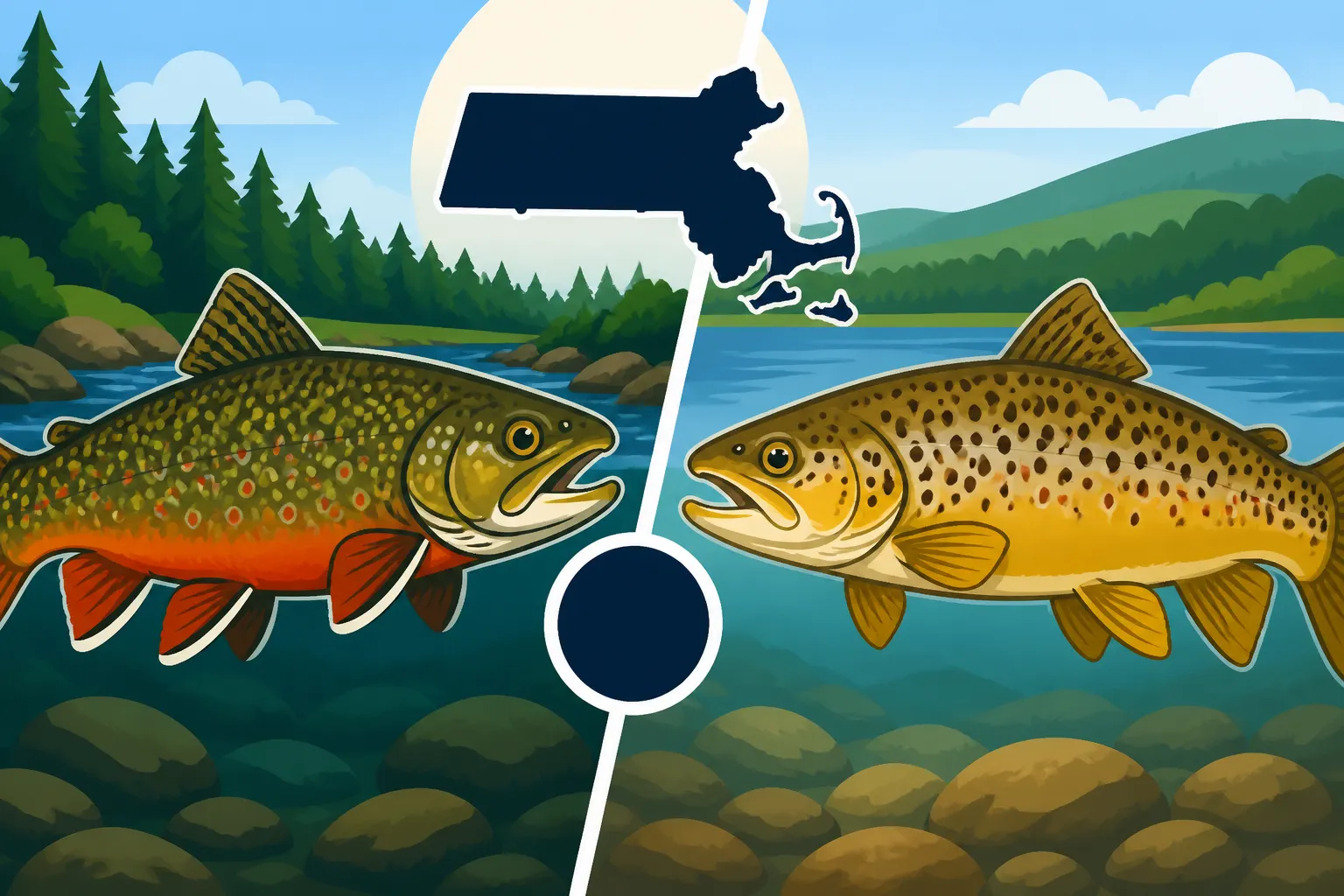
Difference between brook trout and brown trout
For many anglers exploring the beautiful waterways of Massachusetts, distinguishing between the various trout species can feel like trying to solve a slippery puzzle. You're out there on a crisp morning, perhaps along a stream in the Berkshires or a quiet pond in central Massachusetts, and you land a beautiful fish. But is it a native brook trout, or a hardy brown trout introduced from overseas? Understanding the subtle yet significant differences between these two common species isn't just about showing off your fish identification skills; it's crucial for understanding their habitat preferences, behavior, and even your role in conservation. This comprehensive guide will meticulously break down the characteristics that set brook trout and brown trout apart, helping you identify your catch with confidence and appreciate the unique ecology of each.
The Diverse World of Massachusetts Trout
Massachusetts is home to several species of trout, each with its own story and unique place in our freshwater ecosystems. While rainbow trout are often the most recognized due to widespread stocking, brook trout and brown trout offer distinct angling experiences and boast fascinating biological histories. Getting to know these species individually enhances your time on the water, making you a more observant and informed angler.
Native Char vs. Introduced Trout: A Fundamental Difference
It might surprise some, but the "brook trout" isn't actually a true trout in the scientific sense. It's a char, part of the Salvelinus genus, making it a close cousin to arctic char and lake trout. Brook trout, or Salvelinus fontinalis, are native to Massachusetts and represent a vital piece of our natural heritage, preferring the cold, clean waters of pristine streams and rivers. Their presence often indicates a healthy, undisturbed ecosystem.
Brown trout, Salmo trutta, on the other hand, are true trout and are not native to North America. They were introduced from Europe in the late 19th century and have since established themselves widely across Massachusetts. Known for their adaptability and hardiness, brown trout can thrive in a broader range of water conditions than brook trout, including warmer and slightly more degraded habitats. This distinction between native char and introduced trout is the most fundamental difference, influencing everything from their markings to their behavior and preferred environments. Understanding this lineage helps explain why each species looks and acts the way it does.
Why Identification Matters to the Angler
Beyond scientific curiosity, accurately identifying brook trout and brown trout has practical implications for every angler. For starters, fishing regulations often differ by species, sometimes even within the same water body. Knowing what you've caught ensures you're adhering to legal size and bag limits. More importantly, it informs your fishing strategy. For instance, if you're targeting brook trout, you'll seek out specific types of cold, clear water and use certain presentations. If you're after brown trout, you might focus on different structures or times of day.
Furthermore, being able to tell them apart deepens your connection to the sport. You start to recognize the subtle cues of the environment and appreciate the unique beauty and resilience of each fish. It’s also crucial for conservation efforts. Supporting populations of native brook trout often means protecting their delicate habitats, which in turn benefits the entire ecosystem. Recognizing when you've encountered a native brook trout in a pristine stream can fill you with a sense of wonder and responsibility.
Brook Trout: Massachusetts' Native Beauty
The brook trout holds a special place in the hearts of many Massachusetts anglers. It’s a symbol of wilderness, purity, and the pursuit of unspoiled natural beauty. Often smaller than their brown trout counterparts, brook trout compensate with vibrant colors and an almost ethereal grace.
Distinctive Physical Characteristics of Brook Trout
When you pull a brook trout from the water, its beauty is immediately striking. Look closely, and you'll notice a few key features that distinguish it.
First, their coloration is incredibly vivid. The back of a brook trout is typically dark olive green, often with worm-like or labyrinthine patterns known as "vermiculations." These patterns are usually light green or yellow and extend onto the dorsal fin. Their sides fade into a lighter olive or brown, adorned with scattered pale yellow spots. But here’s the kicker: intermingled with these yellow spots, particularly along the lateral line, you'll find bright red spots, each encircled by a halo of brilliant blue. These blue halos are a dead giveaway for brook trout.
Second, pay attention to their lower fins. The pectoral, pelvic, and anal fins on a brook trout usually have a distinctive white leading edge, followed by a thin black stripe, and then the reddish or orange coloration of the fin itself. This "white-black-red" fin trim is another strong indicator. Their tail fin (caudal fin) is typically square or only very slightly forked. Their body shape is generally more streamlined and torpedo-like, adapted for darting through swift, cold currents. When you hold a brook trout, you'll often notice a slightly more elongated, slender feel compared to the more robust build of a brown trout. You can find excellent visual guides on sites like Amazon that sell fishing identification charts if you want a laminated version for your tackle box.
Preferred Habitats and Behavior
Brook trout are true connoisseurs of cold, clean water. They thrive in small, spring-fed streams, mountain brooks, and the upper reaches of rivers where water temperatures rarely exceed the mid-60s Fahrenheit. They need high oxygen levels and clean, gravelly bottoms for spawning. Think of those shaded, gurgling streams flowing through forested areas, often tucked away from easy access—that’s prime brook trout country. You'll often find them lurking in undercut banks, behind large rocks, or in the deeper pools of these pristine environments.
Their diet consists mainly of aquatic insects, larvae, small crustaceans, and sometimes smaller fish or terrestrial insects that fall into the water. Brook trout are often less wary than brown trout, especially in remote areas, and can be quite aggressive towards a well-presented fly or small lure. They are also known for their beautiful spawning colors, with males developing vibrant orange bellies during the fall breeding season. Protecting these delicate habitats is crucial, which is why organizations like MassWildlife are so invested in managing these native populations. Anglers often refer to them as "brookies" and consider catching a wild one a real trophy, not necessarily for its size, but for the untamed beauty it represents. Many anglers will practice catch and release for these fish to help sustain their populations in sensitive streams.
Brown Trout: The Hardy European Transplant
Brown trout, with their robust build and cunning nature, offer a different kind of challenge and reward to Massachusetts anglers. While not native, they have become an integral part of our freshwater fisheries, especially in larger rivers and lakes.
Distinctive Physical Characteristics of Brown Trout
Brown trout have a more subdued, earthy palette compared to the flashy brook trout, but they possess a rugged beauty all their own.
Their base coloration typically ranges from golden brown to olive green on the back, fading to silvery or yellowish on the sides and belly. What truly sets them apart are their spots. Brown trout feature dark spots (often black or dark brown) scattered across their back and sides, extending onto the opercula (gill covers). Many of these dark spots are surrounded by a pale halo, but they lack the brilliant blue halos seen on brook trout. Crucially, they also have distinctive reddish-orange spots along their sides, which are typically larger and more prominent than the brook trout's red spots and do not have the blue halo. These red spots are a key identifier.
Unlike brook trout, brown trout's lower fins (pectoral, pelvic, and anal) generally do not have the prominent white leading edge. Their fins tend to be more uniformly colored, often yellowish or brownish. Their tail fin is typically less square than a brook trout's, often appearing more straight or slightly forked. Brown trout tend to have a more robust, heavy-bodied appearance, especially larger individuals, which can make them quite powerful fighters on the end of a line. When you hold a brown trout, it often feels more solid and muscular. You might even notice that the larger brown trout tend to have a more pronounced kype (hooked jaw) during spawning season, especially the males.
Preferred Habitats and Behavior
Brown trout are incredibly adaptable, a trait that has allowed them to thrive in many environments across Massachusetts. While they appreciate cold, clean water, they are far more tolerant of warmer temperatures and slightly less pristine conditions than brook trout. You'll find them in a wider variety of habitats, including larger rivers, lakes, and even some ponds that might be too warm for native brook trout. They are particularly fond of structure—think submerged logs, rock piles, deep pools, and undercut banks in larger river systems like the Deerfield River or portions of the Connecticut River.
Brown trout are also known for their opportunistic and often predatory feeding habits. While they'll certainly eat aquatic insects, larger brown trout frequently target baitfish, crayfish, and even small rodents or amphibians. This makes them particularly responsive to larger lures, streamers, and minnow imitations. They are notoriously wary, especially in heavily fished areas, and can be quite challenging to catch, demanding stealth and precise presentations from anglers. This wariness is part of their charm for many, as landing a large brown trout feels like a true accomplishment. In Massachusetts, many brown trout populations are sustained through stocking programs, though some rivers maintain wild, self-sustaining populations. Brown Trout Fishing in Massachusetts offers more detailed insights into targeting these fascinating fish.
Side-by-Side: Key Distinctions for Anglers
Having looked at each species individually, let's put them side-by-side to highlight the most crucial differences you'll want to remember when you're on the water. This is where the rubber meets the road for practical identification.
Spot Patterns and Coloration: The Ultimate Indicators
If you can only remember one thing, make it the spots and coloration. This is usually the quickest and most reliable way to differentiate the two.
| Feature | Brook Trout (Salvelinus fontinalis) | Brown Trout (Salmo trutta) |
|---|---|---|
| Native/Introduced | Native (actually a char) | Introduced (true trout) |
| Back Color | Dark olive green with distinctive worm-like (vermiculations) patterns | Golden brown to olive green, sometimes with dark spots and halos |
| Side Spots | Pale yellow spots, often with red spots surrounded by blue halos | Dark spots (black/brown) with pale halos, and red-orange spots without blue halos |
| Fin Edges | Prominent white leading edge on lower fins, followed by black stripe | Generally lack white leading edges; fins more uniformly colored |
| Tail Fin | Square or very slightly forked | More straight or slightly forked, less square |
| Body Shape | More streamlined, torpedo-like | More robust, heavy-bodied, especially larger fish |
| Preferred Temp | Colder, highly oxygenated water | More tolerant of warmer water, wider range of temperatures |
As you can see, the blue-haloed red spots and white-black fin edges are the absolute hallmarks of a brook trout. If you don't see those, you're likely looking at a brown trout, identified by its more varied spots, including reddish-orange ones without the blue halo, and typically plain fin edges. It takes a little practice, but once you train your eye, it becomes second nature. Many anglers keep a small, waterproof identification card or a fishing book from a vendor like Amazon in their tackle box for quick reference.
Habitat Preferences: Where to Find Each Species
Knowing where each species prefers to live is incredibly helpful for targeting them. If you're hiking into a remote, crystal-clear, fast-flowing stream with lots of shade, your chances of encountering a Brook Trout in Massachusetts Streams are very high. These are the fish that require pristine conditions, making them excellent indicator species for environmental health. They'll hug the bottom in cool pools, darting out from under cover to ambush prey.
Conversely, if you're fishing a larger river system that might flow through more developed areas, or a larger, deeper lake that warms up a bit more in the summer, you're much more likely to find brown trout. These fish can also tolerate slightly more turbid water and will use larger structures for cover, such as large boulders or submerged timber. They're often found patrolling current seams or drop-offs in bigger water. This difference in habitat also means that the fishing pressure and public access might vary. Oftentimes, brook trout streams are more remote, requiring a hike, whereas brown trout waters may have easier access points.
Angling Strategies and Challenges
Because of their differing habitats and behaviors, fishing for brook trout and brown trout often requires slightly different approaches.
For brook trout, stealth and a delicate presentation are often key, especially in smaller streams. They are often less selective than brown trout, but their smaller, more confined environments mean that heavy footsteps or a sloppy cast can spook them instantly. Small dry flies, nymphs, and tiny spinners or spoons are effective. You’ll want to focus on casting upstream into pockets of calm water, riffles, and undercut banks. Catching a wild brook trout often feels like a treasure hunt, seeking out those hidden pockets of wilderness. Light tackle is usually sufficient, and a good pair of waders will open up many opportunities.
Brown trout, particularly larger individuals, can be far more challenging. Their wary nature means that fly selection, leader length, and precise casting are paramount for fly anglers. For spin fishing, matching the hatch or "matching the forage" (e.g., using lures that mimic local baitfish) is crucial. They often feed more heavily at dawn, dusk, or even at night, especially during warmer months. Larger streamers, minnow-imitating crankbaits, and even larger worms can entice a bite. You might need to cover more water to find them, and be prepared for a strong fight; a big brown trout can be surprisingly powerful. Understanding the local aquatic insect life and fish populations is particularly important when targeting brown trout, as their diet can be quite varied.
Both species contribute wonderfully to Trout Fishing in Massachusetts, but knowing which one you're pursuing will help you select the right gear, bait, and approach. For either species, remember to check Massachusetts Freshwater Daily Catch Limits before heading out.
Conservation Status and Management in Massachusetts
Understanding the distinction between brook trout and brown trout isn't just about fun on the water; it's also about appreciating their ecological roles and the conservation efforts underway in Massachusetts.
Protecting Native Brook Trout Populations
Native brook trout are often considered an indicator species for environmental health. Their reliance on cold, clean, highly oxygenated water means that their presence signals a relatively pristine aquatic environment. Conversely, their decline can be a warning sign of habitat degradation, increased water temperatures, or pollution. MassWildlife, along with various conservation groups, dedicates significant resources to identifying, protecting, and restoring brook trout strongholds. This often involves stream bank restoration, culvert replacements to improve fish passage, and regulations designed to minimize angling pressure on wild populations.
Many wild brook trout populations exist in smaller, often un-stocked streams across Massachusetts. These are the fish that have adapted to their local environment over millennia, representing a unique genetic heritage. For anglers, this means practicing catch and release in these sensitive areas is often encouraged, if not required. It also means being mindful of your impact when accessing these delicate habitats, such as avoiding disturbing stream banks or wading carelessly. Supporting land conservation efforts that protect forested stream corridors is also indirectly supporting brook trout populations.
Managing Stocked Brown and Brook Trout Fisheries
While native brook trout populations are a focus for conservation, both brown trout and brook trout are extensively stocked by MassWildlife to provide ample angling opportunities across the state. These stocking programs ensure that even waters with limited natural reproduction can offer a vibrant fishing experience. Massachusetts Trout Stocking Schedule details when and where these fish are released.
Stocked fish, while providing excellent sport, serve a different purpose than wild, self-sustaining populations. They often populate "put-and-take" fisheries, where anglers can enjoy catching and keeping their daily limit. This helps alleviate pressure on wild populations while still satisfying the demand for trout fishing. Managing these fisheries involves careful consideration of water quality, public access, and angler demand. Brown trout, in particular, are favored for stocking in larger rivers and lakes because of their hardiness and ability to tolerate a wider range of conditions. Anglers often find larger, trophy-sized brown trout in these stocked waters, providing exciting opportunities for those seeking a bigger fight. Many resources, including fishing guides available on Amazon, detail effective methods for catching these stocked trout, often differing from the tactics used for their wild counterparts.
Disclaimer
This article is for general informational purposes only and does not constitute professional advice. Laws, prices and regulations vary by location and change over time. Consult a qualified professional for guidance on your specific situation.